
Most published exhibition-stand cost guidance stops at mid-sized stands, which leaves exhibitors planning a large presence, 100 square metres and above, without a clear reference for what they should be paying. Large stands are where budgets run into six figures and where the cost drivers shift in ways that catch out even experienced exhibitors.
This guide sets out realistic per-square-metre and total-cost expectations for 100 and 200 square metre stands across the major European markets, explains why the cost curve does not scale linearly, and covers the decisions, single versus double deck, custom versus reusable, that most affect the final number.
Why large-stand costs do not scale linearly
The intuitive assumption is that a 200 square metre stand costs twice a 100 square metre stand, which costs roughly three times a 72 square metre stand. In practice the per-square-metre rate behaves differently at scale, and it moves in two opposing directions at once.
On one hand, some costs scale sub-linearly. Design, project management and certain fixed elements are spread across more square metres, so the per-square-metre cost of those items falls as the stand grows. A larger stand can be more efficient per square metre on the elements that do not need to be replicated across the floor.
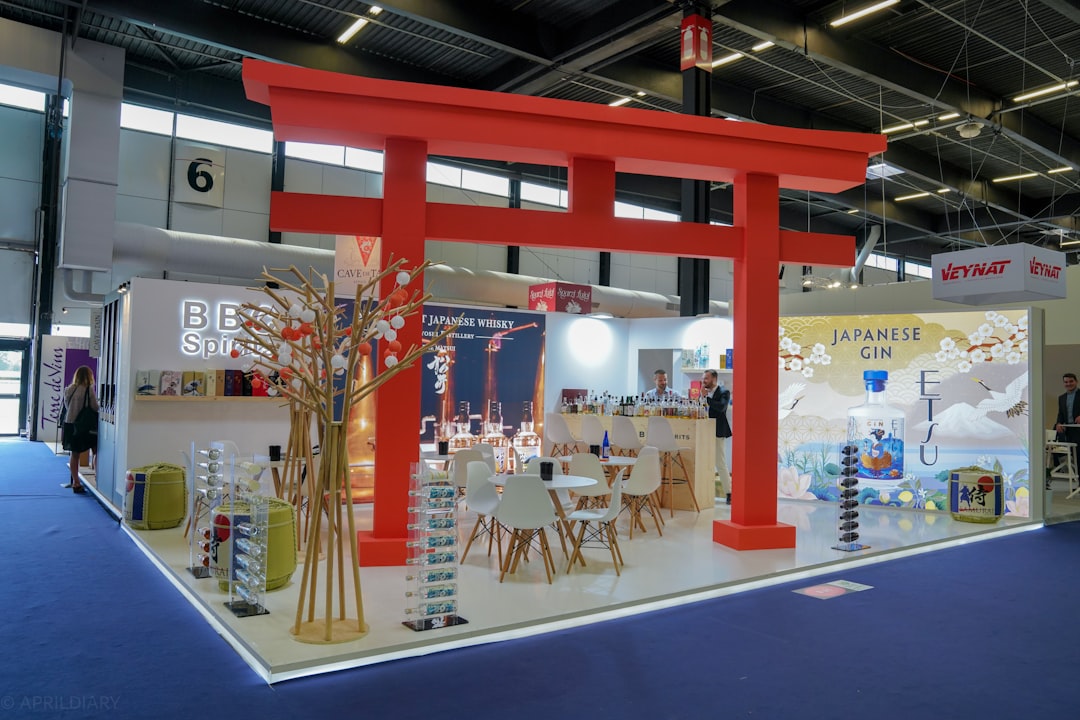
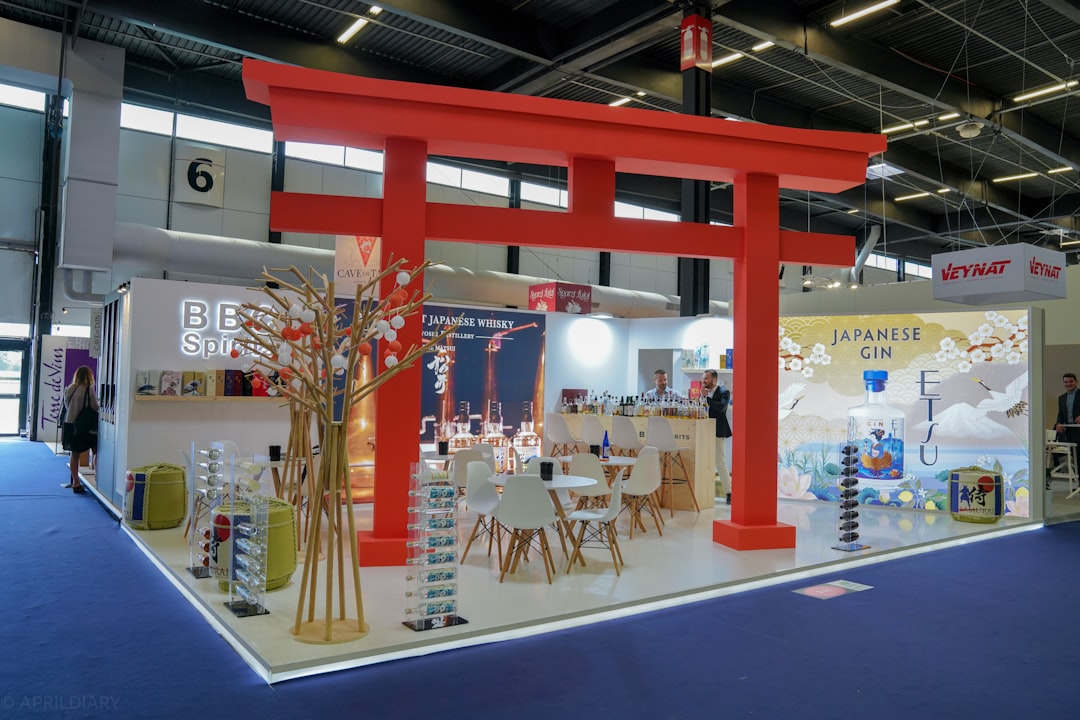
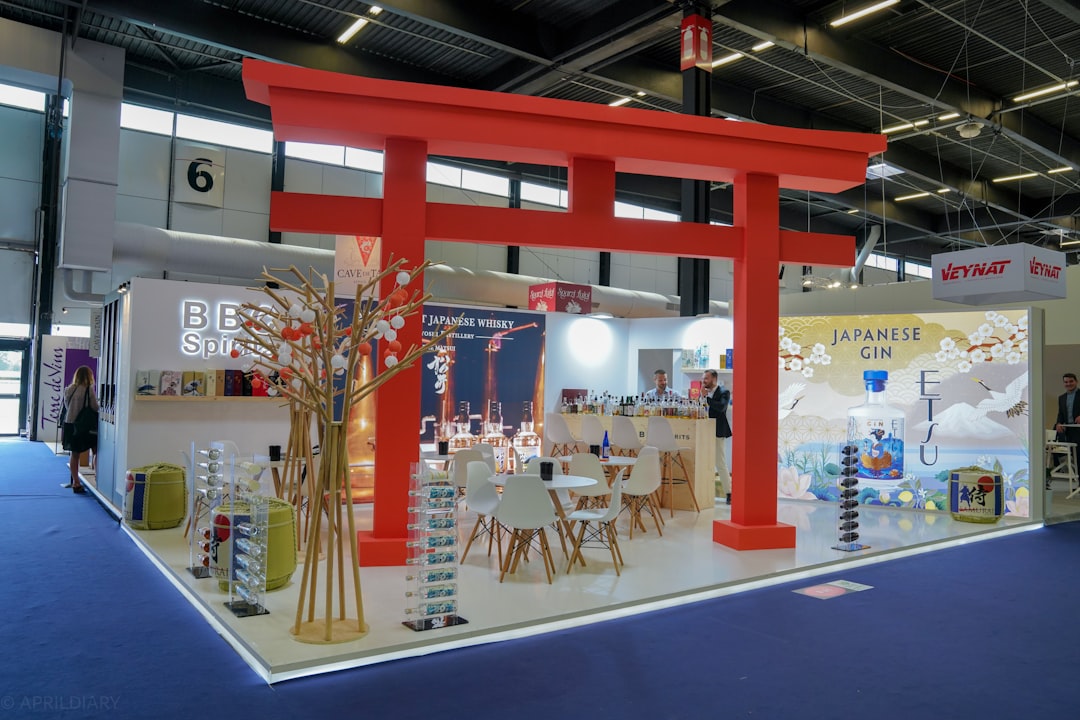
On the other hand, large stands add features that smaller stands never carry, and those features are expensive. A 200 square metre stand is where double-deck construction, large hospitality areas, multiple enclosed meeting rooms, feature walls, significant rigging and full AV integration become normal, and each of those pushes the per-square-metre rate up.
The net effect is that large stands often sit at a similar or higher per-square-metre rate than mid-sized stands, not a lower one, because the ambition rises with the size.
“The trap in large-stand budgeting is assuming economies of scale that do not exist. Yes, your design cost per square metre falls. But a 200 square metre stand is not a big 72 square metre stand, it is a different kind of object, with a second storey, meeting rooms and features the smaller stand never had. Those are what set the price.”
What 100 and 200 sqm stands cost in 2026
The figures below reflect the European per-square-metre build benchmark we maintain across contractors, expressed as the stand build cost before space rental, and extend the ranges in our 36, 54 and 72 sqm pricing matrix up into large-stand territory. As with any benchmark, the actual figure depends on the market, the fair and the finish.
| Stand size and tier | Indicative build cost (EUR per sqm) | Indicative total build (EUR) |
|---|---|---|
| 100 sqm, standard custom | 700 to 1,100 | 70,000 to 110,000 |
| 100 sqm, premium custom | 1,100 to 1,800 | 110,000 to 180,000 |
| 200 sqm, standard custom | 800 to 1,200 | 160,000 to 240,000 |
| 200 sqm, premium custom | 1,200 to 2,200 | 240,000 to 440,000+ |
Two points about these figures. First, they are build cost only, before space rental, which for a 200 square metre stand at a major fair is itself a substantial line item charged by the organiser per square metre. Second, the premium ranges reflect double-deck construction and extensive features; a single-storey 200 square metre stand with modest fit-out sits at the lower end, while a two-storey stand with hospitality, meeting rooms and a feature build sits at the top.
The country also matters. Build rates vary across Europe, with the higher-cost markets like Germany, Switzerland and the Nordics at the upper end and some southern and central European markets more competitive. Our cost matrix breaks this down by country, and the same country pattern applies at large-stand scale.
It is worth being explicit about how wide the range at a single size can be, because the tiers above are not academic. Two exhibitors both building a 200 square metre stand at the same German fair can easily spend 160,000 euros and 400,000 euros respectively, and both figures can be entirely reasonable.
The first is a well-executed single-storey custom stand with a clean fit-out; the second is a two-storey stand with hospitality, several meeting rooms, a feature build and full AV. The square metres are identical; the object is not. This is why a per-square-metre rate alone tells an exhibitor very little at large scale, and why the specification, not the size, is what determines the cost.
An exhibitor who fixes a budget before deciding the specification has the process backwards.
The double-deck decision
The single biggest cost fork for a large stand is whether to go single or double storey. A second storey roughly doubles the usable floor area within the same footprint, which is valuable when floor space is expensive or limited, but it is not free: it adds structural engineering, certification, staircases or lifts, and stricter safety and rigging requirements, and it lengthens the build.
The economics turn on the value of the extra floor area against the premium the second storey costs. When ground-floor space rental is expensive and the extra area is genuinely useful, for meeting rooms or hospitality above an open ground floor, the double deck pays back. When the extra area would be underused, it does not.
This is a real calculation rather than a rule of thumb, and our double-deck stand ROI guide works through when the second storey earns its cost.
“A second storey is not a luxury or a status symbol, it is a floor-area arbitrage. If the rental cost of doubling your ground footprint exceeds the cost of building up, the double deck wins. If it does not, you are paying for a staircase to nowhere. Run the number, do not follow the fashion.”
For large stands at fairs where prime floor space is both expensive and scarce, the double deck is often the rational choice, which is why the biggest stands at the flagship fairs are so frequently two storeys. But the decision should follow the arithmetic of that specific fair, not a general preference.
Custom versus reusable at large scale
The second major cost fork is whether a large stand is a one-off custom build or a reusable system designed to be reconfigured across multiple fairs. At large scale this decision has bigger financial consequences than at small scale, simply because the sums involved are larger.
A company that exhibits a large stand at several fairs a year has a strong case for a reusable or hybrid system: the saving compounds across the calendar, and the expensive structural and meeting-room elements can be standardised while the presentation layer changes.
A company that builds one large flagship stand a year may prefer custom for the brand impact, but should weigh the storage, transport and refurbishment cost of holding a large custom stand against the flexibility of a system.
Our modular versus custom decision framework works through the total-cost comparison, which matters more at large scale than small.
There is also a sustainability dimension that increasingly enters large-stand decisions. A large custom stand built and scrapped after one show carries a high embodied-carbon cost, and companies with sustainability reporting obligations are increasingly steered toward reusable systems for that reason. At large scale the environmental case and the economic case for reuse tend to align.
The line items that move a large-stand budget
Beyond the headline build cost, several line items scale up disproportionately on a large stand and deserve specific attention in the budget.
| Line item | Why it matters at large scale |
|---|---|
| Space rental | Charged per sqm; a major line item on 100 to 200 sqm |
| Structural and safety sign-off | Required for double decks and large features |
| Rigging and hanging structures | Large stands carry more overhead branding and lighting |
| AV and technology integration | Feature walls, screens and interactive elements |
| Hospitality and catering | Large stands host more and longer meetings |
| Freight and forwarding | More material, sometimes multiple trucks |
| Staffing | Large stands need substantially larger teams |
Staffing in particular is underestimated on large stands. A 200 square metre stand needs enough people to cover its meeting rooms, hospitality and open areas simultaneously across a multi-day fair, and an understaffed large stand looks empty in a way that actively undermines the investment. Our stand staffing guide covers the ratios, which scale with stand size.
Budgeting method for a large stand
Because a large stand is a six-figure commitment, it warrants a more rigorous budgeting method than a small one. The approach that works is to build the budget bottom-up from the line items rather than top-down from a per-square-metre rate, because the per-square-metre rate hides exactly the features, double deck, meeting rooms, hospitality, that drive a large stand’s cost.
Start from what the stand needs to do, cost each element, and let the total emerge, then sense-check it against the per-square-metre benchmark.
This also makes the trade-offs visible. If the bottom-up budget comes in too high, the line-item view shows precisely where the money is going and which features to reconsider, whereas a top-down per-square-metre budget offers no such visibility.
Our exhibition budget framework sets out the line-item method, and our trade-fair cost benchmark guide provides the industry reference points to sense-check against.
Measuring the return on a large stand
A large stand is a large investment, and it needs a measurement discipline to match. The right measure is not footfall past the stand but the qualified conversations, meetings and pipeline the stand generated, weighed against its full cost including space, build, freight and staffing. A large stand that generates proportionally more and higher-quality conversations than a mid-sized one justifies its premium; one that simply looks impressive without converting does not.
Setting that measurement goal before the fair, and instrumenting the stand to capture it, is what turns a large-stand investment into an accountable one. The exhibitors who justify returning to a large stand year after year are the ones who can show what it produced, not just how it looked.
Getting comparable quotes for a large stand
A large stand is where the quality of the tendering process most affects the outcome, because the sums are large and the scope is complex enough that quotes from different builders are hard to compare directly. A common and expensive failure is to receive three large-stand quotes that appear to differ by tens of thousands of euros, only to discover that they include different scopes, one includes AV and furniture, another does not, one includes freight, another leaves it to the exhibitor.
The discipline that fixes this is a detailed, itemised brief that every builder quotes against on the same basis, so the resulting quotes are genuinely comparable line by line.
For a large stand this brief should specify the structure and any second storey, the meeting and hospitality requirements, the AV and technology, the graphics, and explicitly whether freight, furniture, electrical and stand services are in or out of scope.
Without that, a large-stand tender compares apples with oranges, and the cheapest headline number often turns out to be the most expensive once the omissions are added back.
“On a six-figure stand, the difference between a good and a bad procurement process is often larger than the difference between two good builders. Write the brief so every quote covers exactly the same scope, or you are not comparing prices, you are comparing guesses about what each builder assumed.”
Choosing the builder for a large stand is also about capability and track record, not just price. A builder who has delivered stands at the size and complexity in question, and who knows the specific venue, carries far less risk than one stepping up in scale for the first time. Our verified builder directory lets exhibitors filter for builders with documented large-stand and specific-venue experience.
The risks that turn a large stand into a loss
Large stands carry risks that small ones do not, and understanding them is part of controlling the cost. The first is scope creep: because the sums are large and the build long, changes accumulate, and each late change on a large custom stand is expensive. Locking the design early and controlling changes tightly is worth more on a large stand than a small one.
The second is the on-site risk of a complex build. A double-deck stand with extensive AV and hospitality has many more things that can go wrong during build-up than a simple stand, and a large build that is not ready on the first morning fails in front of the biggest audience. Protecting the commissioning and testing window, and working with a builder experienced enough to hit it, is essential.
The third is the staffing risk already noted: a large stand that is understaffed, or staffed with people who cannot hold the conversations the fair demands, wastes the whole investment. Getting these three risks under control is what separates a large stand that pays back from one that becomes a costly cautionary tale.
The bottom line on large-stand cost
A large stand is a different financial object from a mid-sized one, not a scaled-up version of it. The per-square-metre rate does not fall as much as intuition suggests, because large stands add expensive features, and the two biggest cost forks, single versus double deck, and custom versus reusable, deserve genuine analysis rather than default choices.
Exhibitors who budget bottom-up from the line items, run the double-deck arithmetic honestly, weigh reuse against custom at the scale involved, and measure the return get large-stand value under control. Those who assume economies of scale that do not exist, or follow the double-deck fashion without the arithmetic, are the ones whose large-stand budgets run away from them.
Above all, a large stand rewards specifying what it needs to do before fixing what it should cost, because at this scale the specification is the cost. Exhibitors who work in that order keep control of a six-figure budget; those who fix a number first and design against it usually end up either overspending or with a stand that underdelivers.
Exhibitors planning a large stand can compare build approaches in our booth-design guides, and companies ready to source a builder for a large stand can start with the verified builder directory.
FAQFrequently asked questions
A 100 sqm standard custom stand runs EUR 700 to 1,100 per sqm, giving a total build of EUR 70,000 to 110,000. A 100 sqm premium custom stand runs EUR 1,100 to 1,800 per sqm, or EUR 110,000 to 180,000 in total. These are build costs before space rental, which the organiser charges separately per square metre.
A 200 sqm standard custom stand runs EUR 800 to 1,200 per sqm, or EUR 160,000 to 240,000 total. Premium custom runs EUR 1,200 to 2,200 per sqm, or EUR 240,000 to 440,000 and above. Large stands often sit at a similar or higher per-square-metre rate than mid-sized ones, because ambition rises with size: double decks, hospitality, meeting rooms and rigging.
A second storey is a floor-area arbitrage. It roughly doubles usable floor area within the same footprint, so when ground-floor space rental is expensive and the extra area is genuinely useful, for meeting rooms or hospitality above an open ground floor, the double deck pays back. Run the arithmetic for the specific fair: if rental for doubling the ground footprint exceeds the cost of building up, build up.
Write a detailed, itemised brief that every builder quotes against on the same basis. Specify the structure and any second storey, the meeting and hospitality requirements, the AV and technology, the graphics, and explicitly whether freight, furniture, electrical and stand services are in or out of scope. Build the budget bottom-up from line items, then sense-check it against the per-square-metre benchmark.