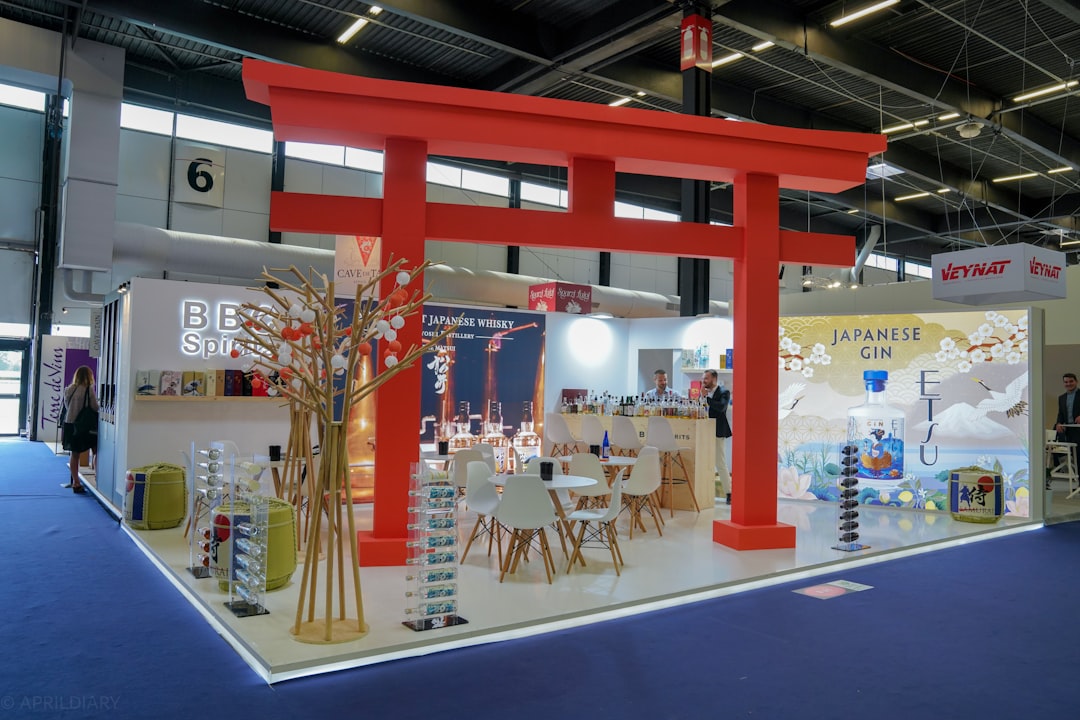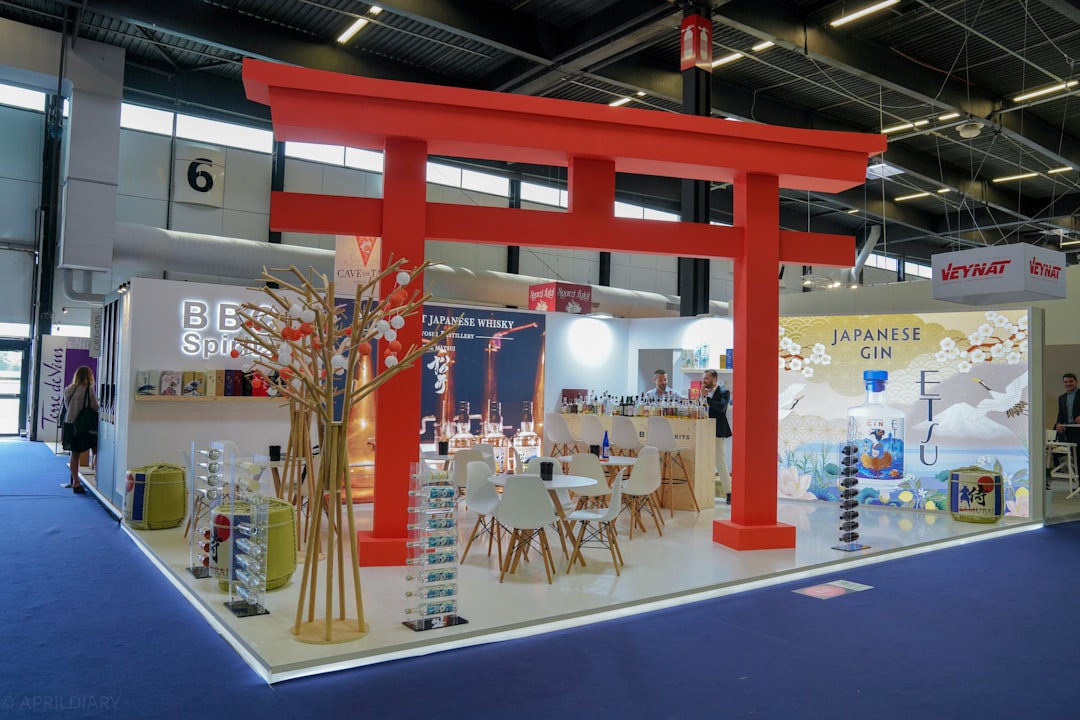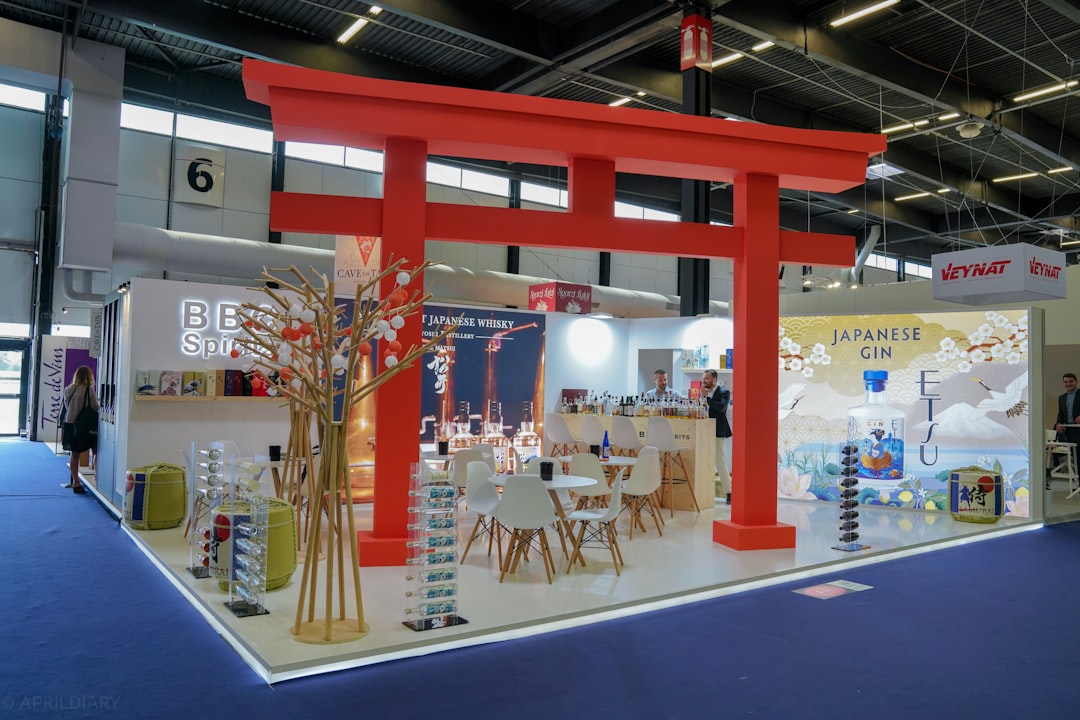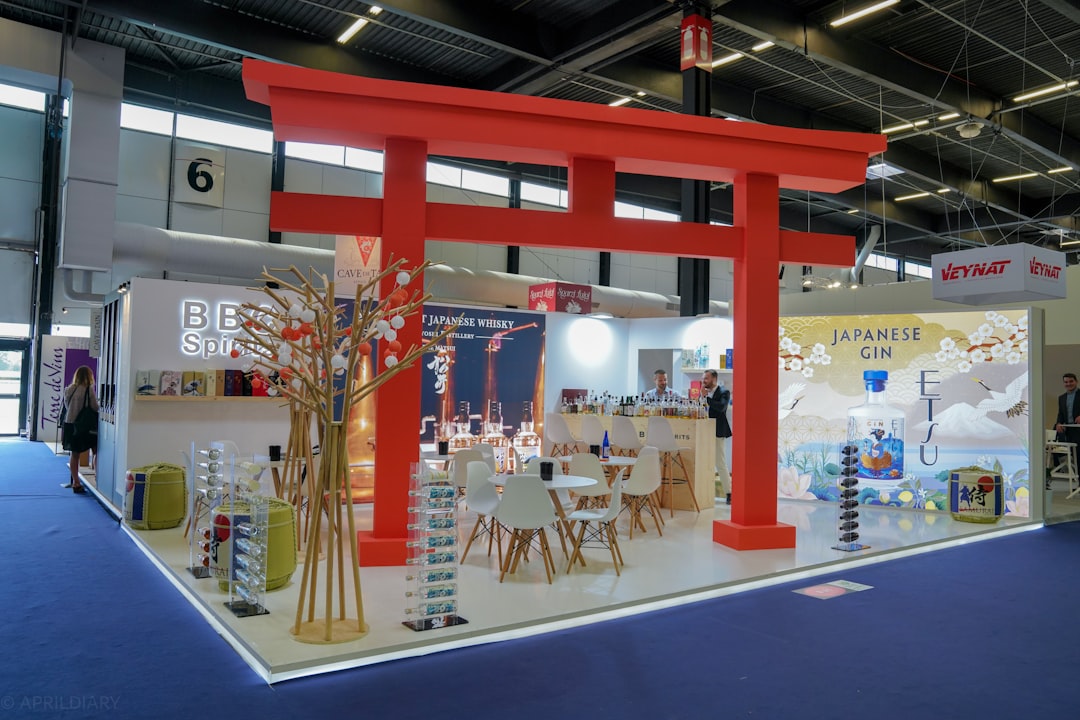
Exhibition stand cost is the line every exhibition manager underestimates at first brief and over-budgets at second commissioning. The cost is not opaque, every line is knowable and every category has a working European benchmark, but the lines are numerous, the splits between categories are inconsistent across builders, and the hidden cost categories routinely add 15-25 percent to first-time exhibitor invoices.
The discipline that separates experienced exhibitors from first-time exhibitors is line-by-line cost transparency at brief stage, not bargaining at quote stage.
This article documents the working European cost framework: the per-sqm tier benchmarks across modular, hybrid, and custom builds; the design-vs-build-vs-services split that determines how the budget is allocated; the hidden cost categories that catch first-time exhibitors; the amortisation logic that justifies investment in reusable stands; and a complete 85 sqm worked example with EUR figures showing how the budget assembles in practice.
It draws on AUMA cost-benchmark publications, FAMAB member quote disclosures, and the post-fair invoice analyses shared within European exhibition-manager communities.
Per-sqm tier benchmarks
The table below summarises observed all-in cost ranges for European exhibition stands at tier-one fairs, including space rental, build, lighting, AV, graphics, transport, install, and dismantle. It excludes staffing, marketing, travel, and on-stand hospitality catering (which is budgeted separately and varies with visitor volume).
| Tier | Per-sqm cost (EUR) | All-in for 50 sqm | All-in for 100 sqm | All-in for 200 sqm | Typical fairs |
|---|---|---|---|---|---|
| Entry modular | 380-580 | 19,000-29,000 | 38,000-58,000 | 76,000-116,000 | Vertical B2B fairs, first-time presence |
| Mid-quality modular | 550-850 | 27,500-42,500 | 55,000-85,000 | 110,000-170,000 | Bauma, EMO, ISE, Anuga, productronica |
| Hybrid | 750-1,250 | 37,500-62,500 | 75,000-125,000 | 150,000-250,000 | Hannover Messe (mid), drupa, MWC Barcelona |
| Mid-custom | 950-1,500 | 47,500-75,000 | 95,000-150,000 | 190,000-300,000 | Maison&Objet, Cosmoprof Bologna, Vivatech |
| Premium custom | 1,500-2,500 | 75,000-125,000 | 150,000-250,000 | 300,000-500,000 | Salone del Mobile, EuroShop, IFA flagship |
| Flagship custom | 2,500-4,500+ | 125,000-225,000+ | 250,000-450,000+ | 500,000-900,000+ | Watches & Wonders, Salone flagship, Hannover Messe agenda-setter |
The figures are point estimates within bands that vary by venue, country, and stand-builder hourly rates. Frankfurt, Düsseldorf, and Geneva sit at the upper end of each band due to higher local labour rates and venue-specific cost loads. Bologna, Madrid, Barcelona, and Berlin sit at the lower end. UK costs since 2021 carry a 15-25 percent premium over EU equivalents on materials originating outside the post-Brexit customs zone.
The tier most often misidentified by first-time exhibitors: mid-quality modular. The tier reads as inexpensive on paper but produces stands that perform competitively with hybrid builds when the modular system is fully exploited and the graphics, lighting, and AV are briefed with discipline. Many exhibitors who think they need hybrid actually need mid-quality modular executed well, at 30-40 percent lower total cost.
The design vs build vs services split
The working European convention for mid-quality stands splits the total cost into three categories:
- Design fees: 8-15 percent of total. Covers concept design, technical drawings, project management, venue-submission paperwork, and the design team’s hours through build and fair.
- Build: 45-60 percent of total. Covers structure (frame, walls, ceiling, flooring), graphics (print and installation), lighting (fixtures and control), AV (screens, audio, computing), furniture (rental or build-in), and the construction labour on-site.
- Services: 25-35 percent of total. Covers venue space rental, power and water connections, rigging and rigging permits, venue compliance fees, transport and logistics, install and dismantle labour, waste disposal, and storage between fairs.
The splits shift by build tier. At entry-modular tier, design fees drop to 4-8 percent because modular concepts are largely templated and the design hours per sqm are low. At premium-custom tier, design fees rise to 12-20 percent because bespoke design work consumes more design hours per sqm, and the design team is more deeply involved through fabrication and install.
“The most useful question to ask any stand quote is: what percentage of this total is design, what percentage is build, what percentage is services. Quotes where the answer is unclear are quotes where the cost categories will shift during the project. Quotes where the answer is clear are quotes where the build team has thought about the project the way you need them to.”, Common framing among brand-experience leads at tier-one European exhibitors
The hidden cost categories
The cost lines most commonly under-budgeted by first-time exhibitors:
Venue power consumption. Often billed at fair-end based on actual usage rather than at connection. A typical 75 sqm stand with mid-quality lighting and AV consumes 4-8 kW; venue billing at EUR 1.50-3.50 per kWh across a 4-day fair adds EUR 800-3,500 above the connection fee. Budget separately and verify the venue billing convention before fair open.
Rigging and rigging permits. Ceiling-suspended branding costs EUR 4,000-15,000 depending on weight, drop height, and approval class. The cost is rarely included in basic build quotes and appears as a separate venue invoice. First-time exhibitors at a venue who plan ceiling rigging without budgeting separately routinely encounter EUR 6,000-12,000 unexpected lines at venue billing.
Waste disposal at fair-end. Skip rental, disposal fees, and venue-specific waste sorting requirements add EUR 500-2,500 to fair-end costs. Most venues now invoice waste separately and apply premium charges for unsorted waste.
AV technician day rates. EUR 400-700 per day during build and fair. A typical 4-day fair with 2 build days adds up to 6 technician days, or EUR 2,400-4,200 above the AV equipment line.
Hospitality catering volume overrun. Catering typically runs at 110-130 percent of planned volume. Budget at 120 percent as the working middle estimate.
Late artwork rework. Express print fees for last-minute artwork changes run EUR 1,500-5,000 above standard timeline pricing. The line is invisible at brief but consistent across stands where artwork is committed late.
Storage between fairs. Climate-controlled storage for modular stand inventory runs EUR 200-800 per month depending on volume. Across a typical 6-month gap between fairs, the line adds EUR 1,200-4,800 that first-time exhibitors do not anticipate.
Insurance and venue liability. Stand-specific insurance runs EUR 500-2,500 depending on stand value and coverage. Venue liability schemes are typically modest (EUR 200-800) but appear as separate venue invoices.
Travel and accommodation for build team. International builds add EUR 200-500 per crew member per day for travel and accommodation, often EUR 3,000-8,000 across a typical build cycle.
The working European convention is to budget 8-12 percent contingency above the named lines to absorb hidden cost categories. Exhibitors who omit the contingency routinely produce projects that finish 10-15 percent over original budget.
Amortisation: when stand cost spreads across multiple fairs
The amortisation calculation that separates one-fair cost from multi-fair cost:
Total all-in first-fair cost ÷ expected fair appearances, plus per-fair refresh and transport costs.
A EUR 110,000 hybrid stand serving six fairs across two years amortises to:
- Initial cost: EUR 110,000 ÷ 6 fairs = EUR 18,333 per fair
- Per-fair refresh (graphics, minor structural updates): EUR 3,000-5,000 per fair
- Per-fair transport, install, dismantle: EUR 4,000-7,000 per fair
- Total per-fair amortised cost: roughly EUR 25,000-30,000 per fair
The amortised figure is substantially cheaper than commissioning six single-fair builds at EUR 40,000 each (EUR 240,000 total versus EUR 150,000-180,000 amortised across the same calendar).
The amortisation discipline requires:
- Committing to the fair calendar at brief stage so the build is engineered for repeated assembly and disassembly
- Choosing a build approach that supports the calendar, modular and hybrid amortise well; single-fair custom does not
- Climate-controlled storage between fairs to preserve material lifecycle
- Refresh budget per fair to keep graphics and minor structural elements current
Mid-cycle changes to the build approach typically destroy the amortisation logic. A stand commissioned as a six-fair hybrid that gets retrofitted as a one-off custom for a flagship appearance loses most of the amortisation benefit because the bespoke retrofit costs nearly as much as a new build.
“We started building the calendar into the stand brief about five fair cycles ago. The first six months of the new approach felt expensive because we were over-engineering the first fair. By fair four, the amortisation was visible in the budget reports. By fair seven, we were spending half what we would have spent under the old per-fair commissioning approach.”, Common post-mortem observation from European exhibition managers
The 85 sqm worked example
A mid-size industrial-technology brand commissions a hybrid stand for an 85 sqm peninsula at Hannover Messe, with planned redeployment to three additional fairs across the next 18 months (productronica Munich, EMO Milan, and Industry 4.0 Brussels). The brief targets mid-quality hybrid construction with strong lighting, modest digital integration, and reusable structural elements.
The complete cost breakdown:
Design fees (EUR 13,400)
- Concept design and 3D visualisations: EUR 6,200
- Technical drawings for venue submission: EUR 3,800
- Project management across build cycle: EUR 2,400
- Permit coordination with venue technical team: EUR 1,000
Build (EUR 64,500)
- Structure: Aluminium extrusion frame (Octanorm Maxima profiles), modular walls with bespoke insert panels, 100 mm raised platform across full footprint. Cost: EUR 22,000.
- Graphics: Hero backlit fabric wall (14 sqm) plus SEG fabric on three secondary walls (28 sqm) plus vinyl on counter wraps (8 sqm) plus ceiling SEG (38 sqm). Print and installation: EUR 8,400.
- Lighting: Track-mounted LED accents (28 fixtures), ambient downlights (16 fixtures), task lighting for meeting rooms (8 fixtures), DMX control system. Equipment and installation: EUR 9,200.
- AV: Two 65-inch touchscreens with custom configurator content, one 12 sqm P3.9 LED video wall with rented content. Equipment and integration: EUR 14,500.
- Flooring: Engineered timber surface across product display zones (40 sqm), carpet tile in meeting rooms (18 sqm), sheet vinyl in hospitality (12 sqm), plus edge trims and accessibility ramps. Surface and installation: EUR 7,400.
- Furniture build-in: Bespoke registration desk and hospitality bar. Cost: EUR 3,000.
Services (EUR 28,800)
- Space rental (85 sqm × EUR 245 per sqm at Hannover Messe peninsula rate): EUR 20,825
- Power connection and consumption: EUR 1,400
- Rigging permit and rigging install: EUR 2,800
- Transport (build warehouse to Hannover, return): EUR 1,500
- Install labour (3 build days, 6-person crew): EUR 1,200
- Dismantle labour: EUR 600
- Waste disposal and venue cleaning fee: EUR 475
Catering and hospitality (separately budgeted, EUR 6,800 for the 5-day fair)
- Standard tier catering for expected 60-90 visitors per day: EUR 4,800
- Hospitality staff (2 staff during peak hours, 1 staff off-peak): EUR 1,400
- Furniture rental (4 lounge chairs, 3 coffee tables): EUR 600
Contingency (EUR 9,000)
- Reserved at roughly 8 percent of named lines to absorb hidden cost categories including potential power overrun, catering volume overrun, and late artwork rework.
First-fair total: EUR 122,500 (all-in including catering)
Amortisation across four fairs over 18 months
- First fair (Hannover Messe): EUR 122,500
- Second fair (productronica, refresh-only): EUR 28,500, graphics refresh, transport, install, services
- Third fair (EMO Milan, refresh-only): EUR 32,000, graphics refresh, transport, install, services, Italy-specific compliance
- Fourth fair (Industry 4.0 Brussels, refresh-only): EUR 26,500, graphics refresh, transport, install, services
- Total across four fairs: EUR 209,500
- Amortised per-fair cost: EUR 52,375
The amortised per-fair cost of EUR 52,375 compares favourably with commissioning four EUR 80,000-90,000 single-fair builds (which would total EUR 320,000-360,000 across the same calendar). The hybrid amortisation saves the brand roughly EUR 110,000-150,000 across the 18-month cycle.
Cost benchmarks by venue
| Venue | Per-sqm space rate (peninsula) | Modular cost premium | Custom cost premium | Notable cost variable |
|---|---|---|---|---|
| Messe Frankfurt | EUR 280-360 | +5-10% above EU average | +8-15% above EU average | High local labour rates |
| Messe Düsseldorf | EUR 295-380 | +8-12% | +10-15% | drupa and K halls premium |
| Deutsche Messe Hannover | EUR 220-310 | Baseline | +5-10% | Mid-tier European pricing |
| Messe München | EUR 240-340 | Baseline | +5-10% | Bauma halls premium |
| Fiera Milano | EUR 260-380 | -5% below EU average | +10-18% (Salone curation) | Salone del Mobile curatorial premium |
| IFEMA Madrid | EUR 200-285 | -8 to -12% below EU average | -5% below EU average | Lower local labour rates |
| RAI Amsterdam | EUR 270-360 | Baseline | Baseline | Sustainability scoring affects total |
| ExCeL London | EUR 300-420 | +15-25% (post-Brexit material) | +15-25% | Post-Brexit import premium |
| Koelnmesse | EUR 240-330 | Baseline | Baseline | Anuga-specific catering premium |
| Messe Berlin | EUR 280-460 (IFA) | Baseline | +5-10% (IFA flagship) | IFA flagship premium |
| Fira de Barcelona | EUR 240-360 (MWC) | -5% below EU average | Baseline | MWC connectivity infrastructure premium |
The space-rate figures reflect peninsula positions at typical fair editions. Island positions add 10-15 percent; row positions reduce by 10-15 percent.
Quote-to-invoice variance: choosing builders by reliability
Working European convention: experienced builders’ quotes typically land within 5-10 percent of final invoice for projects briefed cleanly. Quotes diverge from invoice in three patterns:
- Brief changes mid-project: typically 15-30 percent variance for material brief changes (changing graphics from vinyl to SEG, adding LED walls late, switching flooring surface). The variance is honest and predictable; the lesson is to commit the brief at quote stage.
- Permit-driven design changes: typically 8-15 percent variance when venue technical-drawing review forces design modifications. Often outside the builder’s control; budget contingency accordingly.
- Service-line consumption overruns: typically 5-12 percent variance on catering volume, power consumption, AV support hours, and other consumption-billed lines. Budget at 110-120 percent of planned volume.
The most reliable quotes come from builders who require clean briefs at quote stage; the least reliable come from builders who quote on minimal information and adjust the invoice during build. Choose builders by quote-to-invoice variance reputation rather than by initial quote level.
A quote 15 percent above the cheapest alternative from a builder with documented 5 percent quote-to-invoice variance typically costs less in final delivery than the cheaper quote from a builder with documented 25 percent variance.
“The cheapest quote almost always becomes the most expensive invoice. The most useful question to ask a builder reference is not ‘were they good?’ but ‘how close was the final invoice to the original quote?’ Builders who quote tightly and invoice tightly are the builders worth paying a premium to engage.”, Common framing among Messe Frankfurt-approved stand builders
How to act on this
Build the cost framework into the brief, not the negotiation. The brief should specify the build tier, the design-vs-build-vs-services split expectation, the hidden-cost categories with named contingency, and the amortisation calendar. The /builders directory at Exhibition Stands EU filters builders by their declared quote-to-invoice variance and named references, useful for shortlisting builders by delivery reliability rather than only by quote level.
For complete cost modelling, the Booth Cost Calculator accepts brief-level inputs and produces a line-by-line cost estimate that benchmarks against the European market. For venue-specific cost factors (space rates, power, rigging, compliance fees), the /fairs hub links to each venue’s published cost guidelines.
When briefing through /rfq, include the complete brief in the technical attachments and request that quotes itemise design, build, and services separately. Builders who quote in a single bundled total are typically the builders whose final invoices diverge most from the original quote.
Related reading
- Modular vs Custom Decision Framework, how build type drives the cost framework
- Stand Types by Side Openings, orientation premiums within the cost framework
- Lighting Design, lighting-line cost detail
- Graphics and Large-Format Print, graphics-line cost detail
- Meeting Rooms and Hospitality Zones, hospitality-line cost detail
References and primary sources
- AUMA (Association of the German Trade Fair Industry) publications and exhibitor cost guidance, auma.de
- FAMAB Verband Direkte Wirtschaftskommunikation Member Pricing Disclosure (annual aggregate), famab.de
- UFI (Global Association of the Exhibition Industry) Global Exhibition Barometer, multi-region exhibition industry reference
- Messe Frankfurt Exhibitor Cost Schedule 2026
- Messe Düsseldorf Exhibitor Cost Schedule 2026
- Deutsche Messe Hannover Exhibitor Pricing 2026
- Messe München Exhibitor Cost Schedule 2026
- Fiera Milano Exhibitor Cost Schedule 2026
- IFEMA Madrid Exhibitor Pricing 2026
- RAI Amsterdam Exhibitor Cost Schedule with sustainability scoring methodology
- ExCeL London Exhibitor Cost Schedule 2026, post-Brexit import disclosure
- Koelnmesse Anuga Exhibitor Pricing 2026
- Messe Berlin IFA Exhibitor Pricing 2026
FAQFrequently asked questions
Working European per-sqm benchmarks for all-in stand cost at a tier-one fair, including space rental, build, lighting, AV, graphics, transport, install, and dismantle: entry modular EUR 380-580 per sqm, mid-quality modular EUR 550-850, hybrid EUR 750-1,250, mid-custom EUR 950-1,500, premium custom EUR 1,500-2,500, flagship custom EUR 2,500-4,500+. The figures exclude staffing, marketing, and travel.
Frankfurt and Düsseldorf sit at the upper end of each band; Bologna, Madrid, and Barcelona sit at the lower. UK costs since 2021 carry a 15-25 percent premium on imported components.
Working European convention for mid-quality stands: design fees 8-15 percent of total (concept, technical drawings, project management), build 45-60 percent (structure, graphics, lighting, AV integration), services 25-35 percent (space rental, power, water, rigging, venue compliance, transport, install, dismantle, hospitality, catering, furniture rental).
At premium-custom tier, design fees rise to 12-20 percent because bespoke design work consumes more design hours per sqm. At entry-modular tier, design fees drop to 4-8 percent because modular concepts are largely templated.
The most commonly under-budgeted lines: venue power consumption (often billed at fair-end based on actual usage, can run EUR 800-3,500 above the connection fee), rigging and rigging permits (EUR 4,000-15,000 for ceiling-suspended branding), waste disposal at fair-end (EUR 500-2,500 for skip rental and disposal fees), AV technician day rates during build and fair (EUR 400-700 per day), hospitality catering above the budgeted volume (typically 110-130 percent of plan), late artwork rework (EUR 1,500-5,000 in express print fees), and storage between fairs (EUR 200-800 per month for a typical mid-size stand).
Budget 8-12 percent contingency above the named lines to absorb these.
First-time exhibitors at a venue routinely pay 10-20 percent more than experienced exhibitors for the same stand outcome, primarily because the build team includes risk premium for managing the unfamiliar venue process. The premium covers permit-handling overhead, technical-drawing iterations the venue requires, and the operational complexity of working without prior venue-specific experience.
The defensible first-time approach is to engage a builder with named prior experience at the specific venue, even if their per-sqm rate appears higher than alternatives, the risk premium is honestly priced and the alternative is paying the premium in rework rather than in the original quote.
Whenever the stand will serve three or more fairs across a two-year window with similar footprint and brand expression. The amortisation calculation: total all-in first-fair cost divided by expected fair appearances, less per-fair refresh and transport costs.
A EUR 110,000 hybrid stand serving six fairs across two years amortises to roughly EUR 18,000-25,000 per fair including refresh, substantially cheaper than commissioning six EUR 40,000 single-fair builds.
The amortisation discipline requires committing to the fair calendar at brief stage and choosing a build approach that supports the calendar; mid-cycle changes to the build approach typically destroy the amortisation logic.
Working European convention: experienced builders’ quotes typically land within 5-10 percent of final invoice for projects briefed cleanly.
Quotes diverge from invoice when brief changes mid-project (typically 15-30 percent variance for material brief changes), when permit-driven design changes occur (typically 8-15 percent variance), or when service-line consumption exceeds plan (catering volume, power consumption, AV support hours).
The most reliable quotes come from builders who require clean briefs at quote stage; the least reliable come from builders who quote on minimal information and adjust the invoice during build. Choose builders by quote-to-invoice variance reputation rather than by initial quote level.