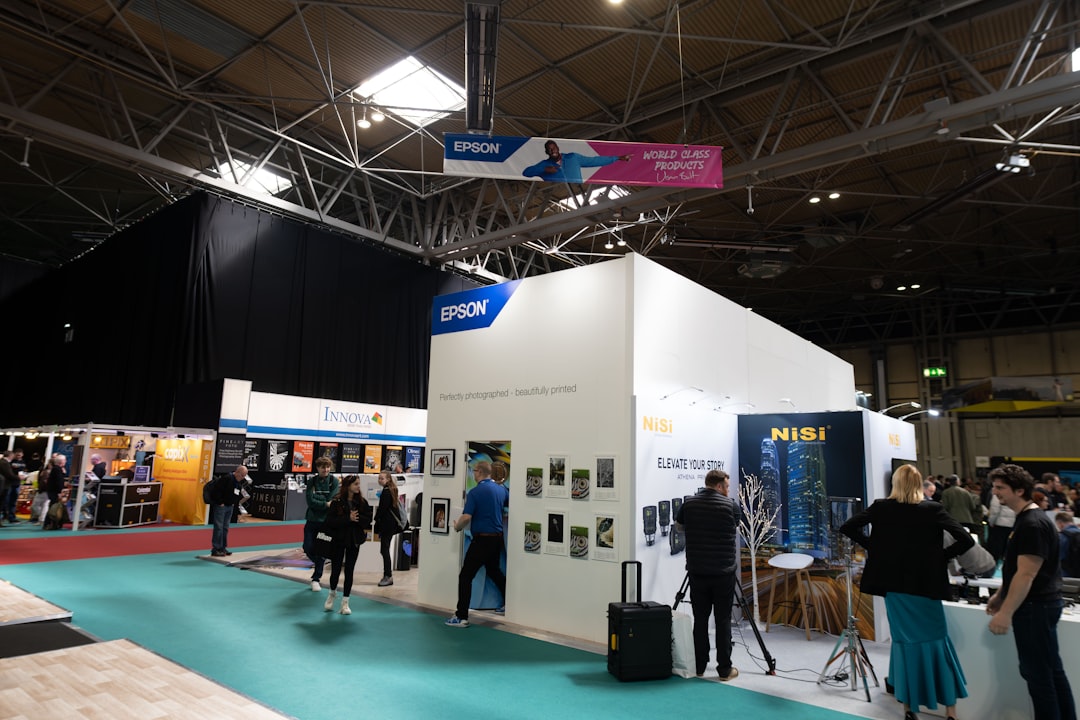
The build-type decision is the first material choice in any exhibition stand programme, and it determines roughly seventy percent of every subsequent budget and operational constraint. Choose modular and you commit to a reusable-skeleton calendar with graphic refreshes per fair.
Choose custom and you commit to bespoke fabrication, single-fair lifecycles, and a budget envelope that scales with brand ambition rather than per-square-metre logic. Choose hybrid, and most experienced European exhibitors eventually do, and you commit to a structural discipline that lets the modular skeleton survive five to eight fairs while bespoke surface treatments refresh the brand expression each cycle.
This article walks through the framework experienced exhibition managers use to make that choice. It draws on cost benchmarks observed at Messe Frankfurt, Fiera Milano, IFEMA Madrid, RAI Amsterdam, and ExCeL London, on the published practices of the major European modular manufacturers (Octanorm, Aluvision, beMatrix, T3 Systems), and on the structural assumptions baked into AUMA and FAMAB exhibitor guidance.
What the build-type decision actually decides
Choosing between modular, custom, and hybrid is not primarily an aesthetic decision. It is a budgeting decision, a logistics decision, and a calendar decision wrapped together. The aesthetic consequences follow from those operational constraints rather than driving them.
“The most expensive mistake we see exhibitors make is choosing the build type based on what they want the stand to look like, then trying to reverse-engineer the budget and timeline to match. The right order is to start with the calendar, how many fairs per year, at what tier, with what budget envelope, and let the build type fall out of that arithmetic.”, Common framing among Messe Frankfurt-approved stand builders
Three operational factors dominate the build-type choice: the number of fairs the stand must serve, the budget envelope per fair, and the lead time available before the first deployment. The four-question framework below distils those factors into a sequence experienced exhibition managers can apply in under an hour of planning.
The four-question framework
Question 1: How many fairs per year, on what footprint?
If the stand serves three or more fairs annually on a similar footprint, say, 50-100 square metres at four different fairs, modular wins decisively on lifecycle economics. The same skeleton ships, assembles, and dismantles four times for less than the cost of two equivalent custom builds.
If the stand serves one or two fairs per year on different footprints (e.g. a 30 sqm presence at IBC Amsterdam and a 120 sqm presence at IFA Berlin), the modular reuse argument weakens, and custom becomes competitive on lifecycle cost.
Question 2: What is the per-fair budget envelope?
Modular stands fit within budget envelopes of EUR 30,000-90,000 per fair for a 50-100 sqm footprint including transport, install, and dismantle. Custom stands at the same footprint start around EUR 80,000 and routinely exceed EUR 200,000 for flagship-tier execution. If the per-fair budget envelope sits below EUR 80,000, custom is structurally unavailable at any quality level worth defending, the modular path is the only honest option.
Question 3: How much lead time is available?
Modular: 8-12 weeks from order to first fair, assuming the manufacturer has frame inventory available. Custom: 6-9 months from concept to opening day, including 4-6 weeks for design and concept approval, 2-3 weeks for engineering and permit submission to the fair organiser, 8-12 weeks for fabrication, and 1-2 weeks of buffer for shipping and storage. Hybrid sits in the middle at 12-16 weeks for first build, then 6 weeks per subsequent fair.
Question 4: Is the brand judgement at this fair tied to stand quality?
At Salone del Mobile, Watches & Wonders Geneva, Maison&Objet, and EuroShop, visitors evaluate the stand itself as part of the brand. An obviously modular stand at these fairs reads as under-committed regardless of how well executed it is. Custom is the table-stakes choice.
At Hannover Messe, Bauma, EMO, productronica, Anuga, ISE, MWC Barcelona, and the entire calendar of vertical B2B trade fairs, the visitor is evaluating your product, not your booth craftsmanship. Modular is fully accepted and frequently the smarter spend.
Cost benchmarks across the three build types
The table below summarises observed all-in cost ranges for a 75 sqm stand at a tier-one European fair, including space rental, build, transport, install, dismantle, AV integration, and basic lighting. It excludes staffing, marketing, and travel.
| Build type | Per-sqm cost (EUR) | All-in for 75 sqm (EUR) | Lead time | Lifecycle | Best-fit fairs |
|---|---|---|---|---|---|
| Modular (standard) | 350-650 | 26,000-49,000 | 8-12 weeks | 6-10 fair cycles | Bauma, EMO, ISE, MWC Barcelona, Anuga |
| Modular (premium) | 500-900 | 38,000-68,000 | 10-14 weeks | 5-8 fair cycles | Hannover Messe (mid-size), Light + Building |
| Hybrid (modular skeleton + bespoke layer) | 600-1,200 | 45,000-90,000 | 12-16 weeks | 5+ fair cycles with refreshes | Hannover Messe (large), drupa, ISE, MWC Barcelona |
| Custom (mid-quality) | 800-1,400 | 60,000-105,000 | 6-9 months | Single-use typically | Maison&Objet, Vivatech, Cosmoprof Bologna |
| Custom (flagship) | 1,500-2,500+ | 113,000-188,000+ | 7-10 months | Single-use | Salone del Mobile, EuroShop, Watches & Wonders, IFA flagship |
The figures above are point estimates within bands that vary by venue, country, and stand-builder hourly rates. Frankfurt and Düsseldorf sit at the upper end of the modular-cost band due to higher local labour rates; Bologna, Madrid, and Barcelona sit at the lower end. UK costs since 2021 carry a 15-25 percent premium over EU equivalents on materials originating outside the post-Brexit customs zone.
Where modular wins decisively
Modular wins decisively when you exhibit at three or more fairs per year on the same footprint, when your budget is constrained to under EUR 700 per square metre, when you need lead time under twelve weeks, or when your booth concept does not depend on dramatic structural features (sculpted ceilings, double-deck construction, integrated bespoke joinery).
For a brand running a mid-sized European fair calendar of four to six shows annually, a modular skeleton refreshed with new graphics each fair typically delivers the same brand impact at thirty-five to fifty percent of the all-in cost of equivalent custom builds.
Modular is also the right answer for first-time exhibitors testing a new fair before committing to a flagship-scale presence. The downside of getting a fair selection wrong is dramatically lower when the stand was a EUR 35,000 modular build that can redeploy elsewhere than when it was a EUR 130,000 custom build with no second life.
The European modular ecosystem rewards exhibitors who learn it. Octanorm’s Maxima, Aluvision’s Hi-LED range, beMatrix’s frame systems, and T3 Systems’ kits are interoperable enough that experienced stand builders mix components across manufacturers to deliver stands the visitor cannot distinguish from custom builds.
Where custom wins decisively
Custom wins decisively at fairs where visitor judgement of the stand is part of the brand assessment. At Salone del Mobile, an obviously modular stand reads to design buyers as a confession that the brand does not take design seriously. At Watches & Wonders Geneva, the same. At Maison&Objet, the same. At EuroShop, where stand builders themselves exhibit, the same, though here the stakes are even higher because the audience includes the world’s leading exhibition designers.
Custom is also the correct choice for stands above 250 square metres at tier-one B2B fairs (Hannover Messe, IFA, MWC Barcelona) when the brand position is “agenda-setter” rather than “vendor on the floor.” At that scale, the modular grid becomes visible from across the hall, and the trade-off between cost and brand presence flips.
“If your brand strategy at this specific fair is to be the talking point, custom is the only mechanism that delivers it. If your brand strategy is to capture qualified leads efficiently, modular almost always wins on cost-per-lead.”, Common framing among brand-experience leads at tier-one European exhibitors
The hybrid model
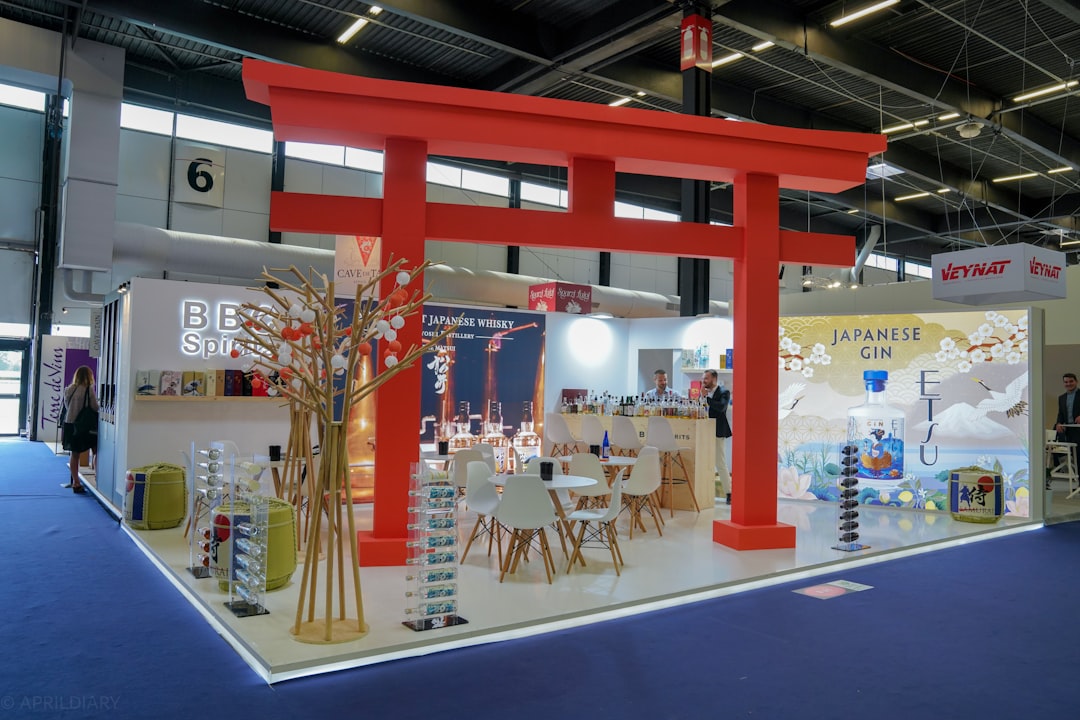
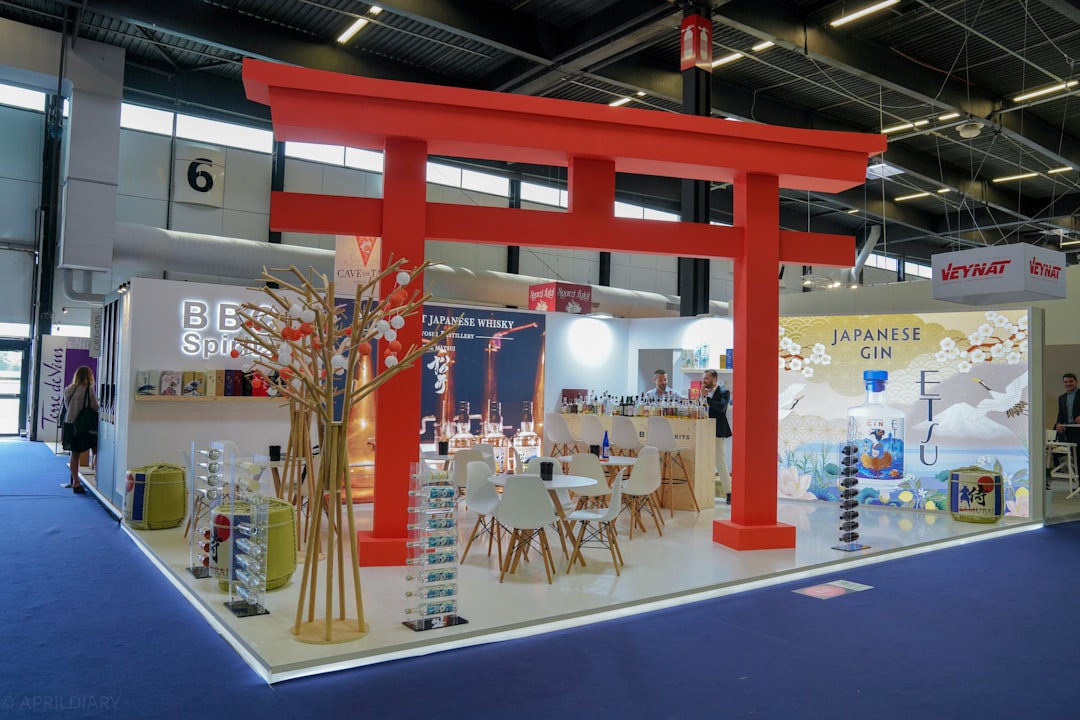
The hybrid model has emerged as the dominant approach for experienced European exhibitors running multi-fair calendars. The structure: a modular skeleton (frame, structural panels, basic lighting grid) reused across five or more fairs, with a bespoke layer (printed fabric SEG graphics, custom vinyl wraps, application-specific furniture, custom lighting fixtures, and a hospitality zone built as a bespoke insert) refreshed each cycle.
The hybrid approach delivers three commercial wins. First, the per-fair cost drops to EUR 600-1,200 per sqm rather than the EUR 1,500+ of equivalent custom builds. Second, the brand expression refreshes each fair without disposing of the underlying structure. Third, the documentation supports ISO 20121 sustainability certification more easily than single-use custom builds, which increasingly matters at venues offering reduced space rates for certified projects.
The hybrid model requires a builder fluent in both modular systems and bespoke fabrication. Not every European stand company offers both. The shortlist of pan-European builders who genuinely deliver hybrid (rather than calling modular-with-graphics “hybrid”) is short, fewer than fifty companies across the EU. The /builders directory at Exhibition Stands EU filters specifically on builders that have completed hybrid projects in the last twenty-four months.
What the three build types actually look like at five visitor distances
| Distance from stand | Modular | Hybrid | Custom |
|---|---|---|---|
| 15+ metres (aisle approach) | Brand recognition driven by graphics and lighting | Indistinguishable from custom at this distance | Brand statement driven by architecture |
| 8-10 metres (decision distance) | Clean modular look; visible if you know what to look for | Reads as custom to all but specialist visitors | Reads as custom |
| 3-5 metres (approaching) | Frame edges and panel joints visible on close inspection | Frame edges hidden behind bespoke surface treatments | Live-finish materials visible (real timber, polished concrete, brushed metal) |
| Within 2 metres (interacting) | Aluminium extrusion, connector hardware visible to trained eye | Modular skeleton visible only where the bespoke layer ends | Joinery quality on full display; no visible seams |
| Touch range (on-stand interaction) | Surface quality acceptable but not premium | Premium surface treatments where they matter most | Premium throughout |
From beyond five metres, well-lit modular stands and well-lit custom stands look comparable to most visitors. Within two metres, the differences become clear to anyone trained to look. Whether that matters depends entirely on whether your visitors are looking.
The lifecycle reality
Custom builds carry one cost. Modular builds carry many costs across many fairs. A defensible total-cost-of-ownership calculation requires looking at five years, not one fair.
“We sold our marketing director on custom for Hannover Messe 2024. By Hannover Messe 2026, we had spent more on disposing of the 2024 build and procuring the 2026 build than two consecutive years of premium modular would have cost. The ‘one fair = one build’ arithmetic only works if you genuinely never want this stand again.”, Common post-mortem observation from European exhibition managers
For a brand running four fairs per year at 75 sqm each, the five-year arithmetic looks roughly as follows:
- Pure modular path: Initial modular system EUR 50,000 + 20 fair deployments at EUR 12,000 each (transport, install, graphics refresh) + EUR 8,000 component replacement = EUR 298,000 over five years.
- Pure custom path: 20 single-use custom builds at EUR 80,000 each (mid-quality, smallest fair) = EUR 1,600,000 over five years.
- Hybrid path: Initial modular skeleton EUR 60,000 + bespoke graphic-and-furniture layer refresh at EUR 25,000 per fair × 20 fairs + EUR 12,000 component replacement = EUR 572,000 over five years.
The modular path is roughly five times cheaper than the custom path on a five-year horizon for an exhibitor running this kind of calendar. The hybrid path costs roughly twice the modular path but delivers visibly stronger brand expression, particularly at the design-led fairs in the calendar.
How to choose: a decision tree
The decision below summarises the framework in a single sequence. Walk it top-to-bottom; the first answer that matches your situation determines the build type.
- Is the brand judgement at this fair tied directly to stand quality (Salone del Mobile / Watches & Wonders / Maison&Objet / EuroShop / flagship Hannover-or-IFA presence above 200 sqm)? → Custom.
- Do you exhibit at three or more fairs per year on a similar footprint? → Modular, possibly hybrid if budget supports.
- Is your per-fair budget envelope below EUR 80,000 all-in? → Modular.
- Is your lead time below 16 weeks? → Modular, or hybrid if the modular skeleton already exists.
- Otherwise → Hybrid is the default European exhibitor choice as of 2026.
What the directory at Exhibition Stands EU lists for each build type
The /builders directory filters builders by their declared build-type specialisation. Verified modular specialists are tagged with the modular badge and the modular-system manufacturers they work with. Verified custom specialists list portfolios with named fairs and exhibitors as evidence. Hybrid builders carry both tags and typically reference five to eight years of cross-pollinated experience.
Use the build-type filter on the /builders hub to shortlist by your decision-framework answer above, then request quotes from the top three matches via /rfq.
For the calendar-level decision, how many fairs at what tier, with what cumulative budget, the Booth Cost Calculator lets you model the five-year arithmetic before committing to a build type.
Related reading
- Stand Types by Side Openings, how the row/corner/peninsula/island choice interacts with the build-type decision
- Lighting Design, why lighting strategy differs between modular and custom builds
- Materials and Finishes, what FSC, low-VOC, and reusable-material decisions look like in practice
- Stand Design Cost Breakdown, the full per-line-item cost framework underneath the EUR figures above
- Exhibiting in Germany, how the German exhibitor culture affects the modular-vs-custom default
References and primary sources
- AUMA (Association of the German Trade Fair Industry) exhibitor guidance and published cost data, auma.de
- FAMAB Verband Direkte Wirtschaftskommunikation member directory and stand-build best practices, famab.de
- Messe Frankfurt Technical Guidelines 2026, exhibitor manual section on stand construction approval
- Messe Düsseldorf Technical Guidelines 2026, sustainable stand-construction incentive programme
- ISO 20121:2024 Event Sustainability Management Systems, International Organization for Standardization
- Octanorm Maxima product specification (modular system component lifetimes)
- Aluvision Hi-LED 100 product specification (modular system component lifetimes)
- IFES (International Federation of Exhibition and Event Services) sustainable stand-construction playbook
FAQFrequently asked questions
Modular stands in Europe typically run EUR 350-650 per square metre all-in (frame, panels, graphics, lighting, transport, install, dismantle). Custom builds at mid-quality run EUR 800-1,400 per sqm, with premium custom at flagship fairs exceeding EUR 2,500 per sqm. The cost gap is consistent across major European exhibition centres, Messe Frankfurt, Fiera Milano, IFEMA, RAI Amsterdam, within roughly 10-15% local variation.
A well-maintained modular system from a reputable manufacturer (Octanorm, Aluvision, Beematrix, T3 Systems) survives 6-10 fair cycles before structural components need replacement. Graphic panels typically refresh every 1-3 fairs. Stands transported in proper flight cases by experienced crews routinely exceed the upper end of that range. The variables that shorten lifespan are aggressive handling, non-climate-controlled storage between fairs, and reusing fabric graphics past their visual prime.
Done well, yes, but it requires a builder fluent in both modular systems and bespoke fabrication.
The technique pairs a modular structural skeleton (frame, panels, basic lighting) with bespoke surface treatments: custom-printed fabric SEG graphics, branded vinyl wraps, application-specific furniture, custom lighting fixtures attached to the modular grid, and a hospitality zone built as a bespoke insert within the modular envelope.
The resulting stand reads as custom from any reasonable visitor distance while costing 30-50% less than a fully bespoke equivalent.
Custom rewards itself at fairs where stand quality is part of the brand judgement: Salone del Mobile (design), Watches & Wonders Geneva (luxury), Maison&Objet (interiors), and EuroShop (the design industry’s own showcase). At these fairs, an obviously modular stand reads as under-committed. Custom is also expected for tier-one brand presence at Hannover Messe and IFA when the booth exceeds 200 sqm.
Modular is fully accepted at Bauma, EMO, productronica, Anuga, ISE, and MWC Barcelona, fairs where visitors evaluate your product, not your booth craftsmanship.
Reusable modular systems align naturally with ISO 20121 sustainable-events documentation: components track to specific fair appearances, materials demonstrate multi-use lifecycles, and disassembly waste is documented per cycle. Single-use custom builds require more aggressive sourcing documentation (FSC timber chains-of-custody, low-VOC certifications, end-of-life disposal plans) to achieve the same ISO 20121 rating.
Several European venues now offer reduced space rates for ISO 20121 certified stand projects, Messe Frankfurt, RAI Amsterdam, and Fira de Barcelona among them, making the modular path commercially easier to defend on sustainability.
Modular: 8-12 weeks from order to first fair. Custom: 6-9 months from concept to opening day. Hybrid: 12-16 weeks for first build, then 6 weeks per subsequent fair once the modular skeleton exists. The lead-time gap matters most for first-time exhibitors deciding mid-cycle, if you’re already inside 16 weeks of a tier-one fair, custom is rarely achievable at quality, and a modular stand becomes the pragmatic choice regardless of brand-impact preferences.