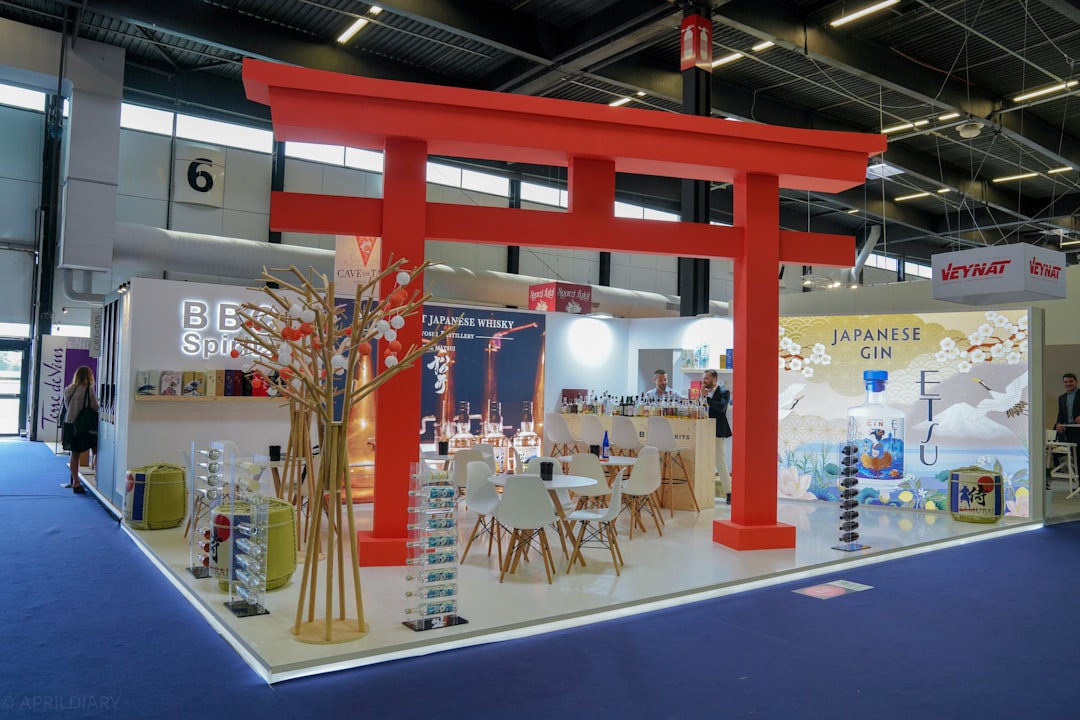

Custom exhibition stand projects fail in predictable ways. The brief gets misread, the engineering doesn’t match the venue’s ceiling-load specification, the bespoke joinery doesn’t survive freight, the install crew arrives short-handed on build day, or the dismantle leaves expensive materials abandoned in a Messe Frankfurt skip because no one budgeted for return freight.
Every one of these failures traces back to a vendor evaluation that happened too quickly, with too little structure, often based on a portfolio website and a likeable account manager.
This article gives European exhibitors a structured evaluation framework for custom stand builders. It works for projects between EUR 80,000 and EUR 2 million, for fairs from Salone del Mobile to Hannover Messe, and for first-time exhibitors as well as marketing teams running a fifteenth consecutive year of fair calendars. The framework rests on twelve evaluation criteria scored across five vendor capability areas: design, engineering, fabrication, logistics, and project management.
The objective is not to find the cheapest builder. Custom stand projects priced fifteen to twenty-five percent below market are the projects that fail on build day. The objective is to find a builder whose actual capabilities match the actual demands of your specific project at a defensible price.
The five capability areas, and what each one really means
Custom stand building is five businesses inside one trench coat. A builder strong in three of them can still deliver a flawed project. Exhibitors who evaluate only the design portfolio, by far the most common failure mode, discover the other four weaknesses on build day, when nothing can be fixed.
Design covers concept development, 3D visualisation, technical drawings, and the ability to translate brand brief into structural intent. The deliverable is a buildable design that survives engineering review.
Engineering covers structural calculation, fire-load compliance with venue-specific regulations, electrical load planning, rigging certification for ceiling and overhead elements, and the documentation packs venue technical offices require before approving the build. The deliverable is a stand the venue actually permits.
Fabrication covers in-house workshop capability, joinery quality, the metals work for custom frames and structural elements, surface finishing (lacquering, veneering, fabric stretching), and the ability to deliver bespoke components without subcontracting key items to capacity-constrained shops. The deliverable is a stand whose physical quality matches the visualisation.
Logistics covers freight planning, flight-case construction for transport, customs handling for cross-border movements, on-site sequencing of materials and crew, and dismantle logistics including waste sorting and return freight. The deliverable is a stand that arrives on time, intact, and leaves cleanly.
Project management covers communication discipline, change-order handling, fair organiser liaison, day-to-day site supervision, and the ability to absorb the inevitable surprises without passing every one back to the exhibitor’s marketing team. The deliverable is a project where the exhibitor’s team can focus on lead capture rather than operational firefighting.
“The single best predictor of custom stand project success is whether the builder has a named, experienced project manager assigned to your account from week one through dismantle. The builders who rotate PMs mid-project, or who treat PM as a junior coordination function, are the builders whose projects go sideways at the moment of maximum pressure.”, Common framing within IFES corporate-member procurement guidance, 2024-2025
The twelve evaluation criteria
The criteria below cover the five capability areas with two to three concrete tests per area. Each criterion can be scored 1-5 on observable evidence rather than vendor self-description. A defensible total score is 48 or higher out of 60. Below that threshold, the vendor is delivering on three or four capability areas but weak on the rest, and the project carries asymmetric downside risk.
| # | Criterion | Capability area | What evidence to ask for |
|---|---|---|---|
| 1 | Portfolio depth at your fair tier | Design | 3+ completed stands at the same fair tier in last 24 months |
| 2 | Brand-translation case study | Design | Walk-through of a project from brief to opening day |
| 3 | In-house engineering team | Engineering | Named engineers, professional credentials, sample drawings |
| 4 | Venue technical-office relationships | Engineering | References from technical officers at named venues |
| 5 | Workshop ownership | Fabrication | Photos and visit access to the actual workshop |
| 6 | Joinery and metals subcontracting policy | Fabrication | What is done in-house vs subcontracted |
| 7 | Flight-case fleet | Logistics | Number of cases owned, condition, dimensions |
| 8 | Cross-border freight experience | Logistics | Customs paperwork samples from recent EU and UK moves |
| 9 | Install crew employment model | Logistics | Are crew employed or hired per-project from agencies |
| 10 | Named project manager | Project management | Specific PM assigned to your project from week one |
| 11 | Change-order process | Project management | Written process, pricing, and approval workflow |
| 12 | Reference calls with recent clients | Cross-cutting | 3-5 client references from last 12 months, freely offered |
The two most diagnostic criteria, in our observation, are workshop ownership and the named project manager. Builders without owned workshops are pure integrators who depend on subcontractor capacity that fluctuates with the European fair calendar. They can deliver fine projects when the calendar is loose; they struggle in March-April peak season around Hannover Messe and EuroShop.
Builders who assign a named PM from week one have built operational discipline around exhibitor service; those who hand off mid-project have not.
Portfolio depth: what to actually look for
A custom stand portfolio is the easiest thing for a builder to embellish. The relevant question is not how impressive the portfolio looks but whether it contains projects analogous to yours, at your fair tier, in your industry vertical, executed within the last twenty-four months.
Three portfolio tests separate substantive builders from impressive websites. First, ask for three completed stands at the same fair tier as your target fair, with dates, footprints, and budget bands. A builder whose tier-one fair portfolio is mostly Hannover Messe 2019 and earlier is a builder whose senior team has likely moved on.
Second, ask whether the builder will introduce you to the exhibitor whose stand you most admire in their portfolio. Reluctance here is diagnostic. Third, ask the builder to walk through the project that went wrong, every active builder has one, and the way they discuss it reveals organisational learning.
“If a stand builder can show you three projects in the last twenty-four months at your fair tier, and can connect you directly to two of those exhibitors for reference calls, you are looking at a serious builder. If they want to show you a project from 2019 instead, you are looking at a builder whose best work is behind them.”, Common framing among FAMAB working-group senior exhibition managers
Engineering: the hidden differentiator
Engineering capability is invisible to exhibitors until it isn’t. The difference between builders with strong engineering teams and those without doesn’t show up in the design proposal, both will produce attractive renders. It shows up when the venue technical office rejects the rigging plan three weeks before opening, when the fire load calculation reveals the planned material specification won’t pass, or when the integrated technology load exceeds the hall’s electrical allocation.
Builders with strong engineering keep credentialled structural engineers on staff, maintain working relationships with the technical offices at Messe Frankfurt, Messe Düsseldorf, Fiera Milano, IFEMA Madrid, RAI Amsterdam, and the other major European venues, and submit technical packs that get approved on first review. Builders with weak engineering subcontract these calculations and submit packs that get bounced back for revision, costing one to three weeks on the project schedule.
The diagnostic is simple. Ask the builder to walk you through a recent technical pack submission to a named venue. A builder with strong engineering will show you stamped drawings, approval correspondence, and proudly explain the engineering decisions. A weak builder will say the engineer is external and the documents aren’t readily shareable.
Fabrication: the workshop visit test
The fabrication capability test is straightforward: ask to visit the builder’s workshop. Builders with serious in-house fabrication welcome the visit because the workshop is their best demonstration. Builders who outsource most fabrication find reasons to decline or to schedule the visit far in the future.
What to look for during the visit. First, the size and condition of the workshop floor, a serious European custom builder runs 800-3,500 square metres of workshop with CNC routing, edge banding, spray booths for lacquering, fabric stretching frames, and metals fabrication adjacent to joinery. Second, the work in progress, visible projects in various stages of completion suggest a builder running stable utilisation.
Third, the staff, joiners, sprayers, metals fabricators visibly working, not a thin crew of senior staff with the rest subcontracted.
The fabrication subcontracting policy is the second test. Every European custom builder subcontracts some elements, specialty lighting, audiovisual integration, large-format printing, often soft seating fabrication. The relevant question is what stays in-house. Builders who keep joinery, metals, surface finishing, and assembly in-house deliver consistent quality and absorb delays internally. Builders who subcontract these core functions become passing-the-blame nodes when something goes wrong.
| Element | Reasonable to subcontract | Should be in-house |
|---|---|---|
| Joinery and casework | No | Yes |
| Metals fabrication for custom frames | No | Yes |
| Surface finishing (lacquer, veneer) | No | Yes |
| Final assembly and quality control | No | Yes |
| Large-format graphics printing | Yes | Optional |
| AV and digital integration | Yes | Optional |
| Specialty lighting fixtures | Yes | Optional |
| Soft seating and upholstery | Yes | Optional |
| Cut flowers, plants, soft styling | Yes | No |
| Catering and hospitality service | Yes | No |
Logistics: the unsexy capability that wins or loses fair week
Logistics capability decides whether your stand actually exists when the fair opens. Three concrete tests separate strong logistics from weak.
The first is the flight-case fleet. Custom stand components survive multiple fair cycles only when shipped in purpose-built flight cases, purpose-cut foam inserts, latched closures, wheels, stacking-rated construction. Builders with serious logistics own their flight cases and maintain them between fairs. Builders without rent flight cases from third parties, which adds EUR 1,200-4,500 per project and means components return from each fair more damaged than necessary.
The second is cross-border experience. A builder shipping from a German workshop to a Spanish fair routinely manages customs documentation, transit insurance, and route planning across multiple jurisdictions. A builder whose work is mostly domestic struggles with these the first few times. Ask for samples of recent customs paperwork for cross-border European moves, and specifically for any UK-EU moves post-Brexit.
The UK-EU transition has separated builders who adapted from those who quietly stopped bidding cross-channel projects.
The third is install crew employment. Builders who employ their install crews directly deliver consistent quality because the crew has done the builder’s stand systems before. Builders who hire install crews per-project from agencies face quality variance, sometimes excellent, sometimes catastrophic. The diagnostic question is direct: are the install crew on your project employed by the builder or hired per-project?
At the major German and Italian builders, expect direct employment. At smaller builders, expect a mix; agency-only crews are a yellow flag.
“The single most important capability we assess in a custom builder is whether they own their flight cases and employ their install crews. Those two facts predict eighty percent of the project outcome. Everything else is recoverable; those two are not.”, Common assessment criterion within UFI corporate-member procurement teams
Project management: how to spot operational discipline
Project management is the easiest capability to fake during the sales process and the hardest to recover from when it fails mid-project. Three observable tests reveal real PM capability.
First, ask which named individual will manage your project, when they were assigned, what their other concurrent projects are, and how many years of stand-project experience they have. A serious builder will name the PM in the first sales meeting, share their CV, and disclose their current portfolio load. A weak builder will hedge (“we’ll assign someone once the project starts”) or rotate names across meetings.
Second, ask for the change-order process in writing. Every custom project has change orders, brand decisions shift, fair organiser requirements change, materials become unavailable. The relevant question is how the builder handles them.
A defensible process includes written change requests, priced impact analysis within 48 hours, exhibitor approval before work proceeds, and updated drawings reflecting approved changes. Builders without a written process price changes after the fact, which is where projects blow their budgets.
Third, ask to see a sample project communication trail from a recent comparable project. Names redacted, the artefact reveals communication cadence, level of detail, and how decisions get documented. Builders with strong PM produce communications that read like project archaeology, anyone joining the project could pick up where the last person stopped. Weak PM produces sporadic emails and missed details.
Pricing transparency: the line-item test
Custom stand quotes that compress everything into a single number or two are quotes designed to obscure margin. A defensible custom quote runs eight to fifteen pages and itemises design, engineering, materials, fabrication labour, finishing, AV and lighting, transport, install crew, dismantle crew, project management, and contingency. Each line should be priced with backing assumptions visible.
The table below shows a defensible quote structure for a 150 sqm custom stand at a tier-one European fair with a EUR 220,000 all-in budget. The exact figures will vary, but the line-item structure should match.
| Cost line | EUR | % of total | Notes |
|---|---|---|---|
| Design and visualisation | 14,000 | 6.4% | Concept, 3D, technical drawings |
| Engineering and venue submission | 8,500 | 3.9% | Structural calcs, fire load, rigging |
| Materials (timber, panels, finishes) | 38,000 | 17.3% | FSC-certified where applicable |
| Joinery and metals fabrication | 52,000 | 23.6% | In-house workshop labour |
| Surface finishing | 16,500 | 7.5% | Lacquer, veneer, fabric stretching |
| Graphics production | 12,000 | 5.5% | Large-format print, fabric SEG |
| Lighting (fixtures + DMX) | 14,500 | 6.6% | Track, spots, accent fixtures |
| AV and digital | 18,000 | 8.2% | Screens, audio, content playback |
| Transport (round trip + customs) | 8,500 | 3.9% | Flight-cased freight |
| Install crew (build week) | 14,000 | 6.4% | 6-8 crew, 4 days |
| Dismantle crew | 6,000 | 2.7% | 4 crew, 1.5 days |
| Project management | 10,500 | 4.8% | Senior PM from week one |
| Contingency | 7,500 | 3.4% | Reserved for change orders |
| All-in total | 220,000 | 100% | EUR 1,467 per sqm |
Three diagnostics on this kind of breakdown. First, design plus engineering should run six to ten percent of total, lower suggests the builder is undervaluing planning quality; higher suggests they are loading margin into intangible lines. Second, materials plus fabrication labour should run roughly forty to fifty-five percent, the actual physical stand should dominate the cost.
Third, contingency at three to five percent is healthy; zero contingency means the builder is hiding the contingency in other lines and will pad change orders later.
Reference calls: the questions that surface real information
Most exhibitors run reference calls and ask the wrong questions. “How was working with this builder?” produces useless platitudes. The questions below produce diagnostic answers.
Ask the reference about the worst day of their project, every project has one, and the answer reveals how the builder behaves under pressure. Ask what surprised them after the contract was signed, the answer reveals what the builder undersold during the sales process.
Ask whether the install crew on build day were the same people promised in the proposal, the answer reveals whether the builder honours staffing commitments. Ask how change orders were handled, the answer reveals pricing discipline. Ask, candidly, whether they would hire this builder again, and what would have to be true for the answer to be yes, the answer reveals genuine satisfaction.
“Reference calls produce useful intelligence only when the questions are specific enough that the reference cannot answer them generically. ‘Tell me about the dismantle’ produces a real answer. ‘How was the experience overall’ produces nothing usable.”, Common procurement guidance within AUMA member exhibitor teams, 2025
The shortlist process
The recommended process: identify eight to twelve builders from the /builders directory filtering on city, system specialisation, and project history. Shortlist to four to six for detailed RFQ. Run the twelve-criterion evaluation on the responses. Shortlist again to two finalists. Visit both workshops. Score finalists across the criteria. Choose.
This process takes four to seven weeks for a tier-one custom project and rewards the time investment. The /rfq form circulates a custom stand brief to vetted European builders and returns three to five matched responses within ten working days, which compresses the first two stages of the shortlist process.
For projects under EUR 100,000, the same framework applies in compressed form, three to four builders, two finalists, one workshop visit, two-week evaluation. The relative weighting of criteria shifts slightly; engineering complexity matters less, but logistics and PM matter just as much.
Red flags that should end the conversation
Six builder behaviours should end a vendor evaluation regardless of how attractive the rest of the proposal looks.
The first is reluctance to share recent client references. A builder confident in their recent work offers references unprompted. A builder who hedges is hiding something specific and recent.
The second is reluctance to allow a workshop visit. Custom fabrication capability is observable; builders who decline observation usually don’t have what they claim.
The third is hand-waving about engineering. “We have a great engineer we work with” is not an engineering capability; that is subcontracting the most critical function in custom stand work.
The fourth is pricing fifteen to twenty-five percent below market for the specification. Custom stand work has thin margins. A builder dramatically underpricing the market is either making an error they will recover via change orders, or running close to insolvency and prioritising cashflow over project quality.
The fifth is rotating project managers across meetings. If you’ve met three different “primary contacts” before signing, you will meet five or six during execution, and no one will own the project.
The sixth is opaque change-order pricing. Builders who won’t commit to a written change-order process before signing will price every mid-project change to maximise margin. This is where good projects go wrong.
What this all costs in time
A serious vendor evaluation for a custom stand project consumes thirty to seventy hours of exhibitor team time across the four-to-seven-week shortlist process. That investment is not optional, projects evaluated in under twenty hours fail at roughly twice the rate of properly evaluated projects, according to FAMAB working-group post-mortems on stand projects that ended poorly.
For exhibitors running fewer than two custom projects per year, the time investment per project is high but tolerable. For exhibitors running four or more, the investment pays back through builder-pool development: by year three, the same exhibitor has worked with four or five vetted builders, knows their capability profiles, and can run shorter evaluation cycles by reusing trusted vendors for analogous projects.
The /booth-design/modular-vs-custom decision guide covers when to commit to custom in the first place; the /booth-design/stand-design-cost-breakdown guide covers expected per-sqm costs across European fairs; and the /booth-design/double-decker-stands guide covers the additional engineering criteria when custom involves two-storey construction.
References
- FAMAB Communication Association, “Best Practices in Custom Stand Vendor Selection,” 2024 white paper
- AUMA (Association of the German Trade Fair Industry) exhibitor procurement guidance for the DACH region
- UFI Global Exhibition Barometer, 35th edition, 2025
- IFES (International Federation of Exhibition and Event Services), “Procurement Best Practices for Custom Exhibition Stand Projects,” 2024 guidance
- Messe Frankfurt Technical Office, “Stand Builder Approval Process and Technical Submission Standards,” 2026 edition
- ISO 20121:2024, “Event sustainability management systems - Requirements with guidance for use,” International Organization for Standardization
- RAI Amsterdam, “Approved Stand Builders Programme: Criteria and Renewal Process,” 2025
FAQFrequently asked questions
Identify eight to twelve builders from initial research, shortlist four to six for detailed RFQ, then reduce to two finalists for workshop visits and reference calls. The full process takes four to seven weeks for tier-one custom projects and three to four weeks for projects under EUR 100,000.
Evaluating fewer than three serious candidates produces information-poor decisions; evaluating more than six wastes builder and exhibitor time without improving outcome quality. Use the /rfq form to circulate a brief to vetted builders, which compresses the first two stages.
Yes, for projects above EUR 80,000 the workshop visit is non-negotiable. Custom fabrication capability is observable in person, workshop floor size, condition of CNC and finishing equipment, work in progress, visible staff working on current projects. Builders with serious in-house fabrication welcome visits; builders who outsource most fabrication find reasons to delay.
A defensible European custom builder operates 800-3,500 square metres of workshop with joinery, metals, surface finishing, and assembly under one roof. Reluctance to host a visit is the single strongest red flag in the evaluation.
Avoid generic questions like ‘how was the experience.’ Ask specifically: tell me about the worst day of the project; what surprised you after the contract was signed; were the install crew on build day the same people promised in the proposal; how were change orders handled and priced; would you hire this builder again, and what would have to change for the answer to be yes.
These questions produce diagnostic answers because they cannot be answered with generic platitudes. Speak to three to five references from the last twelve months; reluctance to provide recent references is a red flag.
Custom stand quotes priced fifteen to twenty-five percent below market for the specification are the projects most likely to fail.
Custom fabrication has thin margins, and dramatically underpriced quotes usually reflect one of three things: a builder making a costing error they will recover via change orders, a builder close to insolvency prioritising cashflow over project quality, or a quote that omits scope the exhibitor assumed was included.
Always compare quotes line-by-line against a defensible cost structure (design + engineering 6-10%, materials + fabrication 40-55%, contingency 3-5%). A quote that compresses everything into two or three numbers is hiding something.
Engineering capability is the hidden differentiator that decides whether the venue approves your stand on first technical-pack submission or rejects it three weeks before opening.
Builders with strong engineering keep credentialled structural engineers on staff, maintain working relationships with venue technical offices at Messe Frankfurt, Messe Düsseldorf, Fiera Milano, IFEMA Madrid, RAI Amsterdam and other major European venues, and submit packs that approve cleanly.
Builders with weak engineering subcontract calculations and submit packs that bounce back for revision, costing one to three weeks of project schedule. Ask to walk through a recent technical-pack submission to a named venue, strong builders share stamped drawings and approval correspondence proudly.
A defensible change-order process is documented in writing before contract signing and includes four elements: written change requests submitted by either party; priced impact analysis returned within forty-eight hours showing cost, schedule, and resource implications; explicit exhibitor approval required before any work proceeds on the change; and updated drawings reflecting all approved changes circulated within five working days.
Builders without a written process price changes after the fact, which is where projects blow their budgets in the final fortnight before opening. Ask for the change-order policy in writing during the RFQ stage, not after signing.