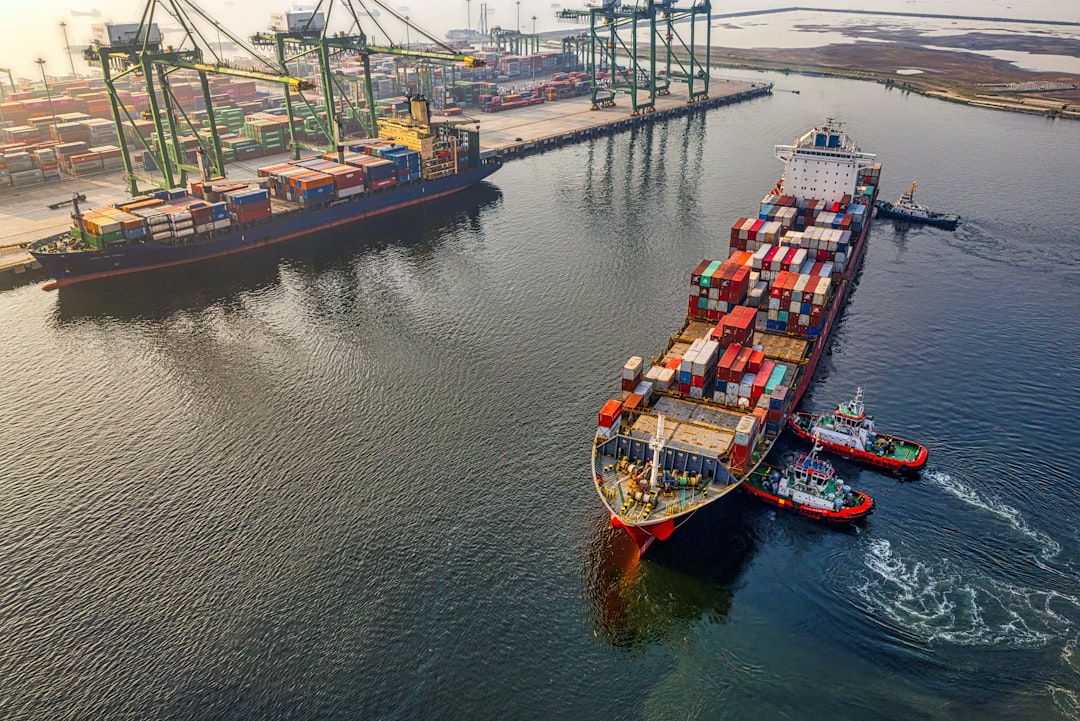
Freight forwarding is the most under-budgeted line item on European exhibition projects and the most common source of opening-day failure.
A stand crate that misses its two-hour marshalling-yard window at Messe Frankfurt rarely arrives on the hall floor before the second build-up day, and a stand that has not been assembled by the end of build-up day two at a six-day Frankfurt fair is at material risk of failing the safety walk-through that gates final hall release.
The forwarder decision sits upstream of all of this, and getting it wrong is expensive in ways that do not show up on the original quote.
This article walks through the three structural options European exhibitors face, the venue’s official appointed forwarder, a consolidated groupage service, or a dedicated direct charter, and gives the framework experienced exhibition managers use to choose between them. The cost benchmarks reference 2026 published tariffs at Messe Frankfurt, Messe Dusseldorf, Fiera Milano Rho, IFEMA Madrid, RAI Amsterdam and Koelnmesse, plus the European groupage networks of Schenker, Kuehne+Nagel, BTG and DSV.
What the official-forwarder system actually is
Every major continental European exhibition venue appoints one or two official forwarders who hold an effective monopoly on the inside-the-fence operations. The appointment covers the marshalling yard (where trucks queue for hall-floor access), the forklift and crane fleet operating inside the halls, the empty-case storage during the show, and the post-show outbound consolidation.
The official forwarder is also the single accountable party for customs clearance on the venue side for non-EU shipments and for the ATA Carnet workflow once the goods cross the venue boundary.
“Treat the official forwarder as a venue facility, not a vendor you negotiate down. Their rates are published, their slot allocation is rule-based, and trying to route around them inside the venue boundary almost always costs more than just paying the tariff.”, Common framing among AUMA-member exhibition logistics leads
The official forwarders by venue, as published in the 2026 technical guidelines, are dominated by a small set of pan-European specialists. Schenker and Kuehne+Nagel hold the majority of German appointments. BTG and Expotrans dominate Italy. Sit-Group and DHL Trade Fairs cover IFEMA Madrid. DSV and other regional specialists handle parts of the Iberian and Portuguese fair calendar.
ExCeL London’s exhibitor logistics partner should be confirmed directly with the venue, as appointed-forwarder arrangements change over time. Brussels Expo uses Ziegler. The named appointment matters because the inside-the-venue handling rate is fixed by the official forwarder and applies regardless of who carried the long-haul leg.
The three structural shipping options
Option 1: Official forwarder end-to-end
You hand the shipment to the official forwarder at origin (your stand builder’s workshop or your warehouse) and they handle every leg through to delivery on the stand. They also handle the return leg, the empty-case storage during the show, and any customs and ATA Carnet workflow on both ends.
Cost: roughly 15-25 percent above the equivalent split arrangement, but with a single chain of custody and a single insurance liability. Best for non-EU exhibitors, for fairs where ATA Carnet is in play, and for any tier-one fair where opening-day certainty outweighs cost optimisation.
Option 2: Consolidated groupage to the venue, official forwarder for the last mile
You book a consolidated groupage service from a major European hub (Frankfurt-Hahn, Rotterdam, Antwerp, Liege, Milan-Malpensa cargo) into the venue’s marshalling yard, where the official forwarder takes over for the hall-floor leg. Groupage rates from a Northern European hub into a tier-one venue typically run EUR 180-260 per cubic metre door-to-marshalling-yard for transit times of 5-8 working days.
The official forwarder’s marshalling-yard-to-stand tariff adds EUR 35-65 per cubic metre or EUR 18-28 per 100 kg, whichever is higher. Best for shipments under 12 cubic metres and for exhibitors with no fragility-critical structural elements.
Option 3: Direct dedicated truck, official forwarder for the last mile
You charter a dedicated 40-tonne truck (volume capacity roughly 100 cubic metres, payload roughly 24 tonnes) from origin to the marshalling yard, where the official forwarder takes over. Dedicated trucking from a Northern European workshop to a Mediterranean fair runs EUR 2,800-4,200 one-way for 2-3 day transit.
Best for shipments above 18 cubic metres, for stands with fragile structural elements (LED walls, glass partitions, polished joinery, custom lighting fixtures), and for any project where the timing risk of consolidated groupage is unacceptable.
Cost benchmarks across the three options
The table below summarises observed all-in cost ranges for moving a 25 cubic-metre, 3,500 kg stand shipment from a stand builder’s workshop in the Ruhr region (Germany) to a tier-one European fair. Figures include long-haul transport, marshalling-yard delivery, hall-floor handling, empty-case storage during a five-day show, and return to origin.
| Option | Long-haul leg (EUR) | Last-mile handling (EUR) | Empties storage (EUR) | Return leg (EUR) | All-in round trip (EUR) |
|---|---|---|---|---|---|
| Official forwarder end-to-end | 3,200-4,800 | included | included | 3,200-4,800 | 7,200-10,400 |
| Groupage + official last-mile | 4,500-6,500 outbound | 1,200-1,800 | 700-1,200 | 4,500-6,500 inbound | 10,900-16,000 |
| Dedicated truck + official last-mile | 2,800-4,200 outbound | 1,200-1,800 | 700-1,200 | 2,800-4,200 inbound | 7,500-11,400 |
The figures look counter-intuitive on first reading. Groupage often comes out as the most expensive option once both legs and the last-mile handling are added, because the per-cubic-metre groupage rate is calibrated against smaller shipments and stops being competitive above 15-18 cubic metres.
End-to-end official forwarding and dedicated trucking arrive at roughly the same total, with the dedicated truck winning slightly on cost but the official forwarder winning decisively on the single-chain-of-custody benefit.
Where the marshalling-yard slot decides the project
Every large European venue operates a marshalling yard where inbound trucks queue for hall-floor access during build-up. The yard has finite capacity, the hall doors have finite capacity, and the official forwarder allocates two-hour delivery slots to keep both moving. Missing your slot at Messe Frankfurt for a fair like Light + Building or Automechanika triggers a reslotting penalty of EUR 200-500 and a high probability that the next available slot is overnight or on the second build-up day.
“We had a client miss the marshalling-yard window at Ambiente by ninety minutes in 2024 because the driver took the wrong autobahn exit. The reslotting cost EUR 400, the new slot was at 02:30 the next morning, and the stand build crew worked a sixteen-hour shift to recover the schedule. The original quote had not budgeted for any of that.”, Common post-mortem observation from Frankfurt-experienced logistics coordinators
The marshalling-yard booking system at Messe Frankfurt opens 90-120 days before the fair, and prime daytime slots on the first build-up day are typically allocated within 72 hours of the system opening. Fiera Milano Rho operates a similar system on a 60-90 day window. IFEMA Madrid and RAI Amsterdam open 45-60 days out. Koelnmesse and Messe Dusseldorf both operate on roughly 60-day windows.
Treat the slot booking as part of the stand-space contractual obligation, not as an optional logistics task to be handled later.
What happens to empty cases during the show
The empty-case management is the single most under-discussed part of the forwarder relationship, and it is where the official forwarder’s monopoly bites hardest. After build-up, your stand crates need to disappear. They cannot stay on the hall floor (a fire-load violation), they cannot stay in the marshalling yard (which needs to clear for show-period deliveries), and they cannot go back to origin and return for dismantle (the freight maths does not work for a one-week show).
The official forwarder’s solution is the dedicated empties warehouse adjacent to the venue. Storage runs EUR 25-45 per cubic metre for the full show period at most German venues, EUR 18-35 per cubic metre at Italian and Spanish venues, and EUR 30-55 per cubic metre at the more constrained London and Amsterdam venues.
The forwarder collects the empties from your stand on the last build-up day, returns them to your stand on the first dismantle day, and charges the storage fee plus the two-way transport between the venue and the warehouse (typically bundled into the per-cubic-metre storage rate, but worth confirming on the quote).
The operational point is that this service is not negotiable. The venues do not permit empty crates to stay anywhere else during the show, and self-storage off-site is rarely cheaper once the round-trip transport is included.
Consolidated vs direct: a working decision rule
The maths breaks at roughly 15 cubic metres for most pan-European lanes. Below that threshold, consolidated groupage wins on cost. Above that threshold, a dedicated truck wins on cost, and the timing and damage-risk advantages of the dedicated truck become decisive.
The cost crossover varies by lane, Frankfurt to Milan crosses over earlier (around 12 cubic metres) because the lane is heavily competed, while Frankfurt to Madrid crosses over later (around 18 cubic metres) because dedicated truck capacity on that lane is scarcer and priced accordingly.
| Shipment size | Recommended option | Why |
|---|---|---|
| Under 8 cubic metres | Consolidated groupage | Dedicated truck capacity is wasted; groupage rate is competitive |
| 8-15 cubic metres | Consolidated groupage with fragility audit | Cost still favours groupage; review co-load risk for LED walls and glass |
| 15-25 cubic metres | Dedicated truck | Cost crossover reached; timing certainty justifies the marginal premium |
| Above 25 cubic metres | Dedicated truck, possibly two trucks staggered | Single truck below capacity wastes the charter; stagger to manage marshalling-yard slots |
The fragility audit matters because consolidated groupage means co-loading with whatever else the forwarder is shipping on that lane. A LED wall packed in a custom flight case is fine. A LED wall packed in a builder’s standard plywood crate sharing a truck with industrial machinery is a different risk profile. If the stand contains polished joinery, glass partitions, or pre-assembled LED arrays, the dedicated-truck threshold drops by roughly five cubic metres.
ATA Carnet and customs workflow on the official-forwarder side
For non-EU exhibitors (UK, Swiss, US, Asian, Middle Eastern brands) bringing goods into the EU for a fair, the ATA Carnet is the standard temporary-import instrument and the official forwarder is the standard handler of the venue-side workflow.
The forwarder receives the Carnet from the originating chamber of commerce, presents it at the EU border on inbound, presents it again on outbound, and returns the discharged Carnet to the originating chamber.
Carnet processing fees on the forwarder side typically run EUR 80-180 per shipment in addition to the Carnet itself (which the exhibitor obtains from their national chamber for EUR 250-500 plus a security deposit calculated as a percentage of the goods value).
See the companion article on Customs and ATA Carnet for non-EU exhibitors for the full Carnet workflow, the chamber-of-commerce timelines, and the security-deposit calculations.
How to act on this
Freight decisions are settled by the tariff, the slot and the shape of your shipment, and the exhibitors who avoid opening-day trouble make those calls at contract signature rather than at loading. Approach official forwarding, groupage and empty-case storage in the following way:
- Treat the official forwarder as a venue facility, not a vendor. Read their published tariff before you negotiate anything.
- Book the marshalling-yard slot at the same time you sign the stand-space contract. Treat the slot date as a contractual obligation.
- Calculate the dedicated-truck-vs-groupage crossover for your specific shipment size and lane. The default at 15 cubic metres is a starting point, not a final answer.
- Audit your shipment for fragility before defaulting to groupage. LED walls, glass, and pre-assembled joinery shift the decision toward a dedicated truck.
- For non-EU origin, book the official forwarder end-to-end. The Carnet workflow alone justifies the 15-25 percent premium.
- Budget for the empty-case storage as a non-negotiable line item at EUR 25-55 per cubic metre depending on venue.
- Confirm the reslotting penalty schedule with the official forwarder in writing before build-up. EUR 200-500 per missed slot is the published norm; some venues run higher for prime daytime slots at flagship fairs.
Related reading
- Customs and ATA Carnet for Non-EU Exhibitors, the temporary-import workflow that sits underneath the freight decision
- Shipping Timelines and 2-Hour Delivery Windows, how the marshalling-yard schedule cascades into stand-build timing
- On-Site Handling and Rigging, the forklift and crane tariffs once the freight is on the hall floor
- Storage Between Shows, what to do with the stand between fairs to avoid round-trip freight every time
- Build-Up and Dismantle Scheduling, how the inbound and outbound freight slots map onto the build calendar
References and primary sources
- Messe Frankfurt Technical Guidelines 2026, exhibitor manual section on logistics, marshalling yard and official forwarders
- Messe Dusseldorf Technical Guidelines 2026, official forwarder appointments and tariff schedule
- Fiera Milano Rho exhibitor manual 2026, BTG and Expotrans tariff schedule
- IFEMA Madrid exhibitor services manual 2026, Sit-Group and DHL Trade Fairs appointment
- AUMA, “Successful Trade Fair Participation” guide, Association of the German Trade Fair Industry, auma.de
- Schenker Trade Fairs published tariff schedule, dbschenker.com
- Kuehne+Nagel Exhibition Logistics service catalogue
- BTG Expologistics published rates, Italian venues
- ICC ATA Carnet system documentation, International Chamber of Commerce, iccwbo.org
- ADSp (Allgemeine Deutsche Spediteurbedingungen) 2017 standard terms for German freight forwarding
FAQFrequently asked questions
Not for the long-haul leg into the city or region, but effectively yes for the last mile onto the hall floor at most German, Italian and Spanish venues.
Messe Frankfurt, Messe Dusseldorf, Fiera Milano Rho and IFEMA Madrid each appoint one or two official on-site forwarders (Schenker and Kuehne+Nagel dominate the German venues, BTG and Expotrans dominate Italy, Sit-Group and DHL Trade Fairs dominate IFEMA) who control the marshalling yard, the forklift fleet inside the halls and the empty-case storage during the show.
Your own carrier can deliver to the marshalling yard, but the official forwarder will handle the hall-floor leg at a fixed handling tariff of roughly EUR 35-65 per cubic metre or EUR 18-28 per 100 kg, whichever is higher.
Consolidated groupage from a single Northern European hub (Frankfurt, Rotterdam, Antwerp) into a Mediterranean fair typically runs EUR 180-260 per cubic metre door-to-stand, with transit times of 5-8 working days. A dedicated 40-tonne truck on the same lane runs EUR 2,800-4,200 one-way, with 2-3 day transit.
For a 25 cubic-metre exhibitor, the maths breaks roughly even on cost but the dedicated truck wins decisively on timing certainty and the absence of co-loaded cargo damaging your crates. For shipments below 12 cubic metres, consolidated almost always wins on cost.
For shipments above 18 cubic metres or with fragile structural elements (LED walls, glass partitions, polished joinery), a dedicated truck is the defensible choice.
Book the official forwarder end-to-end when the fair is outside the EU (Geneva for Watches & Wonders, London ExCeL post-Brexit), when ATA Carnet processing is required, or when the fair manual mandates a single chain of custody for security or insurance reasons.
Booking end-to-end also collapses the liability boundary so that a damaged crate becomes one forwarder’s problem rather than a finger-pointing exercise between three carriers. The premium for end-to-end official is roughly 15-25 percent over a split arrangement, and most experienced European exhibitors consider it cheap insurance for tier-one fairs.
At Messe Frankfurt for the big fairs (Light + Building, Ambiente, Automechanika, ISH) the marshalling-yard booking system opens 90-120 days before the fair and the prime two-hour slots are typically gone within 72 hours. At Fiera Milano Rho the equivalent window opens 60-90 days out. IFEMA Madrid and RAI Amsterdam are slightly more relaxed at 45-60 days.
Missing the booked slot triggers a EUR 200-500 reslotting penalty at most German venues, plus the slot you actually get may be at 03:00 the morning before opening. Book the slot at the same time you book the stand space, and treat the slot booking as part of the contractual obligation to the venue rather than an optional logistics task.
Three things matter operationally. First, they take your empty cases, store them in the venue’s dedicated empties warehouse during the show (typically EUR 25-45 per cubic metre for the full show period), and return them at dismantle time.
Second, they hold a forklift and crew on standby during build-up and dismantle for direct-charge work at EUR 80-150 per hour for a 2.5-3 tonne forklift, EUR 120-220 per hour for a 5-tonne unit, and EUR 200-400 per hour for crane work. Third, they coordinate the customs and ATA Carnet workflow on the venue side for non-EU exhibitors.
Treat them as the single point of contact for everything that happens to your shipment inside the venue boundary.
At smaller European venues with hall-floor access (parts of Messe Berlin, Koelnmesse for some halls, Messe Wien) and within strictly defined self-handling windows, yes, for shipments below 1,500 kg or three cubic metres. Most large venues prohibit self-handling for build-up traffic above this threshold to keep the marshalling yard functional and the forklift monopoly intact.
Messe Frankfurt and Fiera Milano Rho actively police this and will turn away vans that have not pre-booked a self-handling slot. The self-handling fee where permitted runs EUR 35-90 per vehicle, with strict 30-60 minute unloading windows after which overstay penalties of EUR 50-100 per hour apply.