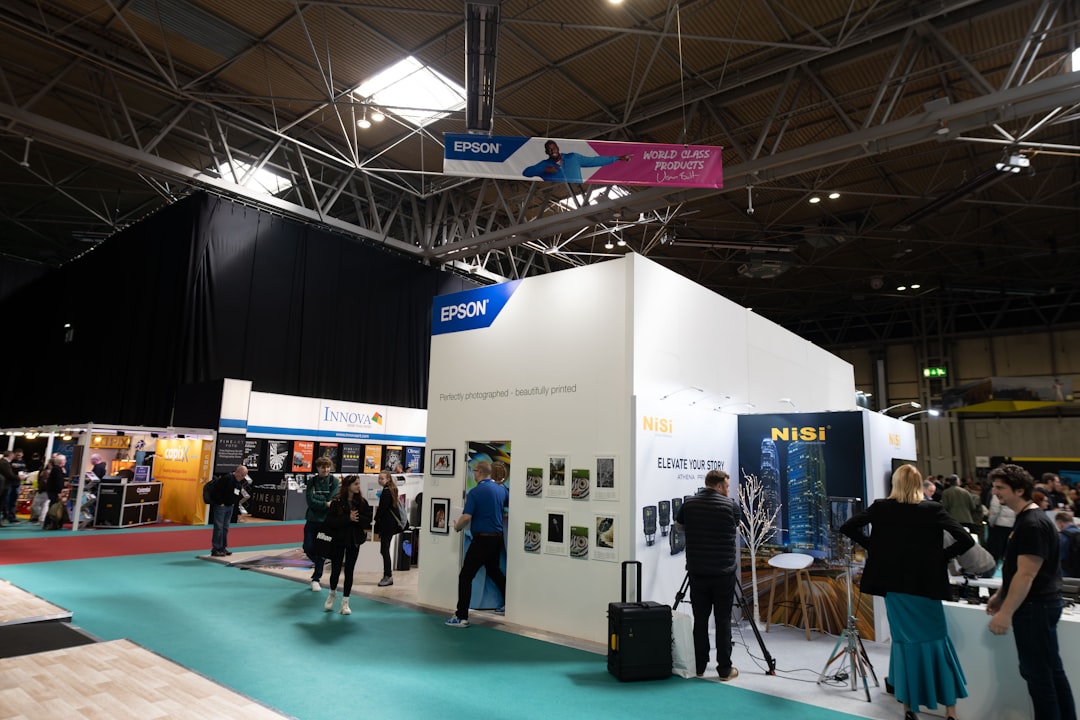


Regulation (EU) 2023⁄988, the General Product Safety Regulation, commonly abbreviated GPSR, was adopted on 10 May 2023, published in the Official Journal on 23 May 2023, and became fully applicable from 13 December 2024.
It replaces the General Product Safety Directive 2001/95/EC that governed EU consumer-product safety for two decades and shifts the legal instrument from Directive (transposed differently by each Member State) to Regulation (directly applicable across all 27 Member States simultaneously), extending and modernising the framework in ways that directly affect trade fair demo product practice.
For trade fair exhibitors GPSR matters because the regulation applies to all consumer products placed on the EU market or made available on it, regardless of whether the product is sold at the fair or simply demoed. The GPSR explicitly addresses online-marketplace responsibilities, distance-selling product safety, and the post-Brexit position of non-EU manufacturers, all relevant to exhibitor demo activity.
This handbook covers the regulation’s scope, the seven operational obligations most consequential for trade fair demos, the EU authorised representative requirement for non-EU exhibitors, the documentation chain, the Safety Gate (formerly RAPEX) interaction, and the interaction with the parallel EU Product Liability Directive 2024⁄2853 and EU AI Act regulatory cluster.
What GPSR replaces and why the Regulation instrument matters
Directive 2001/95/EC (the General Product Safety Directive, GPSD) governed EU consumer-product safety from 2001 through 13 December 2024. Its core mechanism required Member States to transpose general product safety obligations into national law, producing 27 different national consumer-product-safety regimes with operational variations that complicated cross-border product distribution and demo activity.
Regulation (EU) 2023⁄988 applies directly in all Member States without national transposition. The core obligations become uniform across the EU, and the regulation explicitly addresses categories the original GPSD did not anticipate, online marketplaces, distance selling, software-driven consumer products, AI integration, and the post-Brexit cross-border product flow.
| Aspect | GPSD 2001/95/EC (2001-2024) | GPSR 2023⁄988 (from 13 Dec 2024) |
|---|---|---|
| Legal instrument | Directive, transposed by Member States | Regulation, directly applicable |
| Online marketplaces | Not addressed | Explicit obligations |
| Distance selling | Limited coverage | Comprehensive coverage |
| Non-EU manufacturer obligations | Limited | EU economic operator required |
| Software and connected products | Not addressed | Explicit scope |
| AI integration in consumer products | Not addressed | Cross-references EU AI Act |
| Safety Gate / RAPEX | RAPEX framework | Modernised Safety Gate |
| Recall mechanism | Member-State led | Harmonised EU-level |
The seven GPSR obligations most consequential for trade fair demos
1. EU economic operator requirement for non-EU products. GPSR Article 4 requires that for every product subject to harmonised EU legislation placed on the EU market, an EU-established economic operator (manufacturer, importer, authorised representative, or fulfilment service provider) takes responsibility for product compliance.
For non-EU exhibitors demoing products at European fairs from 13 December 2024, designation of an EU economic operator is required, equivalent to the EU authorised representative requirement under the Product Liability Directive 2024⁄2853.
2. Risk assessment documentation. Manufacturers must conduct and document risk assessments covering reasonably foreseeable uses and misuses of products, including in trade fair demo contexts where visitor interaction patterns may differ from intended retail use. Documentation must be available to market surveillance authorities on request.
3. Technical documentation. GPSR Article 9 requires manufacturers to draw up and maintain technical documentation including risk analysis, applied harmonised standards, and other technical specifications. Documentation must be retained for 10 years after product placed on market.
4. Traceability information. Products must carry identifying information enabling traceability, type, batch, serial number or other element allowing identification, plus manufacturer name and contact details. For trade fair demo units the traceability information must be visible to market surveillance inspectors.
5. Safety Gate reporting and recall. GPSR Article 35 requires economic operators to report accidents, dangerous incidents and safety risks to the Safety Gate portal. Recall obligations harmonised across the EU rather than fragmented per Member State.
6. Distance selling and online marketplace provisions. GPSR Article 22 addresses online marketplace obligations including product listing safety verification, suspended-listing cooperation with authorities, and consumer-information obligations. Trade fair exhibitors operating online marketplace sales channels parallel to fair distribution interact with these provisions.
7. Consumer information and warnings. Products must carry warnings, safety information, and instructions in languages easily understood by consumers in Member States where products are made available. For demo products at multi-country European fair appearances, multilingual documentation supports both safety compliance and demo communication.
Trade fair specific application
GPSR applies to products demoed at trade fairs because the legal interpretation under both GPSD and GPSR treats demonstrating a product to potential customers as making the product available on the market for safety-regulation purposes, even when no sale occurs at the demonstration. The position has been reinforced by parallel jurisprudence around the Product Liability Directive 2024⁄2853 which uses similar interpretive framework.
For practical trade fair demo activity this means:
- Demo products at European fairs from 13 December 2024 must comply with GPSR obligations.
- Non-EU exhibitors demoing without EU economic operator designation operate in non-compliance.
- Risk assessments must consider trade fair demo contexts, visitor interaction patterns may differ from intended retail use.
- Technical documentation must be accessible at the fair for market surveillance requests.
- Incident reporting obligations apply if accidents or dangerous incidents occur during fair demos.
Market surveillance authorities in major fair host states (Germany’s BAuA, France’s DGCCRF, Italy’s MISE, Spain’s AECOSAN, Netherlands’ NVWA) operate trade fair inspection programmes. The 2025 fair calendar was the first to operate fully under GPSR, early enforcement patterns showed market surveillance attention concentrated at major consumer-product fairs (IFA Berlin, Salone del Mobile Milan, Maison & Objet Paris) rather than B2B-only fairs, but inspection capacity is expanding.
Interaction with the EU regulatory cluster
GPSR operates alongside several other EU regulations affecting trade fair demos:
- EU Product Liability Directive 2024⁄2853, strict liability for defective products from 9 December 2026. GPSR covers product safety obligations during product life; PLD covers liability for damage caused by defective products. Both require EU economic operator designation for non-EU manufacturers. See EU Product Liability Directive 2024⁄2853 exhibitor exposure.
- EU AI Act (Regulation 2024⁄1689), AI-driven consumer products fall under both GPSR (general safety) and AI Act (AI-specific risk classification and transparency). See EU AI Act trade-fair stand deployment.
- EU Packaging and Packaging Waste Regulation 2025⁄40, packaging of consumer products demoed at fairs must comply with PPWR alongside GPSR product safety. See EU PPWR trade fair impact.
- CSDDD Directive 2024⁄1760, corporate sustainability due diligence covers supplier-side product safety practices for in-scope exhibitors. See EU CSDDD trade fair supply chain.
- EU-UK TCA framework, UK exhibitors post-Brexit are non-EU manufacturers requiring EU economic operator designation for GPSR compliance. See EU-UK TCA UK exhibitor handbook.
The cluster operates coherently, EU economic operator infrastructure established once serves multiple regulations; documentation prepared for one applies materially to others; supplier evaluation processes feed into all of them.
Documentation chain for defensible GPSR compliance
Seven items minimum for trade fair demo readiness:
- EU economic operator designation in writing for non-EU exhibitors with copy at the stand and EU operator contact details accessible.
- Technical documentation for each demo product including risk analysis, applied harmonised standards, conformity declarations, traceability information.
- Risk assessment documented for trade fair demo context including foreseeable visitor interaction patterns differing from retail use.
- Multilingual safety information in the languages of Member States where products are made available, for typical European fair circuit this means EN/DE/FR/IT/ES at minimum, with venue-host language locally required.
- Incident response protocol with documented reporting workflow to insurer, fair organiser H&S office, and Safety Gate portal where applicable.
- Insurance certificates for product liability cover at minimum EUR 10M, public liability cover at EUR 5-10M, with EU-territory cover confirmed.
- Recall preparation including identified communication channels for recall notifications affecting any product distributed at the fair.
The documentation overlaps with PLD 2024⁄2853, AI Act, PPWR 2025⁄40 and CSDDD documentation chains, building once produces multiple parallel compliance outputs. See Stand-builder RFP framework for the procurement-side mechanism that produces supplier-side documentation feeding into GPSR compliance.
Safety Gate (formerly RAPEX) interaction
The EU’s Safety Gate portal (formerly RAPEX, Rapid Alert System for non-food consumer products) is the primary mechanism for Member State market surveillance authorities to share information about dangerous products. Under GPSR Article 35 the Safety Gate becomes the primary EU-level incident reporting and recall coordination platform.
For trade fair exhibitors the Safety Gate interaction matters in two directions:
Outbound reporting. Economic operators who become aware that a product they have placed on the market presents a risk must report to the Safety Gate. This includes incidents occurring during trade fair demos that reveal product safety risks.
Inbound monitoring. The Safety Gate publishes notifications about dangerous products. Exhibitors should monitor Safety Gate notifications relevant to their product categories, a competitor’s product entering Safety Gate creates both reputational and regulatory consideration for adjacent product demos.
Penalties and enforcement
GPSR Article 44 requires Member States to lay down penalties for breach that are effective, proportionate and dissuasive. Maximum penalties typically run to several percent of EU annual turnover for the most serious infringements, with smaller penalties for procedural violations. Member State implementation varies, Germany’s penalty regime under ProdSG is among the more developed; France’s DGCCRF operates active enforcement; Italy’s MISE penalty regime is less developed but expanding.
For trade fair exhibitors, the most consequential enforcement pattern is on-stand product removal or demo suspension during the fair. Market surveillance authorities have powers to require immediate cessation of unsafe-product demonstration, which converts compliance gaps from regulatory issue to operational crisis during the fair itself. Pre-fair compliance audit is the cheap insurance against fair-floor enforcement intervention.
Practical 2025-2027 timeline for trade fair exhibitors
2025 (first full GPSR year):
- Q1: gap assessment against GPSR for all demo product categories
- Q2: EU economic operator designation for non-EU exhibitors
- Q3: technical documentation review and update for in-scope products
- Q4: incident response protocol implementation and stand-team briefing
2026:
- August 2026: EU PPWR 2025⁄40 packaging compliance integration with GPSR demo product packaging
- December 2026: EU Product Liability Directive 2024⁄2853 strict liability for substantial-modification products
- Documentation infrastructure mature, multi-fair operational practice
2027:
- July 2027: EU CSDDD Group 1 application, supplier-side due diligence integration
- Trade fair operations under coherent regulatory cluster
- Civil liability and enforcement case law begins to shape interpretive practice
Conclusion
GPSR is operationally one of the more demanding regulatory shifts affecting the European trade fair industry over 2024-2027, but its impact is shaped by the broader regulatory cluster within which it sits, PLD 2024⁄2853, AI Act, PPWR 2025⁄40, CSDDD 2024⁄1760 all interact with GPSR in their applicability to trade fair demo activity.
The exhibitors who plan compliance as a coherent EU regulatory infrastructure rather than as separate parallel programmes operate more efficiently and at lower per-regulation overhead.
For non-EU exhibitors the EU economic operator designation is the single most consequential preparation step, required from 13 December 2024 for GPSR, required from 9 December 2026 for PLD 2024⁄2853, required for PPWR EPR purposes. A single EU economic operator arrangement (typical cost EUR 3,000-12,000 annually) serves all three regimes.
For EU-headquartered exhibitors the documentation discipline established for GPSR compliance translates into ready-made infrastructure for the broader cluster. The investment is genuinely worthwhile, and the trade fair industry’s progressive normalisation of structured product safety compliance through 2025-2027 will look back at GPSR as the catalyst for the maturation.
References
- Regulation (EU) 2023⁄988 of the European Parliament and of the Council of 10 May 2023 on general product safety, amending Regulation (EU) No 1025⁄2012 and Directive (EU) 2020⁄1828, and repealing Directive 2001/95/EC and Council Directive 87/357/EEC, Official Journal L 135, 23.5.2023
- European Commission, “General Product Safety Regulation”, single-market-economy.ec.europa.eu/sectors/consumer-goods
- Safety Gate (formerly RAPEX), ec.europa.eu/safety-gate
- Directive 2001/95/EC of the European Parliament and of the Council of 3 December 2001 on general product safety, Official Journal L 11, 15.1.2002 (repealed by Regulation 2023⁄988 from 13 December 2024)
- Directive (EU) 2024⁄2853 of the European Parliament and of the Council on liability for defective products
- Regulation (EU) 2024⁄1689 of the European Parliament and of the Council on artificial intelligence (EU AI Act)
- Directive (EU) 2024⁄1760 of the European Parliament and of the Council on corporate sustainability due diligence (CSDDD)
- Regulation (EU) 2025⁄40 of the European Parliament and of the Council on packaging and packaging waste (PPWR)
- ProdSG (Produktsicherheitsgesetz), German Product Safety Act
- DGCCRF, Direction générale de la concurrence, de la consommation et de la répression des fraudes (France)
FAQFrequently asked questions
Regulation (EU) 2023⁄988 was adopted on 10 May 2023, published in the Official Journal on 23 May 2023, and became fully applicable from 13 December 2024, the date from which it replaced the 2001 General Product Safety Directive 2001/95/EC. It applies to all consumer products placed on the EU market or made available on it, regardless of whether the product is sold at a trade fair or simply demoed.
The legal interpretation under both GPSD and GPSR treats demonstrating a product to potential customers as making the product available on the market for safety-regulation purposes, even when no sale occurs at the demonstration.
For trade fair demo activity from 13 December 2024 onwards: demo products at European fairs must comply with GPSR obligations; non-EU exhibitors without EU economic operator designation operate in non-compliance; risk assessments must consider trade fair demo contexts where visitor interaction patterns may differ from intended retail use; technical documentation must be accessible at the fair for market surveillance requests.
Directive 2001/95/EC required each Member State to transpose general product safety obligations into national law, producing 27 different national regimes with operational variations that complicated cross-border product distribution and demo activity. Regulation (EU) 2023⁄988 applies directly in all Member States without national transposition, core obligations become uniform across the EU.
The Regulation also explicitly addresses categories the original GPSD did not anticipate: online marketplace obligations under Article 22, distance selling comprehensive coverage, software-driven consumer products, AI integration cross-referencing the EU AI Act, post-Brexit cross-border product flow with explicit EU economic operator requirement under Article 4, modernised Safety Gate (formerly RAPEX) framework, harmonised EU-level recall mechanism replacing fragmented Member-State-led approach.
For exhibitors operating across multiple Member States the compliance simplification through harmonisation is material, but the substantive obligations including economic operator requirement for non-EU manufacturers are materially more demanding.
GPSR Article 4 requires that for every product subject to harmonised EU legislation placed on the EU market, an EU-established economic operator (manufacturer, importer, authorised representative, or fulfilment service provider) takes responsibility for product compliance.
For non-EU exhibitors (UK post-Brexit, US, Asian, other) demoing products at European fairs from 13 December 2024, designation of an EU economic operator is required, equivalent to the EU authorised representative requirement under the Product Liability Directive 2024⁄2853 effective December 2026 and the EU EPR authorised representative requirement under PPWR 2025⁄40 effective August 2026.
A single EU economic operator arrangement (typical cost EUR 3,000-12,000 annually for passive representation) serves all three regimes. The economic operator must be EU-established, accessible to market surveillance authorities, capable of providing technical documentation on request, and able to cooperate with corrective actions including recall if needed.
Trade fair stand managers should carry written designation documentation accessible at the stand for market surveillance inspector requests.
EU economic operator requirement under Article 4 for non-EU products. Risk assessment documentation covering reasonably foreseeable uses and misuses including trade fair demo contexts. Technical documentation under Article 9 including risk analysis, applied harmonised standards, conformity declarations, retention for 10 years after product placed on market.
Traceability information on products, type, batch, serial number, manufacturer name and contact details, visible to market surveillance inspectors at the fair. Safety Gate reporting under Article 35 for accidents, dangerous incidents and safety risks, with EU-harmonised recall coordination. Distance selling and online marketplace provisions under Article 22 for exhibitors operating parallel online sales channels.
Consumer information and warnings in languages easily understood by consumers in Member States where products are made available, for European fair circuit typically EN/DE/FR/IT/ES at minimum plus venue-host language. The documentation overlaps materially with PLD 2024⁄2853, AI Act, PPWR 2025⁄40 and CSDDD 2024⁄1760 documentation chains, building discipline once produces multiple parallel compliance outputs.
Market surveillance authorities in major fair host states run trade fair inspection programmes. Germany, Bundesanstalt für Arbeitsschutz und Arbeitsmedizin (BAuA) plus Länder-level authorities, enforcement against ProdSG penalties. France, Direction générale de la concurrence, de la consommation et de la répression des fraudes (DGCCRF) with active enforcement programme.
Italy, Ministero dello Sviluppo Economico (MISE) penalty regime less developed but expanding. Spain, Agencia Española de Consumo, Seguridad Alimentaria y Nutrición (AECOSAN). Netherlands, Nederlandse Voedsel- en Warenautoriteit (NVWA).
The 2025 fair calendar was the first to operate fully under GPSR, early enforcement patterns showed market surveillance attention concentrated at major consumer-product fairs (IFA Berlin, Salone del Mobile Milan, Maison & Objet Paris) rather than B2B-only fairs, but inspection capacity is expanding.
The most consequential enforcement pattern for exhibitors is on-stand product removal or demo suspension during the fair, market surveillance authorities have powers to require immediate cessation of unsafe-product demonstration, converting compliance gaps from regulatory issue to operational crisis during the fair itself. Pre-fair compliance audit is the cheap insurance against fair-floor enforcement intervention.
GPSR operates alongside five other major EU regulations affecting trade fair demos with coherent rather than parallel-siloed compliance opportunity.
EU Product Liability Directive 2024⁄2853, strict liability for defective products from 8 December 2026; GPSR covers product safety obligations during product life, PLD covers liability for damage caused by defective products, both require EU economic operator for non-EU manufacturers.
EU AI Act Regulation 2024⁄1689, AI-driven consumer products fall under both GPSR (general safety) and AI Act (AI-specific risk classification and transparency). EU Packaging and Packaging Waste Regulation 2025⁄40, packaging of consumer products demoed at fairs must comply with PPWR alongside GPSR product safety from August 2026.
CSDDD Directive 2024⁄1760, corporate sustainability due diligence covers supplier-side product safety practices for in-scope exhibitors from 2027-2029. EU-UK TCA framework, UK exhibitors post-Brexit are non-EU manufacturers requiring EU economic operator designation.
The cluster operates coherently, EU economic operator infrastructure established once serves multiple regulations; documentation prepared for one applies materially to others; supplier evaluation processes feed into all of them. Exhibitors who plan compliance as coherent EU regulatory infrastructure rather than separate parallel programmes operate more efficiently and at lower per-regulation overhead.