

The EU Packaging and Packaging Waste Regulation is Regulation (EU) 2025⁄40. The European Parliament adopted it on 24 April 2024. The Council gave final approval on 16 December 2024. It was published in the Official Journal on 22 January 2025. It becomes generally applicable from 12 August 2026.
It replaces the 1994 Packaging and Packaging Waste Directive (94/62/EC). That Directive governed the EU’s packaging compliance regime for thirty years. The shift shifts the legal instrument from Directive to Regulation. A Directive is transposed differently by each Member State. A Regulation is directly applicable across all 27 Member States simultaneously.
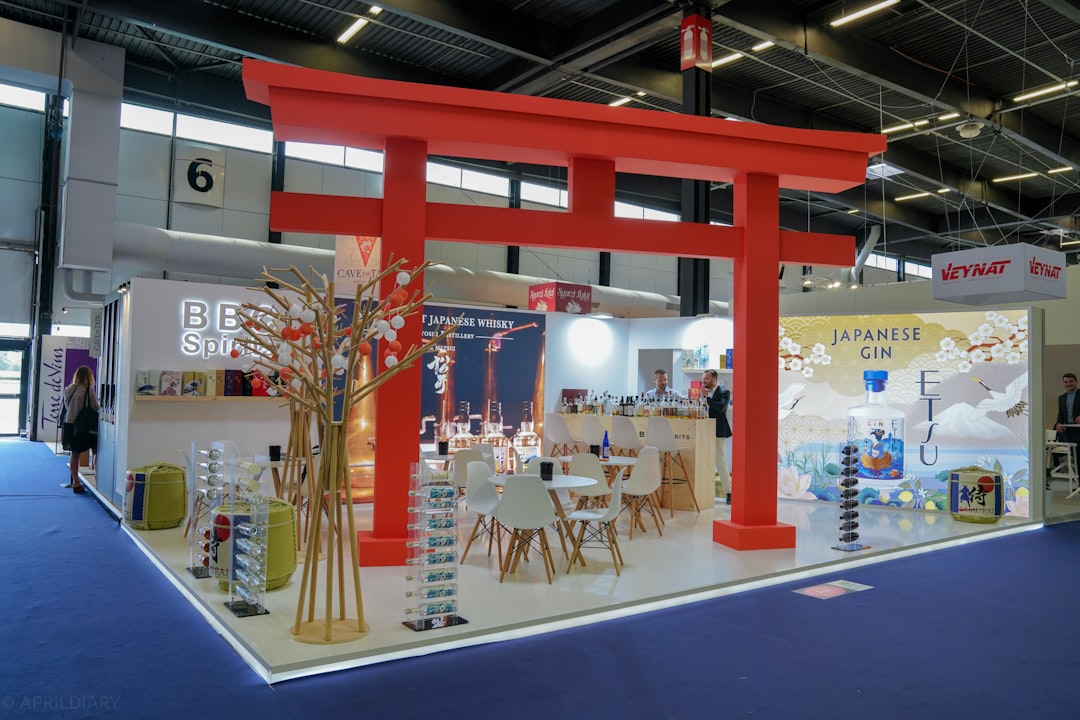
For trade fair exhibitors and stand builders the regulation’s operational implications are substantial. Exhibition activity is not named as a special case. The reason is that the PPWR’s scope catches every category of packaging that flows through fair-stand operations. That means transport packaging for stand-build elements and demo equipment crating. It means primary, secondary and tertiary packaging on food and beverage products on hospitality bars. It means sachets and single-serving items used in catering. It means promotional samples and giveaways with their consumer packaging. It also means the small-format packaging of merchandise and printed materials distributed on the stand.
This handbook covers the seven PPWR provisions most consequential for trade fair operations. It sets out the timeline for entry-into-force milestones. It covers the Extended Producer Responsibility (EPR) interaction with non-EU exhibitors. It covers the documentation chain that supports defensible compliance. It closes on the cost implications for typical European fair-stand deployments.
What the PPWR replaces and why the shift to Regulation matters
Directive 94/62/EC governed EU packaging compliance from 1994 through 2026. Its core mechanism required each Member State to achieve packaging recycling and recovery targets. Each Member State transposed the Directive into national legislation. That produced 27 different national packaging-compliance regimes, 27 different EPR schemes, 27 different fee structures, 27 different documentation patterns.
An exhibitor distributing branded packaging at fairs across multiple Member States faced 27 different compliance burdens.
The Regulation instrument changes that. Regulation (EU) 2025⁄40 applies directly in all Member States without national transposition. National variation persists in EPR scheme operation and reporting infrastructure. The core packaging requirements become uniform across the EU. Those are material restrictions, recycled content thresholds, recyclability classifications and labelling.
| Aspect | PPWD 94/62/EC (1994-2026) | PPWR 2025⁄40 (from August 2026) |
|---|---|---|
| Legal instrument | Directive, transposed by each Member State | Regulation, directly applicable across EU27 |
| Material restrictions | Member-State-specific (varied) | Harmonised at EU level |
| Recycled content thresholds | Voluntary targets in most Member States | Mandatory thresholds by packaging category and year |
| Recyclability classification | Member-State-specific schemes | Harmonised A-E recyclability grading from 2030 |
| EPR scheme operation | National schemes vary widely | National schemes continue but with harmonised cost-modulation principles |
| Labelling | Member-State-specific | Harmonised material-identification labelling |
| Reusable packaging targets | Not present | Mandatory reuse targets for specific categories |
The seven PPWR provisions most consequential for trade fairs
1. Recycled content mandatory thresholds for plastic packaging. From 2030, plastic packaging placed on the EU market must contain minimum recycled content per category. The figures are 30% for contact-sensitive packaging from PET and 10% for contact-sensitive packaging from other plastics. They are 35% for non-contact-sensitive packaging and 65% for plastic beverage bottles. From 2040 these thresholds rise to 50-65% depending on category.
Trade-fair operational impact: hospitality bar single-use water bottles, sample containers and plastic giveaways. All must meet category thresholds from 2030.
**2.
Restriction on single-use plastic packaging in certain contexts.** From 1 January 2030 the regulation prohibits three categories. The first is single-use plastic packaging for fruit and vegetables under 1.5 kg sold in retail. The second is single-use plastic packaging for food and beverages consumed on-premises in HORECA (hotels, restaurants, catering, including trade-fair hospitality contexts). The third is single-use plastic miniature packaging for cosmetic, hygiene and toiletry products typically distributed in hotel rooms. That third one has crossover relevance for trade-fair welcome gifts and giveaway pouches.
Trade-fair operational impact: stand hospitality services from 2030 must shift away from single-use plastic cups, plates and cutlery toward reusable systems.
3. Reusable packaging targets for transport packaging. From 1 January 2030, transport packaging must achieve 40% reusable share for pallets, plastic crates, intermediate bulk containers and similar. This applies within an economic operator and between economic operators in the same Member State. The share rises to 70% by 2040.
Trade-fair operational impact: shipping crates and packaging for stand-build elements fall directly within this requirement. That covers movement from contractor warehouse to venue and back. Single-use cardboard and plastic transport packaging shifts to reusable systems.
4. Empty space ratio limit. From 1 January 2030, the empty space ratio in packaging is capped at 50% for grouped and transport packaging, and at 50% for e-commerce packaging. The ratio compares volume of packaging against volume of product. Trade-fair operational impact: the protective oversized crating common for delicate demo equipment must rebalance. Packaging volumes that exceed the empty-space ratio require redesign.
5. Mandatory packaging recyclability from 2030. Packaging must achieve at least Grade C recyclability under the harmonised A-E classification from 1 January 2030. Packaging not achieving recyclability is restricted from EU market. From 1 January 2035 the threshold rises to Grade B for several categories. Trade-fair operational impact: every packaging item needs recyclability classification documentation. That runs from stand-build crating to promotional gift packaging.
6. PFAS restriction in food-contact packaging. PFAS (per- and polyfluoroalkyl substances) above defined thresholds in food-contact packaging are prohibited from 12 August 2026. That is the regulation’s general application date. Trade-fair operational impact: hospitality bar suppliers must source PFAS-free food-contact packaging from August 2026. Verification cascades through procurement.
7. Harmonised material-identification labelling. All packaging must display harmonised material identification labels from a transitional date driven by Commission implementing acts. Trade-fair operational impact: promotional packaging produced specifically for fair giveaways must carry compliant labelling.
| PPWR provision | Effective date | Trade-fair impact category |
|---|---|---|
| PFAS restriction in food-contact packaging | 12 August 2026 | Hospitality catering, F&B samples |
| Empty space ratio 50% cap | 1 January 2030 | Crating for demo equipment, stand-build transport |
| Recycled content thresholds | 1 January 2030 | All plastic packaging on stand or distributed |
| Single-use plastic in HORECA prohibition | 1 January 2030 | Hospitality bars at fair stands |
| Reusable transport packaging 40% (70% by 2040) | 1 January 2030 / 2040 | Stand-build crating and pallets |
| Recyclability minimum Grade C | 1 January 2030 | All packaging on market |
| Recyclability minimum Grade B (selected categories) | 1 January 2035 | All packaging on market |
| Harmonised material-identification labelling | Per Commission implementing acts | All packaging |
Extended Producer Responsibility (EPR) and non-EU exhibitors
Extended Producer Responsibility schemes have operated under the existing PPWD across all Member States. EPR makes the producer of packaging financially responsible for end-of-life management, collection, sorting and recycling, typically through compliance schemes that collect fees scaled to packaging volume and material.
The PPWR retains EPR as the primary financing mechanism for packaging end-of-life management but introduces three changes consequential for trade-fair exhibitors:
- Eco-modulation harmonisation. EPR fees must vary by recyclability and recycled-content properties of the packaging, packaging that scores poorly on recyclability faces higher fees than packaging that scores well. The principles are harmonised across Member States from 1 January 2030.
- Authorised representative requirement for non-EU producers. Non-EU producers (including UK, US, Asian and other exhibitors placing packaging on the EU market through fair distribution of branded items) must designate an EU-established authorised representative for EPR compliance, equivalent to the EU authorised representative requirement under the Product Liability Directive 2024⁄2853.
- Online marketplaces and fulfilment service providers also acquire EPR obligations under specific provisions of the regulation.
For a UK exhibitor distributing 5,000 branded gift pouches at IFA Berlin, the EPR position from August 2026 is:
- Designate an EU EPR authorised representative (typically EUR 2,500-8,000 annually plus per-packaging-batch fees).
- Register packaging with the German national packaging register (Stiftung Zentrale Stelle Verpackungsregister LUCID, already operational under existing German VerpackG).
- Pay EPR fees scaled to packaging weight, material composition and recyclability.
- Maintain documentation showing compliance for audit purposes.
Member-State EPR schemes vary in operational detail. Germany’s LUCID (operated under Verpackungsgesetz VerpackG) is the most administratively developed. France’s CITEO operates the French EPR scheme. Italy’s CONAI handles the Italian system. Spain’s Ecoembes runs the Spanish system.
The PPWR will harmonise cost-modulation principles by 2030 but national operational variation persists, non-EU exhibitors with fairs in multiple Member States typically register through one Member State (Germany most common for technical infrastructure quality) and rely on cross-recognition through their authorised representative.
Operational implications for typical fair-stand activity
Stand-build transport packaging. Single-use cardboard and plastic crating for shipping stand elements from contractor warehouse to venue and back is the largest packaging volume in stand operations. From 2030 the 40% reusable target plus the empty-space ratio cap drives a shift toward reusable crating systems, collapsible plastic transport boxes, returnable crating leased per movement, modular stand elements designed for crate-free transport.
Stand-build contractors who already operate reusable crating systems for sustainability or cost reasons are well-positioned for PPWR compliance. Contractors who use disposable crating face capital investment in reusable infrastructure or operational shift to leased reusable crating from specialist providers.
Stand demo product packaging. Products demoed at the fair often arrive in their consumer-retail packaging. From 2030 this packaging must meet recycled content thresholds and recyclability classification. Most large manufacturers’ product packaging will achieve compliance through general PPWR responsiveness, but specialty items, limited-edition launch packaging and prototype demo packaging need PPWR-aware design.
Promotional gifts and giveaways. Branded items distributed at the stand with packaging (gift bags, branded pouches, presentation boxes for premium gifts) become trade-fair-specific PPWR exposure. The exhibitor placing the packaged item into circulation at the EU fair is the producer for EPR purposes. Single-use plastic promotional packaging falls under category restrictions; recyclable paper-based packaging or reusable cloth alternatives become operational defaults.
Hospitality bar catering. Single-use plastic cutlery, cups and plates for catering on the stand are restricted from 1 January 2030 in HORECA contexts. Reusable systems (ceramic plates, glass cups, metal cutlery) become operational defaults. F&B sample products distributed on the stand must use compliant packaging materials with PFAS restriction enforceable from August 2026.
Printed marketing materials. Brochures, catalogues, printed product information distributed on the stand do not generally fall within packaging scope (they are products not packaging), but the printed material’s transport packaging into the venue and the protective wrappers around bulk-distributed materials do.
Documentation chain for defensible compliance
Six items minimum:
- EPR authorised representative designation in writing for non-EU exhibitors, with copy at the stand and the EU representative’s contact details accessible.
- National packaging register registration in at least one Member State (Germany’s LUCID most common) with cross-recognition through the authorised representative.
- Material composition declarations for all packaging distributed at the fair, composition, weight, recycled content where claimed, recyclability classification.
- Recyclability certifications from packaging suppliers for the recyclability grade claimed.
- PFAS-compliance certifications for food-contact packaging from 12 August 2026.
- EPR fee payment records for the relevant national schemes covering the packaging volumes distributed.
The documentation overlaps with CSRD ESRS E5 (resource use and circular economy) reporting and with the EU Product Liability Directive 2024⁄2853 documentation chain, building the discipline once produces multiple parallel compliance outputs.
See EU Product Liability Directive 2024⁄2853 exhibitor exposure for the PLD interaction and Modular vs custom CSRD lifecycle carbon for the CSRD ESRS interaction.
Cost implications for typical European fair-stand budgets
For a typical mid-size B2B exhibitor running four EU fairs annually with stand sizes 80-200 sqm, hospitality catering, branded giveaways and standard stand-build crating, the PPWR compliance budget breaks down approximately as follows:
| Cost line | Annual range (EUR) | Notes |
|---|---|---|
| EU EPR authorised representative | 2,500-8,000 | Per non-EU exhibitor, regardless of fair count |
| National EPR registration and fees | 1,800-7,500 | Scaled to packaging volume and Member State |
| Compliant packaging materials premium | +8-18% on materials line | Versus non-compliant equivalents (largest line) |
| Reusable transport crating leased or capex | 5,000-25,000 amortised | Larger contractors absorb; smaller exhibitors face per-fair fees |
| PPWR documentation compliance time | 16-40 hours internal admin | Typically internal sustainability or compliance manager |
| Specialist advice for packaging design | 1,500-8,000 | One-time investment in PPWR-aware design |
Total typical incremental cost EUR 12,000-30,000 annually for the mid-size exhibitor profile, plus the materials-line premium. Larger exhibitors with sustainability functions already in place absorb most of the burden through normal operations; smaller first-time exhibitors face proportionately more impact.
The transitional period: how to use 2026-2030
The 12 August 2026 general application date triggers the PFAS restriction and the EPR authorised representative requirement, but most operational changes (reusable transport, recycled content thresholds, single-use plastic restrictions, recyclability minimums) become enforceable from 1 January 2030. The four-year transitional period is the implementation window.
The exhibitors and contractors who use the window productively will:
- Q3 2026, designate EU EPR authorised representative if non-EU; register with at least one Member-State packaging scheme; verify PFAS-compliance of food-contact packaging.
- Q1 2027, packaging-material audit across all categories used in fair operations (stand-build crating, demo packaging, giveaways, hospitality catering).
- 2027-2028, phased migration to PPWR-compliant materials with supplier development of recycled-content and recyclability-certified alternatives.
- 2028-2029, reusable transport crating system implementation; hospitality reusable systems pilot at one or two fairs to test operational workflow.
- 2029, full operational shift to PPWR-compliant materials and systems; documentation infrastructure verified through dry-run audit.
- 1 January 2030, enforcement-ready operations with documented compliance for all categories.
The exhibitors who improvise will face 2030-2031 emergency procurement at premium prices, packaging-rejection at venue gates where Member-State enforcement is active, and reputational exposure where competitor stands visibly demonstrate compliant operations.
Conclusion
The PPWR is the most consequential packaging regulation change in three decades for businesses operating across EU markets, and trade-fair operations are squarely within scope despite no fair-specific carve-outs in the regulation text.
The 12 August 2026 application date triggers the PFAS food-contact restriction and the EU authorised representative requirement for non-EU exhibitors; the 1 January 2030 milestone activates the major operational changes around recycled content, reusable transport packaging, single-use plastic HORECA restriction, and recyclability minimums.
For the European trade fair industry, which produces enormous volumes of single-use packaging in transport, hospitality, demonstrations and giveaways, the PPWR is both compliance burden and competitive differentiator. Exhibitors and contractors who use the 2026-2030 transitional period to redesign packaging-intensive workflows will operate cost-effectively from 2030.
Those who treat the regulation as an end-of-period emergency will face emergency procurement costs, venue-gate rejection risks, and reputational consequences in front of customers who increasingly evaluate suppliers on environmental performance.
The regulation rewards planning. The four-year transitional period is generous by EU regulatory standards. The exhibitors who plan now have the time advantage that the regulation explicitly provides.
References
- Regulation (EU) 2025⁄40 of the European Parliament and of the Council of 19 December 2024 on packaging and packaging waste, amending Regulation (EU) 2019⁄1020 and Directive (EU) 2019⁄904, and repealing Directive 94/62/EC, Official Journal L, 22.1.2025
- European Commission, “Packaging and packaging waste”, environment.ec.europa.eu/topics/waste-and-recycling/packaging-waste
- European Parliament, “MEPs adopt final ban on shipping waste to non-OECD countries”, press release 24 April 2024
- Council of the European Union, “Packaging waste: Council and Parliament strike a deal to make packaging more sustainable”, press release 4 March 2024
- Stiftung Zentrale Stelle Verpackungsregister, “LUCID Packaging Register”, verpackungsregister.org
- CITEO, “Extended Producer Responsibility for packaging in France”, citeo.com
- CONAI, “Italian National Packaging Consortium”, conai.org
- Ecoembes, “Spanish packaging EPR”, ecoembes.com
- Directive 94/62/EC of the European Parliament and of the Council of 20 December 1994 on packaging and packaging waste, Official Journal L 365, 31.12.1994 (to be repealed by Regulation 2025⁄40 from 12 August 2026)
- European Commission, “Single-Use Plastics Directive (EU) 2019⁄904”, environment.ec.europa.eu/topics/plastics/single-use-plastics
FAQFrequently asked questions
Regulation (EU) 2025⁄40 was adopted by the European Parliament on 24 April 2024, finally approved by the Council on 16 December 2024, published in the Official Journal on 22 January 2025. The general application date is 12 August 2026, the date the PFAS food-contact restriction and EU authorised representative requirements for non-EU producers take effect.
Major operational changes activate from 1 January 2030: recycled content thresholds (30% for contact-sensitive PET, 35% for non-contact-sensitive plastics, 65% for plastic beverage bottles), single-use plastic restrictions in HORECA (hotels, restaurants, catering, including trade-fair hospitality), 40% reusable transport packaging target, 50% empty-space ratio cap, mandatory Grade C minimum recyclability.
From 1 January 2035 recyclability minimums rise to Grade B for several categories and from 2040 recycled content thresholds rise to 50-65% depending on category. The four-year transitional period (2026-2030) is the implementation window, exhibitors using it productively avoid the emergency procurement costs of late compliance.
Two reasons. First, legal instrument change. Directive 94/62/EC required each Member State to transpose into national legislation, producing 27 different national packaging regimes, 27 different EPR schemes, 27 different fee structures over 30 years.
Regulation (EU) 2025⁄40 applies directly in all Member States without national transposition, harmonising core requirements (material restrictions, recycled content, recyclability classification, labelling) at EU level. National variation persists in EPR scheme operation but core obligations become uniform. Second, scope expansion.
The PPWR adds mandatory recycled content thresholds, reusable packaging targets, single-use plastic restrictions in HORECA, empty-space ratio caps, harmonised recyclability classification (A-E grading), none of which existed under the 1994 Directive.
For multinational exhibitors operating across multiple EU Member States the compliance simplification through harmonisation is material, but the substantive obligations are materially more demanding.
Non-EU producers (UK, US, Asian and other exhibitors placing packaging on the EU market through fair distribution of branded items, hospitality catering, demo product packaging) must designate an EU-established authorised representative for EPR compliance, equivalent to the authorised representative requirement under the EU Product Liability Directive 2024⁄2853.
Typical authorised representative cost runs EUR 2,500-8,000 annually plus per-packaging-batch fees. National packaging register registration also required (Germany’s LUCID under Verpackungsgesetz is the most administratively developed and most commonly used by non-EU producers, with cross-recognition through the authorised representative for fairs in other Member States).
Member-State EPR schemes operate independently with cost-modulation principles harmonised by 2030. UK exhibitors particularly affected post-Brexit since pre-2021 they operated under intra-EU producer arrangements; from August 2026 they need the same EU authorised representative infrastructure as any other non-EU producer.
Five categories of impact. (1) Stand-build transport packaging, single-use cardboard and plastic crating for shipping stand elements from contractor warehouse to venue shifts to reusable systems from 2030 (40% target rising to 70% by 2040). Stand-build contractors with existing reusable crating systems are well-positioned; those using disposable crating face capital investment in reusable infrastructure.
(2) Promotional gifts and giveaways, branded items distributed with packaging become exhibitor-specific PPWR exposure with single-use plastic promotional packaging restricted, recyclable paper-based or reusable cloth alternatives becoming defaults.
(3) Hospitality bar catering, single-use plastic cutlery, cups, plates restricted from 2030 in HORECA contexts; reusable ceramic plates, glass cups, metal cutlery become defaults; PFAS food-contact restriction from August 2026.
(4) Demo product packaging, products demoed at fair must meet recycled content thresholds and recyclability classification from 2030; specialty items, limited-edition launch packaging, prototype packaging need PPWR-aware design. (5) Empty-space ratio cap of 50% restricts oversized protective crating for delicate demo equipment from 2030.
Six items minimum. (1) EPR authorised representative designation in writing for non-EU exhibitors with copy at the stand and EU representative contact details accessible.
(2) National packaging register registration in at least one Member State (Germany’s LUCID through Stiftung Zentrale Stelle Verpackungsregister most common) with cross-recognition through the authorised representative for fairs in other Member States. (3) Material composition declarations for all packaging distributed at the fair, composition, weight, recycled content where claimed, recyclability classification.
(4) Recyclability certifications from packaging suppliers for the recyclability grade claimed under the harmonised A-E classification. (5) PFAS-compliance certifications for food-contact packaging from 12 August 2026. (6) EPR fee payment records for the relevant national schemes covering the packaging volumes distributed.
The documentation overlaps with CSRD ESRS E5 (resource use and circular economy) reporting and with Product Liability Directive 2024⁄2853 documentation, building the discipline once produces multiple parallel compliance outputs.
For a mid-size B2B exhibitor running four EU fairs annually with stand sizes 80-200 sqm, hospitality catering, branded giveaways and standard stand-build crating, annual incremental PPWR cost runs EUR 12,000-30,000 plus the materials-line premium.
The compliance cost breakdown runs as follows:
- EU EPR authorised representative EUR 2,500-8,000 (non-EU exhibitors only)
- national EPR registration and fees EUR 1,800-7,500 scaled to packaging volume and Member State
- compliant packaging materials premium 8-18% on materials line versus non-compliant equivalents (the largest line)
- reusable transport crating EUR 5,000-25,000 amortised (larger contractors absorb, smaller exhibitors face per-fair leasing fees)
- PPWR documentation compliance time 16-40 internal admin hours typically internal sustainability or compliance manager
- specialist packaging design advice EUR 1,500-8,000 one-time investment
Larger exhibitors with sustainability functions already operating absorb most of the burden through normal operations. Smaller first-time exhibitors face proportionately more impact and benefit most from explicit transitional-period planning rather than 2030 emergency procurement.