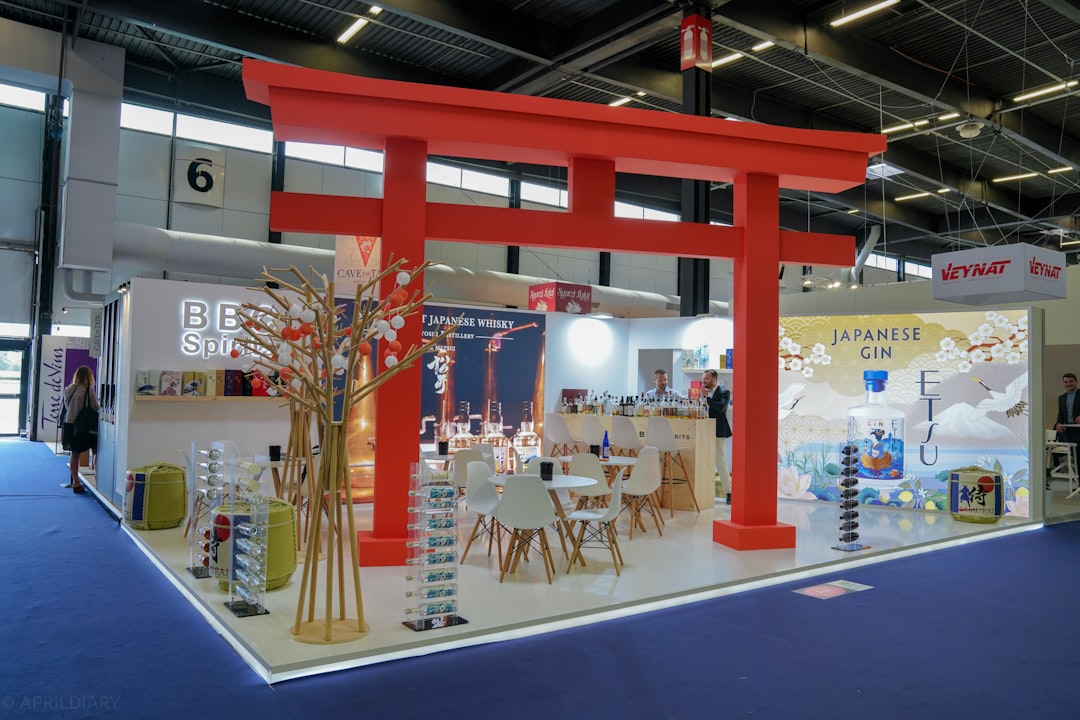


Circular economy thinking has reached the booth itself. Take-back schemes for stand elements have matured into operational infrastructure at the major European venues during 2023 to 2026.
There are four schemes. RAI Amsterdam’s circular-stand-elements programme. Messe Frankfurt’s component-bank pilots. Fira Barcelona’s reuse partnerships. Messe Düsseldorf’s EuroShop sustainable-construction-tied scheme. They close the loop on stand-material circularity that the upstream sustainable-sourcing decisions started.
Some exhibitors integrate scheme participation into their stand-design and dismantle workflows. They are extracting commercial credit alongside sustainability documentation. Others treat take-back as a post-fair afterthought. They are missing both the credit and the documentation.
This article walks through the four major European venue take-back schemes operating at scale in 2026. It sets out the EUR credit ranges scheme participation typically delivers. It covers the operational disciplines that scheme participation requires. It covers the interaction between take-back schemes and the modular-vs-custom build-type decision. It covers the disposal routes that non-scheme-eligible stand elements actually follow. And it covers the verification disciplines that defend circular-economy claims at audit.
It draws on venue-published scheme documentation. It draws on FAMAB and IFES practitioner content. It draws on UFI Sustainable Development Committee 2025 framework reporting. And it draws on the dismantle-stage data shared by several European stand-tech specialists.
The four major European take-back schemes
Four venue-operated take-back schemes are running at scale across European exhibition venues in 2026.
RAI Amsterdam Circular Stand Elements Programme. The most mature scheme operating in 2026. The programme documents redeployment of frames, panels, lighting fixtures, and furniture across subsequent fairs at the venue. It has formal procedures for qualifying components. It has formal procedures for dismantle-stage coordination. And it has formal procedures for redeployment tracking.
RAI Amsterdam ties the scheme to the venue’s own ISO 20121 certification. It offers space-rate discounts, waste-fee waivers, and marketing co-branding for participating exhibitors. The scheme is operated through the venue’s in-house sustainability office with engagement from major stand-builder partners.
Messe Frankfurt Component Bank Pilot. A growing pilot programme running with several stand-builder partners. They take back qualifying modular elements at dismantle. They reintroduce them on subsequent builds.
The component bank operates as a managed inventory of redeployable elements. When a fair concludes, the qualifying components return to the bank. When a subsequent build needs equivalent elements, the bank supplies them. New fabrication is not required. The scheme operates principally through Messe Frankfurt’s sustainable-stand-construction programme tied to the venue’s sustainability incentive tiers.
Fira Barcelona Reuse Partnerships. A connection-and-coordination model rather than a venue-operated bank. The scheme connects exhibitor stand elements at dismantle with builder-side and community-side redeployment routes through Fira’s sustainability office.
The model is less centralised than the RAI and Messe Frankfurt schemes. But it supports a broader range of redeployment destinations. These include community-organisation uses (set design for cultural events, school refurbishment, NGO project support). They also include subsequent stand-building uses.
Messe Düsseldorf EuroShop Sustainable Construction Programme. Tied to the EuroShop sustainable-construction guideline. Exhibitors at EuroShop and at other Messe Düsseldorf fairs can participate in component-redeployment routes coordinated by the venue. The participation is tied to broader sustainable-construction documentation requirements. The scheme operates on a tri-annual rhythm tied to the EuroShop cycle.
Outside these four venues, take-back schemes are emerging but less developed. Many European venues now offer waste-handling discounts for redeployable elements. They do not operate formal redeployment infrastructure. The discount is meaningful, typically EUR 200 to 800 per fair on dismantle waste. But it does not provide the integration with subsequent reuse that the formal schemes deliver.
The EUR credits scheme participation delivers
The credits vary by scheme and by the redeployability of the stand elements.
| Credit type | Typical range (EUR per fair) | Schemes that offer it | Eligibility considerations |
|---|---|---|---|
| Space-rate discount at next fair | 800-3,500 | Messe Frankfurt, Messe Düsseldorf | Requires returning exhibitor with documented prior-fair participation |
| Waste-handling fee waiver at dismantle | 600-2,200 | All four major schemes | Requires qualifying redeployable elements at scheme threshold |
| Component-value cash credit | 400-1,800 | RAI Amsterdam, some specialist schemes | Requires qualifying components matching scheme inventory needs |
| Marketing co-branding value | Non-cash | All four major schemes | Requires scheme-participation documentation |
| ISO 20121 audit documentation credit | Non-cash but procurement-relevant | All four major schemes | Requires complete documentation chain |
| Total monetary capture per fair (typical) | 1,800-7,500 | Across schemes | Sustainable build participating in scheme |
Take a typical 75 square metre sustainable build participating in a venue take-back scheme. The total monetary capture runs EUR 1,800 to 7,500 per fair. That sits against the operational requirements that scheme participation imposes. Some exhibitors run multi-fair calendars across the venues that operate the schemes. For them the cumulative annual capture can reach EUR 5,000 to 25,000.
The marketing co-branding value and the ISO 20121 audit documentation credit are harder to quantify. But they support the broader sustainability-positioning value the schemes contribute. Several large European exhibitors have published case studies on this. They estimate the marketing-value contribution at EUR 8,000 to 40,000 per fair. That applies when the scheme participation is integrated into broader brand-positioning communications.
“The scheme-participation credit is meaningful at scale but the more durable value is the ISO 20121 audit documentation. The scheme participation produces evidence that procurement teams reference, sustainability auditors verify, and CSRD disclosures incorporate. The cash credit is the visible part; the documentation value is the structural part.” Common framing from sustainability leads at large European exhibitors, 2025
What scheme participation actually requires operationally
Scheme participation requires five operational disciplines.
Design-stage alignment. The stand must be designed with redeployable components rather than single-use construction, which constrains some design choices. The design discipline is the upstream decision. It determines whether scheme participation is operationally possible. Stands designed for single-use construction cannot meaningfully participate in take-back schemes. That holds regardless of dismantle-stage discipline.
Materials documentation. Chain-of-custody documentation must establish that materials are sourced from sustainable origins and tagged for tracking through the redeployment chain. The documentation discipline is the same as the broader sustainable-materials documentation discussed in the adjacent sourcing-guide article. There is one extra requirement. The components are tagged for scheme tracking.
Dismantle-stage coordination. The dismantle process must separate redeployable elements from non-redeployable waste, with packaging and handling appropriate for the redeployment route. The discipline requires coordination between the builder’s dismantle team and the venue’s scheme operations. It also requires coordination with any third-party redeployment partners involved in the scheme.
Redeployment-route documentation. The scheme requires evidence of where the elements actually go after dismantle. That closes the audit loop on the circular-economy claim. The documentation typically takes the form of scheme-specific paperwork. That means intake confirmation from the scheme operator. It also means redeployment notifications when components return to subsequent uses.
Scheme-specific paperwork. Each scheme has submission requirements and eligibility checks. Each also has credit-claim documentation that the exhibitor or builder must produce. The paperwork is typically administered through the scheme operator’s portal or through dedicated submission forms.
The total operational effort for scheme participation typically runs 8 to 25 hours per fair. That spans the design, build, dismantle, and documentation phases. The effort is concentrated in the builder relationship rather than in the exhibitor’s own operations. Some exhibitors select builders fluent in scheme participation. They experience the operational burden as a procurement-decision-once rather than a per-fair effort.
How take-back schemes interact with the modular-vs-custom decision
Modular and hybrid builds align naturally with take-back schemes. Their structural components are designed for redeployment by default. Modular systems from Octanorm, Aluvision, Beematrix, and T3 are explicitly engineered for multi-cycle reuse. Their components track through the schemes with straightforward documentation.
Custom builds align less naturally with take-back schemes. Bespoke joinery, sculpted feature elements, and stand-specific construction typically cannot redeploy to other contexts. They produce minimal scheme credit. The exception is custom builds with modular structural skeletons. That is the hybrid build pattern discussed in the adjacent modular-vs-custom decision framework article. There the structural elements participate in the scheme. The bespoke surface treatments do not.
The build-type decision should account for take-back scheme economics when evaluating the multi-fair lifecycle cost. Take a 75 square metre stand running 4 fairs annually at venues with active take-back schemes. The arithmetic looks roughly as follows:
| Build type | Typical scheme credit per fair (EUR) | 5-year cumulative credit (EUR) | Build-type lifecycle interaction |
|---|---|---|---|
| Pure modular | 3,500-7,500 | 70,000-150,000 | Full scheme participation across multi-fair calendar |
| Hybrid (modular skeleton, bespoke surfaces) | 2,000-5,500 | 40,000-110,000 | Structural elements participate; bespoke elements typically do not |
| Custom (single-use) | 0-800 | 0-16,000 | Minimal scheme participation; waste-handling waiver only |
| Cumulative credit advantage of modular over custom | 2,700-6,700 per fair | 54,000-134,000 | Material differentiator on 5-year multi-fair calendars |
The cumulative credit advantage of modular over custom on a multi-fair calendar is material. It supports the broader cost-economics argument for modular builds. That argument applies at exhibitors running multiple fairs per year.
What happens to non-modular stand elements at dismantle
Non-modular stand elements follow several disposal routes in 2026.
Reclaimed-timber networks. Specialist operators in Frankfurt, Amsterdam, Milan, and Barcelona accept FSC-certified custom timber. They re-grade it for subsequent uses: architectural fit-out, furniture making, future stand projects. The networks have matured significantly during 2023 to 2026. They now operate at scale that can absorb most European fair-week custom-timber output.
Furniture-resale networks. Stand-specific furniture often resells through second-hand commercial-furniture operators rather than redeploying through stand take-back schemes. The resale value is typically modest: EUR 50 to 250 per piece for mid-quality stand furniture, EUR 200 to 800 for premium pieces. But the disposal route is genuine. It produces documented disposal-route audit-trail.
Specialist-recycler routes. Bespoke aluminium and steel elements typically flow through scrap-metal recyclers with documented downstream uses. The economic value at scrap-metal prices is modest. But the recycling rate is high. The disposal route is straightforward.
Energy-recovery and landfill. The residual fraction that cannot redeploy or recycle typically flows through municipal waste handling at the venue. The objective on a sustainable build is to minimise the residual fraction. Tier-one programmes typically achieve below 10 percent of stand mass to energy-recovery or landfill. Leading programmes push below 5 percent.
“Our 2025 EuroShop build achieved 92 percent stand-mass redeployment-or-recycling against the 8 percent residual to energy recovery. The number is the headline our marketing team uses but the operational achievement is the documentation chain that supports the claim. Five years ago we would have made the same claim without the documentation; now the documentation is what makes the claim defensible.” Common framing from European sustainability leads, 2025
The verification disciplines
Three verification disciplines support the circular-economy claim at audit.
Mass-balance documentation. Every kilogram of stand material at dismantle is tracked to its disposal route. The percentages by route are calculated and retained. The routes are redeployment, recycling, energy-recovery, and landfill. The mass balance produces the headline circularity figure, e.g. “92 percent of stand mass redeployed or recycled”. It also produces the underlying audit-trail that supports the figure.
Redeployment-evidence collection. Scheme participants typically receive evidence that specific elements were redeployed to specific subsequent uses. The evidence carries photographic or documentary proof of the subsequent use. The evidence is the strongest form of circularity proof. It closes the loop on the redeployment claim with named subsequent use.
Independent verification. FAMAB Green Award submissions and ISO 20121 surveillance audits both verify scheme-participation claims and the supporting documentation. They give independent confirmation that the circular-economy outcomes match the marketing claims. The independent verification is the formal audit layer that procurement teams and CSRD-reporting workflows reference.
Exhibitors who skip the verification disciplines typically discover at audit time that their scheme-participation claims cannot be substantiated. The remediation is to retain documentation discipline through the dismantle-and-aftermath window. That is when the documentation is most easily collected. The alternative is reconstruction at audit time, when the evidence base has degraded.
How Exhibition Stands EU surfaces take-back-scheme-fluent builders
The /builders directory on Exhibition Stands EU tags verified builders against the take-back schemes they have participated in at European venues. Those tags are: RAI Amsterdam circular-stand-elements participation. Messe Frankfurt component-bank engagement. Fira Barcelona reuse-partnership track record. Messe Düsseldorf EuroShop sustainable-construction participation.
Use the take-back-scheme filter on the /builders hub to shortlist by track record. Then request scheme-aware proposals from the top three matches via /rfq. The /calculator lets you model scheme-credit capture against multi-fair calendar economics.
Related reading
- Sustainable Booth Materials Europe Sourcing Guide, the upstream materials decisions that determine scheme eligibility
- ISO 20121 Exhibition Stand Certification Cost ROI, the certification framework that pairs with scheme participation
- Embodied Carbon Exhibition Stand Measurement Reporting, the carbon-accounting context for circular-economy claims
- Modular vs Custom Decision Framework, the build-type decision that determines scheme-eligibility structurally
- Booth Cost Calculator, modelling scheme-credit capture against multi-fair lifecycle economics
References and primary sources
- ISO 20121:2024 Event Sustainability Management Systems
- RAI Amsterdam Sustainability Strategy 2025-2028
- Messe Frankfurt Sustainable Stand Construction guideline 2026
- Fira de Barcelona Bcomes Sustainable programme documentation
- Messe Düsseldorf EuroShop Sustainable Construction Guideline
- UFI Sustainable Development Committee, Circular Economy in Events Report 2025
- FAMAB Green Award circular-economy scoring framework 2025
- IFES Sustainability Stream circular-stand-elements playbook 2025
- AUMA Sustainability Atlas 2025, Association of the German Trade Fair Industry
- Karlsson, “Circular economy in temporary built environments: take-back schemes at European exhibition venues,” Journal of Cleaner Production, 2024, DOI 10.1016/j.jclepro.2024.140987
FAQFrequently asked questions
Four major European venues operate take-back schemes at scale in 2026. RAI Amsterdam runs the most mature circular-stand-elements scheme, with documented procedures for redeploying frames, panels, lighting fixtures, and furniture across subsequent fairs at the venue.
Messe Frankfurt operates a component-bank pilot programme with several stand-builder partners that take back qualifying modular elements at dismantle and reintroduce them on subsequent builds. Fira Barcelona’s reuse partnerships connect exhibitor stand elements at dismantle with builder-side and community-side redeployment routes.
Messe Düsseldorf operates a similar programme tied to its sustainable-construction guideline at EuroShop. Outside these four venues, take-back schemes are emerging but less developed; many venues offer waste-handling discounts for redeployable elements without operating formal redeployment infrastructure.
The credits vary by scheme and by the redeployability of the stand elements. Direct credit on space-rate at the next fair (offered by Messe Frankfurt and Messe Düsseldorf at qualifying tiers) typically runs EUR 800-3,500 against next-fair space cost. Waste-handling fee waivers (offered across most schemes) typically save EUR 600-2,200 on dismantle waste cost.
Cash credits or component-value recognition (offered by RAI Amsterdam and some specialist schemes) typically run EUR 400-1,800 on qualifying components. Brand-positioning value through scheme participation marketing (offered across all schemes) is harder to quantify but supports the broader sustainability-positioning value the schemes contribute.
The total monetary capture on a typical 75 sqm sustainable build participating in a venue take-back scheme runs EUR 1,800-7,500 per fair, against the operational requirements that scheme participation imposes.
Scheme participation requires five operational disciplines. First, design-stage alignment: the stand must be designed with redeployable components rather than single-use construction, which constrains some design choices. Second, materials documentation: chain-of-custody documentation must establish that materials are sourced from sustainable origins and tagged for tracking through the redeployment chain.
Third, dismantle-stage coordination: the dismantle process must separate redeployable elements from non-redeployable waste, with packaging and handling appropriate for the redeployment route. Fourth, redeployment-route documentation: the scheme requires evidence of where the elements actually go after dismantle, which closes the audit loop on the circular-economy claim.
Fifth, scheme-specific paperwork: each scheme has submission requirements, eligibility checks, and credit-claim documentation that the exhibitor or builder must produce.
Modular and hybrid builds align naturally with take-back schemes because their structural components are designed for redeployment by default. Modular systems from Octanorm, Aluvision, Beematrix, and T3 are explicitly engineered for multi-cycle reuse, and their components track through the schemes with straightforward documentation.
Custom builds align less naturally: bespoke joinery, sculpted feature elements, and stand-specific construction typically cannot redeploy to other contexts and produce minimal scheme credit. The exception is custom builds with modular structural skeletons (the hybrid build pattern) where the structural elements participate in the scheme even though the bespoke surface treatments do not.
The build-type decision discussed in the adjacent modular-vs-custom decision framework article should account for take-back scheme economics when evaluating the multi-fair lifecycle cost.
Non-modular stand elements (custom timber joinery, bespoke fabricated furniture, sculpted display elements, specialist lighting fixtures) follow several disposal routes in 2026. Reclaimed-timber networks: specialist operators in Frankfurt, Amsterdam, Milan, and Barcelona accept FSC-certified custom timber and re-grade it for subsequent uses (architectural fit-out, furniture making, future stand projects).
Furniture-resale networks: stand-specific furniture often resells through second-hand commercial-furniture operators rather than redeploying through stand take-back schemes. Specialist-recycler routes: bespoke aluminium and steel elements typically flow through scrap-metal recyclers with documented downstream uses.
Energy-recovery and landfill: the residual fraction that cannot redeploy or recycle typically flows through municipal waste handling at the venue. The objective on a sustainable build is to minimise the residual fraction; tier-one programmes typically achieve below 10 percent of stand mass to energy-recovery or landfill.
Three verification disciplines support the circular-economy claim audit. First, mass-balance documentation: every kilogram of stand material at dismantle is tracked to its disposal route, with the percentages by route (redeployment, recycling, energy-recovery, landfill) calculated and retained.
Second, redeployment-evidence collection: scheme participants typically receive evidence that specific elements were redeployed to specific subsequent uses, with photographic or documentary proof of the subsequent use.
Third, independent verification: FAMAB Green Award submissions and ISO 20121 surveillance audits both verify scheme-participation claims and the supporting documentation, providing independent confirmation that the circular-economy outcomes match the marketing claims. Exhibitors who skip the verification typically discover at audit time that their scheme-participation claims cannot be substantiated.