Working-at-height incidents are the largest single cause of serious injuries on European exhibition builds. The published statistics from Berufsgenossenschaft (the German workplace accident insurance body), INAIL (the Italian equivalent), and the UK Health and Safety Executive all show working-at-height incidents accounting for 35-45 percent of serious injuries on temporary event and exhibition construction.
The compliance framework that has emerged from EU Directive 2001/45/EC and the national implementations is the operational response - a layered set of regulations covering risk assessment, equipment selection, fall-arrest systems, PPE, and competent supervision that every European exhibition build must operate inside.
This article walks through the working-at-height framework as it applies to exhibition stand construction at major European venues, with the practical disciplines that stand builders use to keep crews safe and compliance audits clean. It covers the regulatory baseline, the equipment selection rules, the PPE specifications, the venue enforcement patterns, and the incident-response protocols that determine the consequences when something goes wrong.
The guidance below draws on EU Directive 2001/45/EC, national implementations in Germany (BetrSichV), Italy (D.Lgs. 81⁄2008), France (Code du travail), the Netherlands (Arbobesluit), Spain (RD 2177⁄2004), and the UK (Working at Height Regulations 2005), and on observed enforcement practice at major European exhibition venues.
The regulatory baseline
EU Directive 2001/45/EC establishes the minimum framework for working at height across the European Union. The directive is implemented at the national level with country-specific extensions; the framework principles are consistent across all EU member states.
The core principles:
- Hierarchy of controls. Work at height should be avoided where reasonably practicable. Where it cannot be avoided, work equipment should be selected to prevent falls (collective protection like guard rails, mesh barriers, or fully enclosed work platforms). Where fall prevention is not practicable, fall arrest systems should be used. PPE is the last line of defence, not the primary control.
- Suitable work equipment. Equipment selection must consider the work type, the working environment, the duration of the work, the load, and the conditions under which the equipment will be used.
- Competent supervision. All working-at-height activity must be supervised by a competent person with relevant training and experience.
- Risk assessment. A documented risk assessment must precede any working-at-height activity, identifying hazards, controls, and emergency procedures.
- Training and certification. All workers performing work at height must have appropriate training and certification under national workplace safety standards.
“The working-at-height framework is the most consistently enforced safety regulation at European exhibition venues. Venues that tolerate other safety shortcuts will stop work immediately if they observe non-compliance with working-at-height rules. The consequences of an incident are severe enough that the venues have no operational tolerance for cutting corners on this specific framework.” - IELA Operations Committee, safety compliance benchmarks 2025
The practical implication: stand builders operating at European venues must treat working-at-height compliance as a non-negotiable operational baseline, with the same priority as on-time delivery and budget control.
When working-at-height regulation applies
EU Directive 2001/45/EC and most national implementations treat any work above 2 metres above floor as working at height. Some implementations (notably the UK Working at Height Regulations 2005) apply the framework to any work where a fall could cause injury, which can include work below 2 metres in specific circumstances.
For practical stand construction purposes, the working-at-height framework applies to:
- Work on ladders above 1 metre of step height
- Work on tower scaffolds
- Work on mezzanine decks or upper levels of multi-level stands
- Work on suspended elements (hanging banners, suspended structures)
- Work on roof structures of stands with covered ceilings
- Work near edges of upper-level platforms regardless of edge protection
- Rigging operations at ceiling level
The framework does not apply to standard floor-level stand assembly, transport-and-positioning of components on flat floor, or work on low platforms (under 1 metre) where the consequences of any fall are limited.
The hierarchy of controls
The hierarchy of controls that European stand builders apply on any working-at-height task:
| Priority | Control type | Examples for exhibition use |
|---|---|---|
| 1 | Eliminate work at height | Design stand to assemble at floor level; use telescopic mechanisms |
| 2 | Collective fall prevention | Tower scaffold with guard rails; enclosed work platform on MEWP |
| 3 | Collective fall arrest | Safety nets below work area; air bags for very high work |
| 4 | Personal fall restraint | Short lanyard preventing access to unprotected edge |
| 5 | Personal fall arrest | Full body harness with energy-absorbing lanyard |
| 6 | Personal protection only | Helmet, high-vis, boots (always; not a fall prevention measure) |
The principle: select the highest practicable control. If the work can be done with a tower scaffold (collective prevention), that is preferred over the same work with a harness and lanyard (personal arrest). The harness is the backup, not the primary control.
For exhibition rigging operations - hanging banners, installing suspended structures, working at ceiling level - the work necessarily happens at the edge where collective prevention is impractical. Fall arrest with full-body harness is therefore the standard control, supplemented by collective protection (guard rails, exclusion zones below) where possible.
Equipment selection: scaffolding vs MEWPs vs ladders
The work equipment options for exhibition stand construction:
Rolling tower scaffolds. Stable working platforms at any height up to typical exhibition ceiling. Daily inspection required; certified erector for assembly. Typical 2026 cost EUR 250-450 per week rental plus EUR 350-650 erection labour. Best for extended work at fixed positions.
Mobile elevated work platforms (MEWPs) - scissor lifts. Vertical-only movement. Fast deployment, limited horizontal reach. Typical 2026 cost EUR 350-650 per day with operator. Best for work at multiple positions along a straight path.
Mobile elevated work platforms (MEWPs) - boom lifts. Articulated movement, horizontal and vertical reach. Slower deployment than scissor lifts but greater positional flexibility. Typical 2026 cost EUR 550-950 per day with operator. Best for work requiring access around obstacles or at varying heights.
A-frame ladders. Permitted for short-duration, light work only. Not suitable for sustained working at height. Should not be used as a primary work platform on European exhibition builds; routinely flagged as non-compliant by venue safety teams when used for stand assembly tasks.
Extension ladders. Permitted for access only (reaching a higher platform); not for working from. Properly secured at top and bottom.
The choice between scaffolding and MEWPs depends on the work profile. For routine stand assembly at fixed positions, scaffolding is operationally cheaper and provides stable extended-work platforms. For rigging operations requiring movement between positions, MEWPs are operationally preferable.
“We have largely shifted from scaffolding to MEWPs for exhibition rigging operations over the last five years. The reason is operational flexibility - we can move between rigging points faster on a boom lift than we can dismantle and re-erect scaffolding. The cost premium is acceptable for the time savings. For routine stand assembly we still use tower scaffolds because the work pattern fits stable platforms.” - Senior operations manager, European exhibition rigging contractor working at Messe Frankfurt, Düsseldorf, and Milan
PPE specifications
The PPE specifications for European exhibition build crews, under EU Directive 89/656/EEC and national implementations:
| PPE item | Standard | Required for |
|---|---|---|
| Safety boots S3 | EN ISO 20345 | All on-site work; mandatory baseline |
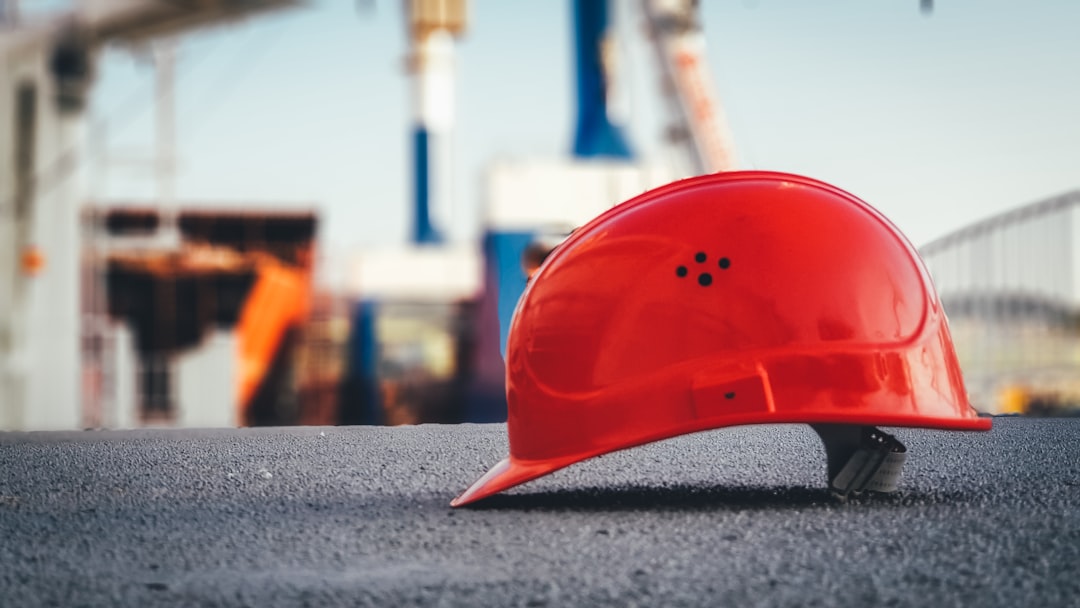
| Hard hat with chinstrap | EN 397 | All on-site work; chinstrap engaged for work at height |
| Hi-vis clothing Class 2 | EN ISO 20471 | All on-site work; daylight visibility |
| Safety glasses | EN 166 | Tasks with impact risk (drilling, cutting, hammering) |
| Cut-resistant gloves | EN 388 | Handling sharp materials |
| Hearing protection | EN 352 | High-noise zones (above 85 dB) |
| Respiratory protection | EN 149 (FFP1-FFP3) | Dust-generating tasks; cutting MDF, sanding |
| Full body harness | EN 361 | All working at height |
| Energy-absorbing lanyard | EN 355 | Fall arrest applications |
| Self-retracting lifeline | EN 360 | Working at height with vertical movement |
| Connector / karabiner | EN 362 | Connecting harness to anchor point |
| Anchor point | EN 795 | Structural attachment for fall arrest |
The PPE specifications are universal across European venues. Country-specific variations are typically about which certifications are recognised for foreign-trained crews and which inspection schedules apply to the equipment.
The venue safety induction
Most major European exhibition venues require build-up crews to complete a venue safety induction before commencing work. The induction typically covers:
- Venue layout including emergency exits and assembly points
- Local emergency procedures and contact numbers
- Local supervisor identification and reporting chain
- Country-specific PPE requirements
- Venue-specific working-at-height rules including height limits, anchor point locations, and exclusion zone procedures
- Incident reporting protocols
The induction typically takes 1-2 hours per crew at the start of build-up and is a venue-controlled requirement. Crews that arrive without home-country safety training are usually not permitted to work at height regardless of induction completion - the induction adds venue-specific knowledge to existing safety training, it does not replace it.
The induction is operationally important for foreign crews. UK, US, Japanese, and Korean stand-builder crews working at German venues must adapt to the German specific framework, which has nuances around equipment inspection, supervisor identification, and incident reporting that differ from home-country practice.
Risk assessment documentation
Every working-at-height task on a European exhibition build requires a documented risk assessment. The assessment typically covers:
- Task description. What work will be performed, at what height, on what equipment.
- Hazard identification. Specific fall hazards, falling object hazards, equipment failure hazards, environmental hazards.
- Risk evaluation. Probability and severity assessment for each identified hazard.
- Control measures. Specific controls applied at each level of the hierarchy.
- PPE specification. Specific PPE required for the task.
- Emergency procedures. What happens if something goes wrong, including rescue procedures.
- Supervisor and worker identification. Named individuals responsible.
The risk assessment is typically prepared by the stand-builder’s safety officer in advance of build-up and reviewed by the venue safety team during build-up induction. Verbal risk assessment without documentation is not acceptable at major European venues.
“We require every stand-builder operating at our venue to submit a written risk assessment for any working-at-height task before build-up commences. About 15 percent of the assessments are returned for revision because they are incomplete. The discipline of preparing the assessment in advance is what catches the safety gaps before the work starts, not during.” - Health and Safety Manager, major German exhibition venue
Incident response protocols
The incident response protocol that European venues operate:
- Immediate emergency response. Venue security and on-site medical team coordinate medical evacuation if required. Work in the affected area is suspended pending investigation.
- Regulatory notification. Serious incidents are notified to the local labour inspectorate (Berufsgenossenschaft in Germany, INAIL in Italy, HSE in the UK, INSST in Spain, Inspectie SZW in the Netherlands). Some incidents trigger automatic on-site inspection.
- Root-cause investigation. Venue safety team coordinates investigation with the stand-builder’s safety officer. Documentation is collected from the work area before any cleanup that could disturb evidence.
- Insurance notification. The stand-builder’s liability insurance and the exhibitor’s stand insurance are notified per policy requirements. Liability allocation between parties is determined by the investigation.
- Regulatory consequences. Minor incidents may trigger additional safety training requirements; serious incidents can trigger venue ban for the stand-builder company, regulatory prosecution, and significant civil liability exposure.
The mitigation is rigorous compliance with the published working-at-height framework, properly inspected equipment, competent supervision throughout build-up, and a culture that treats safety compliance as non-negotiable rather than as a checklist to be completed when convenient.
The fall arrest system specification
For working-at-height tasks where personal fall arrest is the primary control (exhibition rigging being the dominant example), the system specification:
Anchor point. Must be rated for fall arrest loads (minimum 12 kN under EN 795). Ceiling rigging points at exhibition venues are typically certified to this standard. Improvised anchor points (lighting tracks, ductwork, structural beams) are not acceptable.
Connector. EN 362 rated connector (karabiner) attaching the harness lanyard to the anchor point. Self-locking design required.
Lanyard. Energy-absorbing lanyard (EN 355) or self-retracting lifeline (EN 360). The lanyard limits the arrest force on the worker’s body during a fall to under 6 kN.
Harness. Full-body harness (EN 361) properly fitted to the worker. Sit harnesses and chest harnesses are not acceptable for fall arrest; only full-body harnesses provide adequate force distribution.
Rescue plan. Documented procedure for retrieving a worker after a fall. Suspension trauma can become life-threatening within 15-30 minutes if a fall victim remains suspended without rescue. The rescue plan must be operationally feasible with the equipment and personnel available on-site.
The system as a whole must be inspected before each shift and tested at intervals specified by the equipment manufacturer.
Country-specific enforcement patterns
Working-at-height compliance is enforced consistently across major European venues but with country-specific nuances:
Germany. Berufsgenossenschaft inspection is well-organised and unannounced site visits during major fair build-ups are routine. Documentation must be on-site and complete. The German enforcement culture is rule-following rather than principle-based; comply with the published rules and incidents are rare.
Italy. D.Lgs. 81⁄2008 framework with regional variation in inspection intensity. Documentation requirements are demanding. The Italian enforcement culture is sometimes inconsistent but the published framework is rigorous.
France. Code du travail compliance with strong labour inspectorate involvement. The French approach emphasises competent supervision and recognised training certifications.
Netherlands. Arbobesluit framework with relatively flexible enforcement that emphasises outcomes. Documentation is required but the inspection style is more outcome-focused than rule-focused.
Spain. RD 2177⁄2004 framework with significant venue self-policing. Major venues maintain strict standards but smaller venues may have lighter enforcement.
UK. Working at Height Regulations 2005 with strong Health and Safety Executive enforcement. The UK approach is risk-based; the regulator focuses on outcomes and material risk rather than checklist compliance.
Related reading
- Health and Safety Compliance: Fire Load, Signage, and Evacuation at European Stands - the broader safety framework
- On-Site Handling and Rigging Venue Monopolies - the certified-rigger requirements that align with working-at-height
- Stand Approval and Permits at European Venues - the approval process that includes safety sign-off
- Build-Up and Dismantle Scheduling at European Exhibition Venues - working-at-height timing within the build calendar
- Insurance and Liability for European Exhibitors - liability allocation for working-at-height incidents
References and primary sources
- EU Directive 2001/45/EC on minimum safety and health requirements for the use of work equipment at height
- EU Directive 89/656/EEC on minimum safety and health requirements for personal protective equipment
- BetrSichV Betriebssicherheitsverordnung, German implementation of work equipment safety, bmas.de
- D.Lgs. 81⁄2008 Italian consolidated workplace safety act
- UK Working at Height Regulations 2005, hse.gov.uk
- French Code du travail working-at-height provisions
- Dutch Arbobesluit working-at-height implementation
- Spanish RD 2177⁄2004 on working-at-height requirements
- EN 361, EN 355, EN 360, EN 362, EN 795 European standards for fall arrest equipment
- IELA Operations Committee safety compliance benchmarks 2025-2026, iela.org
FAQFrequently asked questions
EU Directive 2001/45/EC and national implementations treat any work above 2 metres above floor as working at height with full compliance requirements. Some national implementations (UK Working at Height Regulations 2005) apply the framework to any work where a fall could cause injury, which can include work below 2 metres in specific circumstances.
For practical stand construction purposes, any work on a ladder, on a tower scaffold, on a mezzanine deck, or on suspended elements above 2 metres triggers full working-at-height protocol: risk assessment, suitable work equipment selection, certified equipment use, fall-arrest provision where edges are not protected, appropriate PPE, and competent supervision.
Fall restraint prevents the worker reaching a position from which they could fall - typically a short lanyard that physically prevents access to an unprotected edge. Fall arrest catches the worker after a fall has begun - a full-body harness with a deceleration lanyard or self-retracting lifeline that limits the fall distance and arrest forces.
Fall restraint is the preferred system because it prevents the fall entirely; fall arrest is the backup when the work necessarily takes place at or near an edge where restraint is impractical. EU regulations require fall restraint to be used in preference to fall arrest where reasonably practicable.
Exhibition rigging operations and high-level stand assembly typically use fall arrest because the work itself happens at the edge.
The standard PPE specification for European exhibition build crews under EU Directive 89/656/EEC and national implementations: safety boots (S3 or S5 rated for site work), hard hat (EN 397 standard, with chinstrap when working at height), high-visibility clothing (EN 20471 Class 2 minimum for general site work), safety glasses for tasks involving impact or particulate risk, and task-specific PPE (gloves for handling, ear protection in high-noise zones, respiratory protection for dust).
For working at height, additional PPE includes full-body harness (EN 361), energy-absorbing lanyard (EN 355), and helmet specifically rated for working at height with chinstrap engaged. Venues typically enforce PPE compliance through site supervision and may stop work for crews operating without appropriate equipment.
Generally yes for the underlying training but with venue-specific adaptation required. A stand-builder crew certified under UK working-at-height regulations or US OSHA standards or Japanese workplace safety regulations brings the foundational training, but the specific equipment requirements, the venue safety induction, and the local emergency procedures vary by country.
The operational pattern: home-country trained crews complete venue-specific safety induction at the start of build-up, which covers venue layout, emergency procedures, local supervisor identification, and country-specific PPE specifications. The induction typically takes 1-2 hours per crew and is a venue-controlled requirement.
Crews that arrive without home-country training are usually not permitted to work at height regardless of induction.
Immediate consequences: emergency medical response coordinated through venue security and on-site medical team; work in the affected area suspended pending investigation; the local labour inspectorate (Berufsgenossenschaft in Germany, INAIL in Italy, HSE in UK, INSST in Spain) typically notified; venue safety team initiates root-cause investigation; documentation collected from the work area before any cleanup.
Longer-term consequences depend on the incident severity and the investigation findings: minor incidents may result in additional safety training requirements; serious incidents can result in venue ban for the stand-builder company, regulatory prosecution, and significant insurance and civil liability exposure.
The mitigation is rigorous compliance with the published working-at-height framework, properly inspected equipment, and competent supervision throughout build-up.
Both are commonly used at major European venues with different operational profiles. Scaffolding (typically rolling tower scaffolds at exhibition height) offers stable working platforms for extended work but requires erection time, daily inspection, and crew familiarity with proper assembly.
Mobile elevated work platforms (MEWPs) - scissor lifts and boom lifts - offer faster deployment and movement but limit working time at any single position. The cost arithmetic: rolling tower scaffold typically EUR 250-450 per week rental plus erection labour; scissor lift rental typically EUR 350-650 per day with operator.
For routine stand construction, scaffolding is usually more cost-efficient; for rigging operations and quick movements between work positions, MEWPs are operationally preferable. The choice should be made at the build-up planning stage based on the specific work profile.