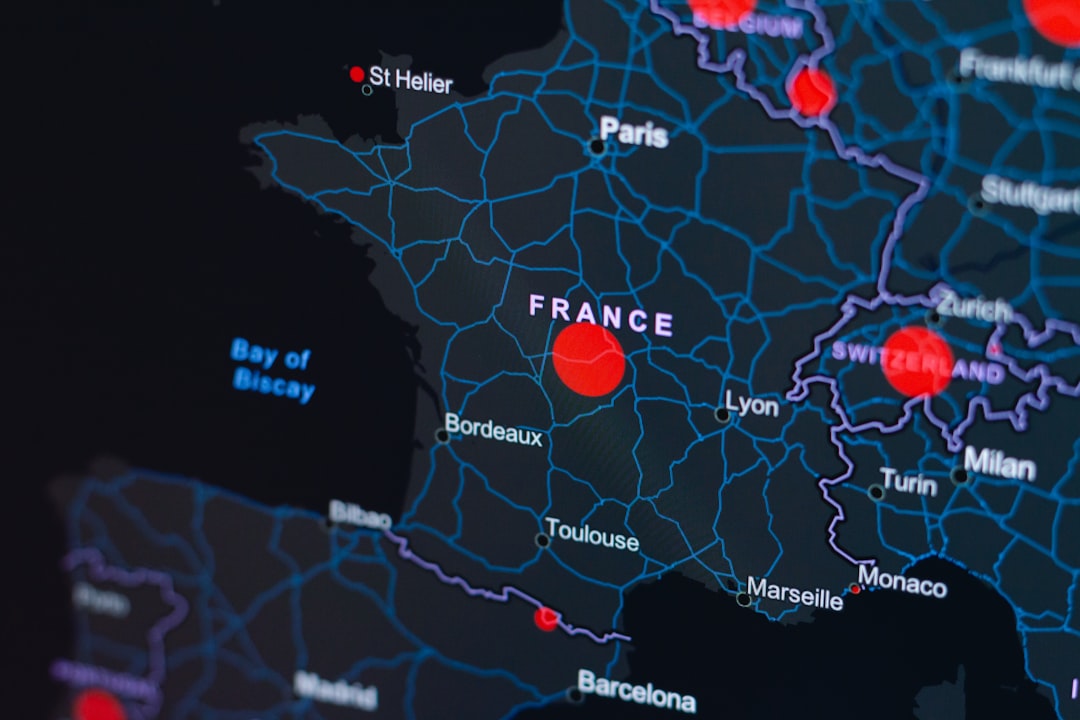
France generates roughly EUR 9 billion in annual trade-fair activity, the second-largest European market after Germany. The activity concentrates in three operational hubs: Paris (Paris Expo Porte de Versailles, Paris-Nord Villepinte, Le Bourget), Lyon (Eurexpo), and Cannes (Palais des Festivals).
A second tier of venues, Nantes Expo, Marseille Chanot, Strasbourg Wacken, Toulouse, Bordeaux, handle regional and sector-specific events but the supplier-density math and pricing reality center on those three primary hubs.
French stand-building is more design-led and more agency-driven than German fabrication. Many French firms emerged from communications and event-agency backgrounds rather than from carpentry workshops, which produces a different operational profile: stronger on creative direction and brand integration, sometimes weaker on raw build discipline and hall-logistics expertise.
Buyers who walk into a French builder relationship expecting German-style precision-of-process get surprised, both for better (creative outputs that German fabricators rarely deliver) and for worse (slipped install timelines, less reliable change-order pricing).
This directory organizes French builders by the four operational realities of the three hub regions, the major fairs they serve, and the 2026 pricing tiers that actually exist.
How French stand-building economics work
French fair-space rental sits at 90-95% of German pricing for comparable square meterage. French labor costs roughly match German (skilled-worker rates have converged across the last 6 years), so the net all-in for a 75 sqm island at SIAL Paris compares to ANUGA Cologne within a 5-10% margin.
What changes is the cost distribution and the procurement experience:
- More design hours per project. French builders typically front-load creative concept work; expect 2-3 design iterations before contract sign-off, charged at EUR 110-160/hour by Tier 2 firms and EUR 180-280/hour at Tier 1. Some firms bundle this; others bill separately. Always ask which.
- VAT treatment is rigorous. French VAT (TVA at 20%) reverse-charging for EU-cross-border B2B is standard but the paperwork chain (Form 13S, intra-community-VAT-number verification, sometimes Form CA12 quarterly) requires builders with proper accounting infrastructure. Builders without it generate post-fair accounting headaches that surface 2-4 weeks after the show.
- Convention collective rates. French stand-build labor is governed by Convention Collective Nationale du Spectacle Vivant Privé (or Convention Foire et Salons in some firms). Install crews carry mandatory minimum rates, overtime triggers, and required breaks. Builders pricing materially below the collective rate are either under-quoting (you pay the difference in change orders) or breaking labor law (which surfaces as an enforcement action mid-install, freezing your stand).
Realistic 2026 build-cost bands for French builders, expressed per square meter of booth floor area:
- Modular system stands: EUR 300-470/sqm. Octanorm Maxima, BeMatrix, Aluvision systems. Comparable to German modular pricing with a 5-8% premium for French labor and design overhead.
- Hybrid (modular skeleton plus custom skin and architecture): EUR 520-820/sqm. The center of gravity for the French market by volume.
- Custom architectural: EUR 850-1,600/sqm. Where Tier 1 French agencies compete. SIAL, Maison & Objet, VivaTech flagship stands operate in this tier.
- Premium architectural with double-decker: EUR 1,500-2,400/sqm. Concentrated in the top-12 French builders. Cannes Lions and Maison & Objet headline stands at the very top of this band.
What these per-sqm prices exclude (consistent across all French builders, always missing from initial quotes):
- Stand-space rental at French majors: EUR 260-360/sqm at Porte de Versailles, EUR 240-330/sqm at Villepinte, EUR 220-310/sqm at Eurexpo Lyon.
- Hall services (electricité, eau, internet, gaz): EUR 2,200-4,200 for 75 sqm at Paris venues; EUR 1,700-3,000 at Lyon.
- French TVA on services and rentals: 20%. EU-VAT-registered exhibitors reclaim, but cash-flow during the fair is real.
- Mandatory fair-organizer insurance (assurance obligatoire): EUR 700-1,400 typical at Paris Expo.
- Freight and ATA carnet handling for non-EU exhibitors: EUR 1,600-3,200.
- French fire-marshal compliance (Commission Communale de Sécurité): mandatory documented review for custom structures over 2.5m. Builders should provide the rapport de sécurité as part of standard handover. EUR 500-1,100 per build.
A fully-loaded budget for a hybrid 75 sqm island at SIAL Paris 2026 lands in the EUR 80,000-115,000 range. At Maison & Objet, EUR 75,000-105,000. At Eurexpo Lyon mid-tier fairs, EUR 65,000-90,000.
The three hub regions and their builder ecosystems
Paris, Porte de Versailles, Paris-Nord Villepinte, Le Bourget
Paris hosts roughly 65% of French trade-fair activity by exhibitor count. The three primary venues serve different sector clusters:
Paris Expo Porte de Versailles (city venue, 220,000 sqm gross): Hosts VivaTech (annual, 180,000 visitors in 2025), Salon de l’Agriculture, Equip’Hôtel, and most consumer-facing flagship shows.
Paris-Nord Villepinte (outer-suburb venue, 240,000 sqm gross): Hosts Maison & Objet, SIAL Paris, Batimat, Premiere Vision Paris, and Intermat. (VivaTech is held at Porte de Versailles, not Villepinte; the Paris Air Show is held at Le Bourget.)
Le Bourget (airport-adjacent): Specialized for Salon du Bourget (Paris Air Show, biennial, ~325,000 visitors), one of the world’s three largest aviation shows.
The Paris stand-building ecosystem is the densest in France: roughly 180 named firms with active Paris operations, clustered in three industrial belts:
- Saint-Denis / Aubervilliers (immediate north): fabrication shops, sub-contractor printers, warehousing
- Massy / Wissous (south): larger-format fabrication, transport logistics
- Marne-la-Vallée / Villepinte ring: builders with permanent Villepinte crews
Tier 1 architectural builders at Paris (EUR 1,200-2,200/sqm):
The Paris flagship tier includes communications-agency-rooted firms with deep brand-experience portfolios, plus pure architectural fabricators with design-direction in-house. These execute the headline stands at VivaTech for major French tech corporates, Maison & Objet anchor brands, and SIAL multinational food-corporate stands.
Wait list: 11-15 months for VivaTech and SIAL slots. Brief acceptance is selective on creative-fit, not just budget.
Tier 2 hybrid plus strong custom (EUR 600-1,000/sqm):
Roughly 90 named firms with design-and-build capability. Most have in-house workshops in the Saint-Denis/Aubervilliers belt and trusted sub-contractor networks for graphics and AV. Sweet spot for 75-200 sqm builds.
Tier 3 modular and small-stand (EUR 340-540/sqm):
Octanorm and BeMatrix specialists serving smaller exhibitors. Best for first-time French-fair exhibitors testing the market.
Operational considerations specific to Paris:
- VivaTech week (mid-June) is the most expensive build window in France. Hotel rates triple, crew availability collapses, premium on every line item runs 20-30%.
- Le Bourget logistics are aviation-grade strict. Builders without Bourget-specific experience routinely miss the security badge process (10-day lead time on crew passes during Salon).
- Parisian agency-style billing. Many French builders prefer monthly retainer or phase-based invoicing rather than line-item itemization. Insist on line-item quotes for budget control.
Lyon, Eurexpo
Eurexpo Lyon (140,000 sqm) hosts Pollutec (environment), SIRHA (hospitality, biennial, 220,000 visitors), Solutrans (commercial vehicles), Global Industrie, EUROBOIS (wood), Piscine Global, and a strong cluster of B2B sector fairs. Lyon also hosts the biennial Mondial des Métiers and several niche pharma and machinery shows.
The Lyon stand-building market is smaller than Paris (roughly 70 named firms with active Lyon operations) but more sector-specialized. Several builders have decade-long relationships with SIRHA’s hospitality cluster (custom kitchen-display fixturing that Paris generalists routinely under-quote).
Realistic pricing at Eurexpo:
- Modular: EUR 300-470/sqm (national pricing applies)
- Hybrid: EUR 480-740/sqm (5-10% below Paris; less design-premium pressure)
- Custom: EUR 720-1,200/sqm
Where Lyon-based builders excel:
- Sector-specific display capability (hospitality equipment, food-and-beverage fixturing, machinery demo stages) where generalist Paris-imported builders quote lower but execute worse
- Eurexpo-venue logistics: Pad. 4-6 cluster has specific freight-gate timing and ceiling-rigging constraints that Paris crews routinely misjudge on first visits
- Local industrial print and graphics supplier ecosystem (cheaper and faster than Paris equivalent)
Where to look elsewhere:
- Premium architectural builds: a Paris Tier 1 with a Lyon crew partnership handles these better
- Double-decker structures: Lyon has fewer specialists; expect Paris-imported design teams or 8-12 weeks longer lead time
Cannes, Palais des Festivals et des Congrès
Cannes hosts Cannes Lions (June, 14,000 industry attendees), MIPIM (real estate, 26,000 visitors), MIPCOM (TV content, 11,000 visitors), MIPTV, and ILTM (luxury travel). Total annual attendance crosses 90,000 across all events.
Cannes is a specialist sub-market. The Palais des Festivals is a city-venue with strict access rules, narrow corridors, and limited freight-gate windows. The local builder pool is small (about 25 named firms with active Cannes operations) and dominated by Côte d’Azur and Marseille-based firms.
Pricing at Cannes:
- Modular: rare format; Cannes events lean toward custom and hospitality-style fitouts
- Hybrid: EUR 700-1,100/sqm (Riviera premium on labor and logistics)
- Custom: EUR 1,000-1,800/sqm (Cannes Lions flagship stands at the top of band)
Operational considerations:
- Hotel-and-crew lodging is the single hardest part of building at Cannes. During Cannes Lions week, lodging within 30km is essentially fully-booked 9 months out and rates 3-5x normal.
- Yacht-stand combinations. Cannes has a unique convention where certain brands operate a Palais stand plus a chartered yacht in the harbor; logistics integration between the two is a specialist skill held by maybe 8 firms.
- Côte d’Azur builders dominate. A Paris-imported team operating in Cannes without a local partner pays material logistics premiums and lacks the local hospitality-vendor relationships that streamline execution.
Six screening filters that work for French builders
The French market rewards selection discipline because variance in operational reliability is wider than in Germany. These filters separate disciplined operators from charming-but-inconsistent ones.
1. Demand fair-specific case studies with photographic and contactable proof.
Ask for three stands the builder completed at your specific fair in the last 18 months, hall numbers, exhibitor names, install-week photos, contactable reference. Real builders deliver this within 24 hours. Generic “nous avons fait beaucoup de stands à Porte de Versailles” responses are a red flag.
2. UNIMEV or FSCEF membership.
UNIMEV (Union Française des Métiers de l’Événement) is the broad French trade-fair industry body. FSCEF (Fédération des Stands et Constructions Événementielles de France) is the stand-builder-specific federation. Membership requires audited financial standing and a code-of-conduct commitment. Not all good French builders are members (some prefer regional networks like the Île-de-France industry chambers), but absence of any trade body affiliation for a national-tier firm is suspicious.
3. In-house carpentry workshop, not pure project management.
Many French builders position as “agencies” without in-house build capacity, sub-contracting all fabrication. These firms produce reliable design-direction but variable build quality. Ask for a workshop visit (visite de l’atelier) before contracting. Disciplined operators show their workshops; pure project-management firms politely decline.
4. French TVA registration with EU-cross-border invoicing capability.
European exhibitors outside France need correctly-issued reverse-charge TVA invoices with intra-community VAT number verification. Builders without proper EU-cross-border infrastructure create accounting friction 2-4 weeks post-fair. Ask for a sample reverse-charge invoice format before contracting.
5. Project manager and project director both named in the contract.
French builds often involve a project director (responsible for client relationship and creative direction) plus a project manager (responsible for delivery and crew). Both should be named in the contract with their personal mobiles. Builds live or die at the project-manager level; insisting on this clause locks in the people, not just the firm.
6. Commission Communale de Sécurité documentation and structural compliance.
French fire-marshal regulations require Commission Communale de Sécurité (CCS) review for custom structures over 2.5m, with the rapport de sécurité provided 2 weeks before install. Builders who promise to “handle the paperwork on the day” routinely create install-day stress that delays stand readiness. Disciplined firms deliver this as standard handover documentation.
Fair-by-fair builder shortlist guidance
Specific firm names move enough that any list ages within 12 months. Here is the operational pattern for shortlisting at each major French fair:
For VivaTech (Paris Expo Porte de Versailles, June annually):
Brief 5-6 firms 13 months out. Expect 2-3 to decline on creative-fit grounds or capacity grounds, VivaTech is the most-oversubscribed French build window. The exhibitor calendar publishes 11 months ahead; builders allocate crew capacity off the published list. Late entries pay materially more.
For SIAL Paris (Porte de Versailles, October biennial):
Brief 4-5 firms 12 months out. SIAL has a preferred-supplier list that matters; ask each shortlisted builder whether they are on it. Food-display fixturing is a specialist skill, generalist builders deliver worse SIAL stands than food-and-beverage-sector specialists.
For Maison & Objet (Porte de Versailles, January and September annually):
Brief 4-5 firms 9 months out. Maison & Objet rewards design-led builders heavily; portfolio fit matters more than at most fairs. Insist on seeing the builder’s actual Maison & Objet portfolio, not just their general design work.
For SIRHA (Eurexpo Lyon, January biennial):
Brief 3-4 Lyon-local firms 10 months out. SIRHA’s hospitality-equipment display requirements reward Lyon-local specialists over Paris-imported teams.
For Salon du Bourget / Paris Air Show (Le Bourget, June biennial):
Brief 3-4 specialist firms 14 months out. Aviation-show specifics (security badging, freight handling for oversized aircraft components, on-stand aircraft display logistics) are a specialist sub-market. Generalist builders deliver worse Le Bourget stands than firms with documented aerospace portfolios.
For Cannes Lions, MIPIM, MIPCOM (Palais des Festivals):
Brief 3 firms 10 months out, prioritizing Côte d’Azur-local crews. The Palais venue logistics and lodging constraints make Paris-imported teams operationally risky without strong local partnerships.
What this directory does NOT replace
This guide replaces three things exhibitors often pay for and shouldn’t:
- Generic stand-builder “matching services” that charge 15-25% commission for shortlisting firms you could find with a few hours of research
- Listicle articles (“top 10 French stand builders”) that mostly recycle paid placements without operational depth
- Stand-builder broker networks that present as independent but actually pre-allocate exhibitors to partner firms
What this guide is not a substitute for:
- Site visits and in-person meetings with shortlisted builders. French builder relationships work substantially through trust built in person
- Fair-organizer preferred-supplier conversations. Each major French fair has its own informal preferred-supplier list; ask the fair sales team directly
- Cross-border legal and TVA counsel for first-time exhibitors from outside the EU
Where to start
For a first-time French exhibitor planning a 2026 stand:
- Identify your target fair (most exhibitors have one priority fair, not “France in general”)
- Filter our builder directory by city, most fairs map to one of the three hub regions
- Apply the six screening filters above to whittle the longlist to 3-5 firms
- Brief 3-4 firms 9-13 months ahead of the fair date
- Visit at least two workshops (ateliers) before contracting
The French stand-building market rewards exhibitors who treat builder selection as a multi-month relationship-building exercise rather than a procurement-bid exercise. Plan accordingly.
FAQFrequently asked questions
Modular system stands using Octanorm Maxima, BeMatrix or Aluvision run EUR 300 to 470 per sqm. Hybrid builds with a modular skeleton plus custom skin and architecture run EUR 520 to 820 and represent the centre of gravity by volume. Custom architectural builds run EUR 850 to 1,600, and premium architectural with a double-decker runs EUR 1,500 to 2,400.
A hybrid 75 sqm island at SIAL Paris 2026 lands in the EUR 80,000 to 115,000 range fully loaded. At Maison et Objet the equivalent is EUR 75,000 to 105,000, and at Eurexpo Lyon mid-tier fairs EUR 65,000 to 90,000. Stand-space rental runs EUR 260 to 360 per sqm at Porte de Versailles and EUR 240 to 330 at Villepinte.
French fire-marshal regulations require Commission Communale de Securite review for custom structures over 2.5 metres, with the rapport de securite provided two weeks before install. Budget EUR 500 to 1,100 per build. Disciplined firms deliver this as standard handover documentation, so require it in the contract rather than accepting a promise to handle the paperwork on the day.
Brief five to six firms 13 months out for VivaTech at Paris Expo Porte de Versailles, expecting two or three to decline on creative-fit or capacity grounds since it is the most oversubscribed French build window. For Salon du Bourget at Le Bourget, brief three to four specialist firms 14 months out, prioritising firms with documented aerospace portfolios and Bourget security-badging experience.