Digital elements on European exhibition stands have moved from novelty to baseline expectation over the past five fair cycles. A flagship-tier stand at IFA, MWC Barcelona, IBC, EuroShop, or ISE without significant digital presence reads as under-committed; a mid-size stand at any tier-one fair without at least one interactive screen reads as a missed opportunity. The question is no longer whether to include digital elements but which elements, at what scale, with what content, and at what cost.
This article documents the four dominant digital-element categories on European stands, LED video walls, interactive touchscreens, AR and VR demonstrations, and connected stand technology, alongside the content production conventions, the on-stand technical support requirements, and the ROI framework that separates investments that perform from investments that look impressive but generate no qualified leads.
It draws on the technical practices of LED supply specialists, the AV-integration conventions at the major European venues, and the post-fair lead-data debriefs that brand-experience leads at tier-one European exhibitors share within their internal communities.
What digital elements actually do on a stand
Digital elements perform three functions: attention capture from the aisle, deep-content delivery for engaged visitors, and demonstration of products that cannot be shown physically. Each function justifies different elements at different scales.
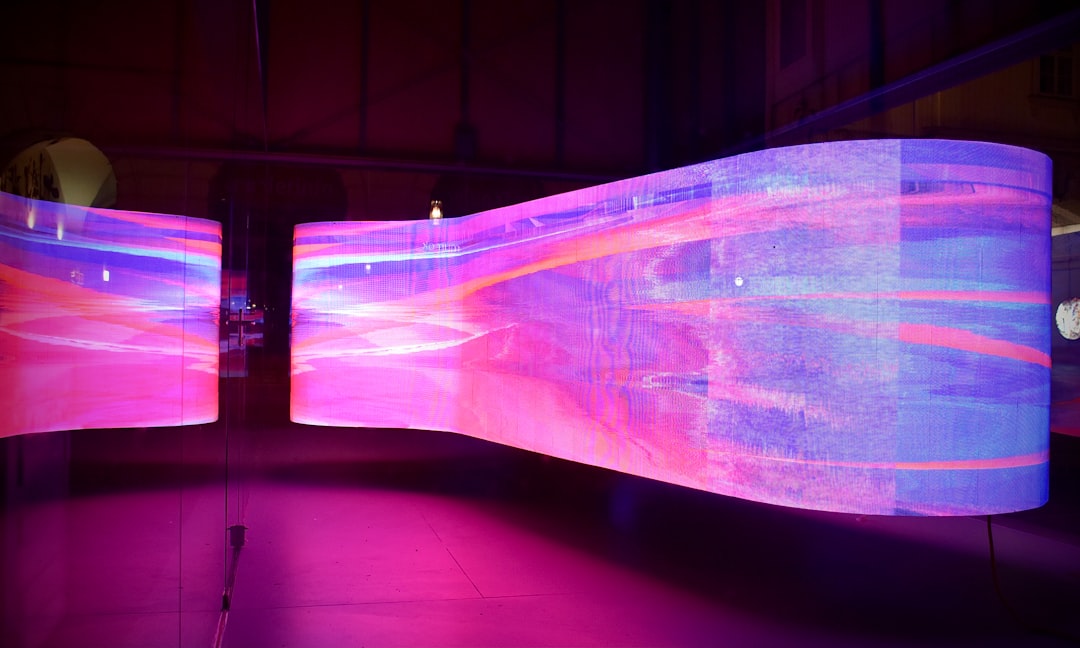
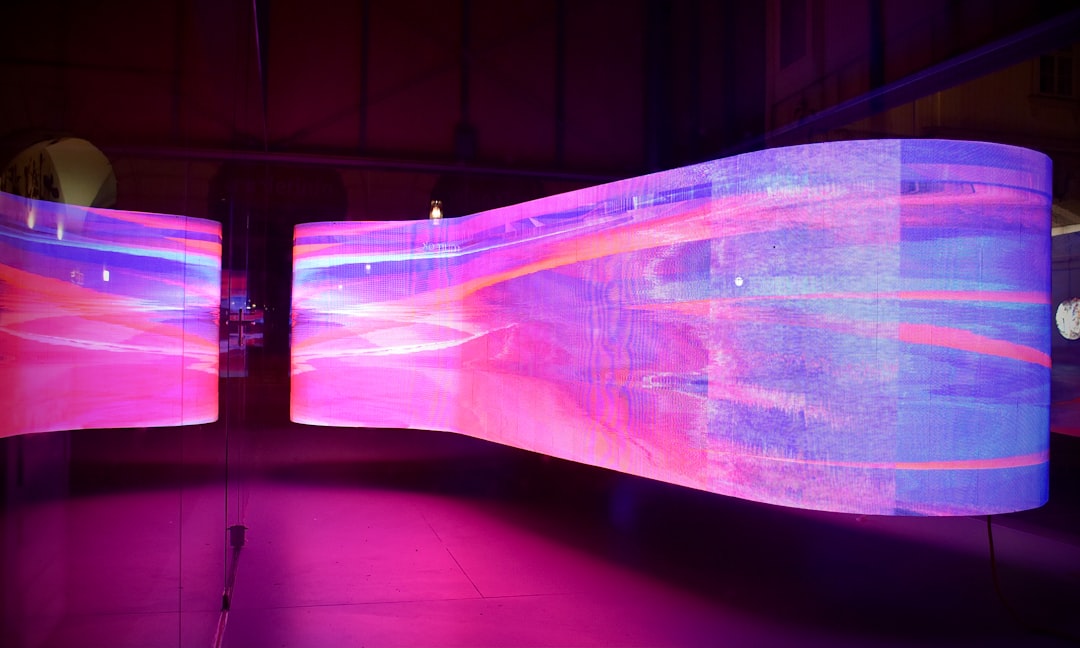
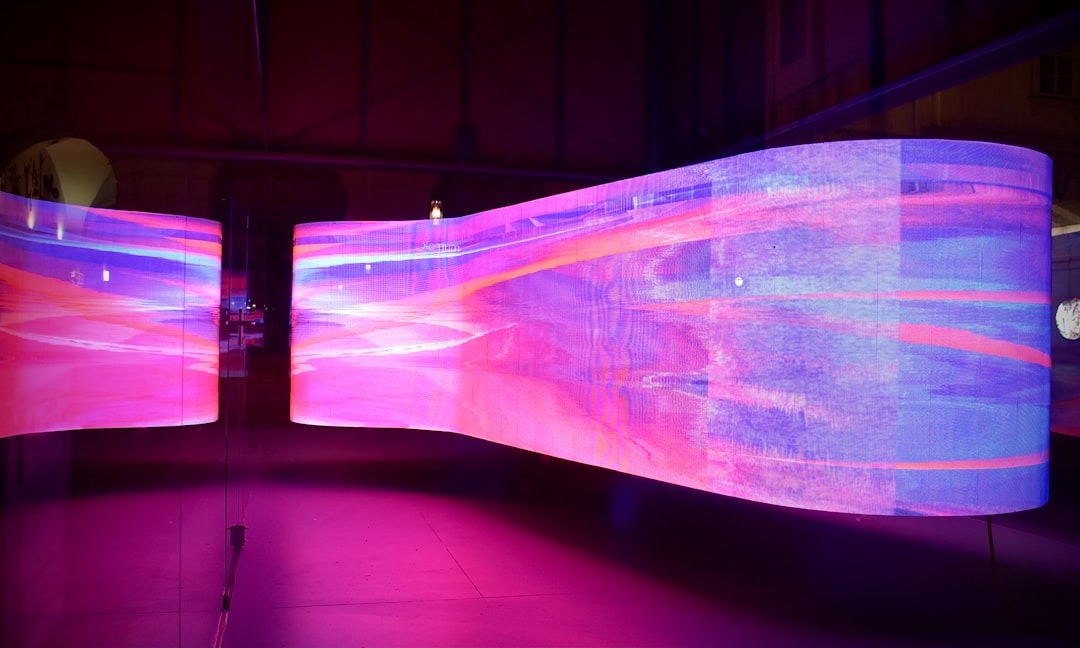
Attention capture. A large LED video wall with high-motion content visible from across the hall draws visitors to the stand the same way a backlit graphic does, but with movement, colour change, and the ability to refresh content across the fair day.
Attention-capture digital elements work best when they are large (above 8 sqm for indoor halls, above 16 sqm for halls with long sightlines), positioned at the aisle-facing brand surface, and loaded with content engineered for visibility at distance rather than detail at close range.
Deep-content delivery. Touchscreens, interactive software demos, and configurator tools deliver content that an engaged visitor wants to explore. The visitor has already entered the stand and is in a deeper engagement than the three-second aisle test allows; the digital element supports the deeper conversation by giving the visitor agency in what they explore.
Deep-content elements work best when they are role-targeted (configurator targeted at the buyer persona, calculator targeted at the technical evaluator, comparison tool targeted at the procurement specialist) rather than generic.
Demonstration of intangible product. AR, VR, and large-screen simulation deliver experience of products that cannot be physically present on the stand. Industrial machinery too large to ship, architectural installations that exist only in plans, software workflows that need scale and motion to communicate, all benefit from digital demonstration when the physical alternative is impossible or impractical.
Demonstration elements work poorly when the physical alternative was possible and the brand chose digital anyway.
“The first question we ask about any digital element is: what would this stand do instead of this digital element, and would that instead be better or worse? If the answer is that the digital element replaces something demonstrably worse, we keep it. If the answer is that the digital element adds novelty without replacing anything, we usually cut it.”, Common framing among brand-experience leads at tier-one European exhibitors
LED video walls: the dominant attention-capture element
LED video walls have displaced backlit graphics on most flagship European stands since 2020, driven by improving pixel pitch (closer viewing distance acceptable), falling cost per square metre, and the ability to refresh content across the fair without reprinting. The technology specification matters because the wrong pixel pitch produces either visible pixel grids at close viewing or unnecessary cost for distant viewing.
Pixel pitch selection. Pixel pitch (the distance in millimetres between adjacent LED pixels) determines minimum viewing distance for the wall to read as a continuous image rather than as visible pixels. The working European convention:
- P1.5-P2.5: Premium close-viewing applications. Minimum viewing distance 1.5-3 metres. Suitable for hospitality-zone screens, meeting-room displays, and any wall where visitors are likely to view at touching distance. Cost: EUR 850-1,400 per sqm rental, EUR 5,500-9,500 per sqm purchase.
- P3-P4 (P3.9 most common): Standard indoor applications. Minimum viewing distance 4-8 metres. Suitable for aisle-facing brand walls on stands where visitors mostly view from 4 metres or more. The most commercially common specification across mid-quality European stands. Cost: EUR 550-900 per sqm rental, EUR 3,800-6,500 per sqm purchase.
- P5-P6: Large-scale viewing, less detail visible at close range. Minimum viewing distance 6-15 metres. Suitable for ceiling-mounted walls visible from long sightlines, hall-entry feature walls, and exterior-grade applications. Cost: EUR 380-650 per sqm rental, EUR 2,400-4,200 per sqm purchase.
- P8-P10: Hall-spanning installations and exterior applications. Minimum viewing distance 15+ metres. Rarely used inside stand footprints but common in venue-wide branding and exterior-fair installations.
Brightness specification. Indoor walls typically run 500-1,000 nits; exterior or hall-entry walls visible against strong ambient run 1,500-3,500 nits. Higher brightness consumes more power and produces more heat; lower brightness can wash out against bright hall lighting. The working European indoor specification is 700-900 nits for most stand applications.
Content production. The single most common mistake on LED-wall investment: under-investing in content. A EUR 8,000 wall running stock video or static brand graphics produces lower engagement than a EUR 3,000 wall running custom-produced motion content targeted at the stand’s specific visitors. The cost of custom LED-wall content runs EUR 12,000-45,000 for a 90-180 second loop, depending on production complexity and 3D content requirements.
Touchscreens and interactive software demos
Touchscreens have a longer history on European stands than LED walls but are more frequently misused. The technology is mature and affordable; the failure mode is content that does not justify the visitor’s engagement.
Hardware specifications. Standard exhibition touchscreens run 32-65 inch in size at 4K resolution with capacitive touch. Cost: EUR 1,200-3,500 per screen for a 4-day fair including rental, content loading, and standard support. Wall-mounted, kiosk-style, and table-integrated form factors are all common; the form factor should match the visitor scenario the content addresses.
Content design that actually generates engagement. The dominant pattern from post-fair lead data: visitors engage with touchscreens that answer a specific question they came to the fair to answer.
Configurators (build your own product specification), comparison tools (compare our product to alternatives on the dimensions you care about), ROI calculators (input your variables, see the projected returns), and role-targeted product walkthroughs all generate 4-8 minutes of engagement per active user.
Generic content (brand brochures, product catalogues, video loops) generates 30-90 seconds per user and produces visible disinterest.
Content production timeline. Working European convention: 8-12 weeks for touchscreen content design and development, including 2-3 weeks of user-experience design, 4-6 weeks of build and testing, 1-2 weeks of integration and on-stand acceptance testing. First-time touchscreen content for a brand should double the timeline to leave buffer for the design iteration that produces actually-engaging experience rather than the first version anyone designs.
“We learned the configurator lesson at Hannover Messe. Our first touchscreen was a digital brochure. Visitors tapped, scrolled, left in under a minute. Our second touchscreen was a configurator targeted at procurement managers. Visitors built their specifications, took photos of their screens, requested follow-up meetings. Same hardware, completely different commercial result.”, Common post-mortem observation from European exhibition managers
AR and VR demonstration
AR and VR have moved from experimental category to mainstream digital element on European stands over the past three fair cycles. The technology is mature; the operational discipline is still developing.
When AR or VR pays off. The decision rule used by experienced exhibitors: AR or VR pays off when the product is too large, too expensive, too operationally complex, or too geographically distant to demonstrate physically on the stand.
Industrial machinery at Hannover Messe, automotive interiors at IAA Mobility, architectural installations at Cersaie, complex industrial workflows at K, and surgical equipment at medical-device fairs all benefit from AR or VR when physical demonstration is impossible or impractical.
When AR or VR does not pay off. The technology fails as decoration. Visitors who pick up a headset for novelty produce zero qualified leads, occupy stand staff with hardware support, and create visible queues that signal to other visitors that the experience is a curiosity rather than a substantive demonstration. The most common failure mode is brands deploying VR for products that could have been demonstrated physically and would have produced better engagement physically.
Content production reality. AR and VR content for stand use requires 12-20 weeks of production timeline including 3D asset creation, interaction design, hardware testing, and on-stand integration. Cost ranges from EUR 35,000 for a basic VR experience (single scene, limited interaction) to EUR 150,000+ for a polished, multi-scene experience with high production values.
The on-stand technical support is more demanding than other digital elements: a dedicated VR or AR operator must be present whenever the experience is open to visitors, both to manage hardware hand-off and to support visitors through the experience.
Connected stand technology
A category that has emerged in the past two fair cycles: integrated stand technology that connects visitor capture, lead qualification, content delivery, and follow-up workflows. The components:
- Lead-capture badge readers integrated with the venue’s badge scanning service, capturing visitor identity at stand entry rather than at end-of-conversation
- Heat mapping of visitor movement through the stand, identifying zones of high engagement and zones of low traffic
- Content analytics on touchscreen and digital-wall usage, identifying which content drives engagement and which is ignored
- Real-time CRM integration pushing captured leads directly into the brand’s sales pipeline rather than waiting for post-fair manual import
Connected stand technology pays off at scale (stands above 100 sqm with significant lead capture) and at brands with mature CRM and sales operations. At smaller scale or with less mature operations, the technology produces data that nobody acts on and adds cost without generating return.
Cost framework and ROI calculation
The table below summarises typical cost ranges for each digital element category on a mid-quality 100 sqm European stand at a tier-one fair.
| Digital element | Typical scale | Cost range (EUR) | Engagement metric | ROI justification |
|---|---|---|---|---|
| LED video wall (P3.9, 12 sqm) | Aisle-facing brand surface | 6,600-10,800 rental | Visible from 30+ metres | Replaces backlit graphics, refresh per fair day |
| Touchscreen (32-65 inch) | 2-4 units on stand | 2,400-14,000 rental | 4-8 min engagement per active user | Configurator or comparison tool drives qualification |
| VR demo (3-station rig) | 1 station on stand | 35,000-90,000 build + 4,000-8,000 fair operation | 6-12 min experience per visitor | Demonstrates product impossible to show physically |
| AR demo (tablet-based) | 2-4 tablets on stand | 12,000-35,000 build + 1,500-4,000 fair operation | 3-5 min experience per visitor | Adds dimension to physical product on display |
| Connected stand (badge + heatmap + CRM) | Stand-wide | 8,000-25,000 fair setup | Lead-capture rate uplift 30-60% | Direct pipeline integration |
| Custom LED-wall content (90-180 sec loop) | One-time production | 12,000-45,000 production | Content quality drives wall ROI | Generic stock content wastes wall investment |
| Touchscreen content development | Per experience | 18,000-65,000 production | Determines engagement minutes per user | Role-targeted content multiplies engagement |
The ROI calculation that experienced exhibitors apply: digital element investment is justified when the incremental qualified leads exceed the incremental cost divided by the brand’s lead value. A EUR 25,000 incremental digital investment at a brand with EUR 3,000 lead value justifies itself at roughly 9 additional qualified leads per fair, typically achievable when the digital element is well-targeted, often unachievable when the element is generic.
Content as the multiplier
The pattern that recurs across every digital element category: the hardware investment is a fraction of the investment that determines whether the element generates return. A EUR 8,000 LED wall running stock video produces poor return. A EUR 8,000 LED wall running EUR 25,000 of custom content produces strong return. The same multiplication applies to touchscreens, AR, VR, and connected stand technology.
“We started budgeting digital content as a separate line from digital hardware about four fair cycles ago. The content line is typically 1.5 to 3 times the hardware line. The ROI math only works if both lines are funded; cutting content to afford more hardware destroys the return on both.”, Common framing among Messe Frankfurt-approved stand builders
Worked example: digital element brief for a 130 sqm island at IBC Amsterdam
A broadcast-technology brand exhibiting at IBC on a 130 sqm island has the following digital element plan: a 16 sqm P3.9 LED video wall on the primary aisle face, four 55-inch touchscreens for product configurator demos, one VR demonstration of remote production workflow, integrated badge-capture and CRM connection.
Cost brief:
- LED wall (16 sqm P3.9 rental): Roughly EUR 11,200 for the 5-day fair including installation and operator standby.
- LED wall content (180 sec custom loop): Roughly EUR 28,000 production.
- Touchscreens (4 × 65-inch rental): Roughly EUR 8,000 for the fair.
- Touchscreen content (configurator + comparison tool, 12 weeks development): Roughly EUR 42,000 production.
- VR demonstration (single station, custom remote-production scenario): Roughly EUR 58,000 build + EUR 5,000 fair operation.
- Connected stand technology (badge + CRM integration): Roughly EUR 14,000 fair setup.
- AV technician (5 days on-stand): Roughly EUR 2,800.
Total digital element line: roughly EUR 169,000 across the fair. The line represents roughly 28 percent of an EUR 600,000 total stand build budget, high but defensible for a broadcast-technology brand whose product proposition depends on demonstrating capabilities that cannot be physically present on the stand.
How to act on this
Brief digital elements alongside the stand layout and graphics, not as later additions. The brief should specify the function each element serves (attention capture, deep content, demonstration), the engagement metric the element is targeted to deliver, the content production timeline, and the on-stand technical support requirement. The /builders directory at Exhibition Stands EU filters stand builders by their AV-integration competence and named digital-content partners.
For digital-line budgeting, the Booth Cost Calculator accepts per-element specifications and produces a costed estimate that benchmarks against the European market. For venue-specific digital element rules (power load, rigging for LED walls, AV signal infrastructure), the /fairs hub links to each venue’s published technical guidelines.
When briefing through /rfq, include the digital brief in the technical attachments and request that quotes itemise content production separately from hardware. Builders quoting digital as a bundled line typically allocate content as the line that gets cut when budget pressure appears, which destroys the ROI of the hardware investment.
Related reading
- Modular vs Custom Decision Framework, how build type affects digital integration
- Lighting Design, how LED walls contribute to ambient lighting
- Brand Storytelling on Stand, how digital elements serve the narrative
- Meeting Rooms and Hospitality Zones, digital elements within meeting rooms
- Stand Design Cost Breakdown, digital lines within the total stand budget
References and primary sources
- ISO/IEC 30141:2018 Internet of Things Reference Architecture (connected-stand reference)
- AVIXA standards for AV system performance (signal flow, calibration, support)
- AUMA (Association of the German Trade Fair Industry) guidance for digital stand elements, auma.de
- FAMAB Verband Direkte Wirtschaftskommunikation digital-element best practices, famab.de
- Messe Frankfurt Technical Guidelines 2026, AV and digital element power and rigging requirements
- RAI Amsterdam IBC technical handbook, broadcast-AV provisions
- Fira de Barcelona MWC technical guidelines, digital element infrastructure
- ISE (Integrated Systems Europe) exhibitor handbook, digital element conventions at the industry’s own showcase
FAQFrequently asked questions
European LED video wall pricing breaks down by pixel pitch: P2.5 (premium close-viewing) runs EUR 850-1,400 per sqm including frame, controller, and rental, P3.9 (standard indoor) runs EUR 550-900 per sqm, P5-P6 (large-scale viewing, less detail) runs EUR 380-650 per sqm. A 12 sqm P3.9 wall runs roughly EUR 6,600-10,800 all-in for a 4-day fair including rental, installation, calibration, and operator support.
Buying outright costs 6-10x rental but the inventory survives 8-15 fair cycles and amortises if the brand exhibits frequently.
Engagement depends almost entirely on content design. Well-designed touchscreen experiences (specific product configurator, comparison tool, ROI calculator targeted at the visitor’s role) routinely generate 4-8 minutes of engagement per active user at European B2B fairs.
Generic touchscreen experiences (brand brochures, video loops, product catalogues) generate 30-90 seconds of engagement and produce visible visitor disinterest. The fix is content design: invest in screen experiences targeted at specific visitor scenarios, not in generic content that any brand could deploy.
AR and VR work when the product is too large, too expensive, or too operationally complex to demonstrate physically on the stand. Industrial machinery at Hannover Messe, automotive interiors at IAA Mobility, architectural installations at Cersaie, and complex software workflows at IBC all justify AR or VR demonstration.
AR and VR do not work as decoration: visitors who pick up a headset for novelty produce zero qualified leads. The decision rule: deploy AR or VR only when the demonstration directly answers a question a qualified buyer would otherwise ask, and only with content that delivers that answer in under 4 minutes.
Working European convention: 8-12 weeks for touchscreen content design and development, 10-16 weeks for LED-wall video content (creative concept, production, editing, colour grading, format conversion), 12-20 weeks for AR or VR demonstration development (3D asset creation, interaction design, hardware testing, on-stand integration).
For first-time digital element deployment, double the timeline to leave buffer for the technical learning curve. Last-minute digital content rushes routinely produce unstable demos and poorly framed video that damages the brand presence the digital element was meant to enhance.
Working European convention: dedicated AV technician on standby (not necessarily on the stand) for any LED wall over 8 sqm, dedicated technician on the stand during opening hours for touchscreens above 4 units or for any interactive software demo, dedicated VR or AR operator on the stand whenever the experience is open to visitors. AV technician day rates at European venues run EUR 400-700 per day.
Underspending on technical support produces digital experiences that fail mid-demo in front of qualified prospects, the single most damaging digital-stand failure mode.
Digital elements typically score neutral to slightly positive on venue sustainability programmes. They consume meaningful power (an 8 sqm LED wall consumes 2-4 kW) but they displace printed graphics that would otherwise be produced, shipped, installed, and disposed.
The net sustainability calculation depends on the comparison: digital displacing single-use vinyl typically scores positive; digital additive to existing printed graphics scores negative. ISO 20121 documentation supports the calculation if the brand quantifies what the digital element replaced rather than added.