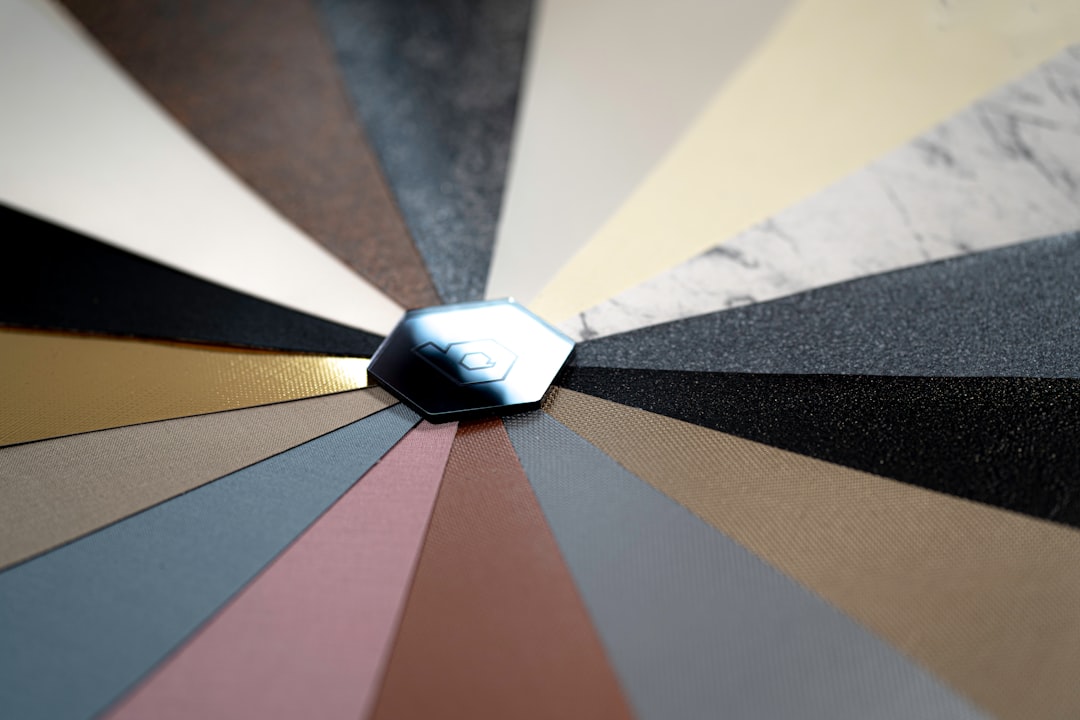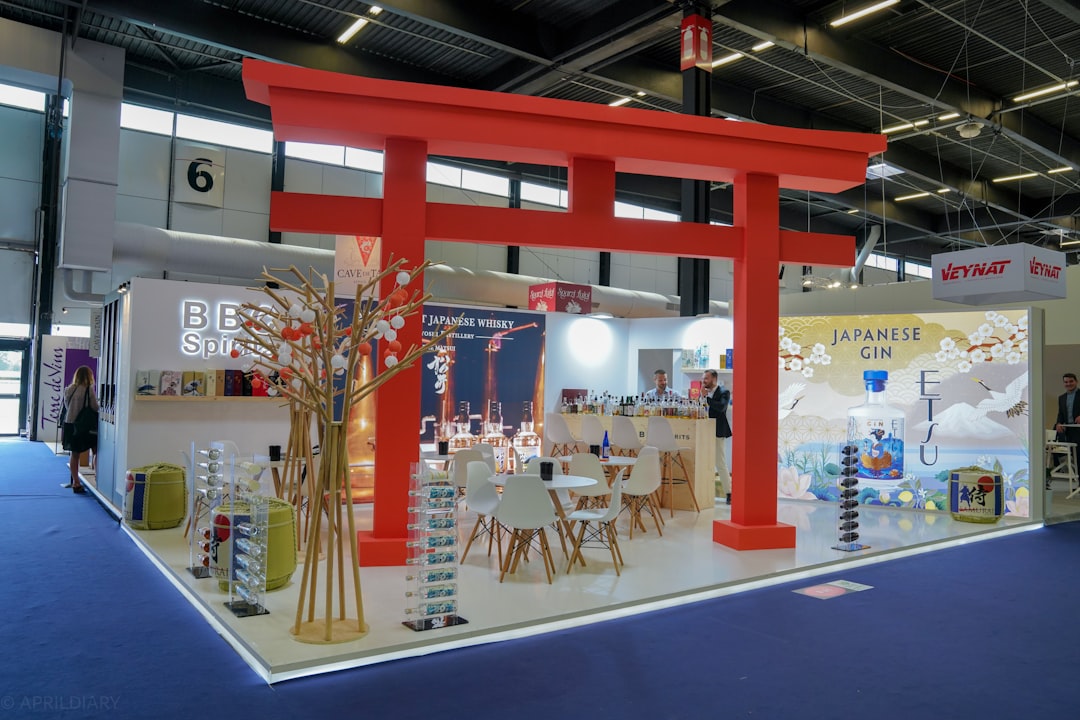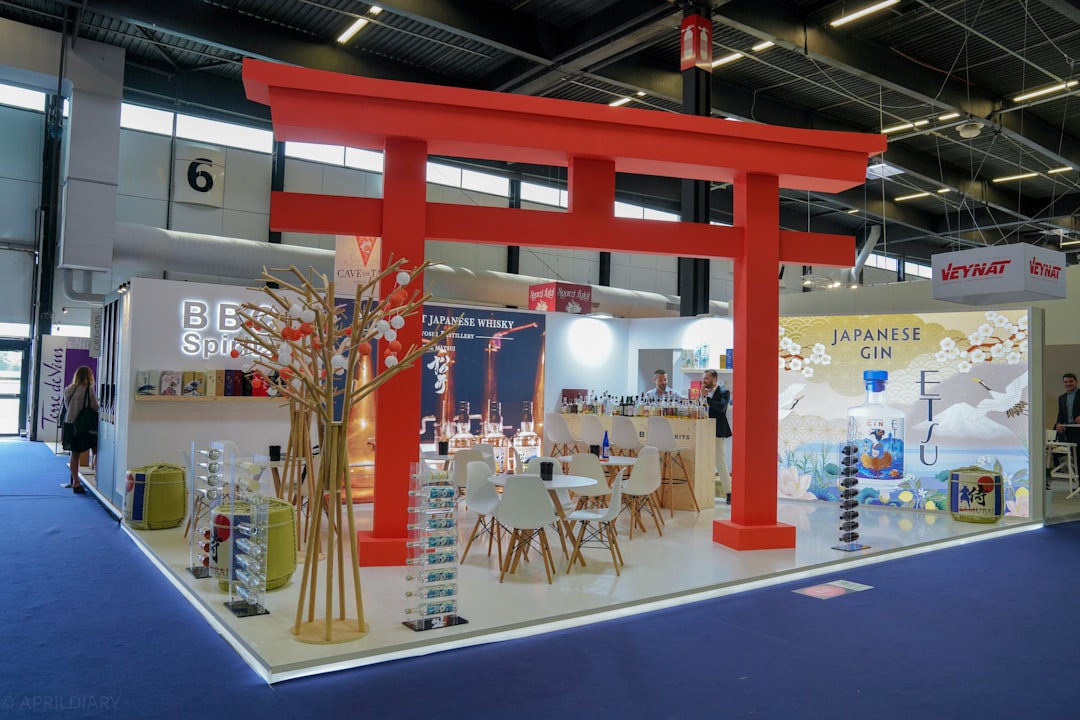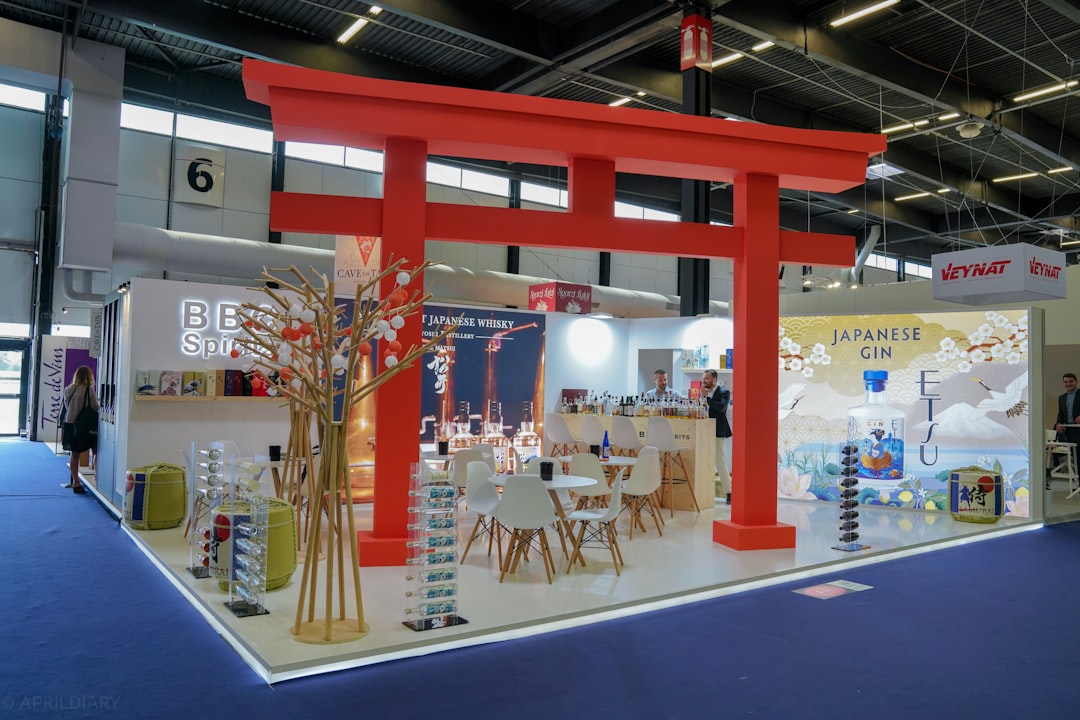
Material selection at the exhibition stand level determines three things simultaneously: build cost, sustainability scoring, and reuse lifecycle. Get the material brief right and the same physical stand can serve five to ten fair cycles, qualify for venue sustainability incentives, and read as premium from the aisle. Get it wrong and the stand reads as cheap, fails the venue’s emissions declarations, and becomes single-use waste at the end of the first fair.
This article documents the four material categories that dominate European exhibition stand construction, aluminium extrusion systems, FSC-certified timber, fabric SEG graphics, and low-VOC coatings and adhesives, alongside the venue compliance regime that shapes their use.
It draws on the technical guidelines of Messe Frankfurt, Messe Düsseldorf, Fiera Milano, RAI Amsterdam, ExCeL London, Koelnmesse, and Messe München, on the published specifications of the major European modular manufacturers (Octanorm, Aluvision, beMatrix, T3 Systems), and on the practical conventions FAMAB members apply in commissioned stand projects.
Why material discipline drives stand economics
The headline finding from five years of post-fair cost reviews across the AUMA-tracked German fair calendar: stands built on material-disciplined briefs cost 12-20 percent less per fair across a five-year lifecycle than stands built on briefs that treated material selection as a designer-aesthetic decision rather than an engineering decision. The reason is not subtle.
Aluminium extrusion frames, properly specified, survive eight to twelve fair cycles without replacement. Fabric SEG graphics survive three to six refreshes. FSC timber elements, treated and stored properly, survive five to eight fair cycles.
A stand briefed without material discipline tends to use single-fair materials (raw MDF, single-use vinyl wraps, non-modular structural elements) that produce premium first-fair aesthetics and zero second-fair value.
“We rewrote the standard brief template to ask material lifecycle questions before aesthetic questions about three fair cycles ago. The stand quality has not declined; the per-fair cost has dropped roughly fifteen percent, and the disposal cost at the end of each fair has nearly disappeared.”, Common post-mortem observation from European exhibition managers
The material brief is also where sustainability scoring is won or lost. ISO 20121 certification, FSC chain-of-custody documentation, low-VOC emissions declarations, and end-of-life disposal planning all depend on what was specified in the material brief, not on what the stand builder happens to use by default.
Aluminium extrusion: the structural skeleton
Aluminium extrusion frames form the structural skeleton of virtually all modern European exhibition stands above the entry-level segment. The four dominant systems, Octanorm Maxima, Aluvision Hi-LED, beMatrix, and T3 Systems kits, share enough dimensional and connector conventions that experienced builders mix components across manufacturers in single builds.
The systems differ in three ways that matter at brief stage:
- Profile depth and load class. Octanorm Maxima profiles run 40-100 mm in standard depth; Aluvision Hi-LED is engineered with profiles optimised for integrated LED panels; beMatrix favours lightweight profiles for portable applications; T3 Systems offers a broader range from 25 mm portable to 120 mm flagship profiles.
- Connector hardware. Each system has proprietary connector geometry, though third-party adapters allow cross-system assemblies at a small structural penalty.
- Channel widths for fabric and panel inserts. SEG fabric channels vary by 0.5-1 mm across the four systems; rigid panel channels vary by 1-2 mm. The variance is small but matters when graphics are sourced separately from the frame.
Aluminium extrusion is structurally near-indestructible for exhibition use. The failure modes are cosmetic (scratched anodised finish, deformed channel edges from rough handling) rather than structural. A well-maintained frame from any of the four major systems survives eight to twelve fair cycles without replacement; the connector hardware sometimes needs refresh at year five.
Cost of new aluminium frame, supplied and assembled for a 75 sqm modular stand, typically runs EUR 14,000-25,000 depending on profile depth and ceiling complexity. Used frame inventory at reputable European builders runs 40-60 percent of new pricing.
Timber: FSC certification and the chain-of-custody question
Timber appears in European exhibition stands in three functional roles: structural inserts (raised flooring substructures, mezzanine decking on double-deckers), feature elements (timber-clad meeting room walls, branded timber counters, decorative ceiling slats), and surface finishes (timber veneer over MDF substrates for premium wall and counter finishes).
FSC certification (Forest Stewardship Council chain-of-custody) is the dominant European procurement standard. PEFC (Programme for the Endorsement of Forest Certification) is also accepted at most venues but appears less often in stand briefs because brand-side procurement teams default to FSC. The cost premium for FSC-certified timber over uncertified equivalent runs 8-15 percent on the timber line, translating to 1-3 percent on the total stand build budget.
The chain-of-custody documentation is what venues and auditors look for, not the certification itself. A certified-timber procurement with no chain-of-custody documentation scores no better than uncertified timber in venue sustainability assessments. The documentation overhead is modest, the timber supplier provides the chain-of-custody certificate with the invoice, but exhibitors and builders new to the discipline routinely miss the step and lose the credit at venue submission.
Treated timber components survive five to eight fair cycles when stored in climate-controlled conditions between fairs. Untreated timber finishes (raw oak, raw walnut, untreated pine) survive one to three fair cycles before visible weathering or damage forces replacement.
“The FSC question is not whether the certification is worth the premium. The certification is worth the premium. The question is whether your builder actually files the chain-of-custody documentation with the venue at submission, because if they do not, you paid the premium for nothing.”, Common framing among brand-experience leads at tier-one European exhibitors
Fabric SEG: the graphics revolution
Silicone Edge Graphics (SEG), dye-sublimated polyester fabric with a thin silicone bead sewn into the edge, slotting into the edge of an aluminium frame, has displaced rigid printed PVC panels on roughly 70-80 percent of European stand builds since 2020.
The advantages over rigid panels are operational rather than aesthetic:
- Weight. A 3 m × 2.5 m SEG fabric weighs roughly 1.5-2 kg. The rigid PVC equivalent weighs 12-15 kg. The shipping and handling difference is enormous at fleet scale.
- Shipping volume. SEG fabric folds flat into a single flight case for an entire stand. Rigid panels require dedicated panel crating, typically tripling the shipping volume.
- Graphics refresh. A SEG fabric panel swaps in 5-10 minutes per frame channel. A rigid panel swap typically takes 30-60 minutes plus removal of the previous panel.
- Cost at print scale. Dye-sublimation printing on polyester at exhibition scale runs EUR 35-55 per sqm finished; rigid PVC printing runs EUR 65-95 per sqm finished.
The disadvantages are real and worth knowing:
- Close-touch surfaces. SEG fabric does not handle being leaned on, gripped, or touched repeatedly. It is unsuitable for hospitality bar fronts, counter wraps, or any surface visitors will physically interact with. Rigid panels or branded vinyl remain dominant for those applications.
- Backlighting requirements. SEG with rear LED backlighting requires specific fabric weights and weave structures to display evenly. Standard SEG fabric in front-lit applications does not transfer well to backlit applications without specification change.
- Acoustic transparency. SEG fabric passes sound, which is sometimes a feature (acoustic-treated walls) and sometimes a bug (meeting room walls that visitors expect to be sound-isolating).
Cost of SEG print, supplied and installed for a 75 sqm stand with typical graphic coverage (60-80 sqm of fabric across feature walls, ceiling tiles, and aisle-facing brand surfaces), typically runs EUR 3,500-6,500.
Low-VOC compliance: the air-quality regime
Volatile organic compound emissions from coatings, adhesives, and panel materials accumulate inside enclosed stand spaces during build and persist into the fair days. The European regulatory regime around indoor-air emissions has tightened steadily, and several tier-one venues now require emission declarations for any coating or adhesive applied inside the hall.
The relevant standards:
- EN 16516:2017, Construction products: Assessment of release of dangerous substances. The European-wide reference for emissions testing methodology.
- AgBB scheme (Germany), Health-related evaluation of emissions of volatile organic compounds. The de facto European benchmark adopted by venue procurement teams at Messe Frankfurt, Messe Düsseldorf, and Messe München.
- A+ label (France), Indoor air emissions class label, increasingly accepted by venues outside France as a procurement default.
Materials that typically require low-VOC compliance documentation: paints applied to stand walls inside the hall, adhesives used in surface lamination, raised-floor underlayment foams, sealants used around joints. The cost premium for compliant materials over conventional equivalents typically runs 5-12 percent on the affected line.
The compliance overhead is not just material cost. Application timing matters: low-VOC coatings applied less than 24 hours before the fair opens still emit at non-trivial rates during opening hours, and several venues now enforce a 48-hour cure window for any coating applied inside the hall. The practical workaround is to factory-pre-finish panels and assemble inside the hall rather than spray-finishing on site.
Cost-and-lifecycle summary table
The table below summarises typical cost ranges, expected lifecycle, and sustainability scoring weight for the dominant material categories on European stands.
| Material category | Cost range (EUR per sqm of stand) | Lifecycle (fair cycles) | Sustainability scoring weight |
|---|---|---|---|
| Aluminium extrusion frame (new) | 180-330 | 8-12 | High when documented as reused after first fair |
| Aluminium extrusion frame (used inventory) | 75-200 | 6-10 remaining | Very high; reuse documentation directly credited |
| FSC-certified timber (structural) | 90-180 | 5-8 | High; requires chain-of-custody documentation |
| FSC-certified timber (veneer finish) | 60-140 | 3-6 | Medium; lower than structural per kg |
| SEG fabric graphics | 45-75 | 1-3 (refresh per fair typical) | Medium; polyester recycling improving |
| Rigid PVC printed panels | 65-120 | 1-2 | Low; landfill-bound typically |
| Low-VOC coatings | Application-dependent | N/A | High; mandatory at several venues |
| Carpet tile flooring | 25-65 | 2-4 | Medium; tile-by-tile replacement supports partial reuse |
| Engineered timber flooring | 80-160 | 4-7 | High when FSC-certified |
| Polished concrete tile flooring | 90-180 | 5-8 | High; aggregate reuse documented |
The cost-per-sqm figures express the material cost contribution to total stand build, not the raw material cost. The lifecycle column reflects typical European stand-builder experience; aggressive handling and non-climate-controlled storage compress the lifecycle by 30-50 percent.
Venue-specific notes
Material rules and sustainability incentive programmes vary by venue. The summary below covers the major tier-one centres.
Messe Frankfurt. Sustainability incentive programme credits FSC-documented timber, reused aluminium with provenance documentation, and low-VOC certified coatings. Documentation must be submitted at the technical-drawing approval stage, typically 6-8 weeks before fair opening. The space-rate discount runs 3-7 percent for stands meeting all three criteria.
Messe Düsseldorf. drupa and K halls operate stricter sustainability protocols because the host industries are themselves material-intensive. Documentation requirements are similar to Frankfurt; the credit weighting is somewhat higher.
Fiera Milano. Salone del Mobile imposes design-curation review on visible materials, with curatorial preferences shifting year to year. EuroCucina and similar tradeshow editions operate procurement-side sustainability scoring distinct from the venue’s general protocol.
IFEMA Madrid. Material rules align broadly with EU defaults; venue-level sustainability incentive programme launched 2024 and still evolving.
RAI Amsterdam. Strongest sustainability incentive programme in Europe as of 2026. Material reuse documentation directly credited; low-VOC compliance mandatory for any coating applied inside the hall.
ExCeL London. Post-Brexit material-import documentation adds 1-2 weeks to lead time on any non-UK-sourced materials. FSC and low-VOC compliance accepted on EU certifications without re-testing.
Koelnmesse. Anuga and ISM halls require food-safe material declarations for any surface in direct or near contact with food products on display.
Messe München. Bauma and IFAT halls operate heavier load-class rules due to outdoor-product exhibits, which affects material selection for raised platforms and structural inserts.
The decision framework: material brief in five questions
The brief sequence below summarises how experienced European exhibition managers approach the material question.
- What is the target reuse lifecycle? Three or more fair cycles points to aluminium extrusion frame with FSC timber inserts and SEG fabric graphics. Single-fair use points to a wider material palette including rigid panels and bespoke joinery.
- What is the venue’s sustainability incentive programme? Verify before the brief is finalised. Documentation must be planned into the procurement timeline, not added at the end.
- Which surfaces are touch-critical? Bar fronts, counter wraps, meeting-room door surfaces, specify rigid finish materials. Aisle-facing brand walls, ceiling tiles, large feature graphics, SEG fabric is the right answer.
- What is the colour-fidelity requirement? Premium product zones require fabric that prints with high colour accuracy (specify ICC profiles at print stage). Standard zones accept conventional dye-sublimation tolerances.
- What is the disposal plan for first-fair-end? Specify in the brief, not at fair-end. Materials with a documented next-fair home cost less in real terms than materials with no second-fair plan.
How to act on this
Specify the material brief alongside the design brief, not after it. The brief should list each material category, the required certification or compliance level, the lifecycle expectation, and the documentation requirement.
The /builders directory at Exhibition Stands EU filters builders by their declared material certifications and named manufacturer partnerships, useful for separating builders fluent in sustainable procurement from builders who order materials by least-cost default.
For material-line budgeting, the Booth Cost Calculator accepts per-material specifications and produces a costed BOM that benchmarks against the European market. For venue-specific sustainability incentives, the /fairs hub links to each venue’s published incentive programme.
When briefing through /rfq, include the material brief in the technical attachments and request that quotes itemise materials by certification class. Builders quoting materials as a bundled line with no certification detail are typically the builders who default to least-cost procurement.
Related reading
- Modular vs Custom Decision Framework, how build type interacts with material selection
- Lighting Design, how surface finish affects fixture selection
- Flooring and Raised Platforms, flooring material specifications in depth
- Graphics and Large-Format Print, fabric SEG specification at print stage
- Stand Design Cost Breakdown, material lines within the total stand budget
References and primary sources
- ISO 20121:2024 Event Sustainability Management Systems, International Organization for Standardization
- EN 16516:2017 Construction products: Assessment of release of dangerous substances, European Committee for Standardization
- FSC Chain of Custody Certification standards, Forest Stewardship Council
- AgBB Scheme for Health-Related Evaluation of Construction Products (German de facto European benchmark)
- French A+ Indoor Air Emissions Label specification
- AUMA (Association of the German Trade Fair Industry) sustainable stand-construction guidance, auma.de
- FAMAB Verband Direkte Wirtschaftskommunikation Sustainable Stand Best Practices, famab.de
- Messe Frankfurt Sustainability Incentive Programme 2026, exhibitor manual
- RAI Amsterdam Sustainable Event Procurement Guidance
- Octanorm Maxima technical specification (component lifetimes)
- Aluvision Hi-LED technical specification (component lifetimes)
FAQFrequently asked questions
Yes for any stand at a venue offering FSC-linked space-rate discounts (Messe Frankfurt, RAI Amsterdam, Fira de Barcelona among others), yes for any stand pursuing ISO 20121 certification, and yes for any brand whose sustainability positioning is part of the visitor brief.
The cost premium for FSC-certified timber over uncertified is typically 8-15 percent on the timber line, which translates to 1-3 percent on the total stand build. The chain-of-custody documentation matters as much as the certification itself; venues and auditors look for it specifically.
SEG (Silicone Edge Graphics) is a tensioned-fabric graphics system where dye-sublimated polyester fabric is sewn with a thin silicone bead that slots into the edge of an aluminium frame. The fabric tensions tight, reads as a single flat surface from any reasonable distance, and replaces rigid printed PVC panels on roughly 70-80 percent of European stand builds since 2020.
The advantages: 60-80 percent weight reduction versus rigid panels, compact shipping (folded into flight cases rather than crated as panels), graphics swap in minutes rather than hours, and lower cost-per-square-metre at print scale. The disadvantage: SEG fabric does not handle close-touch surfaces well, so it is not suitable for surfaces visitors will lean on or grip.
Octanorm Maxima, Aluvision Hi-LED 100, Beematrix M3, and T3 Systems frames share enough dimensional and connector conventions that experienced European stand builders mix components across manufacturers in single builds.
The interoperability is not perfect (some connector hardware is proprietary, some panel-channel widths vary by 0.5-1 mm), but the practical effect is that a builder fluent in two or more systems delivers stands the visitor cannot distinguish from single-system builds while accessing component inventory across multiple suppliers.
Interoperability matters most for tight lead-time projects when a single manufacturer cannot supply the full BOM.
Low-VOC refers to coatings, adhesives, and panel materials with volatile organic compound emissions below thresholds set by European product standards. The relevant standards are EN 16516 (emissions from construction products into indoor air), the German AgBB scheme used as a de facto European benchmark, and the French A+ label that several venues now accept as a procurement default.
Low-VOC matters at exhibition venues because emissions accumulate inside enclosed stand spaces during build, and several tier-one venues now require emission declarations for any coating or adhesive applied inside the hall. The cost premium for compliant materials over conventional is typically 5-12 percent on the affected line.
Yes, increasingly. Messe Frankfurt, RAI Amsterdam, and Fira de Barcelona all operate sustainability incentive programmes that credit reused stand materials at varying weights depending on documentation. Reused aluminium extrusion (with provenance documentation showing prior fair appearances) typically counts at higher weight than new aluminium.
Reused timber requires both prior-use documentation and a current condition assessment. The documentation overhead is non-trivial, exhibitors pursuing material-reuse credits typically need a sustainability consultant or a builder with in-house ISO 20121 expertise, but the incentive value can exceed EUR 5,000-15,000 per fair at the major German and Dutch venues.
Flooring is treated as a separate budget line but interacts with the broader material specification in three ways. First, raised flooring conceals power, data, and water connections, which constrains the rest of the build only if poorly briefed. Second, flooring surface choice (vinyl, carpet tile, engineered timber, polished concrete tile) sets the visual register the wall and ceiling materials must complement.
Third, flooring weight affects the load class declared to the venue, which affects rigging and exhibit permissions. Brief flooring alongside walls and ceiling, not after.