The finish you put on an exhibition stand surface determines roughly forty percent of the visible quality and a similar share of the surface cost. Get the finish specification wrong and your stand reads as either visibly low-budget or expensively miscalibrated. Get it right and the same structural budget supports a stand that holds up against direct comparison with stands costing twice as much.
This guide compares the four dominant finish technologies in European exhibition stand construction: high-pressure laminate (HPL), real-wood veneer, fabric SEG (silicone-edge graphics), and printed vinyl.
For each, the guide covers cost per square metre at 2026 European rates, visual quality at different viewing distances, durability across multi-fair calendars, sustainability characteristics, suitable applications, and the venue-specific quirks at Messe Frankfurt, Fiera Milano, IFEMA Madrid, RAI Amsterdam, and other major venues.
The headline argument: the right finish depends entirely on the surface’s function and viewing distance. Stands using one finish for everything are stands wasting budget. Stands using the right finish for each surface deliver substantially better perceived quality at the same total cost.
The four dominant finishes, briefly
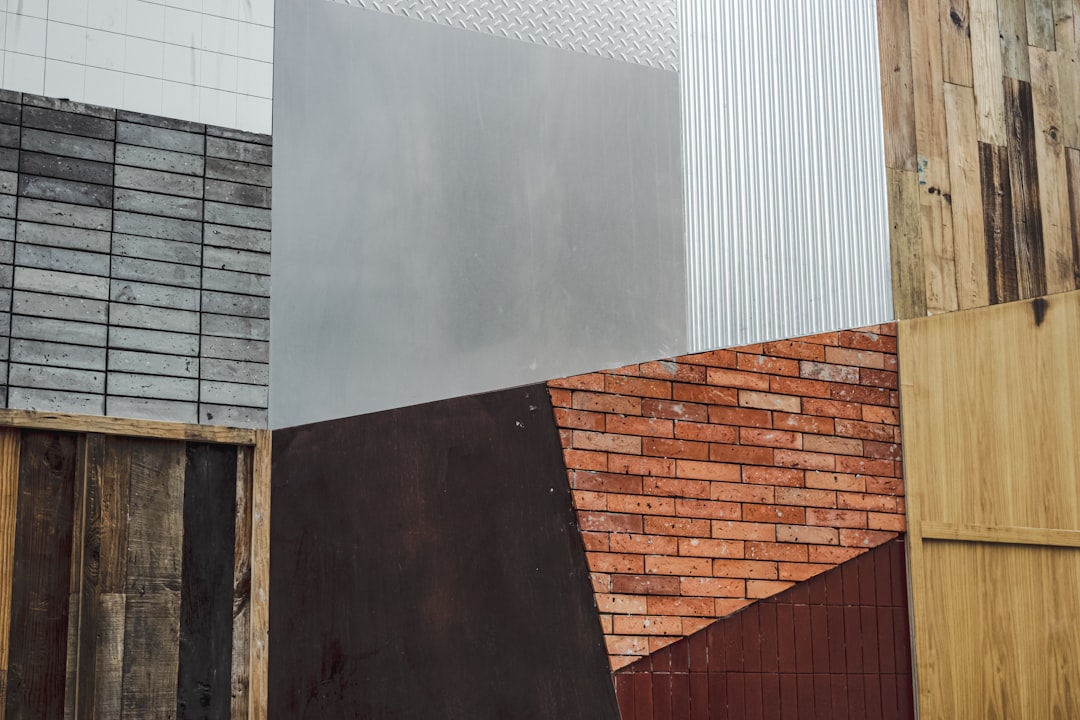
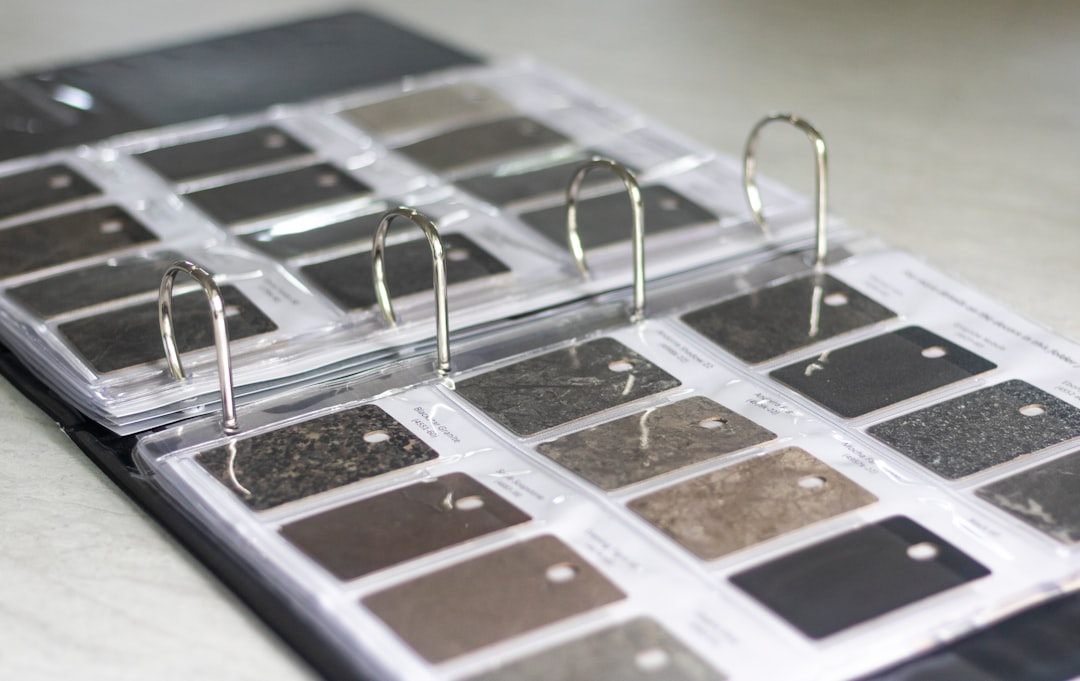
High-pressure laminate (HPL) is the workhorse finish of European stand construction. Thin laminated sheets bonded to substrate panels (typically MDF or chipboard), available in solid colours, woodgrains, metallics, and printed patterns. Cost EUR 24-58 per square metre installed. Durable, photographable, manufacturable in any colour, and serviceable across multiple fair cycles. The default finish for any vertical surface where the brand doesn’t require a higher-impact treatment.
Real-wood veneer is sliced timber bonded to substrate panels, producing the genuine appearance and tactile quality of solid timber at a fraction of the weight and cost. Cost EUR 38-115 per square metre installed depending on species and substrate. Premium quality, biodegradable end-of-life, but more sensitive to humidity and handling than HPL. Used where premium tactility and natural materials are part of the brand statement.
Fabric SEG is dye-sublimation printed polyester fabric stretched within an aluminium frame and held in place by silicone edge gaskets. Cost EUR 32-78 per square metre installed. Extremely visual, easy to swap between fairs (replace the fabric, keep the frame), and supports any colour or image up to fabric printer maximum width. The dominant choice for brand-statement surfaces and large graphics.
Printed vinyl is large-format printed adhesive vinyl applied directly to substrate surfaces or wrapped around structural elements. Cost EUR 18-42 per square metre installed. Highly versatile, supports complex shapes, low-cost, but single-fair use and limited tactile quality. Used for accent graphics, branding wraps on furniture and counters, and surfaces where finish replacement between fairs is part of the design intent.
| Finish | Cost per sqm (EUR) | Viewing distance quality | Lifecycle | Sustainability profile | Typical use |
|---|---|---|---|---|---|
| HPL | 24-58 | Reads premium at 3m+ | 6-10 fair cycles | Recyclable, low-VOC variants available | Vertical walls, counters, partitions |
| Real-wood veneer | 38-115 | Reads premium at touch range | 5-8 fair cycles | FSC available, biodegradable | Hospitality, premium product display |
| Fabric SEG | 32-78 | Reads premium at 2m+ | 5-8 fair cycles (with refresh) | Oeko-Tex, rPET available | Hero brand surfaces, large graphics |
| Printed vinyl | 18-42 | Reads acceptable at 5m+ | Single-fair typical | Recyclable in principle | Accent graphics, furniture wraps |
High-pressure laminate: the workhorse finish
HPL is the European stand-building industry’s default finish for vertical surfaces because it balances cost, durability, and visual quality across the broadest range of applications. Three properties drive its dominance.
First, manufacturability. HPL is available from major European suppliers (Egger, Pfleiderer, Resopal, FunderMax, Abet Laminati) in roughly two thousand standard finishes, solid colours, woodgrains, metallics, stone effects, fabric textures, and abstract patterns. Custom prints are also possible for brands requiring specific colours or graphics integrated into the laminate.
Second, durability. HPL surfaces survive multiple fair cycles, transport in flight cases, and the inevitable scuffs and scratches of build day and dismantle. Maintenance is straightforward: damaged sections can be replaced individually without rebuilding the entire surface.
Third, photographability. HPL surfaces render well in trade-press photography because their colours are stable, their reflectance is controlled, and their visual quality is consistent across the surface. This matters at design-led fairs where stand photography reaches international audiences.
The HPL specification considerations: thickness affects surface stability (0.6mm thin for most applications, 0.8-1.2mm for high-wear surfaces), finish type affects perceived quality (matte and silk finishes read premium; high-gloss reads cheap unless the brand is specifically going for high-gloss), and substrate affects total panel weight (MDF substrate for most applications, lightweight composites where weight matters for freight cost).
The sustainability picture for HPL has improved meaningfully through 2023-2025. Major manufacturers now offer recycled-content lines (Egger Decorative Collection includes recycled-content variants; Pfleiderer offers DuraMin lines), low-VOC adhesive options, and end-of-life recycling pathways. Specifying “EU Ecolabel HPL or equivalent” in the brief lands in the comfortable middle of European venue sustainability acceptance.
“HPL is the finish that no one praises but everyone uses for good reason. It is the option that doesn’t surprise, it does what it claims, costs what it should, and survives the calendar. Stands trying to replace HPL with cheaper alternatives almost always regret it on build day or by the third fair cycle.”, Common framing among Messe Frankfurt-approved stand builders, 2024-2025
Real-wood veneer: premium tactility for brand-led stands
Real-wood veneer occupies the premium tier of European stand finishes. Where HPL approximates wood with print, veneer is actual wood, sliced thinly enough that one cubic metre of solid timber produces hundreds of square metres of veneer surface. The visual and tactile result is genuine in a way that HPL cannot replicate at close range.
The cost premium varies widely by species and substrate. Common European stand veneer applications:
| Veneer species | Cost per sqm (EUR) | Visual character | Best application |
|---|---|---|---|
| European oak (rotary cut) | 38-65 | Warm, traditional, grain prominent | Hospitality, traditional brands |
| European oak (quarter cut) | 55-92 | Refined, linear grain pattern | Premium hospitality, executive zones |
| Walnut (American or European) | 68-108 | Deep, premium, varied grain | Luxury brands, watches, premium auto |
| Maple | 42-72 | Light, clean, modern | Tech brands, contemporary design |
| Beech | 34-58 | Light, neutral, uniform | Background surfaces, partitions |
| Ash | 38-62 | Light, prominent grain | Scandinavian-influenced design |
| Exotic species (zebrawood, ebony) | 95-185 | Distinctive, statement quality | Hero surfaces, focal elements |
| Stone-effect veneer | 65-110 | Premium, weighty appearance | Premium counters, accent walls |
The application discipline matters. Veneer panels need to be installed in matched sequences (book-matched, slip-matched, or random-matched depending on intended visual character), with grain orientation consistent across visible surfaces. Stands installing veneer panels without attention to grain sequencing produce surfaces that read as random patchwork rather than premium continuity.
Veneer’s durability across multi-fair calendars is good but not as forgiving as HPL. Surface damage (scratches, water rings, edge wear) shows more visibly on real wood than on printed laminate, and repair requires more skill. Stands deploying veneer surfaces across multi-fair calendars should plan for refinishing labour at one to three fair cycles per refresh.
The sustainability profile of certified veneer is strong. FSC-certified European hardwood veneers are widely available from major suppliers; the bonding adhesives can be specified as low-VOC; and end-of-life veneer panels can be incinerated for energy recovery or composted in appropriate facilities. The /booth-design/materials-and-finishes/sustainable-exhibition-stand-materials-fsc-low-voc-2026 guide covers the FSC specification language in detail.
Fabric SEG: the brand-statement surface
Fabric SEG (silicone-edge graphics) has reshaped exhibition stand design since 2018. The technology, dye-sublimation printed polyester fabric stretched within an aluminium frame and held by silicone edge gaskets, combines several advantages that no other finish technology offers simultaneously.
First, image quality. Modern dye-sublimation printers produce continuous-tone images at resolutions equivalent to photographic quality. Brand graphics, hero product images, lifestyle photography, and complex pattern designs all render cleanly.
Second, scale. Fabric SEG panels can be manufactured at sizes up to roughly three metres by ten metres without seams, larger with carefully designed seams. This enables hero brand surfaces at scales no other finish can match without visible joints.
Third, refresh economics. The same aluminium frame supports indefinite fabric refresh. Stands reuse the structural frame across multiple fairs while refreshing the fabric for new campaigns, new products, or new fair-specific messages. Fabric replacement cost: EUR 32-58 per square metre.
Fourth, transport efficiency. Fabric folds flat for transport, takes minimal flight-case volume compared to rigid panels, and survives multiple cycles when handled carefully.
The application considerations for fabric SEG. First, the frame structure must be properly engineered, fabric tension across large panels requires substantial frame stiffness, and undersized frames produce visible fabric ripples or sag.
Second, lighting matters more for fabric than for rigid finishes, fabric is partially translucent, so back-lighting and front-lighting produce different visual outcomes; the /booth-design/lighting-design guide covers fabric-specific lighting strategies. Third, fabric near brand colour critical applications requires CRI 90+ illumination to render correctly.
The sustainability picture for fabric SEG is mixed. Polyester base fabric is theoretically recyclable but the end-of-life pathway for printed exhibition fabric in Europe is weak. Recycled-content polyester (rPET) fabric is increasingly available and adds twelve to twenty percent versus conventional. Several manufacturers operate take-back programmes that route used fabric to industrial reuse rather than landfill.
“Fabric SEG is the most important finish technology change in European stand construction in fifteen years. It single-handedly raised the visible brand quality of mid-budget stands to match premium custom builds, and it’s the reason modular and hybrid stands now compete credibly with custom at design-led fairs.”, Common framing within FAMAB working groups on modular finish technology, 2024-2025
Printed vinyl: the versatile low-cost finish
Printed vinyl serves three distinct roles in European exhibition stand finishing: full-coverage surface graphics applied to flat or curved substrates, partial-coverage accent graphics on otherwise-finished surfaces, and wrap finishes on furniture and structural elements that aren’t visually critical.
Cost per square metre varies by application complexity. Flat surface graphics on accessible surfaces run EUR 18-32 per square metre installed. Wraps on furniture and counter surfaces run EUR 25-42 per square metre because of the additional installation labour. Wraps on complex curved surfaces (pillars, sculpted elements) run EUR 35-58 per square metre.
The dominant European vinyl manufacturers (3M Commercial Graphics, Avery Dennison, Orafol, MACtac) offer vinyl in matte, satin, gloss, and metallic finishes with strong colour stability for short-duration applications. Most exhibition vinyl is rated for one to three years of indoor durability, which dramatically exceeds the typical four-to-five-day fair application.
Vinyl’s visual quality reads acceptable from five metres but reveals itself at closer range. Vinyl seams, slight bubbling, and the texture of the vinyl itself are visible at touch distance. Vinyl is therefore suited to large-area or distance-viewed surfaces but ill-suited to surfaces that visitors will touch or examine closely.
The single-fair lifecycle of typical vinyl applications is a sustainability disadvantage. Most vinyl is removed during dismantle and discarded; reuse on subsequent fairs is rare because the vinyl bonds permanently to the substrate. Stands relying heavily on vinyl finishes carry weaker sustainability documentation than stands using fabric SEG or reusable HPL panels.
The defensible vinyl applications in 2026: brand-specific colour wraps on rented furniture (where the furniture supplier may not stock the brand’s exact colour), accent graphics on otherwise-finished walls, temporary fair-specific messaging that won’t reappear, and curved or sculpted surfaces where rigid panel alternatives aren’t available.
Choosing the right finish for each surface
The defensible 2026 European stand combines finish technologies based on each surface’s function, viewing distance, and brand criticality. The pattern below recurs in well-designed stands.
Hero brand surfaces (logo wall, primary brand statement): fabric SEG. Visual quality at distance plus scale plus refresh economics.
Secondary brand and product display walls: fabric SEG for graphic-led surfaces, HPL for surfaces with mounted product or signage.
Counters and reception desks: HPL on visible surfaces. Real-wood veneer where premium tactility is part of the brand experience and budget allows.
Meeting rooms and hospitality zones: real-wood veneer on premium-brand stands, high-quality HPL in matte or silk finish on mid-budget stands.
Partitions and structural walls: HPL for visible surfaces, raw substrate or basic vinyl for hidden surfaces.
Furniture and props: HPL or veneer where furniture is custom-fabricated; vinyl wraps where rented furniture needs brand colour treatment.
Accent and feature surfaces: fabric SEG for image-led accents, HPL for solid-colour accents, vinyl for short-duration or single-fair accents.
| Surface | First choice finish | Defensible alternative | Avoid |
|---|---|---|---|
| Hero brand wall | Fabric SEG | Backlit HPL | Vinyl (reads cheap at close range) |
| Logo statement | Fabric SEG or backlit acrylic | High-quality HPL | Printed vinyl |
| Reception counter | HPL or veneer | High-quality HPL | Vinyl wrap |
| Meeting table | Real-wood veneer | Premium HPL | Anything else |
| Product display | HPL with accent lighting | Veneer for premium products | Plain vinyl |
| Hospitality lounge wall | Veneer or fabric SEG | Premium HPL | Standard vinyl |
| Storage closets | Basic HPL or substrate | Vinyl wrap | Exposed substrate |
| Accent graphic strip | Fabric SEG or vinyl | HPL with vinyl overlay | Hand-painted (inconsistent) |
“The finish-by-surface discipline is what separates competent stand design from amateur stand design. Stands that use one finish for everything are the stands that look amateur regardless of how much was spent. Stands that match finish to surface function look professional even at modest budgets.”, Common framing within IFES corporate-member exhibitor design reviews, 2025
Venue-specific quirks affecting finish choice
Three European venues have technical regulations affecting finish specification that experienced exhibitors plan around.
Messe Frankfurt fire-load regulations restrict the total flammable material in stands above certain sizes. Some specific HPL finishes carry higher fire ratings than others, and fabric SEG fire-resistance certifications need to be documented in the technical pack. The /fairs/light-building and /fairs/ambiente pages cover fair-specific finish requirements at Frankfurt.
Fiera Milano’s Salone del Mobile pavilions have an unwritten convention that any finish less premium than HPL or veneer reads as visibly under-committed for design brands. Vinyl wraps are specifically discouraged on visible surfaces; stands using vinyl heavily at Salone are read by design buyers as not taking the fair seriously.
RAI Amsterdam’s Green Venue programme requires documented sustainability for all finish materials above certain stand sizes, which constrains vinyl use because of the weak end-of-life pathway. Stands at RAI typically minimise vinyl in favour of fabric SEG and reusable HPL.
Refresh economics across multi-fair calendars
Finish refresh economics matter for exhibitors running multi-fair calendars. The five-year finish replacement schedule for a typical 75 sqm stand:
HPL surfaces: refresh every 6-10 fair cycles, cost EUR 1,200-3,200 per refresh (replacing damaged or visibly aged panels rather than full replacement).
Real-wood veneer: refresh or refinish every 1-3 fair cycles, cost EUR 800-2,400 per refresh.
Fabric SEG: refresh every 3-5 fair cycles minimum (often more frequently for campaign-led brands), cost EUR 1,800-4,800 per refresh (replacing fabric, keeping frame).
Printed vinyl: replace entirely each fair, cost equivalent to original installation.
The five-year total finish cost for a typical 75 sqm stand running four fairs per year:
- Pure HPL strategy: EUR 14,000-28,000 initial + EUR 4,800-12,800 in refreshes = EUR 18,800-40,800 total.
- HPL with fabric SEG hero surfaces: EUR 18,500-36,500 initial + EUR 7,200-19,200 in refreshes = EUR 25,700-55,700 total.
- Premium with veneer hospitality: EUR 28,500-58,000 initial + EUR 12,000-32,000 in refreshes = EUR 40,500-90,000 total.
- Heavy vinyl strategy: EUR 9,500-19,000 initial + 19 full re-applications across 20 fairs at EUR 9,500-19,000 each = EUR 190,000-380,000 total.
The vinyl-heavy strategy is by far the most expensive on five-year totals despite the lowest initial cost. This is the cost arithmetic that pushes experienced European exhibitors toward fabric SEG and HPL as the dominant finishes across multi-fair calendars.
Putting it all together
The right finish for any specific surface depends on viewing distance, brand criticality, durability requirements, and budget. The right finish strategy for an entire stand combines multiple finish technologies matched to each surface’s function. The right finish strategy across a multi-fair calendar prioritises refresh-friendly technologies (fabric SEG, reusable HPL) over single-use technologies (printed vinyl) on the budget lines that recur.
Use the /booth-design/materials-and-finishes reference for technical specifications. Use /rfq to circulate a finish-specified brief to vetted European builders. The /calculator includes finish cost modelling within total stand budgets. Browse /builders to filter for builders with strong fabric SEG, veneer, or HPL specialisation.
References
- AUMA (Association of the German Trade Fair Industry) technical guidance on stand materials
- FAMAB Communication Association, “Finish Technology Trends in European Stand Construction,” 2024-2025 report
- IFES (International Federation of Exhibition and Event Services), “European Stand Finish Survey,” 2025
- UFI (Global Association of the Exhibition Industry) Global Exhibition Barometer, 2024 edition
- Egger Decorative Collection product specification documentation, 2025-2026 edition
- Pfleiderer Duropal product line technical documentation, 2025
- 3M Commercial Graphics Division, “Exhibition Vinyl Specification Guide,” 2025
- Berger Textiles, “Fabric SEG Substrates and Sustainability Documentation,” 2025-2026
- Messe Frankfurt Technical Office, “Stand Material and Fire-Load Standards,” 2026 edition
FAQFrequently asked questions
High-pressure laminate (HPL) for most vertical surfaces is the workhorse choice, costing EUR 24-58 per square metre installed and surviving 6-10 fair cycles. The best overall strategy combines HPL for utility surfaces (counters, partitions, secondary walls) with fabric SEG for hero brand surfaces and large graphics.
This combination delivers premium visual quality at viewing distances over two metres for roughly 35-45% less than a veneer-led stand and matches the refresh economics that work across multi-fair calendars. Pure-vinyl finish strategies have the lowest initial cost but the highest five-year total because vinyl is single-fair use.
Use real-wood veneer where premium tactility is part of the brand experience: hospitality zones with conversation furniture, meeting tables, executive areas, and product display surfaces in luxury or premium categories. The veneer premium is most defensible at touch range, where the difference between real wood and printed laminate is immediately apparent.
For surfaces viewed at three metres or more, the visual difference is small enough that HPL with a quality woodgrain finish delivers equivalent perceived quality at 40-65% less cost. Veneer requires more careful handling across fair cycles and more skilled refinishing labour.
Fabric SEG (silicone-edge graphics) is dye-sublimation printed polyester fabric stretched within an aluminium frame and held by silicone edge gaskets.
It combines four advantages no other finish technology offers simultaneously: photographic-quality continuous-tone image rendering, panel sizes up to roughly 3x10 metres without seams, indefinite frame reuse with fabric refresh at EUR 32-58 per sqm replacement, and flat folding for transport-efficient flight cases.
Since 2018, fabric SEG has reshaped European stand design by raising the visible brand quality of mid-budget stands to match premium custom builds at meaningfully lower cost.
Use vinyl selectively for accent graphics, brand-specific colour wraps on rented furniture, and temporary fair-specific messaging that won’t reappear. Avoid vinyl on hero brand surfaces or close-range touch surfaces where the texture and any installation imperfections will be visible. Vinyl reads acceptable at five metres but reveals itself at closer range.
The single-fair lifecycle is also a sustainability disadvantage at venues with strong sustainability programmes like RAI Amsterdam’s Green Venue programme. Stands relying heavily on vinyl finishes typically carry weaker sustainability documentation than fabric SEG or reusable HPL alternatives.
HPL surfaces survive 6-10 fair cycles with periodic individual panel replacement, costing EUR 1,200-3,200 per refresh on a 75 sqm stand. Real-wood veneer requires refinishing every 1-3 fair cycles at EUR 800-2,400 per refresh because surface damage shows more visibly on real wood. Fabric SEG aluminium frames last indefinitely while fabric is refreshed every 3-5 fair cycles at EUR 1,800-4,800 per refresh.
Printed vinyl is essentially single-use and must be reapplied at each fair, which makes vinyl-heavy strategies the most expensive on five-year totals despite the lowest initial cost. For multi-fair calendars, fabric SEG and reusable HPL deliver the strongest cost arithmetic.
Three venues have notable specifics. Messe Frankfurt enforces fire-load regulations on total flammable materials in stands above certain sizes; specific HPL finishes carry different fire ratings, and fabric SEG fire-resistance certifications need documentation in the technical pack.
Fiera Milano’s Salone del Mobile pavilions have an unwritten convention that finishes less premium than HPL or veneer read as under-committed for design brands; vinyl wraps are specifically discouraged on visible surfaces.
RAI Amsterdam’s Green Venue programme requires sustainability documentation for all finish materials above certain stand sizes, which effectively constrains vinyl use because of weak end-of-life recycling pathways.