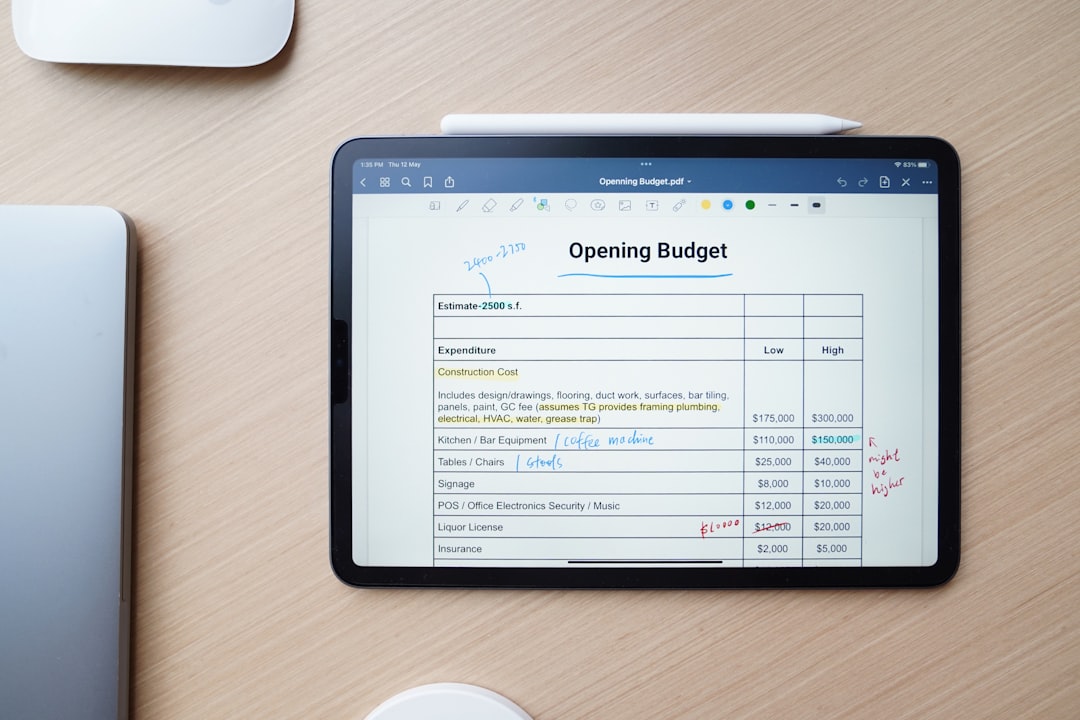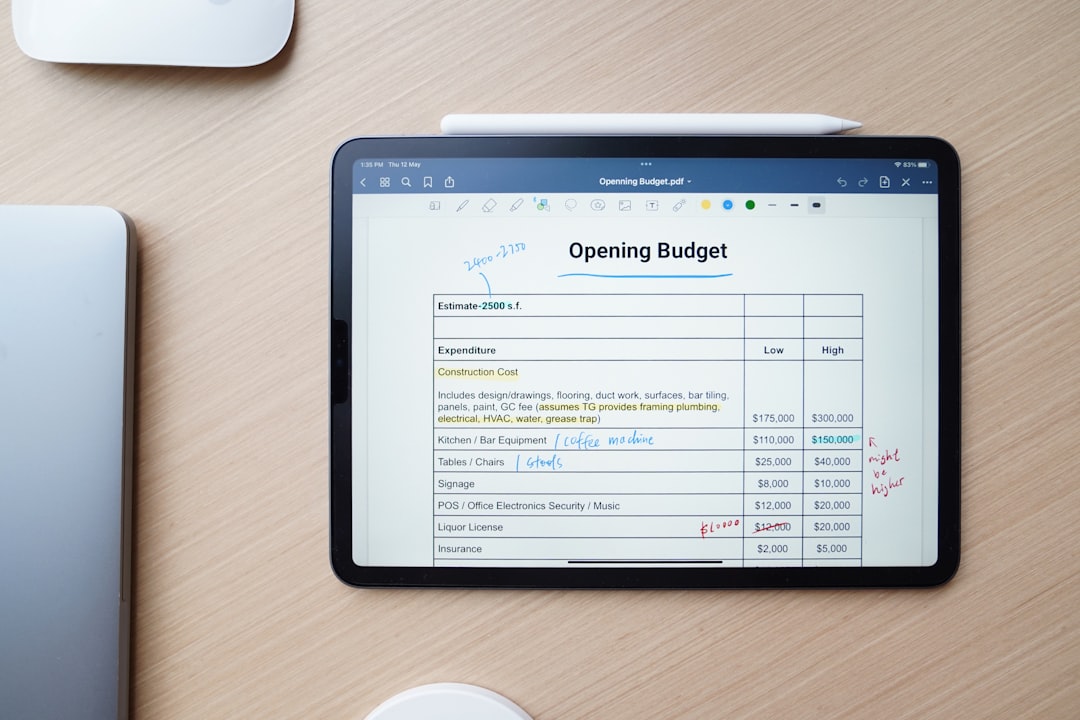
The most consistent budgeting mistake in European trade-fair planning is treating space rental as the budget anchor. Space rental is typically one euro out of every four spent on a fair. The other three euros, stand build, services, staffing, travel, marketing, hospitality, lead capture, contingency, together determine whether the fair pays back.
Industry practice commonly applies a 1:3 rule of thumb: every euro of space rental triggers approximately three additional euros across the other budget lines. This convention is widely used in exhibitor cost-planning guidance, though it is not a rule specifically published by AUMA.
The 1:3 rule is the single most useful sanity check in fair-budget planning, and it holds reliably across the major European exhibition centres, Messe Frankfurt, Fiera Milano, IFEMA Madrid, Koelnmesse, RAI Amsterdam, Deutsche Messe Hannover, Messe Berlin, Fira Barcelona, ExCeL London.
This article walks through the full budget framework experienced exhibitors actually use, including a worked EUR 234,000 example at a tier-one fair, the contingency reserves that protect against routine variance, and the line items most consistently underbudgeted in first-time exhibitor plans.
The 1:3 rule and why it holds
Industry cost-planning guidance suggests the ratio holds within a relatively narrow band depending on stand type and scale:
- Standard exhibitor profile (mid-sized, hybrid stand, professional execution): 1:3.0 to 1:3.4
- Modular-heavy tier-two presence: 1:2.5 to 1:2.8
- Flagship custom-build presence: 1:3.8 to 1:4.5
- Brand-statement flagship at tier-one fair: 1:4.5 to 1:5.5
The ratio drifts upward at larger footprints because the build, hospitality, and staffing requirements scale faster than space rental. The ratio drifts downward at smaller footprints because the build per sqm is usually cheaper at modular grades and staffing is typically a fixed minimum rather than a square-metre scaling cost.
“Whenever a finance team comes back with a draft fair budget where the all-in number is less than three times the space rental, we ask them to find the missing million euros. It is always there, usually hiding in staffing, pre-fair marketing, or the contingency they did not include.”, Common framing among AUMA-affiliated trade-fair consultants
The 1:3 rule is not a planning algorithm. It is a back-check. The actual budget process should build bottom-up from line items, then verify that the resulting total sits in a defensible ratio range against the known space-rental figure.
The fourteen-line budget structure
A defensible fair-participation budget contains fourteen distinct line items. Compressing any of them into “other” or “miscellaneous” reliably leads to overrun. The line items below are the structure most experienced European exhibition managers use, broken into four categories.
Category A: Space and infrastructure (typically 25-35% of total)
- Space rental (per-sqm × footprint × position surcharge)
- Stand services (electrics, water, rigging, internet, compressed air where relevant)
- Insurance and organiser-mandated fees (waste disposal, security, organiser admin)
Category B: Stand build and equipment (typically 30-45% of total)
- Stand design and engineering
- Stand build (modular, hybrid, or custom)
- Furniture and fittings
- AV equipment and integration
- Lighting design and execution
Category C: People and operations (typically 18-28% of total)
- Staffing (fully loaded day rates × staff count × days)
- Travel and accommodation
- Catering and on-stand hospitality
Category D: Activation and follow-up (typically 8-18% of total)
- Pre-fair marketing and outreach
- Press, PR, and sponsorship add-ons
- Lead capture, CRM integration, and post-fair followup
The fourteen-line structure scales from a EUR 60,000 tier-three presence to a EUR 1.5 million flagship build. Only the proportions change.
AUMA cost-per-contact benchmarks
The denominator that determines whether a fair budget is defensible is the cost-per-visitor-contact figure. AUMA tracks this number consistently across German fairs and the benchmark transfers reliably to comparable fairs elsewhere in Europe.
| Fair tier | Cost per contact (EUR) | Cost per qualified lead (EUR, at 20% qualification) | Cost per closed deal (EUR, at 2% close) |
|---|---|---|---|
| Tier-1 flagship (EuroShop, drupa, Hannover Messe flagship) | 200-280 | 1,000-1,400 | 50,000-70,000 |
| Tier-1 vertical (Anuga, Bauma, EMO, ISE, MWC Barcelona) | 150-220 | 750-1,100 | 37,500-55,000 |
| Tier-2 regional (Light + Building, Vicenzaoro, Cosmoprof Bologna) | 130-180 | 650-900 | 32,500-45,000 |
| Tier-3 niche / specialist | 200-350 | 1,000-1,750 | 50,000-87,500 |
The cost-per-closed-deal column is the figure that determines whether the fair budget makes sense at the company’s deal economics. A company with a EUR 65,000 average order value cannot defensibly close at a EUR 70,000 cost-per-deal, the entire deal would consume more than it returns in the first contract year. The same company at a EUR 45,000 cost-per-deal closes inside acceptable customer-acquisition-cost limits.
The implication: the fair budget envelope must be derived from the deal economics, not from internal political comfort. AUMA’s benchmarks give the conversion arithmetic; the company’s own deal data provides the ceiling.
The worked EUR 234,000 example
The example below illustrates a complete fair-participation budget for a 90 sqm tier-one European fair presence. The exhibitor profile is a mid-sized European B2B vendor with a EUR 65,000 average order value, exhibiting at Hannover Messe for the first time in a hybrid stand build.
| Category | Line item | Amount (EUR) | % of total |
|---|---|---|---|
| A1 | Space rental (90 sqm × EUR 290/sqm) | 26,100 | 11.2% |
| A2 | Stand services (electrics, internet, rigging) | 12,000 | 5.1% |
| A3 | Insurance and organiser fees | 3,800 | 1.6% |
| B4 | Stand design and engineering | 8,500 | 3.6% |
| B5 | Hybrid stand build (modular skeleton + bespoke layer) | 77,000 | 32.9% |
| B6 | Furniture and fittings | 6,200 | 2.6% |
| B7 | AV equipment and integration | 9,800 | 4.2% |
| B8 | Lighting design and execution | 5,400 | 2.3% |
| C9 | Staffing (6 staff × 5 days × EUR 650 blended) | 19,500 | 8.3% |
| C10 | Travel and accommodation (6 staff × 5 nights) | 22,000 | 9.4% |
| C11 | Catering and on-stand hospitality | 9,400 | 4.0% |
| D12 | Pre-fair marketing and meeting outreach | 16,800 | 7.2% |
| D13 | Press, PR, and tier-2 sponsorship add-on | 12,500 | 5.3% |
| D14 | Lead capture, CRM integration, post-fair followup | 5,000 | 2.1% |
| Sub-total | 234,000 | 100% | |
| Contingency | 10% reserve | 23,400 | (separate envelope) |
| All-in working budget | EUR 257,400 |
The budget illustrates several patterns visible in defensible tier-one fair plans.
First, space rental is 11.2 percent of the all-in working budget. The ratio of space-to-everything-else is approximately 1:8.9, well above the standard 1:3, this reflects the upgraded hybrid build, the comprehensive activation programme, and the sponsorship add-on layered on top of a relatively modest 90 sqm footprint. The number is defensible but indicates that the exhibitor is deliberately spending above the standard ratio to maximise the impact of the chosen footprint.
Second, stand build at 32.9 percent of the sub-total sits at the upper end of the standard range. Hybrid construction at tier-one fairs typically runs in this zone.
Third, staffing-and-travel combined at 17.7 percent sits in the standard range. The pre-fair training day and post-fair followup day are included in the staffing calculation.
Fourth, pre-fair marketing at 7.2 percent of the sub-total is at the lower edge of the AUMA-recommended eight to twelve percent band. The budget could legitimately add EUR 5,000-10,000 here to push pre-fair marketing into the recommended range.
Fifth, the contingency reserve at 10 percent of sub-total is presented as a separate envelope, not as a line item. This is the convention experienced exhibition managers use because it forces decision-makers to recognise the reserve as risk-management capital rather than budget flexibility.
The pre-fair marketing line in detail
Pre-fair marketing is the line item most consistently underbudgeted by first-time exhibitors. AUMA exhibitor surveys repeatedly find that the pre-fair marketing investment is the single most cost-effective lever for improving overall fair ROI.
A defensible pre-fair marketing plan typically includes:
- Email outreach to existing pipeline: invitation campaigns to known contacts in the database, with personalised meeting requests
- Email outreach via the organiser’s attendee list (where available): targeted invitations to registered attendees matching the exhibitor’s audience profile
- Paid social campaigns during the four-week pre-fair window: LinkedIn for B2B, Instagram for design-led fairs
- Industry-publication advertising during the pre-fair window: digital banners on trade publications targeting fair attendees
- Meeting-platform fees (where the organiser provides one): Salesforce-style platforms used at hosted-buyer fairs
- Printed pre-show collateral mailed to top-tier prospects: physical invitations remain effective for senior buyer outreach
- Press outreach to industry journalists attending the fair: targeted releases and one-on-one briefing requests
The cumulative cost typically lands in the EUR 12,000-25,000 range for a mid-sized tier-one fair presence, equivalent to seven to twelve percent of the total fair budget. Below that level, pre-fair meeting volume drops and on-stand cost-per-qualified-meeting rises sharply.
“We have a hard rule: we will not exhibit at a fair if we cannot afford to do the pre-fair marketing properly. The booth is the venue; the pre-fair campaign is the invitation. A venue without invitations is an empty room.”, Common framing among European B2B exhibition managers
Contingency: what it actually covers
The eight to twelve percent contingency reserve is not a luxury. It covers three predictable sources of overrun.
Source 1: Organiser change orders. Tier-one fair organisers consistently bill back additional electrics, rigging, water, internet, and stand-service line items during the build week. EUR 3,000-8,000 in change orders is normal at fairs above 60 sqm. Larger stands routinely see EUR 8,000-15,000 in change orders.
Source 2: Travel cost escalation. Flight and hotel inventory tightens substantially in the sixty-day window before any tier-one fair. Last-minute changes to staff travel, adding a person, extending a stay, swapping a route, routinely cost forty to one hundred percent more than the original baseline travel quote.
Source 3: On-site change orders. The stand build process surfaces requirements that did not appear in the design specification: an additional lighting fixture for the demo zone, a furniture upgrade for the meeting room, a graphic reprint after a final-week brand decision. These typically aggregate to EUR 5,000-15,000 across the fair build.
A contingency reserve below five percent typically gets consumed entirely by routine variance, forcing mid-cycle scope cuts. A contingency reserve above fifteen percent reads to finance teams as a budgeting error rather than risk management.
Common budget mistakes the framework catches
The fourteen-line structure plus the 1:3 sanity check catches the budget mistakes that recur across first-time and second-time European exhibitor plans.
Mistake 1: Space rental treated as the budget. The exhibitor budgets EUR 30,000 for “the fair” because that is the space rental quote. The actual all-in cost is closer to EUR 110,000. By the time this gap becomes visible, deposits are paid and the cost is sunk.
Mistake 2: Staffing hidden in overhead. The exhibitor budgets EUR 0 for staffing because “the sales team is already paid.” Fair ROI calculations then look artificially favourable and the company over-commits to the next fair cycle. The defensible practice is to cost staff at a fully loaded blended day rate (EUR 500-800 for European sales and technical staff).
Mistake 3: Pre-fair marketing skipped. The exhibitor budgets nothing for pre-fair outreach and walks into the show with no booked meetings. The booth becomes a passive lead-capture exercise rather than an active meeting venue. Cost-per-qualified-meeting runs forty to sixty percent above benchmark.
Mistake 4: Contingency skipped. The exhibitor signs a budget at exactly the available envelope. Change orders, travel escalation, and on-site changes force mid-cycle scope cuts that visibly degrade the stand. A 10% contingency would have prevented every visible problem.
Mistake 5: Sponsorship add-ons treated as discretionary. At tier-one fairs, sponsorship add-ons (registration, lanyard, app banner, hall-entrance signage) drive visibility outside the stand footprint. Skipping sponsorship entirely is a defensible budget choice, but treating it as discretionary spend during the budget cycle frequently means it gets cut for arbitrary reasons rather than strategic ones.
Mistake 6: Lead-capture infrastructure skipped. The exhibitor relies on business cards and scanned badges with no CRM integration. The lead-handoff process collapses inside two weeks of the fair and most leads age out without followup. EUR 4,000-7,000 in lead-capture and CRM integration is the line item that protects the value of every other line item.
Budget benchmarks by footprint and tier
The table below summarises observed all-in budget bands for typical European fair commitments, useful as calibration anchors.
| Footprint | Tier-3 niche fair | Tier-2 regional fair | Tier-1 vertical fair | Tier-1 flagship fair |
|---|---|---|---|---|
| 24-36 sqm | EUR 35-60k | EUR 50-80k | EUR 70-110k | EUR 90-150k |
| 48-75 sqm | EUR 60-110k | EUR 85-150k | EUR 130-220k | EUR 180-310k |
| 90-120 sqm | EUR 95-160k | EUR 140-230k | EUR 210-330k | EUR 290-470k |
| 150-200 sqm | EUR 150-260k | EUR 230-380k | EUR 340-560k | EUR 480-780k |
| 250-400 sqm | EUR 260-450k | EUR 390-660k | EUR 580-980k | EUR 820-1,400k |
| 500 sqm+ | EUR 480k+ | EUR 720k+ | EUR 1,050k+ | EUR 1,500k+ |
The bands reflect realistic variation across stand quality, position type, and activation depth. Exhibitors substantially above or below these bands at a given footprint should investigate the variance before committing.
Related reading
- Choosing the Right European Trade Fair, the four-filter framework that validates the budget envelope
- Stand Booking and Hall Position, how position premiums interact with the space-rental line
- Booth Staffing for European Trade Fairs, staffing-budget detail at the role and rotation level
- Sponsorship and Add-On Packages, when the sponsorship line pays back
- Modular vs Custom Decision Framework, how the stand-build line scales with build-type choice
How to act on this
A defensible fair budget is built bottom-up across every line, then sanity-checked against benchmarks and against the arithmetic of your own average order value. Construct and stress-test the budget in the following order:
- Build the budget bottom-up using the fourteen-line structure.
- Run the AUMA 1:3 sanity check against your draft total.
- Verify the cost-per-contact and cost-per-deal arithmetic against your average order value.
- Confirm pre-fair marketing is budgeted at eight to twelve percent of the total.
- Reserve eight to twelve percent contingency in a separate envelope.
- Use the Booth Cost Calculator to stress-test the line-item assumptions.
- Submit RFQs via /rfq only after the budget envelope is signed off.
References and primary sources
- AUMA exhibitor cost benchmarks (2024-2026 edition), Association of the German Trade Fair Industry, auma.de
- AUMA_MesseTrend annual report, exhibitor and visitor metrics
- AUMA Cost Planning Guide for Trade Fair Participation
- UFI Global Barometer 2026, Union des Foires Internationales, ufi.org
- FAMAB Verband Direkte Wirtschaftskommunikation member cost surveys
- Deutsche Messe Hannover exhibitor manual 2026
- Messe Frankfurt Technical Guidelines 2026
- IFES (International Federation of Exhibition and Event Services) cost benchmarks
FAQFrequently asked questions
AUMA’s 1:3 rule states that for every euro spent on space rental at a German trade fair, the exhibitor will spend roughly three additional euros on stand build, services, staffing, travel, marketing, and other line items. The total all-in budget is therefore approximately four times the space-rental line.
The 1:3 ratio is a benchmark derived from decades of AUMA exhibitor-cost surveys and holds reliably for typical mid-sized exhibitor profiles. Larger flagship stands at premium fairs sometimes push the ratio to 1:4 or 1:5; smaller modular presences at vertical fairs sometimes compress to 1:2.5.
The rule is most useful as a sanity check, if your draft budget shows a ratio dramatically different from 1:3, something has been omitted or double-counted.
AUMA tracks cost-per-visitor-contact at German fairs in the EUR 130-280 range, depending on fair tier, footprint, and execution quality. Tier-one flagship fairs (Hannover Messe, EuroShop, drupa) run at the upper end of that range due to higher visitor-acquisition and stand-execution costs. Tier-two regional fairs run at the lower end.
The qualified-lead cost is roughly five times the contact cost, meaning a EUR 200 per-contact figure implies a EUR 1,000 per-qualified-lead figure at a twenty percent qualification rate. These benchmarks let you back-calculate the maximum defensible budget for any given fair: target leads × cost-per-lead = budget envelope.
Experienced European exhibition managers hold contingency reserves of eight to twelve percent against the total all-in budget.
The reserve covers three predictable sources of overrun: organiser change orders (typical EUR 3,000-8,000 per fair as last-minute rigging, electrics, or service additions are billed back), travel-cost escalation in the final sixty days as flight and hotel inventory tightens, and on-site change orders during the build week.
A contingency below five percent typically gets consumed by routine variance and forces difficult mid-cycle decisions. Above fifteen percent the contingency starts to read to finance teams as a budgeting error rather than a risk management decision.
Pre-fair marketing is the line item most consistently underbudgeted. AUMA exhibitor surveys consistently find that pre-show marketing should run eight to twelve percent of the total fair budget, invitation emails, paid social campaigns targeting attendee lists, meeting-platform fees, printed pre-show collateral, and digital advertising on industry publications during the pre-fair window.
Exhibitors who skip or underbudget this line item routinely find that their cost-per-qualified-meeting at the fair runs forty to sixty percent higher than benchmarks. The pre-fair marketing budget is the single most cost-effective lever for improving overall fair ROI.
The line-item structure stays similar but the proportions shift. At flagship fairs (EuroShop, Hannover Messe flagship presence), stand build typically rises to forty-five percent of total budget as design ambition drives custom or premium-hybrid construction.
At tier-three fairs, stand build typically falls to twenty-five to thirty percent as modular construction predominates, and the staffing-and-travel proportion rises. Sponsorship and add-on packages are typically irrelevant at tier-three fairs and substantial (ten to twenty percent of total) at flagship fairs.
The total budget envelope ranges from EUR 60,000 for a competent tier-three presence to EUR 1.5 million+ for a flagship presence at a tier-one show.
Staffing must be a line item in the fair budget, not absorbed into general overhead. AUMA benchmarks show staffing-and-travel typically running twenty to thirty percent of the total fair budget for a mid-sized European exhibitor. Hiding that cost in overhead produces a budget that looks artificially favourable and misleads decision-makers about fair ROI.
The defensible practice: cost staff at a fully loaded blended day rate that includes salary, benefits, and opportunity cost. EUR 500-800 per staff per fair day is a defensible blended rate for European sales and technical staff. Adding the pre-fair training day and the post-fair lead-followup day brings the realistic staffing duration to six to seven days per staff member per fair.