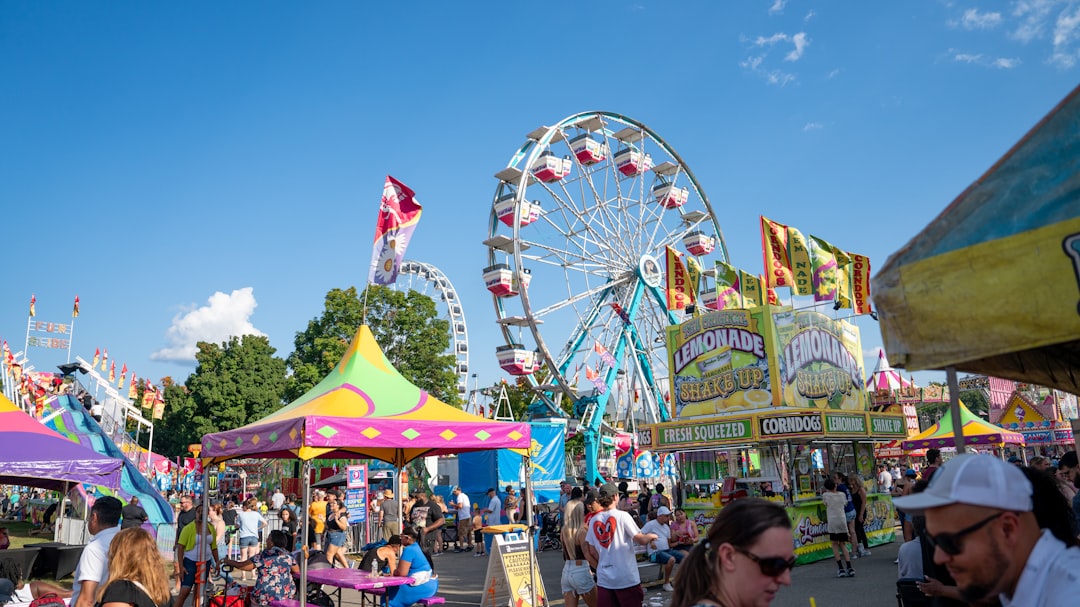
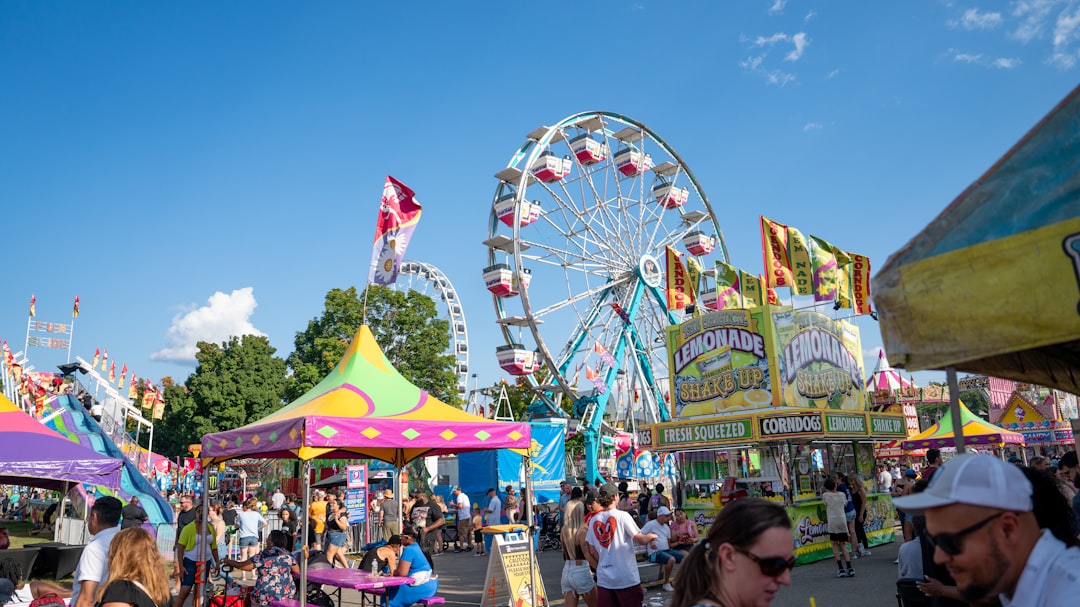
K Show in Düsseldorf is the world’s largest trade fair for the plastics and rubber industries, held every three years at Messe Düsseldorf. The 2025 edition (8-15 October 2025) drew approximately 3,275 exhibitors across 18 halls from 66 nations and more than 175,000 trade visitors from around 160 countries.
Total exhibitor stand-build spend per edition runs EUR 60-180 million across the full exhibitor cohort, with individual booth budgets ranging from EUR 15,000 for small modular stands to EUR 3.5-4 million for the major machinery-manufacturer flagship builds.
This is the operational reality of K Show stand costs in 2025 and the planning roadmap for serious exhibitors targeting K 2028 (the next edition, 18-25 October 2028). The fair operates on a fixed 3-year cycle; lead times for hall positioning and builder commitment compress materially as the fair approaches.
Why K Show is operationally unlike other Düsseldorf fairs
K Show shares its venue with EuroShop, Drupa, and Glasstec but the operational characteristics are unusual within the Messe Düsseldorf calendar:
- Industrial machinery dominance. Roughly 60% of exhibitor space at K is occupied by injection-molding machines, extruders, recycling lines, and other heavy industrial equipment with significant power, water, and floor-load requirements. This drives stand-design fundamentals materially different from consumer-facing or services-focused fairs.
- Live machinery operation on stand. A meaningful proportion of K exhibitors run production lines, demonstration molding cycles, or recycling demonstrations live throughout the fair. This requires reinforced floor specs (1,000-3,000 kg/sqm in many cases), 3-phase 400V power feeds, compressed-air infrastructure, cooling water lines, and material-handling logistics that consumer-stand builders systematically under-quote.
- Long-cycle exhibitor relationships. Many K exhibitors return every 3 years to the same hall and same hall-position for decades. Hall waitlists are inherited rather than openly available; new exhibitors should expect 18-24 month conversations with Messe Düsseldorf sales to secure any reasonable position.
These three characteristics combine to make K the most operationally complex of Düsseldorf’s major fairs from a build-cost perspective.
K 2025 stand cost reality
The full all-in budget for a K Show stand divides into five major cost categories. Percentages shown reflect a typical mid-tier 100 sqm booth at K 2025 with operating machinery on stand.
Stand-space rental (Messe Düsseldorf):
K Show stand-space pricing for 2025:
- Row stand: EUR 300-340/sqm (depends on hall and visibility)
- Island stand (open all 4 sides): EUR 350-400/sqm
- Corner stand: EUR 330-380/sqm
- Premium halls (Hall 1, Hall 16, Hall 17): EUR 380-420/sqm
For a 100 sqm island stand in a standard hall: EUR 36,000-40,000.
K Show charges among the highest stand-space rentals in the Messe Düsseldorf calendar because of the long-cycle exhibitor demand pattern and venue-utilization economics of a 3-year-cycle fair.
Build cost (stand fabrication and design):
K Show build costs sit at the higher end of European trade-fair pricing because the industrial-equipment-on-stand requirements drive material and structural specifications upward.
Realistic 2025 K Show build-cost bands:
- Modular stand without machinery: EUR 320-500/sqm (slightly above generic German modular pricing due to floor-load and power-infrastructure premiums)
- Hybrid stand with one or two machines: EUR 600-900/sqm (machinery integration, power runs, cable management)
- Custom architectural stand with multiple operating machines: EUR 950-1,500/sqm
- Premium custom with double-decker and complex machinery integration: EUR 1,500-2,400/sqm
For a 100 sqm hybrid stand with operating machinery: EUR 60,000-90,000 in build cost.
Hall services (utilities and infrastructure):
K Show hall service requirements are materially higher than average Messe Düsseldorf fairs:
- 3-phase 400V power feed: EUR 800-1,400 per 32A connection (industrial booths often need 2-4 connections)
- Compressed air supply: EUR 600-1,200 per stand
- Cooling water supply: EUR 700-1,400 per stand
- Standard electricity, internet, lighting: EUR 1,800-3,200 for 100 sqm
- Floor-reinforcement certification (where machinery weight exceeds standard 500 kg/sqm): EUR 1,200-2,500
Total hall services for a typical machinery-operating 100 sqm stand: EUR 5,900-13,900 with 2-4 power connections (or EUR 5,100-9,700 with a single 32A connection — roughly EUR 6,000-12,000 for a typical mid-band setup).
Logistics and freight:
K Show freight handling is more complex than service-sector fairs because of heavy machinery movement. Realistic costs:
- Standard freight handling: EUR 1,400-2,400 for a 100 sqm stand without major machinery
- Heavy-machinery placement (crane required, oversize transport): EUR 4,000-12,000+ per machine
- ATA carnet handling for non-EU exhibitors: EUR 1,800-3,500
- Storage for machinery in Düsseldorf warehouses between install windows: EUR 1,200-3,000 typical
Staffing and operational costs:
- Stand staff (booth hosts, technical demonstrators, sales): 60-80 hours per day across multiple staff for the 8-day fair
- Hotel accommodation in Düsseldorf during K week: EUR 320-650/night (Messe-week premium of 2-3x standard rates)
- Crew meals, taxi, contingency: budget 18-25% of build cost as operational reserve
Realistic fully-loaded all-in budgets at K 2025:
- Small modular stand (36 sqm, no operating machinery): EUR 35,000-55,000
- Mid-tier hybrid stand (75 sqm, one demonstration machine): EUR 95,000-160,000
- Major hybrid stand (150 sqm, multiple operating machines): EUR 220,000-380,000
- Custom architectural stand (250+ sqm, flagship machinery showcase): EUR 600,000-1,400,000
- Flagship double-decker with complex machinery: EUR 1,800,000-3,500,000+
The flagship tier is dominated by major plastics machinery manufacturers (Arburg, Engel, Krauss-Maffei, Wittmann, Husky), recycling-equipment manufacturers, and major material suppliers (Borealis, LyondellBasell, BASF, Covestro).
30-month planning roadmap for K 2028
Serious K exhibitors begin formal planning 30 months ahead of the fair date. For K 2028 (18-25 October 2028), that means April-May 2026 is the planning-start window.
The roadmap below describes what disciplined K exhibitors do at each stage. Compression of this timeline is possible but predictably expensive; every stage skipped or shortened typically adds 8-15% to total fair cost across European plastics-machinery exhibitor build cycles.
T-30 to T-24 months (April 2026 - October 2026):
- Strategic decision: are you exhibiting at K 2028? What is the corporate marketing brief and budget envelope?
- Initial conversations with Messe Düsseldorf sales about hall positioning and waitlist status. Returning exhibitors should confirm hall renewal; new exhibitors should understand realistic position availability.
- Internal stakeholder alignment: marketing, R&D (for product launches at K), service-and-sales operations, regional sales managers.
- Begin shortlisting potential stand builders. Brief 6-8 firms at this stage with high-level requirements.
T-24 to T-18 months (October 2026 - April 2027):
- Confirm hall position and signed stand-space rental contract with Messe Düsseldorf.
- Narrow stand-builder shortlist to 4-5 firms. Request initial concept proposals.
- Define product-launch strategy if applicable (K Show is the dominant launch window in the plastics industry; major machinery and material announcements happen here).
- Begin machinery and demonstration-equipment specification. If new equipment is being launched at K, R&D handoffs to fair-prep typically need to be locked at this stage.
T-18 to T-12 months (April 2027 - October 2027):
- Final stand-builder selection and contract signing. Get all 6 screening filters (below) satisfied before committing.
- Stand design finalization through 2-3 revision rounds.
- Machinery shipping logistics planning (heavy machinery transport from manufacturer to Düsseldorf is a 4-8 week process for major equipment).
- Hotel and crew lodging booking, Messe-week lodging in Düsseldorf within 30km is essentially fully-booked by 12 months ahead.
T-12 to T-6 months (October 2027 - April 2028):
- Construction documentation: floor-load engineering, fire-marshal certification, structural compliance documentation. All K stands over 2.5m tall require Messe Düsseldorf structural compliance review.
- Hall-services ordering deadline: most hall services need confirmation 6 months out for guaranteed delivery in the install window.
- Stand staff training and product-demonstration script finalization.
- Visa and travel logistics for international staff (some nationalities require 8-12 weeks lead time for Schengen business visas).
T-6 to T-3 months (April 2028 - July 2028):
- Final build details locked: graphics, AV content, on-stand machinery operating schedules.
- Pre-build review meeting with stand builder + Messe Düsseldorf hall-services rep.
- Lead-capture systems setup and integration with corporate CRM.
- Crew badging, hall access permits, freight arrival window confirmations.
T-3 to T-1 months (July 2028 - September 2028):
- Stand component fabrication completion. Most stand elements should be workshop-complete 3 weeks before install.
- Freight pre-staging at Düsseldorf or builder warehouses.
- Final crew and staff travel confirmations.
- Press and media briefing materials prepared.
Install week (early October 2028):
- Standard K Show install window: 6-9 days before fair opening for major stands; 3-4 days for smaller modular stands. Machinery placement (crane work) typically happens on the first 2 days of the install window.
Six screening filters specific to K Show builders
The generic European-stand-builder screening filters apply at K Show, but four additional filters matter heavily because of the machinery and industrial operations on stand.
1. Documented K Show portfolio of the last 2-3 editions.
Builders without 3+ K Show stands in their last-decade portfolio systematically underestimate the operational reality. K is a triennial event; a builder with K 2019 + K 2022 + K 2025 references has executed across three full planning cycles.
2. In-house machinery integration capability.
Stand builds with operating injection-molding machines, extruders, or recycling equipment require capability to design and execute machinery mounting (often vibration-isolated), power feeds, cooling-water plumbing, material-handling integration, and safety perimeter design. Builders without in-house engineers competent in this work sub-contract it, and typically deliver inconsistent results.
3. Messe Düsseldorf preferred-supplier status or documented K-specific operational relationships.
K Show hall services, structural-compliance review, and freight handling all run through Messe Düsseldorf processes. Builders with documented preferred-supplier status or established working relationships with the K Show organizing team navigate these processes faster and more reliably.
4. Floor-load engineering documentation as standard practice.
K Show stands with operating machinery must satisfy hall floor-load specs that vary by hall and zone. Builders should produce floor-load engineering documentation (calcoli strutturali, Lastberechnungen) as part of their standard work product, not as a special request.
5. Cooling water and compressed air infrastructure experience.
Many K Show machinery demonstrations require cooling water (closed-loop chiller systems on stand) or compressed air (3-6 bar, sometimes higher pressure for specific equipment). Builders without engineering experience in these utility integrations often under-quote installation time, miss capacity sizing, or fail to coordinate with Messe Düsseldorf hall-services connections.
6. Crisis-response capability during the 8-day operating window.
K Show stands operate live machinery for 8 days. Things break. Material runs out. Cooling pumps fail. Hydraulic seals leak. Builders with documented on-stand technical-crew presence during operating hours (not just install/dismantle) handle these incidents materially better than builders who consider their job done at fair opening.
What this guide does not cover
This roadmap focuses on stand-build cost and operational planning. It does not address:
- Product-launch strategy and PR coordination at K Show (a specialist sub-market; consult plastics-industry PR firms with documented K experience)
- Lead capture and post-fair CRM workflow integration (see our lead capture systems guide)
- Sustainability certification for K stands (a growing concern; several material-supplier exhibitors now require third-party-audited sustainable-build certification, EUR 8,000-25,000 incremental cost)
- Visitor-experience design beyond stand build (interactive demonstrations, VR/AR product configurators, technical-presentation theater design)
Where to start for K 2028 planning
For exhibitors planning K Show 2028:
- Confirm whether K is the right fair for your product launch and customer-engagement strategy. The plastics industry has alternative fairs (Plast in Milan, NPE in Orlando, ChinaPlas in Shanghai) that may serve specific commercial objectives better.
- Begin Messe Düsseldorf sales conversations about hall positioning if you are a new exhibitor or considering position change.
- Filter our Germany builder directory for firms with documented K Show portfolios.
- Build a 30-month internal planning timeline against the roadmap above.
- Reserve crew lodging in Düsseldorf for October 2028 immediately upon hall-position confirmation; Messe-week lodging is the single hardest-to-source resource in the K Show planning cycle.
K Show is among the most operationally complex European trade fairs to exhibit at successfully. Exhibitors who plan against a realistic 30-month timeline reliably deliver strong stands at predictable cost; exhibitors who compress the timeline routinely overspend by 25-50% relative to comparable disciplined builds.
FAQFrequently asked questions
Row stands ran EUR 300 to 340 per sqm depending on hall and visibility, corner stands EUR 330 to 380, and island stands open on all four sides EUR 350 to 400. Premium halls, Hall 1, Hall 16 and Hall 17, ran EUR 380 to 420 per sqm. A 100 sqm island stand in a standard hall came to EUR 36,000 to 40,000.
A small 36 sqm modular stand with no operating machinery runs EUR 35,000 to 55,000. A mid-tier 75 sqm hybrid stand with one demonstration machine runs EUR 95,000 to 160,000. A major 150 sqm hybrid stand with multiple operating machines runs EUR 220,000 to 380,000, and a 250 sqm-plus custom architectural flagship machinery showcase runs EUR 600,000 to 1,400,000.
A 3-phase 400V power feed costs EUR 800 to 1,400 per 32A connection, and industrial booths often need two to four connections. Compressed air runs EUR 600 to 1,200 per stand, cooling water EUR 700 to 1,400, and standard electricity, internet and lighting EUR 1,800 to 3,200 for 100 sqm. Including floor-reinforcement certification (EUR 1,200 to 2,500 where machinery exceeds 500 kg/sqm), total hall services for a machinery-operating 100 sqm stand run EUR 5,900 to 13,900 with two to four power connections (roughly EUR 6,000 to 12,000 for a typical mid-band setup).
Serious exhibitors begin formal planning 30 months ahead, which makes April to May 2026 the planning-start window for K 2028 on 18 to 25 October 2028. Confirm hall position and the signed space contract between T-24 and T-18 months, select and contract the builder between T-18 and T-12, and book Düsseldorf crew lodging immediately upon hall confirmation.