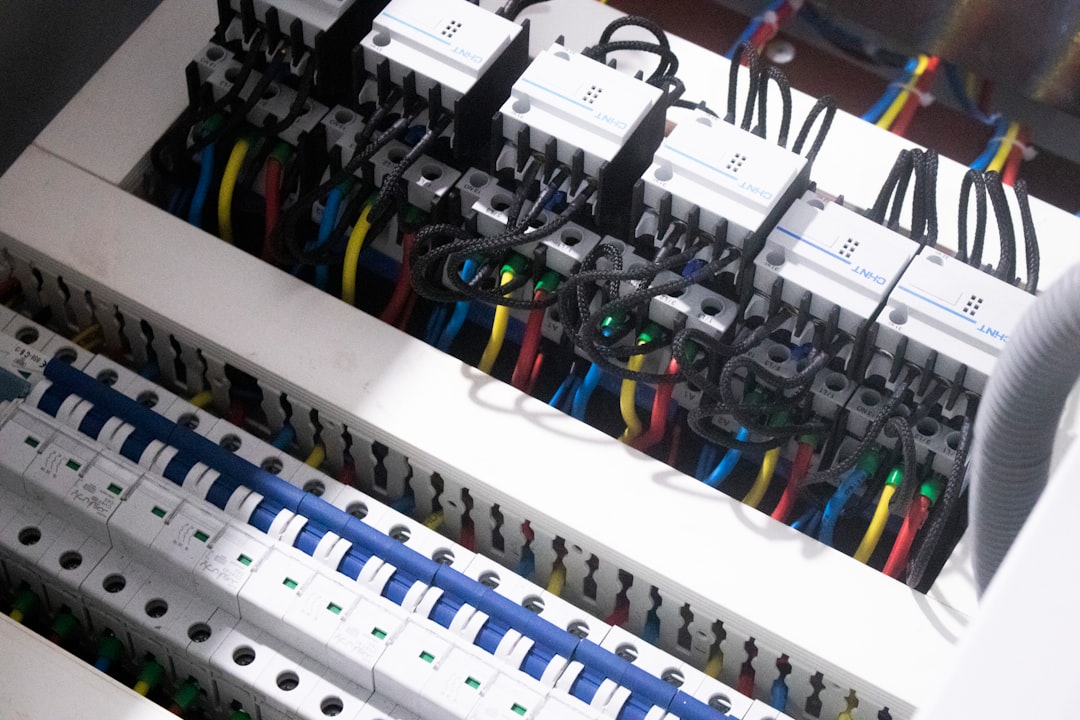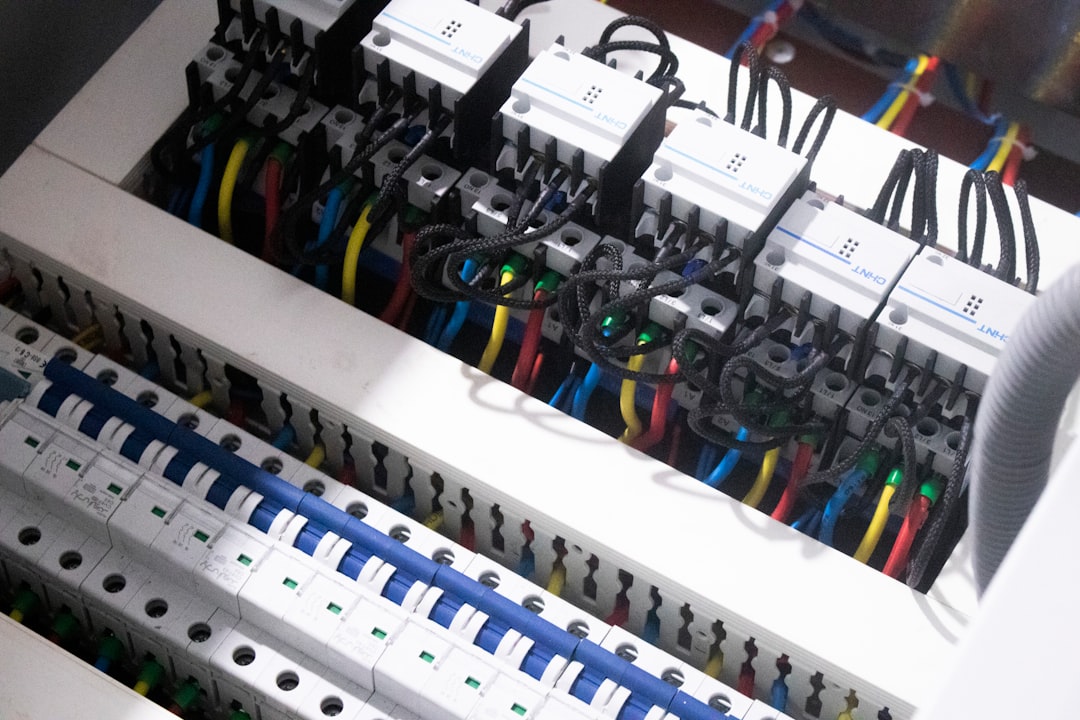
Electrical power specification is one of the most error-prone parts of any European stand order. The exhibitor knows what equipment will be on the stand. The stand builder knows what wiring the equipment needs. The venue knows what connection capacity it can supply.
The gap between those three sets of knowledge is where opening-day power failures happen - stands that trip breakers during the first hour, stands that need emergency upgrade orders that cost more than the original connection, stands that have to reduce their visible operations because the connection is undersized.
This article walks through electrical power ordering at major European exhibition venues with the discipline that experienced operations teams use to avoid the failure modes. It covers the single-phase versus three-phase decision, the CEE plug standards that govern the physical connection, the difference between connected load and operational load, the venue-monopoly certification regime, and the 2026 EUR tariffs at the major German, Italian, Dutch, and Spanish venues.
The framework applies across Messe Frankfurt, Messe Düsseldorf, Hannover Messe, Fiera Milano, IFEMA Madrid, RAI Amsterdam, ExCeL London, and the other major European exhibition centres.
Why electrical specification is more demanding than it looks
The naive approach to stand electrical specification is to add up the equipment wattage, divide by 230 or 400 volts, and order a connection that matches. The reality is more demanding because:
- Equipment manufacturer ratings are often inaccurate for exhibition use. A demonstration machine rated at 8 kW under steady-state load may peak at 14 kW during startup, which trips a connection sized for steady-state.
- Inrush current at startup. LED lighting fixtures and AV equipment draw 2-3x rated current for the first 100-500 milliseconds of operation. Multiple simultaneous startups can trip breakers sized for normal operation.
- Equipment interaction. Servers, audio amplifiers, video walls, and demonstration machinery often have hidden interactions that affect total current draw - power-factor mismatches, harmonic distortion, and reactive load that the simple wattage sum does not capture.
- Venue power supply quality. Venue power can have voltage variation, frequency variation, and brief outages that interact with the stand’s electrical infrastructure. Sensitive equipment may need additional UPS protection.
- Build-up and dismantle phases. Stand construction during build-up uses temporary work power (typically a 16A single-phase circuit) before the main stand connection is energised. Sequencing matters.
“The exhibitors who run trouble-free electrical operations at major fairs are not the ones who get the connection sizing exactly right - they are the ones who oversize by 20-30 percent and never have to worry about it. The cost of an oversized connection is modest; the cost of an undersized connection that fails during opening hours is enormous. The economics favour conservative sizing.” - Common framing among venue technical operations teams at Messe Frankfurt and Fiera Milano
Single-phase versus three-phase
European exhibition venues supply both single-phase (230V, 50Hz) and three-phase (400V, 50Hz) power. The choice between them depends on the connected load:
| Connection size | Typical use case | Maximum continuous load |
|---|---|---|
| 16A single-phase | Small modular stand, lighting and AV only | ~3.5 kW |
| 32A single-phase | Mid-size stand without machinery | ~7 kW |
| 16A three-phase | Mid-size stand with machinery or heavy lighting | ~11 kW |
| 32A three-phase | Standard 50-100 sqm stand with comprehensive AV | ~22 kW |
| 63A three-phase | Large stand or demonstration machinery | ~43 kW |
| 125A three-phase | Major industrial demonstration stand | ~86 kW |
| 250A three-phase | Flagship machinery or video-wall heavy installation | ~172 kW |
The rule of thumb: any stand drawing more than 6-7 kW total connected load should use three-phase. Three-phase distributes the load across three conductors rather than concentrating it on one, which reduces wire heating, improves voltage stability under load, and supports larger total power within reasonable conductor sizing.
For mixed equipment (some single-phase, some three-phase), the stand wiring panel distributes the three-phase incoming feed to single-phase circuits where appropriate. This is standard stand wiring practice and is built into most modular system electrical kits.
CEE plug standards
The physical connection between the venue power outlet and the stand wiring is a CEE plug (IEC 60309). The common sizes:
| CEE plug | Phases | Pins | Colour | Capacity at standard voltage |
|---|---|---|---|---|
| CEE 16A single-phase | 1 | 3 | Blue | 3.5 kW at 230V |
| CEE 32A single-phase | 1 | 3 | Blue | 7 kW at 230V |
| CEE 16A three-phase | 3 | 5 | Red | 11 kW at 400V |
| CEE 32A three-phase | 3 | 5 | Red | 22 kW at 400V |
| CEE 63A three-phase | 3 | 5 | Red | 43 kW at 400V |
| CEE 125A three-phase | 3 | 5 | Red | 86 kW at 400V |
| CEE 250A three-phase | 3 | 5 | Red | 172 kW at 400V |
The exhibitor’s stand wiring must terminate in a CEE plug of the appropriate size to match the venue connection. Plug type mismatches between the stand wiring and the venue connection are a frequent and avoidable cause of build-up delays.
The typical mistake: a stand builder wires the stand panel for a 32A three-phase plug, the exhibitor orders a 16A three-phase connection from the venue, and the plugs don’t match on build-up day. Resolution requires either re-wiring the stand panel (delay measured in hours) or upgrading the venue connection order (delay measured in days for major venues).
The discipline that solves this: the stand wiring termination is specified in the build-up plan and the venue connection is ordered to match. Both decisions are made together at the ordering stage rather than separately.
Connected load versus operational load
The two load measurements that matter:
Connected load is the total wattage if every piece of equipment on the stand ran at full rated power simultaneously. This is the maximum theoretical load the stand could draw.
Operational load is the realistic peak usage during normal show operation. This is typically lower than connected load because some equipment is dormant when other equipment is active.
The diversity factor is the ratio of operational load to connected load:
| Stand type | Diversity factor | Notes |
|---|---|---|
| Tech demonstration heavy | 0.75-0.90 | Most equipment runs simultaneously |
| AV-heavy with video walls | 0.65-0.80 | Some video off when audio dominant |
| Hospitality + retail | 0.50-0.70 | Activity peaks shift across day |
| Modular display with lighting | 0.60-0.80 | Lighting on continuously; equipment varies |
| Industrial machinery demo | 0.70-0.95 | Demo cycles dominate load |
The venue connection should be sized for connected load, not operational load, because venue tariffs are based on connection capacity and the connection must handle the worst-case simultaneous draw.
The illustrative example: a stand with 18 kW connected load and 12 kW expected operational load (diversity 0.67) should be ordered on a 32A three-phase connection (22 kW capacity), not a 16A three-phase connection (11 kW capacity). Sizing to operational load undersizes the connection and trips breakers when equipment all happens to run simultaneously - which always happens at some point during show hours.
2026 EUR tariffs at major European venues
The table below summarises 2026 published electrical tariffs at major European venues. The connection fee covers the venue’s connection setup, certification, and inspection. The daily consumption charge covers the energy used during the show.
| Venue | 16A 3-phase connection | 32A 3-phase connection | 63A 3-phase connection | Daily consumption rate |
|---|---|---|---|---|
| Messe Frankfurt | EUR 285-385 | EUR 485-685 | EUR 850-1,150 | EUR 38-200/day |
| Messe Düsseldorf | EUR 275-375 | EUR 475-665 | EUR 825-1,120 | EUR 36-195/day |
| Messe München | EUR 290-390 | EUR 490-690 | EUR 860-1,160 | EUR 40-210/day |
| Hannover Messe | EUR 280-380 | EUR 480-680 | EUR 840-1,140 | EUR 38-200/day |
| Fiera Milano | EUR 260-360 | EUR 450-630 | EUR 800-1,080 | EUR 34-180/day |
| RAI Amsterdam | EUR 280-380 | EUR 480-680 | EUR 840-1,140 | EUR 38-200/day |
| IFEMA Madrid | EUR 220-320 | EUR 420-580 | EUR 740-1,000 | EUR 30-160/day |
| ExCeL London | GBP 240-340 | GBP 450-630 | GBP 800-1,080 | GBP 34-185/day |
| Paris Porte de Versailles | EUR 290-390 | EUR 490-690 | EUR 860-1,160 | EUR 40-210/day |
The pricing variation reflects local energy costs and labour costs for the certified-electrician installation. The German venues sit at the higher end of the tariff bands; the Italian and Spanish venues at the lower end.
The total electrical cost for a typical 75 sqm stand at a tier-one European fair across 4 show days:
| Venue | Connection (32A 3-phase) | Consumption (4 days) | Total electrical |
|---|---|---|---|
| Messe Frankfurt | EUR 485-685 | EUR 300-820 | EUR 785-1,505 |
| Fiera Milano | EUR 450-630 | EUR 270-720 | EUR 720-1,350 |
| IFEMA Madrid | EUR 420-580 | EUR 240-640 | EUR 660-1,220 |
| ExCeL London | GBP 450-630 | GBP 280-740 | GBP 730-1,370 |
Certified electrical installation
European exhibition venues require all electrical installations to be certified by venue-approved electricians. The structural reasons:
- National safety standards. DIN VDE in Germany, CEI 64-8 in Italy, NEN 1010 in the Netherlands, REBT in Spain, BS 7671 in the UK. All require certified inspection of temporary electrical installations.
- Insurance compliance. The venue’s liability insurance excludes electrical incidents from uncertified installations. The exhibitor’s stand insurance similarly requires certified installation as a condition of cover.
- Visitor safety. Stand electrical installations sit in high-visitor-density environments. A failure that creates shock or fire risk must be identified and prevented before show opening.
- Operational coordination. Each stand’s electrical work must be tested before energisation and inspected during operation. The venue’s electrical team is the single accountable party.
The approved-electrician list at most major European venues includes 5-15 certified contractors. The exhibitor’s stand builder either uses a contractor from the list or works in partnership with a listed contractor for the certification step.
“The certification regime is the dividing line between European exhibition venues and unregulated event spaces. The structure exists because exhibitions have killed people - electrical fires, electrocution incidents, and structural failures involving electrical components. The certified-installation requirement is the operational response, and it is non-negotiable at every major European venue.” - Common framing among venue technical operations directors at major German and Italian venues
The 24-hour power consideration
Most exhibition power is supplied only during show hours and build-up windows, with the supply de-energised overnight. Stands with equipment that must run 24 hours (cold storage for hospitality, server racks for tech demonstrations, illuminated displays that should remain on overnight, security systems) require a 24-hour power supply order.
The 2026 surcharge for 24-hour supply typically runs 30-50 percent above the standard tariff. The order must be specified at the ordering stage; converting standard supply to 24-hour supply mid-show is operationally difficult.
The patterns that work for 24-hour requirements:
- Identify 24-hour equipment at the stand-design stage. Cold storage, server racks, lit displays - all flagged for 24-hour supply in the original electrical order.
- Separate 24-hour and show-hours circuits where feasible. A small 16A circuit for 24-hour equipment and a larger main connection for show-hours equipment can be cheaper than putting everything on 24-hour supply.
- UPS protection for sensitive 24-hour equipment. Even with 24-hour venue supply, brief outages occur. UPS protection on servers and critical equipment is standard.
Specification mistakes that cost stand openings
The mistakes that most consistently cause opening-day power problems at European stands:
- Undersizing the connection. Sizing to operational load rather than connected load, with breakers tripping during peak simultaneous usage.
- CEE plug mismatch. Stand wiring terminating in a plug type that doesn’t match the venue connection order.
- Late order for 24-hour supply. Equipment that needs overnight power discovered after show open.
- No accommodation for inrush current. Large lighting installations or AV systems trip the main breaker at first power-on.
- Mixing equipment certification standards. Equipment imported from non-EU sources without CE marking can fail the certification inspection.
- No UPS for sensitive equipment. Brief venue power variations damaging servers or AV equipment.
- Stand wiring not done by certified electrician. Discovered at certification inspection; remediation required before energisation.
Related reading
- Water, Compressed Air, and Data Connections at European Stands - the broader utility infrastructure that sits alongside electrical
- Build-Up and Dismantle Scheduling at European Exhibition Venues - timing for electrical certification within build-up calendar
- Stand Approval and Permits at European Venues - the broader approval process that includes electrical sign-off
- Health and Safety Compliance for European Stands - the electrical safety requirements at major venues
- On-Site Handling and Rigging Venue Monopolies - the appointed-contractor concession framework that also applies to electrical
References and primary sources
- Messe Frankfurt Technical Guidelines 2026 (Servicehandbuch), electrical installation section, messefrankfurt.com
- Messe Düsseldorf Technical Guidelines 2026, electrical supply specifications
- Fiera Milano operational guidelines for stand utilities 2026
- IEC 60309 Industrial plugs, socket-outlets and couplers standard
- DIN VDE 0100 series for low-voltage electrical installations, VDE Verband der Elektrotechnik
- CEI 64-8 Italian electrical installation standard
- BS 7671 UK Wiring Regulations 18th Edition with Amendment 2
- AUMA technical guidelines for exhibitors 2026, electrical installations chapter, auma.de
- IELA Operations Committee venue utility benchmarks 2025-2026, iela.org
FAQFrequently asked questions
Calculate connected load from the sum of all electrical equipment on the stand, then apply a diversity factor to estimate operational load. Connected load is the total wattage if everything ran simultaneously at full power; operational load is the realistic peak usage.
Diversity factors vary by stand type: tech demonstration stands often run 0.7-0.9 (most equipment runs simultaneously); hospitality and retail stands run 0.5-0.7 (peaks shift across the day); modular display stands with lighting and AV run 0.6-0.8. The venue connection should be sized for the connected load, not the operational load, because venue tariffs are based on connection capacity, not consumed energy.
A stand with 18 kW connected load runs on a 25-amp three-phase connection (approximately 17 kW capacity at 400V); the same stand sized for operational load (12 kW) might be specified on a 16-amp three-phase connection and trip during peak usage.
CEE plugs (IEC 60309) are the standard industrial connectors used for exhibition power across Europe. The common sizes for exhibition stands: CEE 16A 3-phase (5-pin blue/red, up to 11 kW at 400V), CEE 32A 3-phase (5-pin red, up to 22 kW at 400V), CEE 63A 3-phase (5-pin red, up to 43 kW at 400V), CEE 125A 3-phase (5-pin red, up to 86 kW at 400V).
Single-phase variants exist (CEE 16A single-phase, CEE 32A single-phase) for smaller stands. The venue power distribution accepts these standard CEE plugs at the stand connection point; the exhibitor’s stand wiring must terminate in a CEE plug of the appropriate size. Plug type mismatches between the exhibitor’s wiring and the venue connection are a frequent and avoidable cause of build-up delays.
The 2026 Messe Frankfurt electrical tariff includes a connection fee, a daily consumption charge, and the certified electrical installation costs. Representative pricing: 16A 3-phase connection EUR 285-385 connection + EUR 38-52 per day consumption; 32A 3-phase EUR 485-685 connection + EUR 75-105 per day; 63A 3-phase EUR 850-1,150 connection + EUR 145-200 per day.
For a 4-day fair, total electrical cost for a typical 75 sqm stand on a 32A 3-phase connection runs EUR 785-1,105. Additional charges apply for 24-hour power supply (cold storage, server racks, etc.), for emergency standby provisions, and for any installation requiring certified electrical work by venue-approved electricians.
The venue tariff is the same regardless of which stand builder did the wiring; the certification of the installation is the venue’s monopoly.
European exhibition venues require all electrical installations to be certified by venue-approved electricians under national electrical safety standards (DIN VDE in Germany, CEI in Italy, NEN in the Netherlands, REBT in Spain, BS 7671 in the UK).
The structural reasons: stand electrical installations are temporary, sit in high-visitor-density environments, and must withstand the build-and-dismantle cycle without becoming hazardous. The venue insurance and the national workplace-safety regulations require certified installation.
Stand builders typically include certified electrical work in their build quote, but the certification itself is venue-controlled - the venue’s approved electricians perform the testing and the sign-off. The cost is built into the venue tariff and is non-negotiable.
Generally no. European exhibition venues operate approved-electrician lists for the same reasons they operate appointed-handler concessions: safety, insurance, and operational coordination. The approved list typically includes 5-15 certified contractors per venue, all of whom have completed venue-specific safety training and hold the relevant national electrical certifications.
Exhibitors can choose any contractor from the list; bringing a contractor from outside the list is generally not permitted. The exceptions are typically for very specific high-voltage or unusual installations where the venue’s approved contractors cannot supply the required expertise; in these cases the venue evaluates the proposed contractor on a case-by-case basis.
Insufficient power during the show typically manifests as breaker trips when peak operational load exceeds the connection capacity. The immediate consequence is loss of power on the stand until the breaker is reset and the cause identified. If the cause is genuinely temporary (e.g., simultaneous demo equipment startup), reset and continue.
If the cause is structural undersizing of the connection, the only remedies are: reduce simultaneous equipment usage, or order an upgraded connection from the venue. Upgrade orders during show hours typically take 24-48 hours to fulfill at the major venues and carry expedite fees of EUR 450-1,500. The mitigation is to size the connection conservatively at the ordering stage rather than try to upgrade mid-show.