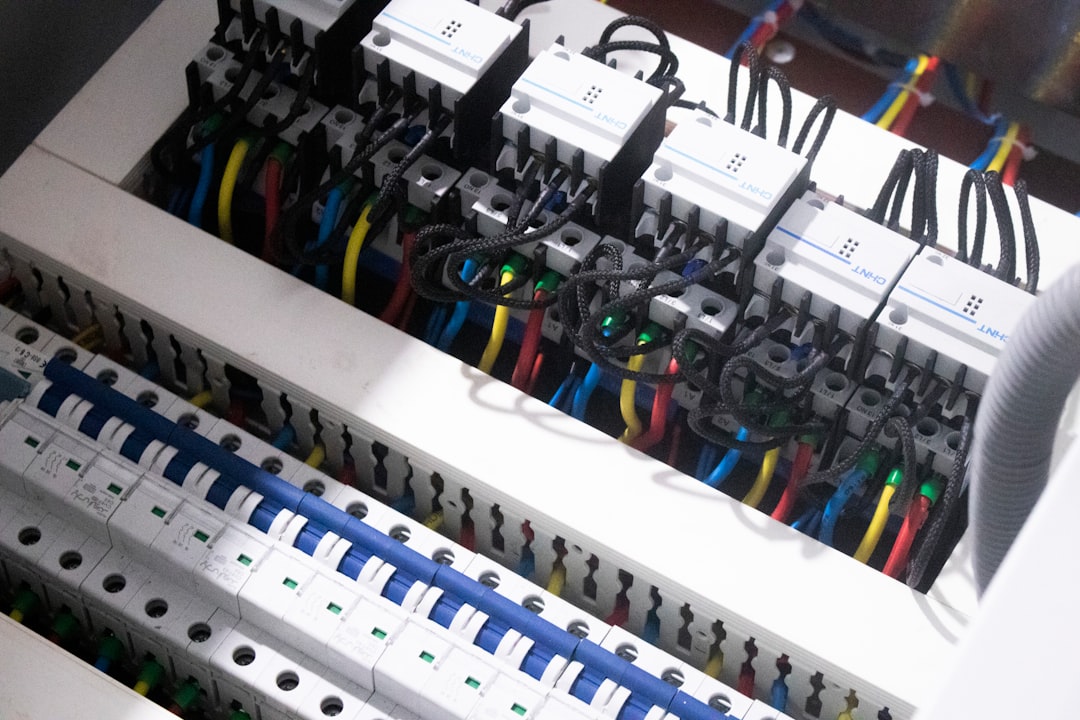
Utility connections are the most rule-bound, most certified-installer-dependent, and most under-budgeted services in European exhibition delivery. The published tariffs are easy to find in the venue technical guidelines, but the actual consumption is shaped by stand design decisions made months before the utility booking is submitted.
A stand that under-specifies its supply rating runs into power-trip outages on opening day. A stand that over-specifies wastes EUR 600-1,500 on unused connection capacity. A stand that ignores the certified-installer rule discovers at the safety walk-through that the wiring needs to be redone by a venue-approved electrician at EUR 250-400 per hour.
This article walks through the four core utility streams (electrical, water and waste, compressed air, data and network) at the major European venues. It references the 2026 published tariffs at Messe Frankfurt, Messe Dusseldorf, Fiera Milano Rho, IFEMA Madrid, RAI Amsterdam, Koelnmesse, and ExCeL London, and the certified-installer rules that apply across continental Europe.
Electrical supply: the core utility decision
Every stand at every European fair requires an electrical supply. The supply rating (the amperage and phase configuration of the venue drop) determines what loads the stand can connect, and the rating decision needs to be made 6-10 weeks before fair opening as part of the utility booking workflow.
The standard supply ratings available at most major German venues:
- 16A single-phase (3.5 kW), small stands, basic lighting and a few low-load devices
- 32A single-phase (7 kW), small stands with moderate AV and lighting load
- 16A three-phase (11 kW), mid-size stands with mixed AV, lighting and demonstration equipment
- 32A three-phase (22 kW), mid-size stands with significant AV and demonstration load
- 63A three-phase (43 kW), large stands with substantial AV, lighting and machinery demonstration
- 125A three-phase (86 kW), flagship stands with major machinery demonstrations or large hospitality kitchens
- 250A three-phase (172 kW), special applications (working production demonstrations, large industrial exhibits)
- 400A and 630A three-phase, bespoke installations for industrial machinery fairs (Bauma, EMO, Hannover Messe Industrial)
Published connection tariffs
The table below summarises 2026 published connection charges at the major European venues for the most common supply ratings.
| Supply rating | Messe Frankfurt | Fiera Milano | IFEMA Madrid | RAI Amsterdam | ExCeL London (EUR equivalent) |
|---|---|---|---|---|---|
| 16A single-phase | 200-260 | 180-240 | 170-230 | 200-260 | 230-300 |
| 32A single-phase | 320-420 | 290-380 | 270-370 | 320-420 | 370-470 |
| 16A three-phase | 380-490 | 340-450 | 320-430 | 380-490 | 430-560 |
| 32A three-phase | 450-580 | 410-540 | 390-520 | 450-580 | 520-660 |
| 63A three-phase | 680-880 | 620-820 | 590-790 | 680-880 | 780-1,000 |
| 125A three-phase | 1,250-1,600 | 1,150-1,500 | 1,100-1,450 | 1,250-1,600 | 1,450-1,850 |
| 250A three-phase | 2,400-3,200 | 2,200-3,000 | 2,100-2,900 | 2,400-3,200 | 2,800-3,700 |
Consumption is billed separately at EUR 0.45-0.70 per kWh, substantially above commercial electricity rates because the venues amortise hall infrastructure (transformers, distribution, switchgear, hall lighting that runs during build and dismantle) across the fair period.
Calculating the right supply rating
The supply rating calculation needs to add the connected loads of every device on the stand with a sensible margin for inrush, simultaneity and headroom. The structure:
- Sum the rated power of every device (lighting fixtures, displays, PCs, demonstration equipment, hospitality appliances, AV systems).
- Apply a simultaneity factor (typically 0.7-0.85) to account for the fact that not every device runs at peak simultaneously.
- Apply an inrush margin (typically 1.2-1.3) for devices with high startup current (motor-driven equipment, large LED arrays, kitchen appliances).
- Round up to the next standard supply rating.
A stand with 4 kW of lighting, 2 kW of AV, 1.5 kW of PCs, 3 kW of demonstration equipment, and 2 kW of hospitality appliances totals 12.5 kW. With a simultaneity factor of 0.8 and an inrush margin of 1.25, the design load is 12.5 kW. The next standard rating above 12.5 kW is 16A three-phase (11 kW), which is below the design load. The correct booking is 32A three-phase (22 kW), with headroom for any equipment additions during build-up.
“Under-specifying the supply rating is the single most common cause of opening-day outages we see. The exhibitor calculates the steady-state load and forgets the inrush of the coffee machine that turns on every twenty minutes. The trip happens at 09:30 on day one and the rectification involves recabling at premium rates.”, Common framing among VDE-certified exhibition electricians
Certified installer requirements
The connection from the venue drop to the stand’s main distribution panel must be made by a venue-certified electrician at every major continental European venue. The venue maintains a roster of certified electricians who hold the relevant national qualification (VDE for German venues, CEI for Italian venues, REBT for Spanish venues, NEN for Dutch venues) and venue-specific safety training.
Beyond the main distribution panel, on-stand wiring can be done by an exhibitor-supplied electrician provided they hold the relevant EU certification and submit electrical drawings as part of stand approval. Drawings should show every circuit, every protection device, every isolator, and the routing of every cable. The venue’s electrical compliance team reviews the drawings during stand approval and signs them off before build-up starts.
UK venues are slightly more flexible on installer credentials post-Brexit but the certification requirement remains. ExCeL London accepts IEE-qualified UK electricians for stand-internal wiring.
Water and waste connections
Water and waste are available at most large European venues but typically only in halls equipped with floor service trenches. The trenches run beneath the hall floor at fixed intervals (typically every 3-6 metres in service-equipped halls) and provide both water supply and waste drainage at each trench access point.
| Service | Connection charge (EUR) | Notes |
|---|---|---|
| Standard water + waste drop (10mm supply, 50mm waste) | 250-450 | Single connection point |
| Additional plumbing run beyond 8-10m from drop | 18-35 per metre | Above-floor routing |
| Above-floor service (halls without trenches) | 350-650 | More expensive than trench connection |
| Hot water supply | additional 80-150 | Where available |
| Industrial waste drainage | bespoke quote | Required for machinery demonstrations |
The constraint to confirm during stand approval is whether the assigned hall has floor service trenches at all and where the trench access points fall relative to the stand footprint. Halls 4 and 5 at Messe Frankfurt have dense trench coverage. Some of the older Fiera Milano halls have sparser coverage. The IFEMA halls have generally good trench infrastructure. Confirm before design freeze, not after.
Compressed air
Compressed air is required for demonstration of pneumatic equipment, certain food-service equipment, and some interactive exhibits. Compressed air is not available in every hall, confirm during stand approval.
Where directly available from the venue infrastructure, connection charges run EUR 320-550 for a standard 6-8 bar supply at most large German venues, EUR 280-480 at Italian and Spanish venues. Consumption is typically bundled into the connection charge for normal stand use, with metered consumption only for high-volume applications.
Where compressed air is not directly available, exhibitor-supplied compressors are typically permitted but with two constraints:
- Noise: compressor noise above 70 dB at 1 metre is rarely permitted in halls with other stands nearby
- Electrical load: the compressor’s electrical load must be included in the supply rating calculation
For most exhibitors at fairs other than Bauma, Hannover Messe Industrial and EMO, compressed air consumption is low enough that exhibitor-supplied compressors are operationally simpler than venue connections.
Data and network
The data and network decision is the most consequential utility decision for stand operations. Venue Wi-Fi at most major European venues is shared across all stands in the hall and is typically saturated during peak fair hours. Speeds drop to 1-5 Mbps per client during peak periods at even well-equipped venues. For any stand operation requiring reliable internet, a dedicated wired connection is the defensible choice.
The standard data tariff structure:
| Service | Typical cost (EUR per fair) | Notes |
|---|---|---|
| Venue Wi-Fi voucher (shared, basic) | 0-50 per device | Often free; speed unreliable |
| Venue Wi-Fi premium (shared, higher priority) | 80-180 per device | Better than basic but still shared |
| Wired 100 Mbps connection (shared bandwidth) | 250-450 | Typical mid-tier business choice |
| Wired 1 Gbps connection (shared bandwidth) | 450-800 | Required for demonstrations with video |
| Wired 1 Gbps premium (dedicated bandwidth) | 800-1,500 | No contention with other stands |
| Dedicated fibre (multi-Gbps, dedicated) | 1,500-3,500 | Broadcast-quality video, live product launches |
| Additional VLAN segmentation | 100-250 | Required for PCI-compliant payments |
| Static IP address | 50-150 | Required for some demonstration equipment |
“For any stand running live demonstrations to off-site audiences, lead-capture tools, or payment processing, the venue Wi-Fi is not a serious option. The dedicated wired drop at EUR 450-800 looks expensive until you have a sales demo collapse mid-pitch because the Wi-Fi died for fifteen seconds.”, Common framing among European stand IT managers
The cable routing for the network drop runs through the same trenches as electrical and water in service-equipped halls. In halls without trenches, the network cable runs above-floor in the same protective covers as electrical, which constrains stand layout and adds to installation cost.
The safety walk-through: what gets tested
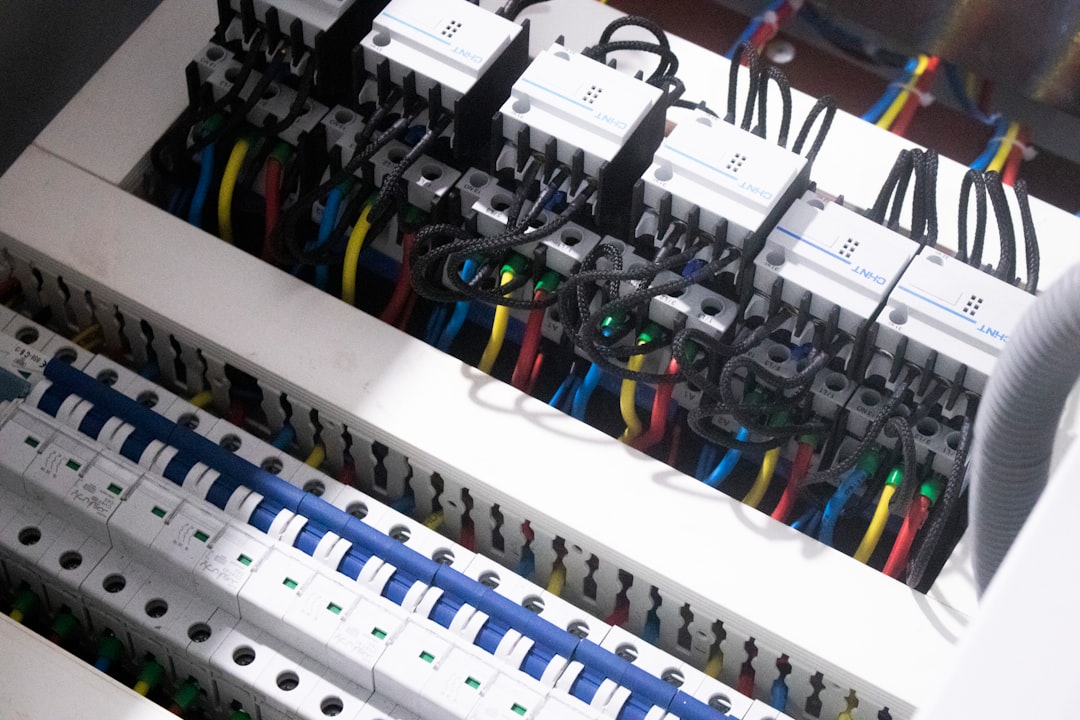
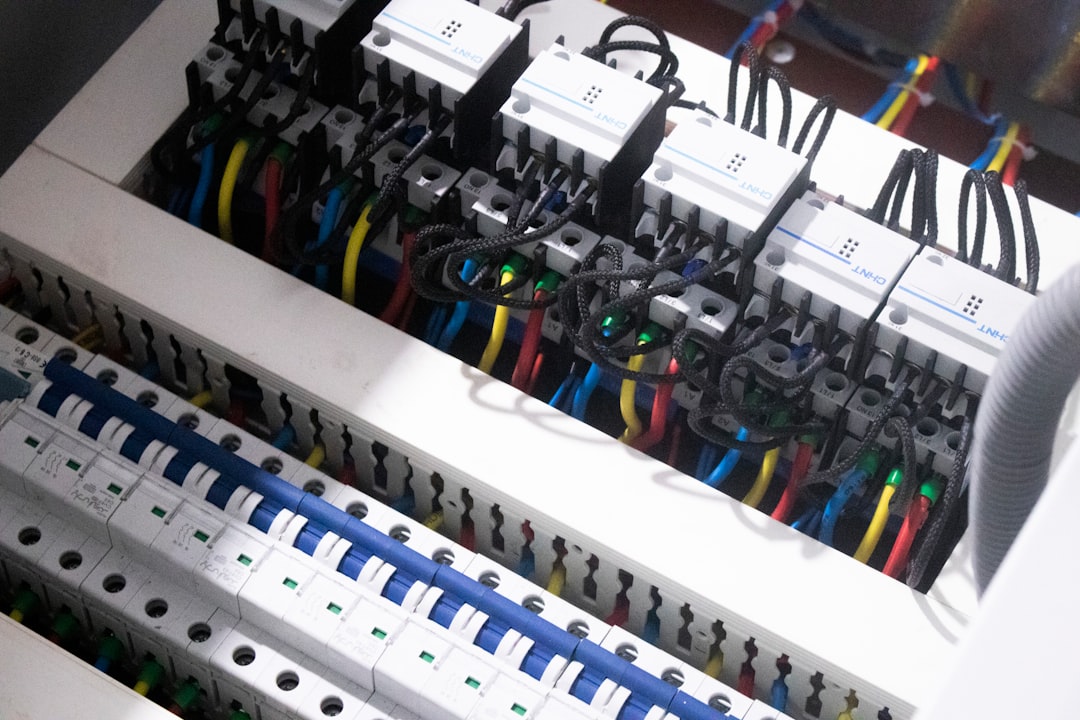
The electrical and utility portion of the safety walk-through tests against the venue technical guidelines. The five things tested on the electrical side:
- RCD protection. Every circuit must be protected by a residual current device of appropriate sensitivity (typically 30mA for general circuits, 10mA for circuits in wet areas like coffee bars or demonstration kitchens).
- Isolation switching. Every stand must have a clearly accessible main isolator that can de-energise the entire stand in an emergency. The isolator must be labelled, must be reachable without climbing, and must not be obstructed by furniture or graphics.
- Cable routing. Cables must not cross visitor walkways without protective covers, must not be in contact with combustible materials (fabric graphics, vinyl, untreated timber), and must follow the stand approval drawings.
- Load calculation. The connected load must not exceed the supply rating and the supply rating must match the venue drop.
- Earthing. All metal stand components and equipment must be properly bonded to earth.
Failures trigger immediate rectification before fair opening. The venue’s electrical compliance team is available at EUR 250-400 per hour for emergency remediation, with a typical rectification job (recabling a circuit, adding an RCD, repositioning an isolator) taking 1-3 hours.
Venue-specific quirks worth knowing
Messe Frankfurt. The 2026 sustainability programme offers a 5-10 percent discount on consumption charges for stands using LED-only lighting (no halogen) and certified energy-efficient AV. The discount requires documentation submitted with the utility booking.
Fiera Milano Rho. Hall 9 and Hall 11 have constrained electrical infrastructure for the largest supply ratings (above 250A); for very high-load stands, confirm hall assignment supports the rating.
IFEMA Madrid. Spanish electrical regulations (REBT) require specific isolator types in wet areas that differ from the German VDE specification; expect rectification at the walk-through if German-spec gear was installed.
RAI Amsterdam. Strong sustainability incentives for renewable-energy sourcing; documented green-energy stands can claim a 10-15 percent discount on consumption charges.
Koelnmesse. Compressed air availability varies significantly by hall; confirm during stand approval, not at booking.
ExCeL London. Post-Brexit, UK electrical components must meet UKCA marking requirements; EU-imported electrical gear without UKCA conformity may not pass the walk-through.
Deutsche Messe Hannover. The largest hall complex in Europe; the highest supply ratings (400A and 630A) are routinely available for Bauma and Hannover Messe Industrial.
How to act on this
Utility planning starts at the design stage, because connected load, trench access and cable routing are all fixed by decisions made long before the booking form is submitted. Work through the load calculation, the booking deadline, the certified-installer split and the drawings in this order:
- Calculate the stand’s connected load with simultaneity and inrush margins. Round up to the next standard supply rating.
- Submit the utility booking 6-10 weeks before fair opening. Late bookings carry 30-50 percent surcharges at most major venues.
- Use a venue-certified electrician for the drop-to-distribution-panel connection. Beyond that, use an exhibitor-supplied electrician with EU certification.
- Submit electrical drawings as part of stand approval. Drawings should show every circuit, every protection device, every isolator.
- Confirm hall service trench availability before design freeze for any stand requiring water, waste or compressed air.
- Default to a wired data connection for any stand operation requiring reliable internet. Venue Wi-Fi is not a serious option for demonstrations or payments.
- Pre-test the safety walk-through items the day before the actual walk-through. RCD trip tests, isolator labelling, cable routing, all rectifiable in advance.
- Apply for sustainability discounts where available. Messe Frankfurt and RAI Amsterdam offer meaningful discounts for documented green-stand configurations.
Related reading
- Build-Up and Dismantle Scheduling, the build sequence that determines when utilities are needed
- Health and Safety Compliance, the safety walk-through testing utility installations
- Stand Approval and Permits, the electrical drawing submission workflow
- On-Site Handling and Rigging, the venue services that interact with utility installation timing
- Lighting Design, the stand design discipline that drives electrical load calculation
References and primary sources
- Messe Frankfurt Technical Guidelines 2026, utility connection tariffs and certified installer requirements
- Messe Dusseldorf Technical Guidelines 2026, electrical, water and data connection schedules
- Fiera Milano Rho exhibitor manual 2026, utility booking workflow and tariffs
- IFEMA Madrid exhibitor services manual 2026, electrical and utility services
- RAI Amsterdam exhibitor manual 2026, sustainability incentives for utility consumption
- Koelnmesse technical guidelines 2026, hall-specific utility availability
- ExCeL London exhibitor manual 2026, electrical and data connection tariffs
- VDE 0100 series, German electrical installation standards
- CEI 64-8, Italian electrical installation standards
- REBT (Reglamento Electrotecnico para Baja Tension), Spanish electrical regulations
- NEN 1010, Dutch electrical installation standards
- EU Low Voltage Directive 2014/35/EU
- AUMA exhibitor manual (2024-2026 edition), utility and services chapter, auma.de
FAQFrequently asked questions
European exhibition electrical supply is priced in two components: a connection charge (one-off fee for installing the drop and supplying the meter) and a consumption charge (per kilowatt-hour of energy used).
Connection charges scale with the supply rating: a 16A single-phase drop runs EUR 180-280, a 32A three-phase drop runs EUR 350-550, a 63A three-phase drop runs EUR 600-900, and a 125A three-phase drop runs EUR 1,200-1,800 at most major German venues. Consumption charges run EUR 0.45-0.70 per kWh, substantially above commercial electricity rates because venues amortise hall infrastructure across the fair period.
Plan the supply rating against the actual stand load (LED lighting, AV equipment, demonstration kit, hospitality appliances) and budget consumption separately.
The connection from the venue drop to the stand’s main distribution panel must be made by a venue-certified electrician at every major continental European venue.
Beyond that distribution panel, on-stand wiring can be done by an exhibitor-supplied electrician provided they hold the relevant EU certification (typically VDE for German venues, CEI for Italian venues, REBT for Spanish venues, NEN for Dutch venues) and submit electrical drawings as part of stand approval.
The venue’s safety walk-through tests the on-stand wiring against the technical guidelines (RCD protection, isolation switches, cable routing, load calculation) regardless of who installed it. UK venues are slightly more flexible on installer credentials post-Brexit but the certification requirement remains.
Water and waste are available at most large European venues but typically only in halls equipped with floor service trenches. Connection charges for a standard water-and-waste drop (10mm supply, 50mm waste) run EUR 250-450 at most German venues, EUR 200-380 at Italian and Spanish venues.
The drop covers a small footprint around the connection point, a coffee bar, a demonstration kitchen, a basin, and any water routing beyond 8-10 metres from the drop requires additional plumbing run-out, typically charged at EUR 18-35 per metre. Halls without floor trenches require above-floor service routing, which is more expensive (EUR 350-650 connection) and constrains the stand layout.
Confirm hall service availability during stand approval, not after design freeze.
Compressed air is required for demonstration of pneumatic equipment (industrial tools, machinery exhibits, manufacturing demonstrations), for certain food-service equipment (espresso machines on automatic systems), and for some interactive exhibits using pneumatic actuation.
Connection charges at most large German venues run EUR 320-550 for a 6-8 bar standard supply, with consumption typically bundled into the connection charge for normal stand use. Compressed air is not available in every hall, confirm during stand approval.
Where compressed air is not directly available, exhibitor-supplied compressors are typically permitted but with noise restrictions (compressor noise above 70 dB at 1 metre is rarely permitted in halls with other stands nearby) and electrical load implications.
Venue Wi-Fi at most major European venues is shared across all stands in the hall and is typically saturated during peak fair hours. Speeds drop to 1-5 Mbps per client during peak periods even at venues with otherwise good Wi-Fi infrastructure.
For stand operations requiring reliable internet (demonstration livestreams, video calls with off-site teams, lead-capture systems, point-of-sale), a dedicated wired network drop is the defensible choice. Dedicated network drops run EUR 250-450 for a 100 Mbps connection, EUR 450-800 for 1 Gbps, EUR 800-1,500 for premium 1 Gbps with dedicated bandwidth (no contention with other stands).
For high-stakes demonstrations (live product launches, broadcast-quality video), most venues also offer dedicated fibre at EUR 1,500-3,500 per fair.
The electrical portion of the safety walk-through tests five things. First, RCD protection: every circuit must be protected by a residual current device of appropriate sensitivity (typically 30mA for general circuits, 10mA for circuits in wet areas). Second, isolation switching: every stand must have a clearly accessible main isolator that can de-energise the entire stand in an emergency.
Third, cable routing: cables must not cross visitor walkways without protective covers, must not be in contact with combustible materials, and must follow the stand approval drawings. Fourth, load calculation: the connected load must not exceed the supply rating and the supply rating must match the venue drop. Fifth, earthing: all metal stand components and equipment must be properly bonded to earth.
Failures trigger immediate rectification before fair opening, with the venue’s electrical compliance team available at EUR 200-400 per hour for emergency remediation.