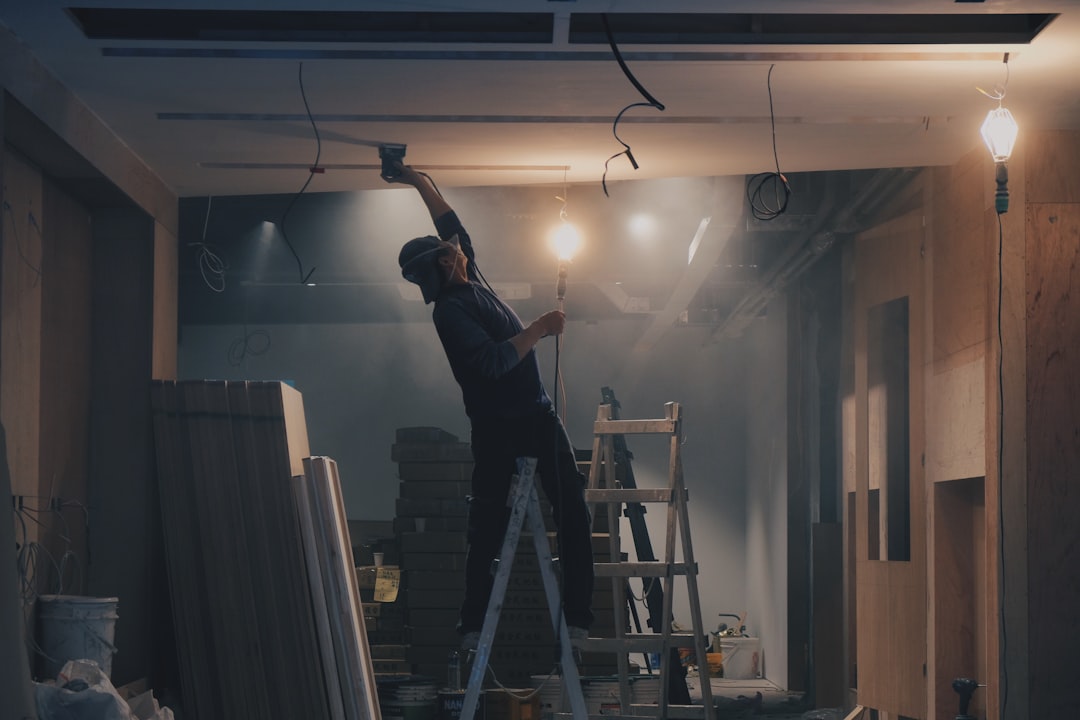
The build-up window at a tier-one European trade fair is a finite resource with hard boundaries on both ends. The hall opens to exhibitors on a fixed date and time. The safety walk-through must complete by a fixed deadline before the fair opens. The dismantle window closes with a hand-back deadline that triggers EUR 1,000-3,000 per day overrun penalties if missed.
Every stand project lives or dies inside that window, and the scheduling logic that protects the window is the single most under-appreciated discipline in European exhibition delivery.
This article walks through how experienced stand builders plan the build-up and dismantle schedule at the major European venues. It references the published build-up windows in the 2026 technical guidelines of Messe Frankfurt, Messe Dusseldorf, Fiera Milano Rho, IFEMA Madrid, RAI Amsterdam, Koelnmesse, Messe Berlin, and ExCeL London, and the standard trade-sequence logic used by FAMAB-certified stand builders.
What the build-up window actually is
The build-up window is the period between the venue opening the hall to exhibitors and the deadline for the safety walk-through that gates fair opening. It is not the period until the fair opens, the safety walk-through typically completes 6-12 hours before the fair opening to give the venue time to rectify any failures.
“Treat the build-up window as ending at the safety walk-through, not at the fair opening. The four to twelve hours between walk-through and opening are venue time, not exhibitor time, and any schedule that assumes otherwise will fail.”, Common framing among Messe Frankfurt-certified project managers
The window length varies dramatically by venue and by stand class. The table below summarises the 2026 published windows at the major European venues for the most common stand-size categories.
| Venue | Below 50 sqm | 50-200 sqm | 200-500 sqm | Above 500 sqm |
|---|---|---|---|---|
| Messe Frankfurt | 2 days | 4-5 days | 5-6 days | 6-8 days |
| Messe Dusseldorf | 2 days | 4 days | 5-6 days | 6-8 days |
| Fiera Milano Rho | 3 days | 4-5 days | 5-7 days | 7-10 days |
| IFEMA Madrid | 2 days | 3-4 days | 4-5 days | 5-7 days |
| RAI Amsterdam | 2 days | 4 days | 4-5 days | 5-6 days |
| Koelnmesse | 2 days | 4 days | 5-6 days | 6-8 days |
| Messe Berlin | 2 days | 3-4 days | 4-5 days | 5-7 days |
| ExCeL London | 1-2 days | 2-3 days | 3-4 days | 4-5 days |
| Deutsche Messe Hannover | 2 days | 4-5 days | 5-7 days | 7-10 days |
| Messe Munchen | 2 days | 4 days | 5-6 days | 6-8 days |
ExCeL London runs the tightest windows in Europe because the venue operates at near-full utilisation and the changeover between consecutive shows is the operational constraint. Continental venues run more relaxed windows because the changeover gaps are longer and the absolute volume of stand construction is higher.
The standard trade sequence
The build-up workflow has eight standard trade stages, each of which requires the previous to be substantially complete. Skipping ahead or running trades in parallel where the structural dependency does not allow it is the most common source of cost overrun and schedule slip.
Stage 1: Site preparation and floor protection
The first crew on site lays floor protection over the venue’s carpeted or hard-floor surface, marks out the stand perimeter, and verifies the venue-supplied services (electrical drop, water, data) are positioned correctly. Time: 2-4 hours for a 75 sqm stand.
Stage 2: Structural build
Frame, deck, walls, ceiling rigging, and any double-deck construction. This is the longest stage and the one most sensitive to material availability. Time: 1-2 days for a 75 sqm modular stand, 2-4 days for an equivalent custom build.
Stage 3: Services rough-in
Electrical cable routing, water and waste connections, compressed air drops, data and network cabling. Services must be roughed in before the wall and floor finishes go on top, but cannot be completed before the structure is sealed. Time: 4-12 hours depending on stand complexity.
Stage 4: Finishes
Vinyl wraps, fabric graphics, joinery, flooring, painted surfaces. This stage runs in parallel with the late phase of services rough-in for efficiency. Time: 8-24 hours.
Stage 5: Furniture and fittings
Furniture delivery and placement, cabinet installation, demonstration equipment positioning. Furniture cannot land before the floor is finished. Time: 4-8 hours.
Stage 6: AV and IT integration
Display installation, audio equipment positioning, network and Wi-Fi commissioning, demonstration equipment commissioning. Time: 8-16 hours, often the longest single trade after structural.
Stage 7: Graphics-final and lighting-tuning
Final graphic touch-ups, lighting positioning and dimming, signage verification, brand consistency check. Time: 4-8 hours.
Stage 8: Safety walk-through and handover
Venue safety officer walks the stand, verifies compliance against the technical guidelines, and signs off. Exhibitor takes possession. Time: 1-3 hours for the walk-through itself, plus any rectification time.
The compression problem
Stand projects fail most often by trying to run the trade sequence in parallel where the structural dependency does not allow it. The classic failure pattern: graphics crew arrives on site before the structural build is complete, waits for 6 hours at EUR 80-120 per crew hour, then rushes the work and produces mounting alignment errors that have to be remediated on day 3.
The waiting cost alone for a four-person graphics crew at EUR 100 per hour is EUR 2,400 per day. Repeat across services, AV, and finishes, and the compression cost of a poorly sequenced build approaches the cost of a second build crew.
“The discipline that separates a EUR 50,000 build from a EUR 80,000 build is not the design or the materials. It is the project manager’s willingness to hold trades back until the previous handover is verifiably complete, even when the schedule looks tight. Every hour of crew waiting time costs more than the hour of schedule slip it would have prevented.”, Common framing among FAMAB-certified stand build project managers
The defensible counter-pattern is to treat each handover between trades as a verified milestone, not an assumption. Structural to services: walk the stand, confirm the frame is plumb, the floor deck is level, the wall positions are final, and the rigging points are accessible. Services to finishes: confirm all cable runs are complete, all water connections are pressure-tested, all data drops are live.
Finishes to furniture: confirm all surface treatments are dry, all joinery is fixed, all flooring is laid. Each handover takes 30-60 minutes and saves multiples of that in downstream compression cost.
The dismantle window and hand-back deadline
The dismantle window opens at fair close and closes at hand-back. Hand-back is when the stand site must be cleared, all materials removed, and the carpeted area returned to bare-floor condition. The venue measures hand-back compliance against published deadlines that vary by stand size.
| Stand size | Hand-back deadline (after fair close) | Overrun penalty (EUR per day) |
|---|---|---|
| Below 100 sqm | 24-48 hours | 1,000-1,500 |
| 100-200 sqm | 36-72 hours | 1,500-2,000 |
| 200-500 sqm | 48-96 hours | 2,000-2,500 |
| Above 500 sqm (no crane work) | 72-96 hours | 2,500-3,000 |
| Above 500 sqm (crane work) | 96-120 hours | 2,500-3,500 |
The penalty schedule above is consistent across the major German venues (Messe Frankfurt, Messe Dusseldorf, Koelnmesse, Hannover, Munich). Fiera Milano runs penalties in the same range but with more flexibility on enforcement when the next show schedule allows. IFEMA Madrid penalties are 10-20 percent lower in EUR terms but the enforcement is strict. ExCeL London penalties are higher in GBP terms (typically GBP 1,200-3,500 per day) reflecting the venue’s higher utilisation cost.
The dismantle sequence runs in reverse of the build-up sequence. Furniture and AV out first. Finishes (graphics, vinyl, joinery) out next. Services disconnected. Structure dismantled. Empties returned from the venue’s empties warehouse. Stand site swept and floor protection lifted. Hand-back walk with venue.
What slows dismantle most often
Three factors compress dismantle most often. First, the official forwarder cannot deliver the empties back to the stand until the floor is partially cleared, which means crates arrive in waves rather than all at once and the dismantle crew waits. Second, the venue’s forklift fleet is shared across the whole hall during dismantle and queueing for forklift access can add 1-3 hours per crane lift.
Third, the marshalling-yard slot allocation for outbound freight is tighter than for inbound because all exhibitors are leaving simultaneously.
The defensible counter-pattern is to plan the dismantle as carefully as the build-up. Book the outbound marshalling-yard slot at the same time as the inbound. Confirm the empties return schedule with the official forwarder during build-up, not at fair close. Phase the dismantle so that AV and furniture leave the stand before the empties arrive, freeing floor space for crate loading.
Overnight working: when it makes sense
All major European venues permit overnight build-up and dismantle, but with restrictions. Power-tool restrictions apply between 22:00 and 06:00 at most German venues, assembly and graphics work is permitted, but cutting, drilling and grinding require a noise-permit exception costing EUR 200-400 per night. Fiera Milano allows overnight work without permit but with a 23:00-05:00 quiet period. IFEMA and RAI are similar.
The economics of overnight working:
- Crew rates: 40-80 percent above day rates for time after 22:00
- Forklift hire: 50-100 percent above day rates for overnight slots
- Electrical and venue services: 25-50 percent surcharge
- Security: most venues require additional on-stand security for overnight work, EUR 35-65 per hour
- Forwarder coordination: limited overnight forwarder presence; coordinate in advance
Overnight working should be a contingency recovery tool, not part of the planned base case. Stand projects that build the schedule assuming two overnight shifts typically end up needing three, and the cost cascade is severe.
Venue-specific scheduling quirks
Messe Frankfurt. The 90-120 day marshalling-yard booking window is the tightest in Europe for prime slots. Light + Building, Ambiente and Automechanika are heavily oversubscribed. Stand approval submissions are due 6-10 weeks before fair opening depending on stand class, see the companion article on stand approval and permits.
Fiera Milano Rho. Salone del Mobile is the most logistics-constrained week in the European calendar. Custom stands above 200 sqm receive extended build-up windows on request but must book the request 16 weeks before fair opening. Outbound dismantle traffic at Salone close routinely causes 4-8 hour delays on the Milan ring road.
IFEMA Madrid. Spanish summer heat (April-October) affects build-up schedules, many crews work earlier morning shifts (06:00-14:00) rather than standard 08:00-18:00 to avoid afternoon temperatures above 35 degrees Celsius in the halls.
RAI Amsterdam. Strong sustainability incentives reduce dismantle costs for stands that document material reuse against ISO 20121. The reduced rate is roughly 10-15 percent on dismantle handling.
Koelnmesse. Hall 11 and Hall 6 have height restrictions (7-8 metres usable rigging height) that constrain double-deck and high-rigging designs. Confirm the rigging budget against the specific hall before approving the design.
ExCeL London. Build-up windows are tighter than continental Europe (typically 2-3 days for mid-size stands). Allow extra time in the schedule for the Dartford crossing and Blackwall tunnel traffic on inbound and outbound freight.
How to act on this
Scheduling a build-up means working backwards from the safety walk-through and forwards from the hand-back deadline until every trade, every handover and every marshalling-yard slot has a fixed place on the calendar. Experienced exhibition managers construct that schedule in the following order:
- Calculate the build-up window for your stand size at your venue using the table above. Treat it as ending at the safety walk-through, not at fair opening.
- Map the eight trade stages onto the available days. Each stage needs verifiable handover to the next.
- Buffer 10-15 percent of the schedule for trade-handover verification and contingency. Do not budget overnight working as part of the base case.
- Book the outbound marshalling-yard slot at the same time as the inbound. Outbound is more constrained than inbound.
- Confirm the hand-back deadline and the overrun penalty schedule with the venue in writing during stand approval.
- Schedule the empties-return coordination with the official forwarder during build-up, not at fair close.
- Identify the contingency minimum-viable stand configuration that can be delivered if freight is delayed. Document it for the build crew.
- Coordinate AV commissioning to start as early as services rough-in allows, AV is typically the longest trade after structural and the most exposed to schedule slip.
Related reading
- Freight Forwarding for European Trade Fairs, the marshalling-yard slot that gates the build-up start
- Shipping Timelines and 2-Hour Delivery Windows, how the freight arrival schedule cascades into build-up
- Stand Approval and Permits, the paperwork that must clear before the build-up can start
- Health and Safety Compliance, what the safety walk-through actually tests
- On-Site Handling and Rigging, the forklift and crane work that sits inside the build-up window
References and primary sources
- Messe Frankfurt Technical Guidelines 2026, exhibitor manual section on build-up and dismantle schedules
- Messe Dusseldorf Technical Guidelines 2026, build-up window allocation and hand-back deadlines
- Fiera Milano Rho exhibitor manual 2026, dismantle and hand-back procedures
- IFEMA Madrid exhibitor services manual 2026, build-up scheduling
- RAI Amsterdam exhibitor manual 2026, sustainability-incentive programme for dismantle
- Koelnmesse technical guidelines 2026, hall-specific rigging height restrictions
- ExCeL London exhibitor manual 2026, build-up window and dismantle deadlines
- AUMA, “Successful Trade Fair Participation” guide, Association of the German Trade Fair Industry, auma.de
- fwd: Bundesvereinigung Veranstaltungswirtschaft e.V. (formerly FAMAB) stand-build best practices, forward.live
- DIN 4102 fire-load classification for construction materials
- Eurocode structural calculation standards for temporary construction
FAQFrequently asked questions
Build-up windows range from 2 days at smaller pavilion fairs to 8-10 days at flagship venues. Messe Frankfurt allocates 4-6 days for Light + Building, Ambiente and Automechanika depending on stand class. Fiera Milano Rho gives 3-5 days for Salone del Mobile, with custom stands above 200 sqm receiving an extended 6-7 day window on request. IFEMA Madrid runs 3-4 days for most fairs.
RAI Amsterdam and Koelnmesse default to 4 days. ExCeL London’s build-up windows are tighter at 2-3 days due to the venue’s higher utilisation rate. The window is always measured from hall opening to the final safety walk-through, not to the official fair opening.
Hand-back is the deadline by which the stand site must be cleared, all materials removed, and the carpeted area returned to bare-floor condition for the venue. Hand-back deadlines at the major German venues run 24-48 hours after fair close for stands below 100 sqm, 36-72 hours for stands above 100 sqm, and 96-120 hours for stands above 500 sqm requiring crane work.
Missing the hand-back deadline triggers a penalty schedule starting at EUR 1,000 per day for stands below 100 sqm and rising to EUR 3,000 per day for stands above 500 sqm. At Fiera Milano and IFEMA the penalty schedules are similar in EUR amount but the enforcement is more flexible, a 4-6 hour overrun with prior notification is typically waived if the venue’s next show schedule allows.
The standard sequence is structure first (frame, deck, walls), then services (electrical, water, data, compressed air), then finishes (graphics, vinyl, joinery, flooring), then furniture, then AV and IT, then graphics-final and lighting-tuning, then safety walk-through, then handover to exhibitor. Each trade requires the previous to be substantially complete.
The compression mistake most stand projects make is releasing graphics and AV crews to site before the structural and services work is verified, the resulting waiting time costs EUR 60-120 per crew hour and accumulates across multiple trades. Experienced stand builders treat the trade sequence as a critical path and protect each handover with a 4-8 hour buffer.
The safety walk-through is the venue’s final verification that the stand meets the technical guidelines before the fair opens.
It tests fire-load compliance (typically calibrated against DIN 4102 or EN 13501 fire-class ratings for materials), structural sign-off (Eurocode-based calculations for any structure above 2.5 metres or with rigging loads), electrical compliance (RCD protection, isolation switches, cable routing), evacuation signage (EN ISO 7010), and unobstructed access to fire-fighting equipment and emergency exits.
A stand that fails the walk-through must rectify before the fair opens. Repeat failure can trigger forced removal of non-compliant elements with the cost charged to the exhibitor at EUR 300-800 per hour for the venue’s compliance team.
Yes at most large European venues, but with significant cost and noise restrictions. Overnight build-up at Messe Frankfurt requires a permit (EUR 200-400 per night per stand) and triggers a surcharge on all venue services consumed overnight (forklift, crane, electrical, security).
Power-tool restrictions apply between 22:00 and 06:00 at most German venues, assembly and graphics work is permitted but cutting, drilling and grinding require a noise-permit exception. Fiera Milano allows overnight work without permit but with a 23:00-05:00 quiet period. IFEMA, RAI and Koelnmesse are similar.
The economics: overnight crew rates run 40-80 percent above day rates, and overnight forklift hire runs roughly 50-100 percent above day rates. Use overnight to recover schedule slip, not as part of the planned base case.
The cascade is brutal. A missed marshalling-yard slot pushes the freight to a later slot, which pushes the build start, which compresses the trade sequence, which forces overtime on the structural crew, which delays the services handover, which forces overtime on every subsequent trade. A four-hour freight delay typically costs EUR 800-2,500 in compressed-schedule overtime across the build.
A full-day freight delay (the freight does not arrive until day 2 of build-up) typically forces the stand to a stripped-down opening configuration and costs EUR 4,000-12,000 in recovery work.
The defence is to book the earliest available marshalling-yard slot, keep a half-day buffer on the freight arrival, and have a contingency stand-build plan that can deliver a presentable minimum-viable stand by hand-over if the schedule collapses.