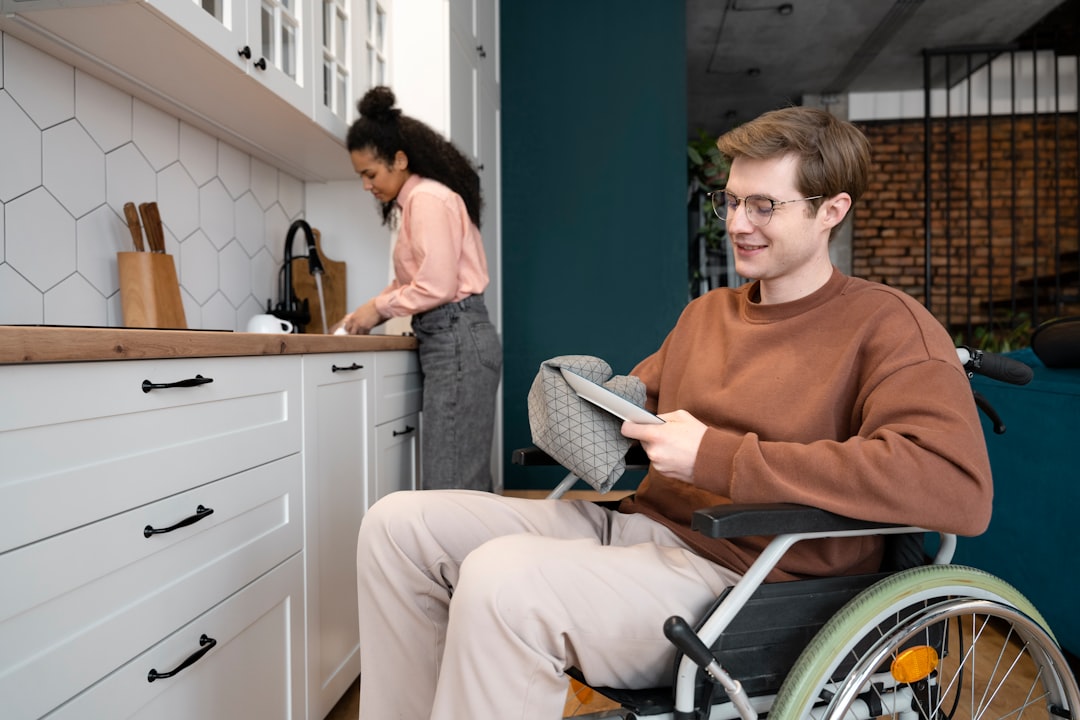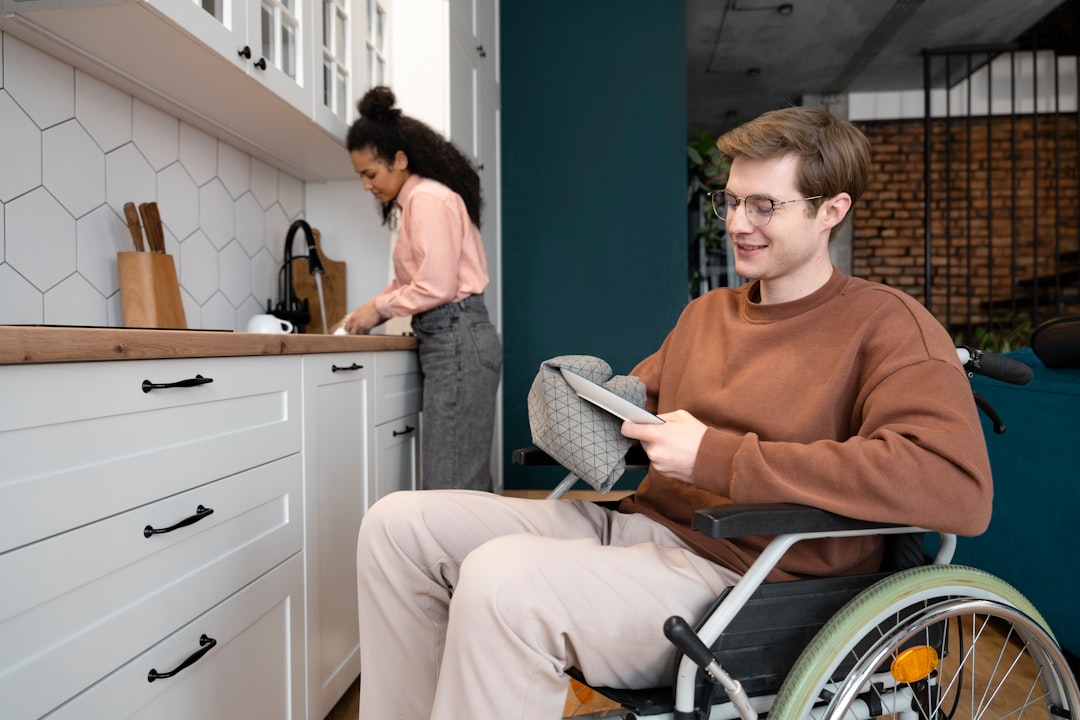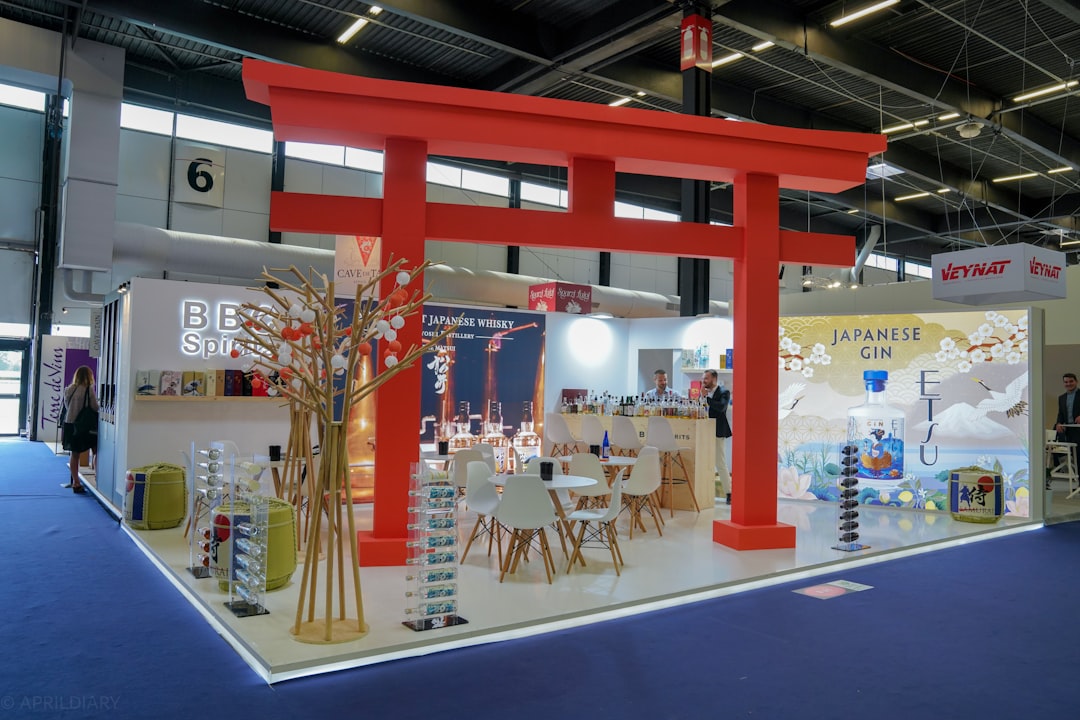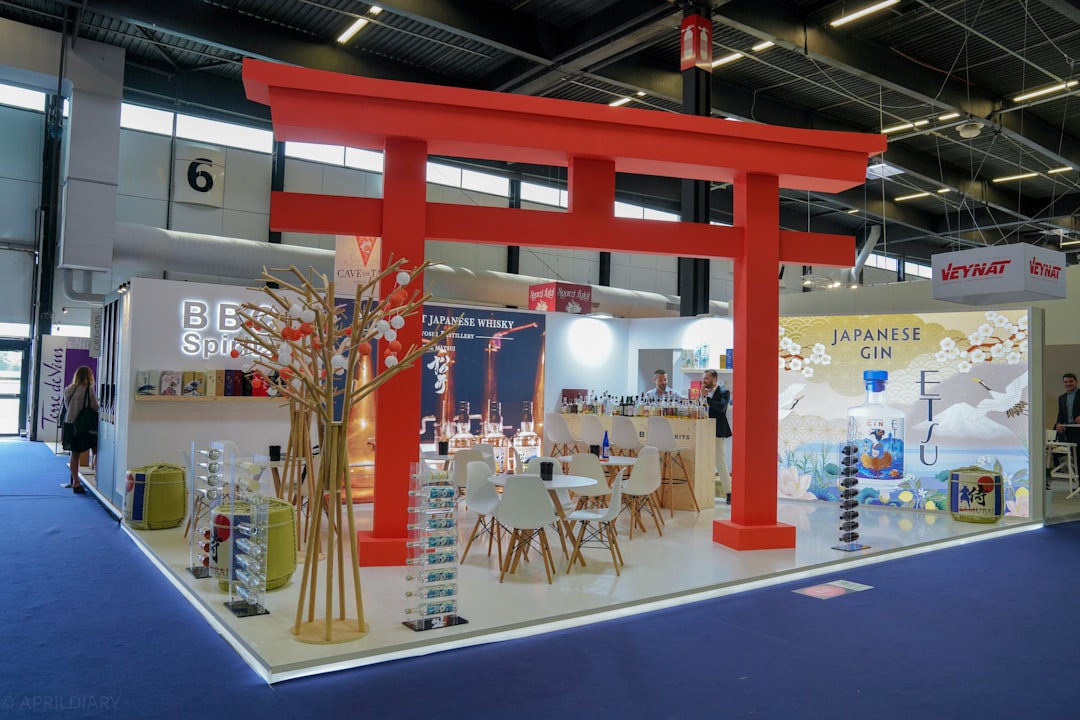
Accessibility is the line item that European exhibitors most often discover too late. The European Accessibility Act (Directive 2019⁄882) came into binding national application on 28 June 2025, and the cascading effect across the trade fair industry has been substantial. Venues that previously offered accessibility as a documented best practice now embed it in technical guidelines with enforcement consequences.
Builders who treated ramps and signage as add-ons now quote them as mandatory line items. Exhibitors who did not budget for inclusive design in the 2024 cycle have discovered the 2026 quote arrives roughly fifteen to twenty-two percent higher than expected because accessibility provisions were never priced into the original brief.
This article unpacks what an accessible stand actually costs at European fairs in 2026, where the spend goes, and what the procurement-side cost difference is between a compliant stand and one that meets the higher inclusive-design standard increasingly expected at flagship fairs. The figures draw on quotes observed at Messe Frankfurt, IFEMA Madrid, Fiera Milano, RAI Amsterdam, ExCeL London, Brussels Expo, and Messe Wien through 2025 contracts and early 2026 commitments.
The headline numbers: a baseline-compliant accessibility package adds EUR 2,800 to 6,400 to a 75 sqm modular stand. Inclusive-design execution that goes beyond compliance, sensory-considered lighting, neurodivergent-friendly zoning, full multilingual signage, induction-loop hearing support, and tactile wayfinding, adds EUR 8,500 to 17,000 to the same footprint.
The cost gap matters because exhibitors who price only the compliance baseline find themselves under-equipped for the audience that increasingly judges stand experience on inclusion.
What the European Accessibility Act actually requires on a trade fair stand
Directive 2019⁄882 transposed into national law across all EU member states by mid-2022 and entered binding application on 28 June 2025. The directive targets a specific list of consumer products and services (e-commerce, banking, e-books, telecoms and transport-related self-service terminals) and does not name trade fair stands in its scope.
In practice, accessibility on stands is driven less by direct EAA obligation and more by venue technical guidelines, procurement expectations, and standards such as EN 17210:2021 and ISO 21542:2021.
The practical effect: stands at European trade fairs in 2026 must accommodate accessibility along five operational axes, physical access (ramps, widths, level changes), sensory access (lighting, sound, contrast), cognitive access (signage, wayfinding, information presentation), assistive-technology compatibility (hearing-loop coverage, screen-reader-compatible digital content), and emergency-egress accessibility (evacuation routes usable by mobility-impaired visitors).
Venues now enforce these provisions through stand-approval gates. Messe Frankfurt’s 2026 Technical Guidelines list nineteen accessibility checkpoints that stand drawings must address before approval. RAI Amsterdam’s exhibitor manual specifies minimum aisle widths within stands at 1,200 mm, ramp gradients at 1:12 maximum, and tactile-strip requirements at every level change above 25 mm.
“Exhibitors who approach accessibility as a check-box exercise will pass the technical inspection and fail the inclusion test. The two are different. Compliance gets you the floor permit. Inclusive design earns you the audience trust that increasingly drives stand return-on-investment, particularly at consumer-facing fairs and policy-adjacent industry shows.”, Common framing within FAMAB inclusive-design working-group discussions, 2025
Baseline-compliant accessibility package: line-item cost
The compliance baseline covers what venues now require for stand approval. Below that level, the stand does not get a floor permit. Above it, the stand passes inspection but may or may not deliver actual visitor inclusion.
| Provision | Specification | Cost per fair (EUR) | Cost notes |
|---|---|---|---|
| Compliant ramp (rise up to 200 mm) | 1:12 gradient, 1,000 mm wide, handrails both sides | 380-880 | Modular aluminium with non-slip surface |
| Aisle widening within stand | 1,200 mm minimum clearance throughout | 0-1,400 | Cost driven by floor-plan rework |
| Tactile floor-strip at level changes | Contrasting colour, raised profile | 65-180 per strip | Typically 3-6 strips per stand |
| Compliant accessible signage | Sans-serif 28pt minimum, contrast ratio 7:1 | 280-720 | Per fair, refreshed each cycle |
| Visual emergency alert | LED beacon integrated with venue alarm | 240-460 | Per fair rental |
| Lowered counter section | 760 mm height for wheelchair access | 320-680 | Modular insert at reception |
| Documentation submission | Stand drawings with accessibility annotations | 180-420 | Builder labour |
| Total baseline | 1,465-4,740 | 75 sqm modular reference |
The baseline package at 75 sqm runs EUR 2,800-6,400 once builder margin and the project-management overhead of accessibility documentation are included. At 150 sqm the figures roughly double; at 250 sqm they roughly triple. The compliance baseline scales linearly with footprint.
Inclusive-design execution beyond compliance
Compliance opens the door. Inclusive design earns the audience. The provisions below sit above the compliance baseline and reflect what tier-one European exhibitors at flagship fairs increasingly specify by default.
| Provision | Specification | Cost per fair (EUR) | Why it matters |
|---|---|---|---|
| Induction hearing-loop coverage | T-coil compatible, 1.5m radius around meeting zones | 580-1,400 | 12% of European adults use hearing aids |
| Sensory-considered lighting | Adjustable lux levels, low-flicker drivers, warm-temp option | 1,200-3,400 | Reduces fatigue for sensory-sensitive visitors |
| Multilingual tactile wayfinding | Braille plus high-contrast print, top-2 visitor languages | 480-1,200 | Inclusive across visual-impairment spectrum |
| Neurodivergent-friendly quiet zone | Acoustically buffered seating, low-stimulation graphics | 1,800-4,200 | Increasingly expected at consumer fairs |
| Subtitled video on all on-stand screens | Burnt-in or live-generated captions | 280-680 | Reaches deaf and ESL audiences alike |
| Wheelchair-height interactive surfaces | Touchscreen at 900 mm, lever-operated controls | 680-1,800 | Equitable interaction experience |
| Plain-language information sheets | Reading age 12, two-language minimum | 320-740 | Improves comprehension across audience |
| Trained accessibility-aware staff | Pre-fair training session (4 hours) | 1,200-2,800 | Service quality, not just hardware |
| Total inclusive premium | 6,540-16,220 | Above baseline figure |
Combined with the compliance baseline, a 75 sqm stand executing inclusive design at the standard expected at flagship European fairs runs EUR 9,340-22,620 on accessibility-related provisions. That sits within the eight to fourteen percent of a EUR 100,000-180,000 mid-tier stand budget, large enough to matter, small enough to defend against the alternative reputational cost of an obviously exclusionary stand.
Venue-by-venue accessibility cost differentials
European venues vary meaningfully in what they require, what they offer included in space rates, and how strictly they enforce standards. The table below summarises observed cost differentials across major venues.
| Venue | Included in space rate | Strictly enforced | Typical surcharge (EUR per stand) |
|---|---|---|---|
| Messe Frankfurt | Hall-level accessible routes, accessible toilets | Yes, 19-point checklist | 380-780 |
| RAI Amsterdam | Hall accessibility, signage at hall level | Yes, pre-build review | 320-680 |
| Fiera Milano | Hall accessibility, accessible transport from city | Moderate enforcement | 480-980 |
| IFEMA Madrid | Hall and route accessibility, on-site mobility aids | Yes, increasing rigor | 280-620 |
| ExCeL London | Comprehensive hall accessibility | Yes, pre-2025 leader | 320-720 |
| Messe Düsseldorf | Hall accessibility, sensory-friendly hours | Yes, growing scope | 380-840 |
| Brussels Expo | Hall accessibility, multilingual support | Yes, EU-institution influence | 420-880 |
| Messe Wien | Hall accessibility, hearing-loop in plenary spaces | Yes | 380-720 |
| Fira Barcelona | Hall accessibility, MWC standard influence | Yes | 280-580 |
| TUYAP Istanbul | Basic accessibility, evolving framework | Moderate | 180-480 |
The pattern: northern European venues enforce more rigorously and offer more included infrastructure; southern and eastern European venues require more exhibitor-side provision and accept more variation. The surcharge figures above represent the additional venue fees, plan-review charges, and inspection costs typically observed; they do not include the underlying provision costs in the previous tables.
What design-led fairs require versus what B2B fairs require
A flagship presence at Salone del Mobile expects inclusive design as part of the brand statement. An obviously inaccessible stand at Salone reads to design buyers as a confession that the brand has not understood the past decade of design discourse. At EuroShop, the world’s leading retail-design fair, inclusive design is itself a content theme, exhibitors who fail to demonstrate it on their own stand undermine their commercial credibility.
At vertical B2B fairs, Bauma, EMO, productronica, Anuga, inclusive design is necessary for compliance and useful for audience reach but not part of the brand-assessment criteria most visitors apply. The compliance baseline plus selective inclusive-design provisions (induction loop in meeting rooms, multilingual signage, sensory-friendly lighting) delivers eighty percent of the audience-side return at roughly forty percent of the full inclusive-design spend.
The decision sequence for the build-type and accessibility-level pairing:
- Is this a design-led fair (Salone, EuroShop, Maison&Objet, Watches & Wonders, IFA flagship)? Specify full inclusive design.
- Is this a consumer-facing fair (IFA mainstream, Salon de l’Auto, IBC main hall)? Specify full inclusive design.
- Is this a tier-one B2B fair with large public press component (Hannover Messe, drupa, MWC Barcelona)? Specify compliance baseline plus induction loop and multilingual signage.
- Is this a vertical B2B fair with predominantly trade audience? Specify compliance baseline plus situational provisions.
Inclusive-design return on investment
The commercial case for inclusive design beyond compliance rests on three observable effects. First, the European audience increasingly judges brands on inclusion, Edelman’s 2024 Trust Barometer found that fifty-eight percent of European B2B buyers consider supplier inclusion practices when evaluating commercial relationships.
Second, accessibility provisions disproportionately benefit the comfort of all visitors, not just those with declared needs, wider aisles improve flow; sensory-considered lighting reduces general fatigue; clear signage benefits visitors regardless of cognitive style. Third, regulators increasingly use trade fair stand accessibility as a signal of supplier behaviour in adjacent commercial contexts.
“We spent EUR 14,000 on inclusive-design provisions at our IFA stand in 2024 and tracked lead capture across the four days. Visitors who specifically commented on stand inclusion converted to qualified-lead status at 2.7 times the rate of the general audience. Not because the stand was easier to visit, but because the visitors interpreted the inclusion as a signal of how we operate as a company.”, Common framing among IFES corporate-member exhibitors discussing inclusive-design ROI
The arithmetic suggests inclusive-design spend pays back through lead-conversion-quality differential alone, before accounting for the brand-perception and regulatory-signalling effects.
Common cost overruns and how to avoid them
Three cost categories consistently exceed the original quote when exhibitors first build accessible stands.
First, late-stage floor-plan rework. Stands designed without 1,200 mm aisle clearance throughout often require rework when accessibility review identifies the gap. The rework cost runs EUR 1,200-3,800 per project, substantially more than designing the clearance in from the start. Specify aisle widths and turning circles in the initial brief.
Second, signage refresh per fair. Accessible signage often requires more sophisticated production than standard exhibition graphics, high-contrast prints, larger fonts, tactile elements, sometimes Braille. Builders quote standard signage costs and add accessibility provisions late, producing a forty to seventy percent overrun. Specify accessible signage in the initial scope.
Third, programming labour for adjustable lighting. Sensory-considered lighting requires programming labour to deliver multiple scenes (full-bright, dimmed for sensory-sensitive periods, transitional). Labour costs run EUR 75-140 per hour and consume eight to twenty hours for a typical stand. Specify scene-programming in the initial brief.
Multi-fair lifecycle: amortising inclusive-design investment
Most accessibility provisions reuse across fairs. The induction-loop hardware, adjustable lighting controllers, tactile-strip components, and lowered-counter inserts deploy with the same modular skeleton at each fair in the calendar. Per-fair lifecycle cost drops substantially after the first deployment.
For a brand running four fairs per year at 75 sqm each with inclusive-design execution:
- First fair: EUR 18,500 inclusive design and accessibility spend (including hardware purchase amortised against four-fair calendar).
- Fairs 2-4 same year: EUR 4,200-6,800 each (transport, install, refresh of consumable elements, plan-review fees).
- Year-one total: roughly EUR 31,000-39,000 on inclusive-design provisions across four fairs.
- Year-two through year-four: roughly EUR 22,000-28,000 per year as hardware amortises.
The five-year inclusive-design budget for a four-fair calendar lands around EUR 125,000-155,000, six to nine percent of the total programme spend, and a defensible investment given the audience-side return and regulatory-signalling effects.
How to specify inclusive design in the builder brief
The single highest-leverage decision is what goes into the original brief. Late additions cost two to three times what early specification costs. The brief should include:
- Stand floor plan with 1,200 mm minimum aisle clearance throughout.
- Level-change strategy (avoidance preferred; ramps at 1:12 where unavoidable).
- Signage specification including font size, contrast ratio, tactile elements, language coverage.
- Lighting specification including lux levels, CRI, scene-programming requirements.
- Hearing assistance specification including coverage zones and induction-loop hardware.
- Furniture specification including lowered-counter sections, wheelchair-accessible interactive surfaces.
- Staff-training requirement and budget allocation.
- Emergency-egress strategy reviewed against venue-specific accessibility rules.
Briefs that include these elements typically deliver inclusive-design execution at the lower end of the cost bands above. Briefs that add them late typically land at the upper end and absorb scheduling pressure that further inflates cost.
The /builders directory inclusive-design tag
The /builders directory at Exhibition Stands EU tags verified builders by their declared inclusive-design specialisation. Builders carrying the inclusion tag have completed at least three stand projects in the past twenty-four months with full inclusive-design execution at named European fairs. Use the inclusion filter to shortlist by capability before requesting quotes via /rfq.
The Booth Cost Calculator lets you model accessibility spend at different inclusive-design levels for your fair calendar.
Related reading
- Brand Storytelling on Stand, how inclusive design integrates with narrative zoning
- Stand Design Cost Breakdown, full per-line-item budget context
- Lighting Design, sensory-considered lighting in detail
- Modular vs Custom, how the build-type choice affects accessibility costs
- Exhibiting in Germany, German venue accessibility frameworks
- Exhibitor Experience and Service Design, inclusion as service-design output
References and primary sources
- Directive (EU) 2019⁄882 of the European Parliament and of the Council, European Accessibility Act, Official Journal of the European Union, eur-lex.europa.eu
- EN 17210:2021 Accessibility and usability of the built environment, Functional requirements, European Committee for Standardization
- ISO 21542:2021 Building construction, Accessibility and usability of the built environment, International Organization for Standardization
- Messe Frankfurt Technical Guidelines 2026, accessibility checklist section, messefrankfurt.com
- RAI Amsterdam Exhibitor Manual 2026, accessibility provisions, rai.nl
- FAMAB Verband Direkte Wirtschaftskommunikation inclusive-design working group, position paper 2025
- IFES (International Federation of Exhibition and Event Services) inclusion guidance, ifesnet.org
- Edelman Trust Barometer 2024, B2B supplier-inclusion findings
FAQFrequently asked questions
Directive 2019⁄882 entered binding national application on 28 June 2025 and is enforced at European trade fairs through venue technical guidelines.
Stands must accommodate accessibility along five axes: physical access (ramps at 1:12 maximum gradient, aisle clearance of 1,200 mm minimum, level changes managed with tactile strips), sensory access (lighting that does not flicker harshly, contrast ratios on signage of 7:1, sound levels that allow conversation), cognitive access (sans-serif fonts at 28pt minimum, plain-language information, multilingual signage), assistive-technology compatibility (induction loops in meeting zones, screen-reader-compatible digital content, subtitled video), and emergency-egress accessibility (routes usable by mobility-impaired visitors).
Messe Frankfurt’s 2026 Technical Guidelines list nineteen accessibility checkpoints stand drawings must pass before approval.
The compliance baseline runs EUR 2,800-6,400 for a 75 sqm modular stand in 2026.
Line items include a compliant ramp (EUR 380-880), aisle widening where the floor plan requires rework (EUR 0-1,400), tactile floor-strips at level changes (EUR 65-180 per strip, typically 3-6 strips), accessible signage in sans-serif 28pt minimum with 7:1 contrast (EUR 280-720), visual emergency alert beacon (EUR 240-460), lowered counter section at 760 mm height for wheelchair access (EUR 320-680), and accessibility-documentation labour (EUR 180-420).
The package scales roughly linearly with footprint: doubling at 150 sqm, tripling at 250 sqm.
Inclusive-design execution beyond the compliance baseline adds EUR 6,540-16,220 to the same 75 sqm stand.
Key line items: induction hearing-loop coverage in meeting zones (EUR 580-1,400), sensory-considered adjustable lighting with low-flicker drivers (EUR 1,200-3,400), multilingual tactile wayfinding with Braille (EUR 480-1,200), neurodivergent-friendly quiet zone with acoustic buffering (EUR 1,800-4,200), subtitled video on all on-stand screens (EUR 280-680), wheelchair-height interactive surfaces (EUR 680-1,800), plain-language information sheets (EUR 320-740), and accessibility-aware staff training (EUR 1,200-2,800).
The combined compliance plus inclusive-design spend for a flagship-fair execution runs EUR 9,340-22,620, sitting within 8-14% of a mid-tier stand budget.
Northern European venues enforce most rigorously. Messe Frankfurt operates a 19-point pre-approval checklist with stand drawings required to address every item. RAI Amsterdam runs a pre-build review with documented surcharges of EUR 320-680 per stand. ExCeL London established its comprehensive framework before 2025 and remains a benchmark.
Messe Düsseldorf and Brussels Expo enforce strictly, with Brussels Expo influenced by EU-institution proximity and Düsseldorf by its industrial-fair audience. Southern and eastern European venues require more exhibitor-side provision and accept more variation, though enforcement is tightening rapidly.
TUYAP Istanbul operates an evolving framework with lighter surcharges (EUR 180-480) but limited included infrastructure.
Three observable effects support a commercial case. First, Edelman’s 2024 Trust Barometer found that 58% of European B2B buyers consider supplier inclusion practices when evaluating commercial relationships. Second, accessibility provisions disproportionately benefit all visitors regardless of declared need, wider aisles improve flow, considered lighting reduces general fatigue, clear signage benefits all visitors.
Third, IFES member exhibitors tracking lead quality across IFA stands in 2024 reported visitors who explicitly commented on inclusion converted to qualified-lead status at 2.7 times the general audience rate. The arithmetic suggests inclusive-design spend repays through lead-conversion quality alone, before counting brand-perception and regulatory-signalling effects.
Most inclusive-design hardware reuses across fairs. Induction-loop electronics, adjustable lighting controllers, tactile-strip components, and lowered-counter inserts deploy with the same modular skeleton each cycle.
For a brand running four fairs per year at 75 sqm with inclusive-design execution: first fair runs EUR 18,500 (including hardware purchase amortised over the four-fair calendar), fairs 2-4 in year one run EUR 4,200-6,800 each, year-one total lands around EUR 31,000-39,000, and years 2-4 settle at roughly EUR 22,000-28,000 per year.
The five-year inclusive-design budget for a four-fair calendar sits at EUR 125,000-155,000, six to nine percent of total programme spend.