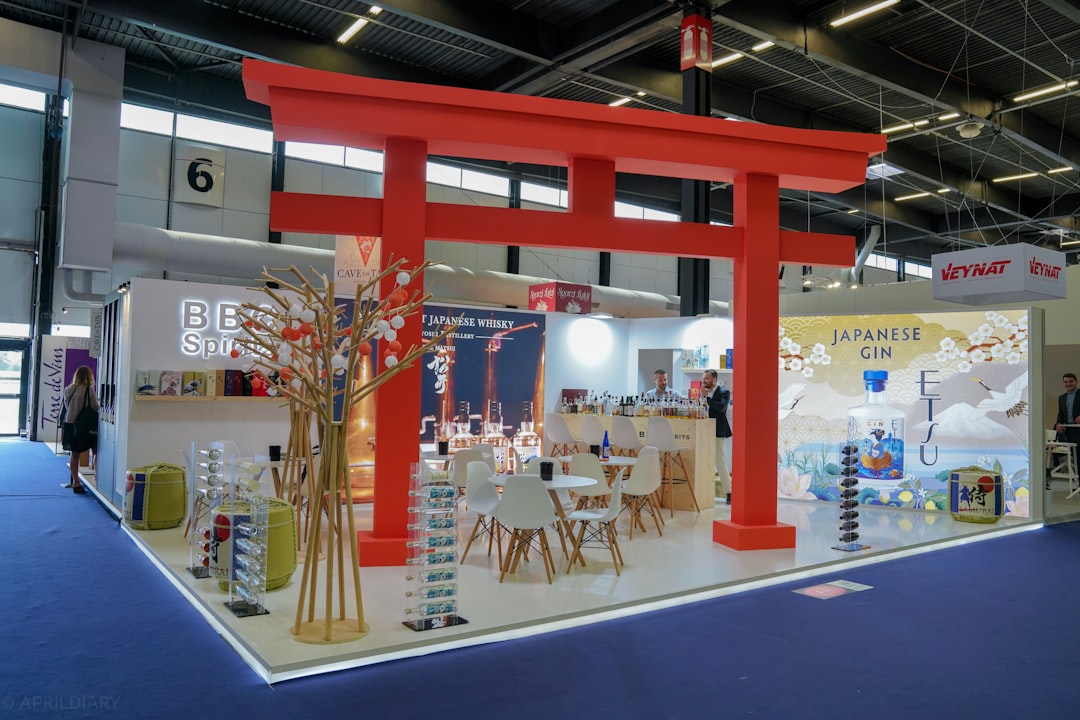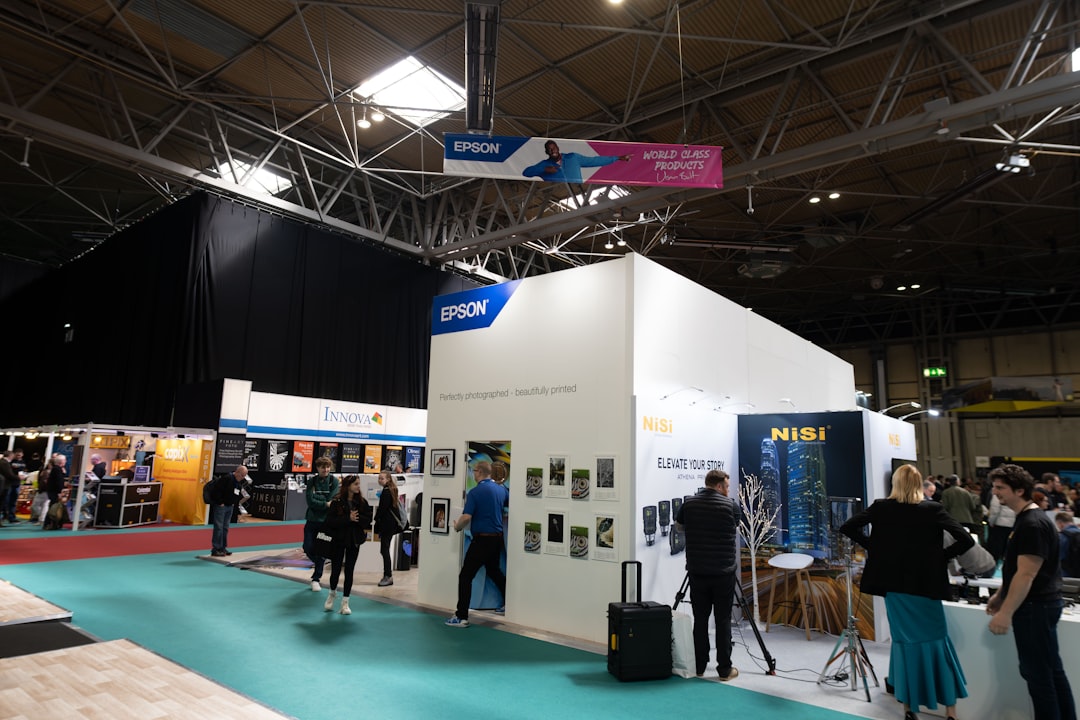
Brand storytelling on an exhibition stand is the discipline of moving a visitor through a sequence of engagement stages, attention, interest, evaluation, relationship, conversion, using the spatial and visual cues the stand provides. Done well, storytelling-led design generates measurably better qualified-lead conversion than feature-led design at equivalent footprint and budget. Done badly, storytelling becomes brand-vanity decoration that adds cost without serving any visitor decision.
This article documents the storytelling framework experienced European exhibition managers and brand-experience leads apply at stand-brief stage.
It covers the three-second aisle test that determines whether visitors enter, the narrative-zoning convention that organises the stand journey, the sightline planning that supports visitor flow through that journey, and the European fair-specific conventions that shape how storytelling actually lands at Salone del Mobile, Maison&Objet, Watches & Wonders Geneva, EuroShop, Hannover Messe, IFA Berlin, MWC Barcelona, ISE, Bauma, IBC, Cosmoprof Bologna, drupa, Ambiente, and the broader European fair calendar.
What storytelling actually delivers commercially
The headline finding from five years of post-fair lead-data debriefs shared within European exhibition-manager communities: storytelling-led stands generate 25-50 percent more qualified conversations than feature-led stands of the same footprint, lighting class, and staffing level. The mechanism is straightforward.
Storytelling-led stands move visitors through engagement stages purposefully; feature-led stands present a list of product attributes and rely on the visitor to organise their own engagement progression. Most visitors do not organise their own progression. Most visitors leave.
The cost differential between the two approaches is minimal at brief stage. The discipline differential is enormous. A storytelling-led stand has been briefed with a coherent narrative arc, with each zone designed to deliver one beat of that arc, with the visual and spatial cues consciously sequenced. A feature-led stand has been briefed as a collection of product displays, meeting rooms, hospitality, and graphics, each commissioned without reference to the others.
“We changed how we brief stands about six fair cycles ago. We start with the visitor journey and the three questions the visitor needs answered to commit to a meeting. Then we design backwards from that. The construction and the graphics are the same scope as before; the post-fair lead numbers are not.”, Common framing among brand-experience leads at tier-one European exhibitors
The three-second aisle test
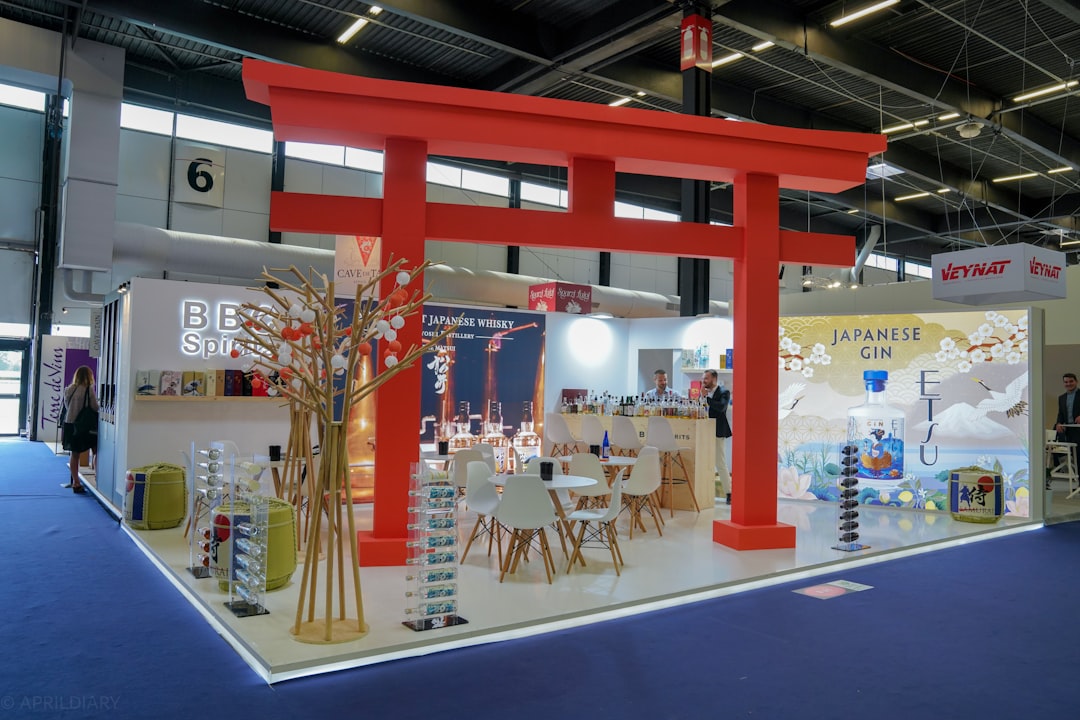
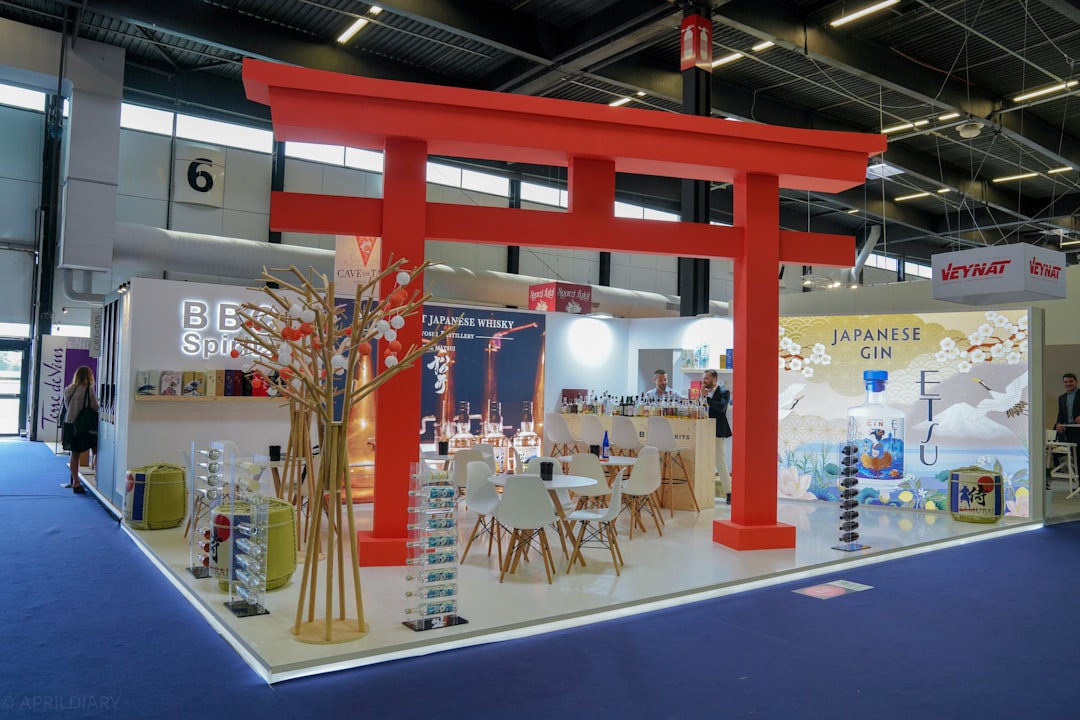
Visitor traffic at European trade fairs moves at 3-5 km/h in main aisles. A typical 4-metre stand front is in a walking visitor’s peripheral vision for roughly 2-4 seconds. In that window, the visitor makes a binary decision: enter the stand or continue to the next.
The cognitive load research applied to retail signage transfers directly: a visitor in motion at fair-walking pace can process roughly three discrete visual elements in three seconds. The dominant European convention for the aisle-facing surface:
- Brand mark. Recognisable at 5+ metres, sized at minimum 12-15 percent of the total hero surface height. The brand mark answers “who is this brand.”
- Hero visual. A single dominant image, product or scene, occupying 60-75 percent of the surface area. The hero visual answers “what do they make.”
- Value-proposition line. One short phrase at 8-12 character height, ideally six to ten words. The value-proposition line answers “why should I care.”
Adding more elements, bullet lists, multiple competing visuals, dense body copy, secondary brand marks, multiple value propositions, exceeds the cognitive load constraint and produces visible visitor disengagement at the aisle threshold. The aisle-facing surface is not the place for the brand’s complete message; it is the place for the message that earns the next 30 seconds of attention.
The three-second test is unforgiving and the failure modes are consistent. A hero wall with five competing visuals fails. A hero wall with the brand mark too small to read at 5 metres fails. A hero wall with the value proposition in body-text size fails. A hero wall without a clear single hero visual, split between three products or showing none of the products at all, fails.
Narrative zoning across the visitor journey
A visitor who has accepted the three-second invitation and entered the stand now begins a journey through the stand’s zones. The dominant European convention organises the journey into six stages, each with distinct design priorities.
Stage 1: Aisle approach (attention). The aisle-facing surface and its hero treatment. Designed for the three-second test.
Stage 2: Entry threshold (welcome and orientation). The first 1-2 metres inside the stand. Visitors at this stage are deciding whether to commit to deeper engagement.
The design priorities: clear visual welcome (a recognisable staff member, a clear path forward, hospitality visible from the entry), absence of barriers (no high counters blocking the view, no dense product clusters in the immediate threshold), and orientation cues (the visitor should be able to see where the stand goes without searching).
Stage 3: Product display (interest and exploration). The main product-presentation zone, typically the largest single area on the stand. Designed for the visitor to explore at their own pace, with clear sightlines to multiple product categories, lighting tuned to product display, and content density supporting deeper engagement than the aisle test allowed.
Stage 4: Demonstration or interaction (evaluation). The zone where the visitor moves from passive observation to active evaluation, touchscreens, AR demonstrations, live product demos, hands-on product handling. The design priority: making the demonstration accessible without intimidating the visitor (a touchscreen that requires an introduction loses 70 percent of visitors who would have engaged with a self-evident interface).
Stage 5: Hospitality (relationship). The zone where conversation becomes relationship. Comfortable seating, refreshment, time to talk without pressure. Designed to convert the engaged visitor into the qualified prospect.
Stage 6: Meeting room (conversion). The committed-conversation environment where qualification deepens into commitment. Designed for focus, privacy, and the absence of distraction.
The journey is not strictly linear, visitors backtrack, jump stages, leave and return, but the stages exist and the stand design either supports the progression or interrupts it. Stands that allocate zones without reference to the journey routinely produce visitor flows that bypass the stages where qualification happens.
“Most stands have all six zones. The difference between a stand that converts and a stand that does not is whether the zones are sequenced in a way visitors actually move through. A meeting room at the back of the stand only works if the path to the back of the stand makes visual sense from the entry.”, Common framing among Messe Frankfurt-approved stand builders
Sightline planning
Sightlines determine what a visitor sees from where they stand and what they can see as they move through the stand. The dominant European convention separates sightlines into three reveal moments:
Entry sightline. What the visitor sees from the aisle threshold immediately on entering. Should reveal one hero moment, typically the primary product feature or the brand-signature architectural element, that justifies the entry decision and previews the deeper stand experience.
Middle-stand sightline. What the visitor sees from roughly 4-6 metres into the stand, after the entry sightline has been absorbed. Should reveal a second narrative beat, the demonstration zone, a secondary product family, the hospitality zone, that pulls the visitor deeper.
Back-stand sightline. What the visitor sees from the back of the stand looking back toward the entry, and what the visitor sees when looking from the middle of the stand toward the back. Should reveal the meeting rooms and committed-conversation zones as the visitor commits to deeper engagement, but should also support visitor self-orientation (the visitor should always be able to see how to exit).
Stands that block sightlines undermine the journey. High walls near the entry hide what is past them and lose visitors who cannot see what is worth going further for. Dense product clusters that fill the middle of the stand prevent the back-stand sightline from doing its work. Meeting rooms positioned without sightline thought become spaces visitors never discover.
The sightline question intersects with stand orientation (row, corner, peninsula, island). Island stands have four entry sightlines and need each to deliver a hero moment; peninsula stands have three; corner stands have two; row stands have one. The sightline budget, the visual content available to fill the reveals, must scale to the format.
Storytelling at European fair scales
The table below summarises typical storytelling intensity expectations across the major European fair categories, expressed as a working register that experienced stand designers match to the fair’s visitor culture.
| Fair category | Example fairs | Storytelling register | Dominant medium | Common pitfall |
|---|---|---|---|---|
| Design-led | Salone del Mobile, Maison&Objet, EuroShop, Cersaie | Dense, layered, architectural | Materials, atmosphere, light | Treating stand as catalogue rather than environment |
| Luxury and craft | Watches & Wonders Geneva, Vicenzaoro, Cosmoprof Bologna | Quiet, premium, restrained | Materials, lighting, choreographed reveals | Overdesigning the brand into invisibility |
| Industrial B2B | Hannover Messe, Bauma, EMO, productronica, K | Product-led with brand framing | Demonstration, technical content | Treating storytelling as decoration disconnected from product |
| Consumer technology | IFA Berlin, MWC Barcelona | Bold, high-energy, visually loud | LED walls, motion, scale | Mistaking volume for substance |
| Broadcast and AV | ISE, IBC | Technical depth with experiential layer | Demonstration, interactive content | Failing to make demos visually engaging from the aisle |
| Food and hospitality | Anuga, Sirha, Ambiente | Sensory, immediate, taste-led | Sampling, sensory design | Treating storytelling as branding rather than experience |
| Print and packaging | drupa, FachPack | Technical with experiential proof | Live demos, sample throughput | Forgetting that visitors want to see the machine run |
| Pharmaceutical and medical | CPhI, MEDICA | Restrained, evidence-led, professional | Data presentation, expert presence | Overdesigning a register the audience finds inappropriate |
The pattern that recurs: the storytelling register must match the fair’s visitor culture, not the brand’s preferred internal aesthetic. A brand that imposes its consumer-tech storytelling register on a pharmaceutical fair will read as inappropriate. A brand that imposes its quiet-premium register on a consumer-electronics fair will read as under-committed. The brand discipline is maintaining identity while adjusting register.
Worked example: storytelling brief for a 90 sqm peninsula at Maison&Objet
A premium-interiors brand exhibiting at Maison&Objet on a 90 sqm peninsula develops the following storytelling brief.
Three-second test: Aisle face occupied by a single hero installation, a fully styled domestic scene at architectural scale, lit cinematically, with the brand mark integrated subtly into the styling rather than displayed as a separate graphic. The hero answers “who is this brand” (recognisable from past Maison&Objet editions), “what do they make” (visible product in context), and “why should I care” (the styling itself is the value proposition for a design-led brand).
Narrative zoning:
- Entry threshold (1.8 metres deep): A widened welcoming zone with a hospitality element visible (espresso bar) and the path forward unobstructed.
- Product display (32 sqm): Three domestic scenes, living room, dining room, bedroom, each fully styled rather than presented as product clusters. The visitor explores at their own pace, with each scene self-contained as a narrative.
- Demonstration (8 sqm): A material library station where visitors handle textile samples, see finishes at scale, and discuss customisation with a brand consultant.
- Hospitality (18 sqm): Lounge seating in the brand’s signature style, espresso bar with a barista, refreshment available throughout the day.
- Meeting rooms (16 sqm split into 3 bays): Acoustic-separated for the committed conversations with buyers and trade press.
- Reception and storage (10 sqm): Set back, signposted clearly but not architecturally dominant.
Sightline planning:
- Entry sightline: The widened welcome reveals the first domestic scene at 3 metres into the stand.
- Middle-stand sightline: At 5-6 metres in, the visitor sees the material library station and the hospitality zone, both pulling deeper engagement.
- Back-stand sightline: From the back, the visitor sees the staff and meeting bays without exposing meeting content to the aisle.
The brief produces a stand whose construction cost is no higher than a feature-led equivalent, but whose post-fair lead quality is consistently stronger because the visitor journey is designed rather than left to visitor improvisation.
Aligning storytelling with stand build type
The storytelling brief interacts with the build type (modular, custom, hybrid). Modular builds constrain certain storytelling moves, the modular grid is visible at close range, which limits the architectural register a stand can occupy. Custom builds support every storytelling move at premium cost. Hybrid builds support most storytelling moves at moderate cost provided the bespoke layer is briefed against the storytelling intent rather than against generic stand aesthetics.
The decision rule: if the storytelling register requires architectural intimacy (design-led fairs, luxury fairs), custom or hybrid is structurally required. If the storytelling register is product-led with brand framing (B2B fairs), modular and hybrid are both adequate provided the graphic and content brief support the storytelling intent.
How to act on this
Brief the storytelling intent before the stand layout, not after. The brief should specify the three-second aisle test (the three elements on the aisle face), the narrative zoning (the six stages and the design priorities for each), the sightline reveals (the three moments), and the storytelling register (matched to the fair’s visitor culture).
The /builders directory at Exhibition Stands EU filters stand builders by their experience at design-led, B2B, and consumer-fair categories, useful for matching builder competence to storytelling register.
For storytelling-aligned cost modelling, the Booth Cost Calculator accepts narrative-zoning specifications and produces a costed estimate. For fair-specific storytelling conventions, the /fairs hub links to each fair’s published exhibitor guidelines and visitor-profile data.
When briefing through /rfq, include the storytelling brief as the first document in the technical attachments. Builders who quote against a storytelling brief produce different proposals than builders who quote against a layout-only brief, and the difference is exactly the difference between storytelling-led and feature-led design.
Related reading
- Modular vs Custom Decision Framework, how build type interacts with storytelling register
- Stand Types by Side Openings, how orientation shapes sightline planning
- Graphics and Large-Format Print, graphic execution of the three-second test
- Interactive and Digital Elements, digital storytelling on stand
- Lighting Design, lighting as narrative cueing
References and primary sources
- AUMA (Association of the German Trade Fair Industry) general visitor and exhibitor statistics, auma.de
- FAMAB Verband Direkte Wirtschaftskommunikation brand-experience guidance, famab.de
- UFI (Global Association of the Exhibition Industry) general industry outlook publications
- ISE Annual Exhibitor Debrief data on digital storytelling at the AV fair
- Salone del Mobile Curatorial Guidance for Exhibitor Design Intent
- Maison&Objet Exhibitor Manual, design-curation expectations
- Messe Frankfurt Visitor Flow Studies, Light + Building and Ambiente data
- Messe Berlin IFA visitor-engagement debrief, consumer-fair storytelling conventions
FAQFrequently asked questions
The three-second test refers to the window in which a visitor walking past a stand at typical fair pace decides whether to enter. Visitors walk at 3-5 km/h in main aisles, meaning a 4-metre stand front is in their peripheral vision for roughly 2-4 seconds. The cognitive load research applied to retail signage shows visitors can process roughly three discrete visual elements in three seconds.
The three-second test dominates stand design because the aisle-approach decision determines every downstream metric, visitor count, qualified leads, conversation depth, and the test is binary: either the visitor enters or they continue past.
The dominant European convention: brand mark (recognisable at 5+ metres), hero visual (single dominant image, product or scene, occupying 60-75 percent of the surface), and one short value-proposition line at 8-12 character height. Adding bullet lists, multiple competing visuals, or dense body copy violates the cognitive load constraint and produces visible visitor disengagement at the aisle threshold.
The three elements should answer three questions: who is this brand, what do they make, and why should I care.
Narrative zoning is the practice of designing distinct zones across the stand that correspond to stages of the visitor journey: aisle approach (attention), entry threshold (welcome and orientation), product display (interest and exploration), demonstration or interaction (evaluation), hospitality (relationship), and meeting room (conversion).
Each zone has different design priorities, different content density, and different lighting register. The convention has emerged because visitors do not absorb stand content uniformly; they move through engagement stages, and the stand design either supports the progression or interrupts it.
Sightlines determine what a visitor sees from where they stand and what they can see as they move through the stand.
The dominant convention: design the entry sightline to reveal one hero moment immediately visible from the aisle, design the middle-stand sightline to reveal a second narrative beat at roughly 4-6 metres into the stand, and design the back-stand sightline to reveal the meeting and hospitality zones as the visitor commits to deeper engagement.
Stands that block sightlines (high walls near the entry, dense product clusters that hide the back) lose visitors who cannot see what is past the immediate threshold.
Yes, measurably, particularly at brand-led fairs. Post-fair lead data from major European exhibitors consistently shows storytelling-led stands generating 25-50 percent more qualified conversations than feature-led stands at equivalent footprint and staffing.
The pattern holds most strongly at design-led fairs (Salone del Mobile, Maison&Objet, EuroShop) where visitors evaluate the brand-narrative coherence as part of the brand assessment, but it holds at B2B fairs too, where coherent storytelling distinguishes the brand from feature-list competitors.
The cost premium for storytelling-led design over feature-led design is typically zero or modest; the brand discipline is the variable.
Each major European fair has implicit visitor expectations about storytelling intensity. Salone del Mobile, Maison&Objet, and Watches & Wonders expect dense, layered storytelling delivered through architectural design, materials, and atmosphere, visitors at these fairs interpret the stand itself as part of the brand statement.
Bauma, EMO, ISE, and MWC Barcelona expect product-led storytelling delivered through demonstration and technical content, visitors evaluate what the product does, not how the brand expresses itself architecturally. Hannover Messe sits between the two and rewards both registers depending on the hall and industry segment.
Match the storytelling register to the fair’s visitor culture rather than imposing a fixed brand template across all fairs.