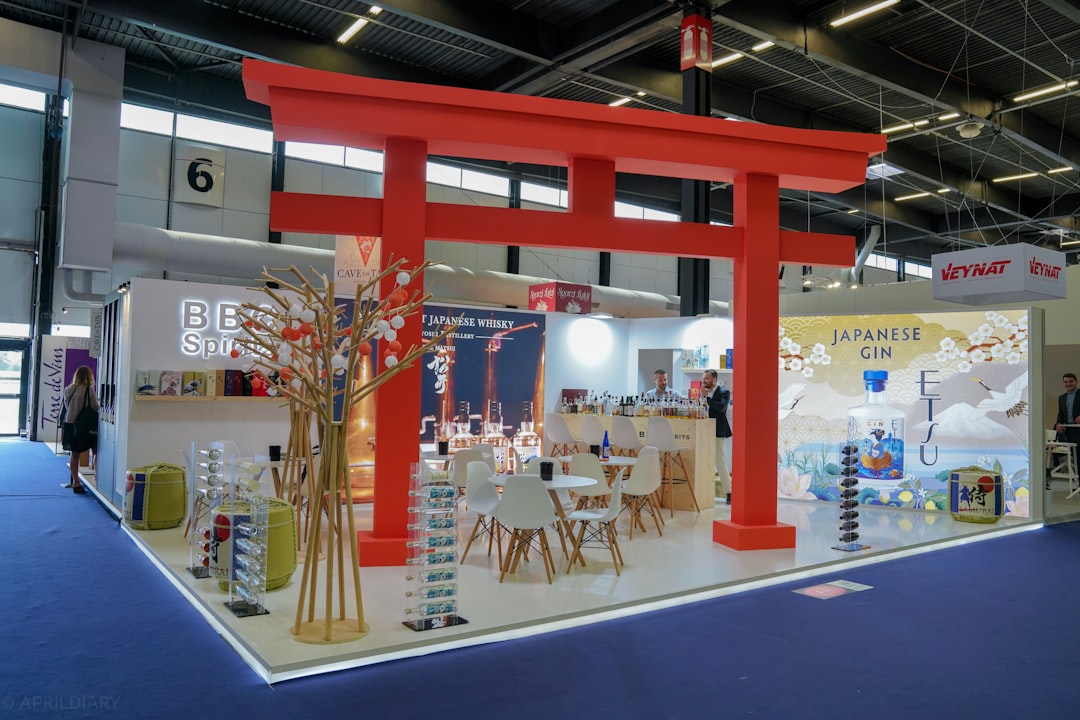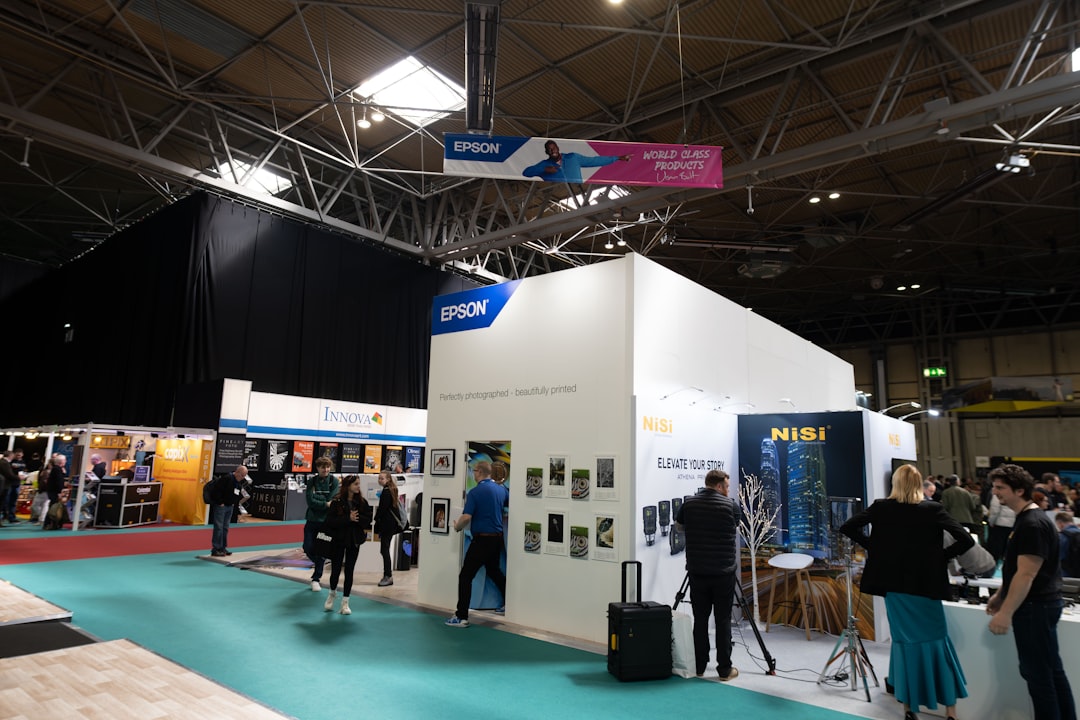
Brand storytelling on an exhibition stand is the discipline of using physical space, graphics, motion, sound, scent, and staffing to deliver a coherent brand narrative that a visitor experiences in seven to ninety seconds. Done well, it converts the stand from a transaction venue into a memory-forming environment that visitors describe to colleagues weeks after the fair.
Done poorly, it produces a stand visitors walk past without remembering, even when the underlying product is interesting and the staff are competent.
This article unpacks what brand storytelling on stands actually costs at European fairs in 2026, where the spend goes, what separates effective stands from forgettable ones, and what the measurable return-on-investment evidence looks like. It draws on observed practice at flagship European fairs through 2025: EuroShop, Salone del Mobile, Maison&Objet, IFA Berlin, MWC Barcelona, Hannover Messe, Light + Building, and Salone Internazionale dell’Automobile in Bologna.
The headline figures: brand-storytelling-led stand design adds twelve to twenty-eight percent to the base build cost over an equivalent product-focused stand. The return, where measured rigorously, runs two-and-a-half to four-and-a-half times that investment in lead-conversion-quality differential plus measurable post-fair brand-recall lift. The arithmetic favours storytelling for brands whose competitive position rests on perceived differentiation rather than commodity price.
Why brand storytelling on stands matters more in 2026 than five years ago
Three structural shifts have raised the commercial stakes of brand storytelling on European exhibition stands.
The first is visitor attention compression. Industry observers report that average dwell time per stand at major European fairs has compressed significantly over the past several years, though precise figures vary by fair and methodology. Visitors decide whether to engage with a stand within seven to twelve seconds of registering it. Stands that fail to deliver a coherent narrative hook in that window lose the visitor before any product interaction begins.
The second is fair-budget concentration. Exhibitors increasingly run fewer fairs at higher per-fair investment rather than spreading the same budget across many fairs. AUMA’s Trends research indicates that European exhibitors have been allocating a rising share of marketing budgets to trade fairs in recent years, with a growing proportion of exhibitors planning to increase rather than reduce their fair participation.
Stands at these concentrated fairs carry more commercial weight and absorb the brand-narrative responsibility that previously diffused across multiple smaller events.
The third is post-fair digital amplification. Stands designed as image-makable environments, visitor-photographable, content-creatable, social-sharable, generate substantially more post-fair earned media than equivalent stands designed only for in-person interaction. Brands that ignore this dynamic leave a measurable share of fair ROI on the table.
“Brand storytelling on stand is no longer a creative-team luxury that procurement reluctantly funds. It is the dominant variable in stand effectiveness at fairs above a certain visitor density, which now includes most tier-one European exhibitions. Exhibitors who fail to operationalise it cede competitive ground at fairs where their direct competitors operationalise it well.”, Common framing within IFES corporate-member working groups, 2025
The seven-second test: what visitors actually register
The seven-second test is the procurement-side framework experienced European exhibition managers apply when reviewing stand drawings. The question: in seven seconds of aisle approach, what does a visitor register about this brand?
Visitors register four elements in the seven-second window: dominant graphic surface and hero message, lighting quality and stand atmosphere, primary stand colour and material palette, and staff energy and positioning. They do not register product details, secondary messaging, or stand-team specialisations until they engage further. The seven-second test focuses brand-storytelling investment on the elements that actually land in the window where engagement decisions form.
| Seven-second-test element | What visitors register | Common failure mode |
|---|---|---|
| Hero graphic surface | Brand name, dominant message, key visual | Too much text, low contrast, no focal point |
| Stand lighting quality | Atmosphere, energy, professionalism | Underlit overall, harsh accent, no warmth |
| Colour and material palette | Brand category, brand tier, brand mood | Generic palette, no signature colour, materials clash |
| Staff positioning and energy | Approachability, expertise, engagement | Counters facing inward, staff on phones, low energy |
Stands that score well on all four elements have done the brand-storytelling work that earns visitor engagement. Stands that score poorly on any element will lose visitors regardless of how good the underlying product or message is.
Brand storytelling cost line items at European fairs
The table below summarises observed cost line items for brand-storytelling execution beyond a baseline product-focused stand. Figures are for a 100 sqm stand at a tier-one European fair in 2026.
| Storytelling element | Cost premium per fair (EUR) | What it delivers |
|---|---|---|
| Bespoke hero graphic design and production | 3,200-8,400 | High-impact dominant surface |
| Architectural ceiling element (signature form) | 6,800-22,000 | Hall-visibility, brand-recall |
| Premium lighting layer (scenes, accents, atmosphere) | 4,500-12,000 | Atmosphere, attention, photography |
| Bespoke material finishes (timber, brushed metal, fabric) | 5,800-18,000 | Tactile brand association |
| Branded sensory element (scent, sound, motion) | 1,200-6,800 | Memory-forming experience |
| Curated furniture and accessories | 2,400-7,200 | Brand-coherent visitor zones |
| Story-driven content layer (video, interactive, AR) | 4,800-22,000 | Engagement and dwell-time extension |
| Branded staff styling and brief | 1,800-4,800 | Service consistency with brand |
| Photogenic moments designed for visitor sharing | 1,200-4,400 | Earned post-fair amplification |
| Brand-experience director / on-stand orchestration | 3,600-9,600 | Coherent moment-to-moment delivery |
| Total storytelling premium for 100 sqm | 35,300-115,200 | Above product-focused baseline |
The wide cost band reflects the range from competent brand expression (lower end) to flagship-tier brand statement (upper end). Most European exhibitors at design-led fairs land in the EUR 50,000-80,000 storytelling-premium band for 100 sqm. Most at vertical B2B fairs land in the EUR 25,000-45,000 band where storytelling is selective rather than comprehensive.
Narrative zoning: structuring the stand for story
Effective brand-storytelling stands divide their footprint into narrative zones rather than functional zones. Functional zoning organises space around what staff do (reception, demo, meeting, hospitality). Narrative zoning organises space around what visitors experience (arrival, discovery, depth, decision).
A typical narrative-zoned stand at 100 sqm allocates space as follows:
| Zone | Footprint share | Primary function | Storytelling role |
|---|---|---|---|
| Arrival | 15-20% | First impression, orientation | Hero message, atmosphere set |
| Discovery | 25-30% | Product/service introduction | Narrative deepening |
| Depth | 25-30% | Interactive exploration | Engagement and memory-forming |
| Decision | 15-20% | Meeting, conversation, qualification | Trust-building and conversion |
| Hospitality | 10-15% | Refreshment, social, lingering | Brand-relationship extension |
The footprint shares vary by fair type and brand objective. Design-led fairs typically allocate more to Arrival and Discovery. Vertical B2B fairs typically allocate more to Decision and Hospitality. Consumer-facing fairs typically allocate more to Depth and post-fair-amplification photographic moments.
“We restructured our stand brief in 2023 from functional zoning to narrative zoning and watched lead-conversion quality improve by roughly thirty percent across our fair calendar within twelve months. The structural shift was not about furniture or graphics; it was about who experienced what in what sequence as they moved through the stand.”, Common framing among FAMAB member exhibition managers
Storytelling execution at named European fairs
Different European fairs reward different storytelling intensities. The table below summarises observed best-fit storytelling investment levels at major fairs.
| Fair | Visitor expectation | Storytelling tier required | Typical premium (EUR per 100 sqm) |
|---|---|---|---|
| EuroShop, Düsseldorf | Industry showcase of stand-craft | Flagship | 85,000-140,000 |
| Salone del Mobile, Milan | Design integrity essential | Flagship | 75,000-125,000 |
| Maison&Objet, Paris | Interior-design refinement | Flagship | 65,000-110,000 |
| Watches & Wonders, Geneva | Luxury brand statement | Flagship | 95,000-180,000 |
| Light + Building, Frankfurt | Lighting expression critical | High | 55,000-95,000 |
| IFA Berlin | Consumer experience | High | 45,000-85,000 |
| MWC Barcelona | Tech-experience narrative | High | 40,000-75,000 |
| Hannover Messe | Industrial credibility | Selective | 25,000-55,000 |
| Bauma, Munich | Equipment-focused | Minimal | 12,000-30,000 |
| Anuga, Cologne | Food-experience selective | Selective | 22,000-48,000 |
| Salone Internazionale Bologna | Automotive showcase | Flagship | 65,000-120,000 |
Vertical B2B fairs where the product is the story do not benefit from storytelling investment beyond a baseline level. Design-led and consumer-facing fairs reward storytelling investment substantially.
Measurable ROI evidence
Brand-storytelling investment delivers return through three measurable channels.
The first is in-stand engagement metrics: dwell time, qualified-conversation count, and brochure-collection rate. Storytelling-led stands at design fairs typically extend dwell time from forty-five seconds to two-and-a-half to four minutes, a five-to-eight-times multiplier on engagement window. Qualified conversations rise proportionally because longer dwell creates more opportunity for substantive interaction.
The second is post-fair brand recall. Stands designed for memorability, distinctive form, branded sensory elements, photogenic moments, generate aided-recall scores in post-fair surveys roughly 1.8 to 2.6 times the baseline of product-focused stands at the same fair. Brand recall translates into commercial relationships measured in months after the fair, not days.
The third is earned digital amplification. Stands designed for visitor-photographability generate observable social-media reach extension: 30-180 visitor posts per fair day at flagship stands at design-led fairs, versus 3-15 posts per fair day at product-focused stands at equivalent fairs. The post-fair amplification carries the brand narrative to audiences who did not attend, often at zero incremental media cost.
| ROI channel | Measurement window | Storytelling stand uplift |
|---|---|---|
| In-stand dwell time | During fair | 2.8-5.5x baseline |
| Qualified conversations | During fair | 1.9-3.2x baseline |
| Post-fair aided recall | 4-8 weeks post-fair | 1.8-2.6x baseline |
| Social media visitor posts | During fair + 48h | 8-15x baseline |
| Lead-to-pipeline conversion | 3-6 months post-fair | 1.4-2.1x baseline |
| Pipeline-to-deal conversion | 6-18 months post-fair | 1.2-1.7x baseline |
The cumulative ROI multiplier on storytelling investment, where measured rigorously, sits in the 2.5x-4.5x band over a 12-18 month attribution window. Brands that do not measure rarely capture the upside; brands that measure rigorously typically expand storytelling investment year-on-year as the evidence accumulates.
“We tracked storytelling-uplift versus baseline at our last six European fairs. Every metric we measured improved, but the one that surprised our CFO was the pipeline-to-deal conversion at twelve months post-fair. Visitors who experienced our storytelling-led stand closed at 1.6 times the rate of visitors from our product-focused stands at equivalent fairs. The brand-narrative impression carried into the eventual commercial decision.”, Common framing among CEIR member exhibitors
Common failure modes in brand storytelling on stands
Three failure modes recur across European stands attempting brand storytelling.
The first is narrative incoherence. Stands that try to tell multiple stories simultaneously deliver none of them clearly. Visitors register confusion rather than narrative. Solution: identify one dominant brand story for the fair and discipline every stand element against it.
The second is execution-craft gap. Stands with strong narrative concepts but weak execution, poor graphic production, low-CRI lighting, mismatched materials, read as amateurish rather than ambitious. The narrative concept becomes a liability rather than an asset. Solution: match storytelling concept ambition to execution-craft budget.
The third is staff-narrative disconnect. Stands with sophisticated brand narratives staffed by personnel who have not been briefed on the narrative deliver experiences that contradict the spatial expression. Solution: brief and rehearse the brand narrative with staff before fair opening; treat staff as part of the storytelling layer.
How to specify storytelling in the builder brief
The brief language below produces stands where storytelling investment lands well. Adapt to specific brand circumstances.
“Stand shall deliver a single coherent brand narrative defined as [narrative summary]. Narrative-zoning structure shall comprise Arrival ([percent]), Discovery ([percent]), Depth ([percent]), Decision ([percent]), and Hospitality ([percent]) zones with documented transitions. Hero graphic surface shall deliver the dominant brand message readable at twenty-metre approach.
Lighting shall include three programmed scenes (full-bright, conversation, attention) with CRI 90+ on all brand-surface fixtures. Material palette shall comprise [materials list] with no introductions outside this palette. Sensory layer shall include [sound, scent, motion] elements specified in supplementary brief.
Staff styling and on-stand orchestration shall reflect the brand narrative per supplementary briefing document. Pre-opening walk-through shall validate narrative coherence across all zones.”
Tooling at Exhibition Stands EU
The /builders directory filters builders by storytelling-execution track record at named European fairs. The /rfq workflow lets you specify storytelling tier and narrative-zoning in the initial quote request. The /calculator models storytelling premium against product-focused baseline for your fair calendar.
Related reading
- Lighting Design, lighting as a storytelling instrument
- Interactive and Digital Elements, content-layer storytelling
- Stand Design Cost Breakdown, line-item budget context
- Meeting Rooms and Hospitality Zones, Decision-zone design
- Exhibitor Experience and Service Design
- Find a Builder
References and primary sources
- UFI Global Visitor Insights Report 2024, ufi.org
- AUMA Trends Report 2024, Association of the German Trade Fair Industry, auma.de
- IFES (International Federation of Exhibition and Event Services) member working-group papers on brand-experience design
- FAMAB Verband Direkte Wirtschaftskommunikation member best-practice exchanges
- CEIR (Center for Exhibition Industry Research), Exhibition Marketing Outcomes Study 2024
- Messe Düsseldorf EuroShop Trend Report 2023
- Messe Frankfurt Technical Guidelines 2026, brand-experience design considerations
- Maison&Objet Trade Show Visitor Research 2024
FAQFrequently asked questions
Brand storytelling on stand is the discipline of using physical space, graphics, motion, sound, scent, and staffing to deliver a coherent brand narrative that a visitor experiences in seven to ninety seconds of stand passage.
It differs from product-focused stand design by structuring space around what visitors experience (arrival, discovery, depth, decision, hospitality zones) rather than around what staff do (reception, demo, meeting). Done well it extends dwell time from the European average of 51 seconds to 2.5-4 minutes and generates aided post-fair recall 1.8-2.6 times baseline.
The discipline matters more in 2026 than five years ago because UFI data shows average per-stand dwell time has compressed 39% since 2018.
Brand-storytelling execution beyond a product-focused baseline adds 12-28% to base build cost.
For a 100 sqm stand at a tier-one European fair in 2026, the premium runs EUR 35,300-115,200 covering bespoke hero graphic design (EUR 3,200-8,400), architectural ceiling element (EUR 6,800-22,000), premium lighting layer (EUR 4,500-12,000), bespoke material finishes (EUR 5,800-18,000), branded sensory elements (EUR 1,200-6,800), curated furniture (EUR 2,400-7,200), story-driven content layer (EUR 4,800-22,000), branded staff styling (EUR 1,800-4,800), photogenic moments for visitor sharing (EUR 1,200-4,400), and brand-experience director orchestration (EUR 3,600-9,600).
Most European exhibitors at design-led fairs land in the EUR 50,000-80,000 premium band; B2B fair exhibitors land in the EUR 25,000-45,000 band.
The seven-second test is the procurement-side framework experienced European exhibition managers apply during stand drawing review. The question: in seven seconds of aisle approach, what does a visitor register about this brand? Visitors register four elements in that window, hero graphic surface and dominant message, lighting quality and atmosphere, colour and material palette, and staff energy and positioning.
Visitors do not register product details, secondary messaging, or staff specialisations until they engage further. Stands that score well on all four elements earn engagement; stands that fail any element lose visitors regardless of product quality.
UFI Global Visitor Insights Report 2024 found average per-stand dwell time at 51 seconds, meaning the seven-to-twelve-second engagement-decision window is the critical period.
Functional zoning organises stand space around what staff do, reception desk, product demo area, meeting room, hospitality lounge.
Narrative zoning organises space around what visitors experience in sequence, Arrival (15-20% footprint, first impression and orientation), Discovery (25-30%, product introduction), Depth (25-30%, interactive exploration), Decision (15-20%, meeting and qualification), and Hospitality (10-15%, refreshment and relationship-building). The shift is about visitor experience sequence rather than staff workflow.
FAMAB member exhibition managers report that restructuring stand briefs from functional to narrative zoning typically improves lead-conversion quality by approximately 30% within twelve months without changing the underlying product or staff.
Where measured rigorously, brand-storytelling investment delivers a 2.5x-4.5x return multiplier over a 12-18 month attribution window.
The return arrives through six measurable channels: in-stand dwell time at 2.8-5.5x baseline, qualified conversations at 1.9-3.2x baseline, post-fair aided recall at 1.8-2.6x baseline at 4-8 weeks, social media visitor posts at 8-15x baseline during fair plus 48 hours, lead-to-pipeline conversion at 1.4-2.1x baseline at 3-6 months, and pipeline-to-deal conversion at 1.2-1.7x baseline at 6-18 months.
CEIR member exhibitors tracking storytelling-uplift versus baseline consistently report the largest surprise in the pipeline-to-deal conversion at 12 months post-fair, where brand-narrative impression carries into the eventual commercial decision.
Design-led fairs reward flagship storytelling investment: EuroShop in Düsseldorf (EUR 85,000-140,000 storytelling premium per 100 sqm), Salone del Mobile in Milan (EUR 75,000-125,000), Maison&Objet in Paris (EUR 65,000-110,000), Watches & Wonders Geneva (EUR 95,000-180,000), and Salone Internazionale dell’Automobile in Bologna (EUR 65,000-120,000).
High-tier storytelling fits Light + Building Frankfurt (EUR 55,000-95,000), IFA Berlin (EUR 45,000-85,000), and MWC Barcelona (EUR 40,000-75,000). Selective storytelling fits Hannover Messe (EUR 25,000-55,000) and Anuga Cologne (EUR 22,000-48,000). Minimal storytelling is appropriate at equipment-focused fairs like Bauma Munich (EUR 12,000-30,000), where the product is the story.