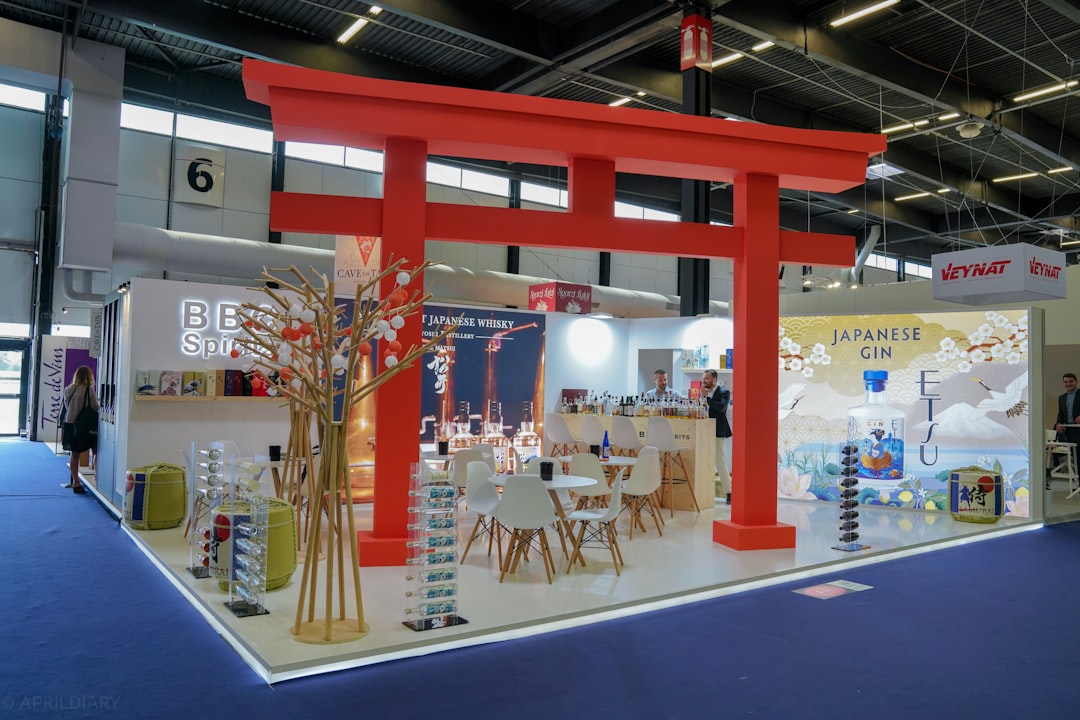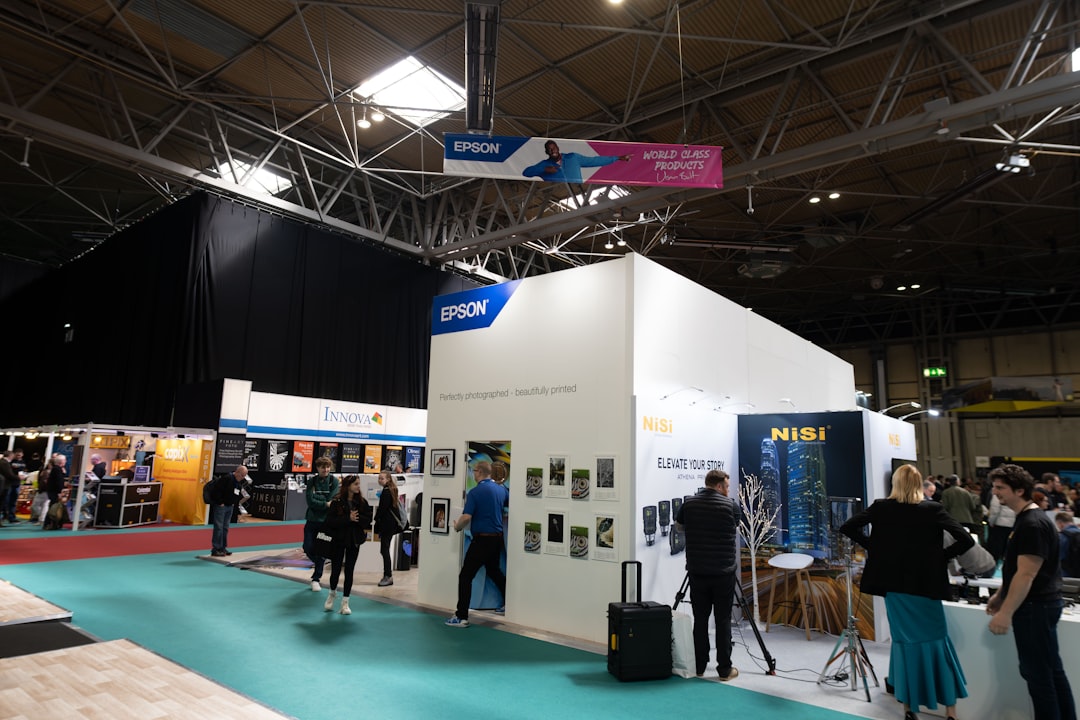
Exhibition stand graphics carry roughly fourteen to twenty percent of the all-in stand budget for typical European projects, and the largest share of the brand-impact return on stand spend. Get graphics right and visitors register your brand from across the hall, photograph the stand for social media, and remember the brand-statement after the fair.
Get graphics wrong and the same physical stand reads as generic, the brand impact at the fair is diluted, and the trade-press photography opportunities go to competitors instead.
This guide covers the four dominant graphic technologies in European exhibition stand construction for 2026: fabric SEG (silicone-edge graphics), backlit fabric and acrylic, large-format vinyl print, and rigid printed panel.
For each, the guide covers cost per square metre at current European rates, print specifications and resolution requirements, viewing-distance suitability, colour fidelity and brand integrity, multi-fair refresh economics, sustainability profile, and the practical specifications that experienced exhibitors put into builder briefs.
The summary: graphics specification deserves the same rigour as structural specification. Vague graphics briefs produce inconsistent results across builders; specific briefs produce predictable, high-quality outcomes. The cost difference between cheap and premium graphics is meaningful (EUR 35-185 per square metre installed), and the difference is visible to visitors who matter.
The four dominant graphic technologies
Each graphic technology serves specific applications. Stands using one technology for everything are stands wasting graphic-budget. Stands matching technology to surface function and viewing distance deliver substantially stronger results.
| Graphic technology | Cost per sqm installed (EUR) | Viewing distance | Resolution typical | Refresh between fairs |
|---|---|---|---|---|
| Fabric SEG (dye-sub) | 38-78 | 2m+ | 720 dpi | Replace fabric only |
| Backlit fabric | 92-165 | 5m+ | 720 dpi | Replace fabric only |
| Backlit acrylic | 145-285 | 3m+ | 1440 dpi | Replace acrylic |
| Large-format vinyl | 22-58 | 5m+ | 720-1440 dpi | Reapply per fair |
| Rigid printed panel | 32-72 | 3m+ | 720-1440 dpi | Reuse or replace |
| Direct print on substrate | 48-95 | 3m+ | 1440 dpi | Replace substrate |
| Vehicle-grade wrap vinyl | 38-85 | 1m+ | 1440 dpi | Reapply per fair |
Fabric SEG: the dominant brand-statement technology
Fabric SEG (silicone-edge graphics) is the technology that has reshaped European stand graphics since roughly 2018. Dye-sublimation printed polyester fabric stretched in aluminium frames and held by silicone edge gaskets, fabric SEG dominates hero brand surfaces across the European fair circuit.
Cost per square metre installed runs EUR 38-78 for 2026 contracts, broken down approximately as:
- Fabric printing: EUR 18-32 per sqm of printed surface
- Aluminium frame: EUR 12-22 per sqm of frame footprint (one-time, reusable across fairs)
- Installation labour: EUR 8-15 per sqm
- Silicone edge profile: EUR 4-8 per linear metre of edge
The technology’s advantages are well-documented. Image quality is photographic-grade at viewing distances of two metres or more. Panel sizes scale to roughly 3m x 10m without seams. Aluminium frames survive indefinitely with simple fabric refresh per fair. Transport efficiency is excellent, fabric folds flat for flight-case freight.
The disadvantages matter for specific applications. Fabric SEG at touch range reveals the fabric texture, which reads as cloth rather than as a smooth printed surface. Backlighting through fabric requires careful design to avoid visible hot spots. Fabric absorbs significant light, so front-lit fabric SEG needs more lumens than equivalent rigid printed panels.
The print specifications that separate good fabric SEG from mediocre fabric SEG:
Resolution at 720 dpi minimum for surfaces viewed at 2 metres; 1440 dpi for surfaces viewed at closer range. Most exhibition dye-sub printers produce 720 dpi natively; 1440 dpi requires higher-end equipment and adds approximately 20% to the print cost.
Colour management with ICC profiles matched to the specific printer-fabric combination. Generic colour profiles produce visible colour drift, particularly on brand-specific Pantone colours. Specifying “ICC profile matched to printer and fabric, Pantone colour proof approved before production” eliminates the most common print quality failure.
Fabric weight at 180-260 g/sqm for standard exhibition use. Lighter fabrics (under 180 g/sqm) sag visibly across large panels. Heavier fabrics (over 260 g/sqm) reduce the fabric’s flexibility and increase shipping weight.
Tension specification across the frame. Properly tensioned fabric reads completely smooth; under-tensioned fabric shows visible ripples and shadows. Tension specification belongs in the brief.
“Fabric SEG is now the European standard for hero brand surfaces because no other technology delivers comparable visual quality with comparable refresh economics. Stands that still use rigid printed panels for hero surfaces are typically stands operating on builder defaults rather than informed specification choices.”, Common framing within FAMAB graphics working groups, 2024-2025
Backlit graphics: the highest-impact technology
Backlit graphics, either backlit fabric within illuminated boxes or backlit acrylic panels with internal LED arrays, deliver the strongest single-surface visual impact available in European exhibition stand graphics.
Cost per square metre installed runs EUR 92-165 for backlit fabric and EUR 145-285 for backlit acrylic. The premium over front-lit fabric SEG runs 100-300%, justifying the cost only at hero brand-statement surfaces or specific lighting-led applications.
Backlit fabric uses a translucent polyester base printed with dye-sublimation, mounted in an aluminium frame with LED arrays distributed evenly behind the fabric. The fabric appears front-lit when ambient hall lighting is high and progressively glows as ambient lighting dims. This creates dynamic visual presence across the fair day and dramatically increases trade-press photography quality.
Backlit acrylic uses a translucent acrylic panel printed with UV-cured ink, mounted with internal LED arrays. The acrylic produces a sharper, more glass-like appearance than fabric, suitable for logo statements, hero product imagery, and design-led brand surfaces. Acrylic panels carry more weight than equivalent fabric SEG, which complicates large-format applications.
The specification considerations for backlit graphics:
LED density behind the panel determines whether the lit surface reads as uniform or shows visible hot spots. Defensible specification: LED density at 12-20 LEDs per linear metre across the panel back, with reflective backing to distribute light evenly. Specifying “uniform luminance, no visible hot spots at 1 metre viewing distance” sets the quality bar clearly.
Translucency of the printed surface matters more than for front-lit graphics. Heavily-printed dark colours block backlight transmission; lightly-printed pastels glow strongly. Brand designs intended for backlit application benefit from accommodating this in the design phase rather than discovering it after print production.
Heat dissipation in the backlit box. LED arrays generate heat, and undersized boxes can develop hot spots that damage fabric or shorten LED lifespan. Defensible specification: passive ventilation or active fan ventilation in boxes deeper than 80mm.
Dimmer control. Backlit graphics that maintain constant luminance across changing ambient conditions read worse than dimmable graphics that adjust to the hall’s dimming pattern. DMX-controlled dimmer integration adds EUR 280-680 per stand but significantly improves consistency across the fair day.
“Backlit graphics are the most dramatic visual investment available in European exhibition stand design. The cost premium is meaningful, but the brand-impact return at hero surfaces is dramatic. Trade-press photographs of backlit stands consistently outperform front-lit equivalents in social media coverage.”, Common framing among design-led fair stand designers at Salone del Mobile and Light + Building, 2024-2025
Large-format vinyl: the versatile, lower-cost technology
Large-format printed vinyl serves three roles in European stand graphics: full-coverage surface graphics on flat or curved substrates, partial-coverage accent graphics on otherwise-finished surfaces, and vehicle-grade wraps on furniture, counters, and structural elements requiring close-range tactile quality.
Cost per square metre installed varies by application:
Flat surface graphics on accessible vertical surfaces: EUR 22-38 per sqm. Wrap applications on furniture and counters: EUR 28-58 per sqm with additional install labour for complex shapes. Vehicle-grade wrap on complex curved surfaces: EUR 38-85 per sqm with skilled installer labour.
The dominant European vinyl manufacturers (3M Commercial Graphics, Avery Dennison, Orafol, MACtac) offer materials in matte, satin, gloss, and metallic finishes. Most exhibition vinyl is rated for one to three years of indoor durability, far exceeding the typical four-to-five-day fair application.
Vinyl’s visual quality reads acceptable from five metres but reveals at closer range. Seams between vinyl panels are visible, slight bubbling can appear during application, and the texture of vinyl itself is visible at touch distance. Vinyl is therefore suited to large-area or distance-viewed surfaces but ill-suited to surfaces visitors will touch or examine closely.
The print specifications for vinyl:
Resolution at 720 dpi for distance-viewed surfaces; 1440 dpi for close-range applications. Vehicle-wrap-grade vinyl with 1440 dpi UV-cured printing produces visibly higher quality than standard 720 dpi solvent prints.
Substrate quality. Cheap vinyl with thin face stocks shows substrate texture through the printed surface; quality vinyl with proper opacity hides substrate variation cleanly.
Lamination overlay for surfaces that visitors will touch. Unlaminated print can scuff and scratch during fair traffic; matte or gloss lamination protects the surface at modest cost premium.
Installation technique. Vinyl applied without proper squeegee technique shows trapped air bubbles. Defensible specification: experienced installer with documented vinyl-application qualifications.
The single-fair lifecycle of typical vinyl applications is the technology’s main limitation. Most vinyl is removed during dismantle and discarded. Stands using vinyl heavily across multi-fair calendars carry weaker five-year sustainability documentation than stands using fabric SEG or reusable rigid panels.
Rigid printed panel: the durable, multi-fair technology
Rigid printed panels combine HPL substrate or composite panel base with direct printing or laminated printed surfaces. The technology bridges between graphics and finishes, both a brand statement and a structural surface.
Cost per square metre installed runs EUR 32-72 for 2026 contracts, with the range reflecting substrate material, print quality, and installation complexity.
Rigid printed panels work well for surfaces that need both structural integrity and graphic content: counters with brand graphics, partitions with sector imagery, product display surfaces with technical specifications, and reception desks with company information.
The multi-fair durability is the technology’s distinctive advantage. Rigid panels survive multiple fair cycles when stored properly. Damage to individual panels is replaceable without rebuilding the entire surface. The total five-year cost of rigid printed panels for stands deployed across multi-fair calendars is competitive with fabric SEG and dramatically below printed vinyl alternatives.
The print specifications for rigid panels:
UV-cured printing on substrate. UV printing produces sharper detail and stronger durability than laminated print. Most major European exhibition graphic suppliers (CMP Graphics, Profihost, various national suppliers) offer UV print on rigid substrate.
Substrate selection. Aluminium composite (Dibond) for outdoor or high-durability applications. Foamex or similar for indoor lightweight applications. HPL substrate for high-quality finished panels integrating with broader stand HPL surface treatment.
Print resolution at 720-1440 dpi depending on viewing distance. Higher resolution for surfaces examined at touch range; standard resolution for surfaces viewed at 3+ metres.
Edge finishing. Rigid panels with rough cut edges read as builder’s-shop quality; panels with sealed, rounded, or properly finished edges read as commercial quality. Specification: “all edges sealed and finished to commercial standard.”
Colour fidelity and brand integrity
The single most expensive graphics failure mode in European exhibition stands is brand colour drift, corporate colours rendered visibly different from the specified Pantone or RGB target. The failure happens across all graphic technologies but is most common in fabric SEG (because dye-sublimation involves complex colour management) and large-format vinyl (because solvent ink processes vary across printers).
Five specifications prevent colour drift:
ICC profile management. Every printer-substrate-ink combination has its own colour profile. Generic profiles produce drift; specific ICC profiles produce accurate colour. The brief should specify “ICC profile matched to actual production printer and fabric or vinyl.”
Pantone matching with physical proof. Brand colours specified in Pantone should be matched on physical proof prints from the actual production printer, approved by the exhibitor before full production. Costs roughly EUR 80-180 per proof; saves potentially thousands in re-prints.
CRI 90+ illumination across the stand. Brand colours that match perfectly in the printer’s daylight lighting can read wrong under CRI 70-80 hall lighting or low-CRI stand lighting. The /booth-design/lighting-design guide covers CRI specification in detail.
Colour reference at install. The installer should have the Pantone reference physically present during install to verify colour match in actual stand lighting conditions. This catches colour drift before visitors notice it.
Documentation. The colour management chain (Pantone references, ICC profiles, physical proofs, install verification) should be documented and retained for future fair refreshes. Stands that re-print graphics across multiple fairs need consistent colour across fair cycles.
“Brand colour drift is the single most preventable graphics failure in European exhibition stands. Every preventive measure exists, but unless the exhibitor specifies colour management explicitly in the brief, builders default to generic processes that produce drift. The specification cost is small; the brand-integrity downside of getting it wrong is large.”, Common framing within IFES corporate-member exhibitor design teams, 2024-2025
Typical 2026 graphics budgets by stand specification
The tables below show realistic 2026 graphics budgets for the three most common European stand specifications. Figures include all graphic technologies in the typical mix, install labour, and design preparation. Frame and structural costs are excluded (covered separately in modular and custom build categories).
| Graphic line | 30 sqm corner (EUR) | 75 sqm peninsula (EUR) | 150 sqm island (EUR) |
|---|---|---|---|
| Fabric SEG hero surface | 1,800-3,200 | 4,500-8,000 | 9,000-16,000 |
| Backlit fabric (logo + 1 hero) | 0-2,400 | 1,400-4,800 | 3,600-9,500 |
| Rigid printed counter and panels | 600-1,200 | 1,400-2,800 | 2,800-5,600 |
| Vinyl accent graphics | 280-650 | 650-1,500 | 1,500-3,200 |
| Furniture vinyl wraps | 380-880 | 880-2,200 | 2,200-4,800 |
| Wayfinding signage | 220-480 | 480-1,200 | 1,200-2,400 |
| Design and artwork preparation | 480-1,200 | 1,200-2,800 | 2,800-5,500 |
| Install labour (graphics share) | 480-880 | 1,200-2,400 | 2,400-4,800 |
| Pantone matching and proofs | 180-380 | 380-680 | 680-1,400 |
| Graphics all-in (mid-band) | 4,420-11,280 | 12,090-26,380 | 26,180-53,200 |
| Graphics as % of all-in budget | 14-18% | 14-19% | 15-22% |
The percentage allocation varies modestly with stand size, peaking at the larger stands where backlit graphics and ceiling-level branding push the graphics line up faster than the rest of the stand budget grows.
Print resolution by viewing distance
Print resolution requirements vary by the closest expected viewing distance. Higher resolution at greater distance is wasted budget; lower resolution at close range produces visible pixelation that damages brand quality.
| Closest viewing distance | Recommended resolution | Cost premium vs 720 dpi |
|---|---|---|
| Touch range (under 1m) | 1440 dpi UV-cured | 25-45% |
| 1-2 metres | 1440 dpi | 20-35% |
| 2-3 metres | 720-1440 dpi | 0-25% |
| 3-5 metres | 720 dpi | Baseline |
| 5+ metres | 540-720 dpi | 0-10% lower |
For typical exhibition stands with mixed viewing distances, the practical recommendation is 720 dpi for most surfaces with 1440 dpi specified for any surface visitors might touch or examine within one metre.
Sustainability profile across graphic technologies
The sustainability picture for stand graphics varies meaningfully across technologies and continues evolving rapidly.
Fabric SEG has the strongest sustainability profile for reusable applications. Aluminium frames are recyclable and survive indefinitely. Recycled-content polyester (rPET) fabric is increasingly available at modest cost premium. Several major suppliers operate take-back programmes for used fabric.
Backlit fabric shares fabric SEG’s sustainability advantages with the additional consideration of LED hardware longevity. Modern LED systems survive 30,000+ hours of operation, dramatically exceeding exhibition application needs.
Vinyl carries the weakest sustainability profile. Most vinyl is single-use, and European recycling pathways for exhibition vinyl are limited. The 3M and Avery Dennison product lines include recycled-content variants, but the end-of-life pathway remains weak.
Rigid printed panels have moderate sustainability, substrates are recyclable (aluminium composite especially), but the printed surface complicates clean recycling. Take-back programmes from major suppliers help, but the volume routed to industrial reuse remains modest.
For exhibitors prioritising sustainability, the practical recommendation is to maximise fabric SEG and minimise vinyl, particularly for surfaces that will be refreshed across multiple fairs. The /booth-design/materials-and-finishes/sustainable-exhibition-stand-materials-fsc-low-voc-2026 guide covers detailed sustainability specifications.
Common graphics specification mistakes
Five recurring errors waste graphics budget on European stand projects.
The first is no Pantone matching specification. Generic colour management produces drift; the cost of physical Pantone proofs is small; brand integrity downside is large.
The second is incorrect resolution specification. Stands paying for 1440 dpi on distance-viewed surfaces waste budget; stands paying for 720 dpi on close-range surfaces produce visible pixelation.
The third is single-technology specification. Stands using only fabric SEG (no vinyl accents, no rigid counters, no backlit hero) miss opportunities to use the right technology for each surface function.
The fourth is no install verification. Stands without on-site colour verification at install accept whatever the printer produced, regardless of brand match.
The fifth is poor artwork preparation. Stands providing low-resolution artwork or RGB files instead of CMYK or printer-native colour spaces produce inferior print quality regardless of printer capability.
Putting it all together
The defensible 2026 graphics specification combines fabric SEG for hero brand surfaces, backlit accent at one or two focal points, rigid printed panels for counters and partitions, vinyl for furniture wraps and accent graphics, and proper Pantone matching with documented colour management across the project.
For a typical 75 sqm peninsula stand, this specification lands at EUR 12,000-26,000 all-in for graphics, representing roughly 14-19% of total stand budget. The investment delivers proper brand integrity across the stand, multi-fair refresh economics on the largest surfaces, and the photographic quality that drives trade-press and social-media coverage.
Use the /booth-design/graphics-and-large-format-print reference for detailed print specifications. Use /rfq to circulate a graphics-specified brief to vetted European builders and graphic specialists. The /calculator includes graphics allocation modelling within total stand budgets. Browse /builders to filter for builders with strong in-house print capability.
References
- AUMA (Association of the German Trade Fair Industry) guidance on exhibition stand graphics
- FAMAB Communication Association, “Graphics Technology Trends in European Stand Construction,” 2024-2025 report
- IFES (International Federation of Exhibition and Event Services), “European Stand Graphics Survey,” 2025
- UFI (Global Association of the Exhibition Industry) Global Exhibition Barometer, 2024 edition
- 3M Commercial Graphics Division, “Exhibition Vinyl and Wrap Specifications,” 2025-2026
- Avery Dennison Graphics Solutions, “Large-Format Print Technical Documentation,” 2025-2026
- Berger Textiles, “Fabric SEG Substrates and Print Quality Specifications,” 2025-2026
- Pantone LLC, “Color Management for Print Production,” current edition
- ICC (International Color Consortium), “ICC Profile Specifications and Implementation,” current edition
FAQFrequently asked questions
Graphics run 14-22% of all-in stand budget for typical European projects, varying by stand size and graphic complexity. Smaller 30 sqm corner stands allocate 14-18%, mid-size 75 sqm peninsulas 14-19%, and larger 150 sqm islands 15-22%. The percentage climbs at larger sizes because backlit hero surfaces and ceiling-level branding push the graphics line up faster than the rest of the stand budget grows.
Absolute spend for a 75 sqm peninsula lands at EUR 12,000-26,000 all-in covering fabric SEG hero, optional backlit accent, rigid printed panels, vinyl accents, wayfinding, design preparation, install labour, and Pantone matching.
Fabric SEG for almost all cases, backlit fabric where lighting-led drama is part of the brand strategy. Fabric SEG delivers photographic-quality continuous-tone imagery at viewing distances over 2 metres, scales to roughly 3m x 10m without seams, and supports indefinite frame reuse with EUR 32-58 per sqm fabric refresh. The cost runs EUR 38-78 per sqm installed.
Backlit fabric adds EUR 54-87 per sqm premium but delivers significantly stronger trade-press photography and visual impact, justifying the premium at design-led fairs like Salone del Mobile, Light + Building, EuroShop and Maison&Objet.
Resolution requirements vary by closest expected viewing distance. 1440 dpi UV-cured printing is recommended for surfaces viewed within 1-2 metres, particularly touch-range applications where the print quality is examined closely. 720 dpi is fully adequate for surfaces viewed at 3-5 metres, which covers most hero brand walls and large graphics. The cost premium for 1440 dpi runs 20-45% versus 720 dpi baseline.
For typical exhibition stands with mixed viewing distances, the practical recommendation is 720 dpi for most surfaces with 1440 dpi reserved for any surface visitors might touch or examine within one metre.
Five specifications prevent the most common colour drift failures. First, specify ICC profile management matched to the actual production printer and substrate, not generic profiles. Second, require Pantone matching with physical proof prints approved before full production (costs EUR 80-180 per proof). Third, ensure CRI 90+ illumination across the stand so accurate colours render correctly under stand lighting.
Fourth, have the installer keep Pantone reference physically present during install to verify match in actual stand lighting. Fifth, document the colour management chain for consistent re-prints across future fair cycles. Brand colour drift is the single most preventable graphics failure in European stands.
Fabric SEG for hero brand surfaces and any walls visitors will photograph or stand close to. Vinyl for accent graphics, furniture wraps, and surfaces where single-fair use is acceptable. The visual difference reveals at closer range: fabric SEG reads as premium continuous-tone imagery at touch distance, while vinyl shows seams, possible bubbling, and texture.
Vinyl costs EUR 22-58 per sqm installed versus fabric SEG at EUR 38-78 per sqm. Fabric SEG also has dramatically better multi-fair economics because aluminium frames survive indefinitely with fabric refresh, while vinyl typically discards each fair. For most stands, the right answer is fabric SEG on hero surfaces with vinyl accents elsewhere.
Yes at hero brand surfaces and lighting-led applications; usually not for general stand graphics. Backlit fabric costs EUR 92-165 per sqm and backlit acrylic EUR 145-285 per sqm installed, representing 100-300% premium over front-lit fabric SEG.
The brand-impact return justifies the premium at one or two hero surfaces per stand, where backlit graphics deliver dynamic visual presence across the fair day, dramatically improved trade-press photography, and consistent social-media coverage value. Multi-surface backlit applications burn budget without proportional return; concentrate the investment at the focal-point surface where the photography moment happens.