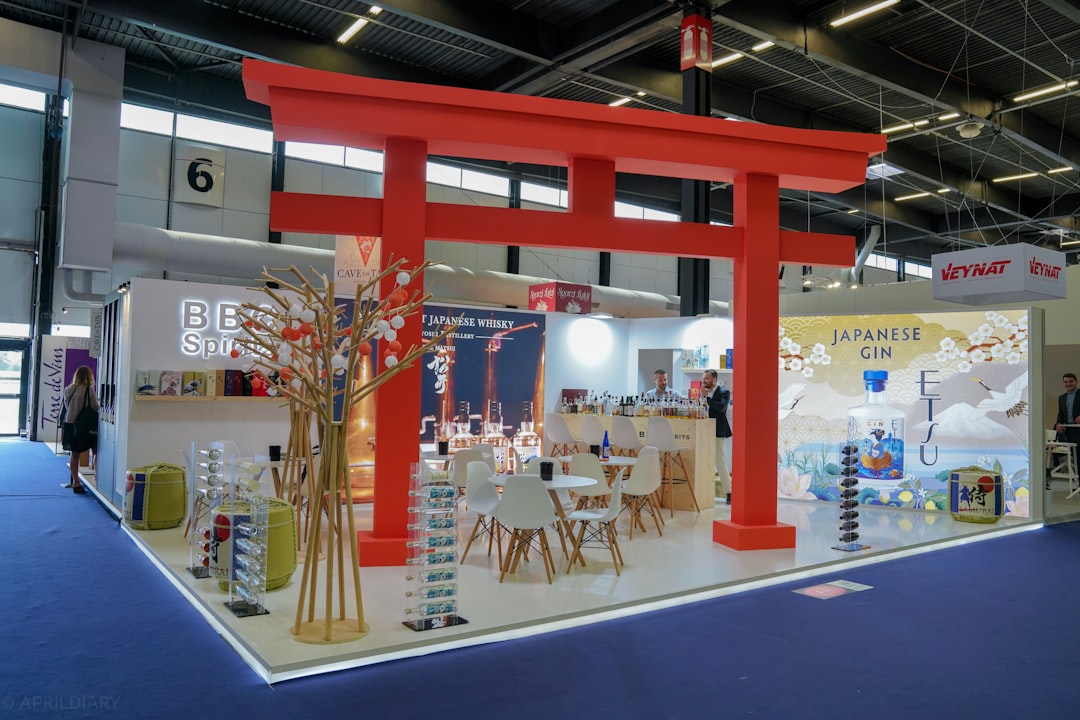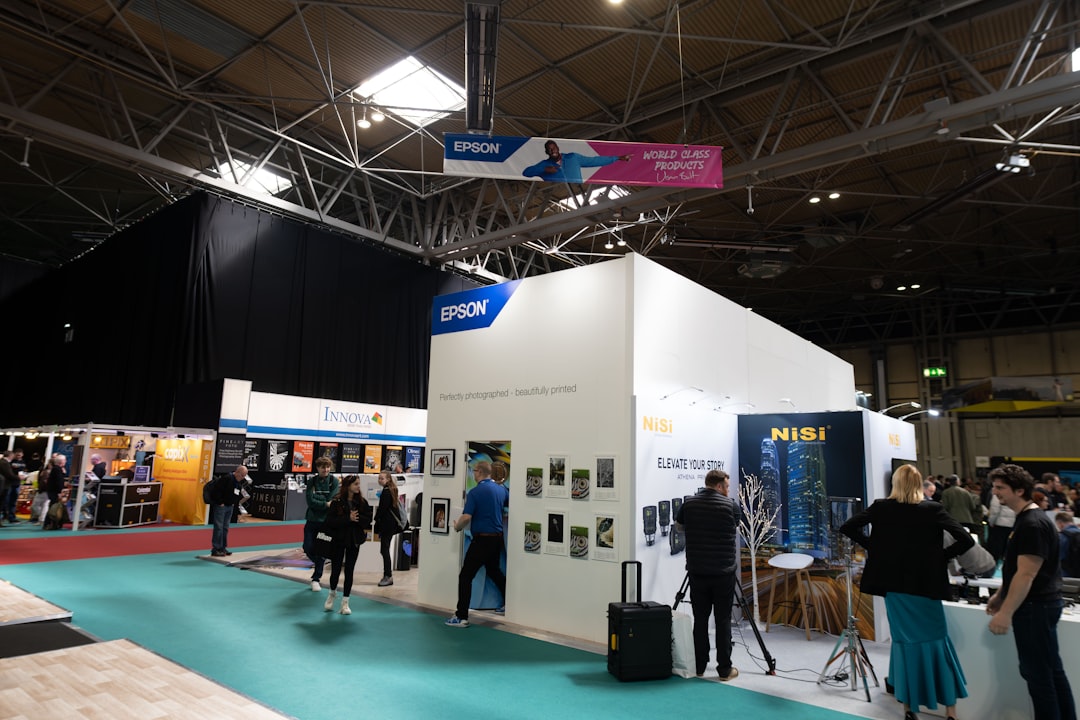
Lighting is the line item European exhibitors most often misjudge. Brand teams underspecify, expecting the venue’s hall lighting to do work it cannot do. Procurement teams overspecify, paying for fixture density that produces a flat-lit cube no one notices.
Builders quote in ways that conflate fixture rental, controller hardware, programming labour, install labour, and DMX cabling into a single line that obscures where the money actually goes. The result, across thousands of European stands annually, is lighting budgets that do not match lighting outcomes.
This guide breaks down exhibition stand lighting costs in concrete EUR figures across the European fair circuit for 2026 contracts. It covers fixture types and their per-unit costs, the lux and CRI specifications that separate good lighting from inadequate lighting, programming and DMX control costs, venue surcharges, and the typical lighting budget for stands at 30 sqm, 75 sqm, and 150 sqm footprints.
The figures come from observed quotes at Messe Frankfurt, Light + Building, Salone del Mobile, ISE at RAI Amsterdam, EuroShop, and Maison&Objet through 2025, projected forward to 2026 contracts now being signed.
The headline numbers: lighting runs eight to fourteen percent of the all-in stand budget for typical modular projects, twelve to eighteen percent for hybrid stands where lighting carries brand-statement responsibility, and fifteen to twenty-two percent for custom stands at design-led fairs where lighting itself is part of the brand assessment.
What a defensible exhibition stand lighting plan actually delivers
Before unpacking cost, it is worth being explicit about what a stand lighting plan is supposed to achieve. Three functional requirements drive every fixture and lux-level decision.
The first is brand surface legibility from across the hall. Visitors registering your stand from twenty to thirty metres away need brand graphics, logo, and dominant messaging to read at that distance regardless of the hall’s ambient lighting. This requires concentrated accent lighting on graphic surfaces at 500-1,000 lux, two to three times the typical 250-400 lux of hall ambient lighting.
The second is product or content legibility within the stand. Visitors examining products, screens, or printed materials at two to three metres need accurate colour rendering and adequate lux levels for sustained viewing. This requires task lighting at 500-750 lux with Colour Rendering Index (CRI) above 90, meaningfully higher than the CRI 70-80 of basic LED hall lighting.
The third is conversation-appropriate ambient lighting in meeting and hospitality zones. Visitors and staff in sit-down conversations need ambient lighting at 300-450 lux, warmer in colour temperature than the product zones, and arranged to avoid the harsh down-lighting that fatigues people across a five-day fair.
A lighting plan that delivers all three is the minimum defensible specification. Plans that deliver one or two will produce a stand that either reads weakly from across the hall, presents product poorly close-up, or exhausts visitors during meeting conversations.
“The lighting cost line is the easiest place to save EUR 4,000 on a stand and the easiest place to lose EUR 80,000 worth of lead-capture value by doing so. We see more lighting failures than any other booth design failure mode, and they almost always trace back to specification cuts during the procurement phase.”, Common framing within IFES corporate-member exhibitor working groups, 2025
Fixture types and per-unit costs in 2026
Six fixture categories cover most exhibition stand lighting. Each carries different per-unit rental and purchase costs, different installation labour requirements, and different visual outcomes.
| Fixture type | Per-fair rental (EUR) | Purchase price (EUR) | Typical use | Lumens output |
|---|---|---|---|---|
| LED track spot (15-25W) | 35-75 | 180-380 | Accent on graphics, products | 1,200-2,800 lm |
| LED track flood (30-50W) | 55-110 | 280-580 | Wash on graphic surfaces | 3,200-6,500 lm |
| LED strip (continuous, per metre) | 12-28 | 35-85 | Architectural lines, edge lighting | 800-2,400 lm/m |
| Backlit fabric panel (per sqm) | 75-160 | 240-450 | Brand surface backlighting | 1,800-3,200 lm/sqm |
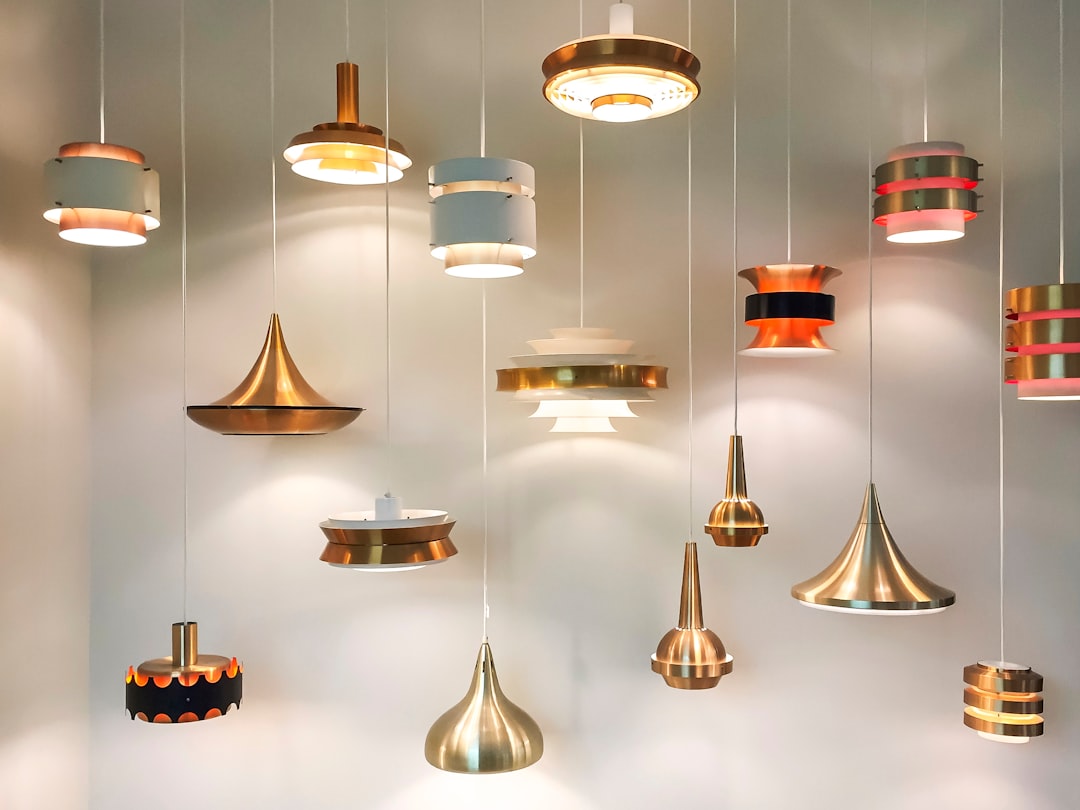
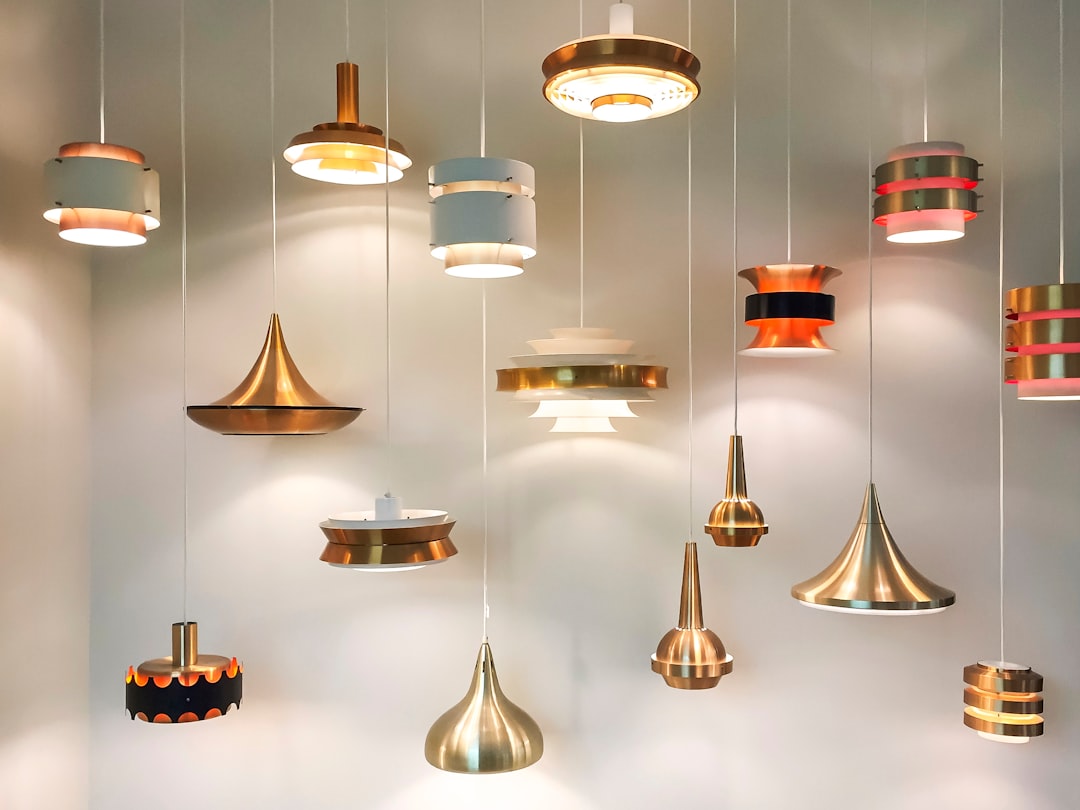
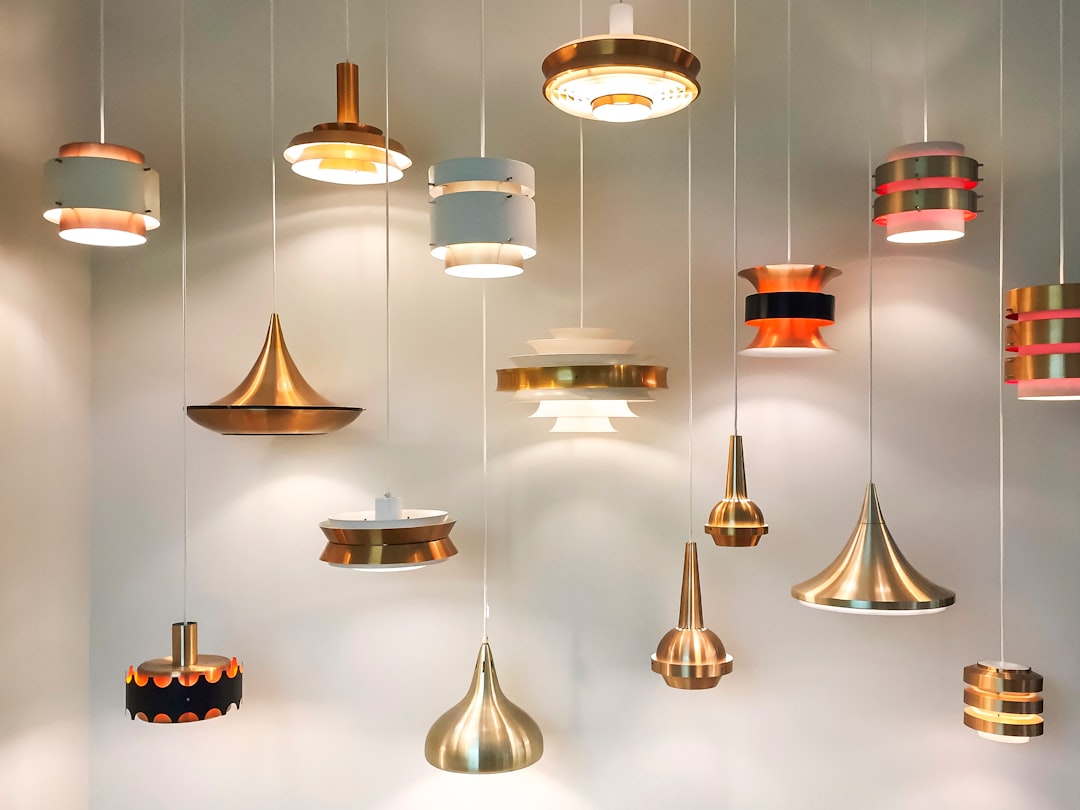
| Pendant fixture (decorative) | 65-180 | 280-720 | Hospitality, meeting zones | Varies |
| DMX-controlled wash (50-100W) | 110-240 | 480-1,200 | Programmed scene lighting | 4,500-10,000 lm |
The track spot and track flood combination handles roughly seventy percent of all stand lighting at typical European fairs. A 75 sqm modular stand typically uses sixteen to twenty-eight track fixtures combining spots and floods, distributed across a perimeter track grid plus an interior grid above the open space.
LED strip lighting has become dominant for architectural accents because of low cost per metre, flexibility in routing, and the visual impact of continuous lit lines along ceiling edges, frame profiles, and floor-level demarcation. A typical stand uses twelve to thirty metres of LED strip for architectural definition.
Backlit fabric panels are the highest-impact-per-EUR investment when stands have a dominant graphic surface that benefits from internal illumination. A six-square-metre backlit fabric panel costs EUR 450-960 per fair to rent, replacing what would otherwise require multiple track floods for similar visual impact.
DMX-controlled fixtures appear at design-led fairs where lighting scenes change across the day or for product reveal moments. They cost two to three times standard fixtures and add EUR 1,200-3,800 in programming labour per fair.
Lux levels and CRI: the specifications that matter
Two technical specifications separate stands where lighting reads professionally from stands where it doesn’t. Both are easy to specify in the builder brief and impossible to fix after install.
Lux level is the illumination intensity at the surface being lit. Different surface types require different lux levels for the desired visual impact. Below 500 lux on a graphic surface, the brand reads weakly from across the hall. Above 1,200 lux on the same surface, the lighting becomes visually harsh and washes out fabric SEG graphics. Above 1,500 lux on product surfaces, materials can show heat damage over a five-day fair.
| Surface or zone | Lux level (target) | Why this level |
|---|---|---|
| Hero graphic surface | 800-1,200 lux | Reads clearly at 20-30m approach |
| Secondary graphic | 500-700 lux | Reads at 10-15m approach |
| Product display | 600-900 lux | Detail visible at touch distance |
| Reception desk | 400-600 lux | Conversation-friendly |
| Meeting table | 350-500 lux | Document-readable, not fatiguing |
| General stand floor | 300-450 lux | Pleasant, navigable |
| Hospitality lounge | 250-350 lux | Inviting, conversation-low |
CRI (Colour Rendering Index) is the measure of how accurately a light source renders colour against a reference standard. Basic LED hall lighting runs CRI 70-80, which renders bright colours acceptably but flattens subtle tones. Brand colours rendered at CRI 70-80 often look noticeably wrong on a stand. Defensible specification for exhibition lighting: CRI 90 or higher on every fixture facing brand surfaces, product displays, or photography/video areas.
Higher-CRI fixtures cost ten to twenty-five percent more than CRI 70-80 equivalents but produce visibly different stand quality. This is the single highest-leverage specification decision in stand lighting.
“If your brand uses any colour outside the basic primary palette, CRI 90+ is non-negotiable. We had a client whose corporate teal read as muddy green under the venue lighting at one Messe Düsseldorf fair because the stand builder had used CRI 80 fixtures to save EUR 600 on the project. Brand integrity cost factor: significant.”, Common framing among FAMAB lighting working-group members, 2024-2025
Programming and DMX control costs
Stands using programmed lighting scenes, colour changes, brightness ramps for product reveals, time-of-day adjustments, require DMX control hardware and programming labour beyond standard fixture installation.
DMX controller hardware rents for EUR 280-680 per fair for typical stand-scale control of twenty to fifty channels. Larger stands or complex programming requires more capable controllers at EUR 480-1,200.
Programming labour runs EUR 75-140 per hour from specialist lighting designers. A typical stand-scale programming task, three to five lighting scenes with smooth transitions between them, consumes eight to twenty hours of programming time. Total programming labour per stand: EUR 600-2,800.
On-site programming support during the fair (a lighting operator available to adjust scenes for unforeseen requirements) costs EUR 380-680 per day. Multi-day fair operators-on-call add EUR 1,500-3,400 across a typical four-day fair.
The total DMX control premium over a static lighting plan: EUR 1,500-6,800 for a 75 sqm stand. This is justified at design-led fairs (Salone del Mobile, EuroShop, Maison&Objet, Watches & Wonders) where lighting variation is part of the brand experience. At vertical B2B fairs (Bauma, Anuga, productronica, MWC Barcelona), static lighting plans achieve equivalent practical outcomes at meaningfully lower cost.
Venue surcharges that hit lighting budgets
Three venue-specific cost categories regularly inflate stand lighting budgets beyond what the headline quote suggests.
Hall electrical capacity beyond the included allocation. Each major European venue includes a base electrical allocation in the space rental (typically 80-150 watts per square metre of stand). Lighting plans for image-led stands frequently exceed this allocation, particularly when combined with AV equipment. Additional electrical capacity costs EUR 8-22 per kilowatt-day at most major venues, which for a stand consuming an extra 4 kW across a four-day fair adds EUR 130-350.
Rigging fees for ceiling-mounted lighting elements. Stands hanging banner lights, large pendant fixtures, or overhead lighting trusses above certain weights require rigging from venue-approved riggers. Rigging fees run EUR 800-3,400 per fair at Messe Frankfurt, Messe Düsseldorf, and Hannover Messe. Fiera Milano, Paris Expo, and IFEMA Madrid run EUR 600-2,400 for similar work. The fees include engineer sign-off, rigging labour, and de-rigging.
Late-change electrical work. Modifying the stand’s electrical plan inside the 72-hour pre-fair window costs roughly double the planned-stage rate. Stands that discover during build day that they need additional circuits typically pay EUR 280-680 in venue-electrician rush charges.
Typical lighting budgets by stand footprint
The tables below show realistic 2026 lighting budgets for the three most common European stand footprints. Figures cover all fixture rental, controller hardware, programming labour, install labour for lighting only, and DMX cabling.
| Lighting line | 30 sqm corner | 75 sqm peninsula | 150 sqm island |
|---|---|---|---|
| Track spots and floods | 700-1,300 | 1,800-3,200 | 4,500-7,800 |
| LED strip architectural | 280-520 | 680-1,300 | 1,400-2,800 |
| Backlit fabric panels | 0-540 | 450-1,800 | 1,800-4,500 |
| Pendant + decorative fixtures | 0-380 | 280-1,100 | 800-2,400 |
| DMX controller (if used) | 0-380 | 280-680 | 480-1,200 |
| Programming labour | 0-800 | 600-1,800 | 1,200-3,400 |
| Install labour (lighting-only share) | 380-780 | 800-1,800 | 1,800-3,800 |
| DMX cabling and accessories | 120-280 | 280-580 | 580-1,200 |
| Total lighting (mid-band) | 1,800-3,800 | 5,200-9,500 | 12,500-22,800 |
| Lighting as % of all-in stand budget | 9-13% | 10-14% | 12-18% |
The percentage allocation increases with stand size because larger stands typically use more sophisticated lighting (DMX scenes, backlit panels, ceiling architecture) that pulls the lighting line up faster than the rest of the stand budget grows.
For comparison, the equivalent custom stand at design-led fairs would push lighting to fifteen to twenty-two percent of all-in budget, at Salone del Mobile, lighting investment of EUR 25,000-45,000 on a 100 sqm custom stand is common and often justified by the brand-assessment context of the fair.
“At Salone del Mobile, lighting is not a stand expense; it is brand expression. Brands that try to economise on lighting at that specific fair end up with stands that read as if the company doesn’t take design seriously, which is the exact opposite signal of why they came to the fair.”, Common framing among Salone del Mobile-approved stand designers, 2024-2025
Lighting strategy by stand type
Different stand layouts require different lighting strategies. The mismatch between layout and lighting is one of the most common failure modes.
Row stands concentrate ninety percent of lighting on the single open side and the back wall behind it. Side walls receive minimal accent lighting because they face neighbour stands. Total fixture count for a 20 sqm row stand: ten to sixteen fixtures.
Corner stands run the three-zone plan described in the /booth-design/stand-types-by-side-openings/corner-stand-strategy-checklist-european-exhibitors article: corner-focal accent, symmetric flank wash, interior ambient. The corner element receives twenty-five to forty percent of total accent fixtures.
Peninsula stands anchor lighting on the back wall (typically thirty to forty percent of fixture count) with the forward three-quarters of the stand floor lit on a distributed grid. Hospitality and meeting zones get their own ambient and task lighting layers.
Island stands distribute lighting across four edges with a central overhead grid. Without a back-wall anchor, total fixture count runs twenty-five to forty percent higher per square metre than peninsula equivalents. Overhead architecture (suspended elements, pendant clusters) adds significant cost but delivers cross-hall presence that peninsulas cannot match.
Double-decker stands require two completely separate lighting plans for the ground and first-floor levels, plus accent lighting on the staircase and the underside of the upper floor structure visible from the main floor. Lighting budget for a double-decker typically runs sixty to ninety percent higher than an equivalent single-level footprint. The /booth-design/double-decker-stands guide covers this in detail.
Common lighting failures and how to avoid them
Five recurring lighting failures appear in European stand projects, each preventable at specification stage.
The first is undersized lux on hero graphic surfaces. Stands quoted with twelve track spots when the graphic surfaces require eighteen produce brand walls that read weakly from across the hall. The fix is specifying lux levels in the brief rather than fixture counts, and verifying with a photometric calculation before signing.
The second is wrong colour temperature mixing. Stands using cool-white (4000K) and warm-white (3000K) fixtures together produce visually jarring transitions across the stand. The fix is specifying a single colour temperature (3000K for hospitality-led stands, 3500K-4000K for product-led stands, 4000K for technology-led stands) across all fixtures.
The third is missing accent lighting on the corner or focal element. Stands with even-distribution lighting across all surfaces produce visually flat results where nothing draws the eye. The fix is allocating twenty-five to forty percent of total fixtures to a single focal zone.
The fourth is no programming for time-of-day variation. Stands lit identically at 09:00 (sparse hall traffic, ambient hall lighting bright) and 16:00 (peak hall traffic, ambient hall lighting dimmed) under-perform during one of those periods. The fix is two or three lighting scenes with simple dim transitions, achievable with DMX programming at modest cost.
The fifth is no on-site adjustment capability during build day. Stands where the lighting plan is fixed before the stand is built and cannot be adjusted to account for unforeseen sightlines, reflective surfaces, or neighbour-stand spillover end up with avoidable issues. The fix is contracting on-site programming support for build day, even if not used during the fair itself.
How to evaluate a lighting quote line by line
A defensible lighting quote itemises fixtures by type and count, lists the lux-level targets for each zone, names the colour temperature and CRI specification, includes DMX programming labour separately from install labour, and explicitly notes which venue electrical surcharges are included in the headline number.
Six questions separate substantive lighting quotes from padded ones.
First, what is the lux level at each graphic surface and product zone? Quotes that don’t answer this question in writing are quotes that haven’t been designed.
Second, what is the CRI of the fixtures specified? Anything below CRI 90 should trigger a discussion about brand colour rendering.
Third, what colour temperature is consistent across the stand? Mixed colour temperatures are an obvious red flag.
Fourth, how many DMX channels are programmed and into how many scenes? “DMX-enabled” without scene count means no programming has been planned.
Fifth, what electrical capacity does the lighting plan consume, and how does that compare to the venue’s included allocation? Quotes that don’t surface this question leave the electrical surcharge as a budget surprise.
Sixth, is on-site programming support included for build day? The marginal cost is small; the avoidance of build-day surprises is large.
“Lighting quotes that come back as a single line item, ‘lighting package: EUR 6,500’, are the quotes most likely to disappoint on build day. Itemised quotes that price by fixture type, lux target, and programming hours are quotes that have actually been designed. The difference shows up under hall conditions.”, Common procurement guidance circulated within AUMA member exhibitor teams
Putting it all together: a defensible 2026 lighting budget
For a typical 75 sqm peninsula stand at a mid-tier European fair (drupa, Anuga, ISE, Light + Building), the defensible 2026 lighting budget lands at EUR 5,500-8,500 all-in for a static plan with CRI 90 fixtures and consistent colour temperature, or EUR 7,500-12,500 with three DMX scenes and on-site programming support.
For the same footprint at a design-led fair (Salone del Mobile, Maison&Objet, EuroShop), the budget moves to EUR 12,000-22,000 to support the brand-assessment context of those fairs.
For first-time exhibitors at 30 sqm at mid-tier fairs, the EUR 2,200-3,800 band delivers professional lighting without overspecifying. For tier-one brand presence at 150 sqm island stands at flagship fairs, EUR 18,000-32,000 is the realistic band.
Use the /calculator to model the lighting budget within an overall stand budget. The /booth-design/lighting-design reference covers lux and CRI specifications in deeper technical detail. The /rfq form circulates a lighting-specified brief to vetted European builders for matched quotes.
References
- Messe Frankfurt Technical Office, “Stand Electrical and Lighting Technical Standards,” 2026 edition
- AUMA (Association of the German Trade Fair Industry) exhibitor lighting guidance, 2024-2025
- FAMAB Communication Association, “Lighting Cost Analysis for European Trade Fair Stands,” 2025
- UFI (Global Association of the Exhibition Industry) Global Exhibition Barometer, 2024 edition
- IFES (International Federation of Exhibition and Event Services), “European Stand Lighting Survey,” 2025
- IES (Illuminating Engineering Society), “Recommended Practice for Museum and Exhibition Lighting,” IES RP-30
- CIE (International Commission on Illumination), “Technical Report CIE 224:2017 Colour Fidelity Index for accurate scientific use”
- Light + Building 2024 exhibitor reports on stand lighting investment patterns
FAQFrequently asked questions
Lighting runs 8-14% of all-in stand budget for typical modular projects at vertical B2B fairs, 12-18% for hybrid stands where lighting carries brand-statement responsibility, and 15-22% for custom stands at design-led fairs where lighting itself is part of the brand assessment (Salone del Mobile, Maison&Objet, EuroShop, Watches & Wonders Geneva).
The percentage allocation increases with stand size because larger stands typically use more sophisticated lighting plans, DMX scenes, backlit panels, and ceiling architecture that pull the lighting line up faster than the rest of the stand budget grows.
Three functional requirements define the minimum defensible specification. Brand surface legibility from across the hall requires 800-1,200 lux on hero graphic surfaces and 500-700 lux on secondary graphics. Product or content legibility within the stand requires 600-900 lux at product zones with CRI 90 or higher.
Conversation-appropriate ambient lighting in meeting and hospitality zones requires 300-450 lux, warmer in colour temperature than product zones. Plans that deliver fewer than all three will produce a stand that reads weakly from across the hall, presents product poorly close-up, or exhausts visitors during meeting conversations across a multi-day fair.
Yes, if you exhibit at design-led fairs where lighting variation is part of the brand experience (Salone del Mobile, EuroShop, Maison&Objet, Watches & Wonders Geneva), or if your stand uses programmed product reveals or time-of-day lighting scenes.
The DMX premium over a static plan runs EUR 1,500-6,800 for a 75 sqm stand including controller hardware (EUR 280-680), programming labour (EUR 600-2,800 for 8-20 hours at EUR 75-140/hour), and on-site programming support (EUR 380-680/day). At vertical B2B fairs like Bauma, Anuga, productronica, and MWC Barcelona, static lighting plans achieve equivalent practical outcomes at meaningfully lower cost.
Colour Rendering Index measures how accurately a light source renders colour against a reference standard. Basic LED hall lighting at venues like Messe Frankfurt and ExCeL runs CRI 70-80, which renders bright primary colours acceptably but flattens subtle tones and shifts brand colours visibly.
Corporate teals can read as muddy green, brand reds can read pink, and any colour outside basic primaries renders unpredictably. Defensible specification for exhibition lighting is CRI 90 or higher on every fixture facing brand surfaces, product displays, or photography/video areas. The CRI 90+ premium adds 10-25% to fixture cost but produces visibly different stand quality. This is the single highest-leverage specification decision in stand lighting.
Three surcharges regularly inflate lighting budgets beyond the headline quote. Hall electrical capacity beyond the included allocation (typically 80-150 watts per square metre included in space rental) costs EUR 8-22 per kilowatt-day at most major venues.
Rigging fees for ceiling-mounted lighting elements above certain weights run EUR 800-3,400 at Messe Frankfurt, Messe Düsseldorf, and Hannover Messe, and EUR 600-2,400 at Fiera Milano, Paris Expo, and IFEMA Madrid. Late-change electrical work inside the 72-hour pre-fair window costs roughly double the planned-stage rate, with venue-electrician rush charges of EUR 280-680 per circuit modification. Always ask the builder for a venue-services lighting estimate before signing.
A 75 sqm peninsula stand at a typical European fair uses 16-28 track fixtures (combining spots and floods) plus 12-30 metres of LED strip for architectural definition, plus 0-3 backlit fabric panels, plus 0-4 pendant or decorative fixtures in hospitality zones. Total active fixture count ranges 22-40 depending on stand complexity and whether DMX scenes are programmed.
Total lighting cost for a 75 sqm 2026 stand lands at EUR 5,200-9,500 for a static plan with CRI 90 fixtures, or EUR 7,500-12,500 with three DMX scenes and on-site programming support. Island stands at the same footprint use 25-40% more fixtures because they lack a back-wall lighting anchor.