Lighting is the most undervalued line in the exhibition stand budget. Brand-experience leads at tier-one European exhibitors consistently report that a stand with strong lighting and average graphics outperforms a stand with average lighting and strong graphics by a comfortable margin in visitor dwell time, photo capture, and post-fair brand recall. The variable is not artistic merit, it is illuminance, colour rendering, and the discipline of three-layer design.
This article documents the lighting benchmarks experienced European stand designers use, the CRI and colour-temperature specifications that determine whether displayed product reads correctly, the three-layer composition convention that has become standard across the major exhibition centres, and the venue compliance rules that affect rigging, power load, and permit timelines at Messe Frankfurt, Messe Düsseldorf, Fiera Milano, IFEMA Madrid, RAI Amsterdam, ExCeL London, Koelnmesse, and Messe München.
Why lighting matters more than designers say
Visitors at trade fairs spend more time in well-lit stands than in well-decorated stands. The published visitor-flow studies from UFI (Global Association of the Exhibition Industry) and the dwell-time datasets shared by Messe Frankfurt and Messe München in their exhibitor debrief materials converge on a consistent pattern: lighting density at the stand entry threshold predicts subsequent dwell time more reliably than any other design variable except the presence or absence of seating.
The reason is physiological as much as aesthetic. Hall ambient lighting at European exhibition centres sits in the 200-350 lux band, adequate for safe circulation but visually flat. A stand interior at 500-700 lux feels measurably brighter and more inviting; the same stand at 300 lux reads as a cavern. The threshold effect is sharper than designers without lighting training tend to expect.
“We started briefing lighting before graphics about six fair cycles ago. Visitor dwell time went up roughly thirty percent on the same footprint with the same product. The graphics designers were not happy, but the lead numbers were unambiguous.”, Common post-mortem observation from European exhibition managers
The corollary matters too: a stand that is too bright produces glare fatigue and visitors leave faster than they otherwise would. The right answer is not maximum brightness; it is correct brightness for each functional zone, layered with directional accents that draw the eye to specific products and graphics.
Lux benchmarks by zone
The table below summarises working illuminance targets used by experienced European stand designers, expressed in lux measured at one metre above floor level (the EN 12464-1 reference height for indoor workplace lighting, which applies to exhibition stands by extension).
| Zone | Target lux (1m above floor) | Colour temperature (Kelvin) | CRI minimum | Notes |
|---|---|---|---|---|
| General circulation | 500-700 | 3500-4000K | 80 | Sets the baseline “feels well lit” impression |
| Product display (general) | 800-1,200 | 3500-4000K | 90 | Higher CRI essential for colour-critical product |
| Hero product (accent) | 1,500-2,500 | 3000-3500K | 95+ | Narrow-beam spots; check heat output |
| Graphics walls | 500-800 (wash) | 4000K | 80 | Even wash; avoid hot spots on printed surfaces |
| Meeting rooms | 300-500 | 3000K | 90 | Comfort over drama; dimmer-controlled |
| Hospitality zone | 250-400 | 2700-3000K | 90 | Warmer; more residential feel |
| Reception/registration | 600-900 | 4000K | 90 | Higher CRI for staff appearance on camera |
| Aisle-facing brand wall | 700-1,000 (wash) | 4000K | 80 | Must lift above ambient to read from the aisle |
The lux figures are floor-of-the-band working targets, not absolute maxima. Stands at design-led fairs (Salone del Mobile, Maison&Objet, EuroShop) frequently push hero zones beyond 3,000 lux to achieve dramatic chiaroscuro effects, but those executions require lighting designers who understand both the optical effect and the heat load on the displayed product.
The colour temperature column matters because it sets the visual mood. The European convention runs cooler (3500-4000K) for circulation and product zones, warmer (2700-3000K) for hospitality. Mixing temperatures unintentionally produces a stand that photographs poorly and reads as visually disorganised. Mixing them intentionally, warm hospitality nested inside cool product zones, is a deliberate design technique that works when the transition between zones is clear.
The three-layer convention
European stand lighting design has converged on a three-layer composition: ambient, task, and accent.
Ambient lighting provides the general illumination of the stand volume. It is typically delivered via downlights mounted in a ceiling grid (for stands with a built ceiling) or via uplights and wash fixtures aimed at the underside of the rigging truss (for stands without a built ceiling). The objective is even illumination across the stand floor at the 500-700 lux benchmark, with no visible hot spots or dark pockets.
Task lighting is zone-specific. Meeting tables get downlights at 300-500 lux directly above the working surface. Registration desks get higher illumination (600-900 lux) so visitor and staff faces read clearly. Product demo areas get directional task lighting tuned to the demo’s specific requirements.
Accent lighting is the storytelling layer. Narrow-beam spots draw the eye to hero products, key graphics, and architectural features. Wall-wash fixtures uplight feature walls and uplight the brand signature. Linear LED strips define edges, hospitality zone boundaries, and the underside of overhangs.
The discipline of layering matters because each layer can be dimmed, switched, and adjusted independently. A stand that runs all three layers at full output for the full fair day produces visitor fatigue and uneven photography. A stand that dims ambient by 20 percent for the late-afternoon session, holds task lighting at full for meetings, and varies accent intensity by hour produces a visually dynamic environment that rewards re-visits.
“If you brief lighting as one design layer, you get one design outcome. If you brief it as three layers with independent control, you get an environment that adapts to what the fair day is doing. The cost difference is minimal; the difference in how the stand performs across an eight-hour day is enormous.”, Common framing among Messe Frankfurt-approved stand builders
CRI: the colour-rendering question
Colour Rendering Index (CRI) measures how faithfully a light source reproduces colour relative to natural daylight, on a 0-100 scale. For exhibition use, the relevant thresholds are:
- CRI below 80: Visible colour shift, particularly in reds and skin tones. Acceptable only for non-colour-critical zones (corridors, storage, behind-stand technical areas). Should not appear in any visitor-facing zone.
- CRI 80-85: Standard quality for general circulation lighting. Acceptable for graphics zones and meeting areas where colour fidelity is secondary.
- CRI 90-95: The benchmark for product display zones. Mandatory for fashion, cosmetics, automotive paint, food, jewellery, and any product where colour is part of the sales proposition.
- CRI 95+: Premium specification used for hero product zones and for product photography lighting. Cost premium over CRI 90 is roughly 15-25 percent on fixtures and electronics.
The CRI specification interacts with colour temperature: a CRI 90 fixture at 3000K renders warm tones (skin, food, timber) better than a CRI 90 fixture at 5000K, even at identical CRI scores. The European industry workaround is to specify both CRI and TM-30 Rf/Rg values for colour-critical projects, though TM-30 specification is still uncommon outside the design-led fairs.
The cost premium for stepping up from CRI 80 to CRI 90 fixtures across a typical 75 sqm stand runs EUR 1,200-2,500, a defensible investment for any exhibitor whose product depends on accurate colour reproduction.
Venue compliance: rigging, power load, permits
European exhibition venues impose distinct compliance regimes on stand lighting that affect cost, lead time, and design freedom.
Ceiling rigging permissions. Most tier-one venues permit ceiling rigging in halls with adequate structural height (typically above 5-6 metres ceiling clearance), subject to load approval and a permit application submitted with the technical drawings. Permit lead times run 4-8 weeks.
Approved riggers must be used at most venues; self-rigging is prohibited at virtually all German, Italian, and Spanish tier-one venues. Rigging cost runs EUR 80-200 per drop point depending on weight class and access requirements.
Power load calculations. The total connected lighting load must be declared in the stand technical submission. European venues bill power consumption separately, typically at EUR 1.50-3.50 per kWh for stand-period delivery (cheaper than retail rates for industrial connections, more expensive than wholesale).
A typical 75 sqm stand consumes 4-8 kW of lighting load; LED has reduced this figure dramatically over the past decade, but exhibitors still routinely under-declare load and discover the gap during venue inspection.
Heat output and product damage. High-output halogen and metal-halide fixtures are now uncommon at European fairs, displaced by LED, but they still appear at venues where exhibitors have not updated their kit. LED fixtures running CRI 95+ at hero-product intensities can still produce localised heat sufficient to damage temperature-sensitive product. The fix is fixture distance, ventilation, and short on-cycles for the hottest accents.
Emergency lighting compliance. EN 1838 emergency lighting standards apply to large stands with enclosed meeting rooms or hospitality zones. The standard requires that emergency exit routes from any enclosed stand space remain visible during power failure. Battery-backed emergency fixtures (EUR 80-200 per unit installed) are mandatory for any enclosed stand space at most tier-one venues.
The table below summarises the venue-specific notes most likely to affect lighting planning.
| Venue | Ceiling rigging permit lead | Approved rigger requirement | Notable lighting rule |
|---|---|---|---|
| Messe Frankfurt | 6 weeks | Yes | Hall-specific load caps in older halls (Halle 3, 4); newer halls (11, 12) unrestricted |
| Messe Düsseldorf | 4-6 weeks | Yes | drupa and K halls allow exceptional rigging loads for flagship stands |
| Fiera Milano | 6-8 weeks | Yes | Salone del Mobile imposes design-curation review on visible lighting |
| IFEMA Madrid | 4 weeks | Yes | Hall-level emergency lighting requirements stricter than EN minimum |
| RAI Amsterdam | 4-6 weeks | Yes | Sustainability scoring rewards LED-only stands |
| ExCeL London | 4-6 weeks | Yes | Post-Brexit fixture-import documentation adds 1-2 weeks |
| Koelnmesse | 4-6 weeks | Yes | Anuga halls require food-safe lighting around product display |
| Messe München | 6 weeks | Yes | Bauma halls allow exceptional ceiling loads for outdoor-product stands |
| Deutsche Messe Hannover | 4-6 weeks | Yes | Hannover Messe imposes industry-specific colour-temperature conventions |
Worked example: lighting brief for an 85 sqm island at IFA Berlin
A consumer-electronics brand exhibiting at IFA on an 85 sqm island has the following zones: 30 sqm of open product display, 12 sqm of hero product feature wall, 18 sqm of meeting area split into two semi-private rooms, 10 sqm of hospitality with bar and seating, and 15 sqm of circulation and storage.
Lighting brief by zone:
- Product display (30 sqm): Ambient at 700 lux, 4000K, CRI 90. Roughly 16 downlights at 25W each on a switched circuit. Estimated fixtures: EUR 3,200 supplied and installed.
- Hero product wall (12 sqm): Accent at 2,000 lux on display moments, 3500K, CRI 95+. Six narrow-beam spots on a track with DMX dimming. Estimated fixtures: EUR 2,100.
- Meeting rooms (18 sqm): Task at 400 lux, 3000K, CRI 90. Eight downlights with dimmer control. Estimated fixtures: EUR 1,400.
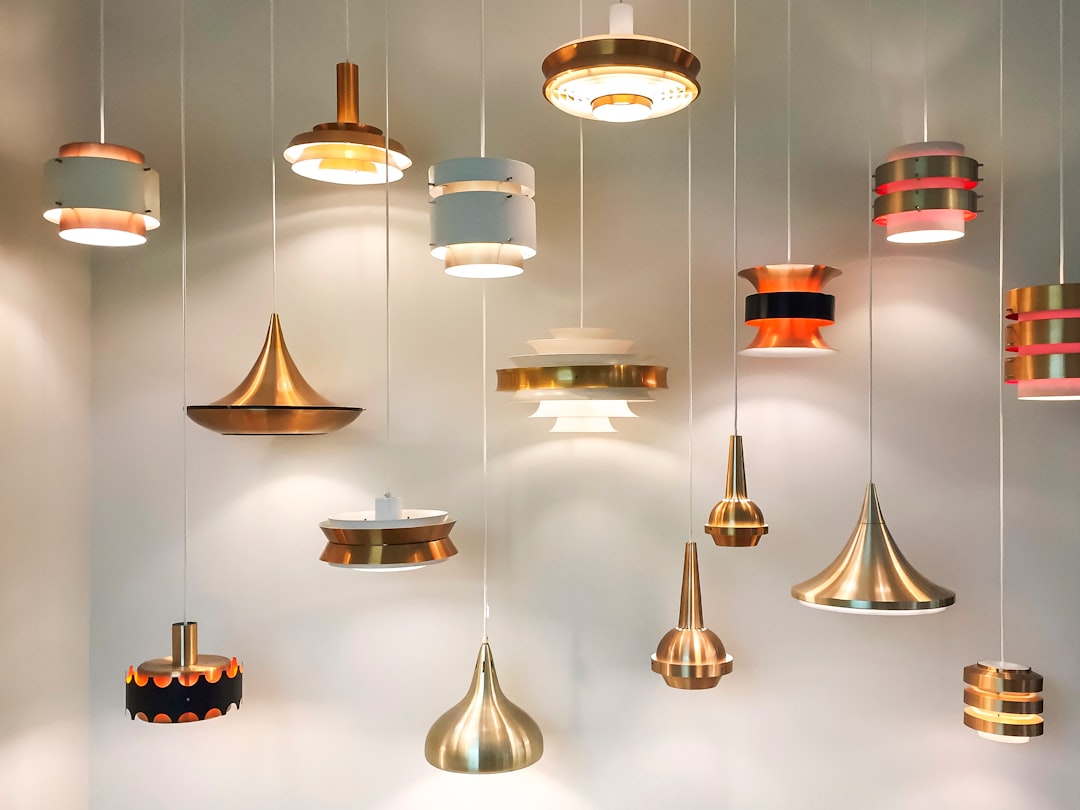
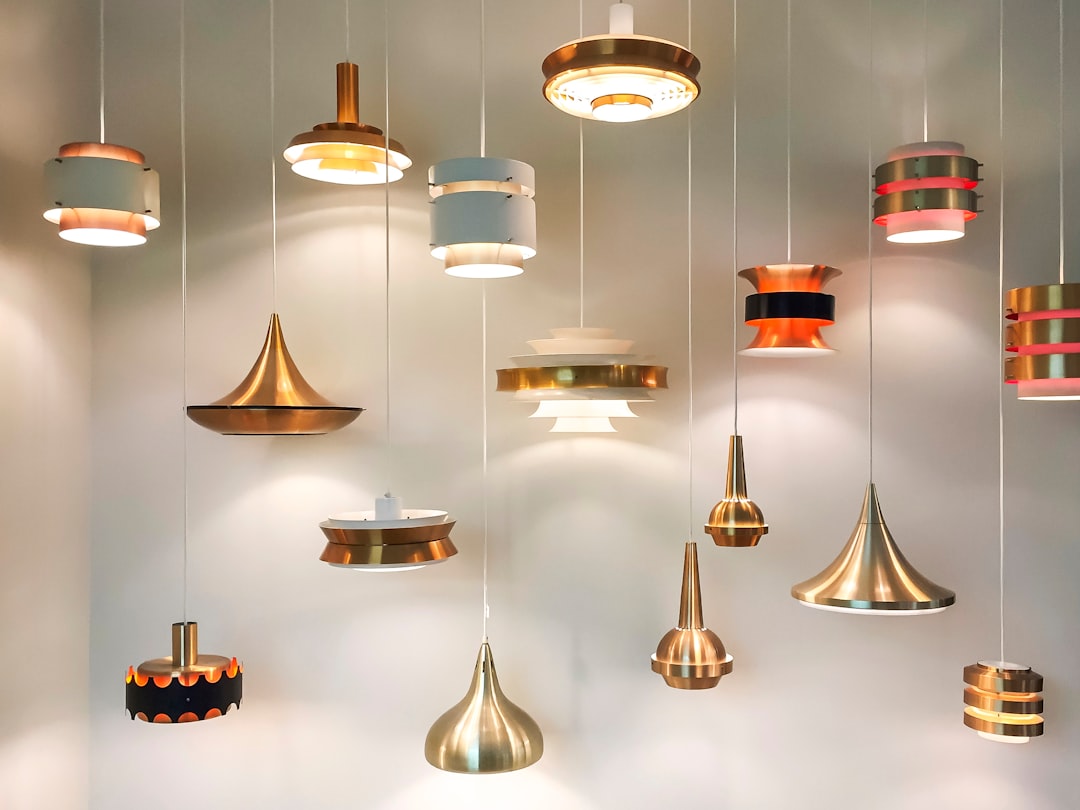
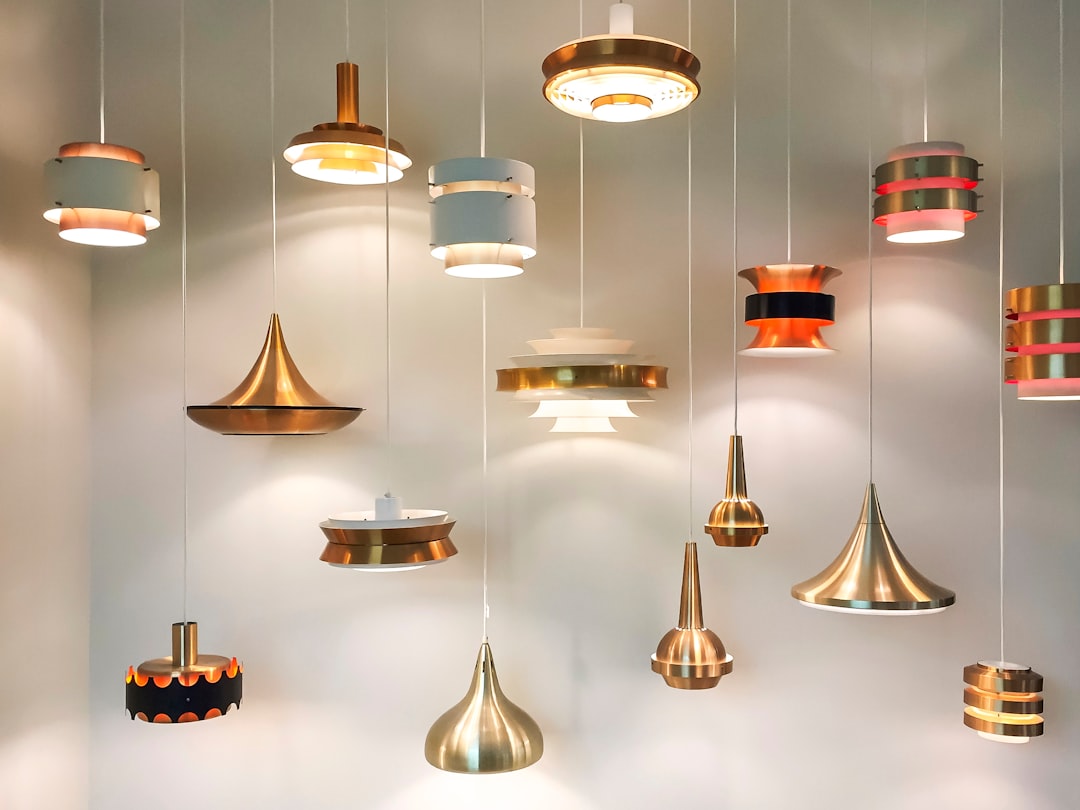
- Hospitality (10 sqm): Task at 300 lux, 2700K, CRI 90, plus warm decorative pendants. Estimated fixtures: EUR 1,800.
- Circulation (15 sqm): Ambient at 600 lux, 4000K, CRI 80. Estimated fixtures: EUR 900.
- Rigging and control: Truss rental and rigging at EUR 2,200, DMX control system and programming at EUR 1,800.
Total lighting line: roughly EUR 13,400 all-in, which sits at the higher end of the mid-quality band for the footprint. The brand spends an additional EUR 1,200 on emergency lighting for the enclosed meeting rooms, bringing the all-in lighting allocation to EUR 14,600, or roughly 11 percent of an EUR 130,000 total stand build budget. That share is consistent with experienced-exhibitor convention.
How to act on this
Brief lighting alongside graphics in the stand RFQ, not as an afterthought. The brief should specify target lux per zone, minimum CRI per zone, colour temperature per zone, and the three-layer composition (ambient / task / accent) you expect the design to deliver.
The /builders directory at Exhibition Stands EU lists stand builders with declared lighting-design competence and named lighting partners, useful for separating builders who treat lighting as a discipline from those who treat it as a fixture-procurement exercise.
For lighting-line budgeting, the Booth Cost Calculator accepts per-zone illuminance and CRI targets and produces a fixture-and-control cost estimate that benchmarks against the European market. For venue-specific compliance, rigging permits, load caps, emergency lighting requirements, the /fairs hub links to each venue’s published technical guidelines.
When briefing through /rfq, include the lighting brief in the technical attachments and request that quotes itemise lighting separately. Builders quoting lighting as a bundled line with no zone-by-zone detail are typically the builders who will under-deliver on the discipline.
Related reading
- Modular vs Custom Decision Framework, how lighting strategy differs between build types
- Graphics and Large-Format Print, why graphics and lighting must be briefed together
- Materials and Finishes, how surface finish interacts with lighting selection
- Interactive and Digital Elements, how LED video walls contribute to ambient lighting
- Stand Design Cost Breakdown, full lighting-line costing methodology
References and primary sources
- EN 12464-1:2021 Light and lighting, Lighting of work places, European Committee for Standardization
- EN 1838:2013 Lighting applications, Emergency lighting, European Committee for Standardization
- CIE 13.3-1995 Method of Measuring and Specifying Colour Rendering Properties of Light Sources (CRI reference standard)
- IES TM-30 Method for Evaluating Light Source Color Rendition (supplementary colour-fidelity reference)
- AUMA (Association of the German Trade Fair Industry) technical guidance for exhibition lighting, auma.de
- Messe Frankfurt Technical Guidelines 2026, rigging permit and power-load sections
- Messe Düsseldorf Technical Guidelines 2026, rigging classes and approved-rigger list
- Fiera Milano Technical Regulations 2026, salone-specific lighting curation policy
- RAI Amsterdam Sustainable Event Lighting Guidance
FAQFrequently asked questions
Working benchmarks across European fairs: 500-700 lux for general circulation areas inside the stand, 800-1,200 lux for product display zones, 300-500 lux for meeting and hospitality areas, and 1,500-2,500 lux for hero product moments under accent lighting. Venue ambient typically sits at 200-350 lux, so the stand must lift visibly above ambient to read as designed.
Going below 500 lux in circulation areas reads as under-illuminated to most visitors; going above 1,000 lux uniformly produces glare fatigue within minutes.
CRI (Colour Rendering Index) measures how faithfully a light source reproduces colour relative to natural daylight on a 0-100 scale. For exhibition use, specify CRI 90 or higher for any zone where product colour matters, fashion, cosmetics, automotive, food, design, jewellery. CRI 80-85 is acceptable for graphics-only zones and meeting areas.
Below CRI 80 the product colour shift is visible and damages brand perception. The cost premium for CRI 90+ LED fixtures over CRI 80 fixtures is typically 15-25 percent, recovered by visitor confidence in displayed product colour.
Mid-quality lighting on a 75 sqm European stand runs EUR 6,000-12,000 all-in, including fixtures, dimmers, control, installation labour, rental of rigging or trussing, and removal. Premium executions with custom track positions, DMX control, dynamic colour changes, and integrated LED video walls push the figure to EUR 18,000-30,000.
The lighting line typically represents 8-15 percent of the total stand build budget; underspending here is the single most common cost-saving mistake European exhibitors make.
Most tier-one European venues (Messe Frankfurt, Messe Düsseldorf, Fiera Milano, RAI Amsterdam, ExCeL London) permit ceiling rigging in halls with adequate structural ceiling height, typically above 5-6 metres, subject to load approval and a permit application submitted with the technical drawings. Permit lead times run 4-8 weeks. Approved riggers must be used at most venues, and self-rigging is generally prohibited.
Rigging cost runs EUR 80-200 per drop point depending on weight class and access requirements.
Both, and the split matters for permit and insurance categorisation. LED video walls above 10 sqm contribute meaningfully to ambient lighting (a typical 500-nit wall at 12 sqm adds 80-150 lux to the stand circulation area) and must be accounted for in the lighting plan, particularly to avoid pushing meeting-area lighting above the comfort threshold.
From a venue compliance standpoint, LED walls are categorised as AV equipment with separate power-load calculations, but their luminance output should appear in the stand lighting brief because it materially affects fixture selection.
Three-layer lighting separates the lighting design into ambient (general illumination of the stand volume, typically downlights or wash from a ceiling grid), task (zone-specific illumination for meeting tables, registration desks, product demo areas), and accent (directional spots, narrow-beam fixtures, and architectural lighting that draws the eye to specific products or graphics).
The convention is dominant across European stand designers because it produces visually layered spaces that photograph well, support both daytime and evening fair sessions, and let exhibitors adjust each layer independently for different moments of the fair day.