Stand orientation, specifically the number of open sides on a stand footprint, is one of the few variables in exhibition planning that materially changes commercial outcomes before any design work begins. A row stand and an island stand of the same square-metre count, in the same hall, at the same fair, produce visitor-traffic profiles that differ by a factor of two to four.
The cost difference between the two formats is rarely more than a factor of 1.4. The orientation choice is therefore one of the highest-leverage decisions an exhibition manager makes, and it is usually made too quickly.
This article walks through the four canonical European stand-orientation formats, row, corner, peninsula, and island, using the AUMA stand-type definitions adopted across German fairs and broadly mirrored at Fiera Milano, IFEMA Madrid, RAI Amsterdam, and ExCeL London.
It documents the per-sqm cost premiums, the traffic deltas observed in venue-level visitor counts, the design freedoms each format unlocks, and the venue-specific notes that determine which formats are actually available to which exhibitors.
The four orientations, defined
The AUMA exhibitor manual, FAMAB technical guidance, and the published technical guidelines of most tier-one European venues converge on four canonical formats. The differences between them come down to a single variable: how many of the four perimeter sides of the stand footprint open to a visitor aisle.
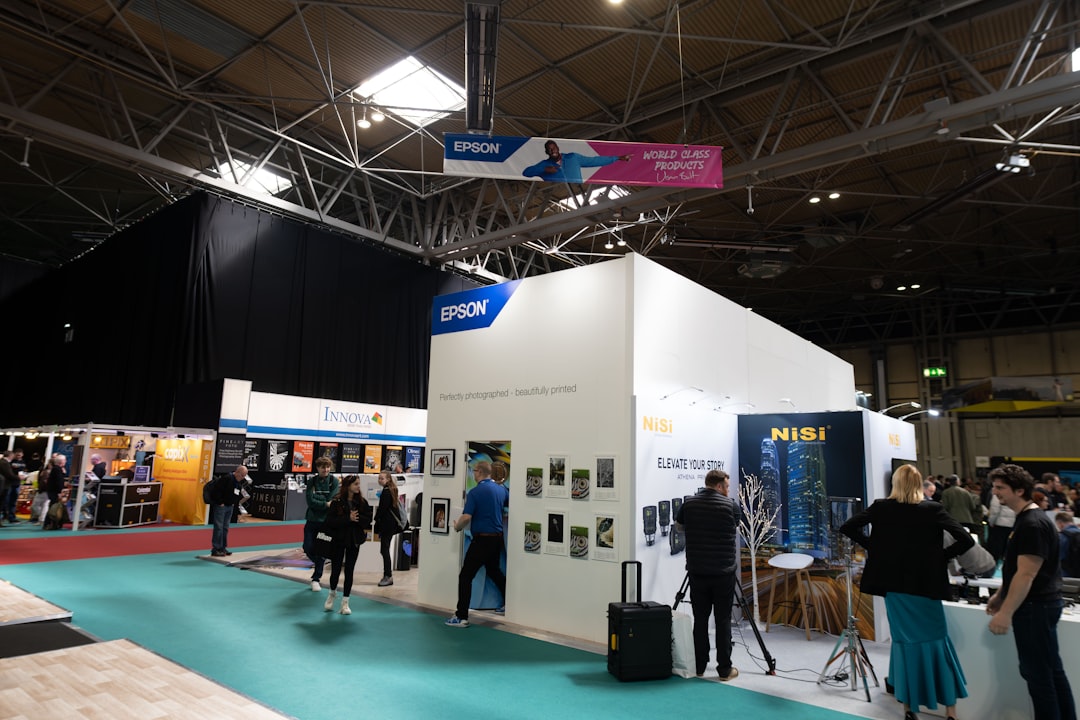
- Row stand (one open side): A rectangle on the aisle with neighbouring stands on the other three sides. The standard hall format. Sometimes called an in-line or linear stand in UK and Dutch venue documentation.
- Corner stand (two open sides, adjacent): A row stand at the intersection of two aisles. The two open sides meet at a shared corner.
- Peninsula stand (three open sides): The aisle end of a row, with three sides facing visitor flow. Sometimes called an end-cap stand in US conventions, though European usage standardises on peninsula.
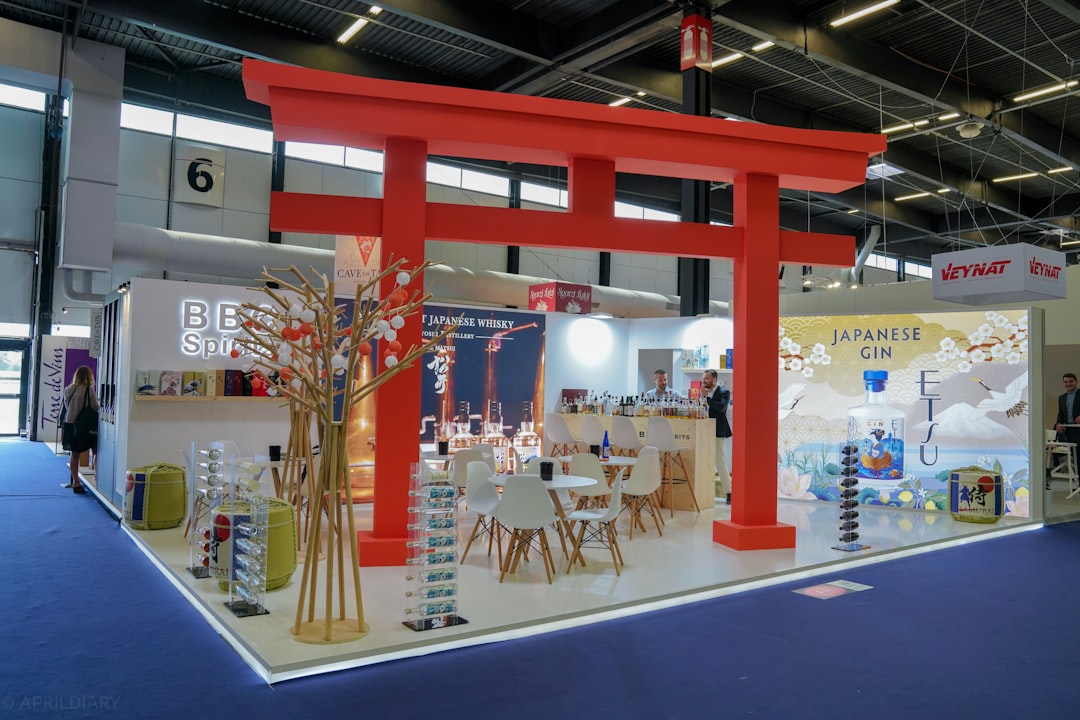
- Island stand (four open sides): A free-standing footprint surrounded by aisles on all four sides, with no neighbouring stands sharing a back wall.
A handful of variant formats appear in venue documentation but reduce to combinations of the above: double-corner (a corner with both adjacent sides longer than the standard), through stand (a peninsula where the depth is short enough to read as walk-through), and hollow-square (a multi-stand island arrangement, rare and usually negotiated as a custom allocation).
“The orientation decision is made twice: once by the organiser when they release the hall plan, and once by you when you accept or fight for a particular position. Most exhibitors negotiate hard for the corner upgrade and forget to negotiate at all for the second-row peninsula that would have performed better.”, Common framing among brand-experience leads at tier-one European exhibitors
What changes between formats
Three things change as side count rises: visitor traffic, cost, and design constraints.
Visitor traffic rises non-linearly with side count. A row stand serves visitors approaching from one aisle. A corner stand catches visitors from two aisles plus the visual draw of an aisle intersection. A peninsula presents three brand-facing surfaces and is visible across longer sightlines, particularly when the aisle ends in a major cross-traffic node. An island acts as a destination rather than a stop on the way past, visitors approach it specifically rather than passing it.
Cost rises in two layers. The organiser charges a space-rental premium that varies by format. The stand build itself becomes more expensive as the number of finished sides grows: a row stand needs one finished perimeter wall and two side walls finished only where they meet the front, while an island stand requires all four perimeter sides to read as finished from any approach.
Design constraints also flip. A row stand is structurally easy: the back wall does the heavy lifting and the side walls handle secondary brand expression. An island stand has no back wall, every approach must be designed as a primary entry, which means rethinking storytelling sequence, sightlines, meeting-room placement, and storage in ways row-stand designers do not have to consider.
Cost premiums, format by format
The table below summarises observed all-in cost premiums for each format relative to a row-stand baseline, measured for a 75 sqm footprint at a tier-one European fair, including organiser space surcharge, additional finished surfaces, and the design work required to handle the extra open sides.
| Format | Open sides | Organiser space premium | Build-cost premium | Combined all-in premium | Typical visitor traffic uplift |
|---|---|---|---|---|---|
| Row | 1 | Baseline | Baseline | Baseline | Baseline (1.0x) |
| Corner | 2 (adjacent) | +10-15% | +8-12% | +18-25% | 1.3-1.6x |
| Peninsula | 3 | +20-30% | +15-22% | +35-50% | 1.6-2.0x |
| Island | 4 | +25-40% | +25-35% | +50-75% | 2.4-3.1x |
| Double-corner / through | Variable | +15-25% | +12-18% | +25-40% | 1.5-1.8x |
The traffic-uplift column is drawn from venue-level visitor-flow studies published in AUMA exhibitor reports and from the visitor-counting datasets shared by Messe Frankfurt and Messe München in their exhibitor debrief materials. Numbers vary with aisle width, hall layout, and the specific cross-traffic patterns of each fair edition, but the ranking is consistent.
The economics simplify into a useful heuristic: a corner upgrade typically returns its cost in lead volume; a peninsula upgrade returns its cost in lead volume only at fairs where spontaneous walk-up traffic is a meaningful share of the total; an island upgrade is a brand-presence investment whose cost is rarely recovered through lead volume alone.
Where each format wins
Row stand, the right answer for most exhibitors
The row stand is the default for a reason: it offers the most cost-efficient surface-to-visitor ratio and concentrates brand expression on the single largest available graphic surface (the back wall). For 18-40 sqm stands at vertical B2B fairs, Anuga, Bauma, EMO, productronica, ISE, a well-designed row stand routinely outperforms a poorly designed peninsula at twice the price.
The deciding variables are back-wall graphic quality, lighting density on the brand wall, and the clarity of the first three seconds of visual messaging on aisle approach.
Row stands win commercially when the visitor mix is dominated by pre-scheduled meetings (where stand orientation matters less than meeting-room availability), when the budget envelope sits below EUR 70,000 per fair, or when the fair organiser has already allocated all peninsula and island positions to incumbent flagship exhibitors.
Corner stand, the highest-ROI upgrade
The corner upgrade is the most commercially defensible orientation change available to most exhibitors. The organiser premium (typically 10-15 percent) is modest, the build-cost increase is contained (one additional finished side panel rather than two or three), and the traffic uplift (1.3-1.6x) is consistently observed. For mid-size exhibitors at fairs above 40 sqm, the corner is usually the right answer when it is available and within budget.
The execution risk is that exhibitors treat the corner as a row stand with extra signage on the new open side rather than redesigning the visitor approach for the two-aisle reality. A corner that addresses both aisles equally, symmetric branding, equal sightlines, a meeting-room placement that does not dead-end visitors approaching from the secondary aisle, captures the traffic uplift the format promises.
Peninsula stand, the brand-amplifier format
The peninsula is the format of choice for brands that want island-style presence without the island surcharge and structural complexity. Three open sides allow a U-shaped or H-shaped layout with meeting rooms at the back, an open hospitality zone at the centre, and brand expression across the three exposed surfaces. The format reads as a destination from longer sightlines, particularly when the aisle ends at a major cross-traffic node.
Peninsula stands work especially well at fairs with strong cross-aisle flow patterns, Messe Frankfurt’s Hall 3 layout, Fiera Milano’s central spine, and IFEMA Madrid’s hall-to-hall corridors all reward end-of-row positions. They struggle at venues with more uniform grid layouts where peninsulas function more like enlarged corners than true destinations.
Island stand, the brand-statement format
The island is the format of choice for flagship brand presence and for exhibitors whose stand is itself a marketing object. At Salone del Mobile, an island below 100 sqm is typically the smallest acceptable presence for a brand that wants to be taken seriously by buyers. At Watches & Wonders Geneva, the same. At EuroShop, the design industry’s own showcase, islands dominate the prestige halls almost entirely.
Islands work commercially when the stand budget exceeds EUR 150,000 and the brand objective is presence rather than lead efficiency. They work poorly when used as enlarged peninsulas with one weak side, the format requires four equally strong approaches, which means design budget and build budget both rise faster than the square-metre count suggests.
“An island stand designed as a peninsula with an afterthought back is the most expensive way to fail at a European fair. If you cannot afford to design four front sides, do not pay for four open sides.”, Common framing among Messe Frankfurt-approved stand builders
Venue-by-venue availability notes
Format availability varies meaningfully by venue. The following notes summarise the practical reality at the major tier-one European exhibition centres as of the 2026 fair calendar.
- Messe Frankfurt: Generous corner and peninsula availability across most halls. Island allocations concentrated in halls hosting flagship industry events (Light + Building, Ambiente, Automechanika). Ceiling rigging permitted in most halls above 6 metres.
- Messe Düsseldorf: Strict allocation of islands to confirmed top-tier exhibitors. Peninsulas widely available. drupa and K halls have particularly strong cross-aisle flow that rewards peninsulas.
- Fiera Milano: Salone del Mobile pavilions allocate islands by curatorial decision, not by booking sequence. Corner and peninsula availability strong across other fairs.
- IFEMA Madrid: Island availability strong outside the flagship FITUR halls. Corner premiums lower than the German venues.
- RAI Amsterdam: Island allocations bundled with rigging rights and AV packages, often more expensive than a like-for-like German equivalent.
- ExCeL London: Post-Brexit cost premium of 15-25 percent on imported modular components affects all formats; islands disproportionately affected because they require more finished perimeter.
- Koelnmesse: Anuga and ISM halls reward peninsulas at the aisle ends near the main entrance routes.
- Deutsche Messe Hannover: Hannover Messe’s hall layout is unusually generous with island positions, reflecting the fair’s flagship-stand culture among industrial exhibitors.
- Messe München: Bauma and IFAT halls allocate islands primarily to top-100 exhibitors by historical booking.
- Messe Berlin: IFA stand allocation strongly favours incumbent flagship exhibitors; new entrants typically start with peninsulas before earning island access in subsequent editions.
The worked example: choosing between a 90 sqm peninsula and a 90 sqm island at IFA Berlin
A consumer-electronics brand evaluating its first IFA presence at 90 sqm has the choice between a peninsula at EUR 380 per sqm space cost or an island at EUR 460 per sqm. The build cost differential between the two formats, executed at hybrid quality, is roughly EUR 18,000 (the island requires a fourth finished perimeter).
Combined cost differential: (EUR 460 - EUR 380) × 90 + EUR 18,000 = EUR 25,200 for the island over the peninsula.
Expected traffic uplift from the format change: roughly 1.4-1.6x on spontaneous walk-up visitors, based on Messe Berlin’s published visitor-flow data for the relevant hall. If spontaneous walk-up visitors deliver 40 percent of the brand’s leads at IFA (a defensible mid-range assumption), the format change drives roughly a 16-24 percent uplift in total lead volume.
Whether EUR 25,200 is worth a 16-24 percent lead-volume uplift depends entirely on lead value. For a brand with an average lead value of EUR 3,000 and conversion rate of 8 percent, the uplift pays for itself at roughly 35 additional qualified leads, achievable at IFA but not guaranteed. For a brand with lead value below EUR 1,000, the peninsula is the structurally smarter choice and the freed budget belongs in graphics density and on-stand activation.
Design implications you cannot defer
Each format imposes design constraints that should be settled before brief-out to the stand builder.
Row stands require a back-wall hierarchy decision: where the brand signature lives, where the product visual lives, and where the call-to-action lives. The aisle approach reads in three seconds; the back wall must communicate in that window.
Corner stands require a symmetric-versus-primary-aisle decision: whether both open aisles get equal brand weight, or whether the primary aisle gets the brand statement and the secondary aisle gets a secondary message. Both approaches work; mixing them produces visitor confusion.
Peninsula stands require an entry-point decision: whether the open-end face is the primary entry, with the two side aisles as secondary, or whether all three sides function as equal entry points. The entry-point decision determines meeting-room placement, hospitality-zone placement, and the geometry of any central feature.
Island stands require a four-front design: every approach must read as a primary entry, every approach must carry the brand signature, and every approach must terminate in something worth approaching for. The temptation to designate a back is strong and consistently produces under-performing islands.
How to act on this
Decide the orientation question before briefing your stand builder. The brief should specify the format you are designing for, the additional perimeter sides that must be finished, and the rigging permissions you have negotiated with the organiser. The /builders directory at Exhibition Stands EU filters builders by their portfolio mix across formats, useful for confirming a builder has actually delivered the orientation you are commissioning.
For format-specific cost modelling, the Booth Cost Calculator accepts the open-sides parameter and computes the format premium against the row baseline. For venues where format availability is unclear, the /fairs hub lists each fair’s allocation conventions and rigging-permission status, drawn from the published technical guidelines.
When format availability is uncertain at brief stage, request quotes from three builders via /rfq at two formats, your preferred and the most likely fallback. Builders quoting both formats produce more defensible decision support than builders quoting only the preferred format.
Related reading
- Modular vs Custom Decision Framework, how the build-type decision interacts with the orientation choice
- Lighting Design, why island stands require lighting strategies row stands do not
- Brand Storytelling on Stand, sightline planning for each format
- Double-Decker Stands, when a second storey changes the orientation calculation
- Stand Design Cost Breakdown, per-line-item costs underneath the format premiums
References and primary sources
- AUMA Stand Types Reference, Association of the German Trade Fair Industry, auma.de
- FAMAB Verband Direkte Wirtschaftskommunikation member guidance on stand-type selection, famab.de
- Messe Frankfurt Technical Guidelines 2026, exhibitor manual sections on stand-type definitions and rigging permissions
- Messe Berlin IFA exhibitor manual, allocation conventions for island and peninsula positions
- Fiera Milano Technical Regulations 2026, salone-specific allocation policy
- IFEMA Madrid exhibitor manual, format premium schedule
- UFI (Global Association of the Exhibition Industry) visitor-flow methodology reference
FAQFrequently asked questions
Measured at AUMA-tracked fairs in Germany, an island stand of equivalent size attracts roughly 2.4 to 3.1 times the spontaneous visitor approaches of a row stand on the same aisle, and a peninsula sits roughly 1.6 to 2.0 times above row baseline. The corner stand sits between row and peninsula at roughly 1.3 to 1.6 times row traffic.
Numbers vary with hall layout and aisle width, but the ranking is consistent across Messe Frankfurt, Fiera Milano, IFEMA Madrid, and RAI Amsterdam. Booked traffic via pre-scheduled meetings is far less affected by orientation than spontaneous walk-ups.
Organiser surcharges typically run 10-15 percent for a corner over a row, 20-30 percent for a peninsula, and 25-40 percent for an island, applied to the base per-sqm space rental rate. At EuroShop 2026, base hall space ran around EUR 280 per sqm, with island upgrades pushing effective space cost to EUR 360-390 per sqm. Hannover Messe and IFA Berlin sit in the same band.
Some fairs treat island upgrades as a bundle of services (additional rigging rights, deeper power allocation, banner-height permissions) rather than a flat percentage, which changes the comparison.
Peninsula wins when budget sits between 80 and 200 sqm, when the brand wants three-sided visibility without the island surcharge, and when an aisle-end position is actually available in the hall plan. Many tier-one halls limit island allocations to confirmed top-tier exhibitors or to footprints above 200 sqm, which pushes mid-size brands into peninsulas by structural availability rather than choice.
The functional difference at visitor level between a well-designed 120 sqm peninsula and a 120 sqm island is smaller than the design industry typically admits.
It helps brand recall and conversion-on-stand, and slightly hurts spontaneous walk-up traffic. The back wall is the largest single graphic surface most exhibitors will ever have at a fair, and it carries the brand signature visible from the opposite aisle.
Removing it (technically possible only at corner, peninsula, and island formats) buys visibility from one extra direction but trades away the most powerful storytelling surface. Most experienced exhibitors on row stands invest the budget freed by accepting a back wall into making that surface unforgettable rather than fighting for an upgraded format.
At fairs where rigging from the hall ceiling is permitted and where ceiling height exceeds 6 metres (most modern German and Italian halls qualify), the answer is usually yes for stands above 100 sqm. Suspended branding lifts brand recall by 30-50 percent in venue-level visitor surveys, and the additional rigging cost runs EUR 4,000-12,000 depending on weight, drop height, and approval class.
Below 100 sqm, the cost-benefit tilts the other way and most exhibitors are better served by investing the same budget in floor-level lighting and graphics density.
Sometimes, and it is worth asking. Organisers occasionally reallocate vacated adjacent stands to incumbent exhibitors at modest upgrade fees, particularly inside two weeks of the fair when reselling is no longer realistic. The risk is that your stand build does not have the structural finish required for the newly exposed side.
Plan for this possibility in your build brief: a row stand with a finished side panel (printed graphics, branded vinyl, not raw extrusion) converts into a corner cleanly. A row stand with a raw extrusion side panel does not, and the upgrade becomes a visible compromise.