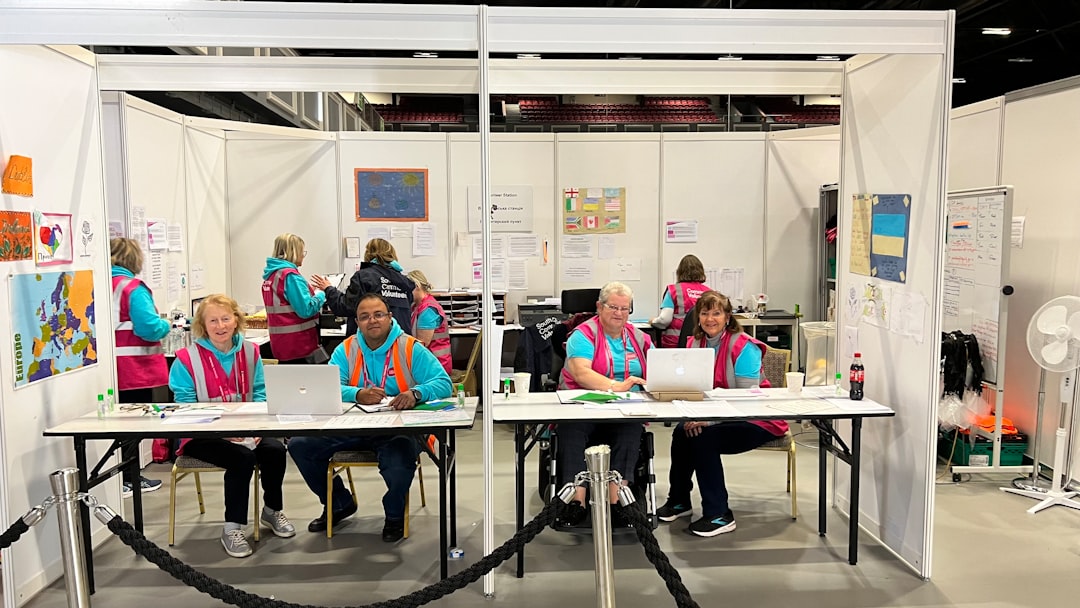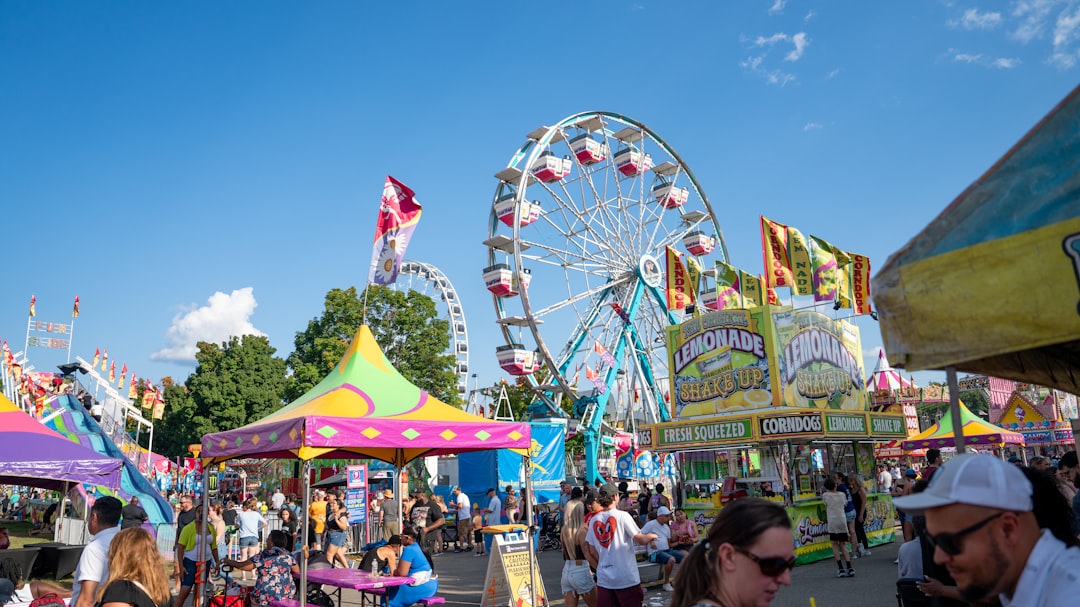
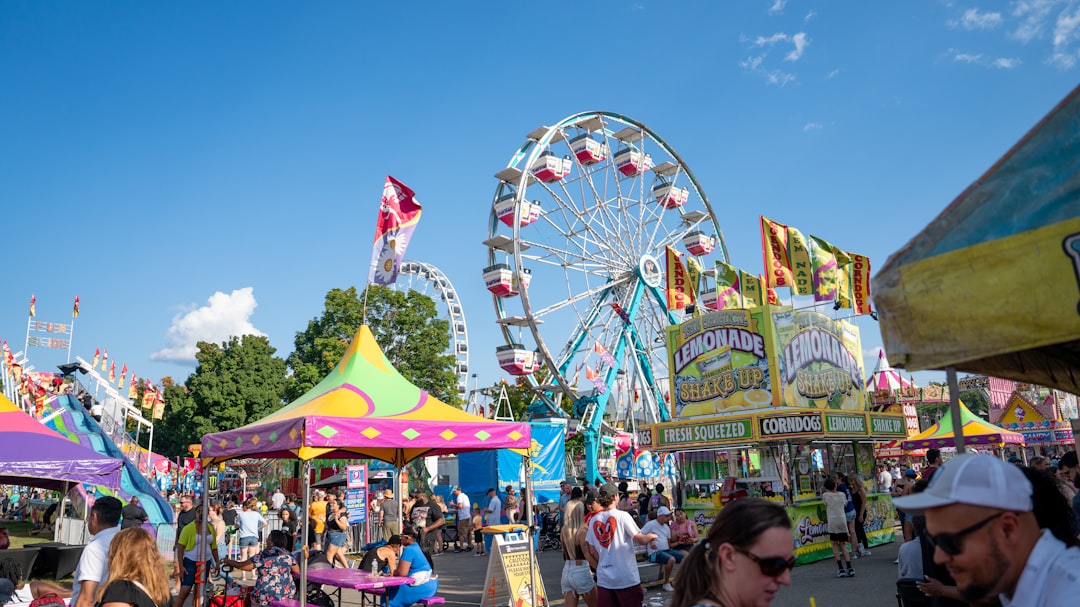
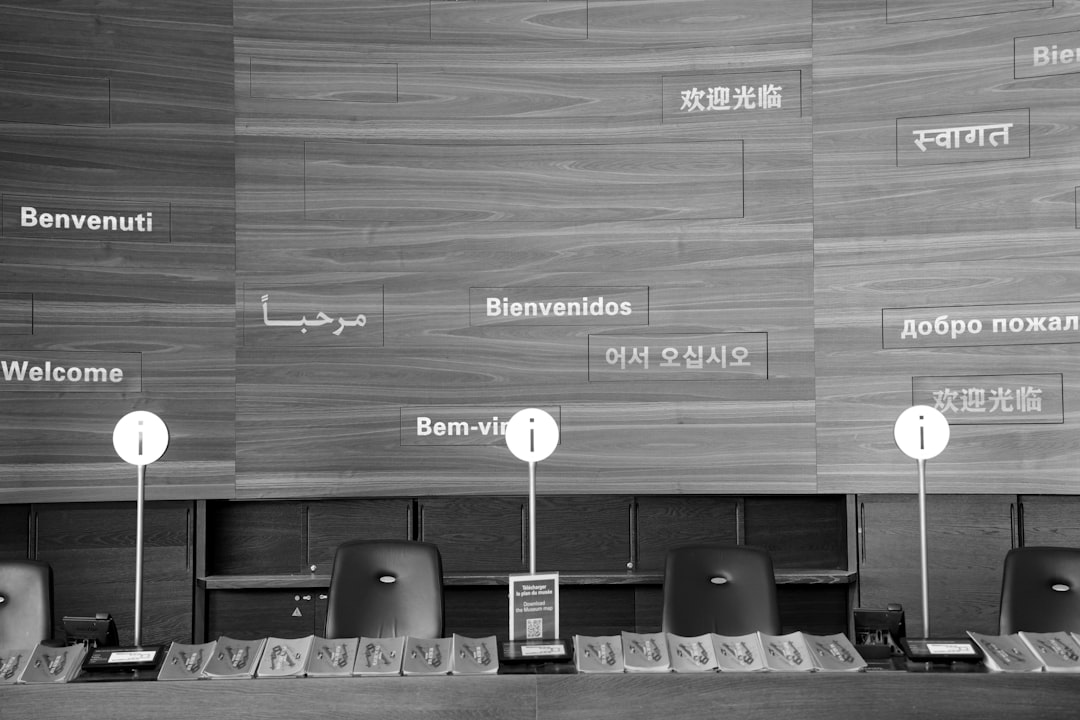
Pan-European trade fairs are linguistically the most diverse selling environment in B2B. A 75 sqm stand at Hannover Messe on a typical Tuesday afternoon hosts visitor conversations in German, French, Italian, Spanish, English, Polish, Czech, Russian, and increasingly Mandarin and Arabic.
A booth team that can only operate in English will close conversations with English-speaking visitors and lose qualifying engagement with the remaining one-third to one-half of the buyer audience. The pipeline cost of that gap, observed across CEIR’s longitudinal research, typically exceeds the staffing premium of building credible multilingual coverage by a factor of 2x to 4x.
This article walks through the language-coverage strategy experienced European exhibition managers use, with buyer-region data, recruiting approaches, cost benchmarks, and named-fair patterns. The material draws on UFI’s Global Exhibition Barometer commentary on multilingual exhibitor performance, CEIR’s exhibition staffing research, AUMA’s exhibitor cost benchmark database, and observed practice across mid-market and enterprise European exhibitors.
Why language coverage matters more than headcount
The temptation in booth staffing is to optimise for headcount: hire enough people to cover the stand area, train them, and assume English will carry most conversations. The data does not support this assumption.
UFI’s exhibitor surveys consistently show that 60 to 70 percent of conversations at major European B2B fairs do work in English. The remaining 30 to 40 percent that require native-language engagement are not evenly distributed across visitor profiles. They concentrate disproportionately in senior-buyer conversations, in family-owned mid-market European businesses, and in regulated industries where buyers prefer native-language discussion of technical specifications.
“The senior-buyer conversation conducted in native language closes at meaningfully higher rates than the same conversation in English. Multilingual booth staffing is not a marginal cost optimisation; it directly affects deal quality at the top end of the pipeline.”, CEIR exhibition staffing research, native-language conversion analysis, 2024 update
The implication is that language coverage matters at the long tail and at the head of pipeline, not at the middle. The middle of pipeline, junior buyers, influencers, evaluators, generally works in English. The head and the tail need native fluency.
Buyer language distribution at major European fairs
The table below summarises observed buyer language distributions at major European tier-one fairs, drawn from organiser visitor surveys and exhibitor post-show data.
| Fair | English-comfortable | Native German | Native French | Native Italian | Native Spanish | Other European |
|---|---|---|---|---|---|---|
| Hannover Messe | 65% | 38% | 12% | 8% | 6% | 14% |
| EuroShop Düsseldorf | 70% | 32% | 14% | 11% | 9% | 12% |
| Bauma Munich | 60% | 42% | 9% | 7% | 5% | 18% |
| Anuga Cologne | 72% | 28% | 14% | 13% | 11% | 14% |
| drupa Düsseldorf | 75% | 26% | 13% | 10% | 8% | 13% |
| K Düsseldorf | 73% | 28% | 12% | 10% | 9% | 13% |
| ISE Barcelona | 78% | 14% | 16% | 12% | 24% | 11% |
| Salone del Mobile Milan | 68% | 14% | 19% | 35% | 14% | 12% |
| IFA Berlin | 67% | 29% | 12% | 10% | 9% | 16% |
| ITB Berlin | 78% | 26% | 13% | 11% | 10% | 18% |
The percentages above sum to more than 100 percent because buyers commonly speak multiple languages. The English-comfortable percentage indicates the share of buyers who can conduct a productive technical conversation in English; the native language percentages indicate the share who would prefer native language for senior-buyer engagement.
Reading the data: Hannover Messe is a strongly German-anchored fair where native German coverage materially affects outcomes. ISE Barcelona skews to Spanish and French rather than German. Salone del Mobile is dominated by Italian. The language-coverage strategy should reflect the specific fair’s buyer mix.
The five-language baseline
For pan-European tier-one fairs, the working baseline is collective coverage of five languages: English, German, French, Italian, Spanish.
| Total staff (per shift) | Required language coverage |
|---|---|
| 3-4 staff | English fluent + native: German + one of (French, Italian, Spanish) |
| 5-6 staff | English fluent + native: German, French, + one of (Italian, Spanish) |
| 7-8 staff | English fluent + native: German, French, Italian, Spanish |
| 9-10 staff | English fluent + native: all 5 + 1 Eastern European (Polish or Czech) |
| 11+ staff | English fluent + native: all 5 + 1-2 Eastern European + 1 Asian or MENA |
The coverage requirement applies per shift, not per total staff. A 10-staff total roster running two-shift rotation means 5 staff per shift, and each shift independently needs the 4-language coverage.
Recruiting multilingual booth staff
Three sources together provide most of the practical coverage at reasonable cost.
First, regional sales offices. Most mid-market and enterprise European exhibitors have country offices in Germany, France, Italy, and Spain. Staff from these offices arrive with native language, product knowledge, and customer-relationship context. The cost is internal staff time plus travel and accommodation, which is typically more economical than hiring temporary multilingual staff at venue-rate premiums.
Second, specialist booth-staffing agencies. Several European agencies maintain multilingual rosters specifically for trade fair staffing. Typical day rates run EUR 220-380 at major European venues for credibly fluent staff with brief product training. The agency model works best for greeter and qualifier roles where conversation flow matters more than deep product knowledge.
Third, local university students. Several European venues host fairs in cities with major universities (Hannover, Frankfurt, Cologne, Düsseldorf, Munich, Milan, Madrid, Barcelona). Local university students often have strong multilingual capability (particularly English plus the host language plus one or two additional European languages) and work at lower day rates than agency staff. Best suited for hospitality, registration, and basic greeter roles.
“The hybrid model of regional office staff for senior selling roles plus multilingual agency staff for greeter and qualifier roles delivers the best cost-coverage tradeoff at most pan-European fairs. Fully in-house staffing tends to overcost language coverage; fully agency-staffed teams tend to undercover product knowledge.”, AUMA Exhibitor Survey commentary on multilingual staffing patterns, 2025
What language coverage costs
The incremental cost of multilingual coverage is typically 15 to 25 percent above an English-only staffing budget at major European fairs. The premium covers:
- Day-rate premium for multilingual agency staff (typically EUR 30-80 per day above English-only rates).
- Travel and accommodation for regional-office staff brought to the fair venue.
- Pre-show language-specific briefing time for non-headquarters staff.
- Translation of demo scripts, marketing materials, and lead-capture templates into 4-5 languages.
CEIR data suggests the cost-per-qualified-lead reduction from multilingual coverage typically runs 18 to 30 percent against English-only baselines. Multilingual coverage is therefore a strongly positive ROI investment at fairs with diverse buyer audiences.
Translation and interpreter alternatives
Interpreter services and AI translation tools are sometimes proposed as substitutes for multilingual staffing. Both have specific use cases but neither substitutes for fluent staff.
Interpreter services run EUR 280-450 per interpreter per day at major European venues. They work well for scheduled in-depth meetings (typically 45-90 minutes) where consecutive interpretation is acceptable. They fail at walk-up booth conversations because the consecutive-translation lag breaks the rapid back-and-forth that makes booth selling work. A 3-minute qualifier conversation becomes a 6-minute interpreted conversation, and the visitor walks 50 to 60 percent of the time.
AI real-time translation tools improved meaningfully through 2024 and 2025 but remain unreliable for technical product conversations where category-specific vocabulary matters. A general-purpose tool will translate “industrial automation controller” correctly but stumble on category-specific product names, configuration jargon, and technical specification language. For consumer-facing or hospitality conversations, AI tools work acceptably; for technical B2B conversations, they remain a stopgap.
The realistic role for both: planned meetings with low-volume language pairs (e.g., a scheduled meeting with a Polish buyer when no Polish-fluent staff is available) use interpreters; ambient stand conversations use multilingual staff.
Coverage-by-fair strategy
The language strategy should reflect the specific fair’s buyer mix. The table below summarises the priority language order for major European tier-one fairs.
| Fair | Priority language 1 (after English) | Priority language 2 | Priority language 3 | Priority language 4 |
|---|---|---|---|---|
| Hannover Messe | German | French | Italian | Polish |
| EuroShop Düsseldorf | German | French | Italian | Dutch |
| Bauma Munich | German | French | Italian | Russian/Polish |
| Anuga Cologne | German | Italian | French | Spanish |
| drupa Düsseldorf | German | Italian | French | Spanish |
| K Düsseldorf | German | Italian | French | Spanish |
| ISE Barcelona | Spanish | French | Italian | German |
| Salone del Mobile Milan | Italian | French | English (default) | German |
| IFA Berlin | German | French | Italian | Spanish |
| ITB Berlin | German | Spanish | French | Russian |
| MWC Barcelona | Spanish | English (default) | French | German |
The pattern: the host country’s language always sits at priority 1 (or 2 if English is the dominant business language for the category), and the rest of the priority order reflects the regional buyer mix surrounding the venue.
Niche fair language strategy
Niche fairs typically draw regional audiences. The language strategy is correspondingly simpler:
- SPS Nuremberg: German + English. Italian and French as helpful but not essential.
- MECSPE Bologna: Italian + English. German and French helpful.
- FachPack Nuremberg: German + English. Eastern European languages helpful for the Polish, Czech, and Hungarian packaging buyer cohort.
- All4Pack Paris: French + English. Italian and Spanish helpful.
At niche fairs, depth in the dominant regional language matters more than breadth. A team of 4 with 3 fluent German speakers will outperform a team of 6 with one each in 5 different languages, simply because the German-speaking buyer audience dominates conversation volume.
Pre-show language briefing discipline
Multilingual staffing creates a coordination challenge that English-only teams do not face. The pre-show briefing needs to ensure that:
- Demo scripts are translated into the languages the staff team covers.
- Qualifying questions are translated and rehearsed in each target language.
- Lead-capture forms and CRM workflow accept multilingual notes.
- Hospitality logistics work across languages (catering staff, menu translations).
- The booth manager has visibility into which staff are covering which language pairs at any moment.
The pre-show half-day briefing for a multilingual team typically extends to a full day, with separate language-stream sessions for the country-specific staff and an integration session bringing the full team together. The additional briefing investment is what makes multilingual coverage actually work operationally rather than just visually.
Common multilingual staffing mistakes
Three recur consistently.
First, hiring multilingual staff but training them only in English. Native-language demo execution requires native-language demo script preparation. A French-fluent demo specialist running an English script in French falls back to translation mode and loses fluency.
Second, concentrating language coverage on one shift. Visitors arrive across both shifts. Each shift needs independent coverage of the core 4-5 languages.
Third, treating multilingual capability as a sales-staff requirement only. Greeter and hospitality roles benefit more from multilingual capability than senior selling roles, because greeters and hospitality staff have most of the initial visitor contact.
How to operationalise on the directory
The /staffing-agencies hub at Exhibition Stands EU lists verified multilingual staffing agencies with European coverage and fair-specific experience. The /calculator integrates language-coverage requirements into the booth-staffing roster recommendation for any specified fair and stand size.
Related reading
- Booth Staffing Calculator by Industry Vertical, the underlying sqm-to-staff ratio framework
- Pre-Fair Staff Training Curriculum, the briefing discipline that makes multilingual coverage work
- Daily Booth Briefing Template, the evening debrief structure for multilingual teams
- Live Demo Script Framework, building demo scripts in multiple languages
- Hosted Buyer Program Application Guide, when hosted-buyer programmes bring pre-translated buyer context
References and primary sources
- UFI Global Exhibition Barometer, multilingual exhibitor commentary editions 33-34, ufi.org
- CEIR Index Report 2024, native-language conversion analysis, ceir.org
- AUMA Exhibitor Outlook, Association of the German Trade Fair Industry, auma.de
- ESSA UK exhibitor multilingual commentary, essa.uk.com
- Deutsche Messe Hannover Messe visitor survey, language distribution data 2024-2025
- Messe Frankfurt visitor research, multilingual conversation analysis
- Koelnmesse Anuga visitor survey 2024
- Fira de Barcelona ISE post-show analytics, 2024-2025 editions
FAQFrequently asked questions
At pan-European fairs (Hannover Messe, EuroShop, ISE, Anuga, IFA), collective coverage of English, German, French, Italian, and Spanish handles 80-90% of likely buyer conversations. Adding one Eastern European language (Polish, Russian, or Czech) and depending on industry adding Mandarin or Arabic typically captures the remaining productive language conversations.
The honest math: 5 European languages is the threshold below which staff teams lose qualifying conversations they could have converted.
No. Survey data from UFI’s Global Exhibition Barometer indicates 60-70% of B2B conversations at major European fairs work in English. The remaining 30-40% requiring native language are disproportionately the senior-buyer high-value conversations. CEIR research shows conversion rates on senior buyer conversations are 35-55% higher when conducted in native language versus English. The 30% English-monolingual gap costs more pipeline than the staffing premium of multilingual coverage.
Three approaches work. First, hire from your own European regional offices, staff already on payroll, already fluent in language, and product-knowledgeable. Second, use specialist booth-staffing agencies with multilingual rosters (typical day rate EUR 220-380 at major European venues). Third, recruit student temps from local universities for greeter and hospitality roles, where short product training is adequate.
Most experienced exhibitors blend all three sources to optimise the cost-coverage tradeoff.
Interpreter services work for scheduled meetings but are operationally clumsy for walk-up booth conversations. Typical interpreter rates run EUR 280-450 per interpreter per day, and the lag created by consecutive interpretation breaks the conversational flow that makes booth selling work.
AI real-time translation tools have improved meaningfully since 2024 but remain unreliable for technical product conversations where category-specific vocabulary matters. Both are stopgaps rather than substitutes for native-fluent staff.
Each shift should independently cover the core 4-5 European languages. A 10-staff team across two shifts means 5 staff per shift, and each shift needs collective coverage of English, German, French, Italian, and Spanish. The temptation is to load language coverage onto one shift, but the second shift loses conversation quality for the missing languages, and visitors arrive across both shifts. Independent coverage per shift is the operational discipline.
Yes. Tier-one fairs (Hannover Messe, EuroShop, drupa, K, Anuga, ISE) draw genuinely pan-European audiences and require the full 5-language coverage. Niche fairs typically draw regional audiences, SPS Nuremberg is predominantly German and central European, MECSPE Bologna is predominantly Italian, FachPack is predominantly German.
For niche fairs, identify the dominant regional language (typically the host country) and prioritise depth in that language plus English, before scaling to additional languages.