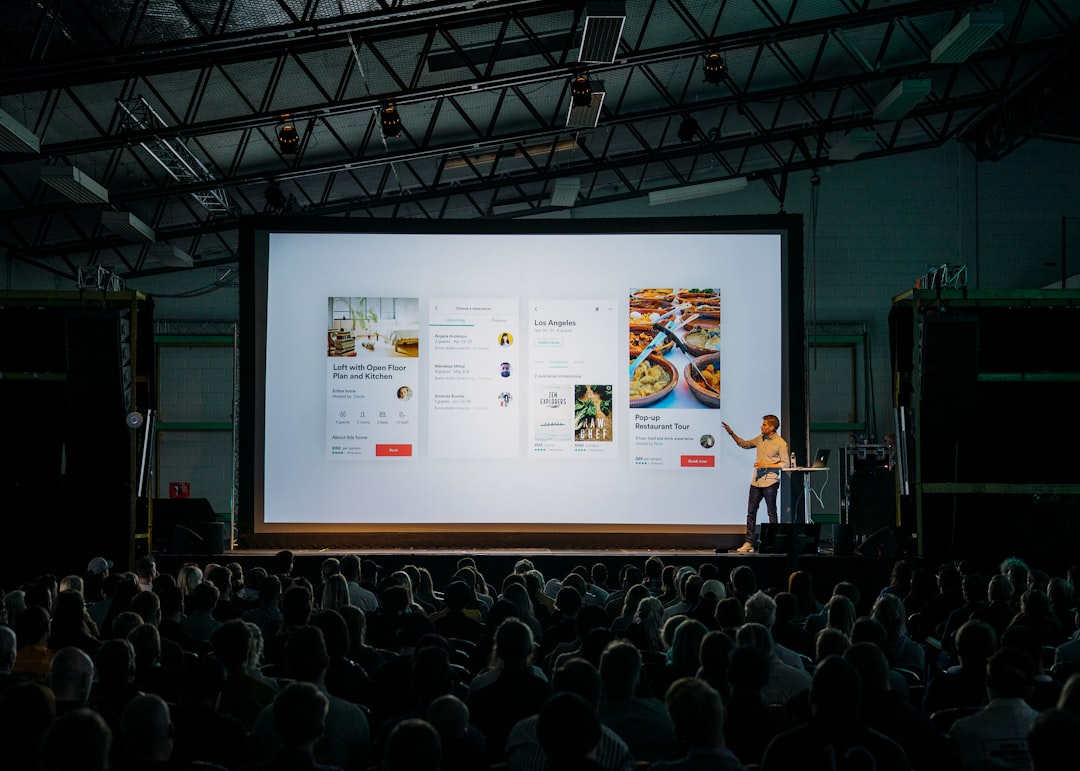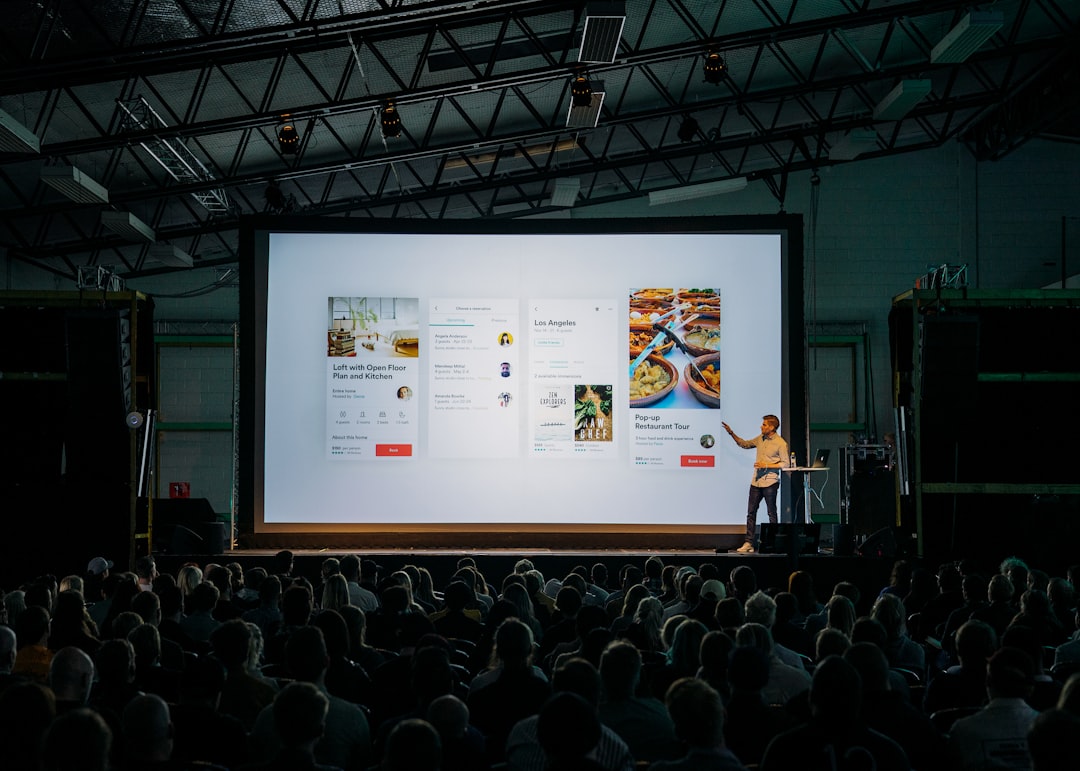
The live 7-minute demo is the workhorse of trade fair product engagement, but it has a structural ceiling: a single demo specialist can run 25-30 demos per hour at sustained pace. When stand traffic peaks at 60-90 visitors per hour during Tuesday-Wednesday core days at Hannover Messe, ISE Barcelona, or EuroShop, demo specialists become the bottleneck.
The exhibitors who deliver outsized conversation volume at peak hours do so by supplementing live demos with well-designed interactive product experiences, touch stations, AR/VR setups, scenario rooms, and immersive product environments that visitors engage with autonomously while staff focus on qualified-buyer escalation.
This article walks through the design principles, technology choices, staffing implications, and cost economics of interactive product experiences at European trade fairs.
The material draws on CEIR’s exhibition engagement research, UFI’s Global Exhibition Barometer commentary on experiential exhibitor performance, observed practice at top-decile exhibitors at Hannover Messe, IFA Berlin, ISE Barcelona, EuroShop, drupa, and Salone del Mobile, and AUMA’s exhibitor benchmark data on experiential investment.
Why interactive experiences exist
Three pressures push exhibitors toward interactive experiences beyond live demos.
First, the demo-specialist capacity ceiling. A 75 sqm stand at peak hours can see 80 visitors per hour. Three demo specialists running back-to-back cannot service all 80. Adding more demo specialists hits diminishing returns from stand physical capacity and staff cost. Interactive experiences absorb the overflow at marginal cost.
Second, the visitor exploration impulse. B2B buyers increasingly arrive at fairs having pre-researched products digitally. Their on-stand interest is often in tactile exploration, touching the product, configuring scenarios, seeing capabilities they cannot evaluate from a website. Staff-led demos cannot replicate the hands-on exploration that hands-off interaction enables.
Third, peak-and-trough traffic patterns. Stand traffic concentrates in the Tuesday-Wednesday afternoon peak; Monday morning, Friday afternoon, and lunch hours run lighter. Interactive experiences remain available across the full open hours regardless of staffing pattern, capturing visitors who would walk past an unstaffed stand zone.
“Interactive experiences absorb the overflow visitor volume that live demos cannot service at peak hours. The well-designed experience also delivers a tactile engagement quality that staff-led demos cannot replicate. Top-decile exhibitors at major European fairs increasingly run both modalities in parallel.”, CEIR exhibition engagement research, 2024 update
The four categories of interactive experience
Interactive experiences cluster into four functional categories, each with distinct design requirements and cost profiles.
| Category | Use case | Typical cost (EUR) | Visitor duration |
|---|---|---|---|
| Touch stations and configurators | Software products, customisation exploration | 8,000-25,000 per station | 3-5 minutes |
| AR experiences | Spatial products, environmental context | 25,000-55,000 | 4-7 minutes |
| VR experiences | Full simulation, immersive scenarios | 45,000-85,000 | 7-10 minutes |
| Scenario rooms | Physical simulated environments | 35,000-120,000 | 8-15 minutes |
The cost figures cover hardware, content development, integration, and on-stand setup. Content development typically absorbs 35-50 percent of total cost. Hardware that travels across multiple fair editions amortises faster than the content layer, which often refreshes per cycle.
Category 1: Touch stations and configurators
Touch stations are the workhorse of interactive booth experience. Visitors interact with a touchscreen interface that presents product information, configuration options, scenario builders, or interactive content. Use cases include:
- Software product exploration where the visitor can test workflows.
- Configurator experiences where visitors customise a product to their specifications.
- Content libraries where visitors explore case studies, technical specifications, or visualisations.
- Multi-language content delivery in regions where many languages need coverage.
Touch stations are operationally the simplest interactive experience. Typical cost runs EUR 8,000-25,000 per station including hardware (commercial-grade touch monitor, dedicated PC, durable enclosure), interface design and development, and integration. Multiple stations on a stand amortise the development cost across hardware copies.
The strongest touch-station designs include three elements: a quick-engagement opening (visitors should be able to start a meaningful interaction within 15 seconds), branching pathways (different visitor personas can self-select into relevant content streams), and a captured-data bridge (the experience ends with a step that ties into the booth’s lead-capture workflow, typically by offering follow-up content delivery or scheduling a deeper conversation).
Category 2: AR experiences
AR experiences overlay digital content onto the physical environment. Use cases that work well at trade fairs:
- Spatial product visualisation: visitors see how a product would look in their actual environment (a manufacturing line, an interior space, a building exterior).
- Operational simulation: visitors see a product in operational context that cannot be physically demonstrated at the booth.
- Process visualisation: complex multi-step processes become visually traceable.
- Component exploration: layered views of internal product structure that physical products cannot expose.
AR typically uses tablet hardware (visitors hold an iPad-class device and aim it at a target marker or product) or AR glasses (more immersive but harder to manage at queue scale). Tablet-based AR runs EUR 25,000-45,000 per setup including content development. AR glasses setups run EUR 45,000-75,000.
The operational challenges with AR are queue management (only one or two visitors can use the experience at once) and content quality dependency (poorly developed AR content reads as gimmick rather than valuable demonstration). Successful AR setups invest 40-50 percent of total budget on the content layer.
Category 3: VR experiences
VR experiences deliver full immersive simulation. Use cases:
- Visitor walkthroughs of products too large to bring to the fair (manufacturing facilities, ships, aircraft, building interiors).
- Operational training simulations that demonstrate product capability in safe environment.
- Customer experience reproduction (a retail brand might let visitors experience their customer journey in VR).
VR setups typically include 1-2 dedicated VR stations with high-end headsets, content servers, and dedicated demo space within the booth. Total cost runs EUR 45,000-85,000 including hardware, content development, and integration.
The structural challenge with VR is throughput. A 7-10 minute VR experience plus 2 minutes of setup and handoff means each station handles 5-6 visitors per hour. A booth with two VR stations handles 10-12 visitors per hour, materially below touch-station throughput. VR works best when the visitor experience is genuinely compelling enough to justify the queue management overhead.
“VR experiences at trade fairs deliver outstanding engagement quality for the visitors who complete them but constrain throughput severely. The economics work when the product is genuinely difficult to demonstrate any other way; the economics fail when VR is layered on as visual signal without operational necessity.”, UFI Global Exhibition Barometer, experiential commentary, 2025
Category 4: Scenario rooms
Scenario rooms are physical simulated environments built within the booth. Use cases:
- A retail technology brand might build a simulated store interior to demonstrate their products in operational context.
- An industrial automation brand might build a simulated production cell with their product as the centerpiece.
- A hospitality technology brand might build a simulated hotel room or restaurant interior.
- A home appliance brand might build a simulated kitchen.
Scenario rooms typically require 25-40 percent of stand footprint and cost EUR 35,000-120,000 to design and build. Reusable approaches (modular components that can be reconfigured across multiple fair editions) reduce per-event cost meaningfully.
The strongest scenario rooms deliver three things: visible product context (visitors see the product working as it would in their actual environment), interaction opportunities (visitors can touch, configure, or operate elements within the scenario), and a structured visitor journey through the room that leads to a staff-led qualification conversation.
The staffing implications
Interactive experiences need supporting staff roles even though they don’t require continuous demo delivery. Three roles emerge:
Experience host. Greets the visitor, briefly explains the experience (15-30 second framing), and hands off to the interactive setup. Typically 1 host per 2 experience stations.
Lead capture and qualification specialist. Badge-scans visitors as they complete the experience, asks 30-60 seconds of qualifying questions, routes to senior salesperson if qualified. Typically 1 per 2-3 experience stations.
Technical support. Maintains equipment, handles malfunctions, restocks materials. Often shared across multiple interactive stations.
A 75 sqm stand with two touch stations and one AR setup typically needs 2-3 supporting staff plus the existing demo and selling team. The total staffing roster expands by roughly 20-30 percent against an equivalent stand running only live demos.
The conversion bridge
The critical design element in any interactive experience is the bridge from autonomous interaction to staff conversation. Experiences that don’t bridge effectively end as visitor entertainment without pipeline impact.
Three bridge patterns work:
The qualified completion. The experience ends with a specific question or action that surfaces qualification signal. “Based on your configuration, would you like to discuss procurement specifics?” Answered yes, the lead capture specialist routes to senior salesperson; answered no, the visitor leaves the experience with follow-up content.
The handoff prompt. The experience ends with a screen instructing the visitor to talk to a staff member. The staff member is positioned at the experience exit and engages immediately. The handoff converts at meaningfully higher rate than visitors who complete the experience and walk away.
The content delivery bridge. The experience ends with a follow-up content offer (technical specification PDF, case study, scheduling link) that requires the visitor to provide contact information. The contact capture happens within the experience flow rather than as a separate booth interaction.
“The interactive experience that doesn’t bridge to staff conversation is entertainment, not selling. The bridge design, the moment the visitor transitions from autonomous interaction to staff engagement, is the single most important element of interactive experience design.”, Reed Exhibitions / RX Global exhibitor performance commentary on experiential investment, 2025
Multi-experience integration
Larger stands frequently combine multiple interactive experiences. The integration design matters:
- Each experience should have a clear narrative purpose distinct from the others.
- Visitor flow between experiences should be intuitive and not require staff intervention.
- Lead capture should accumulate across experiences rather than treating each as a separate engagement.
- Total time required for a complete visitor journey should sit between 12 and 20 minutes.
The /experience-design hub at Exhibition Stands EU lists builders who have completed multi-experience integration projects at major European fairs.
Cost amortisation across fair editions
Interactive experience hardware amortises across multiple fair editions when designed for portability. Touch station hardware typically survives 5-8 fair editions with periodic refresh of the interface design. AR and VR hardware survives 3-5 editions before generational improvements in headsets and tablets necessitate hardware upgrade.
Content amortises differently. Static content (product spec libraries, video case studies) refreshes per cycle alongside product updates. Dynamic content (AR scenarios, VR experiences, scenario room narratives) typically refreshes every 1-2 cycles. Content refresh cost runs 15-25 percent of initial development per refresh.
A typical mid-market exhibitor running 3-5 fairs annually with an interactive experience layer amortises the initial investment over 18-30 months. Year-2 and year-3 economics improve meaningfully as hardware costs are absorbed and content refresh becomes incremental.
Common interactive experience failures
Three patterns recur consistently.
First, technology-for-technology’s-sake. AR or VR added because they look impressive in stand renderings, not because they solve a specific visitor engagement problem. Visitors recognise the gimmick within seconds and disengage.
Second, weak bridge to staff conversation. The experience ends and the visitor walks away. Without the bridge design, the experience is investment without conversion.
Third, equipment unreliability. Interactive experiences that malfunction during peak hours create visible negative impression. Daily testing, backup equipment, and on-stand technical support are non-negotiable operational requirements.
How to operationalise on the directory
The /experience-design hub at Exhibition Stands EU lists builders verified on multi-experience integration. The /calculator includes an interactive experience overlay that estimates cost, staffing implications, and visitor capacity for specified experience configurations.
Related reading
- Live Demo Script Framework, the staffed demo modality that interactive experiences supplement
- Booth Staffing Calculator, how interactive experiences affect overall staffing roster
- Modular vs Custom Stand Build, how interactive experiences fit into the stand-build decision
- Pre-Fair Staff Training Curriculum, preparing staff to support interactive experiences
- Sustainable Swag Strategy and ISO 20121, sustainability framing for reusable interactive hardware
References and primary sources
- CEIR exhibition engagement research and Index Report 2024, ceir.org
- UFI Global Exhibition Barometer, experiential commentary editions 33-34, ufi.org
- AUMA Exhibitor Cost Benchmark Reports 2024-2026, experiential investment section, auma.de
- ESSA UK exhibitor experiential commentary, essa.uk.com
- Deutsche Messe Hannover Messe exhibitor experiential briefing series 2024-2025
- Messe Frankfurt visitor engagement research
- Fira de Barcelona ISE post-show analytics, experiential adoption 2024-2025
- Reed Exhibitions / RX Global European exhibitor performance index 2025
FAQFrequently asked questions
Three scenarios. First, when visitor volume exceeds demo specialist capacity (a 75 sqm stand at peak Tuesday-Wednesday hours can see 80+ visitors per hour against demo specialist capacity of 25-30 per hour). Second, when the product benefits from hands-on visitor exploration that staff-led demos cannot replicate.
Third, when the experience needs to remain available outside peak staffing hours (early morning, lunch break, late afternoon). Interactive experiences supplement live demos rather than replacing them entirely.
Wide range depending on technology and complexity. Touch stations with branded interfaces: EUR 8,000-25,000 per station. AR or VR experience setups: EUR 25,000-85,000 depending on hardware and content. Scenario rooms with simulated environments: EUR 35,000-120,000 depending on physical build. The cost amortises across multiple fair editions when designed for portability. ISO 20121 reusable approaches reduce per-event cost by 40-60% over single-use builds.
Yes when designed properly. CEIR research shows well-designed interactive experiences generate 25-40% of total qualified leads at stands that include them, with conversion rates roughly comparable to live demos when the experience is followed by a staff-led qualification conversation. The critical design element is the bridge from interactive engagement to staff conversation; experiences that don’t bridge end as visitor entertainment without pipeline impact.
Interactive experiences need supporting staff roles even though they don’t require continuous demo delivery. Required roles: experience host (greets visitor, briefly explains the experience, hands off), capture lead (badge scans visitors completing the experience, asks brief qualifying questions, routes to senior salesperson), and technical support (maintains equipment, handles malfunctions).
A typical 75 sqm stand with one interactive experience uses 2-3 supporting staff plus the existing demo and selling team.
Depends on the product. Touchscreens work for software products, configurator-style customisation experiences, and content exploration. AR works well for products with spatial or environmental context (architecture, manufacturing equipment in operational setting, interior design). VR works for products requiring full environmental simulation but creates queue-management challenges due to single-user nature.
Most exhibitors converge on touchscreens plus selective AR for spatial products, with VR limited to specific use cases.
3-5 minutes is the productive window for touchscreen and simpler AR experiences. 7-10 minutes for VR or full scenario room experiences. Under 3 minutes, the experience cannot build enough engagement to support follow-up. Over 10 minutes, queue management becomes a problem and other visitors walk past. The duration should be designed against the visitor capacity the experience needs to handle during peak hours.