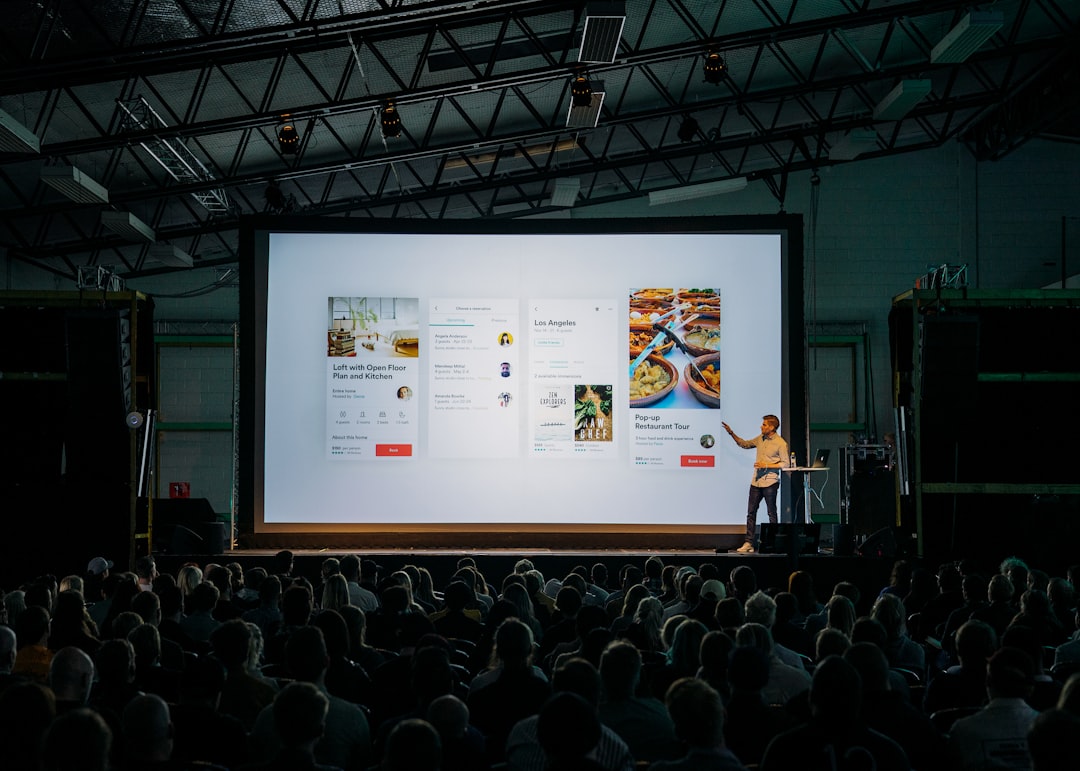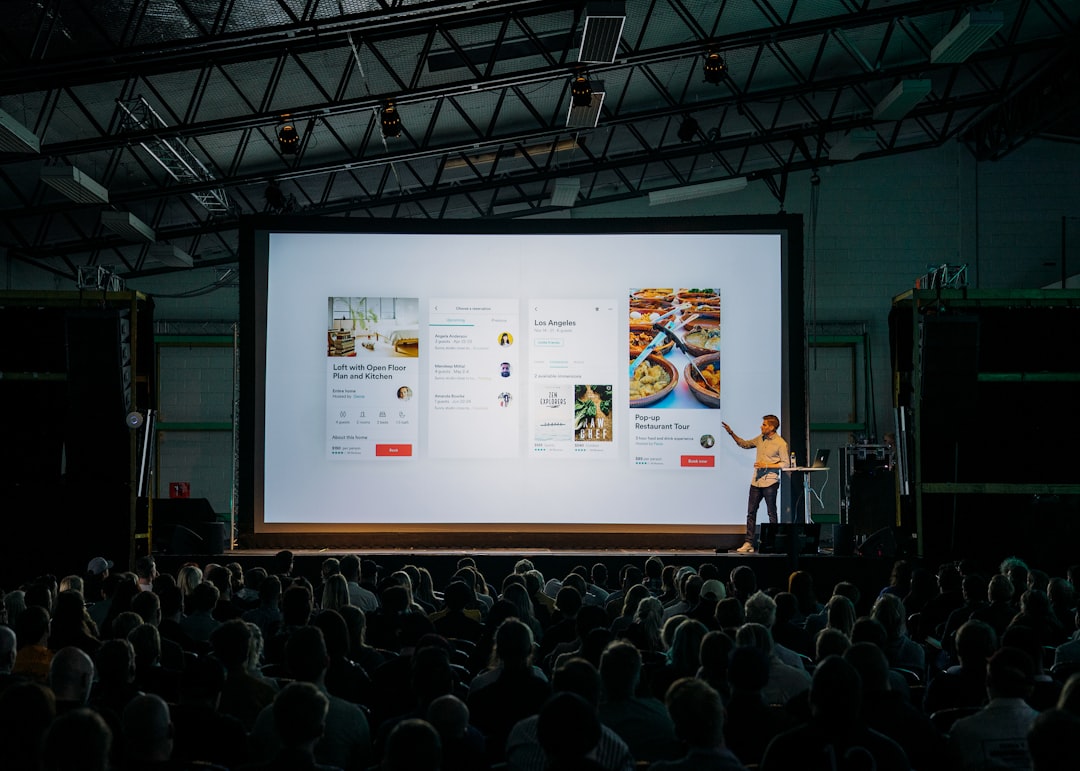

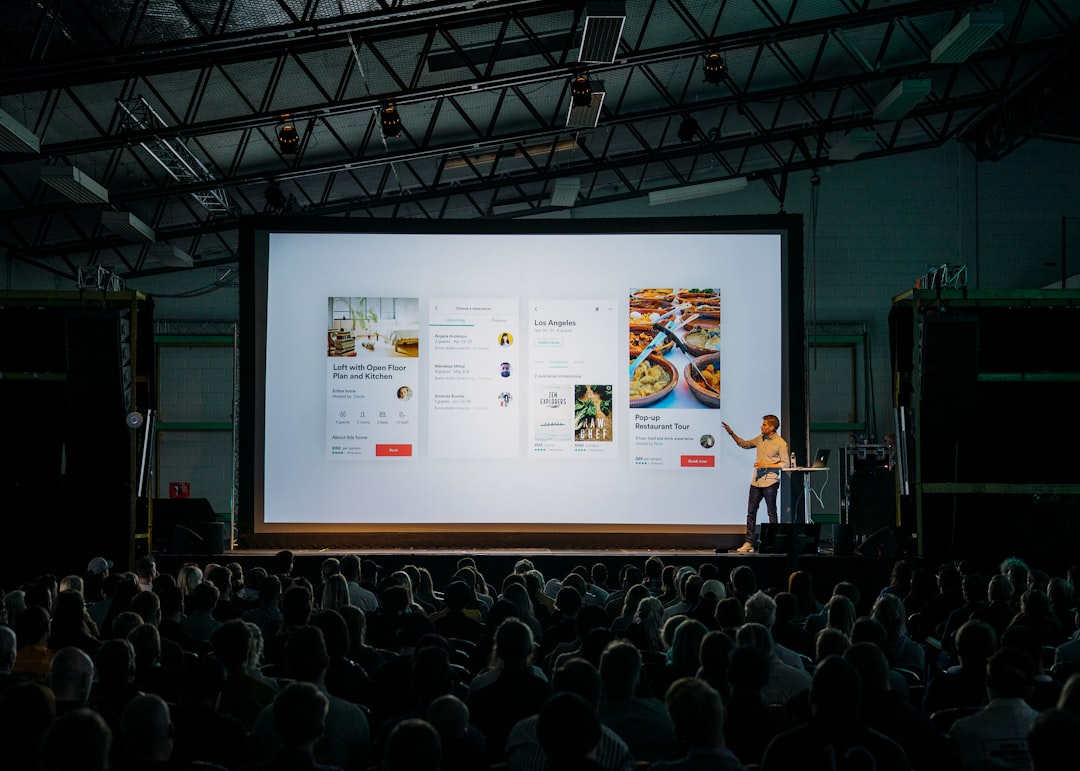
Where you show the demo, on your own stand, in the theatre, or from the keynote stage, determines who watches it, and that determines what the demo achieves. On-stand demos convert qualified prospects who have already chosen to stop at your booth. Theatre demos reach a larger, more exploratory audience that converts less but generates broader category awareness.
Keynote-stage slots reach the largest audience of the fair, convert least in immediate-meeting terms, and produce disproportionate inbound contact for weeks after the show through coverage and word-of-mouth.
The three demo formats are not substitutes for each other. They serve different commercial purposes, attract different audiences, and require different production discipline. This article walks through the trade-off framework experienced European exhibition managers use to decide which formats to invest in for a given fair, with named-fair examples from MWC Barcelona, IFA Berlin, drupa, IBC Amsterdam, ISE, and Hannover Messe.
The three demo-format archetypes
European trade-fair demo investment splits into three recognisable formats, each with distinct economics and audience composition.
Format 1: On-stand demos. Demonstrations run within the exhibitor’s own booth, typically on a dedicated demo zone separate from the qualifier traffic flow. Audience is self-selected, visitors who stop at the demo have already crossed the consideration threshold of stopping at the booth. Conversion to qualified meeting runs at the high end of the format range.
Format 2: Demo theatre / industry stage / content theatre. Demonstrations run on a fair-provided stage in a dedicated theatre space, typically holding fifty to three hundred seats. Audience is partially self-selected (visitors choose to attend the session) and partially walk-up. Conversion to qualified meeting runs lower than on-stand demos but the absolute audience volume is four to ten times higher.
Format 3: Keynote stage. Tier-one fairs operate one or more keynote stages with capacity from five hundred to several thousand seats. Speakers are selected by the organiser through competitive processes and are typically integrated into the fair’s editorial programme. Audience reach extends beyond the immediate audience through livestream, press coverage, and post-event content distribution.
“We think of the three demo formats as a funnel inversion. On-stand demos are the bottom of the funnel, high intent, low volume. Theatre demos are the middle, medium intent, medium volume. Keynote slots are the top, low immediate intent, massive volume, weeks of downstream contact.”, Common framing among European B2B exhibition managers
Conversion economics by format
The table below summarises observed conversion economics across the three formats at tier-one European fairs.
| Format | Typical audience per session | Self-selection level | Conversion to qualified meeting | Per-viewer cost | Best-fit fairs |
|---|---|---|---|---|---|
| On-stand demo | 8-25 viewers | High (visitors chose to stop) | 18-28% | EUR 25-60 | All fairs |
| Demo theatre (in-booth, integrated) | 25-80 viewers | Medium-high | 10-18% | EUR 35-80 | IBC, ISE, drupa, Hannover Messe |
| Industry stage / content theatre (organiser-provided) | 60-300 viewers | Medium | 4-9% | EUR 80-200 | All tier-one fairs |
| Keynote stage (tier-one) | 500-3,000+ viewers (live), 10k+ (downstream) | Low (broad attendance) | 1-3% immediate, 4-8% within 30 days | EUR 200-1,200 | MWC, IFA, EuroShop, drupa keynotes |
The per-viewer cost calculations include the production cost of the demo (script, presenter, AV, rehearsal time) plus the format-specific incremental cost (theatre rental, keynote sponsorship contribution). They exclude the underlying booth investment that supports on-stand demos.
The economics shift with audience composition. Industry stages at vertical B2B fairs (Bauma, EMO, productronica) convert higher than industry stages at flagship horizontal fairs (IFA, MWC) because the vertical audience is pre-qualified by the fair itself. Keynote slots at narrow-vertical fairs are commercially valuable for exhibitors operating in that vertical; keynote slots at broad-horizontal fairs are mostly brand-building rather than lead-generating.
On-stand demo discipline
On-stand demos are the highest-conversion format and the most operationally controllable. The discipline that separates effective on-stand demos from underperforming ones is consistent across European venues.
Discipline 1: Separate demo zone from qualifier zone. Visitors watching a demo should not be in the qualifier traffic flow. A demo zone with even partial visual separation (a screen, a bench, a low partition) produces measurably higher demo attention than a demo integrated into the main qualifier flow.
Discipline 2: Twelve to eighteen minutes maximum. Shorter cannot deliver the value proposition and the product simultaneously. Longer loses the casual-stop audience.
Discipline 3: Two-roles structure. A presenter handles the demo itself. A product specialist handles Q&A after the demo. The two roles should not be combined, a presenter trying to handle live Q&A while running the demo visibly underperforms.
Discipline 4: Visible schedule. Demo times posted on the stand and announced through the qualifier conversation. Fixed-schedule demos every forty-five to sixty minutes produce predictable attendance; on-demand demos produce variable attendance that is harder to staff.
Discipline 5: Clear meeting-booking call-to-action. Every demo ends with an explicit next-step offer: “We can spend twenty minutes diving into your specific use case, let me get you on the meeting calendar.” Demos that end with “thanks for watching” convert at fractions of the rate of demos that end with a meeting-booking offer.
Discipline 6: Backup hardware for every critical component. Demo failures during a tier-one fair routinely cost six figures in lost qualified contact. The backup-hardware investment is small relative to the failure cost.
“Our standard demo budget at tier-one fairs includes one spare laptop, one spare display, one spare HDMI cable, and one spare lavalier microphone. Across thirty fairs we have needed the spares fourteen times. The investment paid back fourteen times over.”, Common framing among technical demo leads at European exhibitors
Theatre and industry-stage demos
In-booth demo theatres and organiser-provided industry stages serve a different commercial purpose than on-stand demos. The audience is larger but less qualified, and the demo content has to do more work to convert.
The defensible discipline for theatre demos:
Content positioning above product pitching. The audience attends the session for the topic, not the product. A session positioned as “the operational challenge our category solves” routinely outperforms a session positioned as “introducing our new product.” The product appears as the resolution of the challenge, not as the headline.
Named presenter with industry credibility. A presenter whose name appears in industry publications and whose track record is verifiable attracts substantially larger audiences than a presenter introduced as “our head of product.” The named-presenter discipline is the single largest differentiator between high-attendance and low-attendance theatre sessions.
Defensible duration. Industry-stage sessions typically run twenty to forty-five minutes. The structure that works most consistently: five minutes of category framing, fifteen to twenty minutes of substantive content (often customer case study, original research, or industry data), five to ten minutes of Q&A.
Tight call-to-action. “If this topic is relevant to your operation, our booth team can walk you through the implementation detail, we are in [booth location].” The directional CTA produces measurably more post-session booth visits than open-ended “feel free to come by” invitations.
Theatre sessions that succeed are typically promoted before the fair through the same pre-fair marketing channels that promote the booth: email to existing pipeline, paid social, industry-publication advertising. Sessions that depend on organiser-driven walk-up attendance frequently underperform.
Keynote-stage slots
Keynote-stage slots at tier-one European fairs are the highest-reach demo format and the most commercially difficult to evaluate. Three factors govern whether a keynote slot pays back.
Factor 1: Slot prominence. Opening-day morning keynotes at MWC Barcelona, IFA Berlin, and drupa reach industry-defining audiences. Mid-day or final-day slots reach a fraction. The slot prominence is typically bundled into the sponsorship tier, tier-1 sponsorship buys morning keynote access; lower tiers receive less prominent slots.
Factor 2: Speaker credibility. Keynote audiences expect named industry voices, not company executives reading product roadmaps. A keynote slot wasted on product pitching damages brand credibility at the most-watched moment of the fair. The defensible pattern: the keynote presents an industry-level perspective (category trends, original research, customer transformation story), with the company’s role embedded but not dominant.
Factor 3: Downstream content distribution. Tier-one fair keynotes generate downstream content for weeks: the organiser-produced video, press coverage, social-media excerpts, the speaker’s own LinkedIn distribution. A keynote that produces strong downstream content is worth substantially more than its in-room audience number suggests. A keynote that is forgettable in content delivers the in-room audience and nothing else.
Keynote-stage economics typically only work for tier-one industry players or for exhibitors making a specific market-establishing move at the fair. First-time exhibitors at any fair tier are almost never well-served by keynote investment.
Choosing the format mix
Most European exhibitor demo programmes use multiple formats simultaneously. The defensible mix depends on fair tier, booth footprint, and commercial objective.
| Profile | On-stand demos | Theatre slots | Keynote slot |
|---|---|---|---|
| First-time tier-one fair exhibitor, 75 sqm | 4-6 per day | 0-1 across the fair | None |
| Returning tier-one exhibitor, 120 sqm | 6-8 per day | 1-2 across the fair | None |
| Major tier-one exhibitor, 250 sqm | 8-12 per day | 2-3 across the fair | Consider |
| Industry-leader tier-one exhibitor, 500 sqm+ | 12+ per day (multiple demo zones) | 3-5 across the fair | Yes if available |
| Tier-two regional fair, 60-90 sqm | 4-5 per day | 1 across the fair | Not applicable |
| Tier-three niche fair, 36-60 sqm | 3-4 per day | 0-1 across the fair | Not applicable |
The mix prioritises on-stand demos because they convert at the highest rates. Theatre slots are added at footprints above 100 sqm when the audience-reach math supports the additional production cost. Keynote slots are added only at tier-one industry-leader profiles where the brand-building and downstream-content economics justify the six-figure commitment.
Named-fair patterns
Demo-format selection varies by fair. The patterns below summarise observed practice at named European fairs.
Hannover Messe: On-stand demos dominate, often run on technical demo benches integrated into the stand. Industry-stage slots through the fair’s content programme (Industrie 4.0 Forum, Energy Forum) reach engaged technical audiences. Keynote-stage slots are reserved for tier-1 industrial players.
MWC Barcelona: Demo theatres in-booth are standard for major exhibitors. The fair’s keynote stages (4YFN, Connected Industries, Mobile Marketing) are competitive but commercially valuable for telecoms and adjacent industries.
IFA Berlin: Consumer-product demos dominate, run on stands designed around demo theatres visible to the aisle. The fair’s keynote stage (IFA NEXT) reserves opening-day slots for tier-1 brand announcements.
EuroShop Düsseldorf: Live retail-installation demos dominate, with full retail-environment build-outs functioning as walk-through demos rather than scheduled presentations. The fair’s industry stages run multiple parallel programmes by retail-sector vertical.
drupa Düsseldorf: Live printing-press demos dominate, run on schedules published months ahead. Industry-stage slots feed the printing-industry trade press for months after the fair.
ISE Barcelona: Demo theatres in-booth are standard for AV integrators. The fair’s keynote stage and content programmes (Smart Building, Smart Workplace, Digital Signage) operate competitive selection.
IBC Amsterdam: Demo theatres in-booth are standard for broadcast technology vendors. The fair’s IBC Conference programme operates as a paid-attendance educational track distinct from the show floor.
Bauma Munich: Outdoor live-equipment demos dominate. The fair’s smaller indoor content programmes are secondary to the outdoor demonstration culture of the construction-equipment industry.
EMO Hannover: Live machine-tool demonstrations dominate, run on the stands themselves rather than in dedicated theatres. The fair’s content programmes are technical and lightly attended.
Vivatech Paris: Demo theatres in-booth and a high-density keynote-stage programme (the fair’s defining feature). Keynote-stage selection is highly competitive.
Production-cost benchmarks
The cost of running each demo format varies substantially but converges on recognisable bands.
| Format | Production cost per session (EUR) | Setup cost per fair (EUR) | Per-day staffing cost (EUR) |
|---|---|---|---|
| On-stand demo (standard) | 0 marginal | 8,000-18,000 (AV, demo bench) | 800-1,400 (demo lead + assistant) |
| On-stand demo (high-production with theatre) | 0 marginal | 18,000-45,000 (theatre build, AV) | 1,200-2,200 (demo lead + assistant + presenter) |
| Industry-stage / content-theatre slot | 3,500-12,000 (slot fee where applicable) | 4,000-10,000 (slide production, presenter rehearsal) | 600-1,200 (presenter day rate) |
| Keynote-stage slot (tier-1 fair, sponsorship-bundled) | 80,000-200,000+ (sponsorship contribution) | 25,000-80,000 (content production, rehearsal) | 1,500-3,000 (presenter team) |
The keynote-stage cost reflects the sponsorship-tier contribution required to access the slot, not a line-item slot fee. The cost economics rarely justify keynote investment for exhibitors below tier-1 industry-player scale.
Common demo-and-presentation mistakes
Mistake 1: Skipping the demo zone separation. Demos running within the qualifier traffic flow underperform consistently.
Mistake 2: Running demos longer than twenty minutes. Casual-stop audience is lost; the demo converts only visitors who would have qualified anyway.
Mistake 3: Combining presenter and Q&A roles. A presenter handling live Q&A while running the demo visibly underperforms a two-roles structure.
Mistake 4: No clear meeting-booking call-to-action. Demos that end with “thanks for watching” convert at fractions of the rate of demos that end with a meeting-booking offer.
Mistake 5: Theatre sessions positioned as product pitches. The audience attends for the topic, not the product. Product-pitch positioning collapses attendance and conversion.
Mistake 6: Keynote slots wasted on product roadmaps. A keynote slot is brand-defining at tier-one fairs. Wasting it on product detail damages credibility at the most-watched moment of the show.
Mistake 7: No backup hardware. Demo failures during tier-one fairs cost six figures in lost qualified contact.
Related reading
- Booth Staffing for European Trade Fairs, the demo-lead role within the seven-role staffing framework
- Staff Training and Briefing, the live demo run-through within the pre-fair training day
- Sponsorship and Add-On Packages, how keynote-stage slots fit into sponsorship-tier economics
- Networking and Hosted-Buyer Programmes, how meeting bookings interact with the demo schedule
- Press and Media Relations, how demo content feeds the press programme
How to act on this
The format mix follows from fair tier, footprint and commercial objective, and each format carries its own lead time, from stage applications months ahead to the demo bench built on your own stand. Decide and resource the demo programme as follows:
- Decide the format mix based on fair tier, footprint, and commercial objective using the format-mix matrix.
- Budget on-stand demo production at EUR 8,000-18,000 for AV and demo-bench setup.
- Apply for industry-stage slots six to nine months ahead with industry-insight content rather than product pitches.
- Reserve keynote-stage consideration for tier-1 sponsorship commitments at industry-defining moments.
- Build a fixed-schedule demo plan with twelve-to-eighteen-minute sessions and clear meeting-booking calls-to-action.
- Provision backup hardware for every critical demo component.
- Use the Booth Cost Calculator to model demo-production costs into the overall fair budget.
References and primary sources
- AUMA exhibitor cost benchmarks (2024-2026 edition), Association of the German Trade Fair Industry, auma.de
- UFI Global Barometer 2026, Union des Foires Internationales, ufi.org
- IFES (International Federation of Exhibition and Event Services) demo-production playbook
- Deutsche Messe Hannover Industrie 4.0 Forum programme documentation
- MWC Barcelona keynote and content programme documentation 2026
- IFA Berlin IFA NEXT and content stage documentation 2026
- drupa exhibitor manual content programme section 2026
- ISE Barcelona content programme application documentation 2026
- IBC Amsterdam Conference programme documentation 2026
- CEIR (Center for Exhibition Industry Research) demo-engagement studies
FAQFrequently asked questions
On-stand demos convert at substantially higher rates because the audience is self-selected, visitors who stop at the demo are already in the consideration zone. Conversion to qualified meeting typically runs eighteen to twenty-eight percent of demo viewers at well-staffed on-stand demos.
Theatre demos serve a different purpose: they reach a much larger audience (typically four to ten times the volume of on-stand demos) but convert at three to six percent to qualified meeting because the audience is more exploratory.
Keynote-stage slots reach the largest audience and convert lowest in immediate-meeting terms (one to three percent) but produce disproportionate inbound contact for weeks after the fair through coverage and word-of-mouth.
Keynote-stage slots at tier-one European fairs are typically bundled into upper-tier sponsorship packages rather than sold individually. Pricing varies dramatically: a thirty-minute keynote slot at MWC Barcelona within a tier-1 sponsorship package effectively costs EUR 80,000-200,000 depending on time slot and audience prominence. ISE keynote slots run EUR 30,000-80,000.
IFA Berlin opening-day keynote slots are reserved for tier-1 industry players and routinely require six-figure sponsorship commitments. Lower-tier industry-stage slots (typically not in the main keynote hall) run EUR 5,000-25,000 and are accessible to mid-sized exhibitors. The economics rarely justify keynote slots for a first-time fair exhibitor.
Twelve to eighteen minutes is the working sweet spot for on-stand demos at European trade fairs. Shorter than twelve minutes typically cannot land the value proposition and prove the product simultaneously. Longer than eighteen minutes loses the casual-stop audience and converts only the visitors who would have qualified anyway.
The defensible structure: two minutes of context and pain-point framing, eight to twelve minutes of live demonstration, two to three minutes of Q&A handled by a product specialist, one minute of clear meeting-booking call-to-action. Demos longer than twenty minutes should be scheduled into a meeting room rather than run as walk-up demos.
Fixed-schedule demos work better for high-production demos with a defined script (typically the case for software demos, hardware demonstrations requiring setup, and demos with an integrated presenter and assistant). On-demand demos work better for product walk-throughs that can adapt to the individual visitor’s interest.
The hybrid pattern that works across most European fairs: fixed-schedule headline demos every forty-five to sixty minutes (typically four to six per fair day), with on-demand product walk-throughs filling the time between scheduled demos. The schedule should be visibly published on the stand and promoted through the qualifier conversation.
Reliable on-stand demos at European tier-one fairs need: a dedicated demo zone separated from qualifier traffic, dual screens (presenter screen plus audience-facing display, typically 75-inch minimum for stands above 50 sqm), wired audio for the presenter (lapel mic, not handheld), reliable wired internet (do not depend on fair-provided wifi for demo connectivity), backup hardware for every critical demo component, and a demo lead distinct from the general qualifier role.
The technical setup typically costs EUR 8,000-18,000 depending on demo complexity, with AV rental running the largest line. Skipping the backup hardware is the most common technical-failure cause at fairs.
Organiser content programmes (industry stages, content theatres, knowledge zones) operate through application processes opening six to nine months before the fair. The selection criteria typically reward: novel content rather than product pitching, named speakers with verifiable industry credibility, content aligned with the fair’s editorial themes, and exhibitors with confirmed booth commitments.
Submitting product-pitch content is the most common application failure. Submitting genuine industry-insight content from a named expert routinely succeeds. Tier-one fairs (Hannover Messe, EuroShop, MWC Barcelona, IFA, drupa) operate competitive selection; tier-two fairs are typically more accepting.