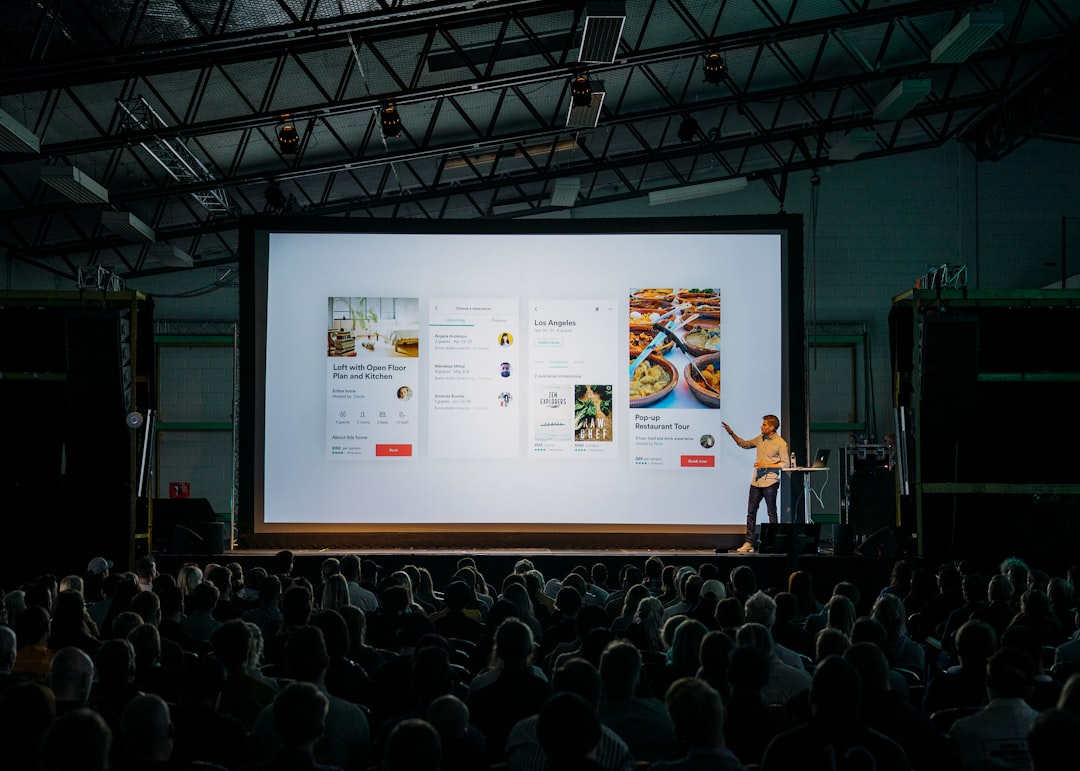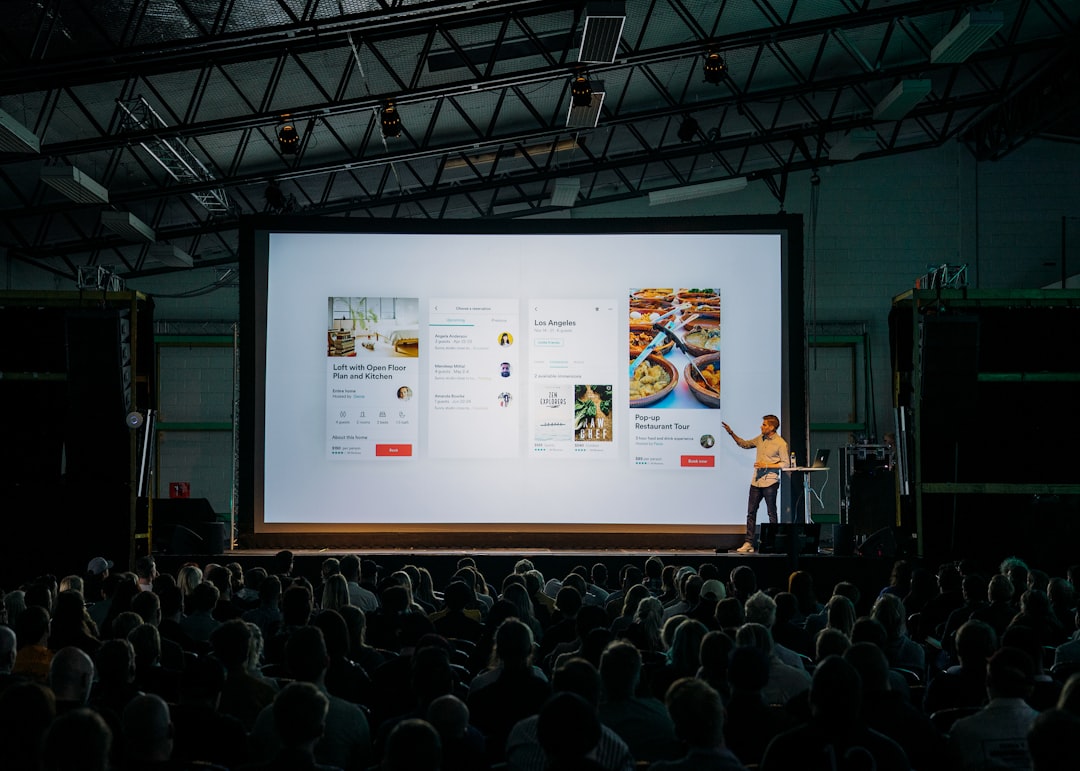

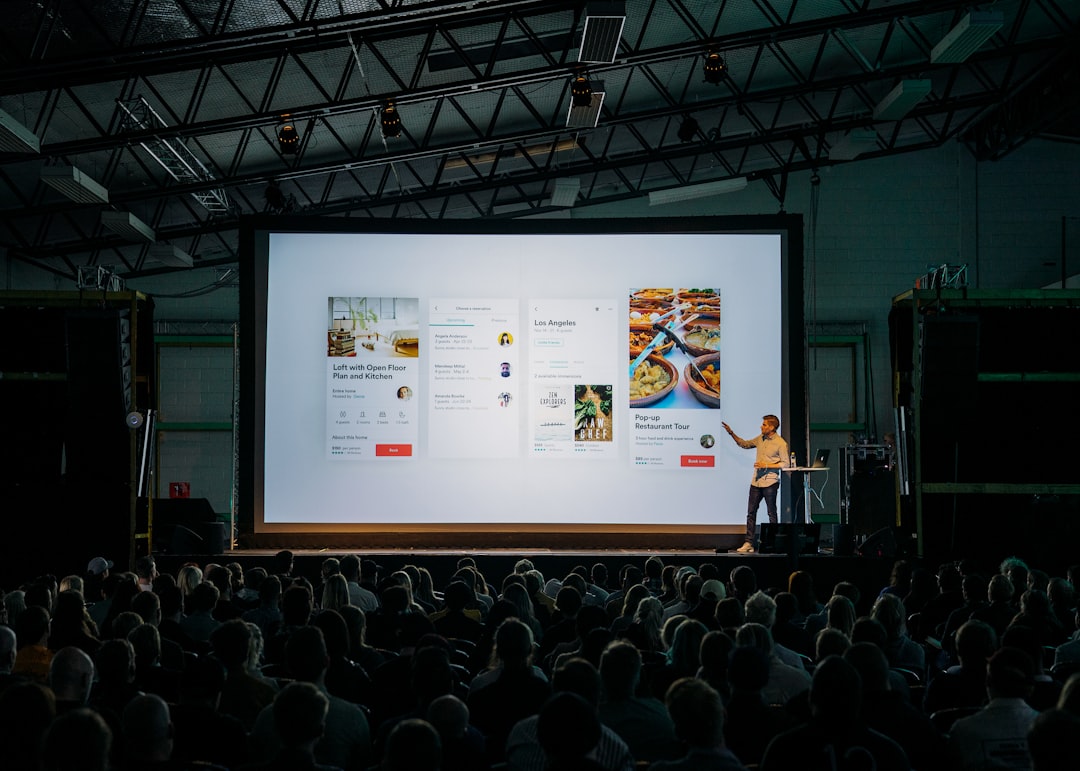
A live demo script framework matters because the live product demo is the single highest-leverage tactical element of any European trade fair stand. A well-structured 7-minute demo converts 55 to 70 percent of qualified visitors into post-show pipeline engagement. A poorly structured demo converts 15 to 25 percent of the same audience.
The gap between the two outcomes is not random; it reflects whether the demo script was engineered against the patterns that experienced exhibition managers know work, or whether it emerged organically from product-marketing decks. This article walks through the five-act demo script framework that delivers consistent conversion, with rehearsal discipline, multilingual delivery considerations, and named-fair examples.
The framework draws on CEIR’s exhibition demo research, UFI’s Global Exhibition Barometer commentary on visitor engagement patterns, AUMA’s exhibitor benchmark data, and observed practice at top-decile exhibitors at Hannover Messe, ISE Barcelona, drupa Düsseldorf, Bauma Munich, EuroShop, Anuga, and the major Messe Frankfurt and Messe Düsseldorf venues.
Why 7 minutes
CEIR’s longitudinal research on visitor attention at trade fair demos consistently finds 5-9 minutes as the productive window. Under 5 minutes, the demo cannot establish enough product depth to support meaningful follow-up. Over 9 minutes, visitor attention measurably declines, qualifying conversation gets compressed, and the visitor walks before the next step is committed.
The 7-minute target is the working midpoint that suits most B2B product categories. Adjustments by complexity:
- Technical machinery, industrial automation, complex software: 8-10 minutes acceptable.
- Standard B2B products: 6-8 minutes optimal.
- Consumer-facing or simpler B2B products: 4-6 minutes optimal.
- Highly complex enterprise software or large-scale industrial systems: 12-15 minutes with active visitor engagement structures.
“The seven-minute demo is the operational sweet spot for B2B trade fair conversion. Demos shorter than five minutes don’t establish enough value; demos longer than ten minutes lose attention before the conversion conversation begins.”, CEIR exhibition demo research, attention-span analysis, 2024 update
The five-act structure
The 7-minute demo divides into five acts with clear timing and operational purpose.
| Act | Duration | Purpose |
|---|---|---|
| 1. Hook | 30-45 sec | Capture attention, frame relevance |
| 2. Context | 60-75 sec | Establish problem the product solves |
| 3. Demonstration | 3-4 min | Live product interaction |
| 4. Value translation | 60-90 sec | Connect demo to visitor’s specific situation |
| 5. Next step | 30-45 sec | Concrete follow-up commitment |
Each act has specific content requirements and rehearsal targets. The framework should be tight enough to ensure consistency across demo specialists and visitors, loose enough to adapt to specific visitor context.
Act 1: The hook (30-45 seconds)
The opening 30-45 seconds determines whether the visitor commits attention to the demo. Three structural patterns work:
The provocative question. “How much time does your team currently spend reconfiguring production lines between SKU changes?”, A question that surfaces a pain point most of your buyer audience experiences. The visitor either says “too much” (committed audience) or “we don’t have that problem” (qualifies them out quickly).
The relevant statistic. “European mid-market manufacturers report 14 to 22 hours of weekly downtime from line changeovers. Our system reduces that to under 4 hours.”, A concrete number that frames why the next 6 minutes matter.
The visible product moment. A 10-15 second product action that visibly demonstrates capability before any explanation. The visitor sees something interesting happen and stays to find out what.
The hook should be rehearsed to land verbatim. Demo specialists who improvise the hook get 30 to 50 percent inconsistency in visitor attention capture. Specialists who deliver the same rehearsed hook deliver consistent attention from the opening moment.
Act 2: The context (60-75 seconds)
The next minute establishes the problem the product solves, framed in language the visitor recognises. Three structural elements:
The category framing. “The challenge most of your peers face is X.” Establishes that the visitor’s problem is widespread enough that solving it matters.
The current-state cost. “Current solutions cost Y in time, money, or operational risk.” Quantifies the pain.
The transition signal. “Here’s what changes with our approach.” Bridges to the live demonstration.
The context act sets up the demo. Without it, the visitor watches the product but doesn’t know why they should care. With it, every product action in Act 3 lands against a problem the visitor already wants solved.
Act 3: The demonstration (3-4 minutes)
The longest act and the most visible. The structure within the 3-4 minute window:
- Setup: 30 seconds showing the operational starting point.
- First interaction: 60-75 seconds showing the primary product capability with running narration.
- Visitor engagement prompt: 15-20 seconds asking the visitor a specific question. “What does your current process look like for this step?” The interaction breaks the monologue pattern.
- Second interaction: 60-75 seconds showing the secondary capability or edge case handling.
- Mid-demo check-in: 15-20 seconds confirming the visitor is still tracking. “Does this look like it would apply to your situation?”
- Third interaction: 30-45 seconds showing a moment of differentiation that competitor products typically handle worse.
The demonstration is where most exhibitor demos lose flow. Three failure patterns recur:
First, monologue mode. The demo specialist talks for 4 minutes without visitor engagement. Visitors retain less, ask fewer questions, and convert less to follow-up.
Second, feature dump. The demo covers every feature the product has rather than the 3-4 features that matter most to this visitor’s likely use case. Visitors lose interest in features irrelevant to them.
Third, technical depth mismatch. The demo runs at technical depth wrong for the visitor (too technical for a procurement buyer, too superficial for an engineer). Demo specialists who can read visitor signals in real time and adjust technical depth deliver materially better conversion than those who run a fixed depth.
“Visitors who watch a demo for seven minutes without speaking convert at 25 to 35 percent to follow-up. Visitors who are engaged with two to three questions during the demo convert at 55 to 70 percent. The visitor-engagement touchpoints during the demo flow are the single biggest lever on demo conversion.”, UFI Global Exhibition Barometer, visitor engagement commentary, 2025
Act 4: Value translation (60-90 seconds)
The minute after the demonstration completes is where the demo specialist translates what the visitor just saw into the visitor’s specific operational context. Three patterns work:
The scenario translation. “Based on what you mentioned about your current changeover time, this would translate to approximately X hours saved per week.” Quantification that turns abstract product capability into concrete visitor outcome.
The peer reference. “We’re working with [credible peer] on exactly this kind of integration.” Social proof from a recognisable name in the visitor’s industry.
The implementation framing. “Implementation typically takes 8 to 12 weeks from procurement decision to first operational run.” Reduces uncertainty about what saying yes actually requires.
Act 4 is where the demo connects to the visitor’s decision-making process. Demos that skip Act 4 leave visitors impressed but uncommitted. Demos that execute Act 4 well move visitors into pipeline.
Act 5: Next step (30-45 seconds)
The closing 30-45 seconds proposes the concrete next step. Three structural options:
The meeting booking. “I’d like to set up a 45-minute call next week to walk through what this would look like in your specific setup. Does Tuesday afternoon work?”
The content delivery. “I’ll send you the technical specification PDF and the case study from [peer reference] tomorrow morning. Best email?”
The trial commitment. “We’re offering a 30-day pilot for visitors at this fair. Would you like the procurement team to send the pilot terms over?”
The next step should be specific, time-bound, and require minimal visitor commitment beyond agreeing to it. Vague follow-up offers (“we’ll be in touch”) convert at 10-15 percent to actual pipeline. Specific time-bound next steps convert at 40-60 percent.
Multilingual demo delivery
Demo scripts at pan-European fairs need delivery in multiple languages. The structural framework holds across languages; the specific phrasings need native translation rather than literal conversion from the English baseline.
Three operational requirements:
Native-language scripts written natively. Translation tools and English-to-target-language conversion produce demo scripts that sound stilted in delivery. Native demo specialists should write the script in their target language directly, then validate against the English baseline rather than the reverse.
Language-specific rehearsal. Each multilingual demo specialist should rehearse the full 7-minute flow in each language they will deliver in. Rehearsal in one language and live delivery in another consistently produces visible flow disruption.
Visitor language detection in the opening. The hook delivers more strongly in the visitor’s native language. Greeter handoff should communicate the visitor’s preferred language to the demo specialist, who opens accordingly.
Demo specialist scheduling and rotation
Demo specialists deliver visibly higher quality on demos 1-15 of the day than demos 30-40. Three operational structures preserve quality:
Structured 90-second resets between demos. Water break, equipment reset, mental reset. Demos run back-to-back without resets produce noticeable quality decline by demo 8-10.
Rotation across demo specialists every 90-120 minutes. No single demo specialist should run 4+ consecutive hours of demos. Rotation allows one specialist to run demos while another handles qualified-buyer escalation conversations.
Daily debrief recalibration. The evening debrief surfaces demo execution feedback and refines emphasis for next day. Demo flow by Day 3 typically delivers 30 to 50 percent better visitor retention than Day 1 baseline.
The demo equipment setup
Demo equipment requires specific operational discipline:
| Element | Requirement |
|---|---|
| Primary demo unit | Tested daily at show open and after each demo |
| Backup demo unit | Available within 60 seconds in case of primary failure |
| Audio | Clear at 3-metre distance even with hall noise |
| Lighting | Adequate to show product detail; not overhead glare |
| Demo timer | Visible to specialist but not visitor; counts toward 7-minute target |
| Visitor reference materials | Spec sheet handed off post-demo |
Equipment failures during demos are the most common cause of visibly disrupted demo flow. The backup unit and the daily testing discipline prevent the most common failure patterns.
Worked example: ISE Barcelona AV integration demo
A typical 7-minute demo at ISE Barcelona for an AV integration platform might run:
| Time | Act | Content |
|---|---|---|
| 0:00-0:35 | Hook | “How long does your current AV configuration take for a typical enterprise meeting room?” + 15-second visible product moment showing automated configuration |
| 0:35-1:45 | Context | Enterprise AV configuration time benchmark, current-state cost, transition to demonstration |
| 1:45-3:00 | Demo part 1 | Configuration of meeting room from scratch via the platform |
| 3:00-3:20 | Engagement | “What does your current configuration process look like in terms of touchpoints?” |
| 3:20-4:30 | Demo part 2 | Multi-room orchestration capability |
| 4:30-4:50 | Check-in | “Does this resemble the scenarios you’re handling currently?” |
| 4:50-5:30 | Demo part 3 | Differentiation moment vs. competitor approach |
| 5:30-6:30 | Value translation | Scenario translation, peer reference, implementation framing |
| 6:30-7:00 | Next step | Meeting booking or content delivery proposal |
The 7-minute structure holds; the content adapts to the specific product and visitor profile.
Common demo script failures
Three patterns recur consistently across European exhibitors who underperform on demo conversion.
First, no rehearsal. The demo specialist is a product expert who knows the product but has not rehearsed the 7-minute structured delivery. Specialists who run their first 5 demos at the fair as live rehearsal lose meaningful conversion volume during the learning curve.
Second, no visitor engagement touchpoints. The demo runs as monologue. Visitors who do not speak during the demo do not convert at meaningful rates regardless of how impressive the product is.
Third, weak next-step proposal. The demo ends with “let us know if you have questions” rather than a specific time-bound commitment. The pipeline-conversion implication is direct and large.
How to operationalise on the directory
The /demo-templates section at Exhibition Stands EU includes the 5-act framework as a downloadable rehearsal template, with example scripts for industrial automation, AV integration, packaging machinery, and consumer electronics categories. The /staffing-agencies hub flags agencies whose demo specialists are trained in this framework.
Related reading
- Interactive Product Experience Design, when the demo lives inside an interactive stand environment
- Booth Staffing Calculator, how demo specialist count fits in the staffing roster
- Pre-Fair Staff Training Curriculum, the rehearsal discipline that makes the demo framework work
- Daily Booth Briefing Template, the evening debrief that refines demo execution across the week
- Multilingual Staff Strategy, language-specific demo delivery considerations
References and primary sources
- CEIR exhibition demo research and Index Report 2024, attention-span analysis, ceir.org
- UFI Global Exhibition Barometer, visitor engagement commentary editions 33-34, ufi.org
- AUMA Exhibitor Cost Benchmark Reports 2024-2026, demo execution section, auma.de
- ESSA exhibitor briefing series on demo delivery, essa.uk.com
- Deutsche Messe Hannover Messe exhibitor operational guidelines
- Fira de Barcelona ISE post-show analytics, demo conversion patterns 2024-2025
- Reed Exhibitions / RX Global European exhibitor performance index 2025
- Messe Düsseldorf integrated demo execution commentary for drupa and K editions
FAQFrequently asked questions
CEIR research on visitor attention spans at trade fair demos consistently finds the sweet spot between 5 and 9 minutes. Under 5 minutes, the demo cannot establish enough product value to drive follow-up. Over 9 minutes, visitor attention measurably declines and the qualifying conversation that should follow the demo gets compressed or skipped.
The 7-minute target hits the optimum for most B2B product categories, with adjustments by complexity: technical machinery may extend to 9-10 minutes; consumer-facing products may compress to 4-5 minutes.
Same skeleton, adapted opening and emphasis. The 5-act structure (hook, context, demonstration, value translation, next step) stays consistent. The specific examples used in the hook and the value translation step should adapt to the visitor’s industry, role, and concerns surfaced in the preceding qualification conversation.
Demo specialists who improvise the entire flow lose internal consistency; demo specialists who run identical pitches lose visitor relevance. Adaptive skeleton is the working compromise.
Two minimum, three preferred. The math: a 7-minute demo plus 3 minutes of qualifying conversation and handoff means each demo specialist can run 5-6 demos per hour at sustained pace. At peak Tuesday-Wednesday hours when stand traffic peaks at 60-90 visitors per hour, two demo specialists handle 25-30 demos per hour effectively; three handle 40-45. Above 100 sqm stand size with demo-heavy product, scale to four demo specialists per shift.
Live product whenever physically and operationally possible. CEIR research shows live-product demos convert 35-55% better to qualified follow-up than video equivalents. Video supplements work as backdrop (looped video walls showing product in operational context) but should not replace the live interaction.
The exception is products that cannot physically be demonstrated on-stand (heavy industrial equipment, software systems requiring extensive setup) where video plus interactive demonstration on tablet or terminal becomes the working substitute.
Three structures matter. First, structured 90-second resets between demos: water break, equipment reset, mental reset. Second, rotation across demo specialists every 90-120 minutes so no single person runs 40 consecutive demos. Third, the daily evening debrief that surfaces demo execution feedback and recalibrates emphasis. Demo quality declines visibly without these structures by Day 3 and meaningfully by Day 4-5.
The demo specialist treating the visitor as an audience rather than a participant. Visitors who watch a demo for 7 minutes without speaking convert at 25-35% to follow-up. Visitors who are asked 2-3 questions during the demo and have moments to react convert at 55-70%. The demo script should embed at least three visitor-interaction touchpoints: an opening question, a mid-demo check-in, and a closing personalisation. Most exhibitor demos forget these touchpoints and run as monologue.