A daily booth briefing template is what separates exhibitors who deliver flat performance across five fair days from exhibitors who compound performance through the week, because the difference is almost entirely evening debrief discipline. A booth team that runs the same Day 1 playbook on Day 5 is leaving 25 to 40 percent of potential performance unrealised.
A booth team that recalibrates each evening based on the conversation patterns of the day delivers Wednesday performance that materially exceeds Tuesday and Thursday performance that exceeds Wednesday.
This article walks through the 45-60 minute evening debrief structure that experienced European exhibition managers use, with the eight-section template and the operational discipline that makes the template actually work.
The framework draws on CEIR’s exhibition operational research, UFI’s Global Exhibition Barometer commentary on exhibitor performance patterns, AUMA’s exhibitor benchmark data, and observed practice across mid-market and enterprise European exhibitors at the major Messe Frankfurt, Deutsche Messe, Messe Düsseldorf, Koelnmesse, IFEMA, Fiera Milano, and RAI Amsterdam venues.
Why the evening debrief matters
Trade fairs are intensive selling environments where conversation patterns shift hour by hour. The buyer mix at 09:30 on Tuesday differs from the buyer mix at 15:00 on Wednesday. The questions that arise on Day 1 differ from the questions that surface on Day 3. The demo flow that worked Monday afternoon may need adjustment by Tuesday evening.
The qualification rubric defined in the pre-fair briefing may need recalibration after 200 actual conversations have surfaced patterns the rubric did not anticipate.
The evening debrief is the mechanism that converts this in-stand learning into next-day improvement. Exhibitors who run the debrief discipline see compounding improvement; exhibitors who skip the debrief see flat or declining performance across the week.
“The single most reliable distinguishing characteristic of top-decile exhibitor performance at major European fairs is whether the team runs a structured evening debrief. The presence or absence of the debrief is more predictive of post-show qualified-lead count than stand size, build quality, or staffing ratio above operational minimums.”, CEIR exhibition operational research, longitudinal commentary, 2024 update
The eight-section debrief template
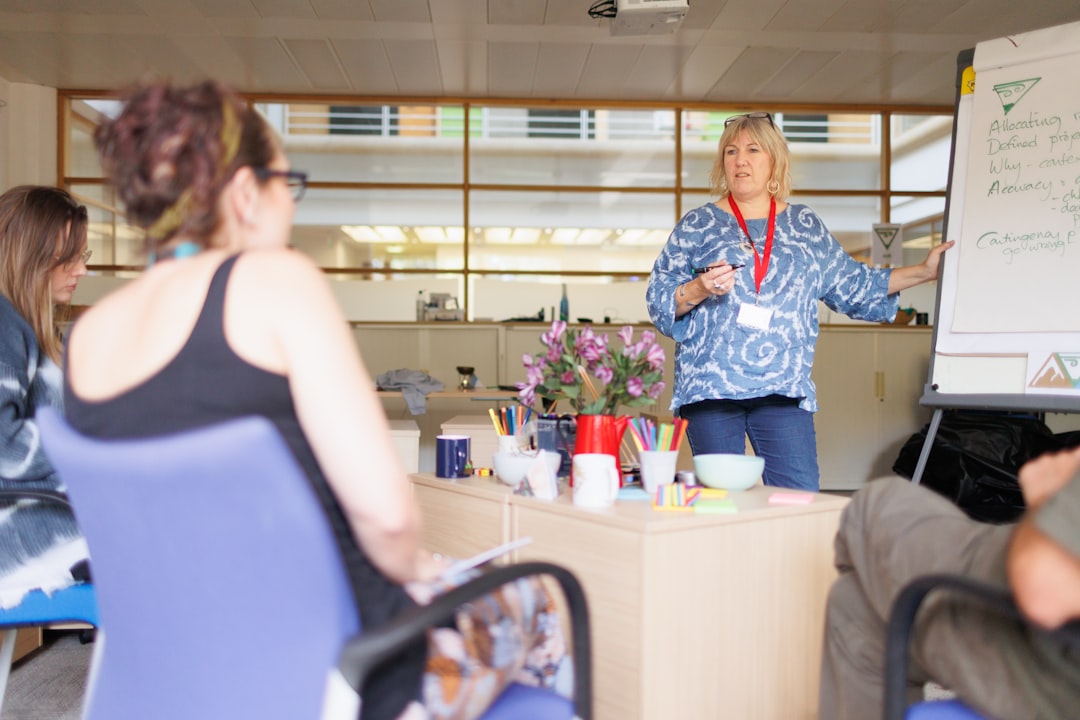
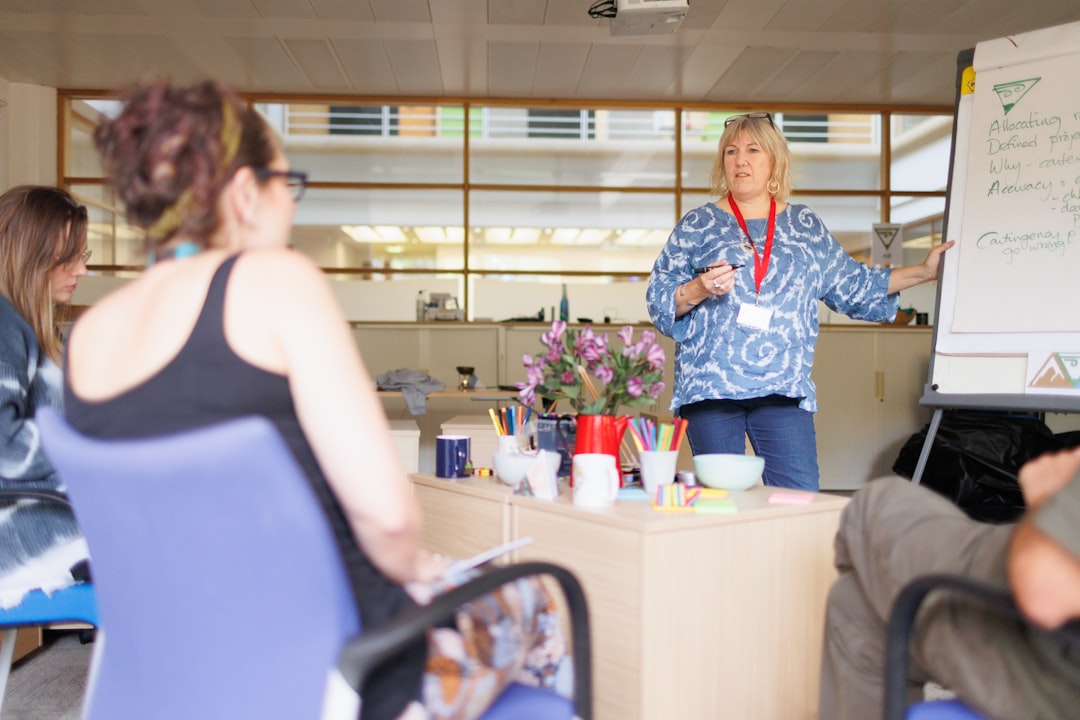
The debrief runs 45 to 60 minutes with disciplined agenda timing. The booth manager facilitates; every staff member contributes.
| Section | Duration | Output |
|---|---|---|
| 1. Lead count and qualified-lead summary | 5 min | Numbers on the whiteboard |
| 2. Conversation pattern observations | 10 min | Top 3 patterns surfaced |
| 3. Demo execution feedback | 10 min | What worked, what to adjust |
| 4. Qualification rubric performance | 5 min | Where the rubric is working / failing |
| 5. Hospitality and meeting logistics | 5 min | Tomorrow’s coordination needs |
| 6. Senior management and press scheduling | 5 min | Coverage adjustments |
| 7. Tomorrow’s tactical adjustments | 10 min | 3-5 written commitments |
| 8. Personal observations and morale | 5 min | Open-floor concerns, energy check |
The total is 55 minutes with a 5-minute buffer. The sections should not be skipped; their order should not be rearranged. The discipline of running through all eight sections every evening builds the cumulative learning loop.
Section 1: Lead count and qualified-lead summary
Open with the numbers. Total conversations today, qualified leads by tier (tier 1 = senior buyer with budget authority, tier 2 = influencer or evaluator, tier 3 = early-stage interest), and comparison against daily target.
The numbers anchor the rest of the discussion in concrete reality. Without them, the debrief drifts into impressionistic anecdote. With them, every subsequent observation can be tested against whether the data supports the impression.
Common patterns to surface:
- Total conversation count versus target (over or under).
- Qualified-lead share versus target.
- Conversation count by hour (when did peak happen, when did lulls happen).
- Conversation count by staff member (capacity utilisation observations).
The lead-count summary should be displayed visually, whiteboard, flipchart, or projected dashboard, not read aloud only.
Section 2: Conversation pattern observations
Ten minutes for staff to share patterns they noticed in conversations. The booth manager facilitates with three prompting questions:
- What was the most common question or objection today?
- What kind of visitor profile dominated, and how did it differ from expectation?
- What competitor activity did staff observe (walk-bys, conversations, intelligence)?
The goal is not to solve the patterns, that comes in Section 7. The goal is to surface them clearly. Each pattern should be captured with enough detail that the team can decide tomorrow what to do about it.
“Pattern surfacing is the highest-value activity in the evening debrief. Most exhibitors instinctively jump to solutions before the patterns are clearly articulated. Top-decile exhibitors discipline themselves to spend ten minutes on patterns before any tactical adjustment.”, AUMA Exhibitor Survey commentary on staff briefing patterns, 2025
Section 3: Demo execution feedback
Ten minutes specifically on demo flow. Demo specialists lead this section; other staff contribute observations from adjacent roles.
Three questions structure the discussion:
- Which demo segments landed well and which fell flat.
- Where did visitors interrupt or lose attention, and what triggered it.
- What technical questions arose that the demo flow didn’t anticipate.
The demo flow is typically the most volatile element of the on-stand performance, pre-fair rehearsal can only approximate live conditions. By Day 2 evening, the demo flow should be visibly tightened from Day 1 baseline. By Day 4 evening, the demo flow typically delivers 30 to 50 percent better visitor retention than Day 1.
Section 4: Qualification rubric performance
Five minutes on whether the qualification rubric is working as designed.
- Are the qualification scores predicting follow-up engagement (when follow-up data is available)?
- Are there conversation patterns where the rubric is consistently miscategorising?
- Are there visitor profiles the rubric doesn’t anticipate?
This section frequently surfaces rubric refinements that take effect from Day 2 onward. The booth manager updates the qualification criteria in writing if needed and reviews the update at the next morning’s huddle.
Section 5: Hospitality and meeting logistics
Five minutes coordinating non-selling functions for tomorrow.
- Catering schedule confirmation and any needed adjustments.
- Meeting room bookings for tomorrow’s senior buyer conversations.
- Client dinner logistics if applicable.
- Hospitality coordination with the hospitality lead specifically.
- Restock requirements (giveaways, marketing materials, brochures).
The integration between hospitality and selling roles is where stands often lose flow during the day. The 5-minute evening alignment prevents friction patterns from compounding.
Section 6: Senior management and press scheduling
Five minutes on senior management presence and press logistics for tomorrow.
- Which senior managers are on stand tomorrow, when, and for what.
- Any scheduled press interviews or media appointments.
- Senior buyer meetings that require senior management attendance.
- Photo opportunities or press conferences.
This section ensures the next-day calendar is internally consistent and prevents the common pattern of senior management arriving on stand without clear engagement assignment.
Section 7: Tomorrow’s tactical adjustments
Ten minutes for the team to commit to specific changes for tomorrow. The booth manager facilitates the conversion of patterns and observations into 3 to 5 concrete commitments. Examples of well-formed commitments:
- “Tomorrow we will lead the opening conversation with the sustainability angle since six conversations today flagged it spontaneously as a buyer concern.”
- “Tomorrow we will demo the X feature first, since visitor interest peaked on it but our current flow demos it third.”
- “Tomorrow we will move the lead-capture station to the front-left corner instead of the centre, since the centre position is creating bottleneck during peak hours.”
- “Tomorrow we will assign Maria to handle senior buyer escalation from greeter level rather than Patrick, since Maria’s German fluency matched the visitor profile better today.”
Each commitment is written down in a shared document or on a printed sheet distributed to all staff before they leave the meeting. The morning huddle reviews the commitments and confirms execution.
“The exhibitors who actually improve across the fair week are the ones who close each debrief with three to five written commitments and re-review them at the morning huddle. Verbal commitments that aren’t written down get lost between 22:00 and 09:00.”, Reed Exhibitions / RX Global exhibitor performance commentary, 2025
Section 8: Personal observations and morale
The final 5 minutes is open floor for personal observations and morale check.
- Are staff feeling appropriately rested and ready for tomorrow?
- Are there interpersonal frictions that need attention?
- Are there logistical pain points (food, accommodation, transport) that need fixing?
- Are there individual development moments (a staff member who handled a difficult conversation particularly well) worth recognising?
This section often surfaces issues that would otherwise compound into Day 3 burnout or Day 4 friction. The booth manager handles morale issues directly rather than deferring them.
What the Day 1 debrief looks like differently
The Day 1 debrief is structurally different from Days 2-5. Conversation patterns have not yet accumulated enough volume to support deep pattern analysis. The Day 1 debrief focuses on:
- Operational logistics: what went smoothly, what created friction (badge scanner setup, demo equipment, hospitality coordination, traffic flow into the stand).
- Demo execution feedback: where pre-fair rehearsal proved insufficient and what needs immediate tightening.
- CRM workflow observation: is the lead-capture process actually working under live conditions.
- Schedule confirmation: tomorrow’s rotation, breaks, and special events.
The Day 1 debrief is the foundation that lets Day 2 and Day 3 debriefs go deeper into pattern analysis.
Compounding improvement: the multi-day arc
The evening debrief mechanism produces a characteristic compounding improvement arc across a 5-day European trade fair. Observed pattern across top-decile exhibitors:
| Fair day | Total conversations | Qualified-lead share | Demo retention | Senior buyer engagement |
|---|---|---|---|---|
| Monday (Day 1) | Baseline | Baseline | Baseline | Baseline |
| Tuesday (Day 2) | +15-25% | +5-10% | +10-15% | +10-15% |
| Wednesday (Day 3) | +20-35% (peak) | +12-20% | +20-30% | +20-30% |
| Thursday (Day 4) | +10-15% above Day 1 | +18-28% | +25-35% | +25-35% |
| Friday (Day 5) | -10-20% (lighter traffic) | +20-30% (quality up) | +28-38% | +25-35% |
The Day 5 conversation count typically drops below Day 1 because Friday traffic is lighter at most European fairs, but the qualified-lead share and demo retention continue improving. The compounding effect on demo execution is what most directly affects deal pipeline quality.
Common debrief failures
Three failures recur consistently.
First, the booth manager runs the debrief as a status report rather than a learning conversation. Staff listen but don’t contribute. The patterns observed during the day stay unsurfaced.
Second, the debrief skips Section 7 (tactical adjustments). Patterns are surfaced but commitments are not made. The next day’s execution looks identical to today’s.
Third, the debrief gets pushed to “after dinner” and loses 40 percent attendance. The post-dinner debrief is structurally weaker than the immediate-post-close debrief.
The mitigation for all three: schedule the debrief immediately after show close, book a venue meeting room, run it with explicit agenda timing, and close with written commitments.
How to operationalise on the directory
The /training-templates section at Exhibition Stands EU includes the eight-section debrief template as a downloadable one-page facilitation guide, with section-level timing and prompting questions. The /staffing-agencies hub flags agencies whose booth managers are trained in this debrief framework.
Related reading
- Pre-Fair Staff Training Curriculum, the half-day briefing that establishes the framework the debrief refines
- Booth Staffing Calculator by Industry Vertical, the staffing context the debrief operates within
- Live Demo Script Framework, the demo content that gets refined in Section 3
- Lead Capture and Follow-up Workflow, the CRM context for Section 1 lead-count tracking
- Multilingual Staff Strategy, additional debrief considerations for multilingual teams
References and primary sources
- CEIR exhibition operational research and Index Report 2024, ceir.org
- UFI Global Exhibition Barometer, exhibitor performance commentary editions 33-34, ufi.org
- AUMA Exhibitor Cost Benchmark Reports 2024-2026, briefing discipline section, auma.de
- ESSA exhibitor briefing series on daily debrief practice, essa.uk.com
- Reed Exhibitions / RX Global European exhibitor performance index 2025
- Deutsche Messe Hannover Messe exhibitor operational guidelines
- Messe Frankfurt visitor research, exhibitor pattern analysis 2024-2025
- AUMA Exhibitor Survey 2025, briefing-discipline section
FAQFrequently asked questions
45-60 minutes is the European standard. Shorter debriefs (under 30 minutes) don’t allow time for genuine pattern surfacing. Longer debriefs (over 75 minutes) lose staff attention after a 9-hour stand day. The 45-60 minute window with disciplined agenda timing handles the eight sections in this template reliably.
The entire on-stand team plus the booth manager. At larger stands, demo specialists and senior salespeople can be split into a 30-minute joint review followed by 30-minute role-specific deep dives. The temptation to exclude greeter and hospitality staff fails, these roles see the most visitor patterns and miss less of the conversation flow than the selling roles realise.
Within 60 minutes of show close, ideally before staff leave the venue. The conversation patterns of the day are freshest at this point and energy is still adequate. Debriefs scheduled for after dinner often lose 30-40% attendance and produce noticeably shallower analysis. The booth manager should book a venue meeting room or hospitality space specifically for the daily debrief at booking time.
Day 1 debrief focuses on operational logistics (what went smoothly, what created friction) and demo execution feedback (where rehearsal proved insufficient). Pattern analysis genuinely surfaces from Day 2 onward when enough conversation volume has accumulated. The Day 1 debrief is the foundation that lets Day 2 and Day 3 debriefs go deeper.
The booth manager closes each debrief with a written set of ‘tomorrow we will’ commitments, distributed to staff before they leave the room (paper or shared mobile note). The next morning’s pre-shift huddle reviews the commitments and confirms who is doing what. Decisions that aren’t written down typically don’t get implemented; decisions written and re-reviewed at morning huddle reliably do.
Yes, when handled carefully. Senior management presence frequently changes the tone of the debrief, with staff becoming more guarded about reporting demo failures or qualification gaps. The mitigation: senior management attends the first 15 minutes (operational summary, lead-count numbers, schedule confirmation), then leaves; the booth manager runs the remaining 30-45 minutes with the operational team for honest pattern surfacing.