The pre-fair training day is the single highest-ROI day in the entire fair calendar. A trained team on a modular booth consistently outperforms an untrained team on a custom booth, across every qualified-contact and meeting-conversion metric that experienced European exhibition managers track. Yet the training day is the line item most consistently cut when the budget tightens, usually with the rationale that “the team is experienced enough to figure it out on the day.”
The team is rarely experienced enough. Even senior sales teams without recurring fair experience underperform their ceiling by twenty to forty percent on day one of a tier-one fair when they walk in cold. By day two they have learned what the qualifier zone needs to do; by day three they are operating at competence; by day four they are tired. The fair ends with a fraction of the qualified-contact volume the booth investment justified.
This article walks through the training and briefing framework that protects against that pattern. It covers the qualifier-script structure, the BANT-plus-pain qualification framework, European business etiquette by venue, the run-of-show daily briefing pattern, and the escalation protocols that handle the unexpected situations every fair produces.
The pre-fair training day structure
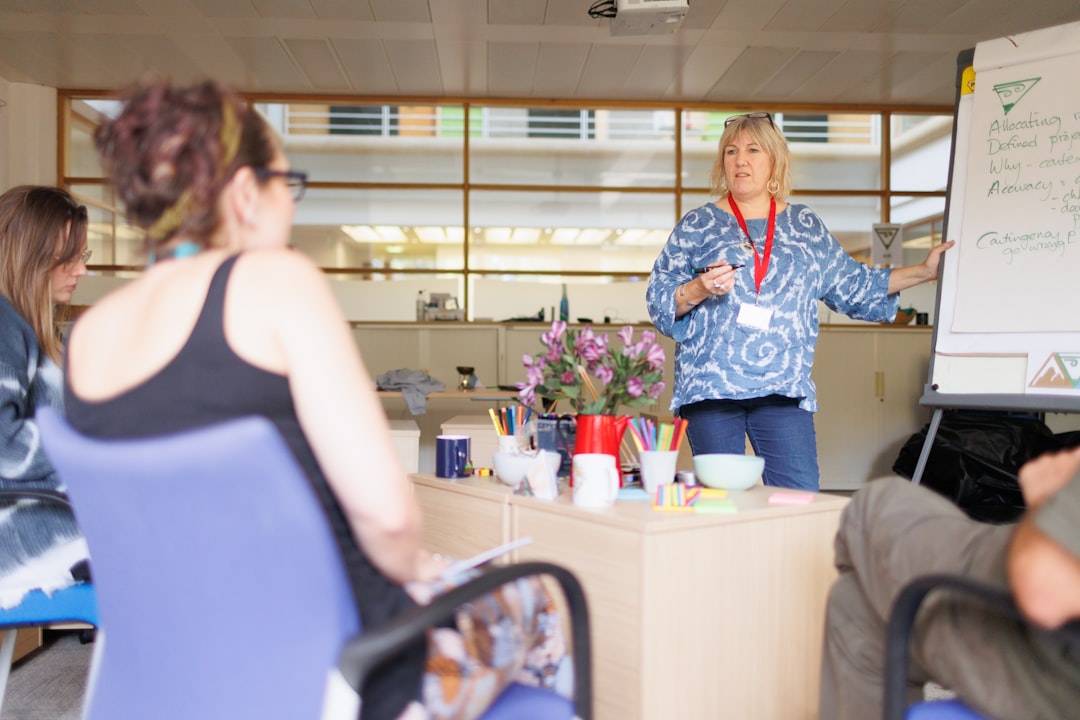
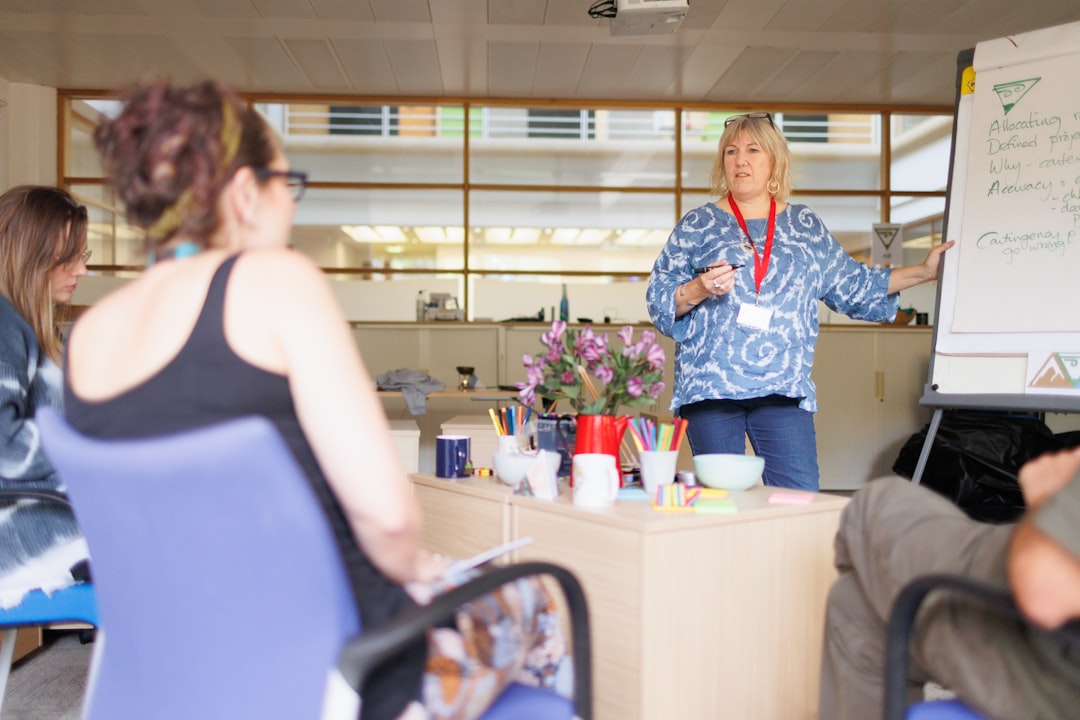
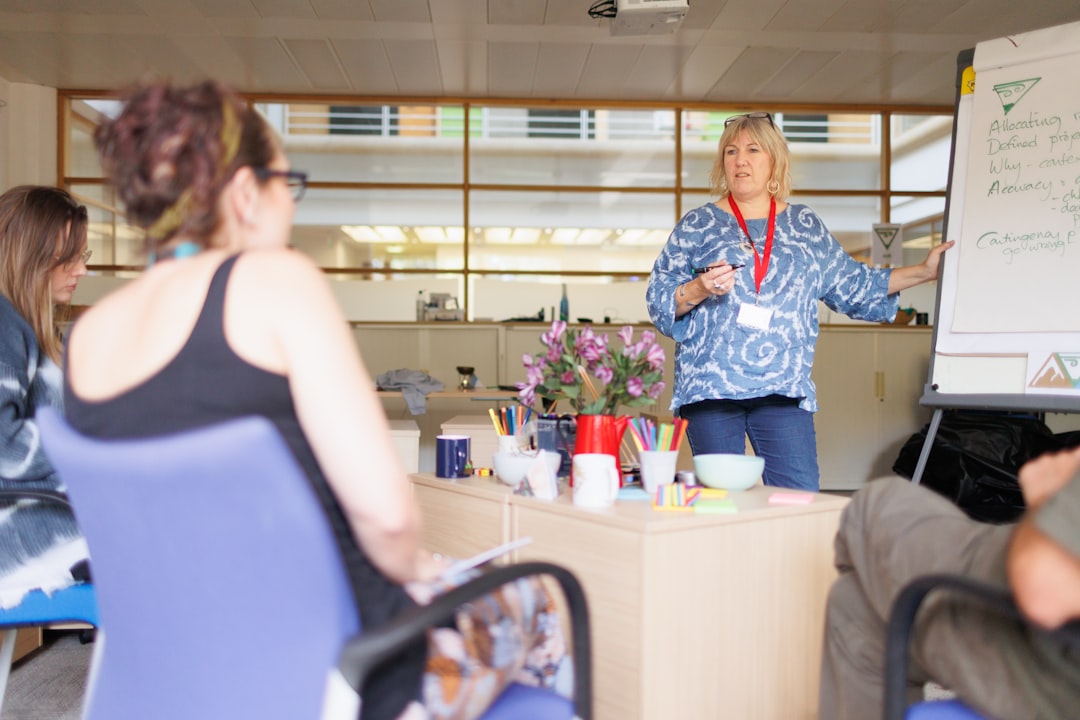
A defensible pre-fair training day runs six to eight hours, scheduled the day before the fair opens. The structure below is the convention experienced European exhibition managers use. It compresses substantial preparation into a single day and produces a team capable of operating at full quality from the open of day one.
| Hour | Topic | Output |
|---|---|---|
| 1 | Product positioning briefing | Shared narrative of what the booth is showing and why it matters |
| 2 | Qualifier script structure and run-throughs | Each qualifier role can run the standard structure in under two minutes |
| 3 | Lead-capture workflow and CRM integration | Every staff member completes a test capture, scanner-to-CRM roundtrip |
| 4 | Meeting calendar walkthrough | Meeting coordinator and specialists know every booked meeting and the meeting agenda |
| 5 (after lunch) | Live demo run-through on every demo asset | Each staff member operates each demo at least once |
| 6 | Rotation schedule and break discipline | Every staff member has their shift assignments and break locations |
| 7 | Etiquette and country-specific patterns | Staff are briefed on the venue’s etiquette baseline and exceptions |
| 8 | Escalation protocols and contingency planning | Every staff member knows the protocol for journalist, competitor, VIP, and technical-failure situations |
The training day produces seven concrete outputs. Staff who can recite the qualifier script structure. Staff who have personally operated every demo asset on the booth. Staff who know their shift assignments and have walked to the break room. Staff who have rehearsed the escalation protocols. The training day is not a briefing; it is a rehearsal.
“We treat the training day like the dress rehearsal of a stage production. If the rehearsal goes well, the run goes well. If the rehearsal is skipped, opening night is improv, and improv is rarely as good as the script and direction the team prepared.”, Common framing among European B2B exhibition managers
The BANT-plus-pain qualifier framework
BANT (Budget, Authority, Need, Timing) has been the dominant B2B sales-qualification framework for decades. For booth-conversation use, a pain-point capture step is added before BANT begins, producing the BANT-plus-pain framework. The pain-point step grounds the conversation in the visitor’s specific problem rather than the exhibitor’s product description, which materially improves the quality of the captured lead.
The full BANT-plus-pain qualifier sequence runs in two minutes or less:
Step 1 (15 seconds): Opening greeting and badge scan. Qualifier introduces themselves by name and role, asks permission to scan the badge, captures the basic lead record.
Step 2 (30 seconds): Two open-ended questions on role and context. “What brings you to the show this year?” and “Tell me a bit about your role at [company].” These two questions establish the visitor’s intent and context.
Step 3 (30 seconds): Pain-point question. A specific question grounded in the product category. For an industrial software vendor: “What’s the biggest operational bottleneck you’re trying to solve in the next six months?” For a design supplier at Salone del Mobile: “What’s the project you’re scoping right now where the materials decision matters most?” The pain-point question shifts the conversation from generic exploration to specific problem-solving.
Step 4 (30 seconds): Budget and timing. Direct but framed: “Is this something you have budget approved for this fiscal year, or earlier-stage exploration?” and “When does this need to be operational?” The budget question separates fishing-trip visitors from active buyers.
Step 5 (15 seconds): Hand-off decision. Based on the previous steps, the qualifier routes the visitor: qualified to product specialist for deeper conversation, qualified to meeting booking for a dedicated follow-up, unqualified-but-relevant to the mailing list, or politely closed with a brochure handoff.
The two-minute sequence produces lead records with the data fields populated for post-fair followup: visitor name, role, company, intent, pain point, budget signal, timing signal, and qualifier disposition. Lead records produced via the BANT-plus-pain sequence consistently convert at higher rates than lead records from unstructured booth conversations.
Structural scripting versus word-for-word scripting
Word-for-word scripting produces wooden conversations that visibly underperform. Booth visitors read scripted-feel quickly, and the qualified-contact rate collapses when the visitor senses they are being processed rather than engaged.
Structural scripting works. The qualifier knows the sequence of question categories they must cover, but the specific words adapt to each conversation. A qualifier running the BANT-plus-pain sequence with a Hannover Messe industrial-engineering visitor will use different vocabulary than the same qualifier running the same sequence with a Salone del Mobile design buyer, even though both conversations cover the same five steps and produce the same lead-record output.
The training-day discipline: drill the sequence, not the wording. Practice runs with role-played visitors who play different visitor archetypes (rushed buyer, exploratory buyer, technical buyer, competitive buyer, time-waster). The qualifier learns to navigate the sequence under varying conversational pressure, which is the actual skill the booth needs.
“We rehearse five visitor types in the training day: the rushed buyer, the exploratory buyer, the technical buyer, the competitor’s salesperson, and the time-waster. The qualifier who can route all five into the right downstream action is ready for the booth. The qualifier who can only handle one or two is not.”, Common framing among AUMA-affiliated booth training consultants
European business etiquette: what actually matters
European business etiquette varies by country and venue in ways that materially affect booth conversation quality. The patterns below are the etiquette differences experienced exhibition managers train staff to recognise.
| Venue / region | Handshake norm | Business card exchange | Conversation pace | Hospitality expectation |
|---|---|---|---|---|
| Hannover Messe / German venues | Standard, firm, brief | Important, formal | Direct, product-and-price within minutes | Coffee offered, light snacks |
| Vienna / Austrian venues | Standard, formal | Important | Direct but slightly more formal | Coffee, pastry common |
| Swiss venues (Watches & Wonders Geneva) | Standard, formal | Very important, ritualised exchange | Direct, technical, precise | Premium hospitality expected |
| Italian venues (Fiera Milano, Vicenzaoro, Cosmoprof Bologna) | Standard, warm | Important | Relationship preamble, then commercial | Coffee, water, often light food |
| Spanish venues (IFEMA Madrid, Fira Barcelona) | Standard, warm | Useful but not critical | Relationship preamble, then commercial | Coffee, water, frequent breaks |
| French venues (Vivatech Paris, Maison&Objet) | Standard, brief | Useful | Slight relationship preamble | Coffee, water |
| Dutch venues (RAI Amsterdam) | Less reliable since 2020 | Less common, badge-scanning dominant | Very direct, pragmatic | Coffee, sparkling water |
| Nordic venues (Stockholm, Helsinki) | Less reliable since 2020 | Badge-scanning dominant | Very direct, succinct | Coffee, water |
| UK venues (ExCeL London) | Less reliable since 2020 | Badge-scanning dominant | Direct, polite | Tea or coffee, biscuits |
Three patterns matter consistently. First, handshake norms: still standard at German, Austrian, Swiss, and Italian fairs; less reliable at Nordic, Dutch, and UK fairs since 2020. Staff should default to the local norm and follow the visitor’s lead. Second, business-card exchange: still important at Italian, French, German, and Swiss fairs; largely replaced by badge-scanning at Nordic, Dutch, and UK fairs.
Third, conversation pace and directness: German, Dutch, and Swiss visitors expect direct product-and-price conversations within minutes; Italian, French, and Spanish visitors expect a brief relationship preamble before commercial detail.
Misreading any of these patterns produces visible friction. A French visitor asked for budget within the first ninety seconds frequently disengages; a German visitor offered five minutes of relationship preamble before product detail frequently checks out mentally. Training the staff on the venue-specific baseline protects against the friction.
The daily run-of-show briefing
Each fair day starts with a fifteen-minute team briefing before the doors open. The briefing covers four items:
- Previous-day debrief summary: key wins, key lessons, lead-quality observations, meeting-attendance rate.
- Today’s booked-meeting calendar: every booked meeting, the meeting lead, the meeting goal, the meeting room assignment.
- Today’s expected visitors: known VIPs, journalists, competitors, partners scheduled to visit.
- Today’s rotation and break schedule: any deviation from the standard rotation, any staff absences, any role swaps.
The daily briefing is the operational glue that keeps the team coordinated across multi-day fairs. Skipping it produces drift, staff lose sight of the meeting calendar, miss VIP arrivals, and forget the previous day’s lessons. The fifteen-minute discipline pays for itself in the first hour of the show day.
The end-of-day debrief mirrors the briefing structure. Fifteen minutes after stand close: what worked, what did not, what changed for tomorrow’s briefing. Lead data is synced during the debrief window, not after staff have left for dinner.
Escalation protocols
Every fair produces unexpected situations. Five recurring situations deserve explicit escalation protocols documented in the pre-fair training day.
Protocol 1: Journalist walk-in. Route immediately to the press lead or stand lead. Never absorb a journalist conversation as a qualifier. Default response: “I will get our press lead, give me two minutes.”
Protocol 2: VIP arrival. Senior buyer or named target visitor arrives unexpectedly. Route immediately to the stand lead, who escalates to the most senior company staff present. Default response: “Welcome, let me get [stand lead name] to spend some proper time with you.”
Protocol 3: Competitor visit. Competitor salesperson or technical staff visits the stand. Treat as a normal visitor up to the budget question. Do not disclose pricing, customer names, or product-roadmap detail. Default response to probing questions: “That’s something we’d cover in a commercial conversation, happy to set one up if you’re a genuine prospect.”
Protocol 4: Technical failure. A demo system fails. The demo lead troubleshoots while the qualifier reroutes affected visitors to alternative engagement (printed materials, video, conversation with a product specialist). Default response: “We’re refreshing that demo, let me show you [alternative] in the meantime.”
Protocol 5: Difficult visitor. A visitor becomes aggressive, intoxicated, or hostile. Stand lead intervenes. Hospitality or security escalation as needed. Default response: minimal, polite, route to the stand lead immediately.
The protocols should be rehearsed during the pre-fair training day, not improvised at the moment they are needed. Staff who have rehearsed the journalist protocol once respond to the walk-in journalist appropriately; staff who have not rehearsed it routinely produce off-message quotes that surface in coverage three weeks later.
Competitor handling: the two governing principles
Competitor handling is the conversation skill that separates trained booth staff from untrained booth staff. Two principles govern.
Principle 1: Never disparage a competitor on the stand. Every visitor is a potential customer and the conversation may reach the competitor through industry networks. Disparagement makes the speaker look insecure and frequently rebounds in the form of competitor responses that escalate the dispute publicly.
Principle 2: Always reframe competitor comparisons in terms of the visitor’s specific use case. Abstract feature comparisons are unwinnable arguments. Use-case-grounded responses are credible. Replace “we are better than X because” with “for the specific problem you described, the way we approach it differs from X in this way.”
The training day should include the three to five competitors the staff will encounter at the specific fair, the credible differentiator for each, and a one-sentence response pattern. Staff who are unprepared default to defensive posturing.
“We pick three competitors before each fair and write a sentence each. The sentence says what makes us different for the kinds of customers who attend this specific fair. That’s it. The qualifier knows the three sentences. Defensive posturing disappears.”, Common framing among European B2B exhibition managers
Language coverage in the briefing
Staff briefings should explicitly assign language coverage per shift. A typical assignment matrix at Hannover Messe:
| Shift | Required languages on floor | Optional languages on floor |
|---|---|---|
| Day 1 morning | English, German | French, Italian (one of) |
| Day 1 afternoon | English, German | Mandarin (peak China-delegation hours) |
| Day 2 morning | English, German | Italian, French |
| Day 2 afternoon | English, German | Mandarin |
| Day 3 morning | English, German | French |
| Day 3 afternoon | English, German | (light coverage day) |
| Day 4 (often shorter) | English, German | (light coverage day) |
The matrix prevents the common failure mode where a Mandarin-speaking external hostess is scheduled inconsistently and the booked-meeting calendar conflicts with their availability.
Common training and briefing mistakes
Mistake 1: Compressing training into a morning briefing on day one. Produces day-one improv and degraded qualified-contact rates.
Mistake 2: Drilling word-for-word scripts. Produces wooden conversations. Drill the structure, not the words.
Mistake 3: Skipping live demo run-throughs. Staff who first operate the demo in front of a visitor fail visibly. Every staff member must operate every demo asset during training.
Mistake 4: Skipping the etiquette briefing. Especially at fairs outside the staff team’s home country. Etiquette friction costs qualified-contact conversion in measurable amounts.
Mistake 5: Skipping escalation protocols. Journalist, VIP, and competitor situations recur at every fair. Staff who have not rehearsed the protocols default to improvisation that frequently produces brand-damaging outcomes.
Mistake 6: No daily run-of-show briefing. Staff lose coordination across multi-day fairs. The fifteen-minute discipline keeps the team aligned.
Mistake 7: No end-of-day debrief. Lead data and qualitative observations are lost. Tomorrow’s briefing has no inputs.
Related reading
- Booth Staffing for European Trade Fairs, the staffing structure that comes before the training plan
- Product Demos and Presentations, the demo-execution discipline that staff training rehearses
- Networking and Hosted-Buyer Programmes, the booked-meeting calendar that staff training walks through
- Press and Media Relations, the press-protocol detail that escalation training rehearses
- Participation Budget Planning, where the training day sits in the fair budget
How to act on this
The training day works when it is scheduled, structured and rehearsed rather than delivered as a briefing note, and it continues through short morning and evening sessions across the fair. Build your team preparation in the following order:
- Schedule the six-to-eight-hour pre-fair training day the day before the fair opens.
- Build the qualifier script as a structural sequence, not a word-for-word script.
- Rehearse the BANT-plus-pain framework with five visitor archetypes.
- Brief etiquette patterns specific to the fair venue and expected audience composition.
- Document the five escalation protocols and rehearse the response patterns.
- Hold a fifteen-minute briefing every fair morning and a fifteen-minute debrief every fair evening.
- Use the post-fair followup day to capture training lessons for the next fair cycle.
References and primary sources
- AUMA exhibitor cost benchmarks (2024-2026 edition), Association of the German Trade Fair Industry, auma.de
- AUMA Booth Staffing Guidelines for International Exhibitors
- FAMAB Verband Direkte Wirtschaftskommunikation training and staffing resources
- UFI Global Barometer 2026, Union des Foires Internationales, ufi.org
- IFES (International Federation of Exhibition and Event Services) booth-training playbook
- CEIR (Center for Exhibition Industry Research) attendee-engagement studies
- BANT qualification framework, IBM original publication and subsequent industry literature
- Cross-cultural business etiquette references, INSEAD and IMD published case material
FAQFrequently asked questions
BANT-plus-pain is the most consistently useful qualification framework for booth conversations at European trade fairs. The conventional BANT (Budget, Authority, Need, Timing) is extended with a pain-point capture step that grounds the conversation in the visitor’s specific problem rather than the exhibitor’s product description.
The full BANT-plus-pain qualifier sequence runs in two minutes or less and produces lead records with measurably higher post-fair conversion rates than open-ended product-walkthrough conversations. The discipline of running every initial contact through the same framework protects qualified-contact rates from the variance that arises when individual qualifiers improvise approaches.
A defensible pre-fair training day runs six to eight hours, scheduled the day before the fair opens. The structure covers product positioning, qualifier scripts, lead-capture workflow, meeting calendar walkthrough, demo run-through, rotation schedule, and escalation protocols.
Compressing the training into a two-hour briefing on the morning of day one produces a staff team that improvises through the first show day and only reaches operational competence by the second. Stretching the training across multiple days adds cost without commensurate benefit. The single-day discipline forces sharp prioritisation of what staff actually need to know.
Three etiquette patterns matter consistently. First, handshake norms: still standard at German, Austrian, Swiss, and Italian fairs; less reliable at Nordic, Dutch, and UK fairs since 2020. Second, business-card exchange: still important at Italian, French, German, and Swiss fairs; largely replaced by badge-scanning at Nordic, Dutch, and UK fairs.
Third, conversation pace and directness: German, Dutch, and Swiss visitors expect direct product-and-price conversations within minutes; Italian, French, and Spanish visitors expect a relationship preamble before commercial detail. Misreading any of these patterns produces visible friction that costs qualified-contact conversion.
Word-for-word scripting produces wooden conversations that visibly underperform. The defensible approach is structural scripting: a sequence of question categories the qualifier must cover, with the specific words left to the qualifier’s judgement.
A typical structural script covers (1) opening greeting and badge scan, (2) two open-ended questions about the visitor’s role and context, (3) one specific pain-point question relevant to the product category, (4) one budget-and-timing question, and (5) the hand-off decision (qualified to specialist, qualified to meeting booking, unqualified to mailing list, or politely closed). The structure stays consistent; the wording adapts to each conversation.
Two principles govern competitor handling at European fairs. First, never disparage a competitor on the stand, every visitor is a potential customer and the conversation may reach the competitor through industry networks. Second, always reframe competitor comparisons in terms of the visitor’s specific use case rather than abstract feature comparisons.
Pre-fair training should include the three to five competitors the staff will encounter, the credible differentiator for each, and a one-sentence response pattern that acknowledges the competitor without diminishing them. Staff who are unprepared for competitor questions default to defensive posturing that converts poorly.
Walk-in journalist visits should route immediately to the press lead or stand lead, never absorbed by a general qualifier. The defensible pattern: a clearly marked press contact on every staff badge, a brief escalation protocol included in the pre-fair training, and a press kit (digital and printed) staged at the stand-lead position for immediate handoff.
Staff who try to handle journalist conversations without preparation routinely produce off-message quotes that surface in coverage three weeks later. Training should make clear that ‘I will get our press lead, give me two minutes’ is always the correct response to an unscheduled journalist approach.