The hybrid event formats trialled between 2020 and 2022 produced the most disruptive episode in the European trade-fair industry’s modern history. Physical fairs cancelled or postponed; organisers built digital platforms in months; exhibitors discovered that pivoting a fair-centric calendar to digital-first delivery was significantly harder than the press coverage suggested. Five years later the dust has settled.
UFI Barometer 2026 records the stable post-COVID picture: physical fairs have returned to or exceeded pre-2020 attendance levels at most major European venues, digital layers persist in a narrow set of genuinely useful functions, and the digital-only event concept has largely retreated to specialised use cases where it fits better than as a trade-fair replacement.
This article maps the stable 2026 picture. It identifies the four hybrid components that genuinely deliver exhibitor value, the much larger set of features that disappointed against their 2020-2022 expectations, the budget allocation that mature exhibitors now actually use, and the cases where digital-first programming continues to make sense outside the trade-fair context.
It refuses the framing that hybrid is the future or that physical is the past. Both framings were overconfident in 2020-2022; the reality is more boring and more useful than either.
The post-COVID settling
Three data series tell the story of how the European trade-fair industry settled after the pandemic disruption.
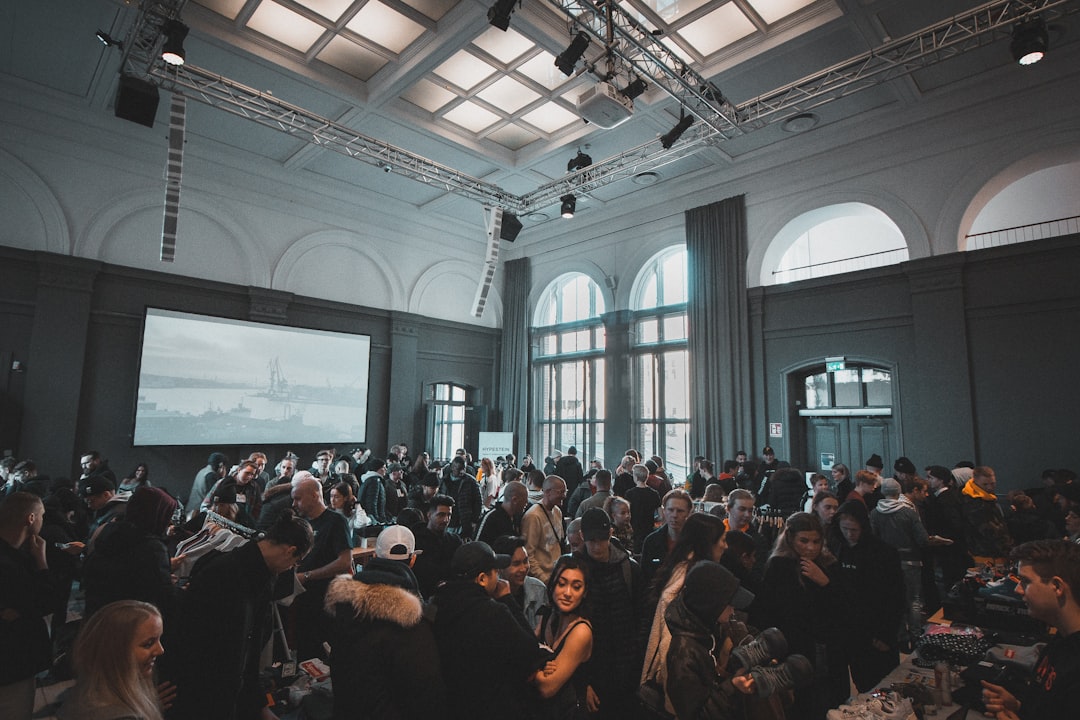
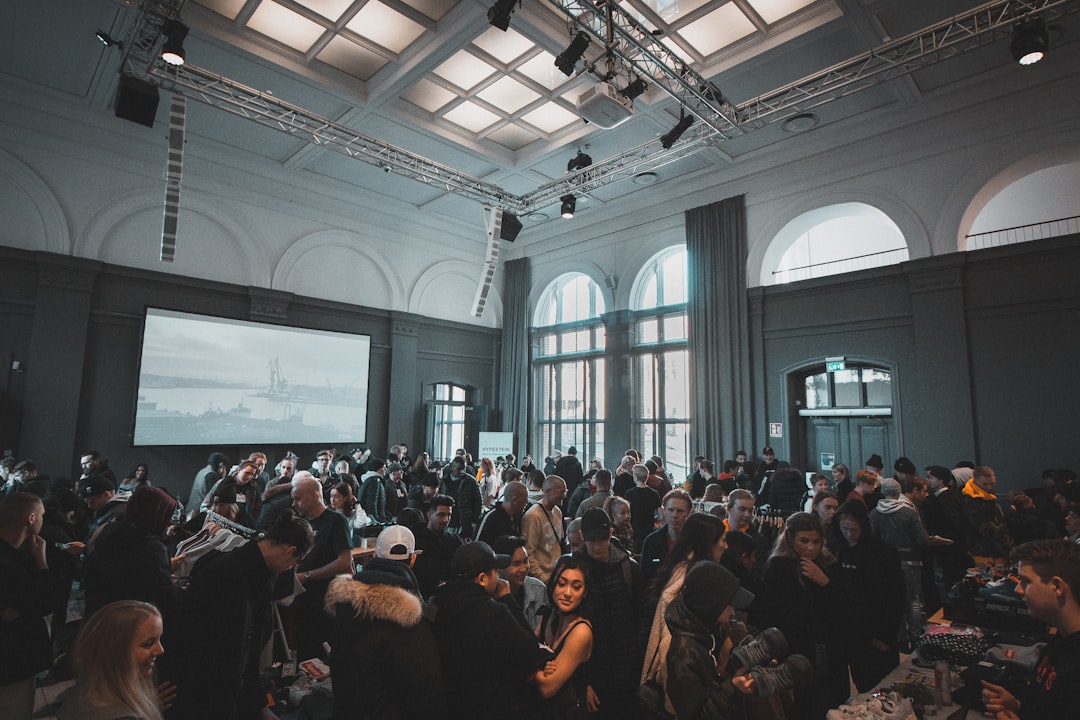
Physical attendance recovery. Aggregate AUMA data shows physical attendance at German trade fairs returning to roughly 95-105% of 2019 levels by 2024-2025, with continued growth into 2026 at most tier-one events. The expected permanent reduction in physical visitor flow, predicted at 20-30% in many 2021 industry forecasts, has not materialised at meaningful scale.
International visitor share at the largest fairs has actually grown back faster than domestic attendance, reflecting pent-up demand for travel that returned strongly from 2023 onward.
Digital event platform retreat. The major digital event platforms launched in 2020-2022 have largely exited the trade-fair-replacement business.
Hopin (its StreamYard product line acquired by Bending Spoons in 2024, after its events business was sold to RingCentral in 2023, and partially deprecated), Brella (refocused on event-supplement rather than event-replacement), Bizzabo (refocused on corporate events rather than trade fairs), and several venue-built proprietary platforms have all retrenched to narrower scope.
The platforms that survived as serious players (Swapcard, Grip, EventX, Eventee) did so by positioning as physical-event enhancement rather than physical-event replacement.
Exhibitor budget reallocation. UFI Barometer 2026 records exhibitor digital allocation peaking at roughly 25-35% of fair-programme budget in 2021-2022, then falling back to 5-15% by 2024-2025 and remaining there in 2026. The 5-15% range covers matchmaking platform engagement, digital catalogue presence, and post-event digital follow-up, the four components that actually work, rather than the broader digital infrastructure investments that disappointed.
“We spent over EUR 400,000 on a virtual booth platform in 2021 because we believed the digital fair was the future. By 2024 we had quietly shut it down. The reality is that our visitors want to be in the hall, talking to our people, touching our products. The digital layer is useful but it is a layer, not a fair.”, Common framing among European tier-one exhibitor marketing leads who invested heavily in 2020-2022 digital infrastructure
What stabilised: the four useful hybrid components
Four hybrid components have stabilised as genuinely useful exhibitor infrastructure. Each shares the feature that it complements physical-fair value rather than competing with it.
Online matchmaking platforms. Pre-fair meeting scheduling via organiser-provided systems (Messe Frankfurt’s Matchmaking 365, RAI Amsterdam’s RAI Connect, Fiera Milano’s MyMatching, Hannover Messe’s matchmaking platform) is the largest single value driver among digital layers.
Pre-booked meeting share has grown from roughly 30% pre-2020 to 50-65% in 2025-2026, with corresponding lift in qualified-conversation throughput during the fair. The matchmaking layer extends the physical event rather than replacing it, meetings are scheduled digitally, conducted physically at the stand or fair meeting rooms.
Digital catalogue and product directory layers. Visitor use of fair-organiser digital catalogues remains strong both before and after the fair. Pre-fair, visitors use the catalogue to plan stand visits and shortlist suppliers. Post-fair, the catalogue remains active for several months and generates measurable inbound lead flow to exhibitors.
The UFI Barometer 2026 records post-fair catalogue-driven lead flow contributing 8-15% of total fair-attributed leads at fairs with well-maintained digital catalogues.
Livestream and on-demand session content. Conference programmes at the larger European fairs (Hannover Messe forum sessions, IBC keynote streams, EuroShop conference content) are increasingly livestreamed and made available on-demand. Exhibitors use the content as marketing assets through the year, embedding it in their own content channels and referencing it in sales conversations.
The content typically reaches several multiples of the live-attendance audience in the months following the fair.
Post-event digital networking. Fair-specific apps that remain active for 4-8 weeks post-event allow visitors and exhibitors to continue conversations started physically. The most engaged users, typically the 10-20% of visitors who attended with specific buying intent, actively use the post-event window for follow-up scheduling, content download, and supplier shortlist refinement.
Exhibitors who staff the post-event app window (typically one named individual for 4-6 weeks) see meaningful incremental lead flow.
| Hybrid component | Genuine use rate | Why it works |
|---|---|---|
| Online matchmaking platforms | 50-65% pre-booked meeting share | Extends physical interaction, both sides actively opt in |
| Digital catalogue / product directory | 8-15% of total fair-attributed leads | Persistent infrastructure, visitor-driven discovery |
| Livestream / on-demand conference content | 3-8x live audience reach | Content amortises beyond fair days |
| Post-event digital networking (4-8 week window) | 10-20% of attendees actively use | Bridges fair to follow-up commercial cycle |
These four components share a positioning logic: each delivers value at a point where physical fairs are weak (scheduling logistics, pre-fair discovery, content amortisation, post-fair continuation) rather than attempting to replicate where physical fairs are strong (dense informal interaction, trust-building, product evaluation through direct experience).
What retreated: the disappointing hybrid features
A much larger set of hybrid features that received heavy 2020-2022 investment have visibly retreated. The pattern in each case is the same: the feature attempted to replicate physical-fair value digitally and failed, with the result that exhibitors and visitors both stopped using it.
Virtual booth replicas of physical stands. The 3D digital twin of the physical stand was the centrepiece of many 2020-2022 hybrid platforms. Engagement turned out to be low in practice. Physical visitors rarely return to the virtual version; remote visitors engage briefly without the conversation depth that the physical visit delivers. Major modular manufacturers (Octanorm, Aluvision) have quietly de-emphasised virtual replica features in their 2026 offerings.
Standalone digital-only trade fairs. Several European industry sectors attempted digital-only fair editions in 2020-2021. With limited exceptions, these have not been repeated. The combination of low visitor engagement, weak commercial conversion, and high platform infrastructure cost made the format commercially unsustainable for organisers and exhibitors alike.
Where the digital-only format persists, it has typically morphed into specialised narrow-use programming (vendor briefings, industry-association webinars) rather than full fair replacement.
Live-streamed exhibitor presentations to remote audiences. The 2020-2022 experiments with live-streaming exhibitor stand presentations to remote audiences saw low viewership and high production cost. Most exhibitors have ceased these in 2026. The exception is large vendor announcements at flagship fairs (MWC, IFA, IAA) where the press and analyst audience justifies the production investment, but this is a narrow use case rather than a general exhibitor practice.
Avatars, gamification, and metaverse-style environments. The metaverse-style exhibition platforms that received heavy media coverage in 2021-2022 have largely failed commercially. Visitor engagement was novelty-driven and did not sustain. The few platforms that survived (Spatial, Decentraland trade-fair zones) operate at scale orders of magnitude below the physical event ecosystem.
| Disappointing component | Engagement reality | Status in 2026 |
|---|---|---|
| Virtual booth replicas | % of physical visitors engage | De-emphasised by major manufacturers |
| Digital-only standalone fairs | Most failed commercially | Largely retreated to specialised narrow use |
| Live-streamed exhibitor presentations | Low viewership, high cost | Persists only at flagship-fair vendor announcements |
| Avatar / gamified environments | Novelty-driven, did not sustain | Failed commercially in most contexts |
| Metaverse-style trade-fair platforms | Engagement orders of magnitude below physical | Active but at margin of industry |
The honest reading: the post-COVID period taught the European industry that digital infrastructure delivers value where it complements physical fairs and disappoints where it attempts to replicate them. The features that worked in the four-useful-component table above are mostly the features that augmented existing physical-fair workflows; the features that retreated are mostly the features that tried to replace them.
The digital-first formats that work outside the trade-fair context
Digital-first event programming has not disappeared, it has retreated to the use cases where it fits better than physical does. These are programmes where the value comes from content delivery, training, or already-acquainted-community interaction rather than from the dense informal exchange that physical trade fairs deliver.
Vendor product briefings. Software vendors, technical product manufacturers, and B2B service providers run regular digital-first product briefings (typically 45-90 minute one-to-many sessions) that work well as digital programming. The audience is self-selecting, the value is in the content delivery, and the format scales without venue cost.
Industry-association webinars. Continuing education, regulatory updates, certification programmes from industry associations (FAMAB, IFES, AUMA, sector-specific bodies) run successfully as digital-first formats. The format suits the use case where structured content delivery dominates over informal interaction.
Partner enablement programmes. Channel partner training, reseller certification, partner-community programmes that previously ran as in-person events now mostly run digital-first. The audience is already known and pre-qualified; the value is in operational enablement rather than discovery.
Specialised micro-conferences. Single-topic deep dives for already-acquainted communities (technical user groups, specialist research communities, narrow vertical buyer groups) often work better digital-first than physical, because the audience is small enough that physical convening cost dominates the value.
None of these formats compete with physical trade fairs. They complement physical events by handling functions that physical events handle poorly (cheap repeatable content delivery to known audiences, narrow-scope structured programming). The mature 2026 European exhibitor uses both, physical trade fairs for the dense interaction and discovery; digital-first programming for the structured content and partner enablement, without confusing the two.
“We stopped trying to compete with our own trade-fair appearances digitally in 2023. The digital programmes we run now are quarterly product briefings to our installed customer base and partner training. They serve different commercial purposes than the fair appearances. Trying to make them do the fair’s job was the mistake we and a lot of our peers made in 2020-2022.”, Common framing among European B2B exhibitor marketing leads
The defensible 2026 budget allocation
For most European exhibitors, the defensible 2026 budget allocation across physical and digital fair-programme components:
| Allocation tier | Physical share | Digital share | Use case |
|---|---|---|---|
| Standard B2B exhibitor (most cases) | 85-90% | 10-15% | Stand build, on-site operations, hospitality dominate; digital is matchmaking + catalogue + post-event app |
| Tier-one flagship exhibitor at MWC/IFA scale | 75-85% | 15-25% | Adds livestream production for vendor announcements, larger post-event content amortisation |
| Software/media exhibitor with year-round digital community | 60-75% | 25-40% | Higher digital share justified by year-round community engagement amortising beyond fair |
| Consumer-goods exhibitor at sampling-heavy fairs | 90-95% | 5-10% | Physical sampling dominates value; digital layer is minimal |
The dominant pattern is the 85-90% physical share. Exhibitors who continued allocating 25-40% to digital after 2022 have largely retreated to the standard range as the underlying digital-event traffic failed to materialise. The narrow exceptions (software vendors with year-round community programmes, media businesses with content amortisation models) sit higher on the digital share because the infrastructure delivers value beyond the fair itself.
The most expensive 2026 budget mistake among European exhibitors is over-investment in digital infrastructure based on 2020-2022 hype-cycle expectations that the underlying traffic has not vindicated. The corresponding under-investment risk, going below 5% digital share, is real but uncommon among serious exhibitors, since the matchmaking and catalogue engagement that defines the lower end of the digital allocation is now standard practice at almost all tier-one European fairs.
How to act on this
For exhibitors planning the 2026-2027 cycle, the practical hybrid posture:
- Engage actively with the organiser matchmaking platform at your target fairs. This is the highest-value digital allocation available. The /fairs directory tags fairs by matchmaking-platform maturity.
- Maintain your digital catalogue presence with the same rigor as your physical stand presence. Update product entries, link to current content, monitor post-fair lead flow.
- Build post-event app engagement into your follow-up workflow. Assign a named individual for the 4-8 week post-event window with explicit conversation-continuation responsibility.
- Resist over-investment in digital-only infrastructure. Virtual booth replicas, live-streamed exhibitor presentations, metaverse environments have not delivered against their 2020-2022 expectations and the budget produces better return when allocated to physical components.
- Model the budget allocation in your stand programme planning. The Booth Cost Calculator supports physical-vs-digital allocation modelling at the fair-programme level.
Related reading
- AI in Exhibitions, the matchmaking infrastructure that drives much of the useful hybrid value
- AR and VR on European Exhibition Stands, the immersive-technology adoption pattern with similar hype-vs-reality gaps
- Sensor Analytics and Booth Data, the on-stand data layer that complements the post-event digital follow-up
- Pre-Fair Marketing Plan, how the hybrid components fit into the pre-fair workflow
- Post-Fair Lead Follow-Up, the four-to-six week post-event window where digital infrastructure delivers measurable lift
References and primary sources
- UFI Barometer 2026 (Global Exhibition Industry Barometer), UFI Global Association of the Exhibition Industry, ufi.org
- AUMA Trends 2025⁄2026, Association of the German Trade Fair Industry, auma.de
- IFES (International Federation of Exhibition and Event Services) post-pandemic format observations, ifesnet.com
- Messe Frankfurt Matchmaking 365 platform documentation
- RAI Amsterdam RAI Connect platform documentation
- Hannover Messe matchmaking and digital catalogue documentation, Deutsche Messe AG
- Swapcard, Grip, EventX, Eventee platform positioning publications (2024-2026)
- FAMAB Verband Direkte Wirtschaftskommunikation digital innovation publications, famab.de
FAQFrequently asked questions
UFI Barometer 2026 estimates roughly 40-45% of European trade fairs operate a meaningful digital layer alongside the physical event, down from the 70-80% peak in 2021-2022. The narrower question, how many fairs run a digital layer that delivers exhibitor value beyond marketing optics, sits closer to 20-25%. The remainder are running residual platforms that exhibitors largely ignore.
The fairs where hybrid genuinely stabilised tend to be the larger tier-one events with international visitor bases (MWC Barcelona, IFA Berlin, ISE Barcelona, Hannover Messe, IBC Amsterdam, drupa) where the digital layer extends physical reach to visitors who could not attend in person. Smaller and more regional fairs have largely returned to physical-only formats.
Three lessons stuck. First, digital-only events struggle to replicate the dense informal interaction that drives much of the commercial value of physical fairs, the hallway conversations, chance encounters, and trust-building that visitors and exhibitors both value.
Second, digital-only event attention is fragmented and shallow; visitor engagement on digital-only platforms typically lasts under 90 minutes vs full-day physical attendance, with proportional reduction in conversation depth and lead quality.
Third, digital infrastructure costs are substantial, well-run digital event platforms cost organisers EUR 200,000-1,500,000+ per event, comparable to the marginal cost of physical venue rental for similar-scale events.
The combined effect: digital-only events have not displaced physical fairs in any European industry sector and have largely retreated to specialised functions (vendor briefings, training events, partner conferences) where they fit better than as trade-fair replacements.
Four components have stabilised as genuinely useful. First, online matchmaking platforms (covered separately in the AI in Exhibitions article) that enable pre-fair meeting scheduling, growing pre-booked meeting share from 30% pre-2020 to 50-65% in 2025-2026.
Second, digital catalogue and product directory layers that visitors use before and after the fair to plan visits and follow up, with measurable post-fair lead flow back to exhibitors via the directory. Third, livestream and on-demand session content from fair-organiser conference programmes, which exhibitors use as marketing assets through the year.
Fourth, post-event digital networking that extends fair conversations into the weeks following, particularly via fair-specific apps that remain active for 4-8 weeks post-event. Outside these four components, most hybrid features have weak or zero adoption by exhibitor sales teams in 2026.
Largely no. The virtual booth replica concept, a 3D digital twin of the physical stand visitors can explore online, saw heavy investment in 2020-2022 with disappointing engagement. Visitors who attend physically rarely engage with the virtual replica; visitors who cannot attend physically engage briefly but the experience does not translate to the conversation-depth or trust-building that the physical visit delivers.
The major modular manufacturers (Octanorm, Aluvision) and stand-building software vendors have quietly de-emphasised virtual replica features in their 2026 offerings.
The functions that virtual replicas tried to deliver, pre-fair visualisation, post-fair recap, remote-visitor inclusion, are now better served by product video content, fair-organiser session recordings, and one-to-one follow-up rather than spatial-replica experiences.
Digital-first works for narrow, defined use cases that do not require dense informal interaction.
Vendor product briefings (one-to-many software demos, technical training), industry-association webinars (continuing education, regulatory updates), partner enablement programmes (channel training, certification), and specialised micro-conferences (single-topic deep dives for already-acquainted communities) all run successfully as digital-first formats.
None of these compete with physical trade fairs; they complement physical events by handling functions that physical events handle poorly. The most successful European exhibitor digital programming in 2026 typically takes this complementary positioning rather than attempting to replicate the trade-fair experience digitally.
The defensible 2026 allocation for most European exhibitors: 85-95% physical (stand build, on-site operations, staffing, hospitality, pre-booked meeting infrastructure) and 5-15% digital (matchmaking platform engagement, digital catalogue presence, post-event digital follow-up content).
The exhibitors who continued allocating 25-40% to digital infrastructure after 2022 have largely retreated to the lower range as the underlying digital-event traffic failed to materialise.
The narrow exceptions are exhibitors with genuine year-round digital community engagement (some software vendors, some media businesses) where the digital infrastructure delivers value beyond the fair itself; for these, the digital allocation may sit higher because it amortises across more than the fair appearance.