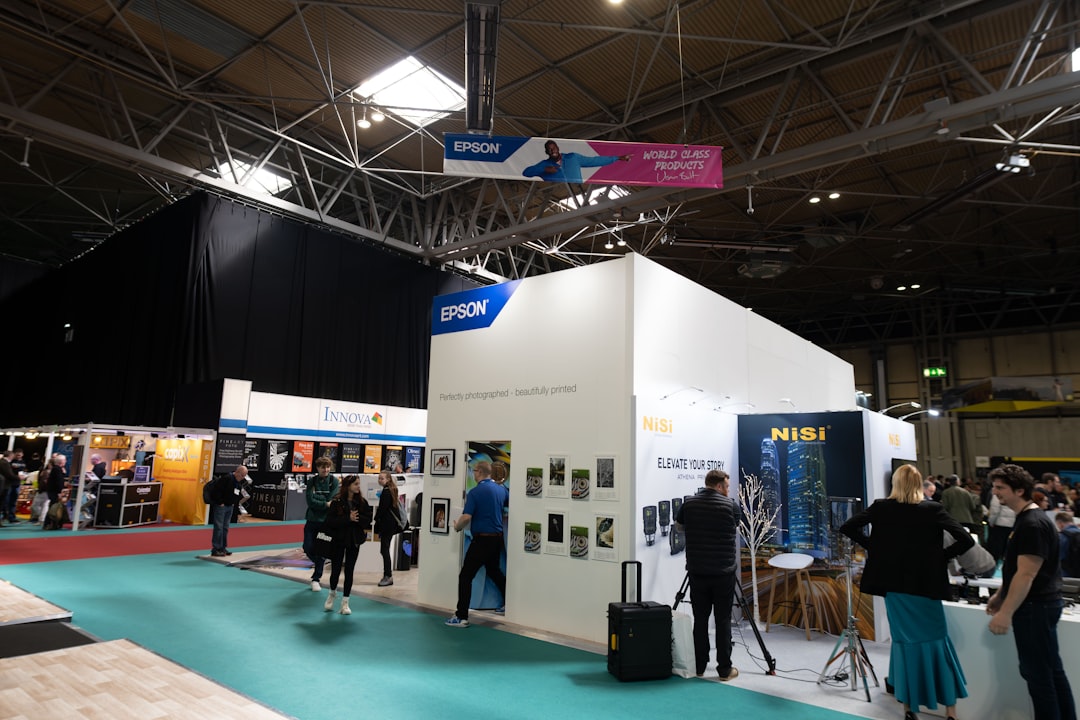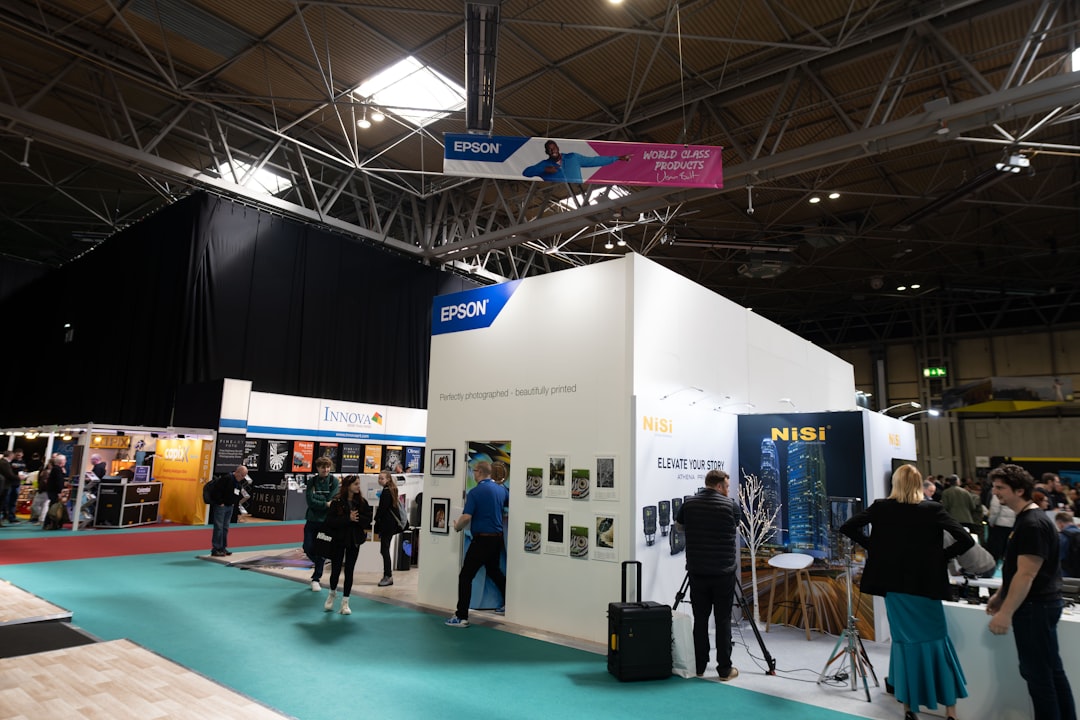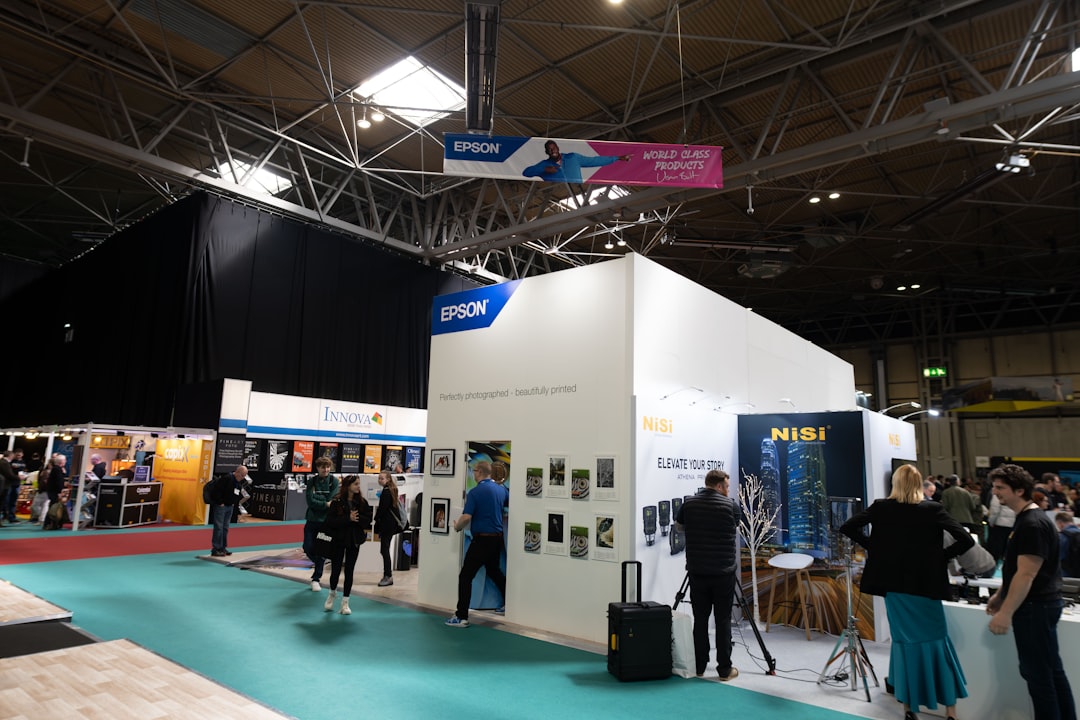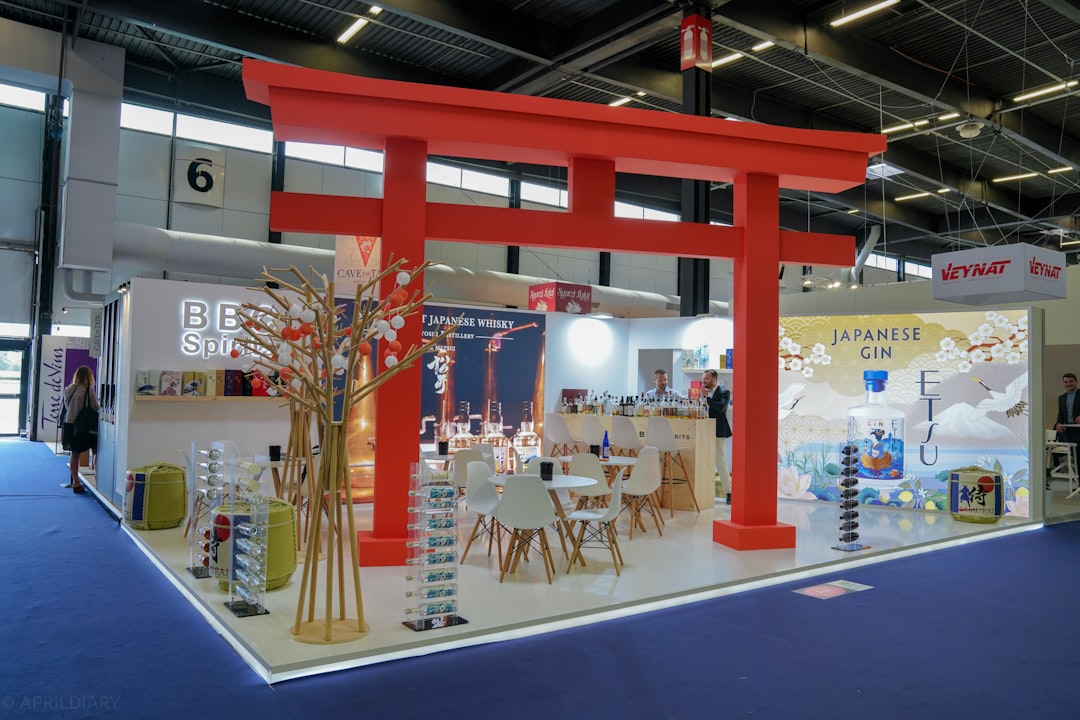
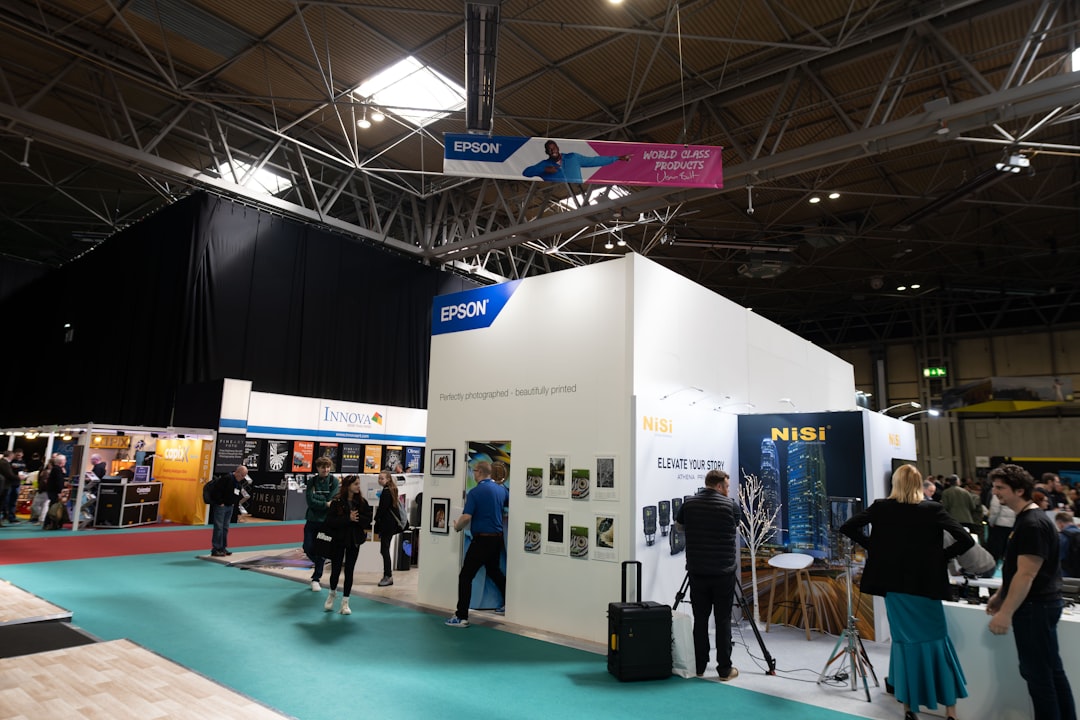
EuroShop has anchored the European retail capital-goods industry calendar since June 1966, the triennial Messe Düsseldorf fair where retail technology, store fitting, visual merchandising, lighting, refrigeration, expo/event marketing and POS systems converge into a single 120,000+ sqm exhibition that doubles as the most important meta-fair for the exhibition stand-build industry itself.
When EuroShop’s Expo + Event Marketing area showcases new modular stand systems, sustainable materials, AV integration patterns and lighting innovations, the year’s worth of European trade fair stand design follows. For exhibitors and stand builders, EuroShop is simultaneously a vertical industry fair (for retail) and a horizontal trend-setting fair (for everyone who builds exhibition stands).
This handbook covers EuroShop’s seven content areas, the historical growth pattern from 331 exhibitors in 1966 to 2,369 exhibitors in 2017, the 2020 COVID-era edition, the 2026 next-edition strategic context, the international expansion through C-star Shanghai, and the practical implications for European exhibitors and stand builders treating EuroShop attendance as research investment.
What EuroShop is and why it matters
EuroShop is the world’s leading capital-goods trade fair for the retail industry. It is initiated by the EHI Retail Institute (the German retail research institute) and organised by Messe Düsseldorf GmbH at the Messe Düsseldorf exhibition grounds. The fair takes place every three years (every two years from inception in 1966 through 1972, switching to triennial cycle from 1975 onwards as innovation cycles in shop fitting lengthened). Both trade visitors and the general public are admitted.
The most recent edition was EuroShop 2020 (16-20 February 2020), the largest pre-COVID edition by exhibition space at 123,799 sqm with 2,292 exhibitors. The 2020 attendance of 94,339 visitors reflected the early-COVID European environment with material drops in Italian and Asian visitor attendance, the previous 2017 edition had drawn 113,906 visitors.
EuroShop’s industry significance derives from its category dominance: there is no other European trade fair that combines retail technology, store fitting, visual merchandising, lighting design, refrigeration, expo/event marketing and POS systems in a single venue.
The combination is structurally why EuroShop matters as both retail-industry buyer event and exhibition-industry trend-setting event, the same Visual Merchandising principles that drive store window design drive trade fair stand design; the same Lighting innovations that transform retail spaces transform exhibition spaces; the same Expo & Event Marketing technology shown at EuroShop deploys at MWC, IFA, Hannover Messe, Salone del Mobile twelve months later.
The seven content dimensions
From 2017 onwards EuroShop restructured the previous four-area format (EuroSales, EuroConcept, EuroCIS, EuroExpo) into seven distinct dimensions of retail trade:
1. POP/POS Marketing, signage, displays, outdoor communication for retail point of presence and point of sale environments.
2. Expo & Event Marketing, stand construction and equipment, brand communication, communication design, event technology. This is the dimension most directly relevant to exhibition stand-builders and exhibitors.
3. Retail Technology, retail software, POS technology, mobile, e-commerce, payment systems.
4. Lighting, systems, design, technology. The lighting innovations shown here typically appear in major European trade fair stand designs within 12-18 months.
5. Visual Merchandising, display mannequins, store and window decorations.
6. Shop Fitting & Store Design, fixtures and equipment, architecture, store planning, materials and surfaces.
7. Food Tech & Energy Management, refrigeration, building automation, cooking and baking equipment.
For exhibition industry attendees the most relevant dimensions are Expo & Event Marketing, Lighting, Shop Fitting & Store Design (materials and surfaces directly inform stand-build material choices), and Visual Merchandising (display design principles cross over to stand merchandising).
EuroShop’s growth trajectory
The historical data tells the story of European retail capital-goods evolution:
| Year | Exhibitors | Visitors | Exhibition space (sqm) |
|---|---|---|---|
| 1966 | 331 | 28,762 | 19,614 |
| 1972 | 478 | 41,393 | 39,198 |
| 1981 | 597 | 45,742 | 41,966 |
| 1990 | 1,120 | 100,640 | 79,842 |
| 1999 | 1,587 | 92,377 | 96,524 |
| 2008 | 1,895 | 104,766 | 106,871 |
| 2014 | 2,229 | 109,496 | 116,579 |
| 2017 | 2,369 | 113,906 | 127,592 |
| 2020 | 2,292 | 94,339 | 123,799 |
The 1966-1990 period reflects the European retail revolution, self-service supermarkets, discount supermarkets, shopping mall buildout driving retail capital goods demand. The 1999-2008 period reflects the digital integration era, POS systems, ERP, supply chain management, merchandise security.
The 2014-2017 period reflects the omnichannel era, mobile payment, e-commerce integration, store-as-fulfilment-centre transformation. The 2020 edition reflects COVID’s distortion of an otherwise upward trajectory.
The visitor-per-exhibitor ratio (28-50 across editions) reflects EuroShop’s institutional B2B character, visitors are professionals making capital purchase decisions, not general public. The fair’s editorial-vetted exhibitor base maintains quality consistency.
The 2026 strategic context
The next EuroShop edition is expected in early 2026, following the standard triennial cycle from 2020. EuroShop 2026 sits in a materially different European retail and exhibition industry context than its predecessors:
- CSRD reporting compliance, retail exhibitors and exhibition stand-builders both face structured sustainability reporting requirements from FY2025 onwards. Sustainable materials, recycled-content thresholds, end-of-life take-back schemes will dominate Lighting and Shop Fitting dimensions. See Modular vs custom lifecycle carbon CSRD.
- EU AI Act, retail technology displays incorporating AI-driven customer analytics, dynamic pricing, recommendation engines fall within the AI Act’s scope. Risk-tier classification and transparency obligations apply. See EU AI Act trade-fair stand deployment.
- EU Product Liability Directive 2024⁄2853, effective December 2026, strict liability extends to software and AI-driven products. EuroShop exhibitors demoing software/AI retail products in early 2026 are demoing under the old PLD framework; the new framework applies for the following triennial cycle.
- EU Packaging and Packaging Waste Regulation 2025⁄40, effective August 2026, reshapes retail packaging requirements with material restrictions, recycled content thresholds, reusable packaging targets affecting POP/POS Marketing exhibitors directly. See EU PPWR trade fair impact.
- Post-Brexit UK exhibitor framework, UK retail technology and store-design firms exhibiting at EuroShop operate under the TCA framework. See EU-UK TCA UK exhibitor handbook.
EuroShop 2026 attendees will see the first European fair-floor demonstration of these regulatory frameworks in concrete product form, sustainable shop-fitting materials with CSRD-aligned documentation, AI-driven retail systems with AI Act risk classification disclosures, PPWR-compliant POP/POS packaging designs.
EuroShop’s supporting programme
The fair runs six dedicated content forums alongside the exhibition floor:
EuroCIS Forum, retail technology innovations and trends presented through current case studies. EuroCIS also runs as a standalone annual fair in the non-EuroShop years (so retail technology attendees can access EuroCIS content annually rather than triennially).
Omnichannel Forum, digital and classical distribution channel integration, success strategies, technology integration.
ECOpark and ECO Forum, energy-efficient retail trade dedicated area, increasingly central as CSRD reporting requirements drive retailer attention to operational carbon.
Architecture & Design Forum, store design, architecture, lighting, fittings, visual merchandising. The Forum’s curated content directly informs the year’s exhibition stand design trends.
POPAI Forum, POS marketing focus organised through the international POPAI (Point of Purchase Advertising International) association.
Expo + Event Forum, programme of presentations, best-case studies and discussions curated by industry experts. This is the meta-event for the European exhibition stand-build industry itself, where the year’s stand-design innovations are first demonstrated and discussed.
The Forums extend value beyond pure exhibition-floor browsing, they convert EuroShop attendance from product-discovery to industry-context-building. For exhibition stand builders attending EuroShop as research investment, the Expo + Event Forum is the highest-value content allocation.
EuroShop awards and editorial credibility
EuroShop hosts six industry awards including the EuroShop RetailDesign Award for the best shops with successful concepts, and the EHI-Stiftung/GS1 Germany Scientific Prize for outstanding academic works in retail research (bachelor’s, master’s, doctoral theses with EUR 38,000 total prize money). The awards programme provides editorial credibility for category leadership and frequently drives subsequent industry adoption of awarded concepts.
For stand builders the parallel German Brand Award and Red Dot Design Award programmes recognise exhibition stand design excellence, winners at these adjacent award programmes often present at EuroShop’s Expo + Event Forum, providing direct exposure to the year’s design-vanguard work.
International expansion: C-star Shanghai
EuroShop’s first international offshoot, C-star (Shanghai’s International Trade Fair for Solutions and Trends all about Retail), launched in 2015 as Messe Düsseldorf’s Asian market access programme. C-star operates annually rather than triennially, with the May 2016 edition drawing 180 companies from 18 countries and 7,600 trade visitors from 77 nations.
C-star serves as a parallel platform for EuroShop exhibitors targeting Asian retail markets and as a parallel content channel for retail capital-goods innovation flow.
For European exhibition stand-builders C-star matters as evidence of the EuroShop programme’s intercontinental adoption pattern, innovations debuted at EuroShop Düsseldorf flow to C-star Shanghai annually, providing a faster Asian distribution cycle than the triennial Düsseldorf-only model.
Why exhibition stand builders should attend EuroShop
Four research-investment justifications for exhibition stand-builders treating EuroShop attendance as professional development:
1. Year-ahead trend visibility. Stand design trends visible at EuroShop appear in major European trade fair stands 12-18 months later. Building EuroShop attendance into the triennial procurement and capability planning cycle delivers competitive positioning that catches up-with rather than lags behind.
2. Material and finish innovation. New sustainable materials, recycled-content panel systems, biodegradable graphics substrates, modular reusable systems all debut at EuroShop’s Shop Fitting & Store Design area before appearing in European stand-build catalogues. Stand builders sourcing early hold inventory advantage when client demand develops.
3. Lighting technology evolution. LED systems, dynamic lighting controls, daylight-spectrum integration evolve through EuroShop’s Lighting area. The stand-build lighting decisions defining the next 36 months across European fairs trace back to EuroShop demonstrations.
4. AV and interactive technology integration patterns. Retail-floor AV integration patterns (touch tables, interactive walls, AR overlay systems, sensor-driven content adaptation) translate directly to exhibition stand AV deployment. EuroShop’s Expo & Event Marketing area shows current integration state-of-the-art.
The investment cost runs EUR 600-1,800 in registration plus travel and accommodation (Düsseldorf hotel premium during EuroShop runs EUR 200-400/night typical). The 3-4 day attendance commitment returns disproportionate value for stand-builder businesses planning multi-year capability and material-sourcing strategy.
Düsseldorf as fair-host city
Messe Düsseldorf is among the world’s leading exhibition organisers by revenue and operates 262,704 sqm of exhibition floor space across 19 halls. The complex sits 8 km north of Düsseldorf central station with U78/U79 tram service direct from the station in 18 minutes. Düsseldorf Airport (international hub) connects to the Messe via S-Bahn in 20 minutes.
Düsseldorf’s positioning as German fair-host city benefits EuroShop attendance: direct international flight connectivity, English-default hospitality industry serving the diplomatic and corporate audience, German operational efficiency for venue services, the German fair technical compliance framework governing stand-build at Messe Düsseldorf.
For exhibitors building at EuroShop the venue compliance regime is the same DIN VDE 0100-718 + DGUV Vorschriften 17⁄18 + Land VStättVO NRW + AUMA guidelines stack that governs all Messe Düsseldorf events including K-Messe (plastics), drupa (printing), Medica (medical), interpack (packaging), boot (boating). Builders with Messe Düsseldorf experience transfer capability directly to EuroShop deployments.
Conclusion
EuroShop’s significance for the European exhibition industry extends beyond its primary identity as the retail capital-goods trade fair. It is the meta-fair that sets European stand-design, materials, lighting and interactive-technology trends for the three-year cycle that follows each edition.
For exhibitors evaluating sustainable materials adoption, for stand builders sourcing next-generation modular systems, for AV technology suppliers evaluating retail-floor integration patterns that translate to exhibition floors, for lighting designers tracking LED and dynamic-lighting evolution, EuroShop attendance returns research investment value that single-vertical fairs cannot match.
The 2026 edition will be the first held under the converging CSRD reporting, EU AI Act, EU PLD 2024⁄2853, and EU PPWR 2025⁄40 regulatory frameworks, and the way exhibitors translate these frameworks into concrete product form on the EuroShop floor will define the European exhibition industry’s response patterns through to the next edition. Stand builders and exhibitors planning for the 2026-2029 cycle should treat the next EuroShop as the primary intelligence event of the cycle.
References
- EHI Retail Institute, “EuroShop overview”, ehi.org
- Messe Düsseldorf GmbH, messe-duesseldorf.de
- EuroShop official website, euroshop.de
- EuroCIS, euroCIS.com
- C-star Shanghai, c-star-expo.com
- POPAI, popai.com
- DIN VDE 0100-718:2017-06, “Errichten von Niederspannungsanlagen, Anforderungen für Betriebsstätten, Räume und Anlagen besonderer Art, Öffentliche Einrichtungen und Arbeitsstätten”, Beuth Verlag
- Land VStättVO NRW, Versammlungsstättenverordnung Nordrhein-Westfalen
- Directive (EU) 2022⁄2464 of the European Parliament and of the Council on Corporate Sustainability Reporting (CSRD)
- Regulation (EU) 2024⁄1689 of the European Parliament and of the Council on artificial intelligence (EU AI Act)
- Directive (EU) 2024⁄2853 of the European Parliament and of the Council on liability for defective products
- Regulation (EU) 2025⁄40 of the European Parliament and of the Council on packaging and packaging waste (PPWR)
FAQFrequently asked questions
EuroShop is the world’s leading capital-goods trade fair for the retail industry, held every three years at Messe Düsseldorf since June 1966 (every two years from 1966-1972, switching to triennial cycle from 1975 onwards). It is initiated by the EHI Retail Institute and organised by Messe Düsseldorf GmbH.
EuroShop matters for the exhibition industry, not just retail, because no other European trade fair combines retail technology, store fitting, visual merchandising, lighting, refrigeration, expo/event marketing and POS systems in a single venue.
The same Visual Merchandising principles that drive store window design drive trade fair stand design; the same Lighting innovations that transform retail spaces transform exhibition spaces; the same Expo & Event Marketing technology shown at EuroShop deploys at MWC, IFA, Hannover Messe, Salone del Mobile twelve months later.
EuroShop attendance is research investment for exhibition stand-builders treating their procurement and capability planning at year-ahead-of-deployment cadence.
From 2017 onwards EuroShop restructured the previous four-area format (EuroSales, EuroConcept, EuroCIS, EuroExpo) into seven distinct dimensions. (1) POP/POS Marketing, signage, displays, outdoor communication for retail point of presence and point of sale.
(2) Expo & Event Marketing, stand construction and equipment, brand communication, communication design, event technology (the dimension most directly relevant to exhibition stand-builders and exhibitors). (3) Retail Technology, retail software, POS technology, mobile, e-commerce, payment systems.
(4) Lighting, systems, design, technology (innovations here typically appear in major European trade fair stand designs within 12-18 months). (5) Visual Merchandising, display mannequins, store and window decorations. (6) Shop Fitting & Store Design, fixtures and equipment, architecture, store planning, materials and surfaces.
(7) Food Tech & Energy Management, refrigeration, building automation, cooking and baking equipment. For exhibition industry attendees the most relevant dimensions are Expo & Event Marketing, Lighting, Shop Fitting & Store Design and Visual Merchandising.
EuroShop launched 11-15 June 1966 with 331 exhibitors from 55 countries, ~29,000 trade visitors and 19,614 sqm of exhibition space.
Growth has been steady across editions: 1972 (478 exhibitors, 41,393 visitors, 39,198 sqm), 1990 (1,120 exhibitors, 100,640 visitors, 79,842 sqm, the first six-figure visitor edition), 2008 (1,895 exhibitors, 104,766 visitors, 106,871 sqm), 2014 (2,229 exhibitors, 109,496 visitors, 116,579 sqm), 2017 (2,369 exhibitors, 113,906 visitors, 127,592 sqm, the largest visitor edition pre-COVID), 2020 (2,292 exhibitors, 94,339 visitors, 123,799 sqm, COVID-affected with material drops in Italian and Asian attendance).
The 1966-1990 growth reflects European retail revolution (self-service, discount supermarkets, shopping malls); 1999-2008 reflects digital integration (POS, ERP, supply chain, merchandise security); 2014-2017 reflects omnichannel era (mobile payment, e-commerce, store-as-fulfilment-centre).
The visitor-per-exhibitor ratio of 28-50 reflects EuroShop’s institutional B2B character, visitors are professionals making capital purchase decisions, not general public.
The 2026 edition sits in a materially different European regulatory context than predecessors. Four converging frameworks: CSRD reporting compliance from FY2025 onwards drives retail exhibitors and stand-builders to surface sustainable materials, recycled-content thresholds, end-of-life take-back schemes in Lighting and Shop Fitting dimensions.
EU AI Act effective from August 2024 onwards classifies retail technology displays incorporating AI-driven customer analytics, dynamic pricing, recommendation engines into risk tiers with transparency obligations.
EU Product Liability Directive 2024⁄2853 effective December 2026 extends strict liability to software and AI-driven products, EuroShop 2026 attendees see the last edition under the old PLD framework with the new framework applying for the following triennial cycle.
EU Packaging and Packaging Waste Regulation 2025⁄40 effective August 2026 reshapes retail packaging requirements with material restrictions, recycled content thresholds, reusable packaging targets affecting POP/POS Marketing exhibitors directly. EuroShop 2026 attendees will see the first European fair-floor demonstration of these regulatory frameworks in concrete product form.
EuroShop runs six dedicated content forums alongside the exhibition floor. EuroCIS Forum covers retail technology innovations through current case studies, also runs as standalone annual fair in non-EuroShop years. Omnichannel Forum covers digital and classical distribution channel integration.
ECOpark and ECO Forum dedicated to energy-efficient retail trade, increasingly central as CSRD reporting drives operational carbon attention. Architecture & Design Forum covers store design, architecture, lighting, fittings, visual merchandising, directly informs the year’s exhibition stand design trends. POPAI Forum on POS marketing organised through international POPAI association.
Expo + Event Forum, programme of presentations, best-case studies and discussions curated by industry experts, is the meta-event for the European exhibition stand-build industry itself where the year’s stand-design innovations are first demonstrated and discussed. For exhibition stand builders attending EuroShop as research investment, the Expo + Event Forum is the highest-value content allocation.
The Architecture & Design Forum is the second-most-relevant for stand builders given direct overlap of store design principles with stand design principles.
Four research-investment justifications. Year-ahead trend visibility, stand design trends visible at EuroShop appear in major European trade fair stands 12-18 months later; building EuroShop attendance into the triennial procurement and capability planning cycle delivers competitive positioning that catches up-with rather than lags behind.
Material and finish innovation, new sustainable materials, recycled-content panel systems, biodegradable graphics substrates, modular reusable systems debut at EuroShop’s Shop Fitting & Store Design area before appearing in European stand-build catalogues; early sourcing holds inventory advantage when client demand develops.
Lighting technology evolution, LED systems, dynamic lighting controls, daylight-spectrum integration evolve through EuroShop’s Lighting area; stand-build lighting decisions defining the next 36 months trace back to EuroShop demonstrations.
AV and interactive technology integration patterns, retail-floor AV integration patterns (touch tables, interactive walls, AR overlay, sensor-driven content adaptation) translate directly to exhibition stand AV deployment. Investment cost runs EUR 600-1,800 in registration plus travel and Düsseldorf hotel premium (EUR 200-400/night during EuroShop).
The 3-4 day attendance commitment returns disproportionate value for stand-builder businesses planning multi-year capability and material-sourcing strategy.