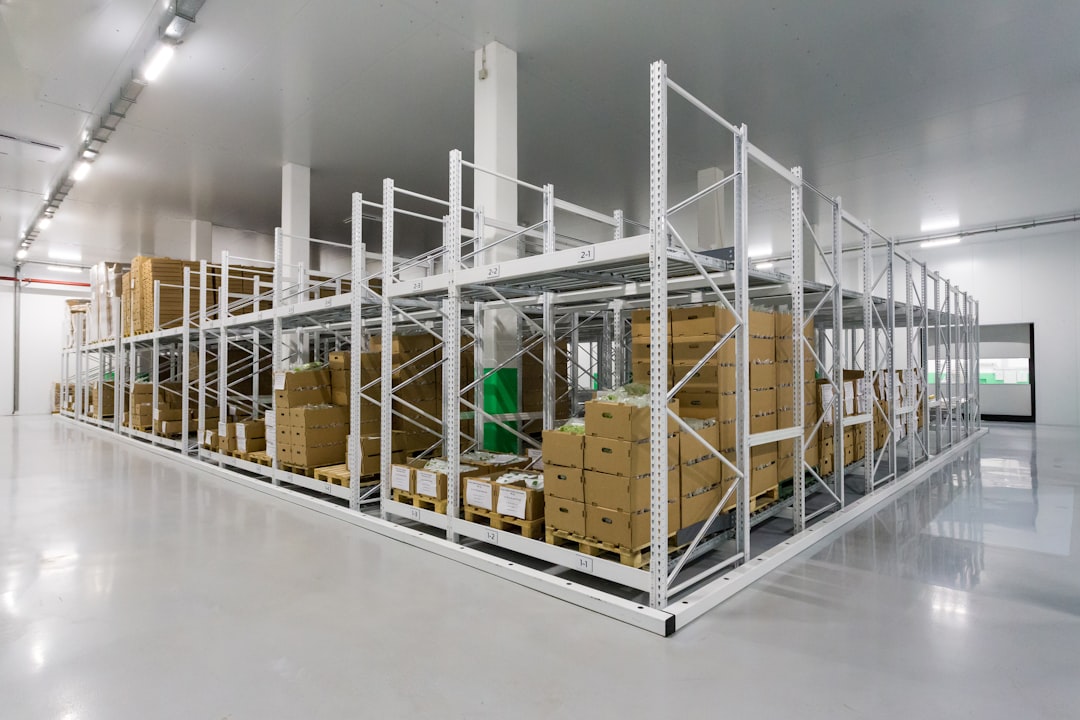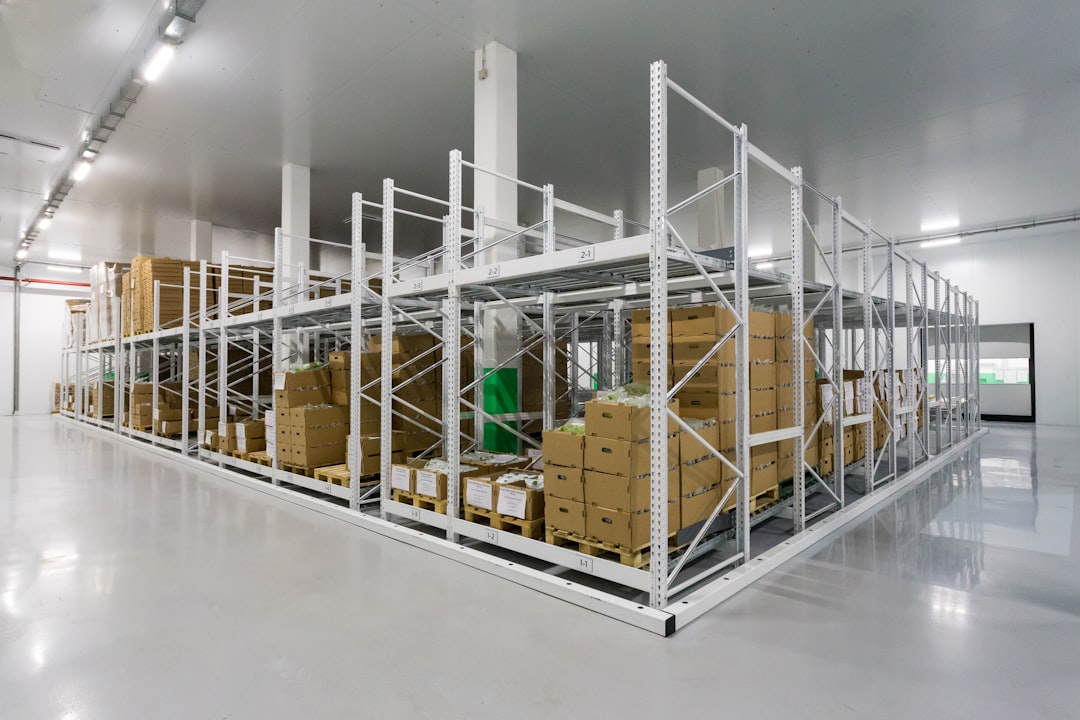
Stand storage between fairs is the invisible cost line that determines whether a multi-fair European calendar runs profitably or hemorrhages money on transport.
The exhibitors who do this well treat storage as a strategic logistics asset: a stand stored in Frankfurt between consecutive European fairs costs less in transport, less in customs friction, and less in component-replacement than the same stand shuttled back to home country between every appearance.
The exhibitors who get it wrong end up with worn stands, missed-window deliveries, and per-fair costs that compound across the calendar.
This article compares the three main storage models used by European exhibitors and non-EU exhibitors at European fairs: bonded warehousing for ATA carnet goods, climate-controlled commercial storage for general use, and non-climate-controlled industrial storage for budget-constrained operations. The 2026 EUR pricing, the operational considerations, and the storage strategies that work for different exhibitor profiles are all covered.
The analysis draws on warehousing operations in Frankfurt, Düsseldorf, Milan, Madrid, Amsterdam, and London, and on the storage practices of pan-European stand builders and multi-fair exhibitors observed across the 2024-2025 fair calendar.
Why storage is a strategic logistics asset
For an exhibitor running four European fairs per year - say, Hannover Messe in April, drupa or EMO in summer, IFA or Frankfurt fairs in autumn, and a Mediterranean fair in winter - the stand makes three to four round trips between home country and Europe if stored at origin. The same stand stored in Europe between fairs makes one round trip per year, with internal European movements between storage and venues.
The cost differential per year for a typical 75 sqm stand:
- Home-country storage with per-fair round trips: approximately EUR 18,000-32,000 annually in transport (assuming UK origin, 4 European fairs, road-and-Channel logistics)
- European storage with intra-EU movements: approximately EUR 9,500-17,500 annually in transport (plus EUR 1,800-7,200 in storage)
For US, Japanese, Korean, and other non-EU exhibitors, the differential is even larger because the home-country option requires airfreight or sea-freight per fair, which can cost EUR 12,000-25,000 per round trip. European storage with carnet management typically reduces total annual transport cost by 60-75 percent.
“The exhibitors who scale across European fairs successfully treat storage as a strategic asset, not an afterthought. The right storage decision at the start of a multi-year European programme can save 30-50 percent on total logistics over the lifetime of the stand. The wrong decision compounds in the opposite direction.” - IELA Operations Committee, multi-fair calendar logistics guidance 2025
The three storage models
The decision matrix below summarises which storage model fits which exhibitor profile.
| Exhibitor profile | Recommended storage | Rationale |
|---|---|---|
| EU-based, multi-fair European calendar | Climate-controlled commercial | No carnet needed; preserves component condition |
| UK, Swiss, US, Asian exhibitor on ATA carnet | Bonded warehousing | Preserves carnet temporary-admission status |
| Budget-constrained exhibitor, simple modular stand | Non-climate-controlled industrial | Lower cost; acceptable for metallic structures |
| Single annual European appearance | Home-country storage | Storage cost exceeds saved transport |
| Stand stored 6+ months between fairs | Long-term commercial | Negotiated rates for extended storage |
| Stand stored less than 30 days between fairs | Venue-adjacent transit storage | Short-term operational convenience |
Bonded warehousing for ATA carnet goods
Bonded warehousing is the operational requirement for non-EU goods on ATA carnet that stay in the EU between fairs. The structural rule: carnet goods must either physically leave the EU between fairs or be held in customs-bonded storage that preserves the temporary-admission status.
The bonded warehousing operators in major European exhibition hubs:
| City | Major bonded warehouse operators | 2026 EUR/cbm/month |
|---|---|---|
| Frankfurt | Schenker Frankfurt, K+N Frankfurt, DHL bonded | 24-38 |
| Düsseldorf | Schenker Düsseldorf, DHL bonded | 22-35 |
| Munich | Schenker Munich, Geis bonded | 22-36 |
| Milan | Expotrans bonded, K+N Milan | 22-34 |
| Bologna | DHL bonded, regional operators | 20-32 |
| Amsterdam | DHL bonded, Valverde bonded | 24-38 |
| Madrid | Resa Expo bonded, regional operators | 18-30 |
| Barcelona | Cargolux bonded | 20-32 |
| London (post-Brexit) | Agility bonded | GBP 22-38 |
| Paris | GES France bonded, Schenker Paris | 24-38 |
The operational workflow for bonded storage:
- Bonded entry. The carnet is endorsed at the EU customs post nearest the bonded warehouse. The warehouse operator confirms inventory acceptance against the carnet’s General List of Goods. The customs office issues the storage authorisation.
- Storage period. The goods are held under customs supervision. The warehouse operator maintains an inventory log that customs can audit. The exhibitor cannot remove goods from the bonded facility without customs authorisation.
- Bonded exit to next venue. When the next fair approaches, the customs authorisation is updated to permit movement from the bonded facility to the venue. The carnet is endorsed for the inter-fair movement. The international forwarder transports the goods to the next venue.
- Repeat or final re-export. Each subsequent fair cycle repeats the bonded entry and exit. The final movement out of the EU triggers the carnet’s re-exportation endorsement and closes the temporary-admission cycle.
The documentation overhead for bonded storage typically runs EUR 250-650 per storage cycle in addition to the per-cubic-metre storage rate. For a stand stored 6 months between two consecutive European fairs, the all-in bonded storage cost runs approximately EUR 850-2,500 versus the equivalent home-country storage cost plus the avoided transport cost.
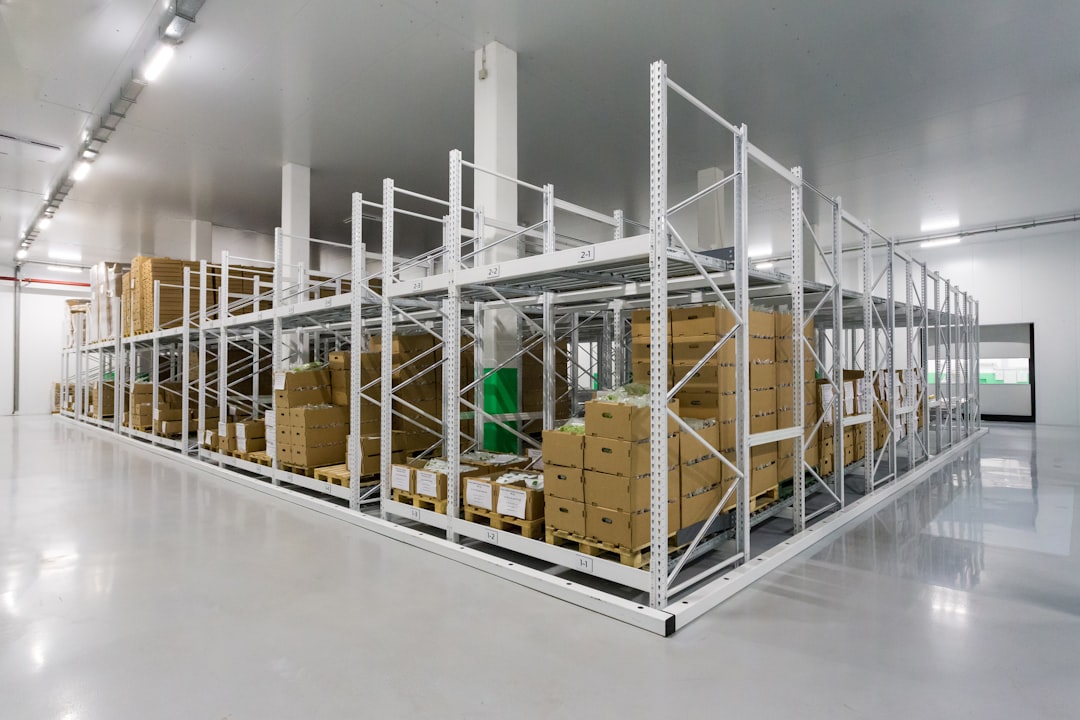
Climate-controlled commercial storage
Climate-controlled commercial storage is the default choice for EU-based exhibitors and for non-EU exhibitors with cleared (DDP) goods. The structural advantage versus non-controlled storage is component lifecycle - stands stored at stable temperature (typically 15-25°C) and controlled humidity (typically 40-60 percent) last 30-50 percent longer than stands stored in industrial conditions.
The 2026 pricing for climate-controlled exhibition warehousing in major European hubs:
| Location | Standard rate EUR/cbm/month | Long-term rate (6+ months) EUR/cbm/month |
|---|---|---|
| Frankfurt area | 22-32 | 18-26 |
| Düsseldorf area | 20-30 | 17-25 |
| Munich area | 20-30 | 17-25 |
| Milan area | 18-28 | 15-23 |
| Bologna area | 16-26 | 14-22 |
| Amsterdam area | 22-32 | 19-27 |
| Madrid area | 15-25 | 13-21 |
| Barcelona area | 16-26 | 14-22 |
| Greater London | GBP 25-40 | GBP 22-35 |
| Paris area | 22-32 | 19-27 |
The operational features that distinguish good exhibition warehousing from generic commercial storage:
- Flight case handling. Forklift access designed for standard exhibition flight case dimensions (typically 1.2m × 0.8m × 1.2m and similar).
- Climate stability. Temperature variation maintained within +/- 5°C and humidity within +/- 15% range across all seasons.
- Inventory management. Component-level tracking with case identification, contents inventory, and last-used fair record.
- Insurance integration. Stored-goods cover at appropriate values, with the warehouse operator’s liability properly capped and the exhibitor’s stand insurance picking up the residual.
- Access flexibility. Same-day or next-day case retrieval for short-notice fair preparation, without the long lead times of self-storage facilities.
“The dividing line between exhibition warehousing and generic commercial storage is whether the operator understands that the goods will move again to a deadline. A self-storage facility that quotes EUR 12 per cbm per month sounds attractive until you need to retrieve cases in 48 hours and the facility runs on 2-week notice. The premium for exhibition warehousing is real but operationally justified.” - Pan-European stand builder operations director, observation on storage selection
Non-climate-controlled industrial storage
Non-climate-controlled industrial storage is the budget option for exhibitors with simple modular stands that tolerate environmental variation. The structural cost saving versus climate-controlled is 40-60 percent, which can be significant for stands stored 6+ months between appearances.
The 2026 pricing for non-controlled industrial warehousing:
| Location | EUR/cbm/month |
|---|---|
| Outskirts of Frankfurt | 9-15 |
| Outskirts of Düsseldorf | 8-14 |
| Outskirts of Munich | 9-15 |
| Outskirts of Milan | 7-13 |
| Outskirts of Madrid | 6-12 |
| Outskirts of London | GBP 12-20 |
The stand components that tolerate non-controlled storage acceptably:
- Aluminium structural profiles in flight cases (Octanorm, Aluvision, Beematrix system components)
- Steel connectors and hardware
- Powder-coated metal panels
- Plain laminate panels without exposed wood edges
The stand components that do not tolerate non-controlled storage well:
- LED lighting fixtures (humidity damages drivers; temperature variation accelerates component failure)
- Painted surfaces (humidity causes paint deterioration on softer substrates)
- Fabric SEG graphics (humidity encourages mould; temperature variation degrades fabric tension)
- Veneered wood panels (humidity causes warping and delamination)
- AV equipment (any electronics fail faster in industrial conditions)
For exhibitors with mixed stand types, the operational pattern is split storage: structural components in non-controlled storage at lower cost, sensitive components in climate-controlled storage at higher cost. The split adds documentation complexity but can reduce total storage cost by 25-40 percent versus full climate-controlled storage.
Venue-adjacent transit storage
Venue-adjacent transit storage is the short-term option for stands moving between European fairs within 30 days of each other. The storage is operationally adjacent to the venue (typically within 10-30 km), allowing rapid retrieval for the next build-up. The pricing model is daily rather than monthly:
| Location | Daily EUR/cbm | Typical use case |
|---|---|---|
| Frankfurt area | 1.50-2.50 | Stand between consecutive Frankfurt fairs |
| Düsseldorf area | 1.40-2.30 | Stand between consecutive Düsseldorf fairs |
| Milan area | 1.30-2.20 | Stand between Fiera Milano fairs |
| Amsterdam area | 1.50-2.50 | Stand between RAI fairs |
The daily pricing means transit storage is cost-efficient for storage periods under 30 days but becomes expensive beyond that. For storage periods between 30-90 days, the monthly commercial pricing typically becomes more cost-efficient. For storage above 90 days, long-term commercial rates dominate.
Storage strategy by fair calendar
The storage strategy that works depends on the fair calendar profile. The patterns:
Single annual European appearance. Home-country storage with one round-trip per year is typically the most cost-efficient. Storage cost in Europe exceeds the saved transport cost for a single fair.
Two European fairs per year, 4-6 months apart. Bonded or climate-controlled storage in a central European hub (typically Frankfurt or Düsseldorf) between the two fairs saves transport cost. The break-even is approximately 3 months of storage versus a round-trip home.
Three or more European fairs per year. European storage is operationally essential. The home-country storage option creates too many round trips, each with carnet management overhead and transport cost.
Multi-year programme with consistent fair calendar. European storage with a long-term contract (typically 12-24 months) reduces storage cost to the negotiated rate. The exhibitor’s logistics partner usually has preferred rates at specific warehouses.
Irregular calendar with variable fair dates. Flexible storage with the international forwarder, with the storage location coordinated to the next-confirmed fair. The forwarder typically maintains relationships with warehouses in all major European exhibition hubs.
The storage-to-build-up handoff
The transition from storage to build-up is operationally similar to the transition from international transport to build-up. The pattern that works:
- Confirmed fair dates and stand details. The storage facility is informed 6-8 weeks before the next build-up of the fair dates, venue, stand position, and required component list.
- Inventory review. The warehouse operator confirms the stored inventory matches the planned build-up. Missing or damaged components are identified at this stage rather than at the venue.
- Transport booking. The international forwarder books the transport from warehouse to venue, with the delivery slot coordinated to the venue’s build-up calendar.
- Customs documentation update (for bonded storage). The customs authorisation for the bonded exit is updated. The carnet is prepared for the inter-fair movement endorsement.
- Loading at warehouse. The components are loaded into the transport at scheduled time, with the warehouse operator confirming the inventory matches the manifest.
- Linehaul to venue. Standard exhibition logistics from warehouse to venue.
- Build-up. The components arrive at the venue inside the booked delivery window.
The discipline that distinguishes effective storage-to-build-up handoffs from problematic ones: the inventory review at step 2 happens early enough that missing components can be replaced before build-up rather than discovered at the stand.
Related reading
- Shipping Timelines and Two-Hour Delivery Windows - the venue delivery window context for storage-to-venue movement
- Post-Brexit UK Exhibition Customs - the carnet workflow that determines bonded storage requirement for UK exhibitors
- DDP vs ATA Carnet vs Temporary Import Decision Matrix - the customs regime choice that drives bonded storage need
- Messe Frankfurt Freight Forwarder Comparison - the forwarder choice that coordinates storage-to-venue movement
- Insurance and Liability for European Exhibitors - stored-goods cover and warehouse-operator liability
References and primary sources
- IELA Operations Committee multi-fair calendar logistics benchmarks 2025-2026, iela.org
- ICC ATA Carnet documentation framework, customs bonded storage requirements, International Chamber of Commerce, iccwbo.org
- EU Union Customs Code Regulation 952⁄2013, customs warehousing procedures, European Commission Taxation and Customs Union
- DB Schenker Trade Fair Logistics warehousing service catalogue 2026
- Kuehne+Nagel KN Expo warehousing solution sheet 2026
- AUMA exhibitor logistics guidance 2026, Association of the German Trade Fair Industry, auma.de
- IFES sustainable stand-construction lifecycle guidance, International Federation of Exhibition and Event Services
- ISO 20121:2024 Event Sustainability Management Systems, stand component lifecycle documentation
FAQFrequently asked questions
Standard 2026 rates for exhibition stand storage in Europe vary by storage type and location. Climate-controlled commercial storage in major exhibition hubs (Frankfurt, Düsseldorf, Milan, Madrid, Amsterdam) runs EUR 18-32 per cubic metre per month for stands stored in proper flight cases.
Bonded warehousing (which preserves the temporary-admission status of ATA carnet goods) runs EUR 22-38 per cubic metre per month with the additional customs documentation overhead. Non-climate-controlled commercial storage in industrial estates 20-50 km from the exhibition hubs runs EUR 8-15 per cubic metre per month but exposes stand components to humidity, temperature variation, and dust that shorten lifecycle.
For a 75 sqm stand requiring approximately 18-25 cubic metres of storage volume, the monthly storage cost ranges EUR 145-950 depending on storage type and location.
Bonded warehousing is required when non-EU goods on ATA carnet need to be stored in the EU between fairs without losing their temporary-admission status. The structural rule: ATA carnet goods must either physically leave the EU between fairs or be held in customs-bonded storage that preserves the temporary-admission status.
Standard commercial storage does not satisfy the second condition - the goods are technically in free circulation while stored, which can trigger duty + VAT assessment if the EU customs authority audits. For UK, Swiss, US, Japanese, and Korean exhibitors with multi-fair European calendars where the stand stays in Europe between fairs, bonded warehousing is operationally essential.
For EU-based exhibitors with no carnet, bonded warehousing offers no advantage and standard commercial storage is the cost-efficient choice.
Frankfurt offers the densest exhibition warehousing ecosystem due to the airport, the venue, and the central European logistics position. Düsseldorf has substantial exhibition-specific warehousing serving Messe Düsseldorf and the broader Rhine corridor. Milan offers strong warehousing options serving Fiera Milano and the secondary northern Italian fairs (Bologna, Verona).
Amsterdam serves RAI Amsterdam and Jaarbeurs Utrecht with mature exhibition warehousing in the Schiphol corridor. Madrid serves IFEMA with a smaller but adequate warehousing network. London serves ExCeL with constrained options due to land costs.
For multi-fair European calendars, the choice of storage city depends on the fair sequence: a stand alternating between Frankfurt, Milan, and Madrid is typically stored in Frankfurt or central Germany because of the centrality and the warehousing ecosystem maturity.
Climate control is genuinely important for stands with electronic components, painted surfaces, fabric graphics, or wood elements.
The structural reasons: temperature variation between 5°C and 30°C accelerates the failure of LED lighting components and adhesive bonds; humidity above 65 percent encourages mould growth on fabric graphics and warps wooden panels; dust accumulation degrades surface finishes and visible-component aesthetics.
For purely metallic modular structures (aluminium frames, steel connectors, no painted surfaces), climate control matters less and non-controlled industrial storage is acceptable. For complete stand systems with mixed materials, climate control extends component life by 30-50 percent and is structurally cost-positive over multiple fair cycles.
Most European venues do not offer between-fair storage. The venue space is used for the next fair and the dismantle deadline forces all stand components off-venue within 24-48 hours of show closing. The exceptions are typically very-large permanent or semi-permanent exhibits at specific venues (some IFEMA pavilions, some Hannover Messe sub-halls), but these are rare and require specific contractual arrangements.
The dominant pattern for multi-fair European calendars is: dismantle, transport to commercial warehousing (bonded or standard), store between fairs, transport to next venue, build up. The ‘venue-adjacent’ warehousing pattern means storage in commercial facilities within 10-30 km of the exhibition centre, not inside the venue itself.
Bonded warehousing requires the carnet to be endorsed at entry to the bonded facility and at exit, with the bonded warehouse operator maintaining a customs-supervised inventory of the goods stored.
The required documentation: the ATA carnet itself with appropriate endorsements, the warehouse operator’s bonded license confirmation, an inventory list matching the carnet’s General List of Goods, and the customs storage authorisation issued by the relevant EU customs authority.
The operational pattern: the international forwarder coordinates the bonded entry at the EU customs post nearest the warehouse, the warehouse operator confirms inventory acceptance, and the customs office issues the storage authorisation. The exit to the next fair venue requires equivalent documentation in reverse.
The cost of the bonded documentation overhead typically runs EUR 250-650 per storage cycle in addition to the per-cubic-metre storage rate.