A pan-European fair calendar of four to six shows per year is operationally a logistics engineering problem before it is a marketing decision. The marketing case for being at Hannover Messe, drupa, Fiera Milano, and IFEMA Madrid in the same calendar year writes itself - those four fairs together reach a substantial fraction of the European industrial buyer base.
The operational case for actually delivering those four fair presences without the logistics costs spiraling is more demanding, and it depends on getting the stand rotation strategy, the storage routing between consecutive fairs, the forwarder relationships, and the buffer planning all aligned.
This article walks through the strategic framework that experienced pan-European exhibitor operations teams use to plan multi-fair calendars. It covers the routing principles that minimise transport cost, the stand-rotation patterns that balance stand longevity against fair coverage, the forwarder relationship strategies that work across multiple venues, and the buffer-planning discipline that distinguishes profitable European programmes from money-losing ones.
The analysis draws on observed practice at pan-European industrial exhibitors, the IELA Operations Committee benchmarks for multi-fair calendars, and the cost data published by major European exhibition forwarders for 2025-2026.
Why multi-fair European calendars are structural, not tactical
Most European fair calendars built one-fair-at-a-time end up overspending on transport, storage, and forwarder management. The structural reason: each fair decision is made in isolation, with logistics costs treated as a fair-specific line item rather than a multi-fair optimisation problem. The exhibitors who treat European calendar logistics as a strategic system rather than a series of tactical decisions consistently spend 25-40 percent less on logistics across the same fair coverage.
“The single biggest cost-control lever in a pan-European exhibitor programme is the calendar itself. Choose the right fair sequence and the logistics cost falls 30-40 percent versus a randomly-ordered equivalent. Choose the wrong sequence and you pay for transport kilometres that have no marketing value.” - Operations director, pan-European industrial exhibitor with annual presence at 6 European fairs
The variables that interact in a multi-fair calendar:
| Variable | Impact on cost | Impact on operational risk |
|---|---|---|
| Fair sequence (geographic order) | High | Moderate |
| Storage location between fairs | High | Moderate |
| Forwarder relationship | Moderate | High |
| Buffer days between consecutive fairs | Moderate | High |
| Stand rotation strategy | High | Moderate |
| Graphic refresh cadence | Moderate | Low |
| Customs regime (carnet vs DDP) | High for non-EU | High |
| Multi-stand or single-stand operation | High | Moderate |
The right strategic framework optimises across all of these simultaneously rather than treating each as an independent decision.
The routing principles
Route optimisation works by selecting fair sequences and storage locations that minimise total kilometres traveled by the stand across the calendar year. The principles:
Cluster fairs by sub-region. German fairs sequenced together; Italian fairs together; Iberian fairs together; Northern European fairs together. The clustering reduces inter-fair transport distance and uses regional storage hubs efficiently.
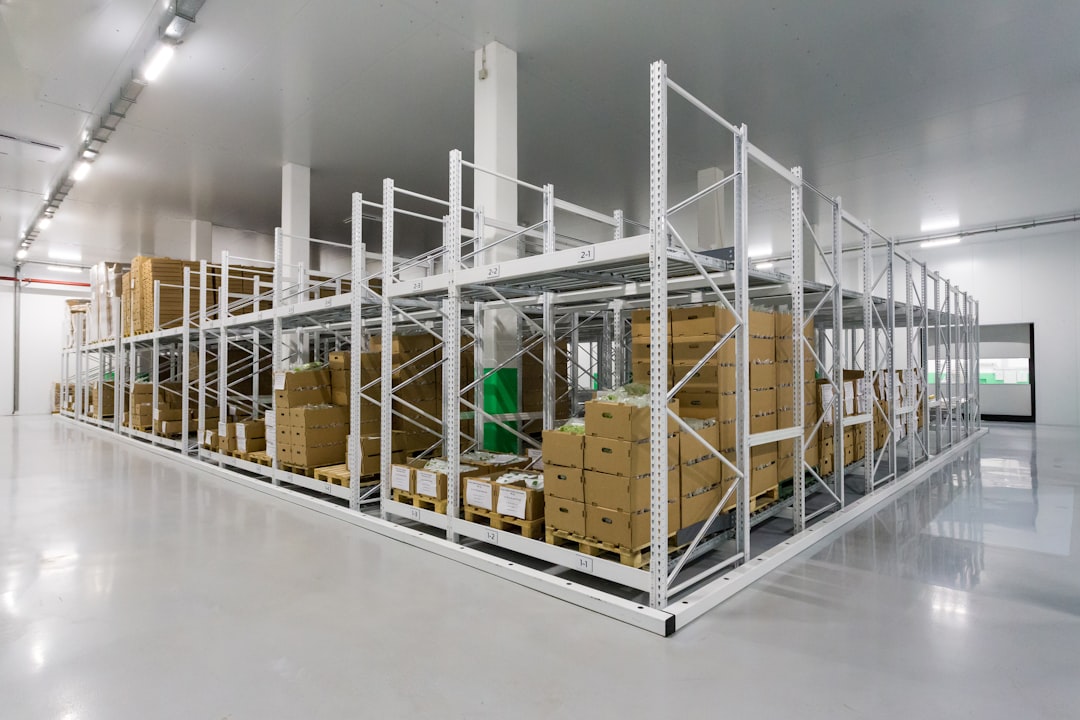
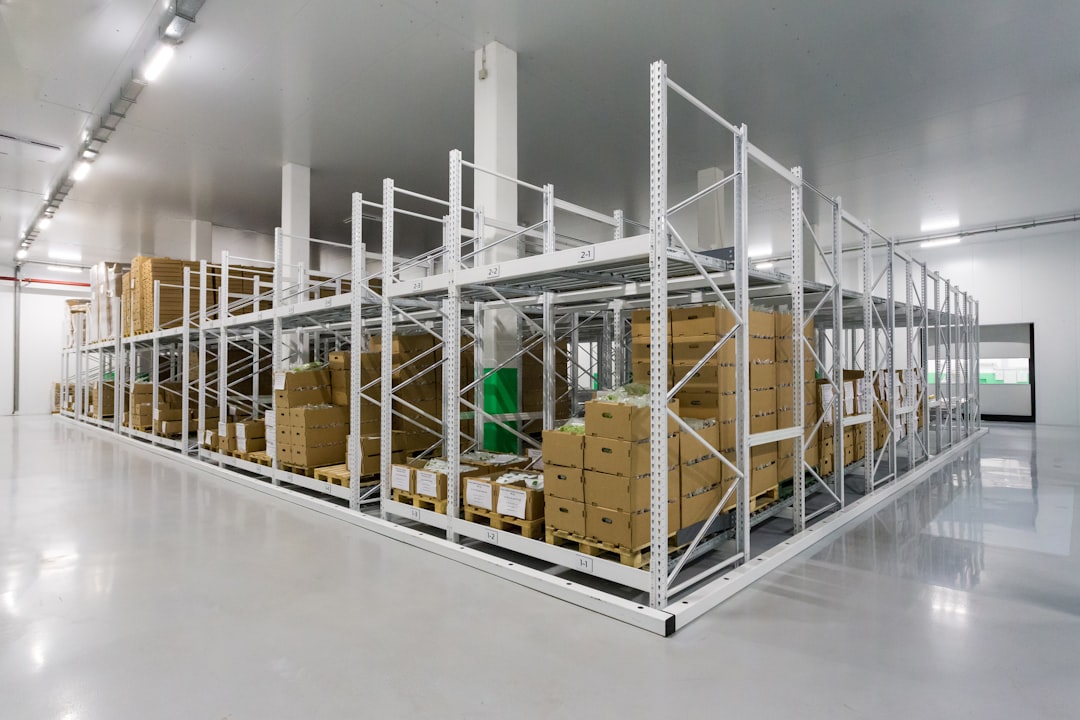
Storage hubs adjacent to fair clusters. Frankfurt or Düsseldorf for German fairs; Milan for Italian; Madrid for Iberian; Amsterdam for Benelux. The storage hub is the rotation point - stand returns to hub after each fair, refreshes, then ships to next fair in the sub-region.
Geographical sequence within clusters. Inside a sub-region, sequence fairs in geographical order to minimise inter-fair backtracking. A German cluster of Messe Frankfurt -> Hannover Messe -> Messe Düsseldorf flows north; reversing this sequence forces backtracking.
Avoid transcontinental movements between consecutive fairs. A stand moving Frankfurt -> Madrid -> Milan adds significant kilometres versus Frankfurt -> Milan -> Madrid in geographical sequence. The marketing calendar can usually be adjusted by 2-4 weeks to align with efficient routing without sacrificing fair attendance.
Pre-book the full multi-fair sequence. The forwarder pricing improves materially when the full sequence is booked together rather than fair-by-fair. The pricing improvement typically runs 8-15 percent on intra-EU sequences and more for transcontinental sequences.
The illustrative example below shows the cost differential between a poorly-routed and a well-routed 5-fair European calendar:
| Calendar | Sequence | Total transport km | Annual transport cost EUR | Storage cost EUR |
|---|---|---|---|---|
| Poorly routed | Frankfurt -> Madrid -> Milan -> Düsseldorf -> Amsterdam | ~4,800 km | 22,500-28,000 | 8,500-12,000 (multiple hubs) |
| Well routed | Frankfurt -> Düsseldorf -> Amsterdam -> Milan -> Madrid | ~3,200 km | 14,800-18,500 | 6,500-9,000 (consolidated hubs) |
The routing differential is approximately EUR 7,700-12,500 annually for the same fair coverage. Across a 5-year exhibitor programme, the routing discipline saves EUR 38,500-62,500.
Stand rotation strategy
The number of stand kits maintained across the calendar is a fundamental strategic decision. The patterns:
Single stand kit. One stand specification, refreshed between fairs, used for all calendar fairs. Operationally simple, cost-efficient, requires 14-28 day gaps between consecutive fairs. Typical for exhibitors at 4-6 European fairs per year.
Two stand kits with rotation. Two stand specifications, often identical, allowing one to be at the next venue while the other is at the current venue. Reduces gap-between-fairs constraint to near-zero but doubles the stand asset cost. Typical for exhibitors at 8-10+ fairs per year or at fairs with very close calendar timing.
Multiple stand specifications. Different stands for different fair types - flagship custom for brand-judgement fairs, routine modular for B2B fairs. Higher asset cost but allows brand differentiation across fair types.
Hybrid kit modular base with bespoke layer. Single modular skeleton stored centrally with bespoke graphic and furniture layers stored separately and rotated per fair. Combines single-kit cost efficiency with multi-stand brand differentiation.
The 5-year cost arithmetic for a 5-fair-per-year programme:
| Strategy | Initial investment EUR | 5-year transport + storage EUR | 5-year refresh EUR | Total EUR |
|---|---|---|---|---|
| Single modular kit | 50,000-90,000 | 90,000-140,000 | 75,000-125,000 | 215,000-355,000 |
| Two modular kits | 100,000-180,000 | 120,000-180,000 | 100,000-150,000 | 320,000-510,000 |
| Multiple stand specs | 200,000-400,000 | 110,000-160,000 | 50,000-100,000 | 360,000-660,000 |
| Hybrid kit + layers | 90,000-150,000 | 100,000-150,000 | 125,000-200,000 | 315,000-500,000 |
The single modular kit is the cost-optimal default for most pan-European programmes. The hybrid kit is the operational choice for exhibitors who want brand differentiation across fair types without the multi-stand asset cost.
Forwarder relationship strategy
The forwarder strategy for a multi-fair calendar typically follows one of three patterns:
Single primary forwarder. DB Schenker, Kuehne+Nagel, or DHL Trade Fairs handles the full multi-fair sequence. Advantages: consistent service quality, single-contract accountability, integrated planning, volume discount across the sequence. Disadvantages: single-point-of-failure if the forwarder’s service deteriorates; less price competition.
Primary + secondary. Primary forwarder handles the majority of fairs with a secondary forwarder for specific venues where the secondary has structural advantages (e.g., DHL Trade Fairs for airfreight-heavy fairs). Advantages: best-of-breed service quality per venue; competitive pricing pressure. Disadvantages: more contract management; potential coordination gaps between forwarders.
Multiple regional forwarders. Different forwarders per European sub-region (German specialist, Italian specialist, Iberian specialist). Advantages: deep regional expertise; competitive pricing. Disadvantages: complex contract management; cross-region handoffs add operational risk.
For pan-European programmes of 4-6 fairs per year, the single primary forwarder pattern is operationally simplest and cost-efficient enough. For larger programmes of 8+ fairs per year, the primary + secondary pattern often wins on best-of-breed service quality.
“We spent two years running multiple regional forwarders across our European calendar before consolidating to a single primary partner. The single-forwarder model costs us approximately 3-5 percent more on raw freight pricing but saves us 15-20 percent on operational overhead. Net it has been substantially cheaper and operationally more reliable.” - Logistics director, mid-cap European technology exhibitor with annual presence at 7 European fairs
Buffer planning between consecutive fairs
The gap between dismantle at fair N and build-up at fair N+1 is the operational risk window of any multi-fair calendar. The buffer planning principles:
| Gap between consecutive fairs | Operational implications | Recommended use case |
|---|---|---|
| Under 7 days | Operationally infeasible for single-kit operation | Requires two-kit rotation |
| 7-14 days | Tight calendar; no margin for delays | Simple modular stands only |
| 14-21 days | Standard pan-European cadence | Most multi-fair calendars |
| 21-28 days | Comfortable buffer; refresh time available | Complex hybrid stands |
| 28+ days | Generous buffer; full refurbishment possible | Premium stands; major refresh between fairs |
The activities that consume the buffer:
- Dismantle at fair N. 1-2 days
- Transport from fair N venue to intermediate storage. 1-3 days depending on distance
- Storage handling and inventory check. 1 day
- Damage assessment and component repair. 2-5 days depending on findings
- Graphic refresh production. 5-10 days for new printed graphics
- Re-staging for fair N+1. 1-2 days
- Transport from intermediate storage to fair N+1 venue. 1-3 days
- Build-up at fair N+1. 3-5 days
The full cycle for a complex hybrid stand with full graphic refresh runs 21-28 days. Compressing into 14 days is feasible only when no graphic refresh is required and no significant damage is discovered. Compressing into 7-10 days requires two-kit operation with the second kit pre-positioned.
The customs regime layer
For non-EU exhibitors, the customs regime layer interacts with the multi-fair calendar in operationally important ways. The key considerations:
Single carnet across multiple fairs. ATA carnets are valid 12 months and can cover unlimited entries and exits during validity. A single carnet for a US, UK, Swiss, Japanese, or Korean exhibitor at 4-6 European fairs is the cost-efficient approach.
Bonded storage between fairs. Goods on carnet must either physically leave the EU between fairs or be held in bonded storage that preserves temporary-admission status. For multi-fair calendars where the stand stays in Europe, bonded storage is operationally essential.
Carnet endorsement at each venue. Each fair’s entry to and exit from the venue requires carnet endorsement at the venue customs desk (where applicable) and at the EU entry/exit posts (only at the first entry and last exit). Failure to obtain these endorsements voids the temporary-admission status.
Final re-export before 12-month deadline. The carnet’s 12-month validity is absolute. The final physical re-export must happen before the deadline regardless of where the stand is in its fair cycle. Multi-fair calendars must plan the final re-export as a non-negotiable deadline.
The calendar template
The template below is the planning framework that pan-European operations teams use to plan a 5-fair European calendar. The template covers the 14-18 month horizon from initial planning to final post-show wrap-up.
| Month | Activity | Owner |
|---|---|---|
| -18 | Initial fair calendar selection | Marketing leadership |
| -16 | Stand space booking at all calendar fairs | Operations coordinator |
| -14 | Stand specification and design approval | Operations + design |
| -12 | Forwarder contract for full multi-fair sequence | Operations coordinator |
| -10 | Carnet preparation (if non-EU) | Operations coordinator |
| -10 | Storage hub contract | Operations coordinator |
| -8 | Stand fabrication completion | Stand builder |
| -6 | First fair build-up planning | Operations + builder |
| -4 | First fair transport booking confirmed | Forwarder |
| 0 | First fair build-up, show, dismantle | Full operations team |
| +2 | First-to-second fair transit and storage | Forwarder + storage |
| +6 | Second fair build-up, show, dismantle | Full operations team |
| +8 | Second-to-third fair transit and storage | Forwarder + storage |
| … | (continues for all 5 fairs) | |
| +14 | Final fair dismantle and return logistics | Full operations team |
| +15 | Carnet retrieval and return to issuing chamber | Operations coordinator |
| +16 | Post-calendar review and next-year planning | Marketing + operations |
The template assumes a 5-fair calendar spread across 14 months. Compressing into 8-10 months is feasible but requires the inter-fair buffers to remain at 21+ days, which constrains the fair-sequence choices.
The cost-control checklist
The cost-control discipline that pan-European exhibitor operations teams apply across the multi-fair calendar:
- Single primary forwarder with full multi-fair sequence booked together.
- Storage hubs adjacent to fair clusters with negotiated long-term rates.
- Single stand kit with refresh between fairs, except where two-kit operation is structurally necessary.
- 21-28 day buffers between consecutive fairs to allow proper-paced refresh work.
- Carnet for non-EU stands with bonded storage between fairs and proper endorsement at every venue.
- Geographical sequence within sub-regional fair clusters.
- Pre-booked on-site handling and rigging at all venues 6-10 weeks ahead.
- Insurance cover that applies across the full multi-fair sequence rather than fair-by-fair policies.
- Post-calendar review with logistics-cost benchmark against the previous calendar.
- Year-on-year refinement of routing, storage, and forwarder relationships.
Related reading
- Exhibition Stand Storage in Europe - the storage type comparison underneath the multi-fair routing strategy
- Messe Frankfurt Freight Forwarder Comparison - the primary forwarder choice for German-cluster fairs
- Shipping Timelines and Two-Hour Delivery Windows - venue delivery window planning for each fair in the calendar
- ATA Carnet for Exhibition Stands - the customs document that enables multi-fair European operation
- Insurance and Liability for European Exhibitors - cover that applies across the full multi-fair sequence
References and primary sources
- IELA Operations Committee multi-fair calendar logistics benchmarks 2025-2026, iela.org
- AUMA exhibitor strategic logistics guidance 2026, Association of the German Trade Fair Industry, auma.de
- DB Schenker Trade Fair Logistics multi-fair contract framework
- Kuehne+Nagel KN Expo multi-venue pricing model 2026
- DHL Trade Fairs European calendar solution sheet
- ICC ATA Carnet documentation framework, multi-fair carnet operations, International Chamber of Commerce, iccwbo.org
- ISO 20121:2024 Event Sustainability Management Systems, multi-event lifecycle tracking
- EU Union Customs Code, customs warehousing for temporary-admission goods
FAQFrequently asked questions
A well-maintained modular or hybrid stand supports 4-6 European fair appearances per year without significant degradation, with full graphic refresh between fairs. Beyond 6 fairs per year, component fatigue starts to show: panel edges scuff, fabric graphics develop visible wear, LED drivers fail at higher rates, and the build-and-dismantle cycle accumulates damage.
Above 8 fairs per year, the stand typically needs major refurbishment annually and the lifecycle economics shift unfavourably. The sweet spot for most pan-European exhibitor programmes is 4-5 fairs per year per stand, with two stand kits sometimes maintained to support 8-10 total annual appearances when fairs cluster in time.
For mid-size B2B exhibitors with EUR 200,000-600,000 annual exhibition budgets, a single rotating stand across multiple fairs is structurally cheaper and operationally simpler.
For larger exhibitors with EUR 1M+ budgets and brand-judgement requirements at specific fairs (Salone del Mobile, Watches & Wonders, IFA flagship), multiple stand specifications make sense: a flagship custom stand for brand-judgement fairs and a routine modular stand for B2B fairs.
The decision pivot is whether the brand is making the same statement at every fair (single stand wins) or making different statements at different fairs (multiple stands required). For most exhibitors, the single-stand pattern with graphic refresh between fairs delivers consistent brand recognition without the multi-stand budget.
The minimum practical gap is approximately 7-10 days, which covers dismantle at fair 1 (24-48 hours), transport between venues (2-5 days depending on distance), and build-up at fair 2 (3-5 days for modular stands). Below 7 days, the calendar becomes operationally fragile and a single delay cascades into missed opening.
For fairs running back-to-back (one closing Friday, the next opening the following Tuesday), the only viable approach is two stand kits with the second kit pre-positioned at the second venue. For typical European fair calendars where 4-6 fairs are spread across 8-12 months, the gaps between consecutive fairs are usually 4-12 weeks, comfortably accommodating standard logistics with buffer.
Route optimisation works by selecting fair sequences that minimise total kilometres traveled and by choosing storage locations adjacent to the major fair hubs rather than at home country.
Four principles govern multi-fair stand rotation:
- cluster fairs in the same European sub-region within the same season (German fairs together, Italian fairs together, etc.)
- use Frankfurt or Düsseldorf as the storage hub for German fairs, Milan for Italian fairs, Madrid for Iberian fairs
- avoid transcontinental movements between consecutive fairs (Frankfurt to Madrid to Milan adds significant kilometres versus Frankfurt to Milan to Madrid in geographical sequence)
- pre-book the forwarder for the full multi-fair sequence rather than treating each fair as a separate booking
A well-routed 4-fair European calendar typically uses 30-45 percent fewer transport kilometres than a poorly-routed equivalent.
For most pan-European exhibitor programmes, a single primary forwarder with strong European coverage is operationally simpler than multiple country-specific forwarders. The single-forwarder approach (DB Schenker, Kuehne+Nagel, or DHL Trade Fairs in most cases) provides consistent service quality, single-contract accountability, and integrated planning across the multi-fair sequence.
The exception is appointed-forwarder venues (Messe Frankfurt, Messe Düsseldorf, Fiera Milano) where on-site handling is performed by the venue concessionaire regardless; here the primary forwarder coordinates with the venue concessionaire. For very large programmes with 8+ European fairs per year, multiple forwarders may make sense to distribute risk and improve service quality through competition.
Plan for at least 14 days of buffer between dismantle at fair N and build-up at fair N+1, with 21-28 days preferred for complex stands.
The buffer absorbs: transport variability (1-3 days), storage handling at the intermediate warehouse (1-2 days), inventory and damage assessment (1 day), repairs and component replacement (3-7 days), graphic refresh production (5-10 days), and re-staging for next-fair delivery (1-2 days).
Calendar buffers below 14 days work for simple modular stands with no graphic refresh, but become risky for complex hybrid or custom stands. The buffer is operationally a cost-control instrument - shorter buffers force expedited work that costs 25-50 percent more than properly-paced work.