
For exhibitors running a single annual fair, storage between European fairs is a trivial question: ship the stand back to a home warehouse or dispose of it as a single-use custom build. For exhibitors running three or more fairs per year on the same modular or hybrid skeleton, it becomes one of the largest annual logistics line items and one of the most consequential calendar-strategy decisions.
A stand that spends 9 months of the year accumulating warehousing fees at EUR 150 per cubic metre per month in the wrong hub can cost more annually in storage than in stand build itself.
This article walks through how experienced European exhibitors approach inter-fair storage. It references the warehouse networks of the major exhibition forwarders (Schenker Trade Fairs, Kuehne+Nagel Exhibition Logistics, BTG, DSV, DHL Trade Fairs), the major European logistics hubs, and the climate-control disciplines that protect stand assets across multi-fair calendars.
What inter-fair storage actually covers
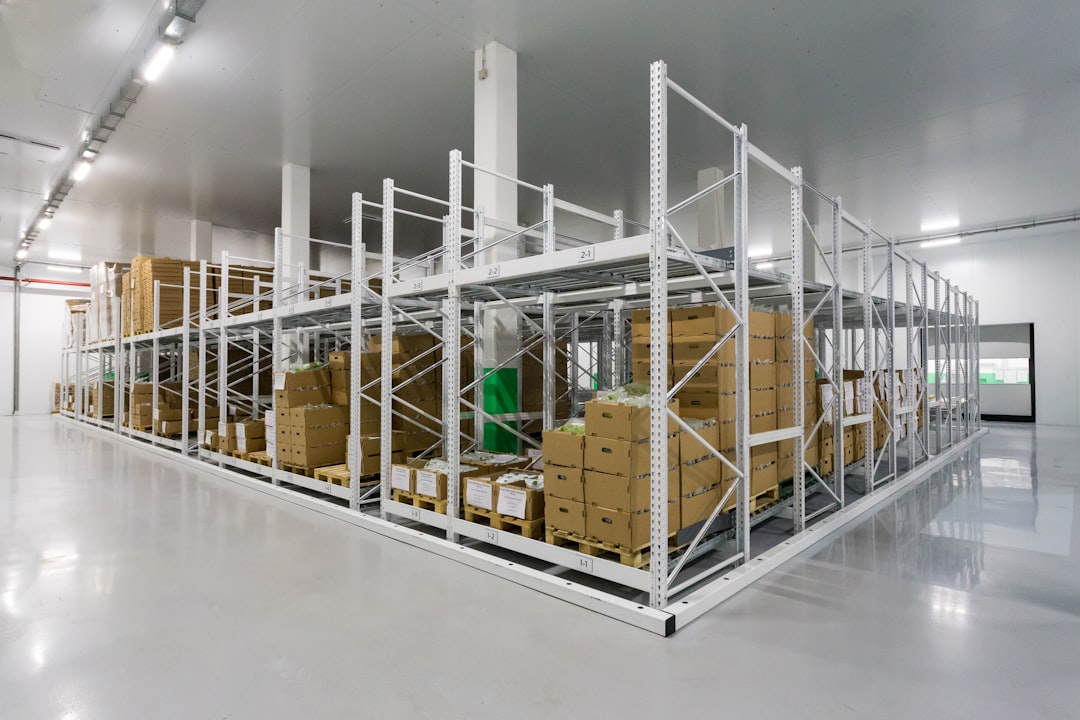
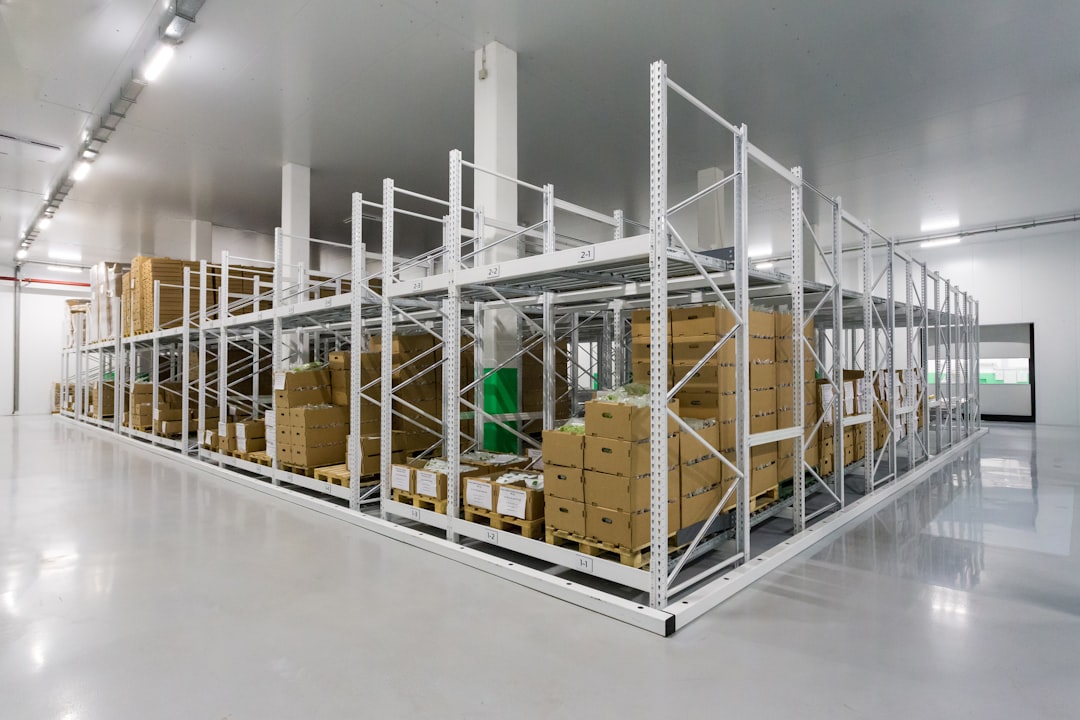
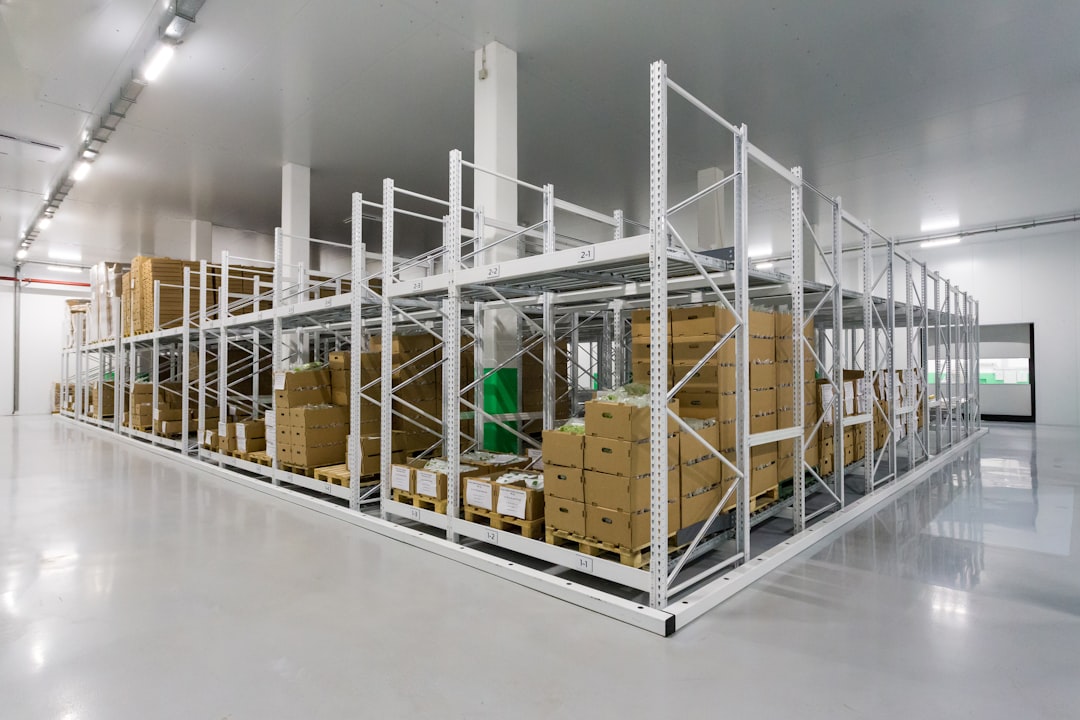
Inter-fair storage covers the full stand asset between deployments: structural frame components in flight cases, graphic panels in transport sleeves, joinery and furniture in custom crates, AV and electronics in climate-protected cases, and the empty cases themselves. For a typical 75 sqm modular stand, the storage footprint runs 18-25 cubic metres of cased volume plus 6-10 cubic metres of empty case storage, totalling 24-35 cubic metres.
The storage period varies by calendar but typically follows a small number of patterns. A four-fair-per-year European calendar with even spacing implies 9-10 weeks between fairs and 36-40 weeks of total annual storage. A calendar concentrated in two periods (spring and autumn) implies 12-16 weeks of storage twice per year. A single-fair calendar with annual deployment implies 48 weeks of storage.
“The storage cost stops being a rounding error and starts being a strategic line item at about three fairs per year. Below that, ship the stand home or build single-use. Above that, the hub storage strategy is one of the top three logistics decisions on the project.”, Common framing among AUMA-member multi-fair exhibition managers
The cost structure of European exhibition storage
Pallet-rack warehousing at European logistics hubs is priced per cubic metre per month, with significant variation by hub location, climate-control specification, and whether the storage is booked through an exhibition specialist or a general logistics provider.
| Hub region | Standard (EUR/cbm/month) | Climate-controlled (EUR/cbm/month) | Notes |
|---|---|---|---|
| Frankfurt / Rhein-Main | 110-150 | 160-200 | Premium hub; dense exhibition forwarder presence |
| Amsterdam / Rotterdam | 100-140 | 150-190 | Premium hub; well-connected to UK and Scandinavia |
| Milan / Bologna | 90-130 | 140-180 | Strong fit for Italian fair calendar |
| Madrid / Barcelona | 85-125 | 130-170 | Lowest in Western Europe; good Iberian-French coverage |
| Antwerp / Liege | 80-120 | 125-165 | Benelux corridor; freight-neutral for pan-European calendar |
| Lyon / Strasbourg | 95-135 | 145-185 | French hub; good for southern European fairs |
| Munich / Stuttgart | 105-145 | 155-195 | Southern German hub; fit for Italian-Austrian calendar |
| Hamburg | 100-140 | 150-190 | Northern German hub; Scandinavian gateway |
| Warsaw / Poznan | 60-95 | 100-140 | Lowest in Europe; longer freight lanes to Western fairs |
| London (UK, EUR equivalent) | 130-180 | 190-240 | Premium; post-Brexit customs friction adds operational cost |
Climate-controlled storage adds roughly EUR 50-80 per cubic metre per month versus standard. For a 25 cubic-metre stand stored 9 months per year, that is EUR 11,250-18,000 per year in climate-control premium, a figure that pays back inside the first calendar year for any stand carrying fabric SEG graphics, printed vinyl, joinery elements or electronic components.
Why climate control is not optional
Non-climate-controlled European warehousing runs temperature ranges of -5 to +35 Celsius across the year and humidity ranges of 30 to 90 percent. The materials in a modern exhibition stand respond to that range in characteristic ways:
- Fabric SEG graphics lose tension and develop sag at temperatures above 30 Celsius repeated across multiple cycles
- Printed vinyl wraps lose adhesive bond on substrates after heat-cycling above 35 Celsius
- MDF and engineered timber joinery swells and warps at sustained humidity above 75 percent
- LED panels and integrated displays suffer condensation damage during humidity transitions
- Aluminium frame surface treatments oxidise faster in high-humidity, low-airflow storage
- Adhesive joints in cabinet construction fail after sustained temperature swings
“We did a forensic post-mortem on a stand that had been stored in non-climate-controlled warehousing for 18 months across three fair deployments. The structural aluminium was fine. Everything else needed replacement or remediation. The EUR 4,500 we saved on standard storage cost us EUR 11,000 in graphics, vinyl and joinery work.”, Common cautionary observation among European stand maintenance managers
The defensible position is to specify climate-controlled storage for any stand carrying fabric, vinyl, joinery or electronics, which means almost every modular stand built in the last decade. The economics support it inside the first year.
Choosing the hub location
The optimal hub location is the centre-of-gravity of the fair calendar by freight-lane cost, not by geographic centre. For most European exhibitor calendars, the gravity centre falls in one of three corridors:
Frankfurt / Rhein-Main
The natural choice for calendars dominated by German fairs. Frankfurt is within 200-400 km of Hannover, Cologne, Stuttgart, and Berlin; within 600-800 km of Milan, Amsterdam, and Paris. Forwarder presence is dense (every major exhibition forwarder operates Frankfurt warehouses). Storage rates are at the upper end of the European range but the freight-lane efficiency offsets it.
Antwerp / Liege Benelux corridor
The freight-lane neutral choice for pan-European calendars without a clear gravity centre. Antwerp is within 400 km of London (via Channel Tunnel), 200 km of Amsterdam, 300 km of Frankfurt, 500 km of Paris, 800 km of Milan, and 1,500 km of Madrid. Warehouse rates are the most competitive in Western Europe, the lane structure to all major fair venues is well-developed, and the Benelux ports provide easy access for non-EU stand imports.
Milan / Bologna corridor
The natural choice for calendars concentrated in the Mediterranean (Salone del Mobile, Cosmoprof Bologna, MIDO, EICMA, Vinitaly, Fiera Milano calendar). Milan is also within reasonable freight range of Geneva, Munich, Lyon and Vienna for cross-Alpine fairs.
For calendars dominated by a single national market, store in that market. For pan-European calendars, the Benelux corridor wins on freight-lane neutrality almost regardless of the specific calendar mix.
Storage versus shipping home: the decision rule
The first question for any exhibitor is whether to use European hub storage at all or to ship the stand back to a home market between fairs. The decision rule is the round-trip freight cost versus the storage cost across the inter-fair gap.
| Inter-fair gap | Strategy | Reasoning |
|---|---|---|
| Under 6 weeks | Hub storage near next fair | Freight round-trip wasteful; minimal storage cost |
| 6-12 weeks | Hub storage | Storage cost typically below round-trip freight |
| 3-6 months | Decision dependent | Compare specific freight quote vs specific storage rate |
| 6-12 months | Round-trip home | Storage cost exceeds round-trip freight |
| Over 12 months | Round-trip home or refresh | Long storage typically followed by graphics refresh anyway |
For an exhibitor with a UK home base running European fairs, the calculation tilts slightly toward hub storage because post-Brexit round-trip freight to the UK runs EUR 4,000-7,000 versus typical European-internal round-trips of EUR 2,500-4,500. For an exhibitor with a Northern European home base running European fairs, the calculation is closer to neutral.
The official-forwarder integrated package
The major exhibition forwarders all operate dedicated exhibition warehouses at the main European hubs and offer integrated storage-plus-transport packages. The integrated package collapses the storage and the next-fair freight into a single contract with:
- A single liability boundary across storage and transport
- Climate-controlled storage as standard
- Inbound and outbound condition reporting (photographic, before-and-after)
- A discount of 5-10 percent on the next-fair freight versus standalone booking
- Single-invoice administration across the inter-fair cycle
The integrated package typically prices competitively with standalone warehousing because the forwarder amortises warehouse capacity against their freight book. For exhibitors running multi-fair calendars, the integrated package is almost always the right structural choice because it eliminates the most expensive failure mode: damage discovered at the next fair where neither the warehouse operator nor the previous-fair forwarder accepts liability.
What the storage relationship actually delivers
A defensible inter-fair storage arrangement delivers four things beyond raw cubic metres of space:
Condition reporting
Photographic inbound and outbound condition reports with timestamped images of every case. The reports form the basis of any damage claim and protect against the “it was damaged when it arrived” disputes that otherwise consume weeks of administrative effort.
Climate monitoring
Continuous temperature and humidity logging across the storage period, with monthly reports to the exhibitor. This protects against silent climate excursions (a warehouse HVAC failure over a weekend) that would otherwise emerge as material damage at the next deployment.
Asset inventory tracking
A bar-coded or RFID-tagged inventory of every case and its contents, accessible to the exhibitor through a portal. Missing components discovered at the next fair are recoverable; missing components discovered three fairs later are typically written off.
Refresh coordination
Most exhibition forwarders also coordinate graphic-refresh and minor remediation work during the storage period, removing the need for the exhibitor to plan a separate workshop visit between fairs. New graphic panels are printed at a local printer, delivered to the warehouse, and swapped into the stored cases before the next-fair freight.
“The boring part of inter-fair storage is the warehousing rate. The valuable part is the condition reporting, the climate monitoring, the inventory tracking, and the refresh coordination. Those four together are what justify using an exhibition specialist over a generic logistics warehouse at half the per-cubic-metre rate.”, Common framing among FAMAB-certified stand operations managers
Empties: the under-budgeted half of the storage line
Stand empties (crates and flight cases) typically travel with the stand from fair to fair, stored at the forwarder’s empties warehouse during each show and at the inter-fair storage hub between shows. The empties are part of the stand asset, they protect the stand during transport, and they must be stored under the same climate conditions to maintain their protective integrity.
A modular stand of 18-25 cubic metres typically generates 6-10 cubic metres of empty case volume, adding roughly 30-50 percent to the storage and transport bill. Stand-build consumables (one-time-use packaging materials, protective foam, banding) are disposed of after the first show and re-procured at the destination of the next show; these are not part of the inter-fair storage footprint.
Annualised storage cost: what to budget
For a four-fair-per-year European calendar with even spacing, climate-controlled hub storage at a mid-cost European hub, the annualised storage line typically lands as follows:
| Stand size (cased volume + empties) | Annualised storage cost (EUR, climate-controlled, mid-cost hub) |
|---|---|
| 15-20 cbm (small stand, 30-50 sqm) | 8,000-14,000 |
| 25-35 cbm (mid-size stand, 75-100 sqm) | 13,000-23,000 |
| 40-55 cbm (large stand, 150-200 sqm) | 20,000-36,000 |
| 60-80 cbm (flagship stand, 300+ sqm) | 30,000-54,000 |
The annualised figures assume 36 weeks of total storage across the year (4 fairs with average 9-week inter-fair gap). For calendars with longer gaps, the cost scales proportionally.
How to act on this
Inter-fair storage is decided by cased volume, the gravity centre of your freight lanes and the length of the gaps between shows, and the contract terms matter as much as the rate per cubic metre. Work through your storage strategy as follows:
- Calculate the cased volume of your stand plus empties. This is the foundation of every storage cost calculation.
- Map your fair calendar onto a freight-lane gravity centre. Frankfurt, Benelux, or Milan corridor cover most European calendar shapes.
- Specify climate-controlled storage for any stand carrying fabric, vinyl, joinery or electronics. The premium pays back inside year one.
- Compare the integrated storage-plus-transport package from your official forwarder against standalone warehousing. The integrated package typically wins on total cost and on damage-claim simplicity.
- Confirm the storage contract includes condition reporting, climate monitoring, inventory tracking, and refresh coordination. These are the four valuable services beyond raw space.
- For inter-fair gaps below 3 months, default to hub storage. For gaps above 6 months, default to round-trip home. The 3-6 month band requires specific rate comparison.
- Schedule graphic refreshes and minor remediation during the storage period rather than at fair sites. Coordinate through the forwarder.
- Reconcile storage invoices against the climate and inventory reports monthly. Disputes are easier to resolve at the time, not at year-end.
Related reading
- Freight Forwarding for European Trade Fairs, the official forwarder relationship that typically includes inter-fair storage
- Shipping Timelines and 2-Hour Delivery Windows, the freight scheduling that drives the storage hub choice
- Insurance and Liability for European Exhibitors, the cover that protects stored stand assets
- Modular vs Custom Decision Framework, the build-type decision that determines whether inter-fair storage applies at all
- Build-Up and Dismantle Scheduling, the dismantle workflow that flows into storage
References and primary sources
- Schenker Trade Fairs warehouse network, dbschenker.com
- Kuehne+Nagel Exhibition Logistics warehouse footprint and storage services
- BTG Expologistics storage and warehousing schedule
- DSV exhibition warehousing rates, European hubs
- DHL Trade Fairs warehouse network across Europe
- AUMA exhibitor manual (2024-2026 edition), inter-fair logistics best practices, auma.de
- FAMAB Verband Direkte Wirtschaftskommunikation member resources on stand asset management
- ISO 20121:2024 Event Sustainability Management Systems, material reuse and storage documentation
- IFES (International Federation of Exhibition and Event Services) sustainable stand-construction playbook
- Messe Frankfurt Technical Guidelines 2026, sustainability incentive for documented reusable stand assets
FAQFrequently asked questions
Standard pallet-rack warehousing at a European logistics hub runs EUR 80-150 per cubic metre per month for non-climate-controlled space and EUR 130-200 per cubic metre per month for climate-controlled space (target 15-22 degrees Celsius, 40-60 percent relative humidity).
A typical 75 sqm modular stand stores in 18-25 cubic metres of flight-cased volume, putting monthly storage at EUR 1,440-5,000 depending on climate-control choice and hub location.
Hub location matters: storage near Frankfurt and Amsterdam runs at the upper end, storage near Milan and Madrid in the middle, storage in Belgium, Netherlands and Poland at the lower end where warehouse space is cheaper and the lane structure to most European fairs is still efficient.
Non-climate-controlled European warehousing runs temperature ranges of -5 to +35 Celsius across the year and humidity ranges of 30 to 90 percent. Modular aluminium frames tolerate that range. Fabric SEG graphics, printed vinyl wraps, joinery elements, and electronic components (LED panels, integrated displays, network gear) do not.
Heat-cycling damages adhesive bonds on vinyl, humidity damages MDF and engineered timber, condensation damages electronics. A stand stored in non-climate-controlled space for 9 months between fairs typically requires EUR 3,000-8,000 in remediation work (graphic reprinting, joinery refinishing, electronics testing and replacement) at the next deployment.
Climate control adds roughly EUR 50-80 per cubic metre per month versus standard but pays back inside the first calendar year for any stand carrying fabric, vinyl, joinery or electronics.
The optimal hub is the centre-of-gravity of your fair calendar by freight lane cost, not by geographic distance. For a calendar dominated by German fairs (Hannover, Frankfurt, Cologne, Munich, Berlin, Dusseldorf), Frankfurt or the Rhein-Main logistics corridor is the obvious centre. For an Italian-dominant calendar, Milan-Bologna corridor. For a Spanish and French calendar, Barcelona or Lyon.
For pan-European calendars without a clear gravity centre, the Benelux corridor (Antwerp-Rotterdam-Liege) wins on freight-lane neutrality because most European fair venues are reachable within 1,000 km on direct dedicated trucking and the Benelux warehousing market is the most competitively priced in Western Europe.
The decision rule is the round-trip freight cost versus the storage cost across the inter-fair gap. Round-trip from a European hub to a UK home base runs EUR 4,000-7,000 for a typical stand-sized shipment. Round-trip to a Northern European home (Scandinavia) runs EUR 3,500-6,000. Storage at a European hub for 3 months runs EUR 4,500-15,000 depending on size and climate-control choice.
For inter-fair gaps below 3 months, hub storage almost always wins on cost and on freight risk. For gaps above 6 months, round-trip to home wins. The 3-6 month band is where the decision depends on specific freight rates and storage rates negotiated.
The major exhibition forwarders (Schenker Trade Fairs, Kuehne+Nagel Exhibition Logistics, BTG, DSV, DHL Trade Fairs) all operate dedicated exhibition warehouses at the main European logistics hubs and offer integrated storage-plus-transport packages.
The integrated package collapses the storage and the next-fair freight into a single contract with a single liability boundary, which simplifies insurance and reduces administrative overhead. Pricing is competitive with standalone warehousing because the forwarder amortises warehouse capacity against their freight book.
The integrated package typically includes climate-controlled storage as standard, condition reporting on inbound and outbound, and a discount of 5-10 percent on the next-fair freight versus standalone booking.
Stand empties (crates and flight cases) typically travel with the stand from fair to fair, stored at the forwarder’s empties warehouse during each show and at the inter-fair storage hub between shows. Stand-build consumables (one-time-use packaging materials, protective foam, banding) are disposed of after the first show and re-procured at the destination of the next show.
Treat the empties as part of the stand asset and budget their storage and transport on the same per-cubic-metre basis as the stand itself. A modular stand of 18-25 cubic metres typically generates 6-10 cubic metres of empty case volume, adding roughly 30-50 percent to the storage and transport bill.