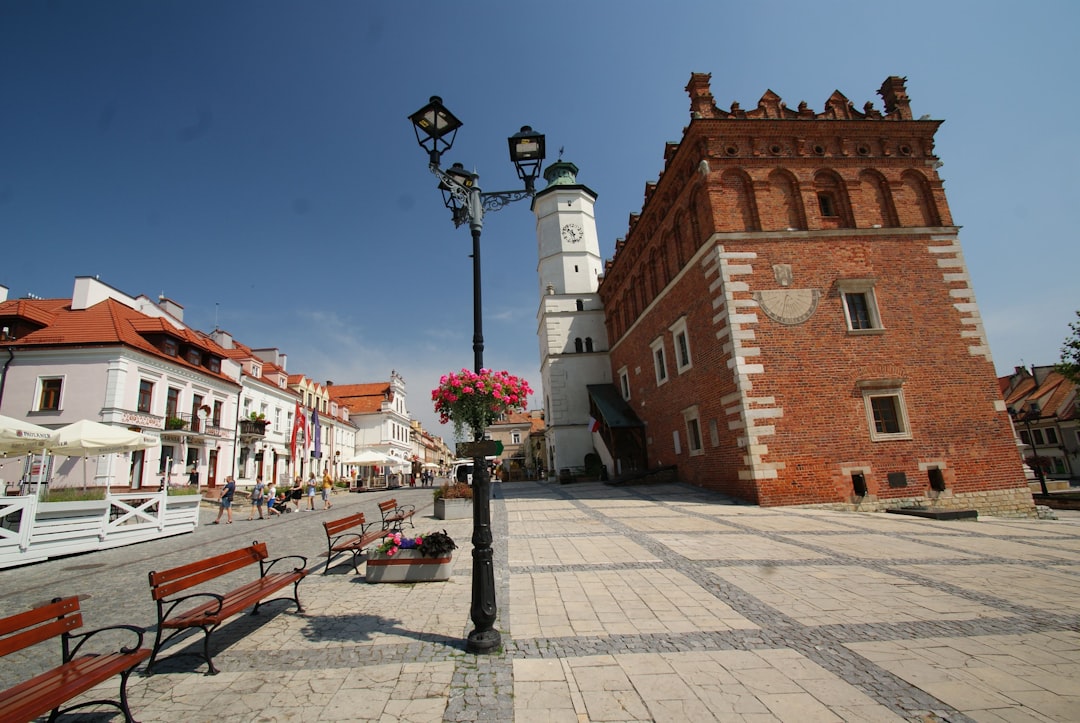
The Central and Eastern European (CEE) exhibition market has emerged as the fastest-growing region in European trade fair activity through 2024 and 2025.
Polish manufacturing output, Czech industrial capability, Hungarian automotive concentration, and the broader CEE industrial recovery have driven exhibitor demand at regional venues that increasingly compete with Western European venues for tier-one trade fair hosting.
The cost differentials remain substantial, CEE venues typically run 30-50% below comparable Western European venues for equivalent stand specifications, making CEE attractive for both regional market access and cost-conscious pan-European exhibition strategy.
This article unpacks what exhibiting in Poland and broader CEE actually costs at major regional trade fairs in 2026, the venue-by-venue cost profiles, the operational considerations specific to the region, and the strategic logic experienced exhibitors apply to CEE fair calendars.
The figures draw on observed quotes at MTP Poznań Expo, PTAK Warsaw Expo, EXPO XXI Warsaw, Veletrhy Brno (Brno Exhibition Centre), Hungexpo Budapest, and Romexpo Bucharest through 2025 contracts and early 2026 commitments.
Why CEE matters as an exhibition destination in 2026
Three structural shifts have elevated CEE in European exhibition strategy through 2024-2026.
The first is regional industrial growth. Polish industrial output has grown approximately 38% versus 2019 baseline; Czech manufacturing 22%; Hungarian automotive component output 28%; Romanian industrial production 18%. The growth has produced increased exhibitor demand and increased visitor concentration at regional fairs serving these industries.
The second is geographic relocation of European industrial activity. Nearshoring trends from 2021 onward have shifted European manufacturing activity toward CEE locations, increasing the commercial relevance of CEE-located trade fairs to pan-European buyer audiences.
The third is venue infrastructure investment. Major CEE venues (MTP Poznań, PTAK Warsaw Expo, Hungexpo Budapest) have invested substantially in technical infrastructure modernisation through 2022-2025, narrowing the capability gap with Western European tier-one venues.
“We expanded our CEE fair calendar from one annual fair in 2019 to four annual fairs in 2025. The commercial logic is straightforward, the buyer audience increasingly includes CEE-located decision-makers, and CEE venue costs deliver substantially better ROI per qualified-lead than equivalent Western European fairs in our sectors.”, Common framing among AUMA member exhibitors operating CEE-aligned commercial programmes, 2024
Major CEE venues and cost profiles
MTP Poznań Expo (Poland)
The largest CEE venue and the regional flagship for major B2B and consumer fairs. Sixteen halls totalling approximately 110,000 sqm.
| Cost category | 2026 figure |
|---|---|
| Space rental per sqm | EUR 180-380 |
| Standard 100 sqm stand all-in (mid-tier) | EUR 55,000-105,000 |
| Premium 100 sqm stand all-in | EUR 105,000-175,000 |
| Hidden-cost variance | 12-18% above headline |
| Typical major fairs | ITM Industry Europe, Polagra, Budma, Salmed, Polish industrial fairs |
PTAK Warsaw Expo (Poland)
Major Warsaw-area venue with substantial recent investment. Around six main pavilions (subdivided into roughly eighteen event spaces) totalling approximately 143,000 sqm, among the largest exhibition complexes in Europe by floor area.
| Cost category | 2026 figure |
|---|---|
| Space rental per sqm | EUR 220-420 |
| Standard 100 sqm stand all-in (mid-tier) | EUR 60,000-115,000 |
| Premium 100 sqm stand all-in | EUR 115,000-195,000 |
| Hidden-cost variance | 14-20% above headline |
| Typical major fairs | Warsaw International Tech Fair, Plastpol, regional industrial fairs |
Veletrhy Brno (Czech Republic)
Established Central European venue with comprehensive technical capability. Around fifteen halls totalling over 130,000 sqm of exhibition space.
| Cost category | 2026 figure |
|---|---|
| Space rental per sqm | EUR 200-380 |
| Standard 100 sqm stand all-in (mid-tier) | EUR 60,000-110,000 |
| Premium 100 sqm stand all-in | EUR 110,000-180,000 |
| Hidden-cost variance | 12-18% above headline |
| Typical major fairs | MSV (International Engineering Fair), IDET, regional industrial and consumer fairs |
Hungexpo Budapest (Hungary)
Major Hungarian venue serving primarily Hungarian-market commercial fairs with growing pan-CEE relevance. Around eight halls totalling approximately 75,000 sqm.
| Cost category | 2026 figure |
|---|---|
| Space rental per sqm | EUR 180-340 |
| Standard 100 sqm stand all-in (mid-tier) | EUR 50,000-95,000 |
| Premium 100 sqm stand all-in | EUR 95,000-160,000 |
| Hidden-cost variance | 12-16% above headline |
| Typical major fairs | OMÉK, AUTOMOTIVE Hungary, regional industrial fairs |
Romexpo Bucharest (Romania)
Substantial Romanian venue serving primarily Romanian-market fairs with growing regional reach. Approximately 38,000 sqm of exhibition space.
| Cost category | 2026 figure |
|---|---|
| Space rental per sqm | EUR 140-280 |
| Standard 100 sqm stand all-in (mid-tier) | EUR 45,000-85,000 |
| Premium 100 sqm stand all-in | EUR 85,000-140,000 |
| Hidden-cost variance | 12-16% above headline |
| Typical major fairs | Construct Expo, regional consumer fairs |
Cost comparison: CEE versus Western European equivalents
The table below compares typical 100 sqm mid-tier hybrid stand cost at major CEE venues versus equivalent Western European tier-one venues.
| Venue | 100 sqm stand cost EUR | % vs Frankfurt baseline |
|---|---|---|
| Messe Frankfurt (baseline) | 165,000 | 100% |
| Messe Düsseldorf | 158,000 | 96% |
| RAI Amsterdam | 152,000 | 92% |
| Fiera Milano | 138,000 | 84% |
| IFEMA Madrid | 125,000 | 76% |
| Brussels Expo | 132,000 | 80% |
| MTP Poznań | 85,000 | 52% |
| PTAK Warsaw Expo | 92,000 | 56% |
| Veletrhy Brno | 90,000 | 55% |
| Hungexpo Budapest | 78,000 | 47% |
| Romexpo Bucharest | 68,000 | 41% |
The CEE cost advantage runs 40-55% below comparable Western European venues at equivalent specification. The advantage traces primarily to space rental rates (CEE typically 40-55% of Western European equivalents) and to local labour cost differentials affecting install and dismantle (CEE typically 40-60% of Western European labour rates).
CEE-specific operational considerations
Five operational considerations affect CEE exhibitor planning beyond what applies at Western European venues.
The first is language operations. English business proficiency varies substantially across CEE markets. Major Polish, Czech, and Hungarian commercial centres operate fluently in English; secondary markets and certain industry sectors may benefit from local-language capability. Multilingual signage in English plus the host country language typically reads as commercially respectful.
The second is local supplier availability. CEE local supplier capability for stand build, AV, and ancillary services has matured substantially through 2020-2025 but remains less dense than Western European equivalents. Western European builders frequently provide services to CEE venues through local-partner arrangements; pure local supplier capability is strongest at MTP Poznań and PTAK Warsaw Expo.
The third is freight cost from Western European origins. CEE venues are typically 800-1,800 km from major Western European stand-build facilities, with corresponding freight costs of EUR 4,800-12,000 per stand for full-truckload transport. Builders fabricating closer to CEE venues (Polish, Czech, German builders with CEE operations) deliver freight efficiency.
The fourth is currency exposure. Three CEE venues operate in non-Euro currencies, Poland (Polish złoty), Czech Republic (Czech koruna), Hungary (Hungarian forint). Romania is on a long-term path toward Euro adoption but currently operates in lei. Currency exposure affects budget planning across the procurement-to-invoice cycle; major venues typically allow Euro-denominated contracts for international exhibitors.
The fifth is EU regulatory compliance. CEE EU member states (Poland, Czech Republic, Hungary, Romania) operate under EU regulatory frameworks including GDPR, the European Accessibility Act, and product safety regulations. Enforcement intensity varies by member state but compliance expectations remain at EU-framework level.
“We treat our CEE fair calendar as commercially equivalent to our Western European calendar with adjusted cost structure. EU regulatory frameworks apply uniformly; the practical differences are local supplier ecosystem density and currency exposure. Neither creates substantial planning complexity once procurement teams understand the patterns.”, Common framing among FAMAB member exhibitors operating CEE programmes, 2024
CEE fair calendar strategic logic
Three strategic patterns characterise effective CEE fair calendar selection.
The first is regional-market access. CEE fairs serve regional buyer audiences distinct from Western European fair audiences. Exhibitors with CEE-market commercial objectives often achieve substantially better regional market penetration through CEE-located fairs than through Western European fairs that attract limited CEE attendance.
The second is sector-specific concentration. Certain industry verticals concentrate at specific CEE venues, printing and packaging at MTP Poznań, engineering and machinery at Veletrhy Brno, agricultural products at Hungexpo Budapest. Sector-specific concentration creates commercial value comparable to or exceeding Western European fairs in those verticals.
The third is cost-efficiency for pan-European exhibitors. Pan-European exhibitors increasingly include CEE fairs in fair calendars not for regional access specifically but for cost-efficient additional fair presence that expands annual touchpoints with the broader European market.
Worked example: industrial machinery exhibitor at MTP Poznań
An industrial machinery exhibitor at ITM Industry Europe in Poznań. 120 sqm island stand with mid-tier hybrid execution.
- Space rental at EUR 285/sqm: EUR 34,200
- Stand build (mid-tier hybrid produced through Polish builder): EUR 58,000
- Lighting and AV (CRI 90+, hero LED wall 6 sqm, 3 touchscreens): EUR 28,000
- Meeting rooms (2 enclosed): EUR 22,000
- Hospitality (café-lounge with Polish-cuisine catering element): EUR 10,500
- Transport (from Polish builder facility): EUR 2,400
- Install and dismantle: EUR 11,000
- Accessibility (inclusive-design execution): EUR 18,000
- Project management and on-stand coordination: EUR 14,000
- Insurance (covering equipment demonstration liability): EUR 4,800
- ZAiKS music licensing (Polish equivalent of SABAM/GEMA): EUR 480
- Bilingual signage and materials (Polish-English): EUR 4,800
- Hidden-cost contingency at 15%: EUR 32,000
- Total: EUR 240,180 for the fair
The figure represents EUR 2,002 per sqm, substantially below the EUR 2,800-3,400 per sqm typical of equivalent stand at Hannover Messe. The cost differential reflects MTP Poznań’s structural pricing advantage and Polish-builder cost efficiency.
Tooling at Exhibition Stands EU
The /rfq workflow includes CEE venue selection and currency specification. The /calculator includes CEE venue cost differentials and currency exposure modelling. The /builders directory lists builders with documented CEE delivery capability.
Related reading
- Exhibiting in Poland and CEE: Fastest Growing Region
- Stand Design Cost Breakdown
- Shipping Timelines and Deadlines
- Insurance and Liability
- Modular vs Custom
- Find a Builder
References and primary sources
- AUMA exhibitor cost benchmarks (2024-2026 edition), auma.de
- FAMAB Verband Direkte Wirtschaftskommunikation member best-practice exchanges
- IFES (International Federation of Exhibition and Event Services) member working group papers
- MTP Poznań Expo Exhibitor Manual 2026
- PTAK Warsaw Expo Exhibitor Manual 2026
- Veletrhy Brno Exhibitor Manual 2026
- UFI Global Visitor Insights Report 2024, ufi.org
- Eurostat CEE manufacturing output statistics 2024
FAQFrequently asked questions
Three structural shifts elevated CEE in European exhibition strategy through 2024-2026. First, regional industrial growth: Polish industrial output has grown approximately 38% versus 2019 baseline; Czech manufacturing 22%; Hungarian automotive component output 28%; Romanian industrial production 18%; growth produces increased exhibitor demand and visitor concentration at regional fairs.
Second, geographic relocation of European industrial activity: nearshoring trends from 2021 onward have shifted European manufacturing toward CEE locations, increasing commercial relevance of CEE-located trade fairs to pan-European buyer audiences.
Third, venue infrastructure investment: major CEE venues (MTP Poznań, PTAK Warsaw Expo, Hungexpo Budapest) have invested substantially in technical infrastructure modernisation through 2022-2025, narrowing the capability gap with Western European tier-one venues.
MTP Poznań Expo (Poland, 110,000 sqm, regional flagship): space rental EUR 180-380 per sqm, 100 sqm stand EUR 55,000-105,000 mid-tier, hidden-cost variance 12-18%. PTAK Warsaw Expo (Poland, 145,000 sqm among the largest in Europe): EUR 220-420 per sqm, 100 sqm stand EUR 60,000-115,000 mid-tier, hidden-cost variance 14-20%.
Veletrhy Brno (Czech Republic, 65,000 sqm): EUR 200-380 per sqm, 100 sqm stand EUR 60,000-110,000 mid-tier, hidden-cost variance 12-18%. Hungexpo Budapest (Hungary, 50,000 sqm): EUR 180-340 per sqm, 100 sqm stand EUR 50,000-95,000 mid-tier, hidden-cost variance 12-16%. Romexpo Bucharest (Romania, 38,000 sqm): EUR 140-280 per sqm, 100 sqm stand EUR 45,000-85,000 mid-tier, hidden-cost variance 12-16%.
CEE venues typically run 40-55% below comparable Western European venues for equivalent stand specifications. Using Messe Frankfurt at EUR 165,000 for 100 sqm as baseline (100%): Messe Düsseldorf 96%, RAI Amsterdam 92%, Fiera Milano 84%, IFEMA Madrid 76%, Brussels Expo 80%, MTP Poznań 52%, PTAK Warsaw Expo 56%, Veletrhy Brno 55%, Hungexpo Budapest 47%, Romexpo Bucharest 41%.
The advantage traces primarily to space rental rates (CEE typically 40-55% of Western European equivalents) and to local labour cost differentials affecting install and dismantle (CEE typically 40-60% of Western European labour rates). EU regulatory frameworks apply uniformly across CEE EU member states.
Five considerations. First, language operations: English business proficiency varies; major Polish, Czech, Hungarian commercial centres operate fluently in English; multilingual signage English plus host country language typically reads as commercially respectful.
Second, local supplier availability: matured substantially through 2020-2025 but remains less dense than Western European equivalents; Western European builders frequently provide services through local-partner arrangements; pure local supplier capability strongest at MTP Poznań and PTAK Warsaw Expo.
Third, freight cost from Western European origins: CEE venues typically 800-1,800 km from major Western European stand-build facilities, with freight costs EUR 4,800-12,000 per stand FTL. Fourth, currency exposure: Poland (złoty), Czech Republic (koruna), Hungary (forint), Romania (lei); major venues typically allow Euro-denominated contracts for international exhibitors.
Fifth, EU regulatory compliance: CEE EU member states operate under EU frameworks including GDPR, European Accessibility Act, product safety regulations.
Three strategic patterns characterise effective selection. First, regional-market access: CEE fairs serve regional buyer audiences distinct from Western European fair audiences; exhibitors with CEE-market commercial objectives often achieve substantially better regional market penetration through CEE-located fairs than through Western European fairs attracting limited CEE attendance.
Second, sector-specific concentration: certain industry verticals concentrate at specific CEE venues, printing and packaging at MTP Poznań, engineering and machinery at Veletrhy Brno, agricultural products at Hungexpo Budapest; sector-specific concentration creates commercial value comparable to or exceeding Western European fairs in those verticals.
Third, cost-efficiency for pan-European exhibitors: pan-European exhibitors increasingly include CEE fairs not for regional access specifically but for cost-efficient additional fair presence expanding annual touchpoints with the broader European market.
Take an industrial machinery exhibitor at MTP Poznań with mid-tier hybrid execution. The budget covers space, build, lighting and AV, meeting rooms, hospitality, logistics, accessibility, management, insurance, licensing, signage and contingency, and it breaks down as follows:
- Space rental at EUR 285/sqm (EUR 34,200)
- Mid-tier hybrid stand build through Polish builder (EUR 58,000)
- Lighting and AV with CRI 90+ and hero 6 sqm LED wall and 3 touchscreens (EUR 28,000)
- 2 enclosed meeting rooms (EUR 22,000)
- Café-lounge hospitality with Polish-cuisine element (EUR 10,500)
- Transport from Polish builder facility (EUR 2,400)
- Install and dismantle (EUR 11,000)
- Inclusive-design accessibility execution (EUR 18,000)
- Project management and on-stand coordination (EUR 14,000)
- Equipment demonstration liability insurance (EUR 4,800)
- ZAiKS music licensing (EUR 480)
- Bilingual Polish-English signage and materials (EUR 4,800)
- Hidden-cost contingency at 15% (EUR 32,000)
Total EUR 240,180 at EUR 2,002 per sqm, substantially below the EUR 2,800-3,400 per sqm typical of equivalent stand at Hannover Messe. Cost differential reflects MTP Poznań pricing advantage and Polish-builder cost efficiency.