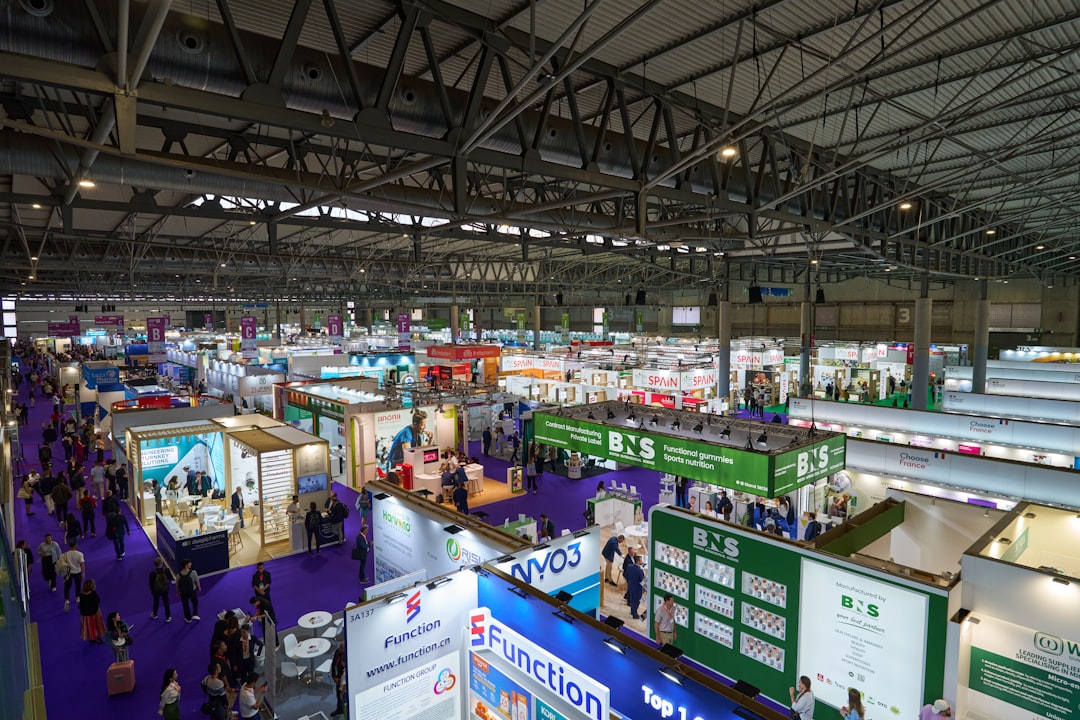
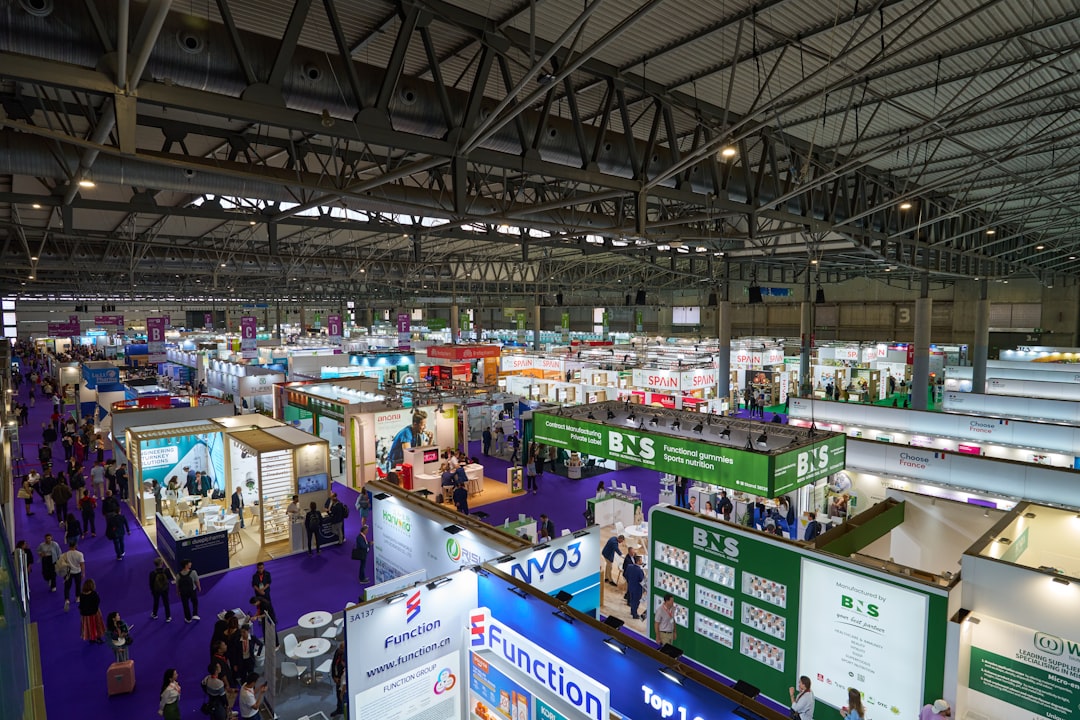
Spain generates roughly EUR 5 billion in annual trade-fair activity, the fourth-largest European market after Germany, France, and Italy. The activity concentrates almost entirely in two operational hubs: Madrid (IFEMA Feria de Madrid) and Barcelona (Fira de Barcelona Gran Via, Fira Montjuic, plus CCIB for conferences).
A meaningful but smaller third hub centers on Valencia (Feria Valencia), and regional venues in Bilbao (BEC Bilbao Exhibition Centre), Zaragoza, and Sevilla handle sector-specific national fairs.
The Spanish stand-building industry has been the fastest-evolving in Western Europe over the last decade. Mobile World Congress’s 2006 relocation to Barcelona triggered a wave of investment in Catalonian fabrication capability, and the post-2014 economic recovery accelerated supplier consolidation in Madrid.
The net result for 2026: tighter top-tier supplier ecosystems than France or Italy, more design-and-build firms (rather than separate design agencies plus fabrication shops), and a service-orientation that European buyers consistently rate above the EU average.
This directory organizes Spanish builders by the operational realities of the two hub regions, the major fairs they serve, and the 2026 pricing tiers that actually exist.
How Spanish stand-building economics work
Spanish fair-space rental sits at 75-85% of German pricing for comparable square meterage, a structural advantage Spanish fairs use aggressively to attract international exhibitors. Spanish skilled labor runs roughly 80-90% of German wages (the gap is closing but persistent), which keeps build costs meaningfully lower across all tiers.
The net all-in for a 75 sqm island at a Spanish major fair runs 12-20% below German equivalents. That is the headline reason Spain has grown its share of European trade-fair activity faster than any other major market over the last five years.
What that pricing advantage does NOT include:
- Spanish IVA (VAT) at 21% on services and rentals. EU-VAT-registered exhibitors reclaim, but cash-flow during the fair is real.
- MWC Barcelona surge pricing. During Mobile World Congress week, every build-cost line item (labor, materials, transport, hotel) inflates 20-35% above the Spanish baseline. Same applies to FITUR week in Madrid for hospitality and crew.
- Sub-contractor depth in regional venues. Builders working at Valencia or Bilbao without local crew partnerships pay 12-18% premiums for crew transport from Madrid or Barcelona.
Realistic 2026 build-cost bands for Spanish builders, expressed per square meter of booth floor area:
- Modular system stands: EUR 240-400/sqm. Octanorm Maxima, BeMatrix, Aluvision, plus several Spanish proprietary systems. Materially below German equivalents.
- Hybrid (modular skeleton plus custom skin and architecture): EUR 430-720/sqm. The center of gravity for the Spanish market by volume.
- Custom architectural: EUR 700-1,300/sqm. Where Tier 1 Spanish firms compete. MWC and FITUR flagship stands operate in this tier.
- Premium architectural with double-decker: EUR 1,200-2,100/sqm. Concentrated in roughly 15 Spanish builders, most in Barcelona, several in Madrid.
What these per-sqm prices exclude (consistent across all Spanish builders, missing from initial quotes):
- Stand-space rental at Spanish majors: EUR 210-310/sqm at IFEMA Madrid, EUR 235-330/sqm at Fira Barcelona Gran Via during MWC and Mobile-cluster events.
- Hall services (electricidad, agua, internet, conexiones especiales): EUR 1,800-3,500 for 75 sqm at Madrid; EUR 2,100-4,000 at Barcelona Gran Via.
- Spanish IVA on services and rentals: 21%.
- Mandatory fair-organizer insurance (seguro de responsabilidad civil): EUR 600-1,200 typical.
- Freight and ATA carnet handling for non-EU exhibitors: EUR 1,400-2,800.
- Spanish fire-safety and structural compliance documentation (certificado técnico). Mandatory for custom structures over 2.5m. EUR 400-900 per build.
A fully-loaded budget for a hybrid 75 sqm island at MWC Barcelona 2026 lands in the EUR 75,000-110,000 range. At FITUR Madrid, EUR 60,000-88,000. At Alimentaria Barcelona, EUR 65,000-95,000. At a mid-tier Valencia or Bilbao fair, EUR 50,000-75,000.
The two hub regions and their builder ecosystems
Madrid, IFEMA Feria de Madrid
IFEMA Feria de Madrid is the largest exhibition complex in Spain (200,000+ sqm gross across 12 halls plus auxiliary spaces). It hosts FITUR (January, 250,000 visitors, the world’s third-largest tourism fair), ARCO Madrid (contemporary art), SIMA (real estate), Genera (energy), Climatización y Refrigeración, Fruit Attraction (60,000+ visitors), Promogift, and a strong cluster of B2B sector fairs across 60+ annual events.
The Madrid stand-building ecosystem is concentrated in three industrial belts:
- Vallecas / San Blas (east-southeast Madrid): fabrication shops, sub-contractor printers, warehousing
- Coslada / San Fernando (eastern outskirts): larger-format fabrication, transport logistics
- Alcobendas / San Sebastián de los Reyes (north): design-and-build hybrids with permanent IFEMA crews
Roughly 120 named firms have active Madrid operations, of which approximately 60 sustain Tier 2 or above quality across multiple fairs.
Tier 1 architectural builders at Madrid (EUR 1,000-1,800/sqm):
The Madrid flagship tier includes design-led firms with brand-experience portfolios plus pure architectural fabricators with in-house design direction. These execute headline stands at FITUR for major hotel chains and tourism boards, ARCO anchor galleries, and Fruit Attraction major-distributor pavilions.
Wait list: 9-13 months for FITUR slots. Brief acceptance is selective on creative-fit and sector-portfolio relevance.
Tier 2 hybrid plus strong custom (EUR 500-820/sqm):
Roughly 70 named firms with design-and-build capability. Most operate in-house workshops in the Vallecas/San Blas belt and trusted sub-contractor networks for graphics, AV, and complex finishing. Sweet spot for 75-200 sqm builds across most IFEMA fairs.
Tier 3 modular and small-stand (EUR 280-450/sqm):
Octanorm and BeMatrix specialists plus Spanish modular system distributors. Strong choice for first-time exhibitors at Madrid sector fairs.
Operational considerations specific to Madrid:
- FITUR week (mid-January) is the most expensive build window in Spain. Hotel rates double, crew availability tightens, premium on every line item runs 15-25%. Plan the FITUR build budget separately from a standard Madrid sector-fair build.
- IFEMA freight gate logistics. Pavilions 1-10 share two freight gates with strict time-window allocation. Builders without IFEMA-specific install scheduling experience routinely miss their slot and pay penalty fees.
- August dark period. IFEMA closes mid-August for two weeks. Plan custom installations to avoid this window.
Barcelona, Fira de Barcelona Gran Via, Fira Montjuic
Fira de Barcelona operates two major venues:
Fira Gran Via (outer venue, 240,000 sqm gross) hosts Mobile World Congress (March, 109,000 visitors), Alimentaria (biennial, 100,000 visitors), Smart City Expo World Congress, ISE (Integrated Systems Europe, the largest pro-AV show in the world at 75,000+ visitors), Hispack, and major industrial-cluster events.
Fira Montjuic (city venue, 120,000 sqm gross) hosts smaller-format consumer and lifestyle shows, plus serves as overflow during MWC week.
Barcelona’s stand-building ecosystem is the most internationally-oriented in Spain. MWC and ISE have driven 20 years of investment in build capability for visiting multinationals, which produces a denser supplier pool than Madrid for premium and architectural builds.
The supplier ecosystem clusters in three belts:
- Hospitalet / Cornellà (immediate west of Fira Gran Via): fabrication shops, printers, warehousing, many firms within 10 minutes of the Gran Via venue
- Sant Boi / Viladecans (south): larger-format fabrication and transport logistics
- Granollers / Mollet (north): design-and-build hybrids serving both Fira venues plus regional Catalonia events
Roughly 110 named firms have active Barcelona operations, of which approximately 65 sustain Tier 2 or above quality.
Tier 1 architectural builders at Barcelona (EUR 1,100-2,100/sqm):
Barcelona’s flagship tier benefits from two decades of MWC-driven investment in premium build capability. These firms execute the most ambitious stands in Spain, the major-mobile-carrier flagship builds at MWC, the anchor-brand walk-through experiences at ISE, the lead Alimentaria pavilions.
Wait list: 13-16 months for MWC slots. Brief acceptance is heavily selective on creative-direction and previous-portfolio fit.
Tier 2 hybrid plus strong custom (EUR 520-880/sqm):
The dense middle of the Barcelona market, roughly 80 firms. Strong design-and-build integration, often faster on revisions than Madrid equivalents, broader experience with international clients.
Tier 3 modular and small-stand (EUR 260-470/sqm):
Modular systems specialists serving smaller exhibitors and first-time MWC and ISE attendees.
Operational considerations specific to Barcelona:
- MWC week (late February or early March) is the most expensive build window in Iberia. Hotel rates triple, crew availability collapses, premium on every line item runs 25-40%. MWC pricing is its own market.
- ISE week (early February) compounds with MWC pressure. The two events back-to-back stress local supplier capacity from late January through mid-March. Plan Barcelona builds outside this window where possible, or commit to suppliers 14+ months in advance.
- Fira Gran Via freight logistics. Halls 1-3 vs Halls 4-8 have materially different freight-gate access, Halls 4-8 are easier. Builders with permanent Gran Via crews know this; outside teams routinely under-quote install time by getting hall placement wrong.
- Catalan vs Castilian Spanish. Barcelona-based crews often default to Catalan in operational communication. Not a barrier for English-speaking exhibitors, but project-management documents may default to Catalan unless specified otherwise upfront.
Valencia, Bilbao, Sevilla, secondary hubs
Valencia (Feria Valencia, 230,000 sqm gross) hosts Cevisama (ceramics), Habitat (furniture), Iberflora (horticulture), and Fimma+Maderalia (wood machinery). The Valencia supplier pool is moderate, about 35 named firms with active Valencia operations. Pricing runs 8-12% below Madrid for comparable builds.
Bilbao (BEC Bilbao Exhibition Centre) hosts Subcontratacion (industrial subcontracting), BIEMH (machine tools, biennial), Maintenance Industrial, and Sealogis. Smaller supplier pool, about 20 named firms with regular Bilbao operations. Some Madrid-Tier-2 firms operate Bilbao crews on a project basis.
Sevilla and Zaragoza host smaller sector fairs; supplier ecosystems are local and limited. Importing a Madrid or Barcelona team to these venues without a local partner increases risk meaningfully.
Six screening filters that work for Spanish builders
1. Demand fair-specific case studies with photographic and contactable proof.
Ask for three stands the builder completed at your specific fair (or sector cluster within IFEMA / Fira Barcelona) in the last 18 months, pavilion numbers, exhibitor names, install-week photos, contactable references. Real builders deliver within 24 hours.
2. AFE or ANSEME membership.
AFE (Asociación de Ferias Españolas) is the broad Spanish trade-fair industry body. ANSEME (Asociación Nacional de Stand y Mobiliario para Eventos) is the stand-builder-specific federation. Both publish member lists. Absence of any trade body affiliation for a national-tier firm is suspicious.
3. In-house carpentry and finishing workshop.
Many Spanish builders position as integrated design-and-build firms but sub-contract all fabrication. These produce reliable design but variable build quality. Ask for a workshop visit (visita al taller) before contracting. Disciplined operators show their workshops; pure project-management firms decline politely.
4. Spanish IVA registration with EU-cross-border invoicing infrastructure.
European exhibitors outside Spain need correctly-issued reverse-charge IVA invoices with intra-community VAT number verification. Builders without proper EU-cross-border infrastructure create accounting friction 2-4 weeks post-fair.
5. Project manager and crew lead both named in the contract.
Spanish builds run on the project manager (responsible for client and creative direction) plus a jefe de equipo (crew lead, responsible for install discipline). Both should be named in the contract with personal mobiles. Stand builds at IFEMA and Fira live or die at the jefe-de-equipo level.
6. Certificado técnico and structural compliance documentation.
Spanish fire-safety and structural compliance requires a certificado técnico for custom builds over 2.5m. Builders should deliver this as standard handover documentation 2 weeks before install. Firms that promise to handle compliance “on the day” routinely create install-day stress that delays stand readiness.
Fair-by-fair builder shortlist guidance
For Mobile World Congress (Barcelona, late February or early March annually):
Brief 5-6 firms 14 months out. MWC is the most-oversubscribed Spanish build window; expect 2-3 firms to decline on capacity grounds even at 14 months. Brief acceptance is selective.
For FITUR (Madrid, January annually):
Brief 4-5 firms 11 months out. FITUR has a preferred-supplier list that matters; ask each shortlisted builder whether they are on it. Tourism-board pavilions and national-tourism-organization stands have specific design conventions, sector-experienced builders deliver materially better outcomes than generalists.
For Alimentaria (Barcelona, biennial in March):
Brief 4-5 firms 13 months out. Food and beverage display fixturing is a specialist sub-market; insist on builders with documented food-sector portfolios.
For ISE (Barcelona, early February annually):
Brief 4-5 firms 12 months out. Pro-AV display requirements (large-format video walls, advanced lighting integration, audio-zone separation) are specialist skills. Generalist builders deliver worse ISE stands than firms with documented pro-AV portfolios.
For ARCO Madrid (February annually):
Brief 3-4 firms 9 months out, prioritizing firms with gallery-fitout portfolio. ARCO stands serve as gallery walls for contemporary art display; design conventions differ materially from commercial-product display.
For Fruit Attraction (Madrid, October annually):
Brief 3-4 firms 8 months out. Fresh-produce display fixturing (refrigerated cabinets, integrated misting systems for produce freshness, ATEX-compliant lighting in some categories) is specialist work.
What this directory does NOT replace
This guide replaces three things exhibitors often pay for and shouldn’t:
- Generic stand-builder “matching services” that charge 15-25% commission for shortlisting firms you could find with a few hours of research
- Listicle articles (“top 10 Spanish stand builders”) that mostly recycle paid placements without operational depth
- Stand-builder broker networks that present as independent but actually pre-allocate exhibitors to partner firms
What this guide is not a substitute for:
- Site visits and in-person meetings with shortlisted builders
- Fair-organizer preferred-supplier conversations (especially at FITUR and MWC where these matter most)
- Cross-border legal and IVA counsel for first-time exhibitors from outside the EU
Where to start
For a first-time Spanish exhibitor planning a 2026 stand:
- Identify your target fair (most exhibitors have one priority fair, not “Spain in general”)
- Filter our builder directory by city, most fairs map to either Madrid or Barcelona
- Apply the six screening filters above to whittle the longlist to 3-5 firms
- Brief 3-4 firms 9-14 months ahead of the fair date (longer for MWC and FITUR)
- Visit at least two workshops (talleres) before contracting
Spain has the best price-quality ratio in major European trade-fair markets for 2026. Exhibitors who treat builder selection as a multi-month relationship-building exercise reliably capture that value; exhibitors who treat it as a procurement bid often do not.
FAQFrequently asked questions
The net all-in for a 75 sqm island at a Spanish major fair runs 12 to 20 percent below German equivalents. Spanish fair-space rental sits at 75 to 85 percent of German pricing for comparable square meterage, and Spanish skilled labour runs roughly 80 to 90 percent of German wages, which keeps build costs meaningfully lower across all tiers.
Modular system stands run EUR 240 to 400 per sqm, materially below German equivalents. Hybrid builds with a modular skeleton plus custom skin and architecture run EUR 430 to 720 and represent the centre of gravity by volume. Custom architectural builds run EUR 700 to 1,300, and premium architectural with a double-decker runs EUR 1,200 to 2,100.
MWC week in late February or early March is the most expensive build window in Iberia: hotel rates triple, crew availability collapses, and the premium on every line item runs 25 to 40 percent. ISE in early February compounds that pressure, stressing local supplier capacity from late January through mid-March. Commit to suppliers 14 or more months in advance.
Brief five to six firms 14 months out for MWC, the most oversubscribed Spanish build window, and expect two or three to decline on capacity grounds even at that lead time. For FITUR in Madrid, brief four to five firms 11 months out and ask each shortlisted builder whether they are on the preferred-supplier list, which matters.