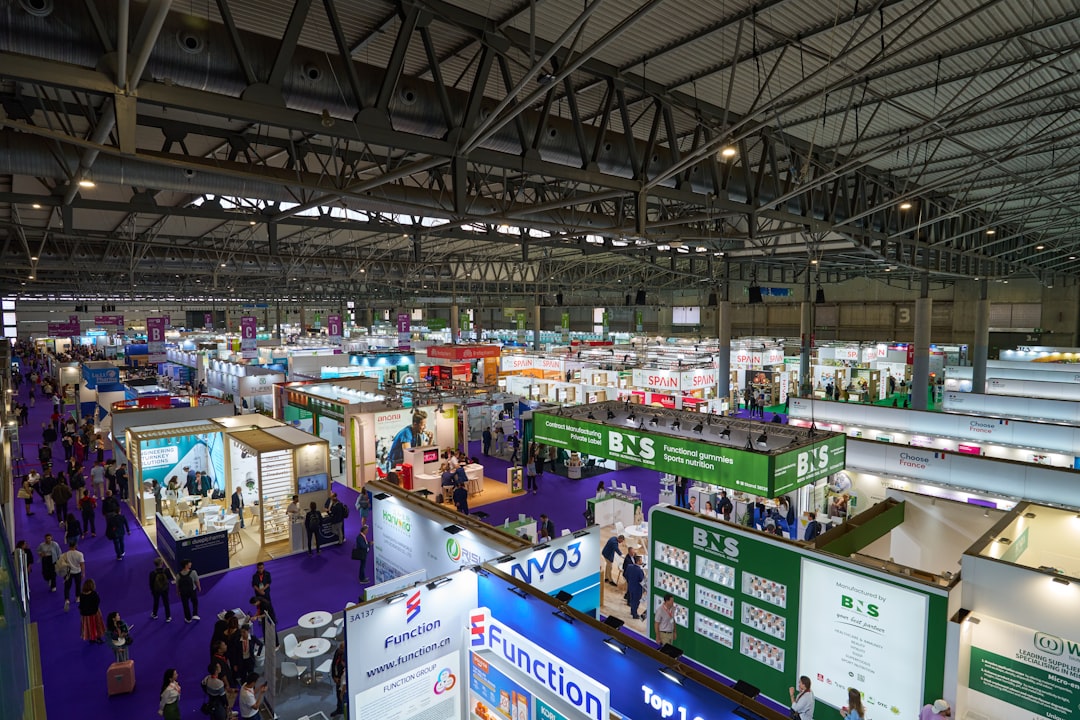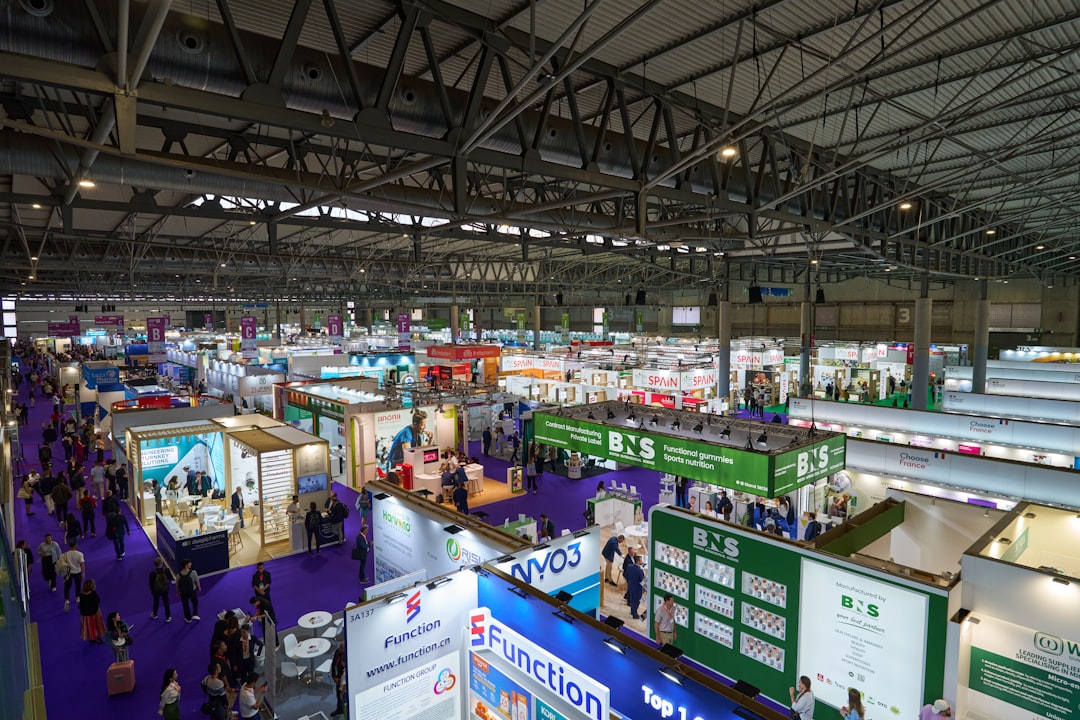
Spain is the fourth-largest exhibition economy in Europe and the largest in Southern Europe by number of internationally-relevant fairs. IFEMA Madrid, Fira de Barcelona, and Feria de Valencia together host more than 200 fairs annually across 750,000 square metres of combined hall space.
Spain’s flagship calendar includes FITUR (the world’s second-largest tourism trade fair), Mobile World Congress in Barcelona, ISE Integrated Systems Europe, Hostelco, Hispack, Alimentaria, Climatización & Refrigeración, Genera, and the Madrid Fashion Week trade component.
For non-resident exhibitors, Spain offers structurally lower cost than Germany, France, or Italy on a per-square-metre basis, typically 25-35 percent cheaper than equivalent stands at Messe Frankfurt or Fiera Milano Rho, while delivering comparable visitor quality at the tier-one fairs. The trade-off is a marginally less digitally-mature VAT recovery system than France, and a stand-builder ecosystem concentrated heavily in Madrid and Barcelona with thinner provincial coverage.
This guide covers IVA reclaim mechanics, cost benchmarks across the major Spanish venues, builder selection criteria, and the operational specifics of IFEMA and Fira Barcelona. References draw from AFE Asociación de Ferias Españolas, the Agencia Tributaria reclaim procedures, the published exhibitor manuals of IFEMA and Fira de Barcelona, and the AUMA International Exhibitor Service comparative Spanish market analysis.
Why Spain works for cost-sensitive European exhibitor programmes
Spain’s per-square-metre cost advantage over Germany, France, and Italy is structural rather than transient.
Spanish stand-builder labour rates run roughly 25 percent below Paris and 30 percent below Frankfurt; Spanish hospitality and accommodation costs sit 30-40 percent below equivalent Paris or Milan budgets; and IFEMA and Fira Barcelona space rental rates carry meaningful concessions for multi-year exhibitor commitments.
The cumulative effect is that a comparable visitor-quality stand costs Spanish-resident exhibitors 25-35 percent less than at Messe Frankfurt for the same brand outcome.
“For brands running a multi-fair European calendar, Spain offers the best cost-to-visitor-quality ratio in Europe. The trade-off is that builder capacity for very large flagship-tier projects is thinner than in Germany or Italy, so the largest custom builds (above 500 sqm) sometimes require pan-European builder partnerships rather than purely local Spanish capacity.”, Common framing among AFE-affiliated exhibitor advisors
The structural cost advantage compounds at MWC Barcelona and ISE, events where Spanish-resident exhibitors and Spanish-build pan-European brands compete directly with German, French, and Italian alternatives. At these fairs, the Spanish cost base materially expands the achievable brand presence within a given budget.
Spanish IVA mechanics
Spanish IVA (Impuesto sobre el Valor Añadido) on exhibition services applies at the standard 21 percent rate. Reduced rates of 10 percent and 4 percent apply to certain hospitality, accommodation, and basic-necessity categories but do not materially affect exhibitor budgets. The reclaim mechanics:
- EU-resident exhibitors: file via the home VAT portal under the EU Eighth Directive. Deadline: 30 September of the year following the fair. Refund window: typically 4-6 months.
- Non-EU reciprocity countries: file directly with the Agencia Tributaria through the dedicated foreign-VAT portal. Deadline: 30 September of the year following the fair (Spain uses the September deadline for non-EU rather than the German June deadline). Refund window: 6-12 months.
- Non-EU non-reciprocity: not eligible. Spain’s reciprocity list aligns with EU norms, US, UK, Switzerland, Norway, Japan, Korea, Canada, Israel, Australia, and roughly twenty more.
Spain’s portal sits between Germany’s procedural-heavy BZSt and France’s digitally-mature DGFiP in operational difficulty. First-time non-EU filings see acceptance rates around 75 percent, better than Germany but below France. The most common reason for rejection is invoice metadata mismatch, where the Spanish supplier’s invoice naming does not exactly match the exhibitor entity’s registered name.
“The Agencia Tributaria is procedurally fair but unforgiving on documentation. We see acceptance rates above ninety percent for filings where the exhibitor has briefed every Spanish supplier on exact company-name spelling, and around sixty percent for filings where suppliers have abbreviated or anglicised the company name on invoices.”, AFE International Exhibitor Service guidance, 2026 edition
Cost benchmarks across major Spanish venues
The table below summarises 2026 published rates and typical all-in budgets for a 100 square metre row stand at the major Spanish fair venues.
| Venue | Location | Hall area (sqm) | Space rental per sqm (EUR) | All-in 100sqm hybrid (EUR) | Recoverable IVA (21%) |
|---|---|---|---|---|---|
| IFEMA Madrid | Madrid | 200,000 | 245-325 | 92,000-148,000 | 16,000-25,700 |
| Fira de Barcelona Gran Via | Barcelona | 200,000 | 285-385 | 108,000-172,000 | 18,800-29,900 |
| Fira de Barcelona Montjuic | Barcelona central | 115,000 | 295-395 | 112,000-175,000 | 19,500-30,400 |
| Feria de Valencia | Valencia | 230,000 | 195-275 | 78,000-128,000 | 13,600-22,200 |
| Bilbao Exhibition Centre | Bilbao | 53,500 | 215-290 | 82,000-132,000 | 14,300-22,900 |
| Fira de Zaragoza | Zaragoza | 90,000 | 185-260 | 72,000-118,000 | 12,500-20,500 |
| Palacio Ferial Malaga | Malaga | 60,000 | 200-275 | 76,000-122,000 | 13,200-21,200 |
MWC Barcelona pricing sits structurally above standard Fira Gran Via rates, premium space at MWC runs EUR 380-480 per sqm rather than the base 285-385 range, reflecting the singular commercial position of MWC in the global mobile industry calendar.
Build culture: what Spanish visitors expect
Spanish fair build culture is structurally more pragmatic than Italian or French expectations. Spanish visitors evaluate stands functionally, does the layout support efficient buyer-seller conversations, is the hospitality welcoming, are the products well-displayed under good light. Architectural-statement stands are appreciated but not required, and modular construction is fully accepted across most Spanish fairs.
Industrial and B2B fairs: Hispack, Genera, Hostelco, Climatización
Modular dominant; hybrid common for mid-tier brands. Visitor judgement is on product capability and commercial terms. The premium investment sits in technical-demo capability, lighting quality, and hospitality.
Sector-flagship fairs: Alimentaria, MWC Barcelona, ISE Barcelona, FITUR
Hybrid construction is the dominant register. At MWC, the largest brand stands (Samsung, Huawei, Ericsson, Nokia) commission flagship custom builds at EUR 5-15 million scale, but the bulk of the exhibitor base operates in the EUR 200,000-1,500,000 hybrid range. At ISE, the audiovisual-integration industry’s own fair, brands frequently demonstrate their AV products as part of the stand build itself, a structural quirk that elevates AV-integration quality above architectural-stand quality.
Design-led Spanish fairs: Madrid Design Festival, Casa Decor
Custom builds with strong material specification. These fairs do not have the international weight of Salone or Maison&Objet but are commercially significant within the Iberian and Latin American specifier markets.
“Spain rewards stands that work commercially over stands that work aesthetically. A modular stand at IFEMA with strong hospitality and good lighting will outperform a beautiful custom stand with weak commercial flow at the same fair. The Spanish buyer evaluates the conversation, not the architecture around it.”, Common framing among AFE-affiliated exhibition designers
Hospitality conventions at Spanish fairs
Spanish fair hospitality follows distinct conventions:
- Coffee service all day: Spanish business culture maintains coffee service throughout the day rather than concentrating it in mid-morning. Plan continuous espresso and americano availability rather than discrete coffee breaks.
- Late lunch hosting: Spanish lunch culture pushes hospitality lunches to 2pm-3pm, longer than other European fairs. Lunch hospitality on stands is uncommon at most fairs; senior buyer lunches happen at off-site restaurants near the venue.
- Aperitivo from 7pm: Spanish working hours extend later than Northern European norms. Hospitality on stands runs to 7pm-8pm at the major fairs, with aperitivo or wine service from 6:30pm.
- Tapas culture: when stands offer food, traditional Spanish tapas (jamón, manchego, olives, croquetas) signal cultural fluency over generic European hotel catering.
- Spanish-English bilingual: Spanish buyers typically open in Spanish and switch to English as required. Stand staff with at least functional Spanish welcome (“¿En qué puedo ayudarle?”) signal commercial preparedness.
The hospitality budget for a 100 square metre Spanish stand at a five-day fair typically runs EUR 5,500-14,000, meaningfully below equivalent French or Italian budgets, reflecting lower Spanish catering costs.
Builder selection for Spanish fairs
The Spanish stand-builder ecosystem clusters in Madrid and Barcelona, with secondary capacity in Valencia and Bilbao. The signals that distinguish builders capable of delivering at IFEMA or Fira Barcelona tier-one level:
- AFE Asociación de Ferias Españolas member ecosystem participation
- Documented portfolio of at least six IFEMA or Fira stands in the previous twenty-four months
- Bilingual Spanish-English project management
- Working relationships with IFEMA-approved or Fira-approved freight forwarders
- Demonstrated capability with Spanish IVA invoicing through correct company-name documentation
For MWC Barcelona specifically, the builder shortlist narrows to firms with proven MWC experience, fewer than thirty Spanish-region builders have credible MWC portfolios at the scale that fair demands. The Exhibition Stands EU /builders directory filters specifically on MWC-portfolio builders for brands targeting MWC presence.
“MWC Barcelona is a different builder market from the rest of Spain. The technical complexity of mobile-industry demos, the security requirements for executive meeting rooms, and the sheer scale of flagship stands all demand specialist builder capability that not every Spanish stand company can deliver.”, Common framing among MWC-experienced exhibition consultants
Timeline gotchas and Spanish calendar specifics
Spanish fair calendars have structural features foreign exhibitors miss:
- August closure: Spain substantially closes for the entire month of August. Stand builders, freight forwarders, and Messe administrative staff return after the first week of September. Autumn-fair decisions must be locked by mid-July.
- MWC Barcelona late February: the world’s largest mobile fair commands roughly half of all Barcelona-region stand-builder capacity in the eight weeks before the fair. Non-MWC brands building in Barcelona during January-February face capacity constraints.
- FITUR mid-January: Spain’s flagship tourism fair runs immediately after the Christmas holiday, which means stand-builder fabrication windows span the Christmas-New Year break. Lock FITUR commitments by mid-October of the prior year.
- Easter calendar shifts: the Spanish Holy Week (Semana Santa) varies between late March and mid-April, affecting spring-fair build windows.
- Regional fair coordination: IFEMA and Fira de Barcelona occasionally schedule overlapping fairs in adjacent sectors. Brands considering both fairs need to confirm calendar non-overlap with their builder.
For the wider Spanish fair calendar context, see Exhibiting in Spain: IFEMA, Fira, and 21 Percent IVA. For the build-type framework that applies to Spanish fairs, see Modular vs Custom Decision Framework.
Related reading
- Exhibiting in Spain: IFEMA, Fira, and 21 Percent IVA, country overview
- Mobile World Congress Barcelona Stand Strategy, MWC-specific deep dive
- Modular vs Custom Decision Framework, broader framework applied to Spanish fairs
- Booth Cost Calculator, model Spanish fair budgets with 21 percent IVA
- Builder Directory, vetted Spanish and pan-European builders with IFEMA and Fira portfolios
- Italian Trade Fair Business Culture Handbook, Iberian-Italian cultural-register comparison
References and primary sources
- AFE Asociación de Ferias Españolas, member fair directory and exhibitor service standards 2026
- IFEMA Madrid Technical Guidelines 2026, exhibitor service manual
- Fira de Barcelona Gran Via and Montjuic exhibitor regulations 2026
- Feria de Valencia exhibitor manual 2026
- Agencia Tributaria, foreign VAT refund procedure documentation
- GSMA Mobile World Congress Barcelona, exhibitor service manual
- AVIXA / ISE Integrated Systems Europe, Barcelona exhibitor regulations
- AUMA International Exhibitor Service, Spanish market comparative analysis 2026
FAQFrequently asked questions
Spanish stand-builder labour rates run approximately 25 percent below Paris and 30 percent below Frankfurt; Spanish hospitality and accommodation costs sit 30-40 percent below equivalent Paris or Milan budgets; and IFEMA and Fira de Barcelona space rental rates carry meaningful concessions for multi-year exhibitor commitments.
The cumulative effect is that a comparable visitor-quality stand costs 25-35 percent less in Spain than at Messe Frankfurt or Fiera Milano Rho for the same brand outcome. The cost advantage compounds across multi-fair European calendars.
Spanish IVA (Impuesto sobre el Valor Añadido) on exhibition services applies at the standard 21 percent rate, slightly lower than Italy’s 22 percent and higher than France’s 20 percent. Reduced rates of 10 percent and 4 percent apply to certain hospitality and basic-necessity categories but do not materially affect exhibitor budgets. The dominant recoverable line for exhibitors is the 21 percent standard rate, applied to roughly 85-90 percent of typical Spanish fair spend.
Spain sits between Germany’s procedural-heavy BZSt and France’s digitally-mature DGFiP in operational difficulty. First-time non-EU filings see acceptance rates around 75 percent, better than Germany’s 65 percent but below France’s 80 percent. The Agencia Tributaria processes claims via a dedicated foreign-VAT portal with electronic invoice support.
The most common rejection reason is invoice metadata mismatch, Spanish suppliers abbreviating or anglicising the exhibitor company name. Brief all Spanish suppliers on exact company-name spelling before contracting.
For stands under 300 square metres, a Madrid-based or Barcelona-based Spanish builder is typically the right choice, cost-competitive, IVA-fluent, and procedurally efficient.
For stands above 500 square metres at flagship tier (particularly MWC Barcelona or ISE), pan-European builders with cross-border project management capability sometimes outperform single-market Spanish builders on technical complexity and material sourcing. The Exhibition Stands EU directory filters builders by IFEMA and Fira portfolios to support this decision.
Yes. MWC Barcelona pricing sits structurally above standard Fira Gran Via rates. Premium space at MWC runs EUR 380-480 per square metre rather than the 285-385 base range, reflecting the singular commercial position of MWC in the global mobile industry calendar.
Flagship stands at MWC routinely cost EUR 5-15 million for major mobile brands (Samsung, Huawei, Ericsson, Nokia, Qualcomm), but the median exhibitor budget sits in the EUR 200,000-1,500,000 hybrid range. MWC is the most expensive Spanish fair by a meaningful margin.
Spain substantially closes for the entire month of August. Stand builders, freight forwarders, and Messe administrative staff return after the first week of September. Autumn-fair decisions (Hispack, Hostelco, Alimentaria, Genera in late September through October) must be locked by mid-July of the same year.
The August closure is more comprehensive than in Italy or France, many Spanish builder workshops fully cease operations between 1-31 August, with skeleton staff available only for emergency project coordination.