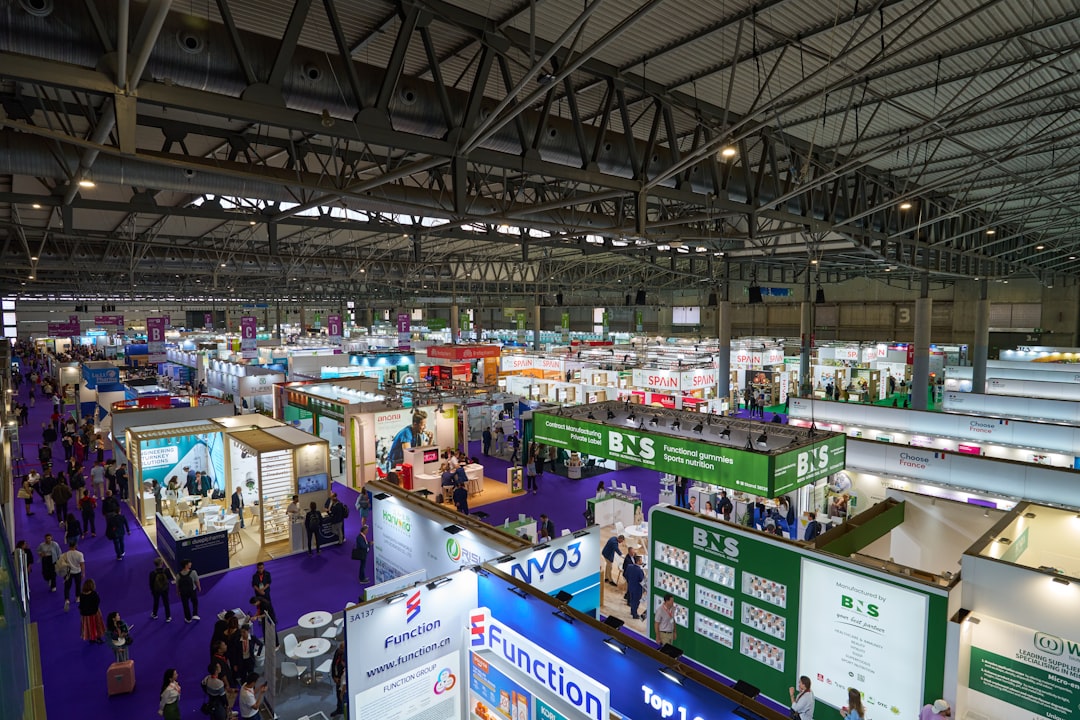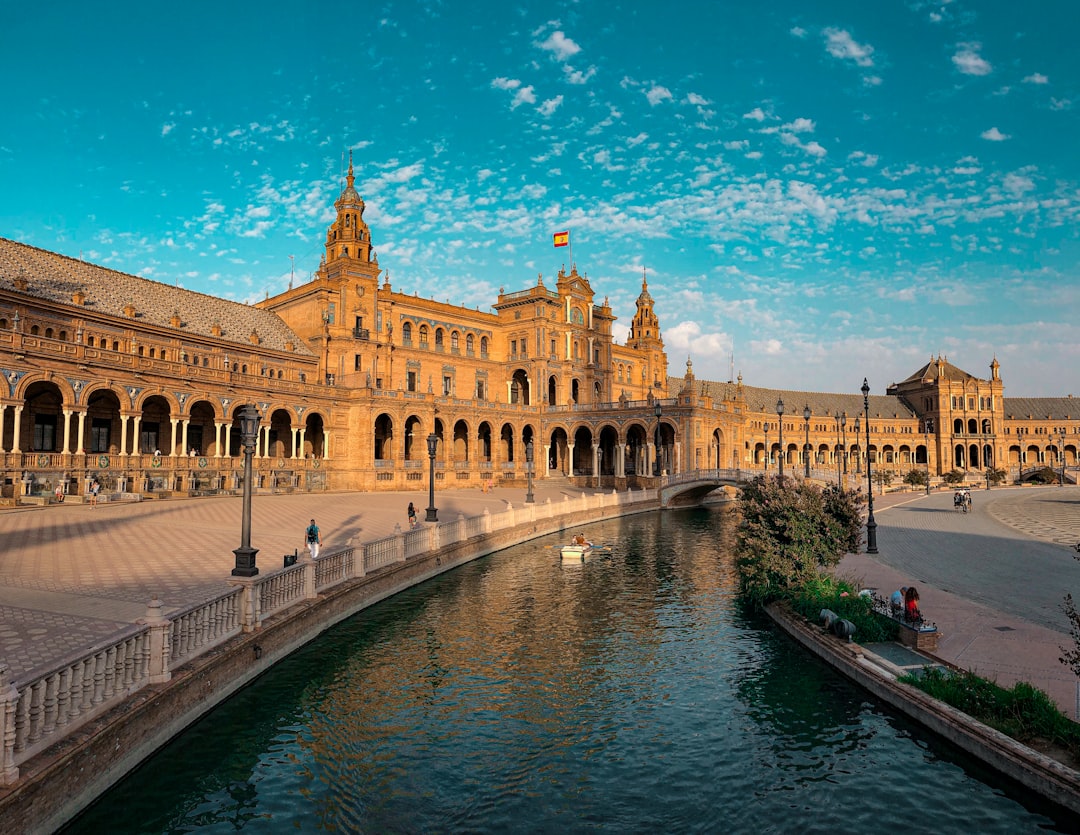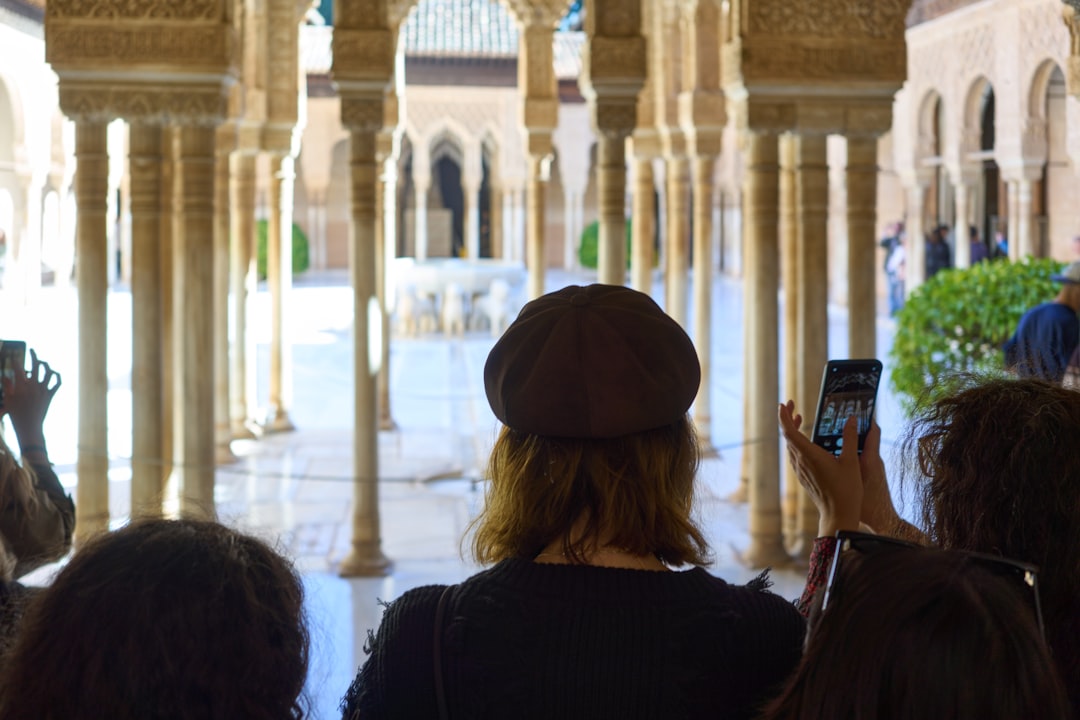
The Spanish exhibition ecosystem is federated, dominated by two heavyweight institutions, IFEMA Madrid in the capital and Fira de Barcelona in Catalonia, with a regional network of secondary venues in Valencia, Bilbao, Zaragoza, Seville and Vigo coordinated through the AFE (Asociación de Ferias Españolas) trade association.
The federation is loose compared to Germany’s tighter Messe operator model, but tighter than Italy’s regional fragmentation.
For foreign exhibitors the operational reality is that Spain’s two major venues each operate with distinct cultural, commercial and technical characters, Madrid as the national institutional and political fair capital, Barcelona as the international technology and design fair capital, and venue selection follows industry alignment more than geographic preference.
This handbook covers the seven organisations foreign exhibitors deal with, the venue map by industry, the Spanish business culture that requires specific stand-staffing and hospitality conventions, the regional VAT and labour compliance specifics that catch foreign builders out, and the calendar pattern across the major fairs of 2026.
The seven organisations foreign exhibitors deal with
IFEMA Madrid, Institución Ferial de Madrid, founded 1980, structured as a consortium owned by Madrid City Council (31%), Community of Madrid regional government (31%), Madrid Chamber of Commerce (31%) and Montemadrid Foundation (7%). Operates the IFEMA Madrid exhibition centre at Campo de las Naciones near Barajas Airport with eight pavilions totalling approximately 200,000 sqm of exhibition floor space.
Hosts approximately 75 fairs annually including FITUR (tourism, January), ARCO (contemporary art, February), MOTORTEC (automotive aftermarket, April), Madrid Fashion Week (twice yearly), SIMO (technology, formerly), and numerous medical, food and industrial verticals. Was the venue for COP25 in December 2019 and the 2022 NATO Summit.
Repurposed Hall 14 as a 5,000-bed field hospital during the COVID-19 pandemic in March 2020.
Fira de Barcelona, founded 1932, structured as a consortium with Generalitat de Catalunya (Catalan regional government), Barcelona City Council and Barcelona Chamber of Commerce as primary stakeholders.
Two main venues: Fira Montjuïc (the historic 1929 International Exhibition site, used for Salón del Manga, Automobile Barcelona, smaller congresses) and Fira Gran Via (the modern 2007 expansion designed by Toyo Ito with 240,000+ sqm, used for MWC Barcelona, Integrated Systems Europe ISE, Smart City Expo, Hispack, Alimentaria).
Plus the CCIB Barcelona International Convention Centre (managed by Fira from November 2021). Hosts 150+ trade shows and congresses annually, 30,000+ exhibitors, 2.5 million visitors from 200+ countries.
AFE, Asociación de Ferias Españolas, Spanish federation of trade-fair organisers and venue operators, coordinates technical standards and industry advocacy across the sector. Does not directly book stands. Membership includes IFEMA, Fira de Barcelona, Feria Valencia, BEC Bilbao, FERMA Zaragoza, FIBES Sevilla and other regional venues.
Feria Valencia, secondary national venue at Paterna near Valencia. Hosts Cevisama (ceramics, February), Iberflora (horticulture, October), Habitat (furniture, September). Strategic for Mediterranean and Levante industry sectors.
BEC, Bilbao Exhibition Centre, Barakaldo near Bilbao, Basque Country. Hosts Ferroforma (industrial), Subcontratación (industrial subcontracting), BIEMH (machine tools), Petma (mining and stone). Strategic for industrial north-Spain B2B.
Promos Spain / ICEX España, Instituto de Comercio Exterior is the Spanish government trade promotion agency. Operates first-contact services for foreign companies entering the Spanish market, including trade-fair entry support, occasionally subsidising Spanish-pavilion presence at major international fairs and inbound trade missions.
Agencia Tributaria (AEAT), the Spanish national tax authority, relevant to foreign exhibitors for the 21% VAT registration question and the 13th Directive refund process post-Brexit.
The venue map by industry
Industry alignment matters more than geography for venue choice:
| Industry | Primary Spanish venue | Annual flagship fair | Typical timing |
|---|---|---|---|
| Mobile telecoms | Fira Barcelona Gran Via | MWC Barcelona | Early March |
| Audiovisual / AV systems | Fira Barcelona Gran Via | Integrated Systems Europe (ISE) | Late January / early February |
| Tourism | IFEMA Madrid | FITUR | Late January |
| Contemporary art | IFEMA Madrid | ARCOmadrid | Late February / early March |
| Automotive aftermarket | IFEMA Madrid | MOTORTEC | April (biennial) |
| Food and beverage | Fira Barcelona Gran Via | Alimentaria | March/April (biennial, even years) |
| Packaging | Fira Barcelona Gran Via | Hispack | Spring (biennial) |
| Furniture / habitat | Feria Valencia | Habitat | September |
| Ceramics | Feria Valencia | Cevisama | February |
| Smart cities | Fira Barcelona Gran Via | Smart City Expo World Congress | November |
| Industrial subcontracting | BEC Bilbao | Subcontratación | June (biennial) |
| Machine tools | BEC Bilbao | BIEMH | June (biennial, odd years) |
| Real estate | IFEMA Madrid | SIMA | May |
| Fashion | IFEMA Madrid | Madrid Fashion Week (MBFWMadrid) | February + September |
| Genera renewable energy | IFEMA Madrid | GENERA | February |
The MWC Barcelona / ISE pairing at Fira Gran Via gives Barcelona dominance in technology fairs (mobile, audiovisual, smart-city, IoT) with international audience profiles regularly above 70% non-Spanish visitor share. The FITUR / ARCO / MOTORTEC mix at IFEMA Madrid gives Madrid dominance in tourism, art, automotive and institutional B2B with stronger Spanish-domestic audience profiles.
Foreign exhibitors choosing between Madrid and Barcelona venues for similar product categories should weight by audience internationality, Barcelona for global-first launches, Madrid for Spanish/Iberian market depth.
Fira de Barcelona Gran Via: the technology-fair anchor
Fira Gran Via opened in 2007 in L’Hospitalet de Llobregat, designed by Japanese architect Toyo Ito. With approximately 240,000 sqm of gross exhibition space across 8 pavilions plus the connected Centro de Convenciones, it ranks among Europe’s larger purpose-built modern exhibition venues, distinguished from older European venues by its single-level pavilion design that simplifies large-format stand build (no upper-level pavilions adding ceiling-height and load constraints).
MWC Barcelona, the GSMA’s annual mobile and telecoms congress, drives much of the international visibility. The 2026 edition runs in early March at Fira Gran Via with 100,000+ attendees, 2,900+ exhibitors, attendees from 200+ countries. Stands at MWC commonly run EUR 800,000-5,000,000+ in deployed cost for the major mobile manufacturer pavilions. The fair runs alongside the 4YFN (Four Years From Now) startup-focused parallel event.
Integrated Systems Europe (ISE) relocated from Amsterdam RAI to Fira Barcelona Gran Via starting in 2021. The 2026 edition draws 80,000+ AV professionals across pro-AV, broadcast, control rooms, digital signage and live events technology. The Amsterdam-to-Barcelona relocation was a structural shift in European AV industry calendar with material implications for AV technology brands’ annual fair strategy.
Smart City Expo World Congress runs annually in November at Fira Gran Via, drawing municipal officials, urban planners and smart-city technology suppliers from 130+ countries. Has grown from approximately 8,000 attendees in 2011 to 25,000+ in 2025.
Fira Barcelona’s institutional structure with the Generalitat de Catalunya as stakeholder produces operational dynamics that differ from purely commercial exhibition operators. Catalan-language signage is required for safety-critical elements alongside Spanish and English. Catalan business culture (more direct than Castilian, more aligned to Northern European commercial patterns) shapes stand-staffing and meeting conventions.
IFEMA Madrid: the institutional and Spanish-domestic fair capital
IFEMA’s Campo de las Naciones complex sits adjacent to Madrid-Barajas Adolfo Suárez Airport with metro Line 8 connection direct to central Madrid in 15-20 minutes. The eight pavilions plus North Convention Centre and South Convention Centre total approximately 200,000+ sqm. Hall 14 (the COVID field hospital hall) is the largest single pavilion at 40,000+ sqm.
FITUR (Feria Internacional de Turismo) in late January is one of the world’s three largest tourism fairs alongside ITB Berlin and WTM London, with approximately 9,500+ exhibitor brands across 150+ countries, 250,000+ visitors. The Spanish hospitality industry uses FITUR as its primary annual commercial event and the fair’s calendar position in late January establishes Madrid as the year’s first major European fair city.
ARCOmadrid (late February/early March) is one of Europe’s most influential contemporary art fairs alongside Art Basel and Frieze, with strong Latin American gallery and collector representation distinguishing it from European-focused art fair circuit. The fair runs alongside JustMad and other satellite events activating Madrid’s gallery district.
MOTORTEC (biennial, April) covers the automotive aftermarket, parts, accessories, repair equipment, workshop technology. Strategic for European aftermarket suppliers given Spain’s domestic automotive aftermarket value and Iberian market access through Madrid.
IFEMA also hosts numerous medical, industrial and consumer goods fairs across the calendar including GENERA (renewable energy, February), Climatización & Refrigeración (HVAC), FRUIT ATTRACTION (fruit and vegetables, October, one of the largest global fresh-produce fairs), MEAT ATTRACTION (meat industry).
Spanish business culture and stand-staffing implications
Five operational implications for foreign exhibitors:
1. Relationships precede transactions, with regional variation. Catalan business culture is more direct and time-efficient than Castilian, Barcelona-located fairs accommodate faster commercial pacing closer to Northern European convention. Madrid-located fairs follow longer relationship-building patterns closer to Italian or French B2B convention. Foreign exhibitors targeting both Spanish regions need to adjust stand-staffing approach by venue.
2. Spanish-language conversation is the dominant commercial language. Catalan in Catalonia for institutional contexts (Generalitat-related buyers, local government, regional businesses) but Spanish remains dominant for commercial B2B. English-default works at international fairs (MWC, ISE) but Spanish-speaking sales staff materially improve commercial throughput at predominantly-domestic fairs (FITUR, MOTORTEC, ARCO for Latin American buyers).
3. Stand hospitality with Spanish food and beverage convention. Spanish jamón and Spanish wine at stand hospitality bars are commercial tools, not decoration. The Iberian/Cantábrico product story signals cultural-context awareness that resonates with Spanish buyers. Cava (Catalan sparkling wine) at Barcelona stands, Rioja or Ribera del Duero wines at Madrid stands, regional alignment matters.
4. Lunch and after-fair social calendar matter materially. Spanish business lunch (1:30-3:30 PM typical) is when commercial conversation deepens. Stand operations should accommodate sales-staff lunch shifts and plan for the lunch slowdown in foot traffic, most Spanish buyers prioritise lunch over fair-floor visits.
The after-fair tapas and dinner calendar (8:30 PM onwards) is where relationships consolidate; foreign exhibitors planning Spanish fair appearances should budget after-hours hospitality time.
5. Sales cycles run multiple fair cycles for relationship maturity. Similar to Italian B2B, Spanish first-fair-ROI expectations from Northern European exhibitors are systematically disappointed. Plan 2-3 fair cycle horizon for commercial maturity.
The translation into stand brief: Spanish/Catalan-speaking staff as default, hospitality bar proportionate to qualified-conversation throughput, lunch-shift staffing accommodation, intentional multi-cycle commercial planning, and post-fair relationship maintenance via personal contact (phone calls preferred to emails for Spanish B2B).
Spanish-specific technical and regulatory compliance
Six requirements layer onto EU standards:
Electrical compliance follows REBT, Reglamento Electrotécnico de Baja Tensión (Royal Decree 842⁄2002), the Spanish low-voltage electrical regulation distinct from German VDE, French NF C 15-100 or Italian CEI 64-8. Stand-build electrical installations need Boletín de Instalación signed by an Instalador Eléctrico Autorizado registered with the relevant Autonomous Community. IFEMA and Fira maintain lists of approved electrical contractors.
Fire safety follows CTE (Código Técnico de la Edificación) plus venue-specific regulations. Material classifications follow EN 13501-1 European harmonised classification with B-s1,d0 or B-s2,d0 typically required for stand surfaces.
Accessibility follows TR-DC-014 plus state-level Royal Decree on accessibility. Catalan venues add additional Generalitat de Catalunya accessibility requirements.
Posted-worker compliance under the 96/71/EC Directive plus 2018⁄957 amendment requires pre-notification through the Spanish Inspección de Trabajo y Seguridad Social. Spanish authorities run fair-floor inspections at IFEMA Madrid and Fira Barcelona, see Posted Workers Directive trade-fair compliance for the detailed workflow.
VAT registered at the standard 21% rate. Non-Spanish EU businesses generally do not need Spanish VAT registration for trade-fair attendance (reverse-charge applies); non-EU businesses post-Brexit including UK exhibitors use the 13th Directive refund mechanism via Agencia Tributaria (annual filing by 30 June for prior year, 6-10 month processing).
Build-up windows typically 72-96 hours at IFEMA Madrid and Fira Barcelona. MWC Barcelona compresses to 60 hours requiring 24-hour build crews for major stands.
Calendar pattern and foreign-exhibitor logistics
The Spanish 2026 fair calendar (selected major fairs):
| Fair | Venue | 2026 dates | International audience |
|---|---|---|---|
| FITUR | IFEMA Madrid | Late January | ~50% international |
| Integrated Systems Europe (ISE) | Fira Barcelona Gran Via | Late January / early February | ~70% international |
| ARCOmadrid | IFEMA Madrid | Late February / early March | Strong Latin American |
| MWC Barcelona | Fira Barcelona Gran Via | Early March | ~70% international |
| Alimentaria | Fira Barcelona Gran Via | March (biennial) | ~30% international |
| GENERA | IFEMA Madrid | February | Iberian focus |
| Cevisama | Feria Valencia | February | Strong international (ceramic industry) |
| MOTORTEC | IFEMA Madrid | April (biennial) | ~40% international |
| Smart City Expo World Congress | Fira Barcelona | November | ~80% international |
| FRUIT ATTRACTION | IFEMA Madrid | October | ~30% international |
Madrid-Barajas Airport handles the IFEMA inbound logistics; Barcelona-El Prat handles Fira inbound. Both are direct-served from most European capitals. The Spanish high-speed rail (AVE) Madrid-Barcelona corridor runs ~2.5 hours, making cross-venue movement during a Spanish trip operationally viable. AVE also reaches Valencia, Seville, Málaga, Bilbao for secondary-venue access.
Conclusion
Spain offers foreign exhibitors a structured choice: Barcelona for international technology audiences via Fira Gran Via and the MWC/ISE anchor pairing, Madrid for Spanish-domestic and Latin American access via IFEMA and the FITUR/ARCO/MOTORTEC mix, plus regional venues for vertical specialisations.
The institutional structure (consortium ownership rather than purely commercial operators) shapes the operational dynamic, IFEMA’s Madrid City Council and regional government stakeholders, Fira’s Generalitat presence, producing fair operations that engage with regional political and cultural contexts foreign exhibitors should respect rather than treat as backdrop.
The 21% VAT rate is higher than the EU average, the labour compliance regime is moderately demanding, and the Spanish/Catalan business culture rewards relationship-building over transactional speed. But the access, to 47 million Spanish-domestic consumers, to Latin American buyer networks that route through Madrid for trans-Atlantic commerce, to Mediterranean and Maghreb markets via Barcelona, is uniquely valuable for European exhibitors with the patience to build properly.
See the companion regional guides for Italian exhibition ecosystem, French exhibition ecosystem, and German fair technical compliance.
References
- IFEMA Madrid official information, ifema.es
- Fira de Barcelona official information, firabarcelona.com
- AFE Asociación de Ferias Españolas, afe.es
- ICEX España Exportación e Inversiones, icex.es
- GSMA MWC Barcelona, mwcbarcelona.com
- Integrated Systems Europe (ISE), iseurope.org
- FITUR, ifema.es/fitur
- Reglamento Electrotécnico de Baja Tensión, Real Decreto 842⁄2002, de 2 de agosto, Boletín Oficial del Estado núm. 224, 18.9.2002
- Código Técnico de la Edificación (CTE), codigotecnico.org
- Agencia Tributaria, “Devolución del IVA a empresarios o profesionales no establecidos”, agenciatributaria.es
- Directive 96/71/EC of the European Parliament and of the Council of 16 December 1996 concerning the posting of workers, as amended by Directive (EU) 2018⁄957
FAQFrequently asked questions
Spanish fair organisation is a federated system distinct from France’s tighter Comexposium-led model or Germany’s Deutsche Messe-Frankfurt cluster. IFEMA Madrid (Institución Ferial de Madrid, founded 1980) is the largest, structured as a consortium owned by Madrid City Council 31%, Community of Madrid regional government 31%, Madrid Chamber of Commerce 31% and Montemadrid Foundation.
Fira de Barcelona (founded 1932) is the second-largest with Generalitat de Catalunya, Barcelona City Council and Barcelona Chamber of Commerce as primary stakeholders, operating Fira Montjuïc and Fira Gran Via venues plus the CCIB Convention Centre from November 2021. AFE Asociación de Ferias Españolas coordinates technical standards across the sector but does not directly book stands.
Regional secondary venues include Feria Valencia (Cevisama, Iberflora, Habitat), BEC Bilbao (BIEMH, Subcontratación), FIBES Sevilla. ICEX España Exportación e Inversiones is the government trade promotion agency for foreign exhibitors entering the Spanish market.
Industry alignment matters more than geography.
Fira Barcelona Gran Via (240,000+ sqm modern venue designed by Toyo Ito, opened 2007) hosts MWC Barcelona (early March, ~100,000 attendees from 200+ countries), Integrated Systems Europe ISE (late January/early February, relocated from Amsterdam from 2021, ~80,000 AV professionals), Smart City Expo World Congress (November, ~25,000 attendees from 130+ countries), Alimentaria (biennial spring), Hispack (biennial spring).
IFEMA Madrid (~200,000 sqm across 8 pavilions at Campo de las Naciones near Barajas Airport) hosts FITUR (late January tourism, ~250,000 visitors), ARCOmadrid (late February/early March contemporary art with Latin American collector depth), MOTORTEC (biennial April automotive aftermarket), GENERA (February renewable energy), FRUIT ATTRACTION (October fresh produce), Madrid Fashion Week MBFWMadrid twice yearly.
Choose Barcelona for international technology audiences (70%+ international attendance typical); choose Madrid for Spanish-domestic and Latin American market access (50% international typical).
Five operational implications. Relationships precede transactions but with regional variation, Catalan business culture is more direct and time-efficient closer to Northern European convention, Castilian Madrid culture follows longer relationship-building patterns closer to Italian or French B2B.
Spanish-language conversation is dominant commercial language, English-default works at international fairs MWC and ISE but Spanish-speaking sales staff materially improve commercial throughput at predominantly-domestic fairs FITUR, MOTORTEC, ARCO. Catalan additionally for institutional contexts in Catalonia.
Spanish hospitality with regional product alignment matters, jamón and Spanish wine as commercial tools not decoration, Cava at Barcelona stands, Rioja or Ribera del Duero at Madrid stands. Lunch (1:30-3:30 PM) and after-fair social calendar (8:30 PM onwards tapas, dinner) matter materially for deal progression, most Spanish buyers prioritise lunch over fair-floor visits.
Sales cycles run 2-3 fair cycles for relationship maturity similar to Italian B2B, Northern European first-fair-ROI expectations are systematically disappointed.
Translation into stand brief: Spanish/Catalan-speaking staff as default, hospitality bar proportionate to qualified-conversation throughput, lunch-shift staffing accommodation, multi-cycle commercial planning, post-fair relationship maintenance via phone calls preferred to emails.
Six requirements layer onto EU standards. Electrical installations must follow REBT Reglamento Electrotécnico de Baja Tensión (Royal Decree 842⁄2002), the Spanish national low-voltage standard distinct from German DIN VDE 0100, French NF C 15-100 or Italian CEI 64-8. Stand-build electrical needs Boletín de Instalación signed by an Instalador Eléctrico Autorizado registered with the relevant Autonomous Community.
IFEMA Madrid and Fira Barcelona maintain lists of approved electrical contractors. Fire safety follows CTE Código Técnico de la Edificación plus venue-specific regulations; material classifications follow EN 13501-1 with B-s1,d0 or B-s2,d0 typically required for stand surfaces. Accessibility follows TR-DC-014 plus state-level Royal Decree; Catalan venues add Generalitat accessibility requirements.
Posted-worker compliance under Directive 96/71/EC pre-notification through Spanish Inspección de Trabajo y Seguridad Social with fair-floor inspection programmes active at IFEMA and Fira. Build-up windows typically 72-96 hours; MWC Barcelona compresses to 60 hours requiring 24-hour build crews for major stands.
Catalan-language signage required for safety-critical elements at Fira Barcelona alongside Spanish and English.
Spanish VAT (IVA, Impuesto sobre el Valor Añadido) is 21% standard rate at the upper end of EU rates. Non-Spanish EU businesses generally do not need Spanish VAT registration for trade-fair attendance, reverse-charge applies for B2B services between EU VAT-registered businesses. UK exhibitors and other non-EU businesses post-Brexit use the 13th VAT Directive refund mechanism via Agencia Tributaria AEAT.
Filing window by 30 June for prior year, typical processing time 6-10 months (improved post-2023 from previous slower performance). Minimum refund threshold EUR 500. Required documentation: original invoices (certified electronic copies increasingly accepted), proof of UK VAT-registered status (HMRC VAT certificate translated where required), proof of payment, application form.
For UK exhibitors at MWC Barcelona incurring EUR 18,000 of Spanish VAT in March 2026, refund application to Agencia Tributaria by 30 June 2027, funds typically received Q1-Q2 2028. Specialised VAT-recovery agents handle Spanish 13th Directive recovery on contingency for material VAT exposure.
See also EU-UK TCA social-security coordination for the broader UK exhibitor post-Brexit position.
Two stand out by industry alignment plus international audience profile. MWC Barcelona at Fira Gran Via in early March is the world’s most influential mobile and telecoms congress with ~100,000 attendees from 200+ countries, 2,500+ exhibitors, ~70% international audience share. The fair runs alongside 4YFN startup-focused parallel event creating dual-stream audience exposure.
Major mobile manufacturer stands run EUR 800,000-5,000,000+ deployed cost but smaller industry-vertical exhibits operate at more accessible budgets. FITUR at IFEMA Madrid in late January is one of the world’s three largest tourism fairs alongside ITB Berlin and WTM London with ~250,000 visitors, ~8,000 exhibitor brands across 150+ countries, ~50% international audience.
The Spanish hospitality industry uses FITUR as primary annual commercial event and the late-January calendar position establishes Madrid as the year’s first major European fair city.
For other industries the calendar alignment depends on vertical: ISE for AV systems (late January/February), ARCO for contemporary art (February/March), Alimentaria for food (March/April biennial), Cevisama at Valencia for ceramics (February), Smart City Expo at Fira Barcelona (November), MOTORTEC at IFEMA for automotive aftermarket (April biennial).