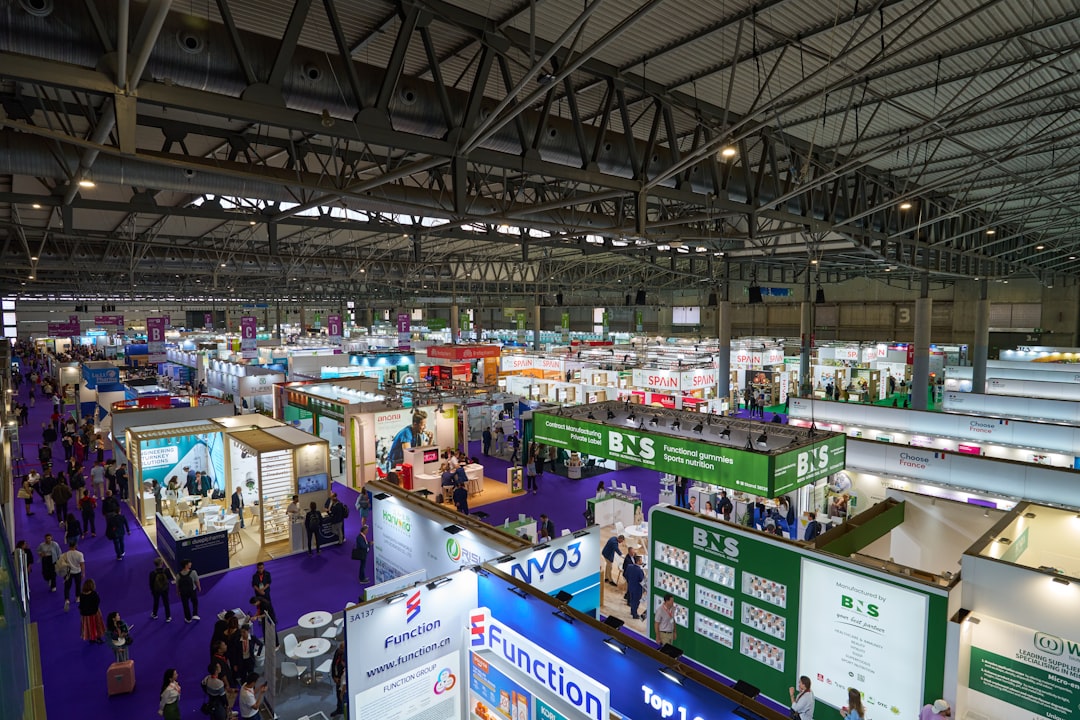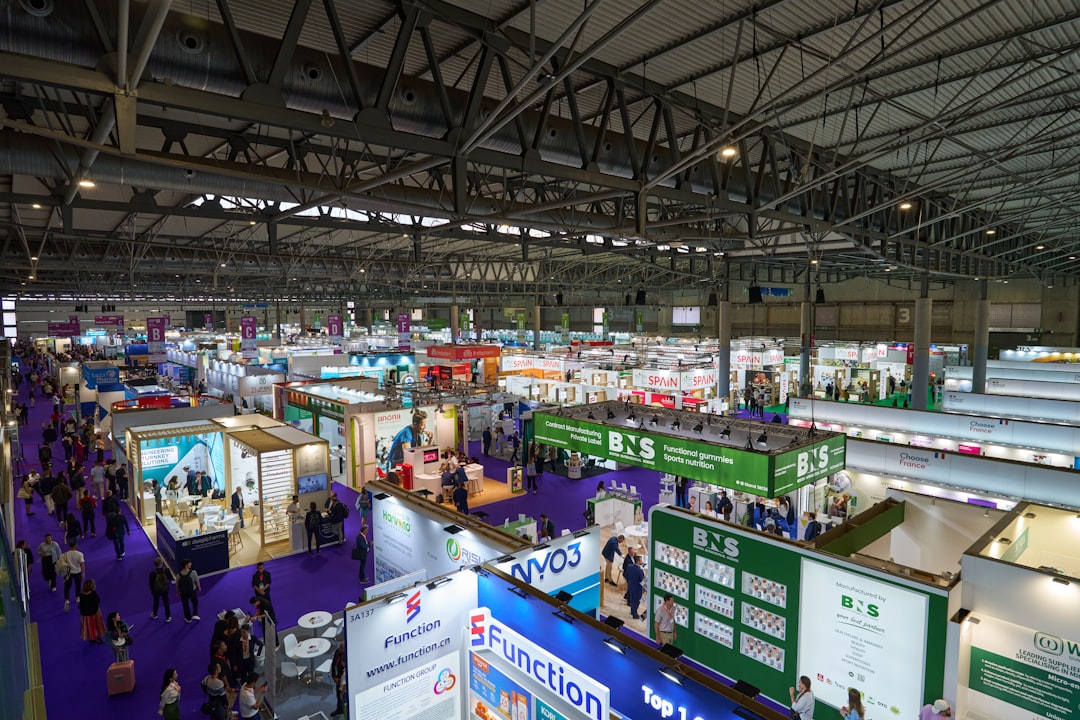
Mobile World Congress, held annually in late February or early March at Fira de Barcelona Gran Via, is the largest and most commercially significant event in the global mobile and connectivity industry. MWC has recently drawn approximately 100,000-110,000 attendees from over 200 countries and territories across four days, with a press and analyst accreditation pool in the low thousands.
The total economic impact on the Barcelona region exceeds EUR 500 million per edition, and GSMA, the event organiser, operates MWC as the canonical reference event for the global mobile ecosystem.
For brands across the connectivity stack, handset OEMs, network equipment vendors, semiconductor companies, cloud and edge platforms, telecom operators, mobile-application developers, and the wider IoT, 5G/6G, AI-infrastructure, and connected-device ecosystem, MWC presence is a strategic priority that frequently consumes 30-50 percent of the annual European trade-fair budget.
The stand-design economics are sharply different from any other European fair, and getting the strategy right materially affects brand outcomes for the following twelve months.
This article walks through MWC stand strategy, drawing on the published practices of major MWC exhibitors, GSMA’s exhibitor service standards, Fira de Barcelona’s technical guidelines for Gran Via, and the operational documentation of the pan-European builders who deliver flagship MWC presence year after year.
Why MWC operates at a different scale from other European fairs
MWC’s distinctive operational features:
- Stand budgets at extreme scale: flagship stands run EUR 5-25 million each for major handset OEMs and network equipment vendors. Mid-tier brand stands run EUR 800,000-3,500,000. Even entry-level mobile-ecosystem brands routinely commit EUR 200,000-600,000 to MWC presence.
- Press attention is global: the international tech press covers MWC at intensity matched only by Apple and Samsung product launches. Stand announcements receive global media coverage within hours.
- Demo complexity is high: mobile-industry demos involve live network connections, sometimes operator partnerships with real radio infrastructure, multiple device demonstrations, executive meeting rooms with secure-network access, and elaborate AV setups. The build complexity exceeds anything seen at industrial-machinery fairs.
- Executive meeting concentration: MWC is the single most important executive-meeting venue in the global mobile industry. Stands devote 30-60 percent of footprint to private meeting rooms rather than visible exhibition space, structurally different from any other European fair.
- Sustainability scrutiny: GSMA has progressively raised sustainability expectations. ISO 20121 alignment is essentially mandatory for flagship exhibitors as of the 2025-2026 cycle.
“MWC stand budgets are larger than the entire European fair budgets of most exhibitors elsewhere. The reason is that MWC is not really a trade fair, it is a four-day executive summit, a global press launch platform, and a partnership-negotiation venue compressed into a single physical footprint. The stand is infrastructure for all three functions simultaneously.”, Common framing among MWC-experienced exhibition consultants
Cost structure for MWC presence
The table below summarises typical 2026 budget tiers for MWC Barcelona stand presence.
| Tier | Footprint range (sqm) | Space rental per sqm (EUR) | All-in budget (EUR) | Typical brand profile |
|---|---|---|---|---|
| Entry (App/Platform) | 18-50 | 425-490 | 180,000-450,000 | App developers, niche platform vendors |
| Mid-tier ecosystem | 80-200 | 440-500 | 600,000-1,800,000 | Semiconductor, cloud, IoT platform |
| Network equipment | 250-800 | 460-525 | 2,000,000-7,500,000 | Mid-tier infrastructure vendors |
| Flagship | 1,000-3,500 | 475-545 | 8,000,000-22,000,000 | Samsung, Huawei, Ericsson, Nokia, Qualcomm, Lenovo |
| Operator pavilion | 800-2,500 | 470-535 | 5,500,000-18,000,000 | Vodafone, Orange, Deutsche Telekom, Telefonica |
The cost band is driven primarily by footprint and demo complexity rather than visual luxury, MWC stands prioritise functional demo capability and meeting-room capacity over architectural-statement aesthetics. The flagship tier is dominated by Hall 2 (Samsung, Huawei) and Hall 3 (Ericsson, Nokia, Qualcomm), with the operator pavilion concentrated in Hall 1.
“An MWC stand at flagship tier carries approximately fifty percent build cost, twenty-five percent technical infrastructure (network, AV, demo hardware), fifteen percent space rental, and ten percent operational running cost across the four days. The cost distribution is unique to MWC, every other major European fair distributes build versus space-rental costs more evenly.”, Common observation among GSMA-affiliated exhibitor advisors
Hall selection and visitor flow
MWC’s hall structure determines visitor mix more decisively than at any other Spanish fair. The eight Fira Gran Via halls each carry distinct sector concentrations:
- Hall 1 (Operator Pavilion): mobile network operators and their partners. Visitor mix: enterprise procurement, partner-channel teams, B2B sales prospects.
- Hall 2 (Smartphones and devices): Samsung, Huawei, Honor, Xiaomi, Oppo, and the major device brands. Visitor mix: retail buyers, distributor partners, consumer-tech press.
- Hall 3 (Network infrastructure): Ericsson, Nokia, Huawei carrier division, Cisco, Juniper. Visitor mix: operator procurement, technical buyers, B2B partnership.
- Hall 4 (Industry 4.0 and IoT): industrial IoT, smart manufacturing, automotive connectivity. Visitor mix: enterprise verticals, system integrators.
- Hall 5 (4YFN startup pavilion): the dedicated startup zone with curated entry programmes. Visitor mix: investors, partnership scouts, design-press editorial.
- Hall 6 (Open RAN and software): Open RAN ecosystem, cloud-native networks, edge computing. Visitor mix: technical buyers, system architects.
- Hall 7 (5G applications and verticals): healthcare, automotive, broadcasting, content. Visitor mix: vertical industry buyers.
- Hall 8 (Connectivity solutions): complementary connectivity solutions, satellite, fixed wireless. Visitor mix: niche-vertical buyers.
The 4YFN (Four Years From Now) startup pavilion in Hall 5 is the strategic entry point for emerging mobile-ecosystem brands. Stand costs start at EUR 8,000-25,000 for curated startup booths within the 4YFN structure, with visitor flow that disproportionately includes investors and partnership scouts. For startups, 4YFN delivers MWC press attention at materially lower cost than independent stand presence.
The MWC build expectation
MWC stand builds prioritise functional capability over aesthetic statement, with five canonical components:
Executive meeting rooms with secure-network access
Roughly 30-60 percent of stand footprint at mid-tier and flagship MWC stands is dedicated to private executive meeting rooms. These rooms require secure-network connectivity (typically dedicated wired connections separate from public Wi-Fi), AV infrastructure for screen-sharing and video conferencing, and privacy-grade construction (full-height walls, sound isolation, lockable doors). Meeting-room density at MWC is the highest of any European fair.
Live demo zones with carrier network connectivity
Network equipment vendors and handset brands demonstrate live products on operational radio networks during the fair. Fira de Barcelona’s MWC infrastructure includes dedicated carrier-aggregation network slices that brands can contract for live demos. The build must accommodate antenna placements, equipment racks, and demo-staff workflow.
Press hosting zones
MWC press attendance is so concentrated that stands routinely dedicate 60-150 square metres to press-hosting zones, interview rooms, press-conference theatres, on-stand briefing positions. The press strategy is integral to stand design rather than an overlay.
Brand-statement architecture
While MWC stands are functional, the flagship tier still delivers strong brand-statement architecture. The 2024 Samsung stand featured a multi-storey LED installation visible from across Hall 2; the 2024 Huawei stand spanned roughly 9,000 square metres with multiple themed zones. Flagship MWC stands are statements about brand position in the global mobile ecosystem.
Sustainability documentation
GSMA’s progressive sustainability standards require ISO 20121 alignment for flagship exhibitors. Materials origin, reusability planning, end-of-life waste documentation, and carbon footprint calculation are increasingly default expectations. Builders without ISO 20121-aligned process documentation are increasingly excluded from flagship MWC consideration.
“MWC is the most complex stand-build environment in European exhibitions. The combination of executive-meeting density, live-demo network integration, press-hosting infrastructure, and sustainability documentation requirements means that builders need specialist capability across five domains simultaneously. The shortlist of builders capable of flagship MWC delivery is genuinely small.”, Common framing among MWC-experienced exhibition consultants
Builder selection for MWC
The MWC builder market is more specialised than the rest of the Spanish exhibition-stand ecosystem. The shortlist of builders capable of delivering at flagship tier is approximately twenty firms across Europe, concentrated in Spain, Germany, Italy, UK, and the Netherlands. The signals that distinguish MWC-capable builders:
- Documented portfolio of at least four MWC stands in the previous three years at stand size above 500 sqm
- Demonstrated technical-network integration capability (working relationships with Fira’s network operators, carrier partnership management)
- Press-hosting infrastructure experience (interview rooms, briefing theatres, journalist-flow management)
- ISO 20121 sustainability documentation
- Capacity to manage 8-12 week build-up schedules with 2,000+ person-day labour pools
For brands considering first-time MWC presence, the builder shortlist is best curated 12-18 months before the fair given the limited number of capable firms and the high competition for their capacity during the MWC build cycle.
Timeline for flagship MWC presence
The flagship MWC timeline runs approximately twelve months end-to-end:
- Month 12-10 before MWC: strategic decision; budget envelope confirmed; builder shortlist
- Month 10-8: builder appointment; concept design; press strategy lock
- Month 8-6: structural engineering; Fira approval submissions; network-services contracting
- Month 6-3: fabrication; demo hardware integration; meeting-room AV specification
- Month 3-1: install rehearsal; press list lock; executive meeting scheduling
- Week 2 before MWC: Fira Gran Via build-up commences
- MWC week: live operations across four days
- Post-fair: dismantle within 72 hours; key components archived for next-year reuse
For brands considering first-time MWC presence, the timeline reality is that committing inside nine months effectively rules out flagship-tier execution. Mid-tier presence (under 200 sqm) remains achievable inside six months given the right builder.
How MWC presence interacts with the wider tech-fair calendar
A successful MWC presence has compounding effects on the wider European tech-fair calendar. The most-mentioned adjacent fairs:
- ISE Integrated Systems Europe (Barcelona, late January/early February), frequently builds for MWC just weeks later, with shared infrastructure considerations
- IFA Berlin (early September), consumer electronics counterpart to MWC’s industry focus
- Embedded World Nuremberg (March), IoT and embedded computing
- CES Las Vegas (early January), global counterpart to MWC for consumer tech
- IBC Amsterdam (September), broadcast and media-technology adjacency
Brands serious about the mobile and connectivity ecosystem typically commit to MWC plus two-to-three adjacent fairs across the annual calendar.
For the wider Spanish fair context, see Exhibiting in Spain: IFEMA, Fira, and 21 Percent IVA. For the cost and VAT framework, see Spain Exhibition Cost, VAT, and Builder Guide.
Related reading
- Exhibiting in Spain: IFEMA, Fira, and 21 Percent IVA, country overview
- Spain Exhibition Cost, VAT, and Builder Guide, IVA mechanics for MWC budgets
- Modular vs Custom Decision Framework, MWC sits firmly in the custom-default tier
- Booth Cost Calculator, model MWC flagship budgets
- Builder Directory, MWC-experienced builders with verified portfolios
- Germany Exhibition VAT Reclaim Guide, for brands building MWC alongside German tech fairs
References and primary sources
- GSMA Mobile World Congress Barcelona, exhibitor service manual 2026 edition
- Fira de Barcelona Gran Via, technical guidelines for MWC editions
- 4YFN startup programme documentation, GSMA editorial
- AFE Asociación de Ferias Españolas, sector annual report 2026
- ISO 20121:2024 Event Sustainability Management Systems
- AVIXA ISE Integrated Systems Europe Barcelona, cross-event documentation
- Agencia Tributaria, foreign VAT refund procedure for Spanish events
- AUMA International Exhibitor Service, MWC market comparative analysis 2026
FAQFrequently asked questions
Flagship MWC stands run EUR 8-22 million all-in for footprints between 1,000 and 3,500 square metres, with the largest stands by Samsung and Huawei routinely at the upper end. Mid-tier ecosystem brand stands (80-200 sqm) run EUR 600,000-1,800,000. Operator pavilion stands run EUR 5.5-18 million.
Entry-tier presence in Hall 5 (4YFN startup pavilion) starts at EUR 8,000-25,000 for curated startup booths and scales to EUR 200,000-450,000 for independent entry-tier stands. MWC is the most expensive European fair per square metre at the flagship tier.
For emerging mobile-ecosystem brands without established carrier or partner relationships, 4YFN is the right entry point.
Stand costs start at EUR 8,000-25,000 for curated booths within the 4YFN pavilion in Hall 5, with visitor flow that disproportionately includes investors, partnership scouts, and design-press editorial. 4YFN delivers MWC press attention and ecosystem visibility at materially lower cost than independent presence.
Established brands with existing carrier relationships skip 4YFN and go directly to hall-aligned independent stand presence in Halls 1-3 or 6-8.
MWC is the single most important executive-meeting venue in the global mobile industry. Carrier procurement teams, OEM partnership executives, ecosystem partners, and major-account customers travel to MWC specifically for concentrated executive meetings across four days.
Mid-tier and flagship MWC stands dedicate 30-60 percent of footprint to private executive meeting rooms, full-height walls, sound isolation, secure-network access, AV infrastructure for screen-sharing. The meeting-room density at MWC is structurally higher than any other European fair.
GSMA has progressively raised sustainability expectations for MWC exhibitors. ISO 20121 alignment is essentially mandatory for flagship exhibitors as of the 2025-2026 cycle, with materials origin documentation, reusability planning, end-of-life waste tracking, and carbon footprint calculation required. Builders without ISO 20121-aligned process documentation are increasingly excluded from flagship consideration.
The sustainability standards are expected to tighten further across upcoming MWC editions, with full carbon-accounting transparency likely required across the supplier chain by 2028.
The MWC builder market is specialised, approximately twenty firms across Europe deliver flagship-tier MWC stands consistently, concentrated in Spain, Germany, Italy, UK, and the Netherlands.
The signals that distinguish MWC-capable builders include documented portfolio of at least four MWC stands above 500 sqm in the previous three years, technical-network integration capability, press-hosting infrastructure experience, ISO 20121 documentation, and 8-12 week build-up labour pools.
For first-time mid-tier presence (under 200 sqm), the builder shortlist broadens to roughly fifty firms with at least basic MWC experience.
For flagship-tier presence (above 500 sqm), commit 12-15 months before MWC. The builder shortlist is small and capacity competition is intense during the MWC build cycle. For mid-tier presence (80-200 sqm), commit 8-10 months out. For 4YFN startup pavilion applications, the GSMA selection deadline typically falls 6-8 months before the fair with rolling early-decision rounds.
For independent entry-tier stands (under 80 sqm), commit 5-7 months out. Late commitments inside three months force significant cost premiums and frequently constrain hall selection to remaining inventory.