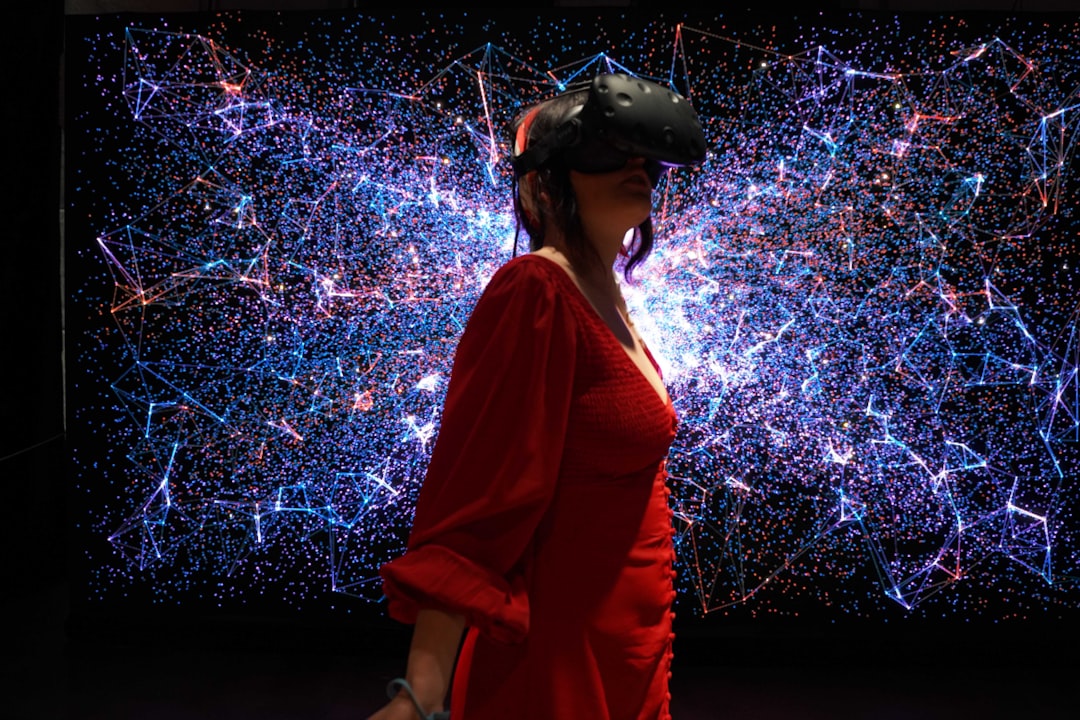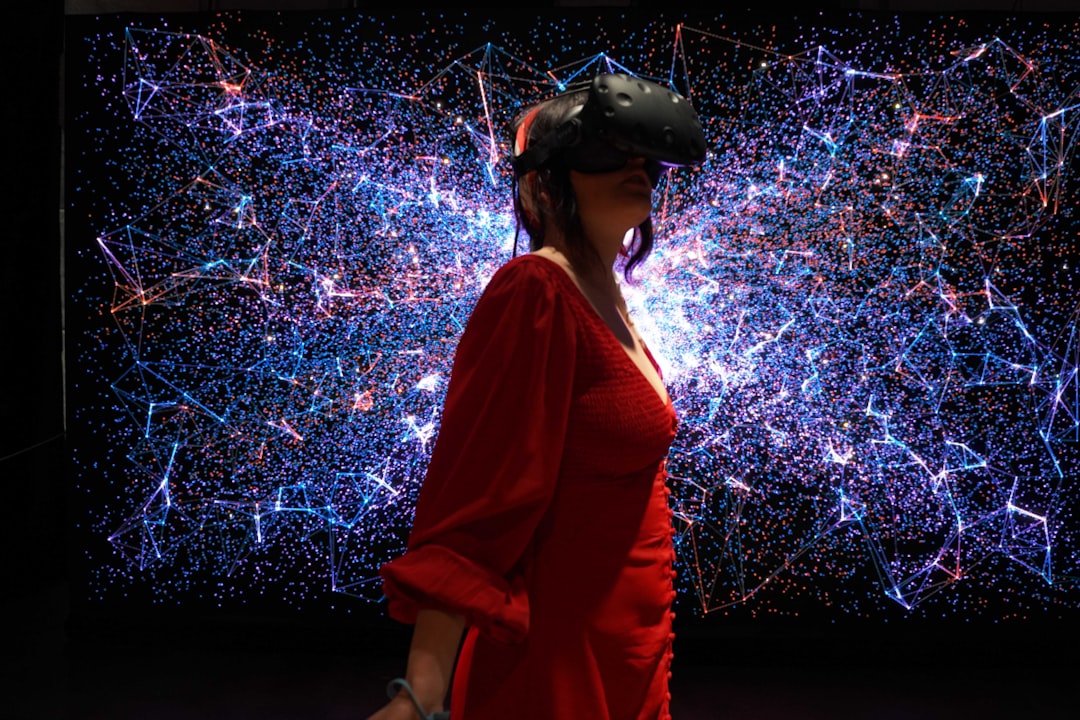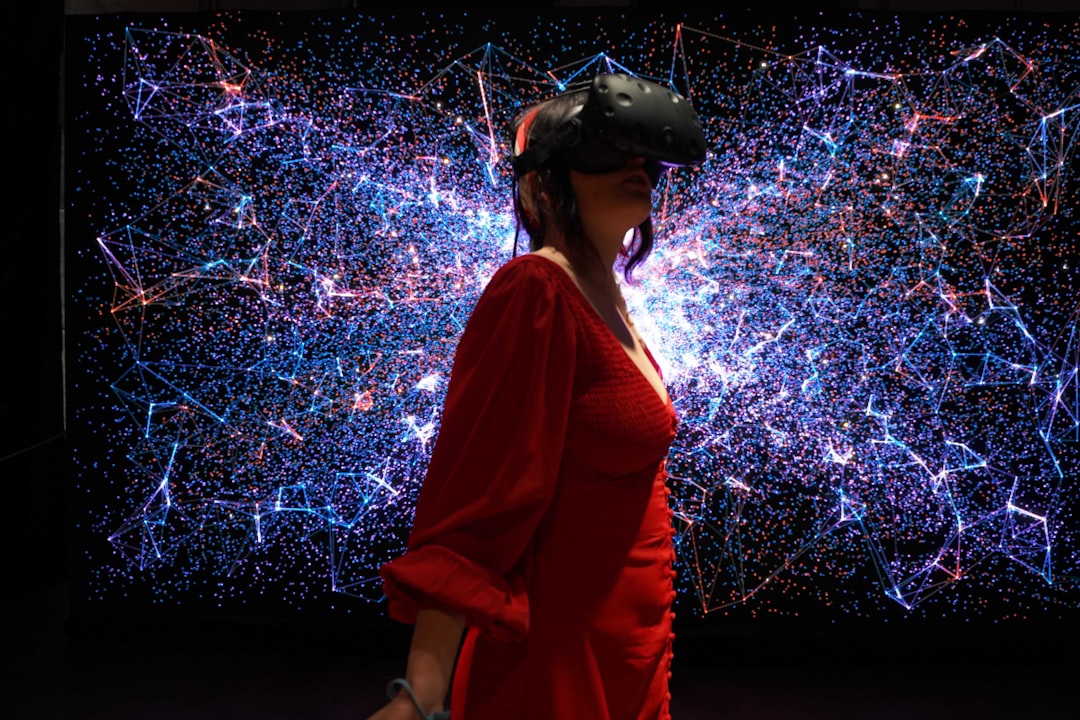

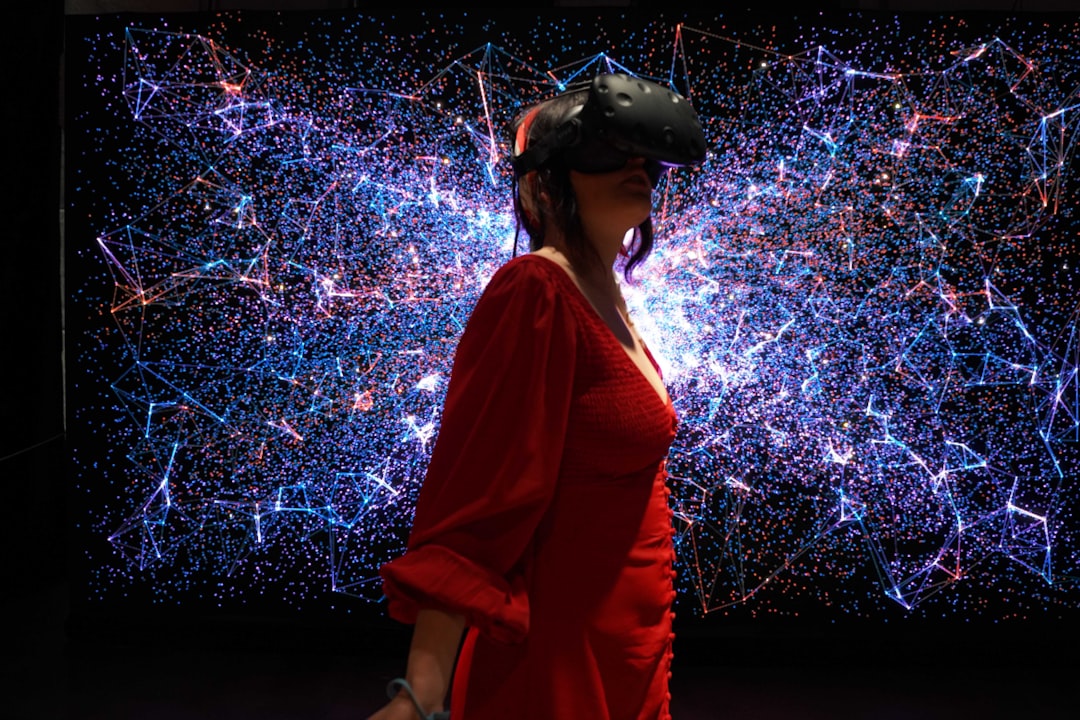
The booth-tech category that did not exist in 2023 is now a meaningful procurement line for European exhibitors planning 2026-2027 fair appearances. Spatial computing, Apple’s preferred term for what most other vendors call mixed reality, has matured from prototype-on-stand novelty to a deployable interaction layer for product demonstration, training scenarios, and immersive brand experiences.
The two devices that anchor the category at fair venues are the Apple Vision Pro (released February 2024 with the M2 variant; the M5 refresh from October 2025 at the same USD 3,499 price point) and the Meta Quest 3 (released October 2023 at USD 499).
The price gap is real and the use-case fit is different. A stand deploying Vision Pro for one-on-one premium executive demos to qualified buyers carries different economics than a stand deploying Meta Quest 3 units for self-service immersive walkthroughs aimed at booth traffic. Both have legitimate places at major European fairs; both also have failure modes that exhibitors discover at the fair rather than in the planning brief.
This guide is the practical deployment reality for spatial computing at European trade fair stands in 2026: the use cases each device suits, the operational requirements for fair-floor deployment (hygiene, battery, network, staff), the EU AI Act and product-liability overlay covered elsewhere in this guide, and the cost-versus-engagement trade-off that determines whether to deploy these technologies at all or stick with conventional touchscreen-and-presenter demonstrations.
It is written for the experiential agency, the stand-build lead, and the marketing operations team who together evaluate whether spatial computing belongs in the stand brief, and frequently discover the device choice is the easy decision while the operational deployment is what determines whether the technology compounds or undermines the stand presence.
What spatial computing actually means at the booth
The terminology in this category is contested. Apple positions the Vision Pro as a “spatial computer” and explicitly avoids “VR headset” or “MR headset” framing, visionOS App Store guidelines instruct developers not to use “augmented reality” or “mixed reality” when describing their apps. Meta uses “mixed reality” and “VR” interchangeably for the Quest 3 depending on use case.
The technical reality is that both devices are head-worn computers that combine camera passthrough of the user’s actual environment with digital overlays, the user sees the real room with virtual elements integrated.
For trade-fair deployment, the practical use cases sort into five categories:
1. Product demonstration that exceeds physical-prototype scale. Showing a visitor what your stand cannot physically accommodate, a full-scale building, a manufacturing line, a product family at scale, an architectural rendering. Both Vision Pro and Quest 3 handle this; Vision Pro’s higher display resolution (~3660×3200 per eye, 23 megapixels total) produces meaningfully sharper text and fine detail than Quest 3.
2. Training scenario simulation. Letting visitors experience using your product in a simulated operational context, surgeons exploring an OR procedure, factory operators running a production line, pilots in a cockpit. Use cases concentrate in medical devices, industrial equipment, aerospace, and complex enterprise software.
3. Spatial product configuration. Visitors customising a product (vehicle, furniture, machinery) in spatial context with real-time visualisation. Strongest fit for automotive, furniture (Salone del Mobile), and complex industrial machinery (Hannover Messe, Bauma).
4. Immersive brand storytelling. Documentary-style or experiential narratives presented in spatial format. Strongest fit for premium consumer brands and creative-industry exhibitors. Apple’s Vision Pro is positioned for this use case with content like the Prehistoric Planet tie-in created by Jon Favreau for the launch.
5. Collaborative spatial workspace. Multiple participants in shared spatial sessions, useful for remote-team-included demos or sales-meeting scenarios involving distant decision-makers. Both Vision Pro and Quest 3 support FaceTime / Workrooms equivalents, with material differences in avatar quality and meeting-room metaphor.
| Use case | Vision Pro fit | Meta Quest 3 fit | Stand contexts where this works |
|---|---|---|---|
| Product demo beyond physical scale | Strong (display sharpness) | Adequate | Architecture, large machinery, automotive at MWC/IFA/Bauma |
| Training scenario simulation | Strong (passthrough quality) | Strong (lower cost per unit) | Medical, aerospace, industrial training contexts |
| Spatial product configuration | Strong | Adequate | Furniture (Salone del Mobile), automotive, industrial |
| Immersive brand storytelling | Strong (Apple ecosystem content) | Adequate (open ecosystem) | Premium consumer brands, design fairs |
| Collaborative spatial workspace | Strong (FaceTime integration) | Adequate (Workrooms) | Enterprise software, B2B sales contexts |
The cost picture: per-stand deployment economics
The unit pricing is straightforward but per-stand deployment economics include several costs beyond device purchase:
Apple Vision Pro per-unit deployment cost. Device at USD 3,499 (M5 variant from October 2025; same price as M2 launch in February 2024). Light Seal at USD 199. Travel case at USD 199. Optional Zeiss prescription inserts USD 99-149. Belkin battery holder for additional run-time. Total per-unit hardware ~USD 4,000. For a stand running 4-8 simultaneous Vision Pro stations, hardware cost runs USD 16,000-32,000.
The Vision Pro’s external battery (353g, swappable) gives roughly 2 hours of runtime, requiring multiple batteries per device for a fair-day deployment.
Meta Quest 3 per-unit deployment cost. Device at USD 499 (128GB) or 649 (512GB). Optional Elite Strap with battery USD 129. Carrying case USD 75. Total per-unit hardware ~USD 700. For 4-8 stations the hardware cost runs USD 2,800-5,600.
Content development cost (the dominant line item). Custom spatial content for Vision Pro requires visionOS development, typically EUR 80,000-300,000 for a 15-30 minute branded experience including 3D asset creation, interaction design, spatial audio, persona handling, and QA on actual hardware.
Meta Quest 3 content development runs roughly 60-80% of equivalent Vision Pro costs because the platform is more mature and the developer ecosystem is larger. Generic stock content (architectural walkthroughs, generic product demos) can substitute at substantially lower cost but produces less differentiated brand impact.
Staff and hygiene operations. Spatial-computing stands require dedicated staffing, typically one operations person per 2-3 devices, plus hygiene protocols between visitors (forehead pad cleaning, hand-sanitiser, optional disposable hygiene shields). Per-fair operations cost runs EUR 4,000-15,000 for a 4-day fair depending on staffing scale.
Network and infrastructure. Spatial computing devices require strong WiFi (typical fair WiFi is insufficient; dedicated 5GHz access points typically needed). MWC Barcelona, IFA Berlin and Hannover Messe all offer dedicated exhibitor network packages for technology demos, typically EUR 2,000-8,000 per fair for guaranteed-bandwidth provision.
| Cost line | Apple Vision Pro (per fair) | Meta Quest 3 (per fair) |
|---|---|---|
| Hardware (4 units) | EUR 14,000-16,000 amortised | EUR 2,500-3,500 amortised |
| Content development (one-time, amortised over 4 fairs) | EUR 20,000-75,000 | EUR 12,000-50,000 |
| Operations staff (4-day fair) | EUR 4,000-10,000 | EUR 4,000-10,000 |
| Network infrastructure | EUR 2,000-8,000 | EUR 2,000-8,000 |
| Hygiene supplies | EUR 500-1,500 | EUR 500-1,500 |
| Insurance increment | EUR 800-2,500 | EUR 400-1,200 |
| Total per fair | EUR 41,300-113,000 | EUR 21,400-74,200 |
From the device positioning: “Apple markets Apple Vision Pro as a spatial computer where digital media is integrated with the real world. Physical inputs, such as motion gestures, eye tracking, and speech recognition, can be used to interact with the system.” Apple Vision Pro product positioning, with M5 chip upgrade announced October 2025.
The operational realities exhibitors discover at the fair
Six operational realities consistently surprise first-time spatial-computing stand deployers:
1. Throughput is much lower than touchscreen demos. A Vision Pro one-on-one demo of 5-8 minutes (the realistic engagement length given setup time, comfort issues for prolonged wear, and visitor fatigue) yields 4-7 demos per device per hour. A 4-device deployment for a 7-hour fair day produces 112-196 demos total.
Compared to touchscreen demos at 15-25 per device per hour, the spatial-computing footprint generates roughly one-third the visitor engagement count. The trade-off is engagement depth and qualified-lead quality, not throughput.
2. Comfort issues compound over the fair day. Even the M5 Vision Pro at 750-800g (excluding the 353g external battery) produces noticeable face and cheekbone pressure for 15+ minute sessions. Meta Quest 3 at 515g is materially lighter but still produces fatigue. Most successful deployments cap visitor session length at 8-10 minutes. Stand operations staff swapping between sessions still hit comfort issues by mid-afternoon.
3. Hand-tracking precision degrades in fair-floor lighting conditions. Both devices use cameras to track hand position; fair-floor lighting (bright overhead, mixed colour temperature, frequently changing as nearby stands’ lighting cycles) produces hand-tracking errors that frustrate visitors. The mitigation is dedicated stand lighting calibrated for the spatial-computing zone, adds EUR 2,000-8,000 to the stand build budget.
4. Personas and avatar features remain uncanny. Both Apple’s Personas and Meta’s avatars produce visitor reactions ranging from amused to off-putting. For collaborative spatial-workspace demos involving multiple visitors, the avatar uncanny-valley effect frequently undermines the immersive case the demo is trying to make.
5. Battery management dominates operational workload. The Vision Pro external battery requires swap roughly every 2 hours; Meta Quest 3 with default battery runs roughly 2-3 hours. A 7-hour fair day needs 3-4 battery cycles per device, with charging infrastructure on the stand or in the back-of-house area. Mismanagement here produces device unavailability during peak fair-floor hours.
6. EU AI Act and product-liability obligations apply. Spatial-computing demos that capture visitor biometric data (eye tracking, gesture data) potentially trigger EU AI Act Article 5 prohibitions covered in our EU AI Act trade fair stand article.
The new EU Product Liability Directive (Directive 2024⁄2853, effective December 2026) covered in our PLD article treats these devices and their software as products with strict liability exposure for visitor harm.
From the review reality: “Apple Vision Pro received mixed to positive reviews. Nilay Patel of The Verge praised the headset’s design as being more premium and less ‘goofy’-looking than other existing VR headsets, but felt that there was ‘so much technology in this thing that feels like magic when it works and frustrates you completely when it doesn’t’.” Vision Pro review reality, applicable directly to fair-floor deployment scenarios.
Where spatial computing actually pays back at European fairs
Five European fair contexts where spatial-computing deployment consistently delivers measurable engagement and pipeline value:
MWC Barcelona (early March annually, Fira de Barcelona Gran Via). The mobile and telecoms industry is the natural early adopter for spatial-computing demos. Vision Pro and Quest 3 deployments at MWC 2024-2026 generated substantial press coverage and qualified-buyer engagement for exhibitors in 5G, AI infrastructure, and network technology categories.
IFA Berlin (early September annually, Messe Berlin). Consumer technology audience is comfortable with spatial-computing devices and the fair’s editorial coverage rewards novel demo formats. IFA’s mixed B2B and consumer audience supports both differentiated executive demos and high-throughput visitor experiences.
Hannover Messe (April annually, Deutsche Messe Hannover). Industrial automation exhibitors increasingly use spatial-computing demos for factory-floor scenario simulation. The fair’s engineer-buyer audience evaluates the technology substantively rather than reacting to the novelty. Sustained deployment over 3-4 fair cycles produces measurable competitive differentiation.
Salone del Mobile (April annually, Fiera Milano Rho). Furniture and design exhibitors use spatial computing for scaled-product visualization (showing a sofa in a virtual room context, exploring fabric and finish options at scale). The design-conscious audience responds well to high-quality spatial content; Vision Pro’s display quality particularly suits this context.
JEC Composites Paris (March annually, Paris Nord Villepinte). Advanced materials exhibitors use spatial computing to demonstrate composite-material applications at scale that cannot be physically shipped to the stand. The technical buyer audience values the demo substance over the novelty.
Outside these five contexts, spatial-computing deployment frequently delivers less pipeline value than equivalent budget spent on conventional touchscreen demos, qualified-meeting space, or sponsorship. The technology is not universally rewarding; the fit depends on industry, audience and exhibition context.
The integrated brief for spatial-computing stand deployment
If you are evaluating spatial computing for a 2026-2027 European fair appearance, the integrated brief should cover six dimensions:
Use-case fit. Which of the five use cases (product demo beyond physical scale, training simulation, spatial product configuration, immersive brand storytelling, collaborative spatial workspace) is the right framing for your industry and visitor audience.
Device choice. Vision Pro for premium one-on-one executive demos, especially in industries where display quality matters (design, medical, complex visualization). Quest 3 for higher-throughput visitor experiences and where lower cost per unit allows more stations.
Content development plan. Custom spatial content versus stock or platform-provided content. Custom development requires 4-6 month lead time and EUR 60,000-300,000 budget; stock content can substitute at substantially lower cost but produces less brand differentiation.
Operations design. Staffing ratio (one operator per 2-3 devices), hygiene protocol, battery management, session length cap (8-10 minutes typical), throughput planning. Lower throughput than touchscreen demos is a feature, not a bug, but the stand build needs to accommodate it.
Stand-build integration. Dedicated lighting for the spatial-computing zone, network infrastructure, charging back-of-house, comfortable seating for demo participants. Adds EUR 8,000-25,000 to the stand build budget on top of the device and content costs.
Regulatory compliance. EU AI Act categorisation of any AI-driven demo, EU Product Liability Directive coverage (effective December 2026), GDPR consent capture for any biometric data, insurance coverage extending to interactive technology demos.
For exhibitors planning multi-fair European programmes with spatial-computing deployment, the per-fair cost decreases as content is amortised across appearances and operational templates stabilise. A first-time deployment at a single fair sits at the higher end of cost ranges; a programme covering three fairs over 18 months with shared content can land at 50-60% of the first-fair total cost per appearance.
For exhibitors evaluating spatial-computing demo partners and content development providers, our vetted builder directory flags partners with documented spatial-computing experience at European fairs. The AR product demo article covers the broader AR/VR demo cost landscape, of which spatial computing is the high-quality / high-cost segment.
What this means for your next fair brief
If you are evaluating whether to deploy spatial computing at an upcoming European fair, the priority sequence:
Confirm the use-case fit honestly. Spatial computing rewards specific use cases (product demo beyond physical scale, training simulation, spatial configuration, immersive storytelling, collaborative workspace) and delivers limited value outside them. Match the technology to the use case, not the use case to the technology.
Choose device by audience density. Vision Pro for low-throughput high-value executive demos; Quest 3 for higher-throughput visitor engagement. Mixed deployments (some of each) work when the use cases for each are clear.
Budget realistically including content and operations. Total per-fair cost typically EUR 21,400-113,000 depending on device choice and content development scope. First-time deployment at the higher end; multi-fair programmes amortise to 50-60% of first-fair cost per subsequent appearance.
Plan for the throughput trade-off. Spatial computing produces roughly one-third the demo count of conventional touchscreen demos at equivalent station count. The justification is engagement depth and qualified-lead quality, not visitor reach.
Integrate regulatory compliance from day one. EU AI Act, EU PLD (effective December 2026), GDPR consent capture, insurance coverage. Designed in is cheaper than retrofitted.
For exhibitors planning spatial-computing deployment alongside the broader stand build, submit a brief via our RFQ system, we route to stand builders, experiential agencies and content development partners with documented spatial-computing deployment experience at the specific fair and audience context you are targeting.
Spatial computing is not a fad, the underlying technology is real, the device ecosystem is maturing rapidly, and the use cases produce measurable engagement value at the right fairs. It is also not a magic bullet, most stands deploying it without considered use-case fit, content quality, and operational planning produce visitor experiences that undermine rather than differentiate the brand.
The exhibitors who treat spatial computing as a serious operational deployment, comparable in planning rigour to the broader stand build, find the technology compounds over multiple fair cycles into a distinctive market position. The exhibitors who treat it as a checkbox find the cost outweighs the engagement value.
References
Apple Vision Pro product documentation, technical specifications and visionOS developer guidelines. M2 variant released February 2024 at USD 3,499; M5 variant released October 2025 at same price with 10% more pixel rendering and up to 120 Hz refresh rate.
Meta Quest 3 product documentation released October 2023 at USD 499 base, full-colour passthrough mixed-reality headset.
Patel, Nilay (January 30, 2024). Apple Vision Pro review: magic, until it’s not. The Verge.
Stern, Joanna (January 30, 2024). Apple Vision Pro Review: The Best Headset Yet Is Just a Glimpse of the Future. The Wall Street Journal.
Wienrich, Carolin (2025). Immersion, Attention, and Collaboration in Spatial Computing: A Study on Work Performance with Apple Vision Pro. IEEE Transactions on Visualization and Computer Graphics, 31(5), 2995-3002.
Aros, M., Arnold, H., & Chaparro, B. (2025). Exploring Device Usability: A Heuristic Evaluation of the Apple Vision Pro and Meta Quest 3. HCI International 2025 Posters proceedings.
Hassenzahl, Mark. User Experience and Experience Design. Interaction Design Foundation framework for evaluating spatial-computing UX beyond technical specifications.
Apple Vision Pro App Store guidelines for visionOS developers, instruction to avoid “augmented reality” and “mixed reality” terminology in favour of “spatial computing experiences” and “vision apps”.
Armstrong, D.G. et al (March 2024). An Augmented Vision of Our Medical and Surgical Future, Today?. Journal of Diabetes Science and Technology, 18(4), 968-973. Use cases for spatial computing in operating-room education and surgical visualization, directly relevant to medical-device exhibitor demos.
Regulation (EU) 2024⁄1689 (EU AI Act, effective progressively from 1 August 2024) and Directive (EU) 2024⁄2853 (EU Product Liability Directive, effective 8 December 2026), regulatory framework applicable to spatial-computing stand deployments at European trade fairs.
FAQFrequently asked questions
Apple Vision Pro is USD 3,499 base (M2 from February 2024 or M5 from October 2025 at same price), Meta Quest 3 is USD 499 (128GB) or USD 649 (512GB). Per-unit total deployment cost including light seals, travel cases, optional Zeiss prescription inserts and battery accessories runs ~USD 4,000 for Vision Pro versus ~USD 700 for Quest 3. For a 4-station stand deployment hardware totals USD 16,000 versus USD 2,800.
Content development is the dominant cost line, custom visionOS content typically EUR 80,000-300,000 for a 15-30 minute branded experience, with Quest 3 equivalent at 60-80% of that. Total per-fair deployment cost (hardware amortised + content + operations + network + insurance) runs EUR 41,300-113,000 for Vision Pro versus EUR 21,400-74,200 for Quest 3.
Five categories sort by fit. Product demonstration that exceeds physical-prototype scale (architecture, large machinery, manufacturing lines), both devices work, Vision Pro display sharpness wins. Training scenario simulation (medical, aerospace, industrial), both work, Quest 3 lower cost per unit allows more stations.
Spatial product configuration (vehicle, furniture, machinery customisation), strongest at Salone del Mobile, automotive fairs. Immersive brand storytelling (documentary-style narratives), Vision Pro’s Apple-ecosystem content like Jon Favreau’s Prehistoric Planet positioning best fit for premium consumer brands.
Collaborative spatial workspace (multi-participant sessions for B2B sales contexts), both support FaceTime / Workrooms equivalents with material differences in avatar quality. Outside these five contexts spatial computing typically delivers less pipeline value than equivalent budget on touchscreen demos.
Substantially fewer than touchscreen demos. A Vision Pro one-on-one demo of 5-8 minutes (realistic length given setup time, comfort limits and visitor fatigue) yields 4-7 demos per device per hour. A 4-device deployment for 7-hour fair day produces 112-196 demos total. Touchscreen demos at 15-25 per device per hour produce roughly 3x the visitor engagement count.
The trade-off is engagement depth and qualified-lead quality, not throughput. Most successful deployments cap visitor session length at 8-10 minutes to manage comfort issues (Vision Pro M5 at 750-800g plus 353g external battery, Meta Quest 3 at 515g still produces fatigue). Operations staff swapping between sessions still hit comfort issues by mid-afternoon.
Six consistent issues. (1) Throughput is roughly one-third of touchscreen demos. (2) Comfort issues compound over fair day even with M5 Vision Pro’s improved Dual Knit Band. (3) Hand-tracking precision degrades in mixed-colour-temperature fair-floor lighting; dedicated stand lighting calibrated for the spatial-computing zone adds EUR 2,000-8,000 to build.
(4) Personas and avatars remain uncanny in collaborative demos. (5) Battery management dominates operations, Vision Pro needs swap every 2 hours, Quest 3 runs 2-3 hours per battery, requiring 3-4 cycles per device for a 7-hour fair day with back-of-house charging infrastructure.
(6) EU AI Act Article 5 prohibitions and Product Liability Directive 2024⁄2853 (effective December 2026) apply to biometric data capture and software product demos.
Five contexts deliver measurable engagement and pipeline value. MWC Barcelona (early March annually, Fira de Barcelona Gran Via), mobile and telecoms audience is natural early adopter. IFA Berlin (early September annually, Messe Berlin), consumer technology audience comfortable with spatial-computing devices, fair editorial rewards novel formats.
Hannover Messe (April annually, Deutsche Messe Hannover), industrial automation engineer-buyers evaluate technology substantively rather than reacting to novelty. Salone del Mobile (April annually, Fiera Milano Rho), furniture and design audience responds well to high-quality spatial content, Vision Pro display particularly suits this context.
JEC Composites Paris (March annually, Paris Nord Villepinte), advanced materials exhibitors use spatial computing to demonstrate composite applications at scale. Outside these five fairs spatial computing frequently delivers less pipeline value than equivalent budget on conventional demos or sponsorship.
Yes to both, materially. EU AI Act Article 5 prohibitions apply to biometric data capture if the device or content infers visitor characteristics from eye tracking or gesture data in ways covered by the prohibited categories. Most visitor-facing spatial computing demos are limited-risk (transparency obligation only) rather than unacceptable-risk, but configuration matters.
EU Product Liability Directive 2024⁄2853 (adopted October 2024, effective for products placed on EU market after 8 December 2026) explicitly extends strict liability to software and AI-driven products, spatial computing devices and their software are products in the new Directive’s sense with strict liability for damage to visitors or visitor equipment.
Insurance coverage should include cyber/data liability at EUR 2-10M and product liability at EUR 10-25M for stands deploying multiple spatial computing stations. Brief your DPO and insurance broker before December 2026 fairs.