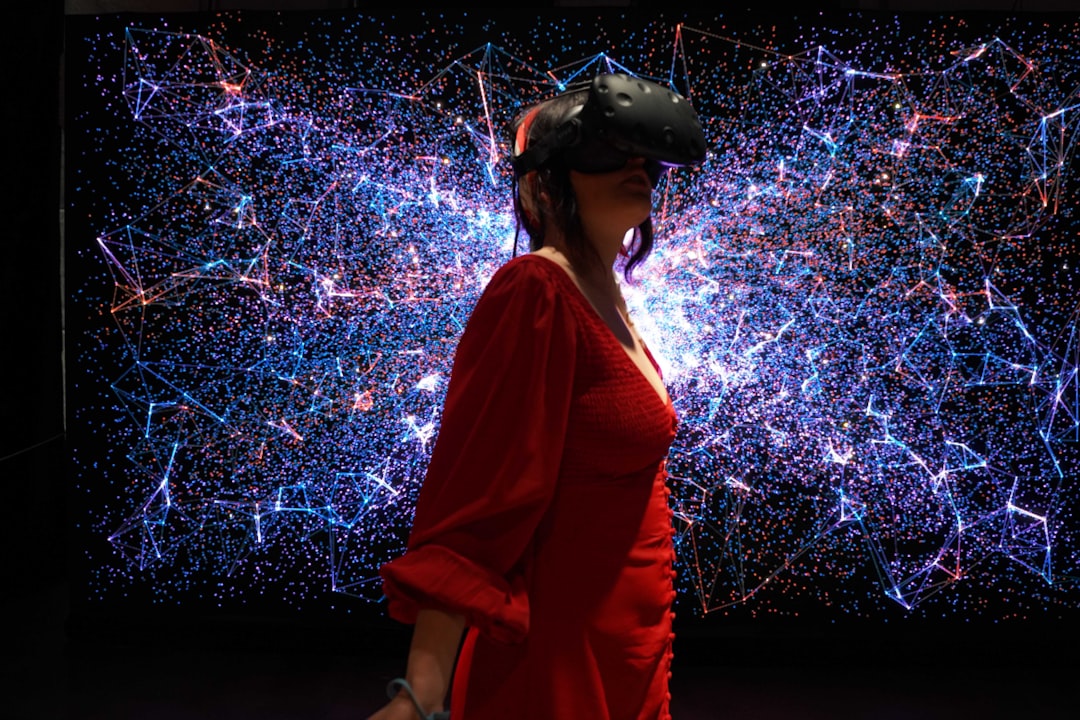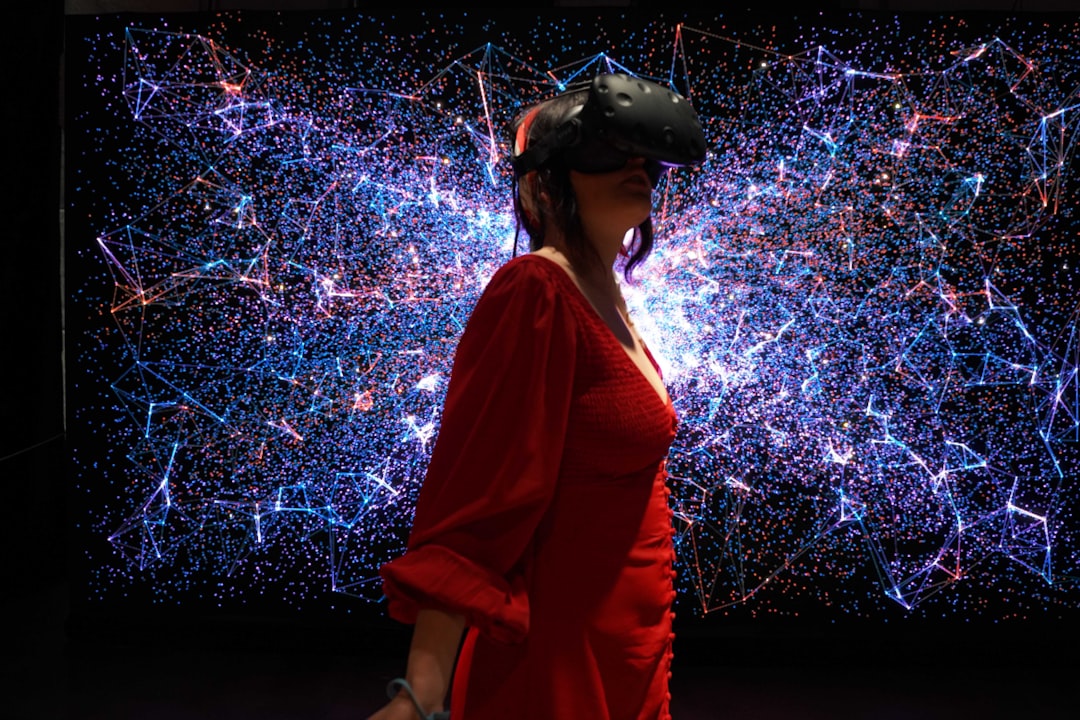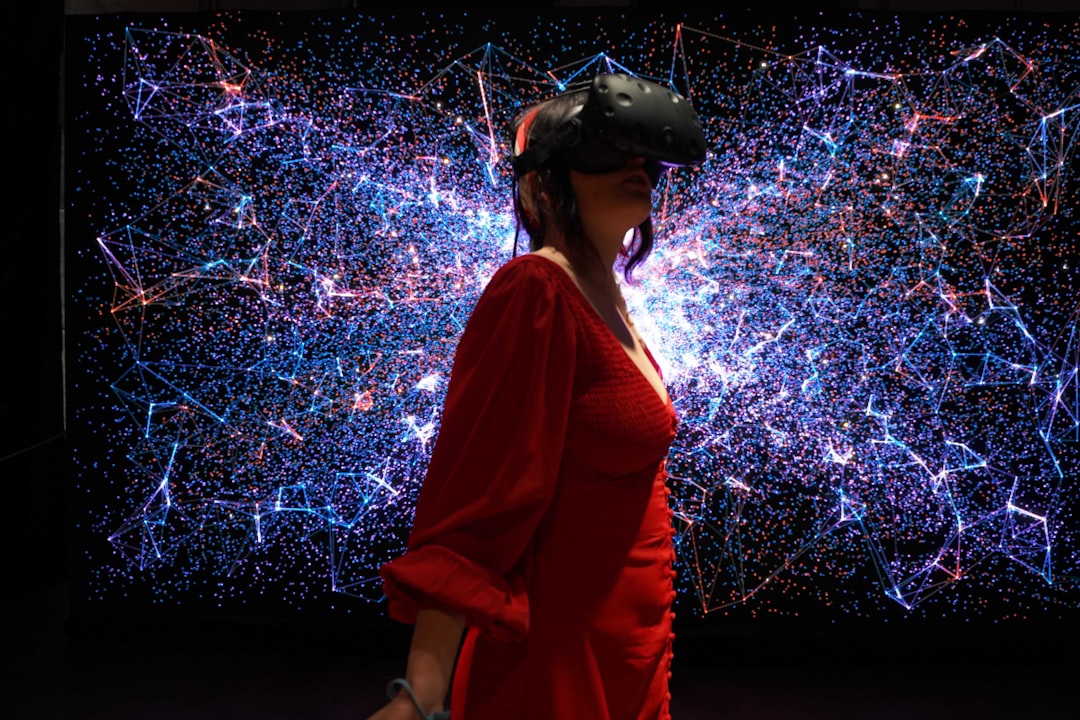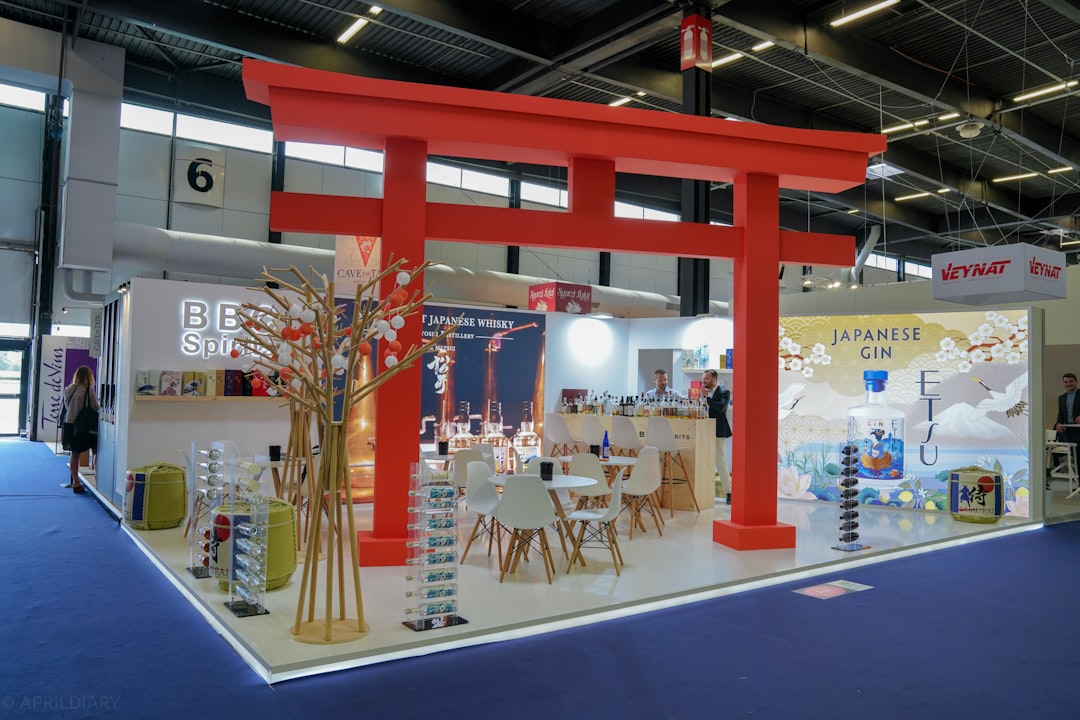
Augmented reality and virtual reality have been the perennial “next big thing” at European trade fairs for the better part of a decade. In 2026 the picture is finally clearer than the hype cycle has allowed. The UFI Barometer 2026 records AR adoption at roughly 28% of European exhibition stands above 75 sqm, with VR meaningfully lower at around 12-15%.
The adoption is concentrated at fairs and exhibitors where the product genuinely benefits from spatial or interactive visualisation; it is absent at fairs where the product can be evaluated with conventional photos, video, or physical samples.
This article walks through the honest cost-benefit picture. It identifies the four use cases where AR and VR deliver measurable lead-quality lift, the much larger set of use cases where they remain expensive crowd theatre, the EUR 8,000-45,000 budget bands that separate viable from theatrical deployments, and the three-question test that determines in advance whether a given product will benefit.
It refuses the framing that immersive experiences are inevitable or universally valuable. The mature European exhibitor in 2026 deploys AR and VR where they fit and skips them where they do not, and there is a substantial cost to confusing the two.
What adoption actually looks like in 2026
Adoption is uneven across the European fair calendar. Two charts in the UFI Barometer 2026 tell the story.
First, AR adoption by fair type: 47% at telecoms and consumer-electronics fairs (MWC Barcelona, IFA Berlin), 42% at automotive fairs (IAA Munich, Geneva replacement events), 38% at industrial machinery fairs (Hannover Messe, EMO, Bauma), 21% at design fairs (Salone del Mobile, EuroShop), and below 10% at food, drink, beauty, and consumer-goods fairs (Anuga, ProWein, Cosmoprof, Spielwarenmesse).
Second, AR adoption by stand size: 4% on stands below 50 sqm, 28% on stands 50-200 sqm, 51% on stands 200-500 sqm, and 73% on stands above 500 sqm.
The pattern reflects an underlying truth. AR works when the product is complex, large, or invisible in normal stand presentation. It does not work when the product is simple enough to evaluate by holding it in your hand, watching a 30-second video, or talking to a salesperson for two minutes. The cost-benefit reverses across these two ends of the spectrum, and the adoption data tracks the reversal closely.
“We spent EUR 32,000 on a custom AR experience for our consumer-goods brand at Anuga 2024 because the marketing team was convinced it would differentiate us. It generated a queue and looked great on LinkedIn. It did not generate one additional qualified lead vs the prior fair where we ran a conventional tasting station for EUR 8,000. We have not deployed AR at Anuga since.”, Common post-mortem framing from European consumer-brand exhibition managers
The four use cases where AR delivers measurable lift
AR delivers measurable lead-quality lift in four product contexts. Each shares the feature that conventional stand presentation cannot deliver the visualisation the buyer needs to make a purchase consideration.
Spatial visualisation of products that cannot fit on the stand. Cranes, ships, large industrial machinery, building information models for architectural and construction firms. The AR experience puts a 1:1 or scaled visualisation of the actual product into the visitor’s spatial context, typically via a tablet held up to the stand floor or a designated AR zone.
Adoption is concentrated at Bauma (construction), SMM (maritime), Hannover Messe (industrial), and BAU (construction). Cost-per-interaction is comparable to or better than alternative options (physical scale model, video walkthrough), and the qualified-lead conversion is visibly higher because the buyer leaves the stand having genuinely visualised the product in their context.
Interactive walkthroughs of complex internal product structures. Engines, medical devices, industrial systems, semiconductor architectures. The AR experience lets the visitor disassemble or interrogate the product virtually, seeing internal components and operational principles that physical demonstration cannot show.
Adoption is concentrated at MEDICA (medical devices), productronica (electronics), Hannover Messe (industrial), and IAA (automotive). The qualification lift comes from the visitor self-selecting their depth of engagement, visitors who walk through the full internal structure are typically meaningfully more qualified than visitors who look at the exterior.
Customisation simulations where visitors configure a product variant. Automotive interiors, furniture systems, kitchen layouts, modular building components. The AR experience lets the visitor specify configuration choices and see the result before committing to a quote request.
Adoption is concentrated at IAA (automotive interior configuration), Salone del Mobile (furniture systems), and Mosbuild and BAU (building components). The qualification lift comes from the configuration data itself, which the sales team uses to follow up with relevant proposals rather than generic catalogues.
Training simulations for equipment too dangerous or expensive to demonstrate. Industrial safety equipment, surgical instruments, aviation systems, mining and oil-and-gas equipment. The AR or VR experience lets the visitor handle and operate equipment that physical demonstration would be impractical to deliver. Adoption is concentrated at A+A (safety), MEDICA (surgical), and the specialised industrial fairs.
Qualification lift comes from the visitor’s demonstrated engagement with operational scenarios specific to their buying context.
Outside these four use cases, AR typically generates aisle traffic without changing lead quality. The crowd-theatre AR installation that draws onlookers but does not influence purchase consideration is one of the most expensive avoidable line items on many stands in 2026.
The realistic AR demo budget
An honest AR demo on an exhibition stand in 2026 budgets as follows:
| Budget line | EUR range | Notes |
|---|---|---|
| AR application development | 8,000-25,000 | Lower if internal product team can adapt existing visualisation assets; higher for purpose-built fair experiences |
| Demo hardware (tablets, AR headsets, charging, content management) | 3,000-8,000 | 2-4 stations typical for 75-200 sqm stand; rental sometimes available |
| Demo-station integration into stand design | 2,000-6,000 | Lighting, sound isolation, queueing area, power infrastructure |
| Trained demo staff for 3-5 fair days | 1,500-4,000 | 1-2 dedicated staff in addition to standard stand team |
| Content updates and tracking | 500-2,000 | Lead-capture integration, analytics, post-fair content refresh |
| Total realistic envelope | 15,000-45,000 |
Below EUR 10,000, the AR experience is rarely strong enough to drive measurable lead-quality lift, it reads as a low-effort overlay rather than a serious capability demonstration. Above EUR 45,000, the case typically depends on factors beyond the immersive experience itself (brand positioning at a flagship fair, multi-fair amortisation of the underlying content, integration with broader product configurator infrastructure).
For exhibitors deploying AR for the first time, the practical recommendation is to budget at the middle of the range (EUR 20,000-30,000) and to commit to the deployment only after passing the three-question test below. The most expensive AR mistakes come from under-budgeting (delivering a weak experience that confirms scepticism) or over-budgeting on a product context where the cost-benefit does not work.
The VR landscape and why adoption is lower
VR adoption at 12-15% of European exhibition stands above 75 sqm is meaningfully lower than AR for three structural reasons.
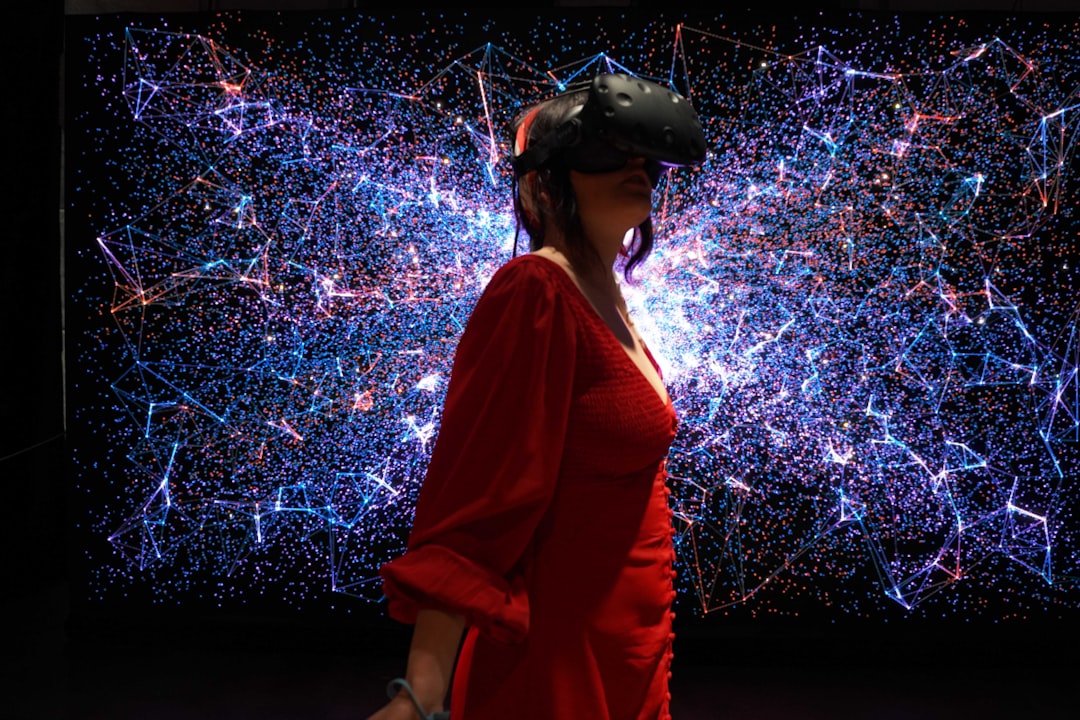
First, hardware friction. VR headsets isolate the wearer from the rest of the stand, require hygiene management between visitors (cleaning between sessions, replaceable face cushions), and trigger motion sensitivity in a non-trivial percentage of users. The friction makes walk-up engagement difficult; VR works as a scheduled or supervised experience rather than as a casual interaction.
Second, throughput limitations. A VR experience that meaningfully demonstrates a product typically runs 5-15 minutes per visitor. Over a 5-day fair, even with 4 headsets running continuously, total VR interactions cap at roughly 200-500, orders of magnitude below the visitor flow at a tier-one fair stand. The cost-per-interaction reaches uneconomic levels for most products.
Third, narrower use-case fit. VR’s strength is deep immersive walkthrough of large spatial environments. The fit is genuine for real estate developments, large industrial facilities, complex training scenarios, and brand spectacle. It is not for product configuration, internal-structure interrogation, or quick visualisation, all of which AR handles better with lower friction.
Where VR works:
| Use case | Typical fair contexts | Cost envelope |
|---|---|---|
| Real estate / development walkthroughs | MIPIM, Expo Real, Realty fairs | EUR 25,000-80,000 |
| Industrial facility tours | Hannover Messe, K Fair, productronica | EUR 30,000-100,000 |
| Surgical/medical training simulators | MEDICA, Arab Health | EUR 40,000-150,000 |
| Brand spectacle / flagship-fair queueing | IAA, IFA, MWC flagship presence | EUR 50,000-250,000 |
| Aviation/aerospace cockpit and cabin demos | Paris Air Show, Farnborough | EUR 60,000-200,000 |
Outside these contexts, VR’s hardware friction outweighs its visualisation benefit relative to AR or high-quality screen-based alternatives. The 12-15% adoption rate reflects fit rather than budget constraints, many of the exhibitors with the deepest budgets specifically choose AR over VR for the throughput reasons above.
Mixed reality and the new headset generation
The Apple Vision Pro (released early 2024) and the Meta Quest 3 / Quest Pro have begun appearing on European exhibition stands in 2026, primarily at MWC Barcelona, IFA Berlin, and the automotive fairs. The UFI Barometer 2026 estimates around 4-6% of stands using these specific headsets, almost entirely at tier-one fairs with technology-forward audiences.
The honest assessment of these devices in the exhibition context:
- Visualisation quality is meaningfully better than tablet-based AR or earlier VR headsets. Spatial fidelity, eye-tracking-driven rendering, and gesture interaction deliver experiences that previous device generations could not.
- Hardware friction persists. Headset weight (Vision Pro at ~600g), hygiene management between visitors, and the cost per headset (Vision Pro at EUR 3,800-4,300 retail per unit) limit deployment scale.
- Throughput remains limited. Like prior VR, the supervised-experience model means 200-500 interactions per fair day per headset.
- Use case fit is similar to VR. Spatial visualisation, training simulation, brand spectacle. Not casual walk-up interaction.
The current pattern is that mixed-reality headsets work as demo stations for a small number of staff-supervised visitors at a time. Whether they scale beyond this niche depends on weight, comfort, hygiene, and cost improvements in subsequent device generations. The MWC Barcelona 2026 and IFA 2026 deployments will be the most-watched real-world tests.
“The Vision Pro experience we ran at MWC 2025 was the best immersive demo we have ever delivered. It also reached 47 visitors over four days at a cost of EUR 78,000. The cost-per-interaction is hard to defend except as a brand statement. For 2026 we are running the same content on tablet AR for a tenth of the cost and reaching twenty times the visitors. The Vision Pro is parked until either the hardware gets dramatically more practical or our use case shifts.”, Common framing among European tier-one exhibitors who deployed mixed-reality at MWC 2025
The three-question test before committing budget
Before committing AR or VR budget, apply three tests at concept stage. The investment is justified only if all three pass.
Test 1: Does the product benefit from spatial or scale visualisation that cannot be delivered by photos, video, or physical samples? If the buyer can evaluate the product by handling it, watching a 30-second video, or talking to a salesperson for two minutes, AR and VR will not change the outcome. If the product is too large, too complex, too internal, or too configurable to evaluate by conventional means, the immersive experience is potentially worth the investment.
Test 2: Will visitors actively engage with the content for at least 90 seconds? Visitor attention is the constraint. If the demo content holds attention only for 30-60 seconds, the cost-per-genuine-interaction makes the immersive experience uneconomic vs simpler alternatives. If the content sustains 90+ seconds of active engagement, the lead-quality signal becomes measurable.
Test 3: Can your sales team qualify a lead based on what the visitor did in the immersive experience? The lead-qualification mechanism must change. If the salesperson follows up the same way regardless of whether the visitor used AR or talked to a colleague at the demo bar, the immersive experience has not changed the commercial outcome.
If the AR or VR session generates configuration data, depth-of-engagement signals, or buying-context information that the salesperson uses in follow-up, the qualification value justifies the investment.
If all three tests pass, AR or VR is a defensible investment. If any test fails, the budget produces better return when redirected to lighting, hospitality, pre-booked meeting infrastructure, or trained demo staff at conventional demo stations.
Where the budget goes when AR/VR is not the answer
For the substantial majority of European exhibition stands where AR and VR do not pass the three-question test, the same budget redirected elsewhere typically produces stronger commercial outcomes:
- Pre-booked meeting infrastructure. Dedicated meeting rooms with privacy, refreshments, and calendar-managed booking systems consistently outperform walk-up tech experiences on qualified-lead conversion. The UFI Barometer 2026 records pre-booked meeting share growing from 30% pre-2020 to 50-65% in 2025-2026 as exhibitors learn the conversion math.
- Lighting design. Professional stand lighting (controllable LED grid, accent lighting on product, hospitality-zone lighting) delivers brand-impact and dwell-time lift across all product categories at a comparable budget to AR experiences. See Lighting Design for the framework.
- Hospitality infrastructure. A genuinely usable hospitality zone with quality refreshments and seating consistently outperforms tech spectacle on visitor dwell time, which correlates with conversation depth and lead quality.
- Trained demo staff. The marginal value of a second well-trained demo specialist often exceeds the marginal value of an immersive experience addition.
The honest framing: AR and VR are tools in the kit, not the kit itself. The mature 2026 European exhibitor reaches for them when the use case fits and reaches for alternatives when it does not.
How to act on this
For exhibitors considering AR or VR deployment in the 2026-2027 cycle, the practical sequence:
- Apply the three-question test before committing budget. If the test fails, redirect the budget to lighting, hospitality, or pre-booked meeting infrastructure.
- Benchmark cost-per-qualified-lead. Compare the projected cost-per-lead of the AR/VR investment against the projected cost-per-lead of alternative investments at the same budget. The Booth Cost Calculator supports the comparison framework.
- Shortlist builders with prior AR or VR integration experience. The /builders directory tags builders by their immersive-experience integration history; request quotes from the top three matches via /rfq.
- Choose your fair carefully. AR and VR pay off at fairs where the audience expects technology demonstration (MWC, IFA, IAA, Hannover Messe) and pay off less reliably elsewhere. See the /fairs directory for fair-by-fair adoption context.
Related reading
- AI in Exhibitions, the parallel technology adoption story with different cost-benefit characteristics
- Sensor Analytics and Booth Data, what visitor behaviour actually shows about engagement with tech experiences
- Hybrid and Digital Event Formats, where immersive content fits in the post-COVID event mix
- Modular vs Custom Decision Framework, the build-type decision that affects how AR/VR integrates into the stand
- Lighting Design, the often-better alternative investment for the same budget
References and primary sources
- UFI Barometer 2026 (Global Exhibition Industry Barometer), UFI Global Association of the Exhibition Industry, ufi.org
- IFES (International Federation of Exhibition and Event Services) technology adoption reports, ifesnet.com
- MWC Barcelona 2026 exhibitor technology guidelines, GSMA
- IFA Berlin 2026 immersive-experience exhibitor data, Messe Berlin
- Hannover Messe 2026 digital twin and AR adoption observations, Deutsche Messe AG
- Apple Vision Pro developer documentation and enterprise deployment guidelines
- Meta Quest 3 / Quest Pro enterprise deployment documentation
- FAMAB Verband Direkte Wirtschaftskommunikation technology stream publications, famab.de
FAQFrequently asked questions
UFI Barometer 2026 records AR adoption at roughly 28% of European exhibition stands above 75 sqm, with VR meaningfully lower at around 12-15%. The adoption is unevenly distributed: heavily concentrated at MWC Barcelona, IFA Berlin, EuroShop, Hannover Messe, and the major automotive and industrial machinery fairs; sparse at consumer-goods and food fairs (Anuga, ISM, Spielwarenmesse).
The pattern correlates with whether the exhibitor’s actual product benefits from spatial or interactive visualisation. A complex industrial machine or a building information model lands well in AR; a chocolate bar or a sofa does not, and the immersive experience there reads as gimmick rather than enhancement.
An honest AR demo on an exhibition stand in 2026 costs EUR 8,000-25,000 for the AR application development (if not already available from internal product teams), EUR 3,000-8,000 for the demo hardware (typically 2-4 tablets or AR headsets with charging stations and content management), EUR 2,000-6,000 for the demo-station integration into the stand design (lighting, sound isolation, queueing area), and EUR 1,500-4,000 for the trained staff to run the demo for 3-5 fair days.
Total realistic envelope EUR 14,500-43,000. Below EUR 10,000, the experience is rarely strong enough to drive lead-quality lift; above EUR 45,000 the case typically depends on factors beyond the immersive experience itself.
AR delivers measurable lift in four use cases:
- spatial visualisation of products that cannot fit on the stand (cranes, ships, large machinery, building information models)
- interactive walkthroughs of complex internal product structures (engines, medical devices, industrial systems)
- customisation simulations where visitors configure a product variant (automotive interiors, furniture systems, kitchen layouts)
- training simulations where visitors learn to operate equipment too dangerous or expensive to bring on-stand
Outside these four use cases, AR typically generates aisle traffic but lower conversion to qualified leads than well-designed conventional demos. The crowd-theatre AR installation that draws onlookers but does not change purchase consideration is the most expensive line item on many stands.
VR is worth deploying in a narrow set of cases: deep immersive product walkthroughs where the visitor commits 5-10 minutes to a guided experience (real estate developments, large facilities, complex industrial environments), training simulations where the spatial fidelity matters (surgical instruments, industrial safety, aviation), and brand experiences at flagship fairs where the queueing and the spectacle are themselves the point (consumer brands at IFA, automotive at IAA).
Outside these cases, VR’s hardware friction (headset hygiene, motion sensitivity, isolation from the rest of the stand) typically outweighs its visualisation benefit relative to high-quality screens or AR alternatives. The 12-15% adoption rate reflects this narrowness rather than budget constraints.
Mixed-reality headsets including the Apple Vision Pro (released early 2024) and the Meta Quest 3 / Quest Pro have begun appearing on European exhibition stands in 2026, primarily at MWC Barcelona, IFA Berlin, and the automotive fairs. Adoption remains experimental, the UFI Barometer 2026 estimates around 4-6% of stands using these specific headsets, almost entirely at tier-one fairs with technology-forward audiences.
The headsets deliver visibly stronger visualisation quality than tablet-based AR but inherit the hardware-friction problems of earlier VR systems. The current pattern is that mixed-reality headsets work as demo stations for a small number of staff-supervised visitors at a time, rather than as walk-up experiences.
Whether they scale beyond this niche depends on weight, comfort, and hygiene improvements in subsequent device generations.
Apply three tests at concept stage. First, does the product benefit from spatial or scale visualisation that cannot be delivered by photos, video, or physical samples? If no, AR and VR will not help. Second, is the demo content something visitors will actively use for at least 90 seconds, or is it something they will glance at and move on?
If under 90 seconds, the cost-per-genuine-interaction makes the immersive experience uneconomic vs simpler alternatives. Third, can your sales team actually qualify a lead based on what the visitor did in the immersive experience? If the lead-qualification mechanism is no different from a conventional demo, the immersive experience has not changed the commercial outcome and the budget is better spent elsewhere.
If all three tests pass, AR or VR is worth the investment. If any test fails, the budget should go to lighting, hospitality, and pre-booked meeting infrastructure instead.