Augmented-reality product demos on exhibition stands moved through a recognisable adoption curve between 2018 and 2026. The first wave, roughly 2018 to 2021, was novelty-led: a handful of flagship stands at IFA, Mobile World Congress, and CES Europe spent EUR 200,000-plus on bespoke AR installations that produced strong press coverage but inconsistent commercial outcomes.
The second wave, roughly 2022 to 2024, was format-led: web-AR, tablet-based AR, and headset-based AR each found their fair-type fit, the unit economics improved, and several stand-tech specialists built repeatable AR delivery practices.
The third wave, 2025 to 2026, is mainstream: AR is now a recognisable line item on tier-one European stand budgets at the EUR 12,000 to 85,000 range that matches the actual commercial value the format produces.
This article walks through the four AR formats that have stabilised across European stand practice, the cost economics by format, the dwell-time and conversion data observed across major fairs, the format-by-fair-type recommendations the experienced immersive teams now follow, and the integration considerations that decide whether an AR installation produces commercial value or expensive novelty.
It draws on stand-tech delivery data shared at IFES sustainability and innovation working sessions, UFI research on visitor engagement, sustainability and tech-budget allocations reported by major European stand-builders, and the cross-fair benchmarking that several European immersive-experience specialists have made publicly available.
The four AR formats that have stabilised
European stand practice in 2026 has converged on four AR formats, each occupying a distinct cost band and a distinct fair-type fit.
Web-AR runs in the visitor’s own mobile browser via QR code scan. No app install is required. The visitor scans the code, the browser launches a WebXR or 8th Wall-equivalent experience, and the AR plays through the phone camera. Web-AR is the lowest-cost format and the broadest-reach format because device penetration is universal at consumer-facing fairs.
Tablet-based AR uses stand-supplied tablets that visitors pick up and explore the product through. The tablet acts as a magic window: the AR overlay appears on the tablet screen as the visitor moves it around a physical product or a marker placed on the stand. Tablet AR delivers richer experiences than web-AR because the application can be optimised for the specific hardware, and the on-stand context allows for guided exploration.
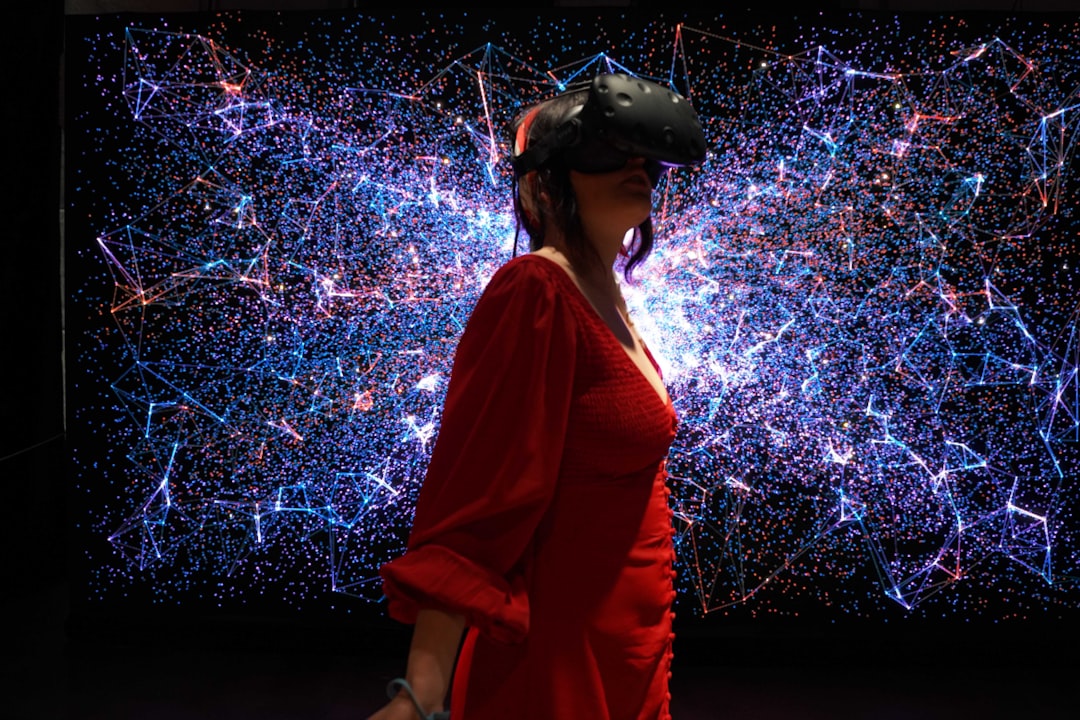
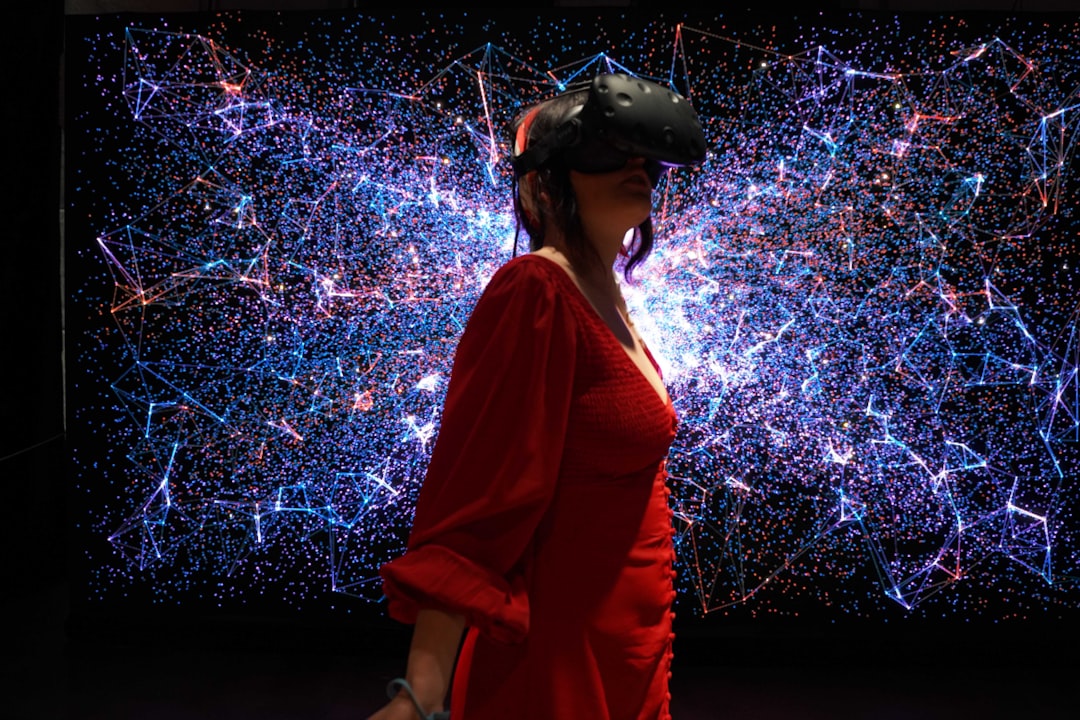
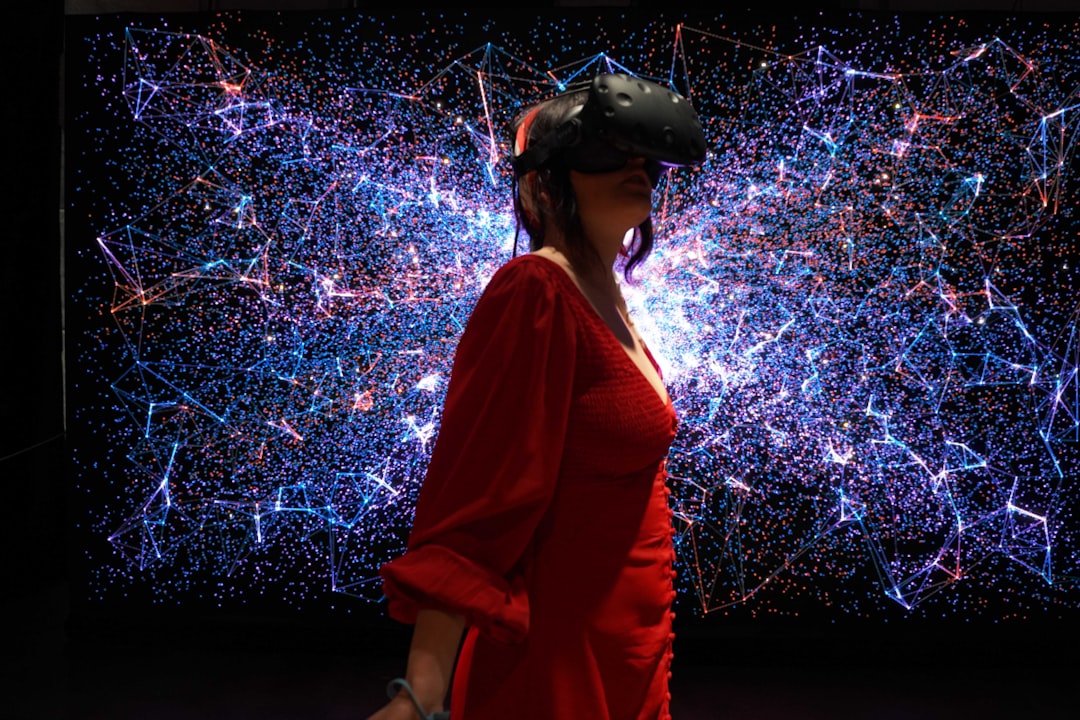
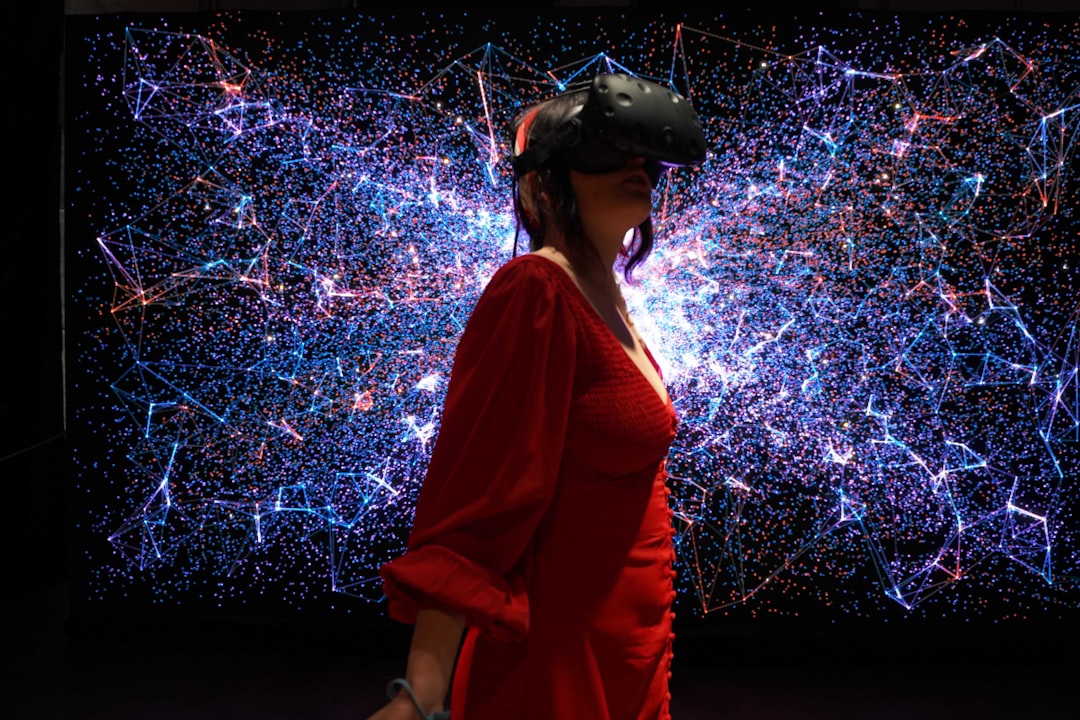
Headset-based AR uses Microsoft HoloLens 2, Meta Quest 3 or Quest Pro with passthrough, Apple Vision Pro, or equivalent headsets. The visitor wears the headset and the AR overlays appear in stereoscopic 3D in their field of view. Headset AR delivers the deepest immersive experience but constrains throughput: typical session length is 4 to 8 minutes including donning, calibration, and removal, which limits per-day visitor count per headset.
Projection-based AR uses calibrated projectors to overlay AR content onto physical products or stand surfaces. There is no device for the visitor to hold or wear; the AR appears in the physical space. Projection AR delivers the broadest visual impact but requires controlled ambient light and bespoke projection mapping per stand and per product.
Cost economics by format
The table below summarises observed all-in cost ranges for AR product demo deployments at European fairs in 2024 to 2026, including 3D asset preparation, application development, stand integration, on-stand support staffing, and first-fair deployment.
| AR format | First-fair cost (EUR) | Per-fair variable cost (EUR) | Throughput per day | Best-fit fair type | Lead-time |
|---|---|---|---|---|---|
| Web-AR | 12,000-25,000 | 1,200-3,000 | Effectively unlimited (visitor’s own device) | IFA, ISE, broad consumer fairs | 6-10 weeks |
| Tablet-based AR | 18,000-45,000 | 3,500-7,500 | 120-220 sessions per tablet per day | Hannover Messe, EMO, Bauma, technical B2B | 8-12 weeks |
| Headset-based AR (Quest 3, HoloLens 2) | 35,000-85,000 | 5,500-12,000 | 35-65 sessions per headset per day | EuroBike, Cosmoprof, Watches & Wonders | 10-16 weeks |
| Projection-based AR | 40,000-120,000 | 6,000-14,000 | N/A (continuous experience) | Salone del Mobile, EuroShop, Light + Building | 12-20 weeks |
The first-fair cost dominates the AR investment decision because most of the cost is sunk into 3D asset preparation and application development that can be reused across multiple fairs.
A well-architected AR application survives 6 to 12 fair appearances before content refresh becomes necessary, with the per-fair variable cost (device-fleet rental, on-stand support, content updates) running 10 to 20 percent of the first-fair cost. Reuse economics make AR significantly more attractive on multi-fair calendars than first-fair pilots suggest.
The dwell-time and conversion data
Properly designed AR experiences extend visitor dwell-time on the stand by 60 to 180 seconds on average against a non-AR baseline, with the high end of the range applying to headset and projection-based formats and the low end to web-AR.
The conversion impact, measured as qualified-lead capture rate against equivalent product-display areas without AR, typically runs 15 to 35 percent higher on AR-equipped stands, with the strongest results on technical products where the AR allows visitors to inspect internal mechanisms or alternative configurations not physically present.
| AR format | Median dwell-time lift (seconds) | Median conversion lift | Strongest product fit | Weakest product fit |
|---|---|---|---|---|
| Web-AR | 45-90 | 8-18% | Configurable consumer products, automotive | Commodity products without configuration depth |
| Tablet-based AR | 90-150 | 18-28% | Technical industrial products, machinery | Pure aesthetic products without functional depth |
| Headset-based AR | 180-360 | 25-40% | High-value technical products, design exploration | Low-value commodity products |
| Projection-based AR | 60-110 (passing dwell) | 12-22% | Flagship-product reveals, design-led stands | Functional product demos requiring interaction |
The conversion lift erodes if the AR experience is purely decorative rather than tied to a meaningful product or specification exploration. Novelty AR without product substance produces dwell-time gain without conversion improvement, the worst commercial outcome because the stand traffic increases without lead quality matching.
The honest design discipline that produces conversion lift is to make the AR earn its place by showing something the physical product cannot: cutaway internal views, configuration alternatives, scale comparisons, performance simulations, or design provenance that would otherwise live in a sales-engineering document.
“We tested three AR concepts at IFA 2024 against an identical non-AR product-display area. The cutaway internal-component AR drove a 31 percent conversion lift. The aesthetic surface-finish AR drove a 9 percent dwell lift but no conversion improvement. The lesson is that AR has to expose something the product alone cannot show, or you are spending immersive-experience budget on Instagram content.”, Common framing from European stand-tech leads, 2025
Format-by-fair-type recommendations
The format-fit decision in 2026 reduces to the visitor audience and the per-visitor engagement value the fair supports.
Broad consumer fairs (IFA, MWC Barcelona on the consumer side, automotive shows) reward web-AR. Visitor device penetration is universal, queue tolerance is low, and the volume of visitors means per-visitor cost arithmetic dominates. Web-AR delivers per-visitor cost of EUR 1 to 4 once enough visitors scan and engage, which the alternatives cannot match.
Technical B2B fairs (Hannover Messe, EMO, Bauma, productronica, drupa) reward tablet-based AR. Visitors are willing to engage for several minutes, the depth of product exploration matters, and the stand staffing structure already supports tablet handover and guided exploration. Tablet AR at these fairs delivers per-engaged-visitor cost of EUR 8 to 25 with conversion lift in the 18 to 28 percent band.
High-end product and design fairs (EuroBike for premium bicycles, Cosmoprof for cosmetics product line exploration, Watches & Wonders for technical horology, ISE for AV system configuration) reward headset-based AR. Visitor count per stand is moderate, per-visitor engagement value is high, and the depth of experience justifies the supervision overhead. Per-engaged-visitor cost runs EUR 45 to 180 but the underlying transactions justify the spend.
Flagship design-led fairs (Salone del Mobile, EuroShop, Light + Building, ISE on the flagship-stand side) reward projection-based AR. The experience itself becomes part of the stand architecture, the brand statement matters as much as the per-visitor conversion arithmetic, and the format aligns with the stand-quality expectations of these fairs. The cost-per-thousand-impressions arithmetic on flagship stands lands in the EUR 4 to 12 CPM range.
The integration considerations that matter
Five integration considerations matter for AR-enabled stands, and getting them wrong is the most common reason AR installations fail commercially despite working technically.
Sightlines
Headset and tablet AR require visitor sightlines that do not depend on the AR content. The visitor has to feel oriented in the physical stand even while in the immersive experience. Stand designers who treat AR as the visual centrepiece often produce stands that disorient visitors when the AR is not active, which reduces overall stand effectiveness. The discipline is to design the stand to be commercially complete without the AR, then layer the AR on as enhancement.
Lighting
Projection-based AR demands controlled ambient light, which constrains the rest of the stand-lighting design. A stand that wants to deliver projection AR alongside conventional brand-lit areas typically needs zoned lighting with dimmable LED fixtures that can drop the projection-zone ambient by several stops while maintaining brand illumination elsewhere on the stand. The lighting-design budget typically increases EUR 4,000 to 12,000 to support this zoning.
Power and connectivity
Headset and tablet fleets require charging infrastructure that is non-trivial on a stand: 6 to 12 outlets on dedicated circuits, with the charging cycle scheduled to match the use cycle.
High-bandwidth wifi or 5G mobile connectivity is non-negotiable for any cloud-rendered AR experience and for any web-AR experience because visitor devices are running the experience through their own cellular data plans, which fail at peak fair traffic. Most European venues now offer dedicated stand-side wifi access points for AR-enabled stands at additional cost in the EUR 800 to 3,000 range per fair.
On-stand staffing
Headset AR requires dedicated staff for hygiene, troubleshooting, and visitor handover. Typical staffing requirement is one dedicated AR specialist per two headsets in use. Projection AR requires technical-support staffing to monitor projector alignment and content playback. Web-AR and simple tablet AR can run with general booth staffing, which is one of the reasons the per-visitor cost arithmetic is so different across formats.
Hygiene workflow
Shared headsets require a sanitisation regime that adds 2 to 4 minutes between visitors. The post-COVID hygiene expectations on shared devices have hardened into operational requirements at most European venues, and headset providers (Quest, HoloLens, Vision Pro) now ship with hygienic eye-and-face shields designed for fast swap-out between users. The hygiene workflow constrains throughput more than the experience length itself on most fair-day cycles.
“The headset experience is technically excellent but the throughput economics fail if the hygiene workflow is undisciplined. We measure two hygiene cycles per minute as the practical operational limit, which caps any single headset at roughly forty-five sessions per day at the fair peak. The throughput maths drives the headset count, not the visual-design preferences.”, IFES Innovation Working Group framing, 2025
When AR pays back and when it doesn’t
The honest AR investment calculus on a multi-fair European calendar reduces to three questions.
First, will the AR experience reuse across at least four fairs? The first-fair development cost is the dominant economic factor, and the reuse curve determines whether AR pays back against simpler product-display alternatives. A four-fair reuse cycle typically produces total-cost economics competitive with high-quality static-display product showcasing; below four fairs, the AR development cost is hard to defend against alternative spending on stand quality.
Second, does the AR experience expose something the physical product cannot? AR that shows cutaway internals, configuration alternatives, scale comparisons, or simulation outcomes produces conversion lift. AR that shows aesthetic surface variations or decorative animation produces dwell-time lift without conversion lift, which is commercial waste.
Third, does the on-stand staffing and integration overhead match the fair-type fit? Headset AR at a high-volume technical fair fails because throughput cannot serve the visitor flow. Web-AR at a flagship design fair fails because the format reads as under-committed against the stand-quality expectations. Format-fair fit is non-negotiable; getting it wrong fails the installation regardless of the AR quality.
How AR plays alongside ISO 20121 documentation
AR installations sit inside the sustainable-stand documentation rather than outside it. Headset and tablet fleets carry embodied-carbon footprints that should appear in the stand-level carbon declaration; web-AR has effectively zero stand-side embodied-carbon load because it runs on visitor devices.
Projection-based AR has modest embodied-carbon load in the projector hardware and dominant ongoing-operations carbon load in the power consumption across the fair duration.
The UFI Sustainable Development Committee 2025 framework includes immersive-experience hardware in the scope of stand-level carbon measurement, and AR specialists working at the top of the European market have begun publishing per-format carbon intensities to support exhibitor CSRD reporting.
How Exhibition Stands EU surfaces AR-capable builders
The /builders directory on Exhibition Stands EU tags verified AR-capable builders against the formats they have delivered (web-AR, tablet, headset, projection) and the European fairs they have executed at. Use the immersive-experience filter on the /builders hub to shortlist by format track record, then request format-specific quotes from the top three matches via /rfq. The /calculator lets you model AR cost against multi-fair reuse economics before committing to a format.
Related reading
- AR/VR European Exhibition Stands: Where They Pay Off, the strategic framework for immersive-experience investment
- AI in Exhibitions, the lead-capture and matchmaking technology that pairs with AR
- Sensor Analytics and Booth Data, the dwell-time and conversion measurement that quantifies AR performance
- Hybrid and Digital Event Formats, how AR experiences extend into hybrid fair formats
- Booth Cost Calculator, modelling AR cost against multi-fair reuse economics
References and primary sources
- UFI Innovation Committee, Immersive Experience Adoption Report 2025
- IFES Sustainability Stream Innovation Working Group, AR/VR Stand Integration Playbook 2025
- FAMAB Verband Direkte Wirtschaftskommunikation, Immersive Technologies in Trade Fair Practice 2024
- AUMA Trade Fair Tech Atlas 2025, Association of the German Trade Fair Industry
- Bain & Company, Event Technology Investment Report 2024
- 8th Wall WebAR Performance Benchmark 2024, Niantic
- Meta Quest for Business deployment case studies 2024-2025
- Microsoft HoloLens 2 Enterprise Deployment Guide 2024
- Industry and academic literature on augmented reality visitor engagement and conversion outcomes in trade fair contexts, Journal of Marketing Communications, 2024
FAQFrequently asked questions
AR cost varies dramatically by format. Web-AR (no app install, runs in mobile browser via QR code scan) runs EUR 12,000 to 25,000 for a first deployment including 3D asset preparation, web hosting, and stand integration.
Tablet-based AR (visitor picks up an iPad or Android tablet on the stand and explores the product through the screen) runs EUR 18,000 to 45,000 including device fleet (typically 4-8 tablets), application development, and stand integration.
Headset-based AR with HoloLens 2, Quest 3, or equivalent runs EUR 35,000 to 85,000 including headset fleet (typically 2-4 units), application development, on-stand support staff, and the hygiene and sanitisation workflow that headset-based experiences require.
Projection-based AR (no devices, the experience plays onto a physical product or stand surface) runs EUR 40,000 to 120,000 because the projection mapping is bespoke per stand and per product.
Properly designed AR experiences extend visitor dwell-time on the stand by 60-180 seconds on average against a non-AR baseline, with the high end of that range applying to headset and projection-based formats and the low end to web-AR.
Lead-capture conversion improvement runs 15-35 percent over equivalent product-display areas without AR, with the strongest results on technical products where the AR allows visitors to inspect internal mechanisms or alternative configurations not physically present on the stand.
The conversion lift erodes if the AR experience is purely decorative rather than tied to a meaningful product or specification exploration; novelty AR without product substance produces dwell-time gain without conversion improvement, which is the worst commercial outcome.
Web-AR fits broad-audience consumer fairs (IFA, ISE in some segments, automotive fairs) where visitor device penetration is high and queue tolerance is low. Tablet-based AR fits technical B2B fairs (Hannover Messe, EMO, Bauma) where visitors are willing to engage for several minutes and the depth of product exploration matters.
Headset-based AR fits high-end-product and design fairs (EuroBike for premium bicycles, Cosmoprof for cosmetics product line exploration, Watches & Wonders for technical horology), where visitor count is moderate and per-visitor engagement value is high.
Projection-based AR fits flagship stands at design-led fairs (Salone del Mobile, EuroShop, Light + Building) where the AR itself becomes part of the stand architecture.
On typical fair traffic, web-AR delivers per-visitor costs of EUR 1-4 once enough visitors scan and engage. Tablet-based AR delivers EUR 8-25 per engaged visitor depending on stand staffing and tablet count. Headset-based AR delivers EUR 45-180 per engaged visitor because of the supervision requirements and the throughput limits of headset experiences.
Projection-based AR has no per-visitor metric in the traditional sense because the experience plays continuously to whoever is on the stand; the cost-per-thousand-impressions arithmetic typically lands in the EUR 4-12 CPM range on flagship stands. The format choice should be matched to whether the exhibitor is optimising for breadth (web-AR, projection) or depth (tablet, headset).
AR experience reuse depends on the application architecture and the 3D asset library. A well-architected AR application typically survives 6-12 fair appearances before content refresh becomes necessary, with per-fair variable cost (device-fleet rental, on-stand support, content updates) running EUR 3,000-9,000 against the EUR 12,000-85,000 first-time development cost.
Reuse economics make AR significantly more attractive on multi-fair calendars than first-fair pilots suggest. The reuse falls apart if the AR experience is tightly coupled to a specific product launch, a launch-specific AR experience is single-use by design, but generic product-line AR survives the multi-fair lifecycle that justifies the development investment.
Five integration considerations matter for AR-enabled stands. First, sightlines: headset and tablet AR require visitor sightlines that do not depend on the AR content (the visitor has to feel oriented even while in the experience). Second, lighting: projection AR demands controlled ambient light, which constrains stand-lighting choices.
Third, power and connectivity: headset and tablet fleets require charging infrastructure, and high-bandwidth wifi or 5G mobile connectivity is non-negotiable for any cloud-rendered AR. Fourth, on-stand staffing: headset and projection AR require dedicated staff for hygiene, troubleshooting, and visitor handover; web-AR and simple tablet AR can run with general booth staffing.
Fifth, hygiene workflow: shared headsets require a sanitisation regime that adds 2-4 minutes between visitors and constrains throughput.