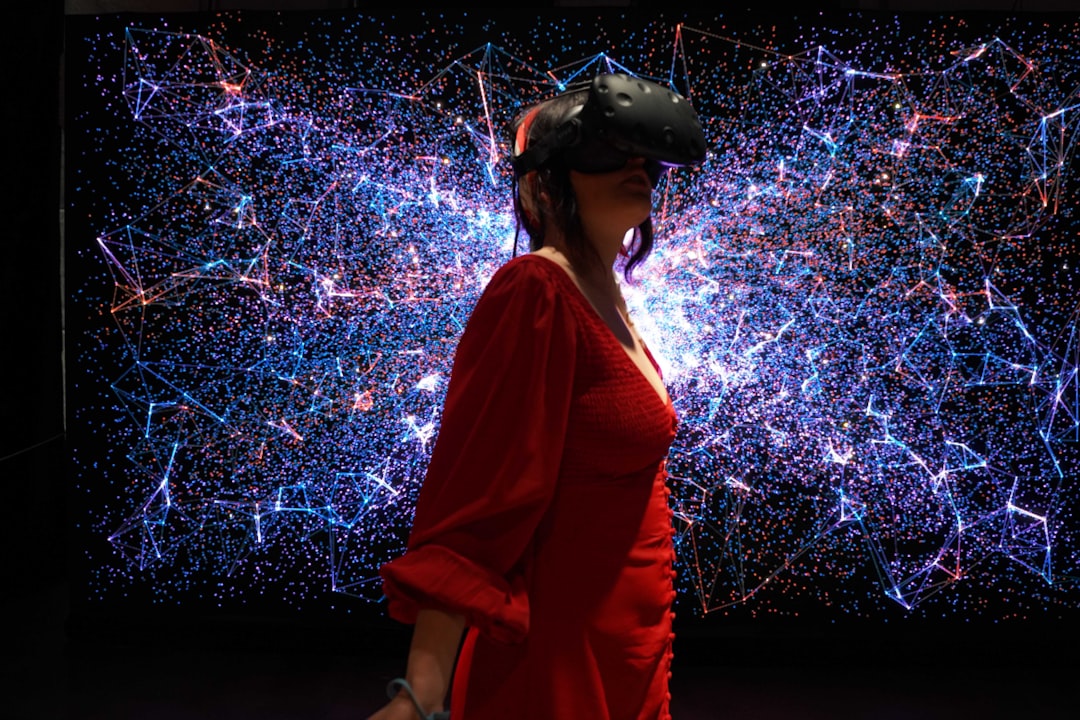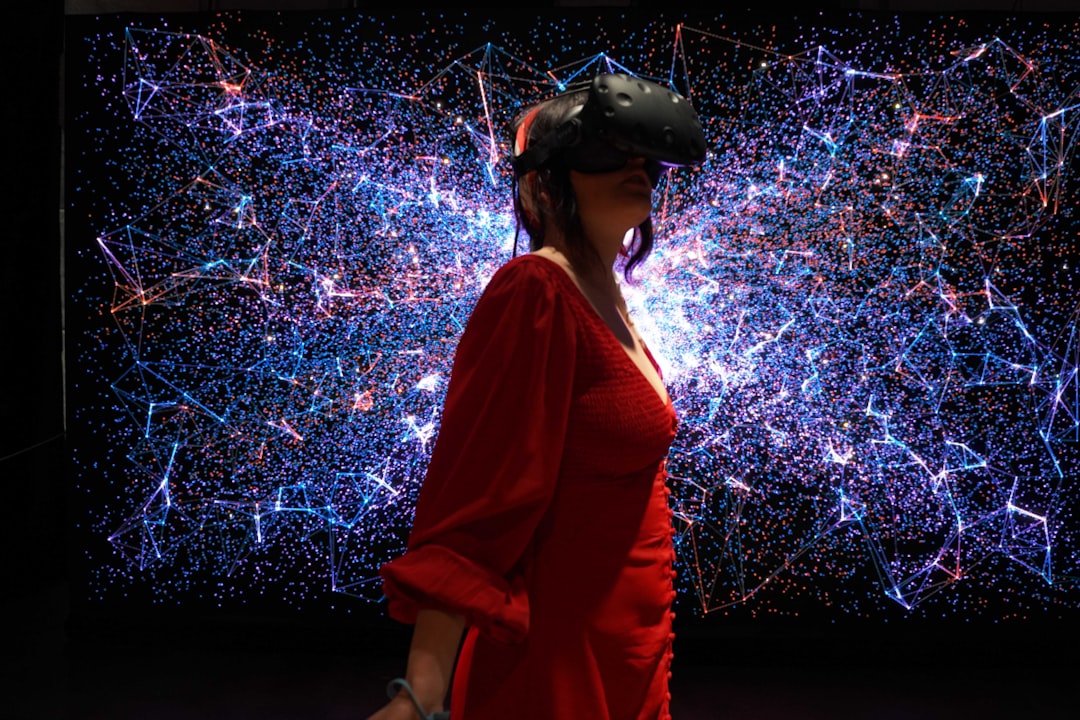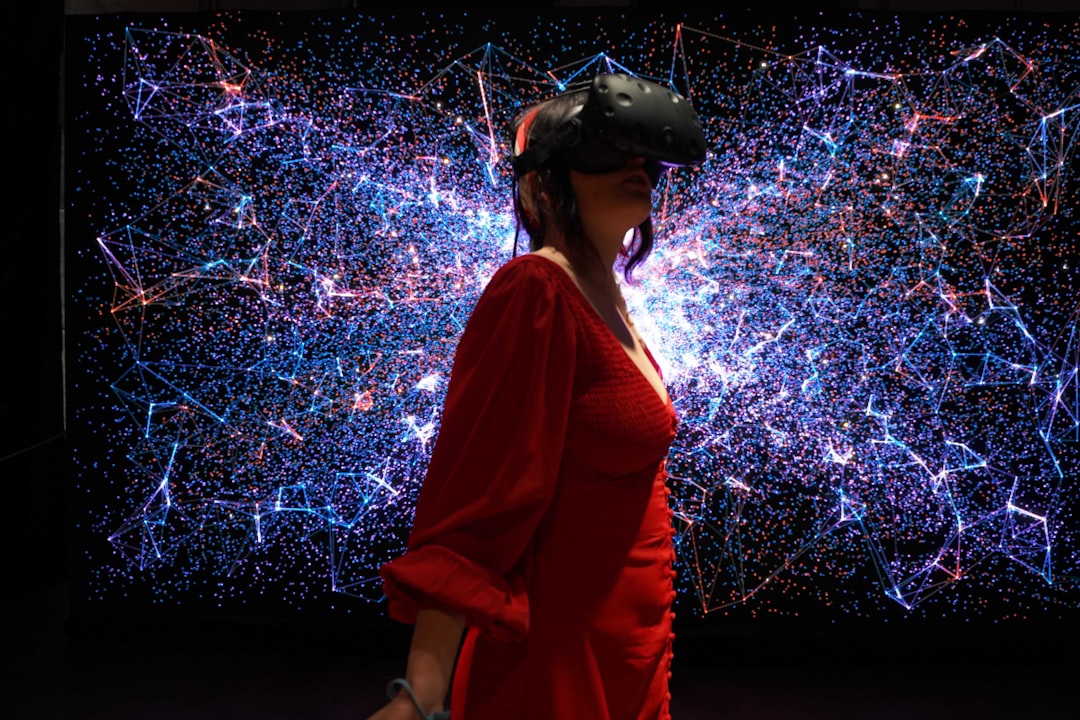
Virtual reality on exhibition stands sits one full economic and operational tier above augmented reality. Where AR has settled into a mainstream EUR 12,000 to 85,000 cost band across four format choices, VR remains a specialist investment at the EUR 55,000 to 220,000 range that justifies itself in a narrower set of sectors and fair contexts.
The narrower fit is not a weakness of VR as a technology, the immersive depth that VR delivers is genuinely unavailable through other means, but it does mean the investment calculus has to be tighter than the AR equivalent.
This article walks through the three VR deployment modes that have stabilised across European stand practice, the cost economics by mode, the sectors where VR consistently produces defensible ROI, the throughput constraints that decide commercial outcomes, and the venue technical-approval realities that VR-equipped stand projects have to navigate.
It draws on stand-tech delivery data shared at IFES Innovation Working Group sessions, UFI research on visitor engagement, deployment-mode benchmarking from several European immersive-experience specialists, and the venue technical-guidelines clauses that have been formalised across Messe Frankfurt, Hannover Messe, RAI Amsterdam, and Fira Barcelona during 2023 to 2026.
The three deployment modes
European stand practice in 2026 has converged on three VR deployment modes, each with distinct cost, throughput, and design implications.
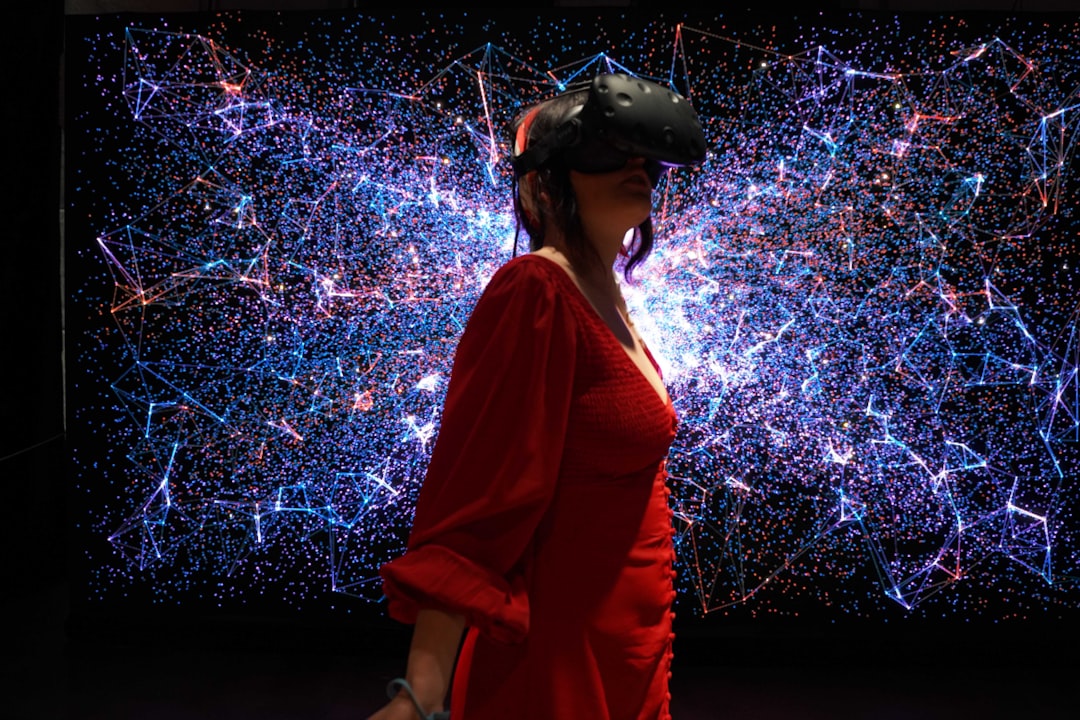
Seated VR places headsets at fixed seats on the stand. The visitor sits down, dons the headset, and experiences a 4 to 7 minute pre-designed VR content piece. The seat constrains movement, which simplifies safety, removes the need for tracked floor area, and supports faster session turnover. Seated VR is the lowest-cost and lowest-complexity deployment mode and serves the broadest range of fair contexts.
Room-scale VR allows the visitor to walk within a tracked physical area on the stand while wearing the headset. Typical tracked-area footprint is 9 to 16 square metres per visitor, with lighthouse base stations or inside-out tracking sensors defining the volume. Session length is typically 6 to 10 minutes.
Room-scale VR delivers significantly stronger immersion than seated VR, the sense of being inside the virtual environment is qualitatively different when the visitor can physically move through it, at the cost of higher hardware count, larger stand footprint, and more complex safety infrastructure.
Location-based VR combines a bespoke physical environment with VR content, typically including haptic feedback, physical props that align with virtual content, and sometimes motion platforms or environmental effects (wind, temperature, vibration). Session length runs 8 to 15 minutes. Location-based VR delivers the deepest immersive experience available on exhibition stands but constrains throughput severely and dominates the cost-per-stand budget when deployed.
Cost economics by deployment mode
The table below summarises observed all-in cost ranges for VR deployments at European fairs in 2024 to 2026, including application development, 3D asset creation, hardware fleet, stand integration, on-stand support staffing, and first-fair deployment.
| Deployment mode | First-fair cost (EUR) | Per-fair variable cost (EUR) | Session length | Throughput per headset per day | Best-fit sectors |
|---|---|---|---|---|---|
| Seated VR (4-8 headsets) | 55,000-110,000 | 8,000-18,000 | 4-7 minutes | 35-50 sessions | Automotive, real estate, manufacturing training |
| Room-scale VR (2-6 headsets, tracked areas) | 85,000-160,000 | 12,000-25,000 | 6-10 minutes | 30-45 sessions | Architecture walk-through, factory virtual tour, immersive product design |
| Location-based VR (1-3 stations, bespoke environment) | 120,000-220,000 | 18,000-38,000 | 8-15 minutes | 20-35 sessions | Flagship product reveals, high-value B2B at IAA, MEDICA, MIPIM |
The cost drivers across all three modes are application-development complexity (typically 40 to 60 percent of first-fair cost), hardware fleet count (typically 10 to 20 percent), on-stand support staffing across the fair duration (typically 8 to 15 percent), and stand-integration and safety infrastructure (typically 10 to 20 percent). Per-fair variable cost on subsequent fairs runs 10 to 18 percent of first-fair cost, dominated by hardware-fleet rental, on-stand staffing, and content updates.
The application-development effort dominates first-fair cost across all modes. A high-quality VR experience requires 800 to 1,800 development hours for the application itself plus 300 to 1,200 hours for 3D asset preparation, depending on the complexity. The development hours typically translate to EUR 35,000 to 120,000 of the first-fair budget at the EUR 70 to 120 hourly rates that European immersive-experience studios charge in 2026.
Where VR consistently produces defensible ROI
Four sectors produce defensible VR ROI on European stands with consistency across multiple exhibitors and fair cycles.
Automotive
Automotive exhibitors at IAA Mobility, the successor formats to the traditional motor shows, and at adjacent fairs (Auto Shanghai equivalents that have European-leg activity, electromobility fairs across Europe) consistently extract VR value through three experience types:
- factory-virtual-tour experiences (showing the production process behind the vehicle on display)
- configuration experiences (allowing visitors to explore vehicle variants and options not physically on the stand)
- prototype-preview experiences (showing future vehicles that cannot be physically present)
The per-engaged-visitor cost arithmetic at automotive flagship stands typically lands in the EUR 50 to 120 range against engaged-visitor lifetime-value figures that comfortably justify the spend.
Real estate and architecture
Real estate and architecture exhibitors at MIPIM Cannes, Expo Real Munich, and the major architecture fairs consistently extract VR value through immersive walk-throughs of buildings before construction.
The use case has matured to the point where MIPIM specifically allocates premium pavilion space to VR-equipped developer stands, and the visitor expectation at the fair is that flagship developers will offer immersive previews. Room-scale VR is the dominant mode in this sector because walking the building is the experience.
“At MIPIM 2025 we tracked thirty-eight VR-equipped developer stands. The conversion to follow-up meeting from a completed VR walkthrough ran 47 percent against 16 percent from equivalent presentation-area engagement. The VR is no longer a differentiator in this sector, it is the table-stakes experience.”, Common framing from European commercial real-estate sustainability and visitor-experience leads, 2025
Manufacturing and industrial training
Manufacturing exhibitors at Hannover Messe, EMO, drupa, and adjacent industrial fairs consistently extract VR value through immersive process-simulation experiences (allowing visitors to operate equipment in a virtual environment), safety-training previews (showing the buyer the safety regime around the equipment they are considering), and maintenance-procedure walkthroughs (allowing visitors to understand operational lifecycle implications).
The per-engaged-visitor cost arithmetic at industrial flagship stands lands in the EUR 80 to 180 range against transaction values that justify the spend.
Healthcare and medical devices
Healthcare and medical-device exhibitors at MEDICA Düsseldorf, Arab Health (which has significant European exhibitor participation), and specialist medical-tech fairs consistently extract VR value through three experience types:
- procedure-simulation experiences (allowing clinicians to experience operating a device in a clinical context)
- equipment-familiarisation training (allowing prospective buyers to operate complex equipment without supervision risk)
- case-study walkthroughs (showing the device in a clinical workflow context)
The sectoral fit here is particularly strong because the alternative, actually demonstrating medical equipment to non-credentialed visitors, is operationally constrained or impossible.
Outside these four sectors, VR on stands rarely justifies the cost-per-engaged-visitor arithmetic against simpler alternatives. The honest investment calculus is to ask whether the VR exposes something genuinely unavailable through other means (an unbuilt building, a remote factory, a medical procedure, a vehicle in production), and to default to AR or simpler product-display formats when the answer is no.
Throughput constraints decide commercial outcomes
Three throughput constraints matter more than the visual quality of the VR experience itself.
Session length caps theoretical throughput. A 7-minute session caps theoretical throughput at roughly 65 sessions per headset per fair day before any overhead. A 12-minute session caps theoretical throughput at roughly 38 sessions per headset per fair day.
Hygiene workflow reduces practical throughput. The 2 to 4 minutes between visitors for headset sanitisation, eye-shield swap, and visitor handover reduces practical throughput to roughly 35 to 50 sessions per headset per day on seated VR, 30 to 45 sessions for room-scale VR, and 20 to 35 sessions for location-based VR.
Queue tolerance caps demand. Visitors at most European fairs tolerate 5 to 10 minutes of queue before walking away, which means the queue length effectively caps demand against the throughput supply. Stands with deep brand pull (flagship automotive stands, recognised architecture firms at MIPIM) sustain longer queues than stands without that pull, but the cap is universal.
The practical throughput maths drives the headset count, not the visual-design preferences. A stand expecting 200 qualified visitors per day on a 3-day fair (600 total) needs roughly 12 headset-days of seated VR capacity to serve 50 percent of qualified visitors, which translates to 4 headsets in operation across the fair days with morning-and-afternoon cycles.
The stand that buys 1 headset because it looks impressive serves 35 to 50 visitors per day at most and turns the remaining 85 percent of qualified visitors away from the experience, which destroys the per-investment ROI calculation.
Venue technical-approval realities
Major European venues now have explicit technical-guidelines clauses for VR installations, and the approval lead-time runs longer than standard stand-construction approval.
Messe Frankfurt and Hannover Messe require electrical-safety inspection of the headset-charging infrastructure, particularly where the charging is integrated into bespoke furniture. They also require dedicated network access points for cloud-rendered VR content, since shared venue wifi typically does not support the bandwidth requirements. Application submission lead-time is 8 to 12 weeks.
RAI Amsterdam adds acoustic-isolation requirements for VR zones where the experience includes spatial audio at high volume. The acoustic-isolation requirement frequently affects stand design because the partitions required to contain sound also affect sightlines from the stand into adjacent areas.
Fira Barcelona at ISE and MWC requires structural review of any tracked physical floor area where visitors will move while wearing headsets. The review confirms that the floor area is genuinely flat, that there are no obstructions within the tracked volume, and that the surrounding stand structures will not cause visitor disorientation or injury.
Messe Düsseldorf at MEDICA has specific clinical-content review requirements for medical-procedure VR experiences. Content showing surgical procedures or clinical interventions may require regulatory disclosure that takes additional approval lead-time.
The submission lead-time on VR-installation approval at the major venues is typically 8 to 12 weeks before fair opening, longer than the standard stand-construction approval, because the safety review requires specialist assessment. Exhibitors planning VR installations should engage the venue technical office at the design-brief stage rather than waiting for standard stand-construction submission.
The integration discipline that produces VR commercial value
Five integration disciplines separate VR installations that produce commercial value from those that produce expensive novelty.
| Discipline | What it looks like in practice | Common failure |
|---|---|---|
| Lead-capture handover | Staff identifies visitor, captures lead, then offers VR session; post-session debrief deepens the captured lead | VR is a passing curiosity; no lead capture before or after; throughput becomes the only metric |
| Hygiene workflow | Dedicated hygiene station, 3-minute reset cycle, visible sanitisation | Hygiene cycle slips; visitor disengagement; potential venue complaint |
| Pre-session preparation | Visitor briefed on what to expect; calibration confirmed before content starts | Visitor confusion in opening seconds; session restart; throughput collapse |
| Post-session conversation | Staff debriefs visitor on what they experienced and converts to next step | Visitor walks away from headset and leaves the stand; engagement evaporates |
| Content-fair fit | VR content speaks to the specific fair audience and product context | Generic VR content; visitor disconnect from why they walked onto the stand |
The discipline most commonly missed is the post-session conversation. The VR experience itself is engaging enough that visitors emerge wanting to talk about it; stands that do not have a staff member ready to convert that conversation into a qualified lead leave the commercial value on the table. The conversion arithmetic that justifies VR investment depends entirely on the conversation that happens after the headset comes off.
“We have measured the lead-capture conversion differential between VR-equipped stands that staff the post-session conversation actively and those that do not. The difference is typically 60 to 80 percent of total conversion. The headset is the engagement engine, but the conversation is the conversion engine.”, Common framing from European stand-tech leads, 2025
VR sustainability accounting
VR installations interact with stand-level sustainability accounting in two respects. First, the hardware embodied-carbon load is higher than equivalent AR. A typical VR headset fleet of 4 to 8 units carries roughly 80 to 180 kg CO2e in hardware embodied carbon against 30 to 60 kg for an equivalent tablet AR fleet. Second, the on-stand power consumption is higher because room-scale and location-based VR involves continuous spatial-tracking infrastructure that runs throughout the fair day.
The UFI Sustainable Development Committee 2025 framework includes VR infrastructure in stand-level carbon scoping, and several major immersive-experience specialists have begun publishing per-deployment-mode carbon intensities. The numbers are still modest compared to overall stand carbon footprint, VR adds roughly 2 to 6 percent to a typical 75-square-metre stand’s total carbon load, but they are no longer ignored in audit-grade declarations.
How Exhibition Stands EU surfaces VR-capable specialists
The /builders directory on Exhibition Stands EU tags verified VR-capable specialists against the deployment modes they have delivered (seated, room-scale, location-based) and the sectors and European fairs they have executed at. Use the immersive-experience filter on the /builders hub to shortlist by VR track record, then request format-specific quotes from the top three matches via /rfq.
The /calculator lets you model VR throughput against expected qualified-visitor flow before committing to a headset count.
Related reading
- AR Product Demo Booth Cost European Fairs, the AR cost framework that VR sits adjacent to
- AR/VR European Exhibition Stands: Where They Pay Off, the strategic framework for immersive-experience investment
- AI in Exhibitions, the lead-capture technology that pairs with VR experiences
- Sensor Analytics and Booth Data, the engagement-measurement layer that quantifies VR commercial outcomes
- Booth Cost Calculator, modelling VR throughput economics against multi-fair reuse cycles
References and primary sources
- UFI Innovation Committee, Immersive Experience Adoption Report 2025
- IFES Innovation Working Group, VR Stand Integration Playbook 2025
- AUMA Trade Fair Tech Atlas 2025, Association of the German Trade Fair Industry
- Bain & Company, Event Technology Investment Report 2024
- Meta Quest for Business deployment case studies 2024-2025
- HTC Vive Enterprise Deployment Guide for Event Activations 2024
- Messe Frankfurt Technical Guidelines 2026, exhibitor manual section on immersive-experience installations
- RAI Amsterdam Stand Construction Technical Manual 2026
- Industry and academic literature on virtual reality deployment modes, commercial outcomes, and throughput constraints in trade fair and exhibition contexts, International Journal of Event and Festival Management and Event Management, 2024-2025
FAQFrequently asked questions
VR deployment costs vary by mode. Seated VR (headsets at fixed seats, typical session 4-7 minutes, throughput 30-50 sessions per seat per day) runs EUR 55,000 to 110,000 first-fair, EUR 8,000 to 18,000 per subsequent fair.
Room-scale VR (visitor wears headset and walks within a tracked physical area on the stand, typical session 6-10 minutes) runs EUR 85,000 to 160,000 first-fair, EUR 12,000 to 25,000 per subsequent fair. Location-based VR (bespoke physical environment combined with VR content, often haptic feedback, typical session 8-15 minutes) runs EUR 120,000 to 220,000 first-fair, EUR 18,000 to 38,000 per subsequent fair.
The cost drivers are application-development complexity, hardware fleet count, and the on-stand support staffing the experience requires.
Four sectors consistently produce defensible VR ROI on European stands. Automotive: factory-virtual-tour and configuration-experience VR at flagship-stand level at IAA Mobility, geneva motor show successor formats. Real estate and architecture: immersive walk-through of developments and design schemes at MIPIM Cannes, Expo Real Munich.
Manufacturing and industrial training: immersive process-simulation and safety-training experiences at Hannover Messe, EMO. Healthcare and medical devices: procedure-simulation and equipment-familiarisation VR at MEDICA Düsseldorf, Arab Health, similar specialist fairs. Outside these sectors, VR on stands rarely justifies the cost-per-engaged-visitor arithmetic against simpler alternatives.
Well-designed VR experiences deliver 30 to 55 percent conversion lift against equivalent product-display areas without VR, with the strongest results in sectors where the VR allows experience of something the visitor cannot otherwise access (a factory tour, a building before construction, a medical procedure).
The dwell-time signal is dramatic: VR sessions extend visitor on-stand time by 180 to 540 seconds, with the high end on location-based VR experiences. The catch is that the conversion lift is measured against the engaged-visitor subset, which is smaller than the total stand traffic, so the absolute lead-count impact depends on throughput.
VR experiences with throughput below 30 sessions per headset per day rarely justify the investment despite strong per-session conversion.
Three throughput constraints matter. First, session length: a 7-minute VR session caps theoretical throughput at roughly 65 sessions per headset per fair day, before hygiene and handover overhead. Second, hygiene workflow: 2-4 minutes between visitors for sanitisation reduces practical throughput to 35-50 sessions per headset per day on stand-day cycles.
Third, queue tolerance: visitors at most fairs tolerate 5-10 minutes of queue before walking away, which means the queue length effectively caps demand against the throughput supply. A single-headset seated VR installation typically serves 35-50 engaged visitors per day; a four-headset room-scale installation typically serves 100-160. Stands targeting higher numbers need either more headsets or simpler formats.
Major European venues now have explicit technical-guidelines clauses for VR installations. Hannover Messe and Messe Frankfurt require electrical-safety inspection of the headset-charging infrastructure plus dedicated network access points for cloud-rendered VR content. RAI Amsterdam requires acoustic isolation of VR zones where the experience includes spatial audio at high volume.
Fira Barcelona at ISE and MWC requires structural review of any tracked physical floor area where visitors will move while wearing headsets. The submission lead-time on VR-installation approval at the major venues is typically 8-12 weeks before fair opening, longer than the standard stand-construction approval, because the safety review requires specialist assessment.
Yes, in two respects. First, the hardware embodied-carbon load is higher: typical VR headset fleet of 4-8 units carries roughly 80-180 kg CO2e in hardware embodied carbon, against 30-60 kg for an equivalent tablet AR fleet.
Second, the on-stand power consumption is higher because room-scale and location-based VR involves continuous spatial-tracking infrastructure (typically lighthouse base stations or inside-out tracking sensors) that run throughout the fair day.
The UFI Sustainable Development Committee 2025 framework includes VR infrastructure in stand-level carbon scoping, and several major immersive-experience specialists have begun publishing per-deployment-mode carbon intensities. The numbers are still modest compared to overall stand carbon footprint but they are no longer ignored in audit-grade declarations.