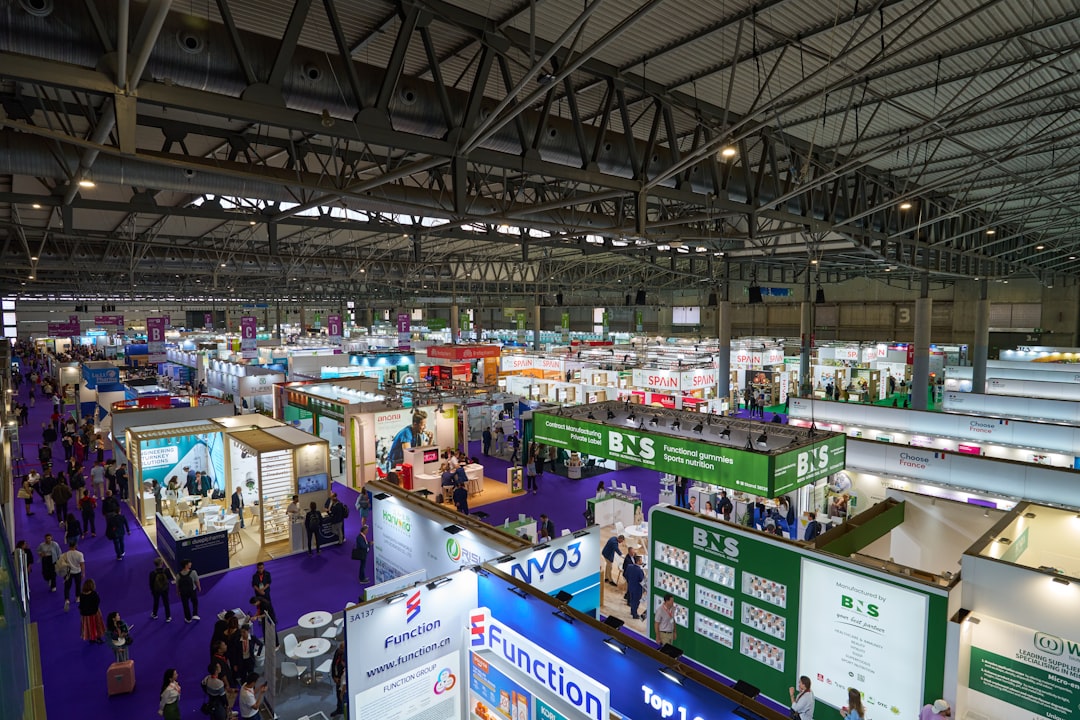

The Stockholm Furniture and Light Fair (Stockholm Furniture & Light Fair, often abbreviated SFF) held each February at Stockholmsmässan is the Nordic design industry’s most important annual event and the definitive international showcase for Scandinavian and Nordic design.
Combined with the parallel Stockholm Design Week programming across the city, Greenhouse showcasing emerging designers, the Established Designer brand stands, the Stockholm Design Talks programme, and the off-site installations, the SFF ecosystem draws approximately 40,000 trade visitors from 80 countries across four days, with a buyer mix that disproportionately concentrates Scandinavian, German, Dutch, UK, and Japanese specifier and retail audiences.
For furniture brands, lighting manufacturers, interior accessory companies, and the wider Nordic-design ecosystem, SFF presence is the strategic platform for accessing the global Scandinavian-design specifier and retail network. While the absolute attendance is meaningfully smaller than Salone del Mobile or Maison&Objet, the buyer concentration in Scandinavian design specialists and the Nordic-design press attention generate commercial outcomes that punch above the visitor numbers.
This article walks through the strategy framework experienced Nordic-design brands apply to SFF, drawing on the published exhibitor practices of established Scandinavian brands, Stockholmsmässan’s exhibitor service manual, ESA Nordic chapter operational guidance, and the documentation of the Stockholm Design Week parallel programming.
Why SFF operates differently from Salone or Maison&Objet
The Stockholm Furniture and Light Fair’s distinctive operational features:
- Concentrated Nordic-design specialist audience. Unlike the generalist design-buyer audience at Salone or Maison&Objet, SFF attendance concentrates Nordic-design specialist retailers, specifiers, and press. The relevance of the audience for Nordic-design brands is structurally higher than at larger continental fairs.
- Stockholm Design Week parallel programming. The citywide off-site programme, Greenhouse, Established Designer, Stockholm Design Talks, gallery installations, generates approximately half of total SFF media coverage and constitutes the primary venue for emerging-designer launches and brand-cultural-statement programming.
- Nordic-design aesthetic register. Stand design at SFF follows the Nordic clean-design discipline more strictly than at any other European design fair. Foreign exhibitors who import continental decoration templates read as foreign; brands that adapt to the Nordic aesthetic register succeed disproportionately.
- Sustainability standards highest of any European design fair. Stockholmsmässan and SFF organisers have progressively raised sustainability expectations; ISO 20121 alignment is essentially default for flagship-tier presence, with material origin and reusability documentation expected across all tiers.
- Annual cadence with established rhythm. SFF runs every February with consistent timing, which supports long-term brand strategy planning around the Stockholm calendar.
“Stockholm Furniture and Light Fair is the most disciplined design-aesthetic environment in European exhibitions. Salone is bigger and richer; Maison&Objet is more retail-led; SFF is the cleanest expression of Nordic design discipline applied to fair architecture. For Nordic-design brands, no other fair offers the same audience concentration.”, Common framing among ESA Nordic chapter design consultants
Cost structure for SFF stand presence
The table below summarises typical 2026 SFF stand budgets at Stockholmsmässan.
| Stand tier | Footprint range (sqm) | Space rental per sqm (SEK / EUR) | All-in budget (SEK / EUR) | Build complexity |
|---|---|---|---|---|
| Greenhouse emerging designer | 4-12 (curated) | Curated pricing | 40,000-180,000 SEK / 3,500-16,000 EUR | Curated pavilion within Greenhouse area |
| Established mid-tier | 50-120 | 3,400-4,200 / 300-370 | 850,000-1,800,000 SEK / 75,000-160,000 EUR | Custom with Nordic-design discipline |
| Flagship brand | 200-450 | 3,800-4,600 / 335-405 | 2,800,000-6,500,000 SEK / 245,000-575,000 EUR | Full custom with architect-designed elements |
| Heritage flagship | 500+ | 4,200-4,900 / 370-432 | 7,500,000-18,000,000 SEK / 660,000-1,590,000 EUR | Architect-designed installation-grade |
| Stockholm Design Week parallel | Off-site | n/a | 200,000-3,500,000 SEK / 17,500-310,000 EUR | Site-specific installation |
SFF flagship-tier budgets sit meaningfully below Salone del Mobile heritage flagship equivalents (Salone heritage runs CHF 5-12 million range; SFF flagship runs SEK 7.5-18 million range, approximately EUR 660,000-1,590,000). The cost differential reflects both the smaller Nordic fair footprint norms and the Nordic design-aesthetic preference for restraint over architectural extravagance.
The Greenhouse emerging-designer programme
Stockholm Furniture and Light Fair’s Greenhouse programme is the strategic entry point for emerging Nordic designers. The programme:
- Curates roughly 70 emerging designers and design studios annually
- Provides 4-12 square metre booths within a Stockholmsmässan-curated pavilion
- Receives concentrated design-press attention disproportionate to footprint size
- Constitutes the most-watched venue for spotting Nordic-design talent
- Operates on a competitive jury-selection process with applications due 4-6 months before the fair
For emerging Nordic-design talent, Greenhouse delivers SFF press attention and ecosystem visibility at materially lower cost than independent stand presence. Many established Nordic brands (Hem, Massproductions, and others) launched their reputations through Greenhouse-equivalent emerging-designer programmes.
“Greenhouse is the most cost-effective design-press route in the Nordic fair calendar. Selection generates 6-12 weeks of design-press coverage at a stand cost that emerging brands can actually afford. The selection process is competitive, typically 200-300 designer applications for 70 spots, but the reward when selected is significant.”, Common framing among Nordic emerging-design advisors
The Stockholm Design Week parallel strategy
Stockholm Design Week, the citywide parallel programming concurrent with SFF, is the cultural-statement venue for Nordic design brands. The parallel-programming structure includes:
- Showroom openings and brand cultural installations across central Stockholm
- Gallery exhibitions in design-specialist galleries
- Brand events at heritage Stockholm venues (museums, design schools, design archives)
- Stockholm Design Talks programme with international design-industry speakers
- After-fair networking events for the international design press and specifier networks
Approximately 60 percent of flagship SFF exhibitors host Stockholm Design Week parallel programming. The parallel-programming budget adds SEK 200,000-3,500,000 (EUR 17,500-310,000) depending on venue and ambition. For Nordic-design brands whose strategic positioning is design-led editorial, Stockholm Design Week parallel programming is essentially mandatory.
The Nordic design build expectation
SFF stand builds follow the Nordic clean-design discipline strictly. The defining characteristics:
Material authenticity dominance
Real materials at modest grades rather than imitation materials at premium grades. Plain birch plywood, natural ash, painted MDF with honest paint surfaces, natural wool felt, raw concrete or honest concrete-effect coating. Stains, finishes, and surface treatments are minimal and honest.
Integrated rather than added lighting
Lighting is designed into the stand architecture rather than added as discrete fixtures. Track lighting, integrated LED strips, and discrete spotlights are preferred over decorative pendant fixtures. The Nordic design tradition treats light as architectural material rather than ornamental accessory.
Sustainability documentation as default
Materials origin tracking, reusability planning, and end-of-life waste documentation are operational defaults rather than premium options. ISO 20121 alignment is increasingly expected at flagship-tier presence.
Restraint over ornamentation
Nordic stands typically present product within visually-quiet stand architecture rather than highly-decorated environments. The product display benefits from the visual contrast with the stand surroundings rather than competing with them. This is fundamentally different from continental design-fair conventions.
“The hardest part of designing for Stockholm Furniture and Light Fair is doing less rather than more. Continental design-fair conventions add ornamentation, decoration, and visual richness; SFF aesthetic discipline subtracts these. Brands that understand this design subtraction succeed at SFF; brands that don’t, fail visibly.”, Common framing among Stockholm-based design consultants
Hospitality conventions at SFF
SFF hospitality is calibrated for design-industry conversations:
- Excellent coffee throughout the day, Stockholm’s specialty coffee culture is among Europe’s best; mediocre coffee on stand reads as cultural foreignness
- Light fresh catering with regional Nordic-bakery items (kanelbullar, semlor, fresh pastries from Stockholm bakeries)
- End-of-day mingling from approximately 4pm with light wine or Nordic-spirit service (Swedish aquavit, Finnish vodka, Danish snaps)
- Stockholm Design Week off-site hospitality at evening events with stronger food and cocktail programming
- English-default conversations with Nordic-language welcome appreciated but not required
Builder selection for SFF
The Swedish stand-builder ecosystem includes specialist firms with strong SFF portfolios. The signals that distinguish builders capable of delivering at SFF flagship level:
- ESA European Sign Federation Nordic chapter membership
- Documented portfolio of at least four SFF stands in the previous three years at flagship tier
- Material-sourcing relationships for Nordic-design specifications (specific birch plywood grades, Nordic-specific textiles, regional design materials)
- Bilingual Swedish-English project management
- ISO 20121 sustainability documentation
- Demonstrated Nordic design-aesthetic fluency through portfolio work
Several pan-European builders (particularly Dutch, German, and Italian firms with Nordic operational experience) deliver competent SFF results, but the design-aesthetic fluency premium remains real. For brands whose strategic positioning is Nordic-design-led, a Stockholm-based builder with strong SFF portfolio is typically the right choice.
Timeline for flagship SFF presence
The flagship SFF timeline runs approximately twelve months:
- Month 12-10 before SFF: brand strategic decision; budget envelope confirmed; designer or architect appointment
- Month 10-8: concept development; Nordic-design aesthetic studies; sustainability documentation planning
- Month 8-6: design lock; structural engineering; Stockholmsmässan approval submissions
- Month 6-3: fabrication; material sourcing; Stockholm Design Week parallel programming planning
- Month 3-1: install rehearsal; design-press strategy lock; off-site venue lock for Design Week
- Week 2 before SFF: Stockholmsmässan build-up
- SFF week: four days of live operations including Stockholm Design Week parallel
- Post-fair: dismantle; key materials archived or recycled per sustainability documentation
How SFF interacts with the wider European design fair calendar
SFF in February sits at the strategic start of the annual European design fair calendar. The adjacent fairs:
- Maison&Objet Paris (September and January), interior design retail
- Salone del Mobile Milan (mid-April), global design flagship
- Stockholm Design Week parallel installations during SFF
- Helsinki Design Week (September), Nordic-design complementary calendar
- Copenhagen Design Week (variable), Nordic-design complementary calendar
Most flagship Nordic-design brands commit to SFF plus Salone del Mobile as the core annual commitment, with selective Maison&Objet attendance for retail-focused product lines.
For the wider Nordic fair context, see Exhibiting in the Nordics: Stockholm, Copenhagen, Helsinki. For Nordic VAT and customs mechanics, see Nordic Trade Fairs English-Default Guide.
Related reading
- Exhibiting in the Nordics: Stockholm, Copenhagen, Helsinki, country baseline
- Nordic Trade Fairs English-Default Guide, VAT and customs mechanics
- Salone del Mobile Flagship Design Strategy, comparison with the global design flagship
- Maison&Objet Design Strategy, comparison with Paris design retail platform
- Modular vs Custom Decision Framework, SFF sits in custom-with-restraint tier
- Builder Directory, SFF-experienced builders with verified Nordic design portfolios
References and primary sources
- Stockholm Furniture and Light Fair organising committee, exhibitor service manual 2026 edition
- Stockholmsmässan exhibitor service standards
- Stockholm Design Week parallel programming documentation
- ESA European Sign Federation Nordic chapter, design-fair operational guidance
- Greenhouse emerging-designer programme jury documentation
- Svensk Form (Swedish Form Association), Nordic design-industry context
- ISO 20121:2024 Event Sustainability Management Systems
- Nordic Design Council, cross-Nordic design-industry coordination
FAQFrequently asked questions
SFF is structurally smaller, more aesthetically disciplined, and more specifically Nordic-design focused than Salone. Salone’s global generalist design-buyer audience contrasts with SFF’s concentrated Nordic-design specialist retailers, specifiers, and press. Salone heritage flagship stands run CHF 5-12 million; SFF flagship stands run SEK 7.5-18 million (EUR 660,000-1,590,000).
The aesthetic register differs sharply, Salone rewards visual richness and architectural ornamentation; SFF rewards restraint and material authenticity. For Nordic-design brands, SFF audience concentration is unmatched; for global design brands, Salone remains the larger commercial platform.
Greenhouse is Stockholm Furniture and Light Fair’s curated programme for emerging Nordic designers and design studios. The programme provides 4-12 square metre booths within a Stockholmsmässan-curated pavilion for approximately 70 designers selected annually through a competitive jury process. Stand costs run SEK 40,000-180,000 (EUR 3,500-16,000).
Selection generates 6-12 weeks of design-press coverage and ecosystem visibility at lower cost than independent presence. For emerging Nordic-design talent, Greenhouse delivers SFF press attention at a cost emerging brands can realistically afford.
Stockholm Design Week runs concurrent with SFF and includes citywide off-site programming: showroom openings, gallery exhibitions, brand events at heritage Stockholm venues, the Stockholm Design Talks programme, and after-fair networking events. Approximately 60 percent of flagship SFF exhibitors host Stockholm Design Week parallel programming at additional budgets of SEK 200,000-3,500,000.
For Nordic-design brands with strategic design-led editorial positioning, parallel programming is essentially mandatory. For retail-volume brands, the main fair stand alone is sufficient.
Nordic clean-design discipline at SFF means material authenticity over imitation luxury (plain birch plywood rather than wood-effect vinyl), integrated rather than added lighting (track and LED strips designed into stand architecture rather than decorative pendants), restraint over ornamentation (visually-quiet stand architecture that lets product display dominate), and sustainability documentation as default expectation rather than premium option.
The hardest part of designing for SFF is subtraction rather than addition. Continental design-fair templates fail visibly at SFF.
For brands whose strategic positioning is Nordic-design-led and who will return to SFF year after year, a Stockholm-based builder with strong SFF portfolio is typically the right choice given design-aesthetic fluency and material-sourcing relationships.
For brands running multi-fair European calendars where SFF is one stop among many, pan-European builders with established Nordic operational experience (particularly Dutch, German, and Italian firms) deliver competent results at coordinated cross-fair operational cost. The design-aesthetic fluency premium for Swedish builders is real but not absolute.
For flagship-tier presence at SFF (200-450 sqm), commit 12 months before the February fair. For mid-tier established brand presence (50-120 sqm), commit 8-9 months out. For Greenhouse emerging-designer programme, applications typically close 4-6 months before SFF with competitive jury selection.
For Stockholm Design Week parallel programming, lock off-site venue commitments 6-9 months before the fair given limited Stockholm heritage-venue availability around Design Week. The Stockholm-region builder ecosystem saturates approximately 8-10 weeks before SFF.