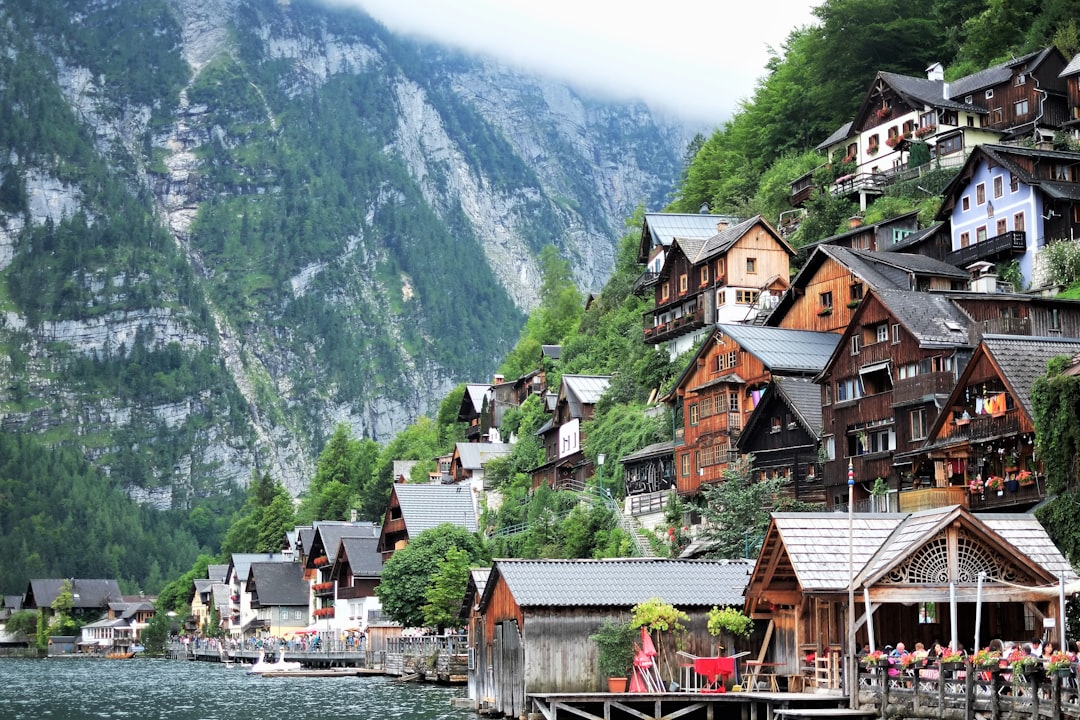
This Austria exhibition guide starts with geography, because Austria sits at the crossroads of Western Europe, the Central and Eastern European bloc, and the Alpine luxury-tourism economy, and that position shapes every venue, VAT and staffing decision that follows.
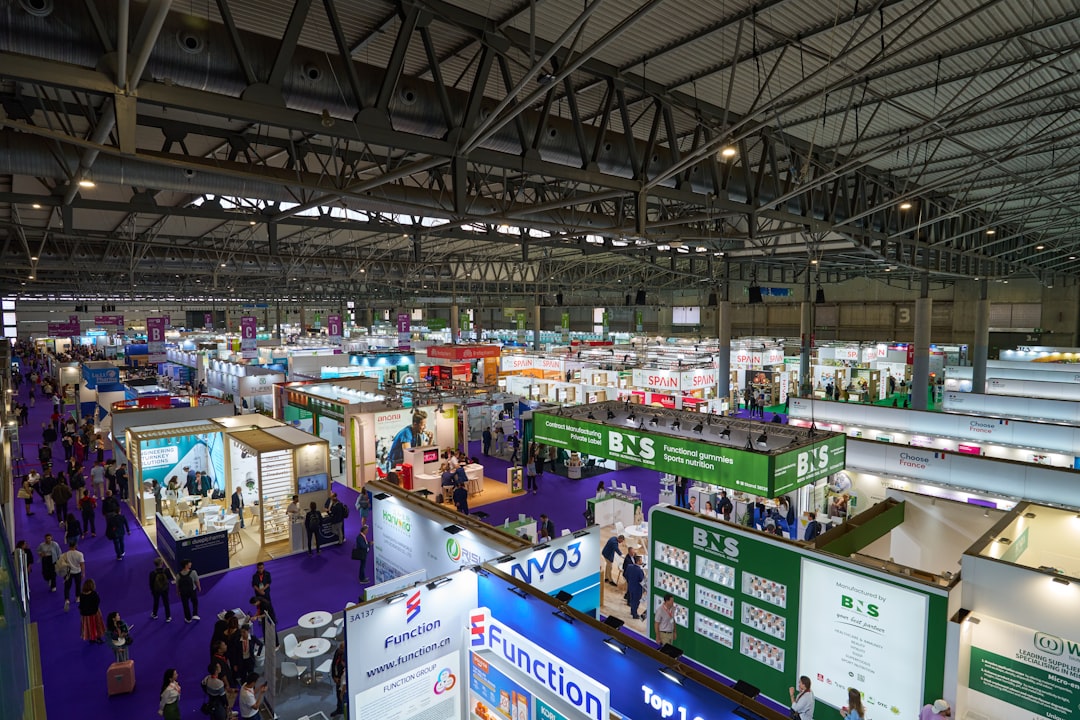
The country’s exhibition calendar is anchored by Messe Wien Exhibition and Congress Center (Vienna’s flagship venue), Messe Salzburg (specialising in alpine sports, gastronomy, and regional industry), Messe Graz (Austria’s second city with strong technology and design programming), and Messe Innsbruck (alpine-region specialist).
Together these venues host approximately 200 fairs annually, with several events of pan-European significance: Salzburg’s Power-Days (electrical industry) and Alles fuer den Gast, Graz’s Smart Automation Austria, and the broader sector-vertical calendar that positions Austria as the strategic entry point for Central European market access.
For European exhibitors, Austria offers a unique combination: full EU member-state status with all the customs and VAT simplifications that brings, a Vienna-region cost base 15-20 percent below Munich or Zurich while remaining higher than Eastern European alternatives, and a buyer mix that disproportionately includes Central and Eastern European commercial counterparts.
This guide covers Austrian VAT mechanics (the standard rate is 20 percent), cost benchmarks across Messe Wien and the regional venues, the Austrian business-culture conventions that differ from German equivalents, and Austria’s strategic role as a CEE-gateway exhibition market.
The references draw from Austrian Federal Economic Chamber (Wirtschaftskammer Österreich) exhibition documentation, Messe Wien Exhibition and Congress Center published exhibitor manuals, the Bundesministerium für Finanzen (BMF) VAT refund procedures, and AUMA International Exhibitor Service comparative Austrian-market analysis.
Why Austria works as a European exhibition strategic position
Austria’s strategic exhibition positioning derives from three structural features:
- EU member-state status with German-language operational fluency. Austria is fully integrated into the EU customs union and VAT area, meaning EU-resident exhibitors face no customs friction. Vienna’s German-language business culture supports cross-border German-Austrian commercial flow with no language friction.
- CEE-gateway visitor demographics. Austrian fairs disproportionately attract Czech, Slovak, Hungarian, Slovenian, and increasingly Romanian and Croatian buyer attendance. For brands targeting the Central and Eastern European market without committing to full CEE-region presence, Austria delivers concentrated CEE buyer access in a German-language operational environment.
- Cost advantage over Munich and Zurich. Vienna stand-builder rates run 15-20 percent below Munich equivalents and 25-35 percent below Zurich. For brands that need German-language operations but want to avoid the cost premium of the major German Messe centres, Vienna delivers operational comparability at materially lower cost.
“Austria is the most-underutilised strategic exhibition position in continental Europe. The combination of EU integration, German-language operational fluency, CEE buyer access, and 15-20 percent cost discount over Munich makes Vienna the right answer for many brands whose default would have been Frankfurt or Munich. The visitor quality at Messe Wien matches the major German venues; the cost base does not.”, Common framing among Wirtschaftskammer-affiliated Austrian exhibition advisors
Austrian VAT (USt) mechanics
Austrian USt (Umsatzsteuer, the local term for VAT) on exhibition services applies at the standard 20 percent rate, identical to France and slightly below Spain, Netherlands, and Italy. Reduced rates of 13 percent and 10 percent apply to specific hospitality and accommodation categories but do not materially affect exhibitor budgets. The reclaim mechanics:
- EU-resident exhibitors: file via the home VAT portal under the EU Eighth Directive. Deadline: 30 September of the year following the fair. Refund window: typically 4-6 months.
- Non-EU reciprocity countries: file directly with the Bundesministerium für Finanzen through the foreign VAT portal. Deadline: 30 June of the year following the fair. Refund window: 5-8 months.
- Non-EU non-reciprocity: not eligible.
Austria’s reciprocity list aligns closely with Germany’s BZSt list. The BMF portal operates in German and English with strong digital maturity comparable to the BZSt. First-time non-EU filings see acceptance rates above 75 percent, comparable to Spain and below France’s DGFiP.
“Austrian VAT recovery is procedurally similar to the German equivalent given the close commercial-law alignment between the two jurisdictions. Where Austria differs is in slightly faster refund timing and a more streamlined documentation review process. For brands running both German and Austrian fair calendars, the operational learning curve transfers directly.”, Wirtschaftskammer Austrian Federal Economic Chamber, exhibitor advisory documentation 2026
Cost benchmarks across Austrian venues
The table below summarises 2026 published rates and typical all-in budgets for a 100 square metre row stand at the major Austrian venues.
| Venue | Location | Hall area (sqm) | Space rental per sqm (EUR) | All-in 100sqm hybrid (EUR) | Recoverable USt (20%) |
|---|---|---|---|---|---|
| Messe Wien | Vienna | ~55,000 | 265-345 | 95,000-148,000 | 15,800-24,700 |
| Messe Salzburg | Salzburg | 35,500 | 235-310 | 84,000-132,000 | 14,000-22,000 |
| Messe Graz | Graz | 32,000 | 215-285 | 78,000-125,000 | 13,000-20,800 |
| Messe Innsbruck | Innsbruck | 20,000 | 205-275 | 74,000-120,000 | 12,300-20,000 |
| Wels Messezentrum | Wels (Upper Austria) | 60,000 | 225-295 | 80,000-128,000 | 13,300-21,300 |
| Klagenfurt Messe | Klagenfurt | 14,000 | 195-260 | 70,000-115,000 | 11,700-19,200 |
| Tulln Messegelände | Tulln | 27,000 | 200-265 | 72,000-118,000 | 12,000-19,700 |
Vienna venues carry a 15-20 percent premium over regional Austrian alternatives, driven primarily by Vienna-region labour rates and accommodation costs. The cost gap between Vienna and Munich is meaningful, Vienna sits below Munich at every tier, and is the structural reason that brands considering Munich frequently end up at Vienna for German-language market access at lower cost.
Austrian business culture: between German precision and Hungarian relationship-building
Austrian business culture sits at the cultural-geographic intersection of German precision-orientation and the Central European relationship-building register. For exhibitor stand strategy, the practical consequences:
Punctuality and operational discipline match German norms
Austrian buyers expect punctuality, prepared meetings, and operationally-efficient stand experiences in the German tradition. Generic Mediterranean fair conventions (extended hospitality, late meeting starts, relationship-first conversation flow) read as foreign and unprepared.
Hospitality conventions warmer than German equivalents
Austrian fair hospitality is somewhat warmer than German equivalents. Espresso service, regional pastries (Apfelstrudel, Sachertorte for Vienna-area fairs), and end-of-day wine service (particularly Austrian Grüner Veltliner) signal cultural fluency. The hospitality footprint allocation runs 18-25 percent of stand area, between the Dutch 15-25 percent and the Italian 30-40 percent.
Language layering: German default with English fluency
Austrian fairs operate in German by default, with English fluency widespread among commercial buyers. Stand staff with at least courteous German opening signal commercial preparedness; full bilingual capability is welcomed but not required. The German-language register at Austrian fairs is closer to Bavarian German than to Northern German conventions.
Cross-border CEE visitor flow
A meaningful share of visitors at Vienna fairs are from Czech Republic, Slovakia, Hungary, Slovenia, Romania, and Croatia. Stand teams should be prepared for buyer conversations in English (the lingua franca for cross-border CEE business) and ideally have at least one team member with regional CEE language capability.
“Vienna fair attendance disproportionately includes Central European buyers who come specifically because Austria delivers operational quality at lower cost than Munich. For brands targeting the wider CEE market, Vienna is the strategic capital, better than committing to multiple individual CEE venues for the same buyer access.”, Common framing among Vienna-based exhibition consultants
Build culture at Austrian fairs
Austrian fair build culture is pragmatic and German-aligned. Modular and hybrid construction are fully accepted at most Austrian fairs. Custom builds are reserved for design-led events (Vienna Design Week, occasional Salzburg luxury programming) and flagship-tier B2B presence.
Industrial and B2B fairs: Smart Automation Austria, Power-Days (Salzburg)
Modular dominant; hybrid common for mid-tier brands. Visitor judgement is functional and product-focused.
Sector-flagship fairs: ISPO Munich-Salzburg satellite, Vienna Auto Show, Allesfürdas-Tier
Hybrid construction is the dominant register, with strong technical-demo capability for industry-specific sectors.
Design and luxury programming: Vienna Design Week, Salzburg Festival exhibition components
Custom builds with strong material specification. These events do not have the international weight of Salone del Mobile or Watches and Wonders but carry significant regional prestige.
Builder selection for Austrian fairs
The Austrian stand-builder ecosystem clusters around Vienna with secondary capacity in Graz and Salzburg. The signals that distinguish builders capable of delivering at Messe Wien flagship level:
- FAMAB Austria affiliation or equivalent professional association membership
- Documented portfolio of at least six Messe Wien stands in the previous 24 months
- Bilingual German-English project management
- Working relationships with Vienna-region freight forwarders
- ISO 20121 sustainability documentation
- Cross-border Austrian-German experience for brands running both calendars
Many Vienna builders deliver excellent results at Munich and other German venues, and many German builders (particularly Munich-based firms) deliver at Vienna. The cross-border German-Austrian builder market is one of the most fluid in Europe.
Timeline and Austrian calendar specifics
Austrian-specific operational features:
- Vienna Auto Show late April: annual Vienna-region stand-builder demand peak
- ISPO Munich-Salzburg in February: the Salzburg programming around the Munich-anchored ISPO sports business fair commands regional builder capacity in early winter
- Austrian summer break: lighter than Italian August closure; Austrian builders typically take 2 weeks of summer leave rather than a full-month closure
- Christmas closure: Austrian Catholic calendar produces a longer Christmas closure than German equivalents, with stand-builder capacity reduced from 23 December through 7 January
- Festival overlap: the Salzburg Festival (July-August) and other Austrian cultural festivals affect regional accommodation and hospitality capacity around fair dates
For the wider Austrian fair context, see Exhibiting in Austria: Messe Wien CEE Gateway. For comparable VAT mechanics, see Germany Exhibition VAT Reclaim Guide.
Related reading
- Exhibiting in Austria: Messe Wien CEE Gateway, country baseline
- Messe Wien CEE Gateway Strategy Guide, Vienna-specific deep dive
- Germany Exhibition VAT Reclaim Guide, comparable VAT mechanics
- Modular vs Custom Decision Framework, applies sharply differently across Austrian fair tiers
- Booth Cost Calculator, model Austrian fair budgets with 20 percent USt
- Builder Directory, Austrian and pan-European builders with Messe Wien portfolios
References and primary sources
- Wirtschaftskammer Österreich, Austrian Federal Economic Chamber, exhibition industry documentation 2026
- Messe Wien Exhibition and Congress Center, exhibitor service manual 2026 edition
- Bundesministerium für Finanzen (BMF), foreign VAT refund procedure documentation
- Messe Salzburg, Messe Graz, Messe Innsbruck, exhibitor regulations and venue technical standards
- ISPO Munich-Salzburg, cross-border event documentation
- AMA Austrian Marketing Association, sector commercial guidance
- ISO 20121:2024 Event Sustainability Management Systems
- AUMA International Exhibitor Service, Austrian market comparative analysis 2026
FAQFrequently asked questions
Austria offers three structural advantages: EU member-state status with full customs and VAT integration, German-language operational fluency (Austria operates in German, just as Bavarian German is close to Austrian German), and a 15-20 percent cost discount versus Munich at comparable visitor quality.
Vienna’s buyer mix disproportionately includes Central and Eastern European commercial counterparts who come specifically for the CEE-region cost discount. For brands needing German-language market access without the Munich or Frankfurt cost premium, Vienna delivers operational equivalence at materially lower cost.
Austrian USt (Umsatzsteuer) on exhibition services applies at the standard 20 percent rate, identical to France’s TVA and slightly below Italy’s 22 percent, Netherlands’ 21 percent, and Spain’s 21 percent. Reduced rates of 13 percent and 10 percent apply to specific hospitality and accommodation categories but do not materially affect exhibitor budgets.
The reclaim deadline is 30 September following year for EU exhibitors (EU 8th Directive) and 30 June following year for non-EU exhibitors filing via the BMF foreign VAT portal.
Vienna fairs disproportionately attract Czech, Slovak, Hungarian, Slovenian, Romanian, and Croatian buyer attendance. For stand strategy, this means: prepare stand staff for English-language conversations as the lingua franca for cross-border CEE business; ideally have at least one team member with CEE language capability; price product and service offerings with CEE-market currency considerations in mind (some Austrian fairs see significant payment-currency negotiations); and plan hospitality with Central European preferences in mind (heavier dairy, less seafood, slightly later meal times than Northern European norms).
Yes. Many Austrian stand builders (particularly Vienna-based firms) deliver excellent results at Munich, Frankfurt, and other German venues, and the cross-border German-Austrian builder market is one of the most fluid in Europe. For brands running both Austrian and German fair calendars, a single bilingual builder frequently delivers both markets.
Austrian builders also have strong relationships with CEE-region freight forwarders and customs brokers for brands extending into Czech, Slovak, or Hungarian markets.
A 100 square metre hybrid Messe Wien stand runs EUR 95,000-148,000 all-in including space rental, build, install, dismantle, and basic technical services. Of that, approximately EUR 15,800-24,700 is recoverable USt for qualifying exhibitors. The Vienna cost sits 15-20 percent below equivalent Munich pricing and roughly comparable to Madrid or RAI Amsterdam at the mid-tier.
Regional Austrian venues (Salzburg, Graz, Innsbruck) sit 12-18 percent below Vienna pricing reflecting lower regional labour and accommodation costs.
Austria’s exhibition calendar has two main slowdowns: a lighter summer break (typically 2 weeks of stand-builder leave in late July through early August, lighter than Italian or Spanish August closures), and a longer Christmas closure (23 December through 7 January, following the Catholic feast calendar that includes Epiphany on 6 January).
The Salzburg Festival programming through late July and August affects regional Salzburg-area capacity. Vienna Auto Show in late April and ISPO satellite events in February constitute the main builder-demand peaks.