Austria occupies a distinctive position in the European exhibition map: a Western European market with German-language conventions and EU-standard infrastructure, simultaneously functioning as the natural staging post for Western brands entering Central and Eastern European markets. Vienna sits within three hours of Budapest, Prague, Bratislava, and Ljubljana by train or short flight.
Multinational corporations operating CEE divisions, Erste Group, Raiffeisen Bank International, OMV, Wienerberger, run their regional operations from Vienna, creating dense CEE-buyer audiences at Messe Wien fairs that would otherwise require three to five separate CEE-city fair presences to match.
This guide walks through the Austrian exhibition reality: the venue map dominated by Messe Wien with Reed Messe Salzburg and Messe Graz as the regional alternatives; the German-language working culture that mirrors Germany at lower absolute scale; the 20 percent VAT mechanics and Firmenbuch registry; the Eurocodes-equivalent structural framework; and the CEE-gateway positioning that gives Austrian fairs strategic value beyond their direct Austrian market.
The Austrian exhibition map
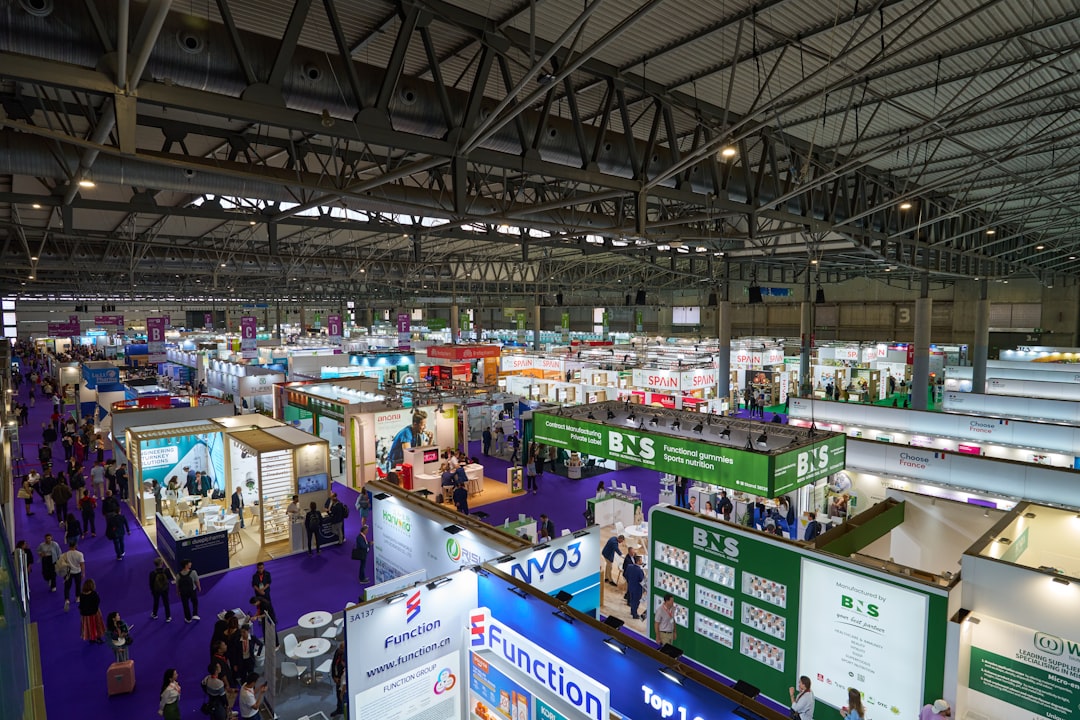
The Austrian commercial exhibition footprint concentrates at Messe Wien, with Reed Messe Salzburg, Messe Graz, and Design Center Linz as the principal regional alternatives. The market is structurally smaller than Germany or Italy by exhibitor floorspace, but the regional CEE audience reach gives Austrian fairs strategic value disproportionate to their size.
| Venue operator | Flagship fairs | Sector strength | Indicative space cost (EUR/sqm) |
|---|---|---|---|
| Messe Wien | ViennaContemporary, Wiener Immobilien Messe, Vienna Tec, Bauen & Energie | Contemporary art, real estate, regional industrial, building services | 260-460 |
| Reed Messe Salzburg | Schmuck (jewellery), Hohe Jagd, Alles fuer den Gast | Hunting, hospitality, regional B2B | 240-410 |
| Messe Graz | Steirischer Herbst exhibitions, regional industrial fairs | Styrian regional industry, automotive supply | 220-380 |
| Design Center Linz | OOE Wirtschaftsforum, regional Austrian B2B | Upper Austrian regional industry | 210-360 |
| Messe Klagenfurt | Klagenfurter Messe, Carinthian regional fairs | Carinthian regional consumer and industrial | 190-340 |
| Messe Innsbruck | FAFGA Hotel & Gastro, regional Tyrol fairs | Tyrolean hospitality and tourism | 220-380 |
Headline base rates above reflect tier-A in-hall positions for standard row stands on the 2026 published calendar. Corner positions add 8-12 percent, head-of-aisle 12-18 percent, and island positions 18-25 percent. The headline rates sit 10-18 percent below German tier-one equivalents while delivering substantially overlapping buyer audiences for CEE-targeted exhibitor strategies.
Austria at a glance: the country-specific exhibitor facts
| Fact category | Austria-specific reality |
|---|---|
| Top fairs by exhibitor spend | ViennaContemporary, Wiener Immobilien Messe, Alles fuer den Gast, FAFGA, Bauen & Energie |
| Top venues | Messe Wien, Reed Messe Salzburg, Messe Graz, Design Center Linz |
| Standard VAT rate | 20% (reduced 10% applicable to some hospitality categories) |
| Trade registry | Firmenbuch, maintained by local Handelsgerichte and federally indexed at firmenbuch.at |
| Industry association | Oesterreichischer Wirtschaftsbund and regional Chambers; AEMG for event-industry suppliers |
| On-site forwarders | Multiple accredited handlers; Schenker Austria, Cargo Partner, and Lagermax among the largest |
| Payment-term norm | Net 30 standard; venues require typically 30% deposit on space booking, balance 60 days before opening |
| Working language for build-up | German is the working norm; English fully workable at ViennaContemporary and internationally-positioned events |
| Working language for visitor engagement | German strongly preferred for Austrian and CEE-region audience capture; English fully workable at international flagships |
| Structural-calculation framework | Eurocodes (EN 1990 to EN 1999), signed by an Austrian-registered Ziviltechniker |
| Currency | EUR |
| Build-day cultural norm | German-precision discipline with accommodating execution; multiple-handler concession structure |
“Austria is the German-language exhibition market that operates with a little more flexibility than Germany itself. The venues are smaller, the per-sqm costs are lower, the on-site handling concessions are competitive, and the CEE-buyer reach you get from Vienna outperforms anything you can manufacture by stacking separate CEE-city fair presences. For German-experienced builders, Vienna is the easiest tier-one Germanic-language entry point.”, Common framing among Vienna-based regional exhibition managers
The CEE-gateway strategic positioning
The single most consequential strategic fact about the Austrian exhibition market is the CEE-gateway positioning. Vienna’s geographic centrality in Central Europe, combined with the city’s role as multinational CEE-regional headquarters and the historical Habsburg-era commercial ties retained in CEE banking, legal, and corporate networks, creates dense CEE-buyer audiences at Vienna fairs that would otherwise be distributed across multiple CEE city events.
For Western exhibitors targeting Hungary, Czechia, Slovakia, Slovenia, Croatia, and the broader Balkans, one Vienna fair often delivers regional CEE buyer coverage that would require three to five separate CEE fairs to match. The Austrian flagship calendar’s regional CEE attendance frequently runs 25-45 percent of total visitor numbers, a pattern not replicated at any Western European fair outside Vienna.
The implication for market-entry strategy is that Vienna can function as the single point of CEE-region buyer engagement, with subsequent CEE-city fair presences added selectively based on which CEE markets prove highest-value after the Vienna baseline. The alternative strategy, entering each CEE market via its own national fair, typically delivers narrower per-market buyer audiences at higher cumulative cost.
Messe Wien, Reed Messe Salzburg, and the Austrian flagship calendar
Austria’s flagship fairs are smaller-scale than the German or Italian equivalents but deliver high-quality buyer engagement, particularly for CEE-targeted exhibition activity:
- ViennaContemporary (Messe Wien, annually each September), Central Europe’s flagship contemporary art fair, anchoring Vienna’s role in regional art collecting.
- Wiener Immobilien Messe (Messe Wien, annually), Vienna real estate flagship.
- Power-Days (Messezentrum Salzburg, biennial), electrical industry trade fair with strong CEE-region attendance.
- Bauen & Energie Wien (Messe Wien, annually), building and energy industry flagship.
- Vienna Tec (Messe Wien, biennial), industrial technology and automation flagship.
- Alles fuer den Gast (Reed Messe Salzburg, annually), Austrian and Central European hospitality industry flagship.
- Hohe Jagd & Fischerei (Reed Messe Salzburg, annually), Central European hunting and fishing industry flagship.
- Schmuck Salzburg (Reed Messe Salzburg, annually), jewellery industry flagship.
- FAFGA Hotel & Gastro (Messe Innsbruck, annually), Tyrolean and Alpine hospitality industry flagship.
The current calendar is maintained at /fairs?country=austria. Verified stand builders with documented Austrian project history are at /builders?country=austria. The Vienna, Salzburg, Graz, and Linz city pages aggregate venue, builder, and logistics context at /cities/vienna, /cities/salzburg, /cities/graz, and /cities/linz.
The 20% VAT mechanics and Firmenbuch
The Austrian standard VAT rate (USt, Umsatzsteuer) is 20 percent, identical to the French TVA rate and lower than the German MwSt equivalent. The mechanics for foreign exhibitors mirror the broader EU framework: EU-resident exhibitors typically benefit from the reverse-charge mechanism on venue-supplied services, with the venue invoicing net of USt and the exhibitor accounting for VAT in its home country.
The mechanism breaks at the standard EU triggers, on-stand sales for Austrian fulfilment, payments collected in Austria, or direct contracting with Austrian suppliers without an EU VAT ID. Austrian VAT registration runs through Finanzamt Oesterreich, with appointment of a fiscal representative compulsory for non-EU exhibitors. Typical first-registration timelines run 3-6 weeks, faster than the German equivalent.
Recovery of unregistered Austrian VAT through the EU portal typically takes 5-9 months, broadly comparable to the Dutch and German timelines.
The Firmenbuch, the Austrian commercial registry, maintained by the local Handelsgerichte and federally indexed at firmenbuch.at, is the publicly-searchable equivalent of the German Handelsregister or UK Companies House. Every Austrian company carries a Firmenbuchnummer that appears on commercial invoices and contracts. For on-stand commercial contracts signed at Austrian fairs, the foreign exhibitor’s home-country registry equivalent is the standard evidence-of-existence requirement.
The German-language working culture in practice
Austrian build-day and venue-operations culture operates on German-language conventions throughout. Builder communications, venue technical-office exchanges, on-site handler interactions, and on-stand commercial conversations default to German unless the parties involved have agreed on English. For German-experienced builders and exhibitor teams, Austria operates familiarly; for non-German-speaking teams, the language barrier is the dominant operational consideration.
The cultural framing carries some Austrian distinctions from the German equivalent. Austrian business culture is somewhat more relationship-mediated than the German equivalent, closer to the Bavarian end of the German spectrum than the Hamburg or Berlin end, with conversation rhythms that allow more space for context-setting before commercial framing.
The implication for stand-staff briefing is to allow somewhat extended opening conversation windows before transitioning to product specification, while not extending to the full intellectual-framing length expected at French fairs.
“Austria is German-language operationally with Italian-influenced conversational rhythm. Stand staff briefed for the Munich model perform well in Vienna; stand staff briefed for the Hamburg model sometimes find Austrian conversations slower than they expect. The fix is to brief for the regional rhythm without abandoning the German-precision discipline on commercial close.”, Common observation among Vienna-based exhibition managers serving multinational clients
The Eurocodes structural framework, with Austrian stamping
The Eurocodes structural-calculation regime applies in Austria as in Germany, with the operational difference that stamping must be by an Austrian-registered Ziviltechniker (chartered engineer-architect).
The Ziviltechniker title is regulated by the Bundeskammer der Ziviltechniker, and the registration is country-specific, a German-registered Pruefingenieur cannot directly stamp Austrian venue submissions, though reciprocity arrangements exist for engineers with the relevant cross-border registration.
Submission deadlines mirror the German equivalent (typically six to eight weeks before build-up start). Late submission cost are broadly comparable, in the EUR 700-2,800 range for expediting fees. The structural-calculation requirement applies to the same thresholds as in Germany: any stand element above three metres, suspended rigging, double-deck construction, or closed ceiling above 30 square metres.
Common pitfalls for first-time exhibitors in Austria
- Treating Austria as a smaller version of Germany. The infrastructure conventions are similar but the conversational rhythm and CEE-buyer audience profile create different operational realities. Brief stand staff accordingly.
- Skipping the Ziviltechniker stamping step on the assumption that German Pruefingenieur stamping transfers. It does not without specific cross-border registration. Engage Austrian-registered engineers.
- Underestimating CEE-buyer audience density at Vienna fairs. Austrian fairs frequently see 25-45 percent CEE-region attendance; staff for CEE-language coverage where audiences justify.
- Treating Salzburg, Graz, and Linz as fully interchangeable regional Austrian venues. Each serves different regional industries and Austrian provincial audiences; sector-fit matters.
- Austrian VAT cash-flow planning errors. Refund recovery typically takes 5-9 months; broadly comparable to German and Dutch equivalents but with Austrian-specific documentation requirements.
- Assuming English-only is workable at non-flagship Austrian venues. German is the working norm at all venues; English is reliably workable only at ViennaContemporary and internationally-positioned events.
Worked example: first-time exhibitor budget at a Messe Wien flagship fair
A first-time international exhibitor booking 60 square metres at a Messe Wien flagship fair (such as Wiener Immobilien Messe) with a hybrid build, targeting both Austrian and CEE-region buyer audiences:
- Space rental, 60 sqm at EUR 340/sqm tier-A position: EUR 20,400
- AEMG marketing and Power-Days registration: EUR 750
- Hybrid build with bespoke graphics and demonstration zones: EUR 44,000
- Structural calculation by Austrian-registered Ziviltechniker: EUR 2,200
- Inbound freight (one truckload, EU origin): EUR 3,400
- Messe Wien on-site handling and storage: EUR 3,200
- On-stand electrics, water, connections: EUR 2,400
- On-stand catering for staff and visitor hospitality (four days): EUR 3,800
- Multilingual hostess and translation services (German plus Hungarian and Czech, four days): EUR 5,200
- Site supervisor (Messe Wien-experienced, four days): EUR 3,600
- Contingency at 8 percent: EUR 7,100
- Total all-in budget: approximately EUR 96,000 (excluding staff travel, accommodation, and pre-fair marketing)
The same hybrid build at the equivalent German venue (Messe Frankfurt or Hannover Messe) would typically run EUR 115,000-128,000 all-in, with comparable Western European buyer audience but materially smaller CEE-region attendance.
The market-entry decision framework for Austria
- Is your CEE-region strategy primary, with Western European buyer engagement secondary? → Vienna is the structurally efficient single point of CEE-region buyer audience. Plan 50-100 sqm hybrid build at Messe Wien with German-and-CEE-language staff briefing.
- Is your category Austrian-domestic-led (Austrian hospitality, real estate, regional industry)? → The relevant Austrian regional flagship is the right tier. Reed Messe Salzburg for hospitality and tourism; Messe Graz for Styrian industry; Design Center Linz for Upper Austrian industry.
- Is your category globally anchored at a Vienna flagship (ViennaContemporary for art collecting)? → Plan a 60-150 sqm hybrid build with 9-12 month lead time.
- Are you a German-market exhibitor adding Austria to an existing portfolio? → Austria slots in with familiar German-language operational discipline at materially lower absolute costs. The German hybrid build typically deploys to Vienna at 10-18 percent lower all-in cost.
- Have you exhibited at three or more Austrian fairs? → You are operating at calendar level. The hybrid build refreshed across the Austrian-and-CEE calendar becomes the right cost structure.
Find builders, fairs, and city context for Austria
- /builders?country=austria, verified stand builders with documented Austrian project history
- /fairs?country=austria, full calendar of Austrian fairs
- /cities/vienna, /cities/salzburg, /cities/graz, /cities/linz, city-level aggregations
Related reading
- Exhibiting in Germany, the German-language tier-one neighbour with overlapping conventions
- Exhibiting in Poland and CEE, the CEE region Austrian fairs gateway-serve
- Exhibiting in Switzerland, the German-Swiss neighbour with comparable precision conventions at higher absolute cost
- Exhibiting in Italy, the southern neighbour with which Austrian businesses share historical commercial ties
- Modular vs Custom Decision Framework, build-type framework underneath the Austrian hybrid recommendation
- Customs and ATA Carnet, EU customs picture for Austria-bound freight
References and primary sources
- Wirtschaftskammer Oesterreich (Austrian Federal Economic Chamber), wko.at
- Messe Wien Exhibitor Technical Guidelines 2026
- Reed Messe Salzburg Exhibitor Service Manual 2026
- Messe Graz venue technical documentation 2026
- Eurocodes EN 1990 to EN 1999, Austrian structural-design implementation
- Bundeskammer der Ziviltechniker, Austrian chartered engineer-architect registration
- Finanzamt Oesterreich, foreign-exhibitor VAT registration requirements
- Firmenbuch, Austrian commercial registry (publicly searchable at firmenbuch.at)
- ViennaContemporary, Power-Days, Alles fuer den Gast exhibitor statistics 2024-2026 editions
FAQFrequently asked questions
Three structural factors compound. First, Vienna sits within three hours by train or short flight from Budapest, Prague, Bratislava, and Ljubljana, making it a natural staging post for Western brands entering Central and Eastern European markets.
Second, Austrian business culture and language fluency span both Germanic Western Europe (shared language with Germany) and CEE markets (historical Habsburg-era commercial ties retained in the legal frameworks, banking systems, and corporate networks of Central European countries).
Third, Vienna remains the regional headquarters location for many multinational corporations operating CEE divisions, Erste Group, Raiffeisen Bank International, OMV, Wienerberger, and several others run their CEE operations from Vienna, creating dense buyer audiences at Messe Wien fairs that would otherwise be distributed across multiple CEE cities.
The pragmatic implication for Western exhibitors is that one Vienna fair often delivers regional CEE buyer coverage that would require three to five separate CEE fairs to match.
Messe Wien operates on broadly similar German-language conventions to the major German Messe venues, Eurocodes structural-calculation regime, Sachkundenachweis credentialing for trades, similar build-day discipline, and German as the working language.
The differences are scale and concession structure: Messe Wien is materially smaller than the German tier-one venues (roughly 70,000 square metres total exhibition space versus 350,000+ at Messe Frankfurt), the on-site handling concession is less restrictive than Schenker’s German monopoly at most venues, and headline per-sqm rates run 10-18 percent below German equivalents.
For German-experienced builders, Messe Wien delivery operates with familiar discipline at lower absolute cost. The technical-office relationship is somewhat more accommodating than the German equivalent, though still operationally rigorous.
For EU-resident exhibitors renting space only, the Austrian reverse-charge mechanism applies on venue services, so no Austrian VAT number is required for the booking itself. The threshold breaks on the standard EU triggers: on-stand sales for Austrian fulfilment, payments collected in Austria, or contracting directly with Austrian suppliers without an EU VAT ID.
The Austrian standard rate (USt, Umsatzsteuer) is 20 percent, identical to the French rate and lower than the German equivalent. Austrian VAT registration runs through Finanzamt Oesterreich, with appointment of a fiscal representative for non-EU exhibitors. Typical first-registration timelines run 3-6 weeks, faster than the German equivalent.
Recovery of unregistered Austrian VAT through the EU portal typically takes 5-9 months, broadly comparable to the Dutch and German timelines.
Firmenbuch is the Austrian commercial registry, functionally similar to the German Handelsregister but operationally distinct. The Firmenbuch is maintained by the local commercial courts (Handelsgerichte) and is publicly searchable online at firmenbuch.at. Every Austrian company carries a Firmenbuchnummer that appears on commercial invoices and corporate communications.
Austrian counterparties verify foreign exhibitor entities against their home-country equivalent registry; for on-stand commercial contracts signed at Austrian fairs, the foreign exhibitor’s home-country registry equivalent is the standard evidence-of-existence requirement. The Firmenbuch operates on broadly the same convention framework as Handelsregister but is a separate national system.
Austria has fewer globally-anchored flagships than Germany, France, or Italy, but several Austrian fairs serve as regional anchors for CEE-targeted exhibition activity. ViennaContemporary anchors Central European contemporary art collecting. Wiener Immobilien Messe is the Vienna real estate flagship. Vienna Tec serves the regional industrial calendar. Vinova Vienna is the wine industry’s regional event.
Reed Messe Salzburg hosts SuisseEMEX Austria when rotating, Austrian regional B2B fairs, and Mozartfest-adjacent cultural events. Messe Graz serves Styria and southeastern Austrian regional industry. The Austrian flagship calendar is generally smaller-scale than the German equivalent but delivers high-quality buyer engagement particularly when CEE-region buyer audiences are the target.
Austrian build-day discipline mirrors German conventions in substance with slightly more accommodating execution. Messe Wien, Reed Messe Salzburg, and Messe Graz operate published time-slot allocations, accredited-contractor lists, and on-site safety officer enforcement at standards comparable to the German Messe equivalents.
The Eurocodes structural-calculation regime applies, with stamping required by an Austrian-registered Ziviltechniker (chartered engineer). On-site handling concessions are less restrictive than at most German venues, with multiple accredited handlers operating concurrently.
The cultural framing is precision with practical accommodation, the German-language working culture without the absolute rigidity of the largest German Messe venues. For German-experienced builders, Austrian delivery operates familiarly; for non-German-speaking builders, the language barrier is the dominant operational consideration.