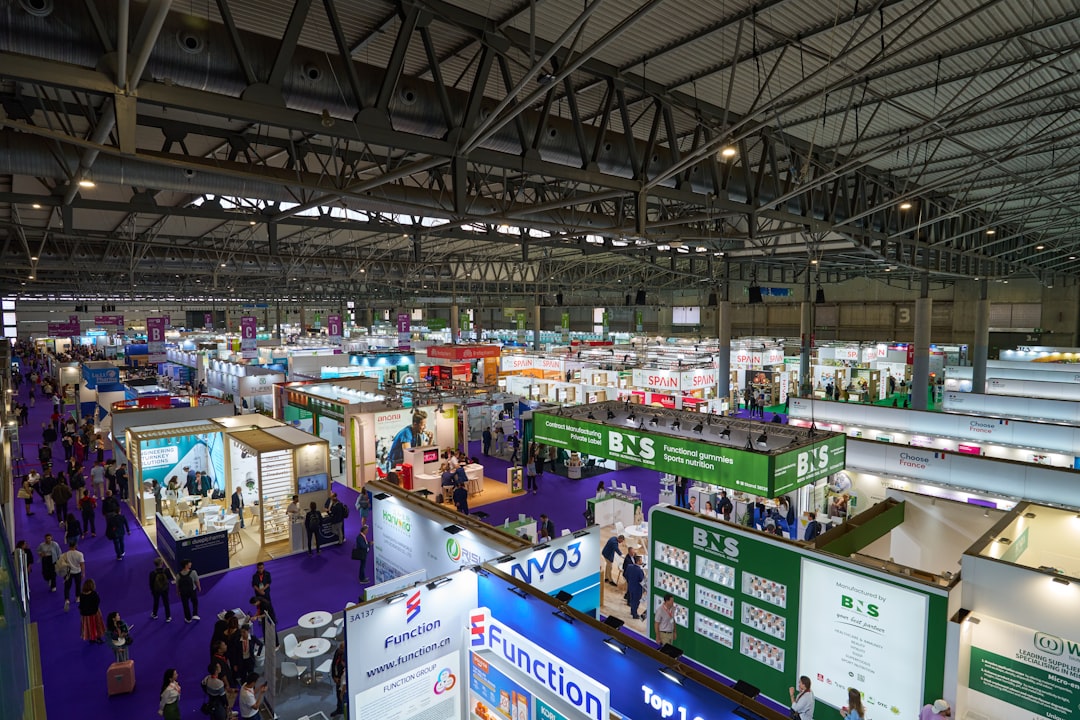
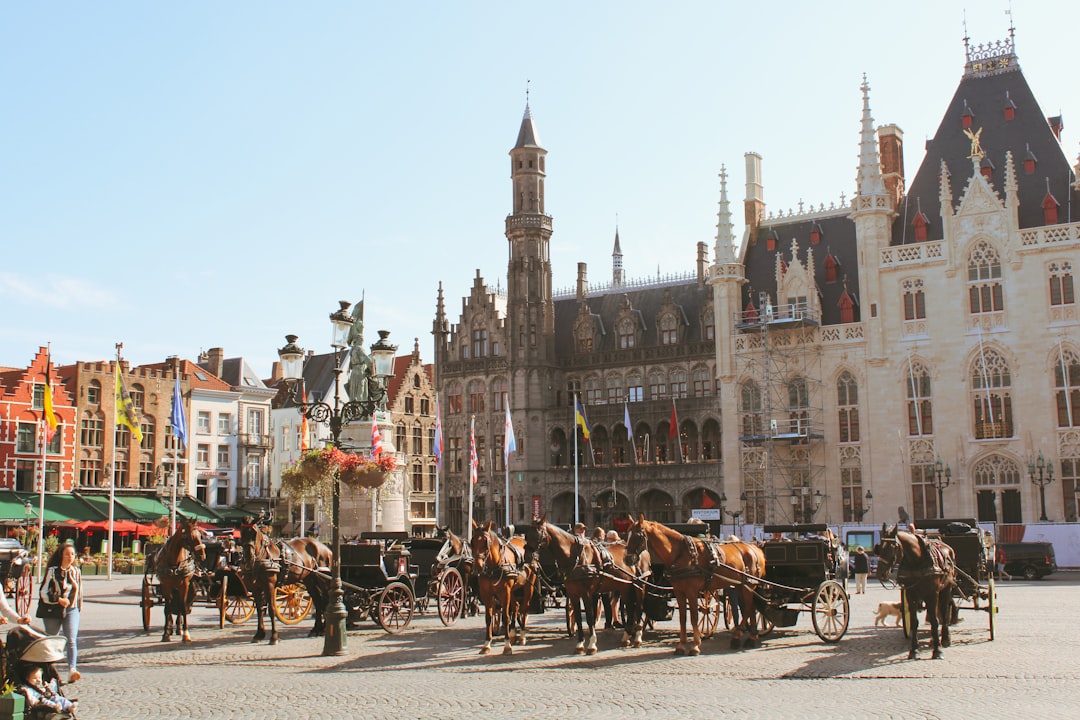
Belgium punches above its weight as a European exhibition destination.
The country combines the institutional gravity of Brussels (EU institutions, NATO, lobbying ecosystem), the industrial depth of Flanders (manufacturing, chemicals, life sciences), the cross-border accessibility of its central European location, and a venue infrastructure that delivers tier-one technical capability at price points moderately below comparable German and Dutch venues.
For exhibitors targeting EU policy-adjacent audiences or pan-European industrial buyers, Belgium offers a venue mix that few neighbouring countries match.
This article unpacks what exhibiting in Belgium actually costs at major Belgian trade fairs in 2026, the venue-by-venue cost differentials, the language and operational considerations specific to a country with three official languages, and the practical guidance experienced exhibitors apply to Belgian fairs. The figures draw on observed quotes at Brussels Expo, Flanders Expo Ghent, Antwerp Expo, Kortrijk Xpo, and Tour & Taxis through 2025 contracts and early 2026 commitments.
Why Belgium matters as an exhibition destination
Three structural advantages position Belgium in the European exhibition landscape.
The first is institutional gravity. Brussels hosts the European Commission, European Parliament, European Council, NATO headquarters, and the dense network of trade associations, lobbying organisations, embassies, and policy-research institutions that surrounds them. Industries where EU regulatory engagement is commercial-critical (life sciences, food, energy, defence, transport, financial services) find concentrated decision-maker access in Brussels that no other European city matches.
The second is industrial depth. Belgium’s manufacturing sectors, chemicals, pharmaceuticals, machinery, automotive components, food processing, textiles, have produced a thick industrial base that supports both supply-side and demand-side trade fair activity. Flemish manufacturing in particular maintains export-led commercial activity that drives fair participation.
The third is geographic centrality and accessibility. Belgium sits within four-hour rail or drive distance of major European population centres (Amsterdam, Paris, London via Eurostar, Cologne, Düsseldorf). The accessibility supports visitor attendance from multiple European markets at a single venue.
“We rebooked Brussels Expo annually from 2020 onward because the audience concentration around EU institutional decision-making is genuinely unique. A stand at Brussels reaches buyers and influencers we cannot economically reach through any other single European fair.”, Common framing among AUMA member exhibitors operating in EU-regulated sectors, 2024
Major Belgian venues and their cost profiles
Belgium operates four substantive trade fair venues serving the major B2B and consumer exhibition calendar.
Brussels Expo
The largest Belgian venue, hosting major fairs across multiple sectors and the venues most directly tied to EU institutional gravity. Twelve halls totalling approximately 115,000 sqm.
| Cost category | 2026 figure |
|---|---|
| Space rental per sqm | EUR 280-520 (varies by fair tier) |
| Standard 100 sqm stand all-in (mid-tier) | EUR 95,000-165,000 |
| Premium 100 sqm stand all-in | EUR 165,000-265,000 |
| Hidden-cost variance | 14-20% above headline |
| Typical major fairs | Seafood Expo Global (until 2024), Realty Belgium, Brussels International Travel Fair, sector-specific industry fairs |
Flanders Expo (Ghent)
Mid-sized venue serving primarily Flanders-region B2B and consumer fairs. Approximately 50,000 sqm of exhibition space across multiple halls.
| Cost category | 2026 figure |
|---|---|
| Space rental per sqm | EUR 240-420 |
| Standard 100 sqm stand all-in (mid-tier) | EUR 75,000-130,000 |
| Premium 100 sqm stand all-in | EUR 130,000-205,000 |
| Hidden-cost variance | 12-18% above headline |
| Typical major fairs | Flanders Technology, Bis-Bois, regional consumer and B2B fairs |
Antwerp Expo
Smaller specialist venue serving primarily diamond, jewellery, and selected industrial sectors leveraging Antwerp’s specialised commercial heritage. Approximately 18,000 sqm of exhibition space.
| Cost category | 2026 figure |
|---|---|
| Space rental per sqm | EUR 320-580 |
| Standard 100 sqm stand all-in (mid-tier) | EUR 85,000-145,000 |
| Premium 100 sqm stand all-in | EUR 145,000-225,000 |
| Hidden-cost variance | 12-18% above headline |
| Typical major fairs | Antwerp Diamond Days, selected industrial fairs |
Kortrijk Xpo
Specialised venue serving particularly the design, interior, and textile sectors with a strong cross-border position serving northern France as well as Flanders. Approximately 28,000 sqm of exhibition space.
| Cost category | 2026 figure |
|---|---|
| Space rental per sqm | EUR 220-380 |
| Standard 100 sqm stand all-in (mid-tier) | EUR 70,000-120,000 |
| Premium 100 sqm stand all-in | EUR 120,000-185,000 |
| Hidden-cost variance | 12-16% above headline |
| Typical major fairs | Biennale Interieur, Indextiles, regional design and textile fairs |
Brussels Expo as Belgium’s flagship venue
Brussels Expo carries the highest international profile among Belgian venues and the most diverse exhibition calendar. The venue operates through clear technical guidelines, comprehensive exhibitor services, and a service-design approach that European exhibitors rate moderately strong relative to peer venues.
Notable operational characteristics:
- Tri-lingual operational environment (French, Dutch, English) with comprehensive English-language support for international exhibitors
- Strong EU-institutional adjacency creating distinctive audience composition
- Comprehensive technical infrastructure across power, internet, AV, rigging
- Approved-supplier catering with reputable network
- Moderate enforcement of accessibility provisions per European Accessibility Act
- Pre-fair plan-approval review process with documented criteria
- Moderate venue surcharge variance at 14-20% above headline quote
Brussels Expo serves both pan-European fairs requiring institutional adjacency and Belgium-specific commercial fairs serving the Belgian market. The audience mix varies substantially by fair.
Language considerations on Belgian stands
Belgium operates with three official languages, Dutch (in Flanders), French (in Wallonia and Brussels), and German (in the small eastern community). English is the dominant business language across both Flemish and Walloon commercial contexts and is universally spoken at trade fair settings.
Practical language guidance for exhibitor stands:
- English is sufficient as primary language for international exhibitors at Belgian fairs
- Bilingual signage in Dutch and French shows commercial sensitivity at Brussels venues
- Flemish-region fairs (Ghent, Antwerp, Kortrijk) favour Dutch-and-English signage
- Walloon-region fairs favour French-and-English signage
- Staff language capability ideally includes English plus either Dutch or French depending on venue region
- Printed materials in English and one Belgian language (matched to venue) typically meet visitor expectations
The language sensitivity matters more at Belgian-specific commercial fairs than at pan-European fairs hosted in Belgium. Pan-European fairs operate predominantly in English regardless of Belgian venue location.
“We staff our Brussels Expo stand with English-French-Dutch capability and our Flanders Expo stand with English-Dutch capability. The language sensitivity reads to Belgian visitors as commercial respect and to international visitors as global capability. The differential staffing cost is modest.”, Common framing among IFES corporate-member exhibitors operating in Belgium, 2024
Belgian regulatory and operational considerations
Three Belgium-specific regulatory and operational considerations affect exhibitor planning.
The first is music licensing through SABAM. Stands playing music must be licensed through SABAM (Société d’Auteurs Belges - Belgische Auteurs Maatschappij). Per-fair licensing fees vary by stand size and music usage; typically EUR 280-1,400 per fair.
The second is workplace safety enforcement. Belgium operates federal workplace safety frameworks with moderate enforcement. Stand build and dismantle activities are subject to inspection. Builder compliance certification typically suffices for documentation but exhibitors should verify.
The third is EU-institutional access constraints during specific periods. Brussels venues experience hotel capacity constraints and elevated pricing during major EU Council meetings, NATO summits, and similar events. Coordinating fair timing with the EU institutional calendar where possible reduces accommodation costs substantially.
Per-fair budget planning at Belgian venues
The table below summarises typical per-fair budget allocations for a 100 sqm mid-tier hybrid stand at major Belgian venues.
| Cost category | Brussels Expo EUR | Flanders Expo EUR | Antwerp Expo EUR | Kortrijk Xpo EUR |
|---|---|---|---|---|
| Space rental | 38,000 | 30,000 | 42,000 | 28,000 |
| Stand build (mid-tier hybrid) | 65,000 | 65,000 | 65,000 | 65,000 |
| Lighting | 14,000 | 14,000 | 14,000 | 14,000 |
| AV | 22,000 | 18,000 | 18,000 | 16,000 |
| Meeting rooms (2 enclosed) | 24,000 | 22,000 | 22,000 | 20,000 |
| Hospitality (café-lounge) | 9,500 | 8,500 | 8,500 | 7,800 |
| Transport (within EU) | 4,800 | 4,200 | 4,200 | 3,800 |
| Install and dismantle | 14,000 | 12,000 | 12,000 | 11,000 |
| Accessibility | 5,800 | 5,400 | 5,400 | 4,800 |
| Project management | 14,000 | 12,000 | 12,000 | 10,500 |
| Insurance | 2,400 | 2,200 | 2,200 | 2,000 |
| Music licensing (SABAM) | 680 | 580 | 580 | 480 |
| Hidden cost contingency (16%) | 33,000 | 29,000 | 32,000 | 28,000 |
| Total per fair | 247,180 | 222,880 | 237,880 | 211,380 |
The cost differential between Brussels Expo and Kortrijk Xpo runs roughly 17% for equivalent stand specification, driven primarily by space rental rate differential. The differential reflects the institutional-adjacency premium at Brussels.
Worked example: pharmaceutical exhibitor at Brussels Expo
A pharmaceutical company exhibits at a Brussels-hosted EU regulatory affairs fair on a 150 sqm island stand. Mid-tier hybrid execution with substantial meeting capacity for ABM-aligned executive briefings.
- Space rental at EUR 420/sqm (premium hall position): EUR 63,000
- Stand build (mid-tier hybrid with bespoke surface treatments): EUR 92,000
- Lighting (38 fixtures CRI 90+ with scene programming): EUR 22,000
- AV (hero LED wall 8 sqm, 4 touchscreens, premium meeting room video conferencing): EUR 48,000
- Meeting rooms (3 enclosed for executive briefings): EUR 48,000
- Hospitality (premium café-lounge with curated catering): EUR 22,000
- Transport (from Frankfurt-area facility): EUR 5,800
- Install and dismantle: EUR 22,000
- Accessibility (inclusive-design execution): EUR 22,000
- Project management and on-stand orchestration: EUR 22,000
- Insurance (premium tier with pharmaceutical product coverage): EUR 8,500
- SABAM music licensing: EUR 880
- Trilingual signage and materials production: EUR 6,800
- Hidden cost contingency at 17%: EUR 65,000
- Total: EUR 447,980 for the fair
The figure represents approximately EUR 2,987 per sqm, consistent with mid-tier hybrid execution at Brussels Expo for a high-specification commercial program targeting EU institutional audience.
Tooling at Exhibition Stands EU
The /rfq workflow includes Belgian venue selection as a filter. The /calculator includes Belgian venue cost differentials. The /builders directory lists Belgian builders alongside European builders capable of Belgian fair delivery.
Related reading
- Exhibiting in Belgium: Brussels Multilingual EU
- Stand Design Cost Breakdown
- Accessibility and Inclusive Design
- Shipping Timelines and Deadlines
- Insurance and Liability
- Find a Builder
References and primary sources
- AUMA exhibitor cost benchmarks (2024-2026 edition), auma.de
- FAMAB Verband Direkte Wirtschaftskommunikation member best-practice exchanges
- IFES (International Federation of Exhibition and Event Services) member working group papers
- Brussels Expo Exhibitor Manual 2026
- Flanders Expo Exhibitor Manual 2026
- SABAM music licensing rate documentation
- Belgian Federal Public Service for Employment workplace safety guidance
- UFI Global Visitor Insights Report 2024, ufi.org
FAQFrequently asked questions
Three structural advantages position Belgium.
First, institutional gravity: Brussels hosts the European Commission, European Parliament, European Council, NATO headquarters, and dense network of trade associations, lobbying organisations, embassies, and policy-research institutions; industries where EU regulatory engagement is commercial-critical (life sciences, food, energy, defence, transport, financial services) find concentrated decision-maker access no other European city matches.
Second, industrial depth: Belgium’s manufacturing sectors, chemicals, pharmaceuticals, machinery, automotive components, food processing, textiles, produce thick industrial base supporting both supply-side and demand-side trade fair activity.
Third, geographic centrality and accessibility: Belgium sits within four-hour rail or drive distance of major European population centres (Amsterdam, Paris, London via Eurostar, Cologne, Düsseldorf), supporting visitor attendance from multiple European markets at a single venue.
Brussels Expo (largest, 115,000 sqm, 12 halls): space rental EUR 280-520 per sqm, standard 100 sqm stand all-in EUR 95,000-165,000 mid-tier, hidden-cost variance 14-20%. Flanders Expo Ghent (50,000 sqm, mid-sized): EUR 240-420 per sqm, 100 sqm stand EUR 75,000-130,000 mid-tier, hidden-cost variance 12-18%.
Antwerp Expo (18,000 sqm, specialist for diamond/jewellery): EUR 320-580 per sqm reflecting specialised commercial heritage, 100 sqm stand EUR 85,000-145,000 mid-tier. Kortrijk Xpo (28,000 sqm, design/interior/textile specialist with cross-border French audience): EUR 220-380 per sqm, 100 sqm stand EUR 70,000-120,000 mid-tier, hidden-cost variance 12-16%.
Cost differential between Brussels Expo and Kortrijk Xpo runs roughly 17% for equivalent specification, driven by institutional-adjacency premium at Brussels.
Belgium operates with three official languages: Dutch (Flanders), French (Wallonia and Brussels), German (small eastern community). English is the dominant business language across Flemish and Walloon commercial contexts and universally spoken at trade fairs.
Practical guidance: English is sufficient as primary language for international exhibitors at Belgian fairs; bilingual signage in Dutch and French shows commercial sensitivity at Brussels venues; Flemish-region fairs (Ghent, Antwerp, Kortrijk) favour Dutch-and-English signage; Walloon-region fairs favour French-and-English signage; staff language capability ideally includes English plus either Dutch or French depending on venue region; printed materials in English and one Belgian language (matched to venue) typically meet visitor expectations.
Language sensitivity matters more at Belgian-specific commercial fairs than at pan-European fairs hosted in Belgium where English dominates.
Three considerations. First, music licensing through SABAM (Société d’Auteurs Belges - Belgische Auteurs Maatschappij): stands playing music must be licensed; per-fair licensing fees vary by stand size and music usage, typically EUR 280-1,400 per fair.
Second, workplace safety enforcement: Belgium operates federal workplace safety frameworks with moderate enforcement; stand build and dismantle activities subject to inspection; builder compliance certification typically suffices for documentation but exhibitors should verify.
Third, EU-institutional access constraints during specific periods: Brussels venues experience hotel capacity constraints and elevated pricing during major EU Council meetings, NATO summits, and similar events; coordinating fair timing with the EU institutional calendar where possible reduces accommodation costs substantially.
Brussels Expo enforces accessibility provisions per European Accessibility Act with moderate intensity.
Take a pharmaceutical company at an EU regulatory affairs fair on a 150 sqm island stand with mid-tier hybrid execution. The budget totals EUR 447,980 at EUR 2,987 per sqm, built up from the following line items:
- Space rental at EUR 420/sqm premium hall position (EUR 63,000)
- Stand build mid-tier hybrid with bespoke surface treatments (EUR 92,000)
- Lighting 38 fixtures CRI 90+ with scene programming (EUR 22,000)
- AV including hero 8 sqm LED wall and 4 touchscreens and premium meeting room video conferencing (EUR 48,000)
- 3 enclosed meeting rooms for executive briefings (EUR 48,000)
- Premium café-lounge hospitality with curated catering (EUR 22,000)
- Transport from Frankfurt-area facility (EUR 5,800)
- Install and dismantle (EUR 22,000)
- Inclusive-design accessibility (EUR 22,000)
- Project management and on-stand orchestration (EUR 22,000)
- Premium-tier insurance with pharmaceutical product coverage (EUR 8,500)
- SABAM music licensing (EUR 880)
- Trilingual signage and materials production (EUR 6,800)
- Hidden cost contingency at 17% (EUR 65,000)
Brussels Expo sits in the mid-to-upper tier of European venue exhibitor experience and cost.
Strengths: comprehensive technical infrastructure across power internet AV rigging, tri-lingual operational environment with comprehensive English-language support, strong EU-institutional adjacency creating distinctive audience composition, approved-supplier catering with reputable network, pre-fair plan-approval review with documented criteria.
Moderate dimensions: enforcement intensity on accessibility provisions per European Accessibility Act sits at moderate level relative to Messe Frankfurt or RAI Amsterdam strict enforcement; hidden-cost variance 14-20% above headline runs slightly higher than RAI Amsterdam (12-18%) but lower than Fiera Milano (16-24%) or ExCeL London (18-28%); year-round relationship dimension scored moderate rather than strong in IFES exhibitor reporting.
Per-sqm cost moderately below comparable German and Dutch tier-one venues. Best fit for exhibitors targeting EU policy-adjacent audiences or pan-European industrial buyers requiring central European venue.