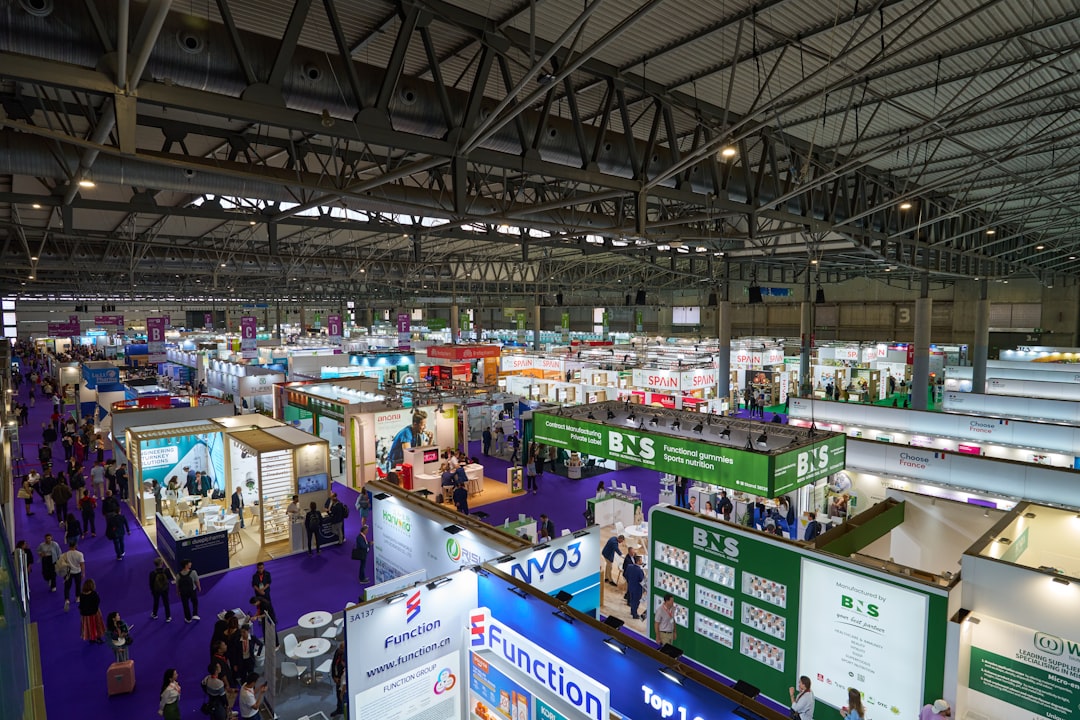
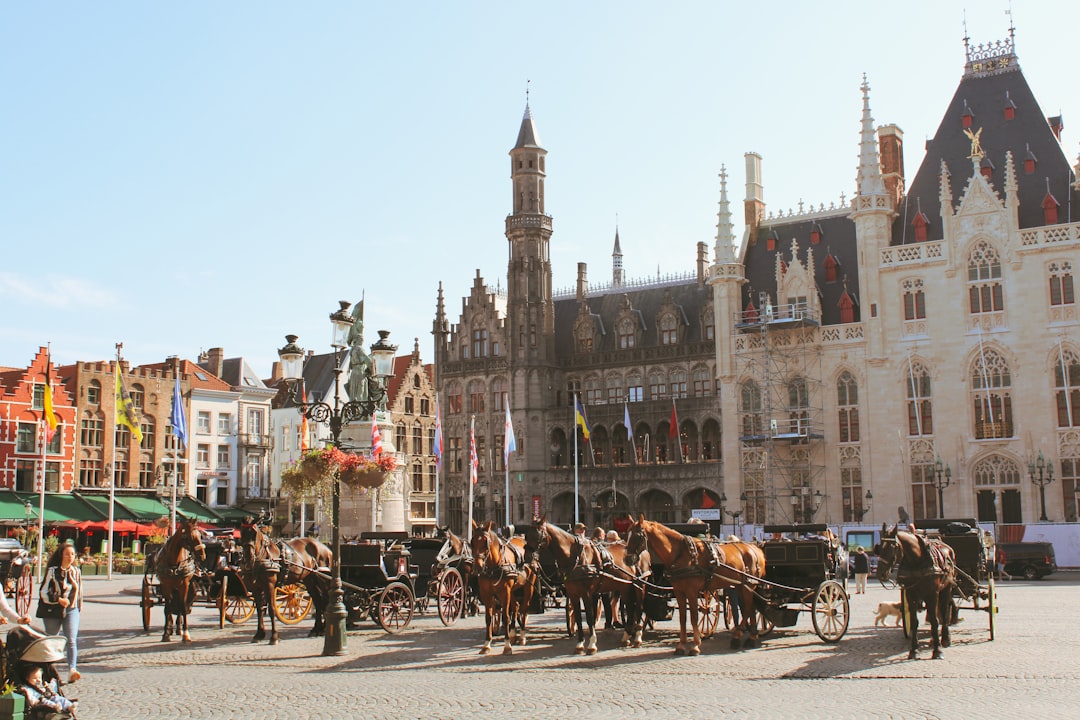
A trade fair in Brussels is rarely just a trade fair. EU institutions, NATO, national permanent representations and industry associations all sit within reach. Around them is a dense network of policy-influencing organisations. Together they create an audience composition no other European city offers.
Some exhibitors have a commercial position shaped by EU regulation, EU procurement or pan-European policy decisions. For them, a Brussels presence offers strategic value that pure visitor-count metrics never capture.
This article unpacks five things. How experienced European exhibitors structure a Brussels presence in 2026 to extract maximum EU-institutional value. What the audience at Brussels fairs actually looks like. Which stand design and programming choices reach that institutional audience. Which supplementary activities pair productively with the fair presence. And what the budget profile for an institutional-engagement strategy looks like. The figures and patterns draw on observed practice through 2025.
Why EU-institutional access creates distinct fair value
Three structural factors make Brussels exhibition presence commercially distinct from comparable presence elsewhere.
The first is decision-maker concentration. Brussels hosts roughly 32,000 EU institutional staff and 1,500 accredited journalists. Add 30,000+ registered lobbyists and the staff of approximately 200 national permanent representations and trade associations. The cumulative concentration of policy-shaping decision-makers in a single European city has no equivalent.
The second is regulatory-cycle adjacency. EU regulation moves on multi-year cycles with consultation periods, legislative drafting, trilogue negotiations, and implementation phases. Stand presence at policy-adjacent Brussels fairs allows engagement during specific regulatory-cycle phases when commercial influence opportunities are greatest. The cycle-aware exhibitor extracts substantially more value than the cycle-unaware exhibitor.
The third is informal-relationship infrastructure. A thick one surrounds the formal institutions: restaurants, cafés, association offices and members-club venues. It supports off-stand engagement that complements what happens on the stand. Brussels fairs frequently serve as anchors for a surrounding programme of dinners, briefings and bilateral meetings. That programme is where the substantive value of the fair week.
“We think of our annual Brussels presence as a programme rather than a fair. The stand is one element within a week of policy engagements that the fair week creates the opportunity to organise. Pure stand metrics undercount the value of the Brussels presence by a factor of three to five.” Common framing among AUMA member exhibitors operating in EU-regulated sectors, 2024
Brussels exhibition audience composition
The audience composition at Brussels fairs varies substantially by fair type. Three categories of Brussels-hosted fair attract distinctly different institutional audiences.
The first is EU-sector-policy fairs. These are fairs built around sectors with active EU regulation: food safety, life sciences, energy, transport and defence. They draw substantial attendance from Commission staff, MEPs and political staff, associations, and national permanent representations.
The second is industry-vertical fairs hosted in Brussels for venue-convenience reasons. Some B2B fairs land at Brussels Expo purely for geographic convenience. These draw mainly commercial audiences, with limited institutional crossover.
The third is association-organised events. EU-level industry associations such as CEFIC, EFPIA and BusinessEurope run their own annual congresses and exhibitions. These attract heavy institutional attendance, because the associations themselves coordinate institutional engagement.
| Fair category | Typical institutional attendance | Best fit for |
|---|---|---|
| EU-sector-policy fairs | Heavy Commission, MEP, association | Regulated-sector exhibitors |
| Vertical fairs at Brussels Expo | Light institutional, primary commercial | General B2B exhibitors |
| Association-organised events | Heavy institutional, strong cross-sector | Sector-association members |
Stand design choices that reach institutional audiences
Stands designed for institutional audience engagement differ from generalist Brussels stand design in three measurable ways.
The first is meeting capacity for senior-level conversations. Institutional audiences (Commission officials, MEPs, ambassadors, association directors) expect substantive 30-45 minute meetings, frequently with multiple participants. Stand meeting capacity must accommodate this conversation pattern. Stands attempting institutional engagement with only stand-floor meeting tables consistently underdeliver.
The second is content positioning for policy-relevant narrative. Stand content that presents commercial offering without acknowledging EU regulatory context reads to institutional audiences as commercially unsophisticated. Content that positions the company within current regulatory-policy debates reads as serious institutional participant.
The third is hospitality for relationship-extending engagement. Institutional audiences operate substantial relationship infrastructure outside formal meetings. Stand hospitality supports informal extended engagement: lounge seating, a coffee bar, light catering. That setup often produces the meaningful conversations that formal meetings cannot.
Supplementary engagement: the off-stand programme
Brussels exhibition presence works best when paired with structured off-stand engagement during the fair week.
Three off-stand engagement patterns reliably amplify Brussels fair value.
The first is the policy briefing event. This is a 90-minute briefing at an external venue during fair week. The audience is curated: Commission staff, association staff and journalists. The topic is one specific regulatory question the exhibitor holds a commercial position on. Typical cost: EUR 8,500-28,000 per event including venue, catering, content development, and audience curation labour.
The second is the institutional bilateral meeting series. These are pre-scheduled bilateral meetings with specific institutional contacts during fair week. They put the Brussels visit to work beyond stand presence. Typical cost: primarily executive time investment.
The third is the association-event participation. Sponsorship or participation in EU industry association events during the fair week extends the engagement beyond the exhibitor’s own activities. Typical cost: EUR 4,800-22,000 per event depending on sponsorship tier.
The combined off-stand programme often costs 30-80% of the stand budget itself. Yet it typically extracts 2-4x the institutional-engagement value of stand alone.
“We structure every Brussels fair week as a programme: stand presence Monday-Thursday, breakfast policy briefing Tuesday morning, dinner with key Commission contacts Wednesday evening, association reception Thursday afternoon. The fair is the anchor; the week is the deliverable. Brussels works this way; no other European venue does.” Common framing among IFES corporate-member exhibitors operating policy-engagement programmes, 2024
Brussels-specific operational considerations
Three Brussels-specific operational considerations affect institutional-engagement exhibitor planning.
The first is hotel and accommodation capacity. Brussels experiences capacity constraints during major EU institutional events (Council meetings, parliament plenary weeks). Booking accommodation 10-14 weeks in advance secures availability; later booking faces premium pricing and capacity unavailability.
The second is language operations. Most institutional audiences work in English at trade fairs. French capability is appreciated, and Dutch capability shows commercial respect at Belgian-context fairs. Staffing should include English plus at least one additional Belgian language.
The third is timing coordination with EU institutional calendar. Major EU Council meetings, parliament plenary weeks, and Commission college meetings affect institutional staff availability. Coordinating fair timing or off-stand programme timing around these events affects audience access.
Budget profile for institutional-engagement Brussels presence
The table below summarises typical budget allocation for a 100 sqm Brussels Expo stand with institutional-engagement programming.
| Cost category | Per-fair EUR |
|---|---|
| Stand build and venue (mid-tier hybrid execution) | 145,000 |
| Off-stand policy briefing event | 18,000 |
| Pre-scheduled bilateral meeting coordination | 8,500 |
| Association event sponsorship | 12,000 |
| Curated dinner with institutional contacts | 14,000 |
| Bilingual stand content production (English + French) | 8,500 |
| Senior staff and executive travel | 32,000 |
| Hospitality and accommodation | 28,000 |
| Pre-fair institutional outreach campaign | 12,000 |
| Post-fair institutional follow-up | 8,500 |
| Total | 286,500 |
The cost structure differs substantially from generalist stand budgeting. The off-stand programme represents roughly 30% of total fair-week investment; senior-staff time represents another 12%. The stand itself represents roughly 50% of total programme cost.
The investment delivers institutional-engagement value that conventional fair ROI metrics undercount. Policy-relevant relationships built at Brussels fair weeks typically pay out over multi-year cycles, aligned with EU regulatory cycles. Those attribution windows run substantially longer than typical fair ROI tracking allows for.
Worked example: chemicals exhibitor at Brussels-hosted EU sector fair
A chemicals company exhibits at an EU-sector fair at Brussels Expo with active engagement on revised CLP regulation. 120 sqm stand with full institutional-engagement programming.
- Space rental at EUR 380/sqm: EUR 45,600
- Stand build (mid-tier hybrid with substantial meeting capacity): EUR 92,000
- Lighting and AV: EUR 38,000
- Meeting rooms (3 enclosed, configured for 6-person discussions): EUR 38,000
- Hospitality (premium café-lounge): EUR 14,000
- Transport, install, dismantle: EUR 18,000
- Stand operations (accessibility, PM, insurance, SABAM, miscellaneous): EUR 38,000
- Bilingual stand content production: EUR 12,000
- Off-stand policy briefing event (CLP regulation panel): EUR 22,000
- Bilateral meeting coordination (12 institutional meetings): EUR 12,000
- Dinner with permanent representations: EUR 18,000
- Association co-sponsorship (CEFIC member event): EUR 14,000
- Senior staff and executive travel (12 people across week): EUR 42,000
- Hidden-cost contingency at 17%: EUR 67,000
- Total: EUR 470,600 for the fair-week programme
The stand portion represents roughly EUR 280,000 of the total. The off-stand programme represents EUR 108,000. Staff and travel represent EUR 42,000. The structure reflects the institutional-engagement programming around the stand rather than the stand standing alone.
The programme delivered approximately 47 institutional contacts across the week. It also produced 18 substantive policy conversations and 8 follow-up meeting commitments. Engagement with the CLP regulation process then continued across the subsequent 18 months. The conventional fair-ROI calculation captures perhaps 15-25% of the actual commercial value.
Tooling at Exhibition Stands EU
The /rfq workflow includes Brussels institutional-engagement scope as an optional add-on. The /calculator can model off-stand programme cost alongside stand cost. The /builders directory lists builders capable of Brussels-specific stand delivery.
Related reading
- Exhibiting in Belgium 2026 Cost Guide
- Stand Design Cost Breakdown
- Account-Based Marketing at European Trade Fairs
- Press and Media Relations
- Meeting Rooms and Hospitality Zones
- Find a Builder
References and primary sources
- AUMA exhibitor cost benchmarks (2024-2026 edition), auma.de
- FAMAB Verband Direkte Wirtschaftskommunikation member best-practice exchanges
- IFES (International Federation of Exhibition and Event Services) member working group papers
- Brussels Expo Exhibitor Manual 2026
- European Commission Transparency Register, ec.europa.eu/transparencyregister
- CEFIC (European Chemical Industry Council) member event documentation
- BusinessEurope event documentation
- Edelman EU Affairs Trust Barometer 2024
FAQFrequently asked questions
Three structural factors. First, decision-maker concentration: Brussels hosts roughly 32,000 EU institutional staff, 1,500 accredited journalists, 30,000+ registered lobbyists, and staff of approximately 200 national permanent representations and trade associations, cumulative concentration of policy-shaping decision-makers in a single European city has no equivalent.
Second, regulatory-cycle adjacency: EU regulation moves on multi-year cycles with consultation periods, legislative drafting, trilogue negotiations, implementation phases; stand presence at policy-adjacent Brussels fairs allows engagement during specific regulatory-cycle phases when commercial influence opportunities are greatest.
Third, informal-relationship infrastructure: Brussels operates thick informal-relationship infrastructure (restaurants, cafés, association offices, members-club venues) supporting off-stand engagement complementing on-stand activity; fairs frequently serve as anchors for surrounding programmes of dinners, briefings, bilateral meetings.
Three categories. EU-sector-policy fairs (explicitly focused on sectors with active EU regulation like food safety, life sciences, energy, transport, defence): attract substantial Commission staff, MEP and political staff, association staff, and national permanent representation attendance.
Industry-vertical fairs hosted at Brussels Expo for venue-convenience reasons (B2B verticals happening to be hosted at Brussels Expo because of geographic convenience): attract primarily commercial audiences with limited institutional crossover.
Association-organised events (annual congresses and exhibitions organised by EU-level industry associations like CEFIC, EFPIA, BusinessEurope): attract heavy institutional attendance because associations themselves coordinate institutional engagement.
Best-fit audience: regulated-sector exhibitors for EU-sector-policy fairs, general B2B exhibitors for vertical fairs at Brussels Expo, sector-association members for association-organised events.
Three measurable differences from generalist Brussels stand design.
First, meeting capacity for senior-level conversations: institutional audiences (Commission officials, MEPs, ambassadors, association directors) expect substantive 30-45 minute meetings frequently with multiple participants; stand meeting capacity must accommodate this conversation pattern; stands attempting institutional engagement with only stand-floor meeting tables consistently underdeliver.
Second, content positioning for policy-relevant narrative: stand content presenting commercial offering without acknowledging EU regulatory context reads as commercially unsophisticated; content positioning the company within current regulatory-policy debates reads as serious institutional participant.
Third, hospitality for relationship-extending engagement: institutional audiences operate substantial relationship infrastructure outside formal meetings; stand hospitality supporting informal extended engagement (lounge seating, coffee bar, light catering) produces meaningful conversations that formal meetings cannot.
Three off-stand engagement patterns reliably amplify value. First, the policy briefing event: 90-minute briefing at external venue during fair week, with curated institutional audience covering specific regulatory topic the exhibitor has commercial position on; cost EUR 8,500-28,000 per event including venue, catering, content development, audience curation labour.
Second, the institutional bilateral meeting series: pre-scheduled bilateral meetings with specific institutional contacts during fair week, leveraging the visit to Brussels for purposes beyond stand presence; cost primarily executive time investment.
Third, the association-event participation: sponsorship or participation in EU industry association events during fair week; cost EUR 4,800-22,000 per event depending on sponsorship tier. Combined off-stand programme often costs 30-80% of stand budget itself but extracts 2-4x the institutional-engagement value of stand alone.
For a 100 sqm Brussels Expo stand with institutional-engagement programming, the typical allocation is:
- stand build and venue mid-tier hybrid (EUR 145,000)
- off-stand policy briefing event (EUR 18,000)
- pre-scheduled bilateral meeting coordination (EUR 8,500)
- association event sponsorship (EUR 12,000)
- curated dinner with institutional contacts (EUR 14,000)
- bilingual stand content production English plus French (EUR 8,500)
- senior staff and executive travel (EUR 32,000)
- hospitality and accommodation (EUR 28,000)
- pre-fair institutional outreach campaign (EUR 12,000)
- post-fair institutional follow-up (EUR 8,500)
Total EUR 286,500 per fair-week programme. Cost structure differs substantially from generalist budgeting: off-stand programme represents roughly 30% of total fair-week investment, senior-staff time represents 12%, stand itself represents 50% of total programme cost. Investment delivers institutional-engagement value conventional fair ROI metrics undercount substantially.
Chemicals company at EU-sector fair on 120 sqm stand with active engagement on revised CLP regulation, full institutional-engagement programming.
The budget distributes across the following lines:
- Space rental at EUR 380/sqm (EUR 45,600)
- mid-tier hybrid stand build with substantial meeting capacity (EUR 92,000)
- lighting and AV (EUR 38,000)
- 3 enclosed meeting rooms configured for 6-person discussions (EUR 38,000)
- premium café-lounge hospitality (EUR 14,000)
- transport install dismantle (EUR 18,000)
- stand operations (EUR 38,000)
- bilingual stand content production (EUR 12,000)
- off-stand CLP regulation panel briefing (EUR 22,000)
- 12 bilateral institutional meetings coordination (EUR 12,000)
- dinner with permanent representations (EUR 18,000)
- CEFIC member event co-sponsorship (EUR 14,000)
- 12 senior staff travel across week (EUR 42,000)
- hidden-cost contingency 17% (EUR 67,000)
Total EUR 470,600 fair-week programme. Delivered 47 institutional contacts, 18 substantive policy conversations, 8 follow-up commitments, ongoing CLP engagement across 18 months. Conventional fair-ROI metrics capture perhaps 15-25% of actual commercial value.